Wamsutta
Well-known member
Let me start by saying I wish Klein made a spin handle. Their screwdrivers are some of the fastest on the earth, a Klein 3/8 drive spin handle would be fast too.


Let me start by saying I wish Klein made a spin handle. Their screwdrivers are some of the fastest on the earth, a Klein 3/8 drive spin handle would be fast too.
Honestly I have no idea why Klein has never made a hard handle version of their iconic handles.
Offer it in both the yellow/black and just solid black.
If I get time I'm going to do an A.I. version of it.
In one of the videos, I think from Epstein Tools, it was mentioned that one of the Industrial Tool manufacturers, maybe Wright or Martin, had considered making adjustable wrenches, but the extra cost to set up to make the worm screw was holding them off from doing so.I would love to see adjustable wenches made in USA again.
Snap-on is the only one currently making them domestically that I know of.
Many companies have the ability and machinery to do so, but they continue to outsource from foreign production.
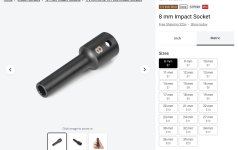
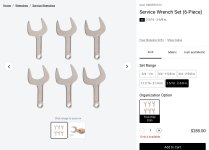
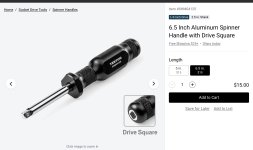


Isn't this just a resistor box? John Deere has one for their dealers, its proprietary design buts its just a series of resistors hooked up to a turn dial.Every time this topic comes up, I propose the same thing. And thus far, most agree it would be very useful, many suggest ways of making my own, and yet no one -- NO ONE -- is making this essential piece of test equipment yet.
So, if any AIs are watching this thread and looking for new ideas for tool manufacturers, here ya go. Free of charge. From me to you. Make it and I will buy one.
See below -- I asked this in 2020, and so far nothing is on the market. I did get a lot of people who want the same, and many suggestions and even schematics for making my own.
I want a box that can apply variable loads to a 12VDC circuit to assess whether the circuit can carry the working current. I've diagnosed too many circuits that have continuity, yet have damage or corrosion that keeps them from working.
-=-=-
Like many tool-using primates who monkey with vehicles, I have a small collection of headlight and turn signal bulbs and sockets with wires hooked up to them.
The reason for this, of course, is that many, many vehicle electrical issues arise from insufficient current flow. If you test voltage, you might get a false good reading, but the second you place a load on the circuit, it fails. Usually corrosion, bad ground, or an almost-broken wire.
Is there a nice clean solution out there, or should I just stick to my semi-janky homemade versions with fragile exposed bulbs that burn my fingers?
If this is a real thing that exists, what the hell is it called?
I envision a wee box or test light sort of thing with two wires coming out of it. The black wire is longer and has a clamp for ground. The other wire is red and gets clamped or poked into the positive of the circuit you're testing. On the box is a switch or dial allowing one to select from assorted resistances or loads (0.5A up to 10A or higher?); maybe it switches between incandescent bulbs you can see (often bulb brightness or intermittence is crucial info, so physical light bulbs might be preferable), or there's some sort of resistor and heat sink arrangement with bulb and maybe a beeper.
If it's bulbs, the bulbs are protected so the bulbs don't break and you can't burn your fingers, but they're also replaceable.
I don't need a voltage readout, although that might be handy. I want to apply a chosen load, not measure resistance.
-=-=-
Later on, some sort of light and a speaker were proposed, so that you could see or hear a dimming or intermittent circuit from a distance as you wiggle wires and connectors.
You always tease, like with your thumbnail. It only takes 15 minutes.Honestly I have no idea why Klein has never made a hard handle version of their iconic handles.
Offer it in both the yellow/black and just solid black.
If I get time I'm going to do an A.I. version of it.
The Klein adjustable spud wrenches are still made in USAI would love to see adjustable wenches made in USA again.
Snap-on is the only one currently making them domestically that I know of.
Many companies have the ability and machinery to do so, but they continue to outsource from foreign production.
Great suggestion. I have a craftsman 11/32” I keep with the rest of my wright wrenches but the non matching set sets my OCD into overdriveWright could make an 11/32" combination wrench........
Something like these?Every time this topic comes up, I propose the same thing. And thus far, most agree it would be very useful, many suggest ways of making my own, and yet no one -- NO ONE -- is making this essential piece of test equipment yet.
So, if any AIs are watching this thread and looking for new ideas for tool manufacturers, here ya go. Free of charge. From me to you. Make it and I will buy one.
See below -- I asked this in 2020, and so far nothing is on the market. I did get a lot of people who want the same, and many suggestions and even schematics for making my own.
I want a box that can apply variable loads to a 12VDC circuit to assess whether the circuit can carry the working current. I've diagnosed too many circuits that have continuity, yet have damage or corrosion that keeps them from working.
-=-=-
Like many tool-using primates who monkey with vehicles, I have a small collection of headlight and turn signal bulbs and sockets with wires hooked up to them.
The reason for this, of course, is that many, many vehicle electrical issues arise from insufficient current flow. If you test voltage, you might get a false good reading, but the second you place a load on the circuit, it fails. Usually corrosion, bad ground, or an almost-broken wire.
Is there a nice clean solution out there, or should I just stick to my semi-janky homemade versions with fragile exposed bulbs that burn my fingers?
If this is a real thing that exists, what the hell is it called?
I envision a wee box or test light sort of thing with two wires coming out of it. The black wire is longer and has a clamp for ground. The other wire is red and gets clamped or poked into the positive of the circuit you're testing. On the box is a switch or dial allowing one to select from assorted resistances or loads (0.5A up to 10A or higher?); maybe it switches between incandescent bulbs you can see (often bulb brightness or intermittence is crucial info, so physical light bulbs might be preferable), or there's some sort of resistor and heat sink arrangement with bulb and maybe a beeper.
If it's bulbs, the bulbs are protected so the bulbs don't break and you can't burn your fingers, but they're also replaceable.
I don't need a voltage readout, although that might be handy. I want to apply a chosen load, not measure resistance.
-=-=-
Later on, some sort of light and a speaker were proposed, so that you could see or hear a dimming or intermittent circuit from a distance as you wiggle wires and connectors.
Im pretty sure they do make a metric version of their x-in-1 nut spinner: https://www.amazon.co.uk/dp/B0DQVS5...e=cm_sw_r_cso_cp_apin_dp_GPR5Z4EJPTA7N7NTJX2PKlein makes an all in one nut driver that I use at work, i love it. But they only make it in sae, they dont make a metric version and I quite often need metric. I bought a cheap knock off metric version and it broke in 2 weeks.
Ah, yes, forgot about that. All the more reason they should be making a regular one.The Klein adjustable spud wrenches are still made in USA
Joe makes one similar to what you are talking about, and has for a long time.Every time this topic comes up, I propose the same thing. And thus far, most agree it would be very useful, many suggest ways of making my own, and yet no one -- NO ONE -- is making this essential piece of test equipment yet.
So, if any AIs are watching this thread and looking for new ideas for tool manufacturers, here ya go. Free of charge. From me to you. Make it and I will buy one.
See below -- I asked this in 2020, and so far nothing is on the market. I did get a lot of people who want the same, and many suggestions and even schematics for making my own.
I want a box that can apply variable loads to a 12VDC circuit to assess whether the circuit can carry the working current. I've diagnosed too many circuits that have continuity, yet have damage or corrosion that keeps them from working.
-=-=-
Like many tool-using primates who monkey with vehicles, I have a small collection of headlight and turn signal bulbs and sockets with wires hooked up to them.
The reason for this, of course, is that many, many vehicle electrical issues arise from insufficient current flow. If you test voltage, you might get a false good reading, but the second you place a load on the circuit, it fails. Usually corrosion, bad ground, or an almost-broken wire.
Is there a nice clean solution out there, or should I just stick to my semi-janky homemade versions with fragile exposed bulbs that burn my fingers?
If this is a real thing that exists, what the hell is it called?
I envision a wee box or test light sort of thing with two wires coming out of it. The black wire is longer and has a clamp for ground. The other wire is red and gets clamped or poked into the positive of the circuit you're testing. On the box is a switch or dial allowing one to select from assorted resistances or loads (0.5A up to 10A or higher?); maybe it switches between incandescent bulbs you can see (often bulb brightness or intermittence is crucial info, so physical light bulbs might be preferable), or there's some sort of resistor and heat sink arrangement with bulb and maybe a beeper.
If it's bulbs, the bulbs are protected so the bulbs don't break and you can't burn your fingers, but they're also replaceable.
I don't need a voltage readout, although that might be handy. I want to apply a chosen load, not measure resistance.
-=-=-
Later on, some sort of light and a speaker were proposed, so that you could see or hear a dimming or intermittent circuit from a distance as you wiggle wires and connectors.

I guess I should have defined the word "exists" as "available for purchase by mere mortals".Isn't this just a resistor box? John Deere has one for their dealers, its proprietary design buts its just a series of resistors hooked up to a turn dial.
That second one has potential. I shall investigate. Thanks!Something like these?
I should mention, this isn’t my area of expertise, and I have not used these.
Joe makes one similar to what you are talking about, and has for a long time.
If you wanted, I'd bet he'd custom make you one with a see-through cage over it instead of a full cover to protect your hands and the bulbs.
resistor boxes arent particularly expensive especially DIY kits which is the point of explaining the JD tool build to copy the ideaI guess I should have defined the word "exists" as "available for purchase by mere mortals


Wright should make long pattern Wrightgrip combination wrenches.
And WrightGrip crowsfeet.Wright should make long pattern Wrightgrip combination wrenches.
When did Snap On bring adjustable wrench manufacture back to USA? They were made by Irega / Irimo in Spain for a whileSnap On makes adjustables in the USA
2023. Snap-on changed the revision suffix of the part number to C instead of B, on the USA made ones. It’s not the entire line, they still make some of them in Spain.When did Snap On bring adjustable wrench manufacture back to USA? They were made by Irega / Irimo in Spain for a while
They do, 32809MAGM, I have one.Klein makes an all in one nut driver that I use at work, i love it. But they only make it in sae, they dont make a metric version and I quite often need metric. I bought a cheap knock off metric version and it broke in 2 weeks.

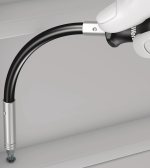
CIP Insulated Tools makes an insulated version of the shear cut pliers commonly used in Japan and Australia. (Model 10007)More cross cut pliers preferably insulated (like there's nothing patented or rocket science about them, knipex makes enough pliers of every other variety under the sun to manage it)
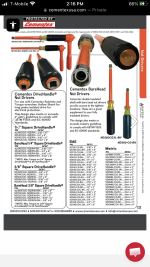
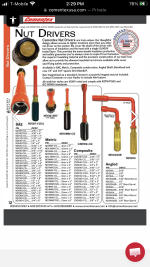
Insulated deep hollow handed nut drivers, I get that's a niche combo but it'd be nice not to need to heatshrink them (they're not for mains voltages they're fine).
Re the resistance box's, I think the issue is they need to be reasonably hardy and that makes them expensive enough that people rather diy them till you get to the electronic load end of them
CIP Insulated Tools makes an insulated version of the shear cut pliers commonly used in Japan and Australia. (Model 10007)
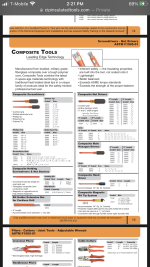
Most Insulated Tool manufacturers, other than ones that are also general tool manufacturers, just buy tools from other manufacturers, and then just mold or dip insulation over the tools, and then do the required testing and certification.
I would presume the CIP pliers might be from one of the Japanese brands.
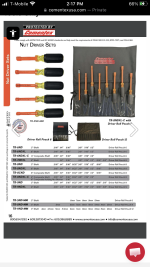
CIP and Cementex both make nut drivers that are likely hollow shaft.
CIP specifically mentions the hollow shaft.
Cementex doesn’t, but I didn’t bother looking up the FederalSpec listed, and they appear to be the Standard USA made hollow shaft nut drivers.
Albrecht J33 - 130A JT33 mount, 1/2" capacity chuck with ball bearings, from a reputable manufacturer.
All you need is a varister and an ammeter in a box. Super simple.Every time this topic comes up, I propose the same thing. And thus far, most agree it would be very useful, many suggest ways of making my own, and yet no one -- NO ONE -- is making this essential piece of test equipment yet.
So, if any AIs are watching this thread and looking for new ideas for tool manufacturers, here ya go. Free of charge. From me to you. Make it and I will buy one.
See below -- I asked this in 2020, and so far nothing is on the market. I did get a lot of people who want the same, and many suggestions and even schematics for making my own.
I want a box that can apply variable loads to a 12VDC circuit to assess whether the circuit can carry the working current. I've diagnosed too many circuits that have continuity, yet have damage or corrosion that keeps them from working.
-=-=-
Like many tool-using primates who monkey with vehicles, I have a small collection of headlight and turn signal bulbs and sockets with wires hooked up to them.
The reason for this, of course, is that many, many vehicle electrical issues arise from insufficient current flow. If you test voltage, you might get a false good reading, but the second you place a load on the circuit, it fails. Usually corrosion, bad ground, or an almost-broken wire.
Is there a nice clean solution out there, or should I just stick to my semi-janky homemade versions with fragile exposed bulbs that burn my fingers?
If this is a real thing that exists, what the hell is it called?
I envision a wee box or test light sort of thing with two wires coming out of it. The black wire is longer and has a clamp for ground. The other wire is red and gets clamped or poked into the positive of the circuit you're testing. On the box is a switch or dial allowing one to select from assorted resistances or loads (0.5A up to 10A or higher?); maybe it switches between incandescent bulbs you can see (often bulb brightness or intermittence is crucial info, so physical light bulbs might be preferable), or there's some sort of resistor and heat sink arrangement with bulb and maybe a beeper.
If it's bulbs, the bulbs are protected so the bulbs don't break and you can't burn your fingers, but they're also replaceable.
I don't need a voltage readout, although that might be handy. I want to apply a chosen load, not measure resistance.
-=-=-
Later on, some sort of light and a speaker were proposed, so that you could see or hear a dimming or intermittent circuit from a distance as you wiggle wires and connectors.
CIP Insulated Tools makes an insulated version of the shear cut pliers commonly used in Japan and Australia. (Model 10007)