The applicable code is available for all to see, specifically the 2024 International Energy Conservation Code as adopted by the state:
UpCodes offers a consolidated resource of construction and building code grouped by jurisdiction

up.codes
There is a specific section in R104.1 that calls out the process to obtain approval for a method/design/material not specified:

Essentially it says the burden to show it meets or exceeds the code intent is on the applicant, but that the official then must respond in writing with yes/no and why.
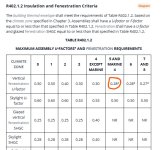
The specific requirement for Zone 5 locations for "vertical fenestration" which is the code way of saying a window in a wall
The messy part of the lower price point vinyl window world is that they players get bought and sold often in the name of consolidation.
Andersen sold American Craftsman 8 or so years ago, Silverline made what was bought here per the paperwork and they call it the 70 Series. Silverline is now owned by PlyGem who is now under the umbrella brand Cornerstone who now owns American Craftsman and the same window that appears to be advertised on Silverline's site as the V3 "brand" or model includes what appears to be the same product being sold either as American Craftsman or Silverline....it's jargon terms of "white label mfg" where you make the same product and put different stickers on at the end to enable selling it thru different channels(sometimes in the same region) to reduce conflict, give appearance of unique-ness etc....
Regardless...what factory solutions are there
Based on some documentation found on Silverline's site which even for someone well versed in navigating this **** is hard to find which tells a bit of a story(in my window nerd mind at least):
It looks like what was bought for the double hung venting flankers is the configuration highlighted in yellow:

So what does that mean?
2.2mm or 3mm is the thickness of the glass panes. Thinner is cheaper and often on smaller windows performs better thermally, but there are limits to when it can be used....specifically size or if tempered so they list both 2.2 and 3mm configurations. The U-Factor of .33 lins up
The spacer of "intercept" is a mfg specific term and irrelevant to the consumer as you don't get control of it
To get to the .28 you have to go to the blue or magenta-ish colors...which requires a change to a different LowE coating shown in the blue, then that same configuration adding argon gets you to .26.
So what is this magic coating of E2+PS??? There are only a couple of companies doing the actual glass coating and everyone buys from them but has their own marketing terms so let's check their lit:

Well that says about nothing to the average consumer but attempts to justify the extra money but it's confirms it's an extra coating...let's see what:
Public information on the rated performance off all the mfgs gets us this which is highly technical but confirms a key thing

They're still using Guardian for their LowE coatings, more details on all the options are below:
So boiling that all down....to something managable and actionable.
They have several "base" options for the coating
-Low-E or their "base" which is what OP has...this is CG70 in glass company langauge
-Low-E SC or "Sun Control" for locations where solar gain is a concern and what to limit it...likely the mfg name is CG55
-Low-E2+ which is an upgraded option for better U-Factor...likely Mfg name of 62/27
With each of those options, you can add argon and to LowE and LowE 2 you can add the "PSL" technology (mfg name IS20) which is an additional coating on the room side surface to further improve U-Factor(make it smaller)
So it does look like you could order the glass package that appears necessary to get to the .28 without doing any frame modifications like foam filling. This gives a very narrow and low probability path to try and submit a request in writing to change the glass and sashes to that configuration and use the above linked documentation as proof of compliance with the intent to get an approved permit.
Again, with ordering sash or glass only, there is no manufacturer documentation attesting to the performance, so this type of documentation and possibly a friendly letter via the customer support channel is as far as you're likely to get


