To avoid these ads, REGISTER NOW!

Drywall ceiling concerns...

Daytrepper

Active member
Joined
Feb 10, 2011
Messages
28
Location
Zebulon, NC
Hello all, been lurking here for a while, finally getting down to the nitty gritty and remodeling my garage, and I have a few questions on the ceiling.

I have a 30x30 shop. I would like to hang a drywall ceiling, and from some research 5/8 drywall is what I need to get the job done, prevent sagging, etc. I am concerned with the trusses' ability to support the ceiling properly, and hope someone here can shed some light on it before I hire someone to come look at the trusses. I have no truss spec sheet unfortunately.

Here are some pics and details on the trusses...
2x4 "W" style, spaced 24" OC....

trusses are tied together with 2x4 boards...10 feet apart at the base of the "W" at the bottom chord, gable to gable

there are also 4 2x4x10 boards bracing the trusses diagonally.

Regular shingle/plywood roof on top...

There are 2x4 nailers on the top plates at each gable end for a ceiling.

Here are a few pics:
garagetrusses005.jpg

garagetrusses004.jpg

garagetrusses002.jpg


Thanks for the help!
 
Last edited:
To avoid these ads, REGISTER NOW!

Traditional hotrodder

Active member
Joined
Nov 28, 2010
Messages
35
Location
MI
You are good to go. Grab yourself 23 -or- (24 to be safe) 5/8" 4' x 10' sheets of drywall and do yourself a favor and rent a drywall jack and you can have the ceiling laid out within a day's time. Be sure to run the drywall perpindicular to the truss's. I would also suggest 1 5/8" drywall screws. The bottom chord of the truss will be plenty strong enough.
 
OP
D

Daytrepper

Active member
Joined
Feb 10, 2011
Messages
28
Location
Zebulon, NC
You are good to go. Grab yourself 23 -or- (24 to be safe) 5/8" 4' x 10' sheets of drywall and do yourself a favor and rent a drywall jack and you can have the ceiling laid out within a day's time. Be sure to run the drywall perpindicular to the truss's. I would also suggest 1 5/8" drywall screws. The bottom chord of the truss will be plenty strong enough.

Thanks! Ive never dealt with trusses before, so this was somewhat of a grey area for me. I came across a good deal a week or so ago on some 5/8 x 4 x 12...22 sheets, so I picked them up...was one of those deals you couldnt pass up...had a box of 3000 1 1/4 screws to boot...nice to know I dont have to try to resell the whole mess...

Plan is to rent a drywall lift for the weekend and have at it...I also picked up 24 sheets of 1/2 x 4 x 12 for the walls...
 

Kevin54

MEMBER EMERITUS
Joined
Jan 12, 2005
Messages
29,341
Location
Urbana, Ohio
Yep. You are all good. Hanging drywall on 2' center trusses is common. As stated above, run the drywall perpendicular to the trusses and stagger the seams 1/2 the length of the drywall. So either stagger the seams at 4' intervals minimum or 6' intervals. Your edge seams will all run straight together, it's just the ends that need staggered every other one
 

creativecars

Well-known member
Joined
Nov 15, 2010
Messages
4,300
Location
Indiana- where horse and buggies still roam
After seeing the bottom picture it looks like you have the opportunity for some extra storage up there. I would definitely look into adding some reinforcement and plywood to the for a light bulky storage area in the middle. It looks like maybe a 8X20 area.
 

ddawg16

Well-known member
Joined
Jul 11, 2008
Messages
21,005
Location
S. California
I concure with Kevin and Traditional as well....

Remember....do the ceiling first....the drywall on the side is used to support the edge of the ceiling....

After you tape and mud....since it's only a garage, you don't need a fantastic surface.....take some of the mud and thin it a bit with water...you want it to be just a little thicker than paint....slop it on with a deep knap roller.....once it's dry, a coat of primer and then I would suggest a high gloss exterior white paint....

You will be amazed out how much more light you will have. Amazed.....

BTW....how much did the drywall score cost you?
 
OP
D

Daytrepper

Active member
Joined
Feb 10, 2011
Messages
28
Location
Zebulon, NC
I concure with Kevin and Traditional as well....

Remember....do the ceiling first....the drywall on the side is used to support the edge of the ceiling....

After you tape and mud....since it's only a garage, you don't need a fantastic surface.....take some of the mud and thin it a bit with water...you want it to be just a little thicker than paint....slop it on with a deep knap roller.....once it's dry, a coat of primer and then I would suggest a high gloss exterior white paint....

You will be amazed out how much more light you will have. Amazed.....

BTW....how much did the drywall score cost you?

Thanks for the help fellas.

Definitely planning to do some high gloss white paint, will likely add some kind of stripe near the floor up about 5 feet, maybe grey with a red stripe to transition to the white the rest of the way up.

I got the 5/8 sheetrock for $100 with the screws, from a buddy that does construction work...its brand new, fire rated, etc...Considering at the gypsum yard it is $9.50 a sheet, thought 100$ was a pretty good deal. Picked up the 1/2 for the walls at a gypsum yard for 8.50 a sheet.

I'll throw up some more pics during the install.

creativecars said:
After seeing the bottom picture it looks like you have the opportunity for some extra storage up there. I would definitely look into adding some reinforcement and plywood to the for a light bulky storage area in the middle. It looks like maybe a 8X20 area.

Its about 8x10x30 in the center. I have some old 3/4 plywood from some shelving I might put up there.
 
Last edited:

Kevin54

MEMBER EMERITUS
Joined
Jan 12, 2005
Messages
29,341
Location
Urbana, Ohio
Along with what Ddawg said, you can also thin your mud with paint. (after you tape and mud the seams) We used to do this quite a bit when remodeling apartments. It helps out when you go to give it a final coat of paint. And if texturing a ceiling, look at different rollers. They make all types of rollers to give different textures. I don't mean different naps, but the roller will give different patterns. When I built my wifes building, my drywall guy used a roller that makes the ceiling look like it is all woodgrained or tree barked. Unique and different.

Here is a site that shows a couple of different ones. Nothing like I have but just an idea.

http://www.all-wall.com/Categories/Drywall-Texture-Rollers
 
Last edited:

bczygan

Well-known member
Joined
Nov 4, 2009
Messages
22,002
Location
DETROIT! Arsenal of Scrappers
Stagger the joints. Run the wall sheets horizontally. If more than 8' high put one top and one bottom and a strip in the middle. Do ceiling first. Run ceiling sheets perpendicular to the joists. Why 5/8" on the ceiling?
 
Last edited:

jvitez

Well-known member
Joined
Nov 30, 2009
Messages
2,429
Location
Big Sky Country, Canada
I would use ceiling paint on the ceiling after priming. No high gloss. Too much reflection becomes blinding. Ceiling paint has a very flat sheen. It reflects lots of light because of the white color, but hides surface irregularities and doesn't cause blinding reflections. You could go semi-gloss to the walls, but high gloss only on trim.

You could use any flat paint for the ceiling, actually. The only difference between ceiling paint and flat wall paint is that ceiling paint has far less abrasion/smudging resistance, therefore it's cheaper to make and cheaper to buy.
 

slghmmr88

Well-known member
Joined
Jun 16, 2007
Messages
582
Location
Edmond, OK (way north)
I would strongly suggest it.
1 1/4" screws aren't going into the wood much with 5/8 drywall. Actually, just 5/8". Since it's the ceiling I would want more gripping the wood than that :willy_nil

use the 1 1/4 on the walls, pick up 7-10 lbs of 1 5/8 screws for the lid.

I couldn't agree more and make sure they are the coarse for wood and not the fine (metal studs). and a drywall screw gun will save a lot of hassle getting the proper depth and not popping the paper (maybe borrow one from your constuction buddy or rent one)
 
Last edited:

hpw

Well-known member
Joined
Oct 7, 2007
Messages
989
I couldn't agree more and make sure they are the coarse for wood and not the fine (metal studs). and a drywall screw gun will save a lot of hassle getting the proper depth and not popping the paper (maybe borrow one from your constuction buddy or rent one)

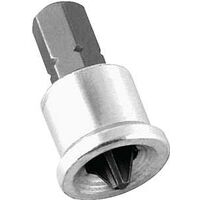
There is a $5.00 bit that will make any drill into a drywall gun that Home Depot/Lowes sells, but couldn't find it on their web site. Maybe someone else will know what I'm talking about and have a link.
 
Last edited:

scott37300

Well-known member
Joined
May 5, 2010
Messages
3,450
Location
Wisconsin
There is a $5.00 bit that will make any drill into a drywall gun that Home Depot/Lowes sells, but couldn't find it on their web site. Maybe someone else will know what I'm talking about and have a link.

I've used this before and it doesn't even begging to compare to a drywall screwgun. The gun is well worth the 60 bucks you will pay for it and if you want I"m sure you can sell it for 30-40 bucks after you use it once.
 

Addrock

Well-known member
Joined
Jun 1, 2010
Messages
393
Location
South Wisconsin
One thing not mentioned ( a lot of good advise) is to buy and place your plywood for your storage area under the peak. You paid extra for those trusses, might as well use that storage. Also when screwing your cieling sheets I will double tap them still 5 locations per bottom cord but 2 per location.
Good luck!
 

brownbagg

Well-known member
Joined
Mar 20, 2006
Messages
5,208
also do not screw eight inches from the wall edge on drywall. doing temperture change the truss will move and if the drywall not tight at the edge it wont crack the joint, beside it be sitting on top of the side wall so it need a little movement
 

brownbagg

Well-known member
Joined
Mar 20, 2006
Messages
5,208
if it was me I just plywood the ceiling and paint it white, that way more insulation or storage up in the attic
 
To avoid these ads, REGISTER NOW!

OccupantRJ

Well-known member
Joined
May 15, 2009
Messages
11,043
Location
Eastern North Carolina
Is the top chord of those rafters really a 2x4? :shocking:
Nate, did you mean "bottom chord"? 2 X 4 lower chord is pretty common around here. My former shop was 28 feet wide, 4/12 pitch, had 2 by 4 W trusses, a ceiling, and was used to store extra car parts up there, along with having a hoist rail slung off them. Been 22 years now, a friend now owns the building, and no issues.
 

Attachments

  • Hoist_005.jpg
    Hoist_005.jpg
    48.8 KB · Views: 50

padstack

Well-known member
Joined
Feb 25, 2010
Messages
246
One thing I would add (and IMO it's more personal preference), but I always put liquid nails on the wood before lifting the drywall panel up. Then once the glue dries, you've got more than just the screws holding it in. It supposedly helps with screw pops as well.
 

Older'n dirt

Well-known member
Joined
Oct 26, 2010
Messages
118
Location
Roodhouse, IL
I can see where the liquid nails would help if you're putting plywood, OSB, cement board, etc. on the ceiling, but with drywall you're just glueing to a paper facing. But hey, .... I've been wrong so many times .............
 

Jota21

Member
Joined
May 14, 2010
Messages
15
I've used this before and it doesn't even begging to compare to a drywall screwgun. The gun is well worth the 60 bucks you will pay for it and if you want I"m sure you can sell it for 30-40 bucks after you use it once.

also - dont use that depth set attachment with an impact driver. The hammering motion will continue to tighten it which means that the screws will continue to go deeper and deeper into the sheet rock. Then you'll need two pairs of channellocks to break it loose, reset your depth, and do it all over again.

+1 on the drywall screw gun... well worth the money, even if it's just one job. Look on craigslist or even amazon. I got a refurbished Bosch for $40-50 on amazon - i think CPO Outlets...
 

csp

Well-known member
Joined
Mar 23, 2010
Messages
5,719
Location
Franktown, CO
I can see where the liquid nails would help if you're putting plywood, OSB, cement board, etc. on the ceiling, but with drywall you're just glueing to a paper facing. But hey, .... I've been wrong so many times .............

Just try to remove a sheet of drywall that's been attached with screws and adhesive. Once the adhesive sets, it's there forever and it adds a lot of shear strength to the wall/ceiling that it's used on.

Regular liquid nails shouldn't be used though. There are specialty drywall adhesives formulated for this use.

My garage trusses are 2x4 on all chords and they have a 45lbs per sq. ft. snow load rating. It's as much the triangulation and design as the material they are made with.
 
Last edited:

OccupantRJ

Well-known member
Joined
May 15, 2009
Messages
11,043
Location
Eastern North Carolina
Just try to remove a sheet of drywall that's been attached with screws and adhesive. Once the adhesive sets, it's there forever and it adds a lot of shear strength to the wall/ceiling that it's used on.

Regular liquid nails shouldn't be used though. There are specialty drywall adhesives formulated for this use.

My garage trusses are 2x4 on all chords and they have a 45lbs per sq. ft. snow load rating. It's as much the triangulation and design as the material they are made with.

Dang right! I have a manufactured home in another county that I had custom built and lived in for 4 years after getting flooded. When the unit was being trimmed out, there was a bad sheet of drywall in a corner that had a humped spot in it. It took the guy they sent out an hour and a half to get the sheet removed and the studs cleaned up for the new sheet. All the drywall and exterior osb sheathing was glued and screwed into place, plus metal straps were attached beneath the sheathing from the top plate to the bottom sill. The marriage wall was twin 2 X 4 constructed walls. These things add up to make a tremendously strong wall. How many stick built homes are built like that? Home was built by Horton out of Georgia.
 

padstack

Well-known member
Joined
Feb 25, 2010
Messages
246
Just try to remove a sheet of drywall that's been attached with screws and adhesive. Once the adhesive sets, it's there forever and it adds a lot of shear strength to the wall/ceiling that it's used on.

Regular liquid nails shouldn't be used though. There are specialty drywall adhesives formulated for this use.

Good point. I equated liquid nails with "adhesive". Although LN DOES make a drywall version. :)
I am NO contractor, but for a room I'm doing now, I just went to depot and bought the larger tubes in a contractor pack for like $30-35 or something. Ends up being cheaper/oz AND less changing tubes. It's the same company that makes "quad" and usually sits right next to the liquid nails.
 

padstack

Well-known member
Joined
Feb 25, 2010
Messages
246
also - dont use that depth set attachment with an impact driver. The hammering motion will continue to tighten it which means that the screws will continue to go deeper and deeper into the sheet rock. Then you'll need two pairs of channellocks to break it loose, reset your depth, and do it all over again.

+1 on the drywall screw gun... well worth the money, even if it's just one job. Look on craigslist or even amazon. I got a refurbished Bosch for $40-50 on amazon - i think CPO Outlets...

I bought the harbor freight special for about $25-30 a few years back. Easily my most used tool after several room remodels and building a new garage. I absolutely love it. It also uses the collated screws from Senco or equivalent (cheaper than HF by about 20-25%). Heck, I even busted up my regular drill and used the drill part to do all of my electrical wire holes. It's more than paid for itself.
 
OP
D

Daytrepper

Active member
Joined
Feb 10, 2011
Messages
28
Location
Zebulon, NC
Stagger the joints. Run the wall sheets horizontally. If more than 8' high put one top and one bottom and a strip in the middle. Do ceiling first. Run ceiling sheets perpendicular to the joists. Why 5/8" on the ceiling?

That is the exact plan. 5/8 on the ceiling to prevent sagging, and Im told it is code here for a garage.

use the 1 1/4 on the walls, pick up 7-10 lbs of 1 5/8 screws for the lid.

Thanks, will do. The screws I got with the drywall are 1 1/4.

I couldn't agree more and make sure they are the coarse for wood and not the fine (metal studs). and a drywall screw gun will save a lot of hassle getting the proper depth and not popping the paper (maybe borrow one from your constuction buddy or rent one)

I borrowed a screw gun, and have also a couple regular drills with the drywall screw bits with the collars. Should go pretty smooth tomorrow.

Is the top chord of those rafters really a 2x4? :shocking:

Yessir. That is what concerned me about them being able to hold up the ceiling.

There is a $5.00 bit that will make any drill into a drywall gun that Home Depot/Lowes sells, but couldn't find it on their web site. Maybe someone else will know what I'm talking about and have a link.

Exactly what I have along with a regular screw gun. Was $6 for a pack of 5 at HD.


Thanks for all the help and replies everyone. This will make the job much easier. Starting 9am tomorrow.

I do have two other questions, Ive heard some conflicting information on placing the screws in the drywall. Ive heard anywhere from 8 to 12" OC in the center of the panel and 6-8" OC on the edges...what is the standard for screw placement?

Also, I was checking the trusses for uniform level on the bottom chords, and I have one where the chord is slightly warped, and it is bowed up above the others about a 1/2"...can I just shim above the drywall in this area? The rest do not vary more than 1/4" within 8 feet.
 

nate379

Banned
Joined
Feb 2, 2009
Messages
7,279
Location
Palmer, AK
Maybe we don't call the same thing here as everyone else, but what the roof decking is nailed to is the top chord and what the ceiling would hang off is the bottom chord.

I couldn't use 2x4s even on the small 16x20ft shed I built cause it wouldn't meet building code for load limit unless I had added several more webs. Was easier and cheaper to use 2x6s.

Nate, did you mean "bottom chord"? 2 X 4 lower chord is pretty common around here. My former shop was 28 feet wide, 4/12 pitch, had 2 by 4 W trusses, a ceiling, and was used to store extra car parts up there, along with having a hoist rail slung off them. Been 22 years now, a friend now owns the building, and no issues.
 
Last edited:
OP
D

Daytrepper

Active member
Joined
Feb 10, 2011
Messages
28
Location
Zebulon, NC
Maybe we don't call the same thing here as everyone else, but what the roof decking is nailed to is the top chord and what the ceiling would hang off is the bottom chord.

I couldn't use 2x4s even on the small 16x20ft shed I built cause it wouldn't meet building code for load limit unless I had added several more webs. Was easier and cheaper to use 2x6s.

Just for giggles, I took a look in the attic of my house, and my neighbors garage which is already finished with drywall, and very similar to mine, both use very similar 2x4 trusses to what I have in the garage.
 

csp

Well-known member
Joined
Mar 23, 2010
Messages
5,719
Location
Franktown, CO

6768rogues

Banned
Joined
Nov 28, 2007
Messages
4,524
Location
Western NY
Trusses often have a 2x4 bottom chord. The top chord tries to push the walls out. The bottom chord keeps the walls restrained. The bottom chord is in tension, ever try to stretch a 2x4? Some webs are under tension and some are under compression. If you look at a truss drawing, it will show bracing on the compression webs. That is because a member under compression can buckle and break, requiring bracing. Members under tension are getting stretched and do not need bracing, as they will not buckle under tension. The bottom chord of a standard truss is typically rated for about 5 to 10 lbs. per square foot of dead load. That is enough for drywall and insulation. Without a truss designed for a bottom chord live load, do not store items up there and do not install a floor for attic storage. By looking at your truss picture, I can safely assume that they were not designed for a live load.
In your picture, the short web is supporting the center of the roof span and is under compression. The long web to the peak is supporting the short web so it does not push the bottom chord down. Your short web must be short enough that its compression load does not require bracing, or the builder threw away the truss design and did not brace the compression web. I would bet on the former rather than the latter because the compression web is very short. If the roof pitch were greater, the compression web would be longer and would require bracing.
 
Last edited:
OP
D

Daytrepper

Active member
Joined
Feb 10, 2011
Messages
28
Location
Zebulon, NC
Trusses often have a 2x4 bottom chord. The top chord tries to push the walls out. The bottom chord keeps the walls restrained. The bottom chord is in tension, ever try to stretch a 2x4? Some webs are under tension and some are under compression. If you look at a truss drawing, it will show bracing on the compression webs. That is because a member under compression can buckle and break, requiring bracing. Members under tension are getting stretched and do not need bracing, as they will not buckle under tension. The bottom chord of a standard truss is typically rated for about 5 to 10 lbs. per square foot of dead load. That is enough for drywall and insulation. Without a truss designed for a bottom chord live load, do not store items up there and do not install a floor for attic storage. By looking at your truss picture, I can safely assume that they were not designed for a live load.
In your picture, the short web is supporting the center of the roof span and is under compression. The long web to the peak is supporting the short web so it does not push the bottom chord down. Your short web must be short enough that its compression load does not require bracing, or the builder threw away the truss design and did not brace the compression web. I would bet on the former rather than the latter because the compression web is very short. If the roof pitch were greater, the compression web would be longer and would require bracing.

Thanks for the info. Sounds like the drywall will be near the 5lb/sqft dead load if I am calculating it correctly. I dont plan to store anything up in the attic space, that would just allow for more junk accumulation lol...I was going to put some plywood up there just for access to wiring etc if I ever needed it, but I will hold off on doing that and just go with the drywall and insulation. R-32 will be going in.
 

Kevin54

MEMBER EMERITUS
Joined
Jan 12, 2005
Messages
29,341
Location
Urbana, Ohio

I've used this before and it doesn't even begging to compare to a drywall screwgun. The gun is well worth the 60 bucks you will pay for it and if you want I"m sure you can sell it for 30-40 bucks after you use it once.

0511220.jpg


If you hang drywall for a living then I would say invest in a drywall gun, but if you are only going to do it as a one shot deal, pick up a few of the bits and go for it. I have hung quite a few sheets of drywall using those and never do break through the paper. As long as the bit is in good shape, the screw hangs on to it really well. You can also magnetize it to help the screw hang on.

Is the top chord of those rafters really a 2x4? :shocking:

Around here that is the standard truss that you get. All made from 2x4's. But they are strong in their design.

In my old garage, I straddled one web and 5 trusses with (2) fullsize 2x6 oak planks, one on each side of the web and pulled 350 engines out along with a few 440's and never damaged the trusses. The garage is still standing 29 years later.
 

6768rogues

Banned
Joined
Nov 28, 2007
Messages
4,524
Location
Western NY
Thanks for the info. Sounds like the drywall will be near the 5lb/sqft dead load if I am calculating it correctly. I dont plan to store anything up in the attic space, that would just allow for more junk accumulation lol...I was going to put some plywood up there just for access to wiring etc if I ever needed it, but I will hold off on doing that and just go with the drywall and insulation. R-32 will be going in.

You should be well under the rated load of the bottom chord. Around here that is a minimum of 10 lbs. per square foot. I am aware that other regions have as low as 5 lbs. A 4x8 sheet of wallboard is 32 square feet. Even at 5 lbs. per square foot, your structure can hold 160 lbs. over the area of an 8-foot sheet of wallboard. 1/2 inch wallboard weighs 1.6 lbs. per square foot and 5/8 type X weighs 2.2 lbs. per square foot. The ceiling weight is not even at the half way point of what you can install.
For 24 inch centers, you should use 5/8 or high strength 1/2.
 
OP
D

Daytrepper

Active member
Joined
Feb 10, 2011
Messages
28
Location
Zebulon, NC
Progress this weekend:

Step 1:
garagetrusses005.jpg


Step 2:
garagebuild003.jpg


Step 3:
GarageBuild2004.jpg


Ceiling is up, now on to wall insulation, then sheetrock the walls...hopefully complete this time next sunday, then its time for tape and mud.....

Thanks for the help everyone, you definitely cleared up all the concerns I had. Took about 10 hours in all with 2 helpers.
 
To avoid these ads, REGISTER NOW!
Top Bottom