To avoid these ads, REGISTER NOW!

Here's an easy one: main panel to sub-panel feed

StumpFJ40

Well-known member
Joined
Mar 11, 2008
Messages
82
Location
NOVA
I'm working out my electrical feed to my detached garage. During my investigation of the existing home electrical I identified the main panel as a GE 200 amp 40 slot main panel and a Square D 100 amp 8 space/16 circuit sub panel.
EDITs in red The subpanel is fed by a 50A 240v breaker in the main panel. the sub panel feeds the power to the kitchen island (1 outlet and a propane cooktop) and the Master bead room outlets. There is space for a double pole breaker in the subpanel.
My plan is to swap the 50A breaker for a 100A, change the 6-2 feeder to 2 or 3-2 and add a 100A double pole breaker to the sub panel to feed the garage with 2AWG CU cable to a 100/125A 12 circuit panel in the garage. The power requirements in the garage are a 5hp 60gal (240v 20A) compressor, Plasma cutter (rare usage) and a Hobart 187 handler MIG welder as well as 8ft fluorescent lights (of course) and approximately 18 outlets. Not likely to hit the 90A or 100A threshold.
My understanding is that the breaker in the main is the main overcurrent device and anything "down stream" from that breaker can be 100A (only option with the Square D panel) or what ever. It just means the main 90A will pop before the 100A ones.

Any issues with this plan? If so, I can certainly pop for the GE 100A breaker as well, but figured I'd see if I pop it before buying the higher amp feed breaker.
Cheers,
Mike T
 
Last edited:
To avoid these ads, REGISTER NOW!

Gregishome

Well-known member
Joined
Dec 29, 2011
Messages
811
I wouldnt count on a GE breaker protecting much. I call them " welding" breakers. :)
 
OP
S

StumpFJ40

Well-known member
Joined
Mar 11, 2008
Messages
82
Location
NOVA
Really? hmmm, I didn't know they were that bad. Other than the GE breakers (not gonna swap out the main panel) is there any other issue with this setup?
 

Aceman

Well-known member
Joined
Jan 28, 2007
Messages
2,513
Location
Eastern Oregon
I don't see a problem, but I'll mention a couple things.

The breaker feeding your sub can't just be upraded to 100 amp without checking the wire size. Electricians install breakers to match the wire, if it has a 90 amp breaker, it's probably a 90 for a reason.

If you don't mind spending the money on copper, I'd use #3 rather than #2 and save a little money. #3 is 100 amp wire.

Pulling your garage sub from your house sub rather than the main may cause some of the house subs circuits to dim when something in your garage kicks on. Just something to look out for....
 
Last edited:
OP
S

StumpFJ40

Well-known member
Joined
Mar 11, 2008
Messages
82
Location
NOVA
Thanks Aceman. I appreciate the input. I have a line on some Southwire 2-2-2-4 quadplex (labeled THHN on each individual wire) water tight armored direct bury cable and the homeowner is chipping in half of the cost, so It is worth it for the time saved by being able to cut the trench and lay the cable in with no messing with PVC and pulling the cable through 140ft of conduit.

Your comment about the 90A breaker and the wire size made me take a second look and, lo-and-behold, the sub feeder is 6-2 CU with a 6AWG ground. Looks like I'll have to bump that up as well, but I should have some of the garage feed wire left over.

Will that work?
 
OP
S

StumpFJ40

Well-known member
Joined
Mar 11, 2008
Messages
82
Location
NOVA
OOps, Fixed the OP with correct info: the feeder breaker in the main is 50A... I pulled the cover from the main and found that the panel was mislabeled. So, 6-2 is OK and I will need to up the feeder gauge. Refer to OP.
 
Last edited:

Aceman

Well-known member
Joined
Jan 28, 2007
Messages
2,513
Location
Eastern Oregon
I have a line on some Southwire 2-2-2-4 quadplex (labeled THHN on each individual wire) water tight armored direct bury cable and the homeowner is chipping in half of the cost, so It is worth it for the time saved by being able to cut the trench and lay the cable in with no messing with PVC and pulling the cable through 140ft of conduit.

Your comment about the 90A breaker and the wire size made me take a second look and, lo-and-behold, the sub feeder is 6-2 CU with a 6AWG ground. Looks like I'll have to bump that up as well, but I should have some of the garage feed wire left over.

Will that work?

I'm not sure what type of Southwire cable that is, THHN is NOT rated for wet locations underground. Is it slash rated THHN/THWN, etc? That would be okay.

But, if your sure the cable is direct burial rated, then it sounds like your good to go ahead with it.
 

PRH44

Well-known member
Joined
Dec 25, 2009
Messages
563
Location
Indiana
Take another look at the cable to see if it has 2nd type in the lable such as THWN or the like. Pure THHN can not be used in a wet location.
 

pattenp

Well-known member
Joined
Jun 4, 2008
Messages
10,175
Location
Virginia - USA
In your OP you state change the 6-2 feeder to 2 or 3-2. Two conductor feed is not correct for feeding a sub-panel, you need to use three conductors such as the 2-2-2-4 you mentioned in post #5. Also the cable in the link you provided has a #6 bare ground with 3 #2 conductors.
 
OP
S

StumpFJ40

Well-known member
Joined
Mar 11, 2008
Messages
82
Location
NOVA
Regarding the link. The Product Specification PDF text describes that wire over 1/0 has a bare ground: "Southwire Armorlite ® Type MC Cable - "PVC Jacketed" is constructed with soft-drawn, copper Type THHN/THWN-2conductors rated 90°C wet or dry, and a bare copper grounding conductor for sizes 1/0 AWG and larger."
The wire I looked at has a green coated ground wire.

As far as addressing the existing wiring, the sub-panel is wired with 3 wires: 2 hots and a ground. If necessary, I will add the 4th wire. I will see what AHJ says.
 

Aceman

Well-known member
Joined
Jan 28, 2007
Messages
2,513
Location
Eastern Oregon
That cable you linked to will work just fine. Just watch the backfill, if it's rocky, I'd bed it in sand. I always walk the ditch and manually smooth out the bottom with a shovel, lay the wire/pipe, and then sluff some of the tailings back onto the wire/pipe to hold it in place. Then the guy backfilling with the loader isn't sluffing full bucketfuls onto it, pushing it all over the place at the bottom of the ditch. Leave a little slack at both ends of the ditch in case the wire settles it doesn't pull out of the panels.

You do need a 4 wire cable to your existing sub. You can't just add a 4th wire to the outside of it.
 

ishiboo

Well-known member
Joined
Oct 27, 2010
Messages
9,481
Location
Oshkosh, WI
Regarding the link. The Product Specification PDF text describes that wire over 1/0 has a bare ground: "Southwire Armorlite ® Type MC Cable - "PVC Jacketed" is constructed with soft-drawn, copper Type THHN/THWN-2conductors rated 90°C wet or dry, and a bare copper grounding conductor for sizes 1/0 AWG and larger."
The wire I looked at has a green coated ground wire.

As far as addressing the existing wiring, the sub-panel is wired with 3 wires: 2 hots and a ground. If necessary, I will add the 4th wire. I will see what AHJ says.

You've got something wrong. Without the sub-panel having a neutral, it's not likely that it's powering the bedroom or island outlets, or a propane cook top. Normal bedroom/island outlets would be 120v, unless the bedroom had maybe a dedicated window air conditioner, than it may have a 240.

The fourth wire is without question required. Most inexpensive way to run this sub would be 2-2-2-4 SER breakered at 90A. As "tough" as the MC looks, it is rated for the same as NMB - protected from physical damage.
 

pattenp

Well-known member
Joined
Jun 4, 2008
Messages
10,175
Location
Virginia - USA
My mistake, I misread the numbers. I was thinking it was #2 when actually is was #2/0 that has the bare ground. You definitively will have to add the neutral to the sub-panel feed. If your AHJ says you don't need it I'll be very surprised. Without a neutral I assume the current sub-panel has the branch circuit neutrals landed on the ground bar, which is a no no by NEC.

Regarding the link. The Product Specification PDF text describes that wire over 1/0 has a bare ground: "Southwire Armorlite ® Type MC Cable - "PVC Jacketed" is constructed with soft-drawn, copper Type THHN/THWN-2conductors rated 90°C wet or dry, and a bare copper grounding conductor for sizes 1/0 AWG and larger."
The wire I looked at has a green coated ground wire.

As far as addressing the existing wiring, the sub-panel is wired with 3 wires: 2 hots and a ground. If necessary, I will add the 4th wire. I will see what AHJ says.
 

pattenp

Well-known member
Joined
Jun 4, 2008
Messages
10,175
Location
Virginia - USA
Why are you looking at using the copper MC cable vs aluminum Mobile Home Feeder? The MHF is cheaper and can be direct buried. But, I suggest conduit for any underground feed.

mh_feeder.gif
 
OP
S

StumpFJ40

Well-known member
Joined
Mar 11, 2008
Messages
82
Location
NOVA
I can get the CU for roughly 2.75/ft with the jacket and I don't have to worry at all about assembling PVC or pulling MHF through 150' of conduit. The garage is also down a hill with a short but decent grade for 20ft or so... where if I lay in the amored cable, it will conform to the contour better. I can unroll the cable into the trench and bury it in a few hours. With the Landlord paying 1/2, it is worth the time savings for CU and workability.
The existing Sub, next to the main breaker, indeed has 3 wires running to it, but it must be a 120V feed from one of those GE tandem breakers I am not used to those ultra slim single breakers that feed a normal single slot. I continue to work through the issue while posting here.
I appreciate the patience.

It looks as if my plan has changed to the following:
1. Pull the 50A 120 tandem breaker, relocate 2 circuits from the main to the sub panel to make space for the 100A 240V breaker.
2. Run #2 or #3 CU wire (got cheap source), with a neutral and ground, from the main to the Sub (I need to separate the neutrals and grounds when I rewire the sub, correct?)
3. Consolidate some breakers from singles to tandems within the Sub to make room for a 90A-100A Dual Pole breaker to feed the garage.

**Alternatively, I could relocate 4 circuits from the main to the sub and run the garage feed directly from a 100A breaker in the main box. Is there any advantage to this as opposed to Main-to-sub-to-garage? I would think there would be less loss through the system, but potentially more work to relocate 4 circuits from the main as opposed to two.

I seem to be getting myself more confused, but more information will lead to a better long-term result in the end.

BTW, I will have a Master Electrician look at my plan/work, as it is required in my County to have a Master Electrician sign off on the Permit application.
I just want to have as much understanding of the best way forward BEFORE I have to pay a guy for his time.
Thanks again for any and all input on this.
 
OP
S

StumpFJ40

Well-known member
Joined
Mar 11, 2008
Messages
82
Location
NOVA
OK, After having written it out again, I think it will be less hassle and a cleaner install if I 1. Move 4 breakers (GE slims) to the sub panel; thus leaving the sub as is (maybe upping the feed breaker to 60A). Just need to add J-box(es) to extend relocated circuits to sub.
2. Install 90A Garage feed in main.
3. Add additional ground bar to main panel for 4th wire
4. Done
Does this work? will I have issues with the sub? It will be about full, but I will diversify the loads such that the master BR and kitchen share the sub (as they are rarely used simultaneously).

Can someone explain these GE Q-line breakers to me?!?! grrrr
 
Last edited:

pattenp

Well-known member
Joined
Jun 4, 2008
Messages
10,175
Location
Virginia - USA
This is to recap if I'm following you on this correctly, first of all, you/owner needs to fix the feed to the sub-panel in the house. It needs to be fed with 4 wires (2 hots, 1 neutral and 1 ground). The neutral and grounds need to be separate in the sub, so there needs to be a ground bar and a neutral bar in the sub-panel. If it's fed via a DP 100A breaker then the wire needs to be #2 copper. You should not need any additional ground bar in the main panel, grounds and neutrals are bonded and use the same bar in the main panel.

Now for the sub-panel in the garage if that's to be fed with 100A, then add a DP 100A breaker in the main panel. Run the 4 wires (2 hots, 1 neutral and 1 ground) to main breaker sub-panel in garage. Grounds and neutrals go to two separate bars and add two 8' ground rods at the garage driven at least 6" apart connected with a #6 bare copper wire from the ground bar in the main breaker sub-panel.

Neutral bars in the sub-panels need to be isolated/insulated from the box, so be sure any bonding screws to the box on the neutral bars are removed. Box needs to be bonded to the ground bar.
 
Last edited:
To avoid these ads, REGISTER NOW!
OP
S

StumpFJ40

Well-known member
Joined
Mar 11, 2008
Messages
82
Location
NOVA
Thanks Pattenp! That is a much better summary than I could have come up with.

I discovered the ground wire for the #6 subpanel feeder. I didn't see it before, as it is 12AWG and was hidden behind another set of wires. So, there are 4 wires between the main and the sub panel: three #6 AWG and one #12 AWG ground. It appears to be wired correctly so I think I will just move 4 breakers from the main to the subpanel and run the garage feed off the main.
All of the demand into the subpanel are intermittent loads like bedroom lights, outlets and cooktop ignition. The additional circuits

Copy all on the garage subpanel.
Thanks again!

Cheers,
Stump
 
OP
S

StumpFJ40

Well-known member
Joined
Mar 11, 2008
Messages
82
Location
NOVA
I'll have to check the gauge of the ground wire out... It is 6-2 wire with a ground encased with it. The 4th wire is #6 as well, but run separate. of it is undersized, I will correct.
Cheers,
Stump
 

pattenp

Well-known member
Joined
Jun 4, 2008
Messages
10,175
Location
Virginia - USA
??? It didn't sink in with me that you're saying the feed to the sub was a 6/2 w/g cable plus a single #6 as the 4th wire. Is the cable plus the single wire run within conduit from the main to the sub?

I'll have to check the gauge of the ground wire out... It is 6-2 wire with a ground encased with it. The 4th wire is #6 as well, but run separate. of it is undersized, I will correct.
Cheers,
Stump
 

Norcal

Well-known member
Joined
Mar 16, 2008
Messages
13,764
The cable needs to be rerun, adding a conductor for a neutral is not good......
 
OP
S

StumpFJ40

Well-known member
Joined
Mar 11, 2008
Messages
82
Location
NOVA
OK, let me reset here:
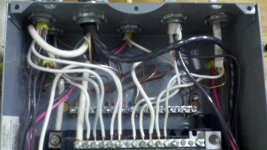
These panels are within six inches of each other. The feed from the main panel is a 50A breaker (the breaker is a 1" GE q-line series 50A breaker. It is NOT a double pole breaker, so it is only connected to 120V) feeding 120V to the subpanel via a 6-2 (with ground) wire and a fourth wire. The hots from the 6-2 are connected to each leg of the subpanel power bus with the 10 gauge ground is connected to the ground bus. The fourth #6 AWG wire is connected to the POCO ground (neutral) and goes from the main panel to the ground bus in the subpanel.
From the looks of it, the 4th wire is just another ground because there is only one ground bus bar in the sub.
 
OP
S

StumpFJ40

Well-known member
Joined
Mar 11, 2008
Messages
82
Location
NOVA
All right, I got it. The owner or handyman, I won't say it was an electrician since this was clearly wired incorrectly put the load neutrals and grounds on the same bar with it still bonded to the subpanel. Now, whoever did it did a decent job with the connections, but did not understand the 4 wire setup.

So, I will by a ground bar and hook the equipment grounds to it and keep the equipment neutrals on the original ground bar, but take bonding screw out.
That should do it for the existing subpanel and that opens up the space for the 90 amp feed to the garage.
 
OP
S

StumpFJ40

Well-known member
Joined
Mar 11, 2008
Messages
82
Location
NOVA
Here is the final result in the subpanel. All equipment neutrals connected to non-bonded bar. Additional ground bar added (had to drill box to mount it) and equipment grounds connected. Both bars are connected to the main panel ground bars.

Thanks for the guidance provided!

Cheers,
Stump
 

Attachments

  • 2012-02-12_18-45-36_21.jpg
    2012-02-12_18-45-36_21.jpg
    145.6 KB · Views: 51
  • 2012-02-12_18-45-57_148.jpg
    2012-02-12_18-45-57_148.jpg
    144.5 KB · Views: 45

Norcal

Well-known member
Joined
Mar 16, 2008
Messages
13,764
The feed to the panel is all wrong. a current carrying conductor needs to be in pipe or a listed cable assembly, like NM cable. Not going to comment about the rest of it.
 

ishiboo

Well-known member
Joined
Oct 27, 2010
Messages
9,481
Location
Oshkosh, WI
The feed to the panel is all wrong. a current carrying conductor needs to be in pipe or a listed cable assembly, like NM cable. Not going to comment about the rest of it.

Yeah. Plenty of issues with this panel, it's awful.

The separate wire is of course a no-no.

A white wire cannot be used as the hot conductor as it's currently being used.

The neutral seems to be landed in a regular hole. I believe the D ground bus accepts up to #6 so you should be okay, but it should be landed on the neutral lug.

You have MWBCs without handle ties/dual pole breakers, on separate tandems because tandems CANNOT service a MWBC.

You have one breaker which is wired but will never work, because it's a 6-space/12-circuit panel and you have 7 spaces filled.

The QO 6-space panel has 8 physical breaker locations on both the plastic bus insulator and the cover, but only 6 of them have actual bus stabs.

This is pretty bad.
 

ishiboo

Well-known member
Joined
Oct 27, 2010
Messages
9,481
Location
Oshkosh, WI
Obviously pointing out all the issues isn't going to be helpful to you, instead I'll offer how you're going to fix it. This is EASY AS PIE as it's fed from a breaker 6 inches away from it.

Replace the panel with a 24-space/24-circuit QO panel. You have the right panel, it's just not big enough. Unfortunately you cannot use those tandems in your new panel, they may be usable in your old main. I could use them if you can't :D

It sounds like a big jump in capacity, but with the MWBCs you have and future modifications I guarantee you your 24-space will be eaten up quickly.

For wire, you have lots of options since it's such a short run in the conduit. Copper #2 for 100A, aluminum #2 for 90A, you could do a run of 2-2-2-4 SER without conduit but I think conduit will be cleaner and easier with individual conductors.

Your MWBCs (or 240/120 circuits) need to be on DOUBLE POLE breakers... in QO land these take up two spaces but are a solid unit with one handle and one trip indicator. You cannot split them into separate breakers (it may be locally acceptable to use two single poles with a handle tie but don't, you have no reason to do so as it costs less to use a double and you need new), use tandems, etc.

Your new panel needs a ground bar just as you did, the neutral screw which comes in a bag should not be installed. You did these right. :)
 
OP
S

StumpFJ40

Well-known member
Joined
Mar 11, 2008
Messages
82
Location
NOVA
OK, WOW! I definately have alot more to pay attention too. Thanks to all who pointed out the issues and, particularly, to ishiboo for taking the time to explain how to on F my situation.

So, I will get some 6-3 and rewire the sub with a larger capacity panel.

Addressing the identified issues:

A white wire cannot be used as the hot conductor as it's currently being used.
The 6-2 wire currently in place has a white and black wire with the white wire taped black to indicate a hot lead.

The neutral seems to be landed in a regular hole. I believe the D ground bus accepts up to #6 so you should be okay, but it should be landed on the neutral lug.

Understood, wondered why it was there myself, but figured it got the same end result

You have MWBCs without handle ties/dual pole breakers, on separate tandems because tandems CANNOT service a MWBC.

Understood will get two of these to handle both MWBC's

You have one breaker which is wired but will never work, because it's a 6-space/12-circuit panel and you have 7 spaces filled.

I'll have to check that out... why does it have 8 spaces identified on the label on the panel face? If I recall, those circuits are working

The QO 6-space panel has 8 physical breaker locations on both the plastic bus insulator and the cover, but only 6 of them have actual bus stabs.

Picture one shows a stab on the extreme left making this box an 8 space box... I don't know what else to say except it looks like it has 8 spaces to me.

Thanks again, and I will fix these issues ASAP.
Please let me know if there is anything else wrong or the answers to my questions are incorrect.
Cheers,
Stump
 

ishiboo

Well-known member
Joined
Oct 27, 2010
Messages
9,481
Location
Oshkosh, WI
OK, WOW! I definately have alot more to pay attention too. Thanks to all who pointed out the issues and, particularly, to ishiboo for taking the time to explain how to on F my situation.

So, I will get some 6-3 and rewire the sub with a larger capacity panel.

No problem... you're clearly capable of doing the work, just need the details on the NEC to do it :) The thread amuses me as it says "here's an easy one" but we're on 2 pages and there's lots of confusion :)

I really think you should use #2 copper or at least #2 aluminum so you have 100A or close to capacity on the new sub-panel, since your main is full.

The price difference on such a short run is so small and then you have a lot of upgrade potential.

Addressing the identified issues:

A white wire cannot be used as the hot conductor as it's currently being used.
The 6-2 wire currently in place has a white and black wire with the white wire taped black to indicate a hot lead.

A "hot" wire cannot be white at all. You cannot reidentify it with black tape. Not a huge deal but when you buy new wire to make this right, you don't need to even buy white wire, reidentify a black with some white tape. :)

You have one breaker which is wired but will never work, because it's a 6-space/12-circuit panel and you have 7 spaces filled.

I'll have to check that out... why does it have 8 spaces identified on the label on the panel face? If I recall, those circuits are working

The QO 6-space panel has 8 physical breaker locations on both the plastic bus insulator and the cover, but only 6 of them have actual bus stabs.

Picture one shows a stab on the extreme left making this box an 8 space box... I don't know what else to say except it looks like it has 8 spaces to me.

I didn't see a stab and thought this was a 6-space panel. They do have 8 physical spaces, but only the middle 6 are usable. The two on each outside end do not have bus stabs. Perhaps you do have the 8-space version. On the 6-space, there are still 8 labels and 8 knockouts in the cover, but the cover label has some text over #1 and #8 saying they are not used. My apologies if this is a real 8-space panel :)

:beer:
 
OP
S

StumpFJ40

Well-known member
Joined
Mar 11, 2008
Messages
82
Location
NOVA
I really think you should use #2 copper or at least #2 aluminum so you have 100A or close to capacity on the new sub-panel, since your main is full.

The price difference on such a short run is so small and then you have a lot of upgrade potential.

Copy that, that is an easy one... I certainly like copper for its workability over aluminum, especially for short runs like this.

A "hot" wire cannot be white at all. You cannot reidentify it with black tape. Not a huge deal but when you buy new wire to make this right, you don't need to even buy white wire, reidentify a black with some white tape. :)

That makes absolute sense.

Just to clarify a point: Hypothetically, I could keep the white ground wire "as-is", IF I sleeved it in flexible conduit to bundle it with the with 2 new black feeds #6AWG. Correct?

Good stuff.
 

pattenp

Well-known member
Joined
Jun 4, 2008
Messages
10,175
Location
Virginia - USA
To clarify the statement “A "hot" wire cannot be white at all.” is true if using single conductors. But if the white wire is part of a cable assembly it can be reidentified by marking tape.

..........
A "hot" wire cannot be white at all. You cannot reidentify it with black tape. Not a huge deal but when you buy new wire to make this right, you don't need to even buy white wire, reidentify a black with some white tape. :)...........
 
OP
S

StumpFJ40

Well-known member
Joined
Mar 11, 2008
Messages
82
Location
NOVA
To clarify the statement “A "hot" wire cannot be white at all.” is true if using single conductors. But if the white wire is part of a cable assembly it can be reidentified by marking tape.

Okay, by "cable assembly" that would be identified as all 4 wires bundled in the same manufactured "wrapper" as in that is the way you bought it? Meaning just putting 4 wires into a conduit would not make it a "cable assembly"?

Not trying to get into semantics, but it seems that the NEC is a HUGE collection of semantics.
 

pattenp

Well-known member
Joined
Jun 4, 2008
Messages
10,175
Location
Virginia - USA
You are correct. Romex as an example is a cable assembly. Individual conductors run in conduit is not a cable assembly. If using 10/2 Romex as an example to feed a 240V circuit, the white is reidentified as red.

Okay, by "cable assembly" that would be identified as all 4 wires bundled in the same manufactured "wrapper" as in that is the way you bought it? Meaning just putting 4 wires into a conduit would not make it a "cable assembly"?

Not trying to get into semantics, but it seems that the NEC is a HUGE collection of semantics.
 
Last edited:
To avoid these ads, REGISTER NOW!
Top Bottom