To avoid these ads, REGISTER NOW!

Floor Jack oil change?

bobbyrae

Active member
Joined
Jun 15, 2008
Messages
29
Location
Alameda, CA
First the good news: I bought a Vulcan (yes, chinese) 2 1/4 ton jack back around 1990 for $50 and it has continued to work just fine. So, thumbs up for Vulcan,:thumbup: but I have a feeling that brand is deceased.

Over the years I have asked the guys at the auto parts stores and people in forums about changing the oil, and they have always given responses like "if it ain't broke, don't fix it." Generally, I respect that philosophy, except that if you took that attitude with your car's engine oil, it would end up costing you in the long run. So we should realize that routine maintenance is not the same as "fixing."

In researching different floor jacks online, I have found the following almost verbatim in three different manuals. I think the brands were Omega, Blackhawk and Milwaukee.

Changing oil
For best performance, replace the complete fluid supply at least once per year.
1. With saddle fully lowered, remove the vent screw and drain the fluid into a suitable container.
2. Fill with oil until ~3/16” above the inner cylinder as seen from the oil filler hole. Reinstall vent screw.
Note: Dispose of hydraulic fluid in accordance with local regulations.


So, what do you think? Is this in the manual just as a CYA, or would it help extend my jack's life? My manual doesn't say anything about changing the oil and I am pretty sure it would involve some disassembly.

Thanks guys. I can't believe how much helpful info I keep finding here.
 
To avoid these ads, REGISTER NOW!

Hetman

Well-known member
Joined
Jul 3, 2012
Messages
128
It's only a hand-pumped jack, not some heavy machine with hydraulic powertrain and tools.
It would be interesting if you drain the oil and check how it looks (and post pics!) - you probably put it back in.
 

rodm1

Well-known member
Joined
Feb 17, 2008
Messages
2,270
I think its a good idea to remove some of the junk that accumulates in there. It's a safety item all sow it deserves a little better care. But you only payed $50 if it fails buy a good one.
 
Last edited:

Hiball

Well-known member
Joined
Apr 30, 2009
Messages
14,031
Location
Missery
IMO I feel yearly oil changes are a waste of time and money, obviously if you leave your fill plug/vent off or leave your jack outside in the elements you greatly improve your chances of ingesting contaminants into the system. As far as doing oil changes to remove these contaminates, you will Never come close to flushing the system without a complete tear down of the reservoir. The best course of action is to make sure the reservoir plug is installed and wipers (if equipped) are in good condition.
 
Last edited:

EOC_Jason

Well-known member
Joined
Jun 25, 2012
Messages
11,388
Location
Bentonville, AR
^^^ I think he hit it right on the spot. When I went to add a little oil in my jack a while ago, the plug was on there so tight when I got it off it let out a little "****" from air pressure built up inside!

Unless you leave the plug off (which would make a huge mess if you ever tried to use the jack) or had major damage to the wipers (which again would make a mess), the oil inside should stay pretty clean and free from contaminates & moisture.

If the jack was used at a tire place all day long, then yeah maybe once a year it wouldn't hurt to give it a little TLC and change the oil and clean the grime off.
 

JASTECH

Well-known member
Joined
Oct 21, 2009
Messages
2,671
Location
Gering, NE
I would do it and log it down with reciept of oil purchase. It would help in sell value if you did. Also warranty on newer jacks, plus the fluid gets compressed alot and this changes the fluid a bit.
 
OP
B

bobbyrae

Active member
Joined
Jun 15, 2008
Messages
29
Location
Alameda, CA
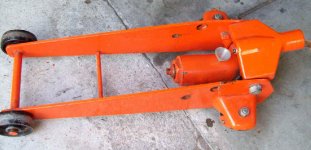
I am thinking that pulling the lift arm shaft and regreasing it would be a good idea at a minimum. It's been suggested that the old oil may look fairly clean, so I am planning on draining it and measuring how much of it there is just for reference. If it looks dirty, I'll put new stuff in.

Here's a question that has been nagging at me and I wonder if any of you have the answer. The jack seems to top out at a point where the handle starts moving freely and I suspect that it just runs out of hydraulic fluid at that point. Is that what actually controls the upper end point of motion? Or is there normally some mechanical block inside? I guess it would be a smart design to size the reservoir to match the maximum piston position.
 

Attachments

  • jackb.JPG
    jackb.JPG
    62 KB · Views: 39
To avoid these ads, REGISTER NOW!

Hetman

Well-known member
Joined
Jul 3, 2012
Messages
128
There may be air or oil starts foaming but it's not good. And it's not by design.
When you drain oil, please post pics.

Remove handle spring and when not used, open valve and leave pump in down position - it prevents rusting and in consequence earlier wearing/destroying of seals.

You have grease fitting, there's no point in removing shaft, just put fresh grease in i.
 

Hiball

Well-known member
Joined
Apr 30, 2009
Messages
14,031
Location
Missery
Here's a question that has been nagging at me and I wonder if any of you have the answer. The jack seems to top out at a point where the handle starts moving freely and I suspect that it just runs out of hydraulic fluid at that point. Is that what actually controls the upper end point of motion? Or is there normally some mechanical block inside? I guess it would be a smart design to size the reservoir to match the maximum piston position.

It is by design... Most jacks have some sort of over extension setup, sometimes it's simply a hole/slit in the cylinder wall that when the pressure side of the seal encounters it dumps the oil back into reservoir. The other version includes a cross pin that sits perpendicular to the piston and when it contacts the tank nut internally it un-seats a ball at the business end of the piston. A reservoir that is low on oil will give you a similar feeling/action but not as defined.

Foaming oil? Lmao.... We are talking hand jacks, unless your Superman and can rapidly pump your jack you are gonna be hard pressed to create this problem. As far as removing the spring to allow the pump piston to sit recessed... That seems very pointless to me, the jacks that really benefit from rod application sealing are your yasui based jacks and they normally leave a small film of oil behind and sure having the pump piston recessed will protect it from the elements, but remember in the down position the oil cylinder is theoretically dry. Let's take it a bit further, why not remove the pump piston and store in a greasy rag in a safe? Lol.. I thing the best policy is to just use jack frequently, don't leave it outside in the elements.
 

Hetman

Well-known member
Joined
Jul 3, 2012
Messages
128
It's my experience, both jack and presses. Rod or pump pistons left systematically uncovered and little dots of corrosion appear - these degrade seals very fast.
Been there, done that. Doing my way there's enough oil everywhere to protect it.
Of course, one gets all his tools rusty in a month and another guy won't see a bit of rust in twenty years - it's up to luck, local climate, ventilation in your garage etc... IMO better safe than sorry.

As for foaming, all you need is damaged pump seal - just enough to **** a bit of air every stroke. Again, it's my experience.
 

Hiball

Well-known member
Joined
Apr 30, 2009
Messages
14,031
Location
Missery
It's my experience, both jack and presses. Rod or pump pistons left systematically uncovered and little dots of corrosion appear - these degrade seals very fast.
Been there, done that. Doing my way there's enough oil everywhere to protect it.
Of course, one gets all his tools rusty in a month and another guy won't see a bit of rust in twenty years - it's up to luck, local climate, ventilation in your garage etc... IMO better safe than sorry.

As for foaming, all you need is damaged pump seal - just enough to **** a bit of air every stroke. Again, it's my experience.


I'll agree that climate plays a large part in how a tool rusts etc.... But I've torn down 1000's upon thousands of hydraulic jacks/pumps/clinders/motors and in my experience if you use your jack and keep it from the elements your gonna be fine. As I stated when you use this jack it leaves a thin coat of oil on the piston and pump pistons are plated. Please explain how lowering the pump piston (extracting all the oil out of the cylinder) protects it, you can still have surface rust appear, which essentially is all those "specs" are that you referenced. Obviously if you have a worn/damaged pump and continue to try and use it you will ingest some air into the system, it would have to be some extreme usage (Hand pump) IMO to have a serious foaming issue as most of your hydraulic oil has additives to not only control foaming but also has anti rust properties. Again... I'm not arguing, I just think removing the spring is a bit extreme, obviously it's your equipment and you can maintain it as you see fit.
 
OP
B

bobbyrae

Active member
Joined
Jun 15, 2008
Messages
29
Location
Alameda, CA
It is by design... Most jacks have some sort of over extension setup, sometimes it's simply a hole/slit in the cylinder wall that when the pressure side of the seal encounters it dumps the oil back into reservoir. The other version includes a cross pin that sits perpendicular to the piston and when it contacts the tank nut internally it un-seats a ball at the business end of the piston. A reservoir that is low on oil will give you a similar feeling/action but not as defined.

I was looking at an exploded view diagram of my power unit, and what you are saying (what I put in bold) seems to explain exactly what I am seeing. My reservoir also looked a bit low, so I had two mechanisms at work preventing over extension! Thanks!
 
OP
B

bobbyrae

Active member
Joined
Jun 15, 2008
Messages
29
Location
Alameda, CA
Here's what I did in the end.

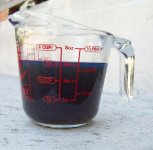
As I planned, I removed the lift arm in order to get easier access to the drain plug and also to make lubing the parts simpler. I drained the oil and while initially it did look pretty clean, there was some dirt at the very end and you can see for yourself what it looked like. Not horrible, but if you have new stuff, you put it in. By the way, I read that stuff is based on vegetable oil, which will not have a long life like synthetic oil, right?

I think the biggest surprise was that the lift arm shaft was dry as a bone! It has a mini zerk fitting and I don't have a grease gun any more and when I did, it didn't have a mini zerk on it, so I never did it. But I always thought they must have put SOME grease on it during assembly. Apparently not! So I put some synthetic brake caliper grease in there, hoping it will hold up for another decade or so.

I have to say that I am glad I tore into the thing in the end. It definitely operates more smoothly now and since it doesn't leak and has new fluid, it should go for a while.
 

Attachments

  • jackframe.JPG
    jackframe.JPG
    49.5 KB · Views: 33
  • oilsm.JPG
    oilsm.JPG
    26.9 KB · Views: 41
To avoid these ads, REGISTER NOW!
Top Bottom