
You are using an out of date browser. It may not display this or other websites correctly.
You should upgrade or use an alternative browser.
You should upgrade or use an alternative browser.
how to run wire to receptacle boxes
- Thread starter thammel
- Start date
I use my knee as a guide when drilling w/ a Hole Hawg® keeps the holes reasonably straight when drilling studs between boxes, wire is expensive enough so wasting it by making runs longer then necessary is not a good idea, IMO.
this
Nostraquedeo
Well-known member
- Joined
- Oct 23, 2009
- Messages
- 501
That's a lot of wasted wire. Honestly, seems like running wires vertically would put you at greater risk of screwing into a cable. You only have one area of each stud to hit a wire if ran horizontally. If ran vertically, you risk hitting the wire the entire length of the stud. I mean we screw into studs, not the hollow space between a stud. If hitting the wire with a screw is the concern, it would be cheaper to install the metal protectors on all studs.
jopickens
Well-known member
If you ran the wires vertically from the top or bottom - would you have a better chance of chasing in new wire/other wires at a later date?
KissMyWhiteSS
Well-known member
Run the wire through the stud and then by some stud guards to protect the wire from being nail into.
Falcon67
Well-known member
Drop to the first, horizontal after that. In my shop I set the plugs at 48" and bored the holes 40" off the floor. Quicker run, less wire. I used nearly 1000' of romex anyway, despite the careful planning.
A related question: how to daisy chain from one receptacle to the next? Is best practice to splice off a pigtail from a continuous wire run, or take the faster approach of just cutting the wire and using the two screw or push-in connections on the receptacle to maintain the connection?
dimarcelli
Well-known member
- Joined
- Jan 3, 2013
- Messages
- 45
I always use the screw terminals. It's quicker, easier. No wire nuts to mess with.
Also, don't use the push-in terminals, always side wire. It's a more secure connection. Inside the receptacle, the only thing making contact with the copper is the edge of a small flat "spring" if you will, which doesn't allow for a solid contact connection.
Also, don't use the push-in terminals, always side wire. It's a more secure connection. Inside the receptacle, the only thing making contact with the copper is the edge of a small flat "spring" if you will, which doesn't allow for a solid contact connection.
rburke65
Well-known member
Not a good idea to use the "push ins." Always pig tail.
RECox286
Well-known member
It is much easier to "tuck" pigtailed 12 romex than it is to try to
"tuck" 2 pair. If you follow my drift. I always like to pigtail, especially
in a s/g, o/w steel box, where space is at a premium to begin with.
When I wired my upstairs, I used 4" deep steel boxes with mud rings.
Made the job go much easier since I wired all the receptacles 20A.
Uncle Bob
"tuck" 2 pair. If you follow my drift. I always like to pigtail, especially
in a s/g, o/w steel box, where space is at a premium to begin with.
When I wired my upstairs, I used 4" deep steel boxes with mud rings.
Made the job go much easier since I wired all the receptacles 20A.
Uncle Bob
zmaxmotorsports
Well-known member
Pig tailing the wires before plugs works better in my experience,that way If you lose 1 plug it doesn't affect the rest of circuitI always use the screw terminals. It's quicker, easier. No wire nuts to mess with.
Also, don't use the push-in terminals, always side wire. It's a more secure connection. Inside the receptacle, the only thing making contact with the copper is the edge of a small flat "spring" if you will, which doesn't allow for a solid contact connection.
So there are at least 2 schools of thought on how to run nm to receptacle boxes:
1) down from the attic on the sides of trusses - easier to pull in the future and not in the way of insulation, etc.
2) across the stud bays - minimizes chances of hitting wires when nailing to the studs.
I like this concern with #2. However, I have 2x6 construction so placing wire in the middle of the stud with 1) above, means I'm at least 2 to 2.5" from the face of the stud - no nails or screws will hit the wire when doing drywall. However, other fasteners could be a concern. Good thing to be concerned about!
Tom
1) down from the attic on the sides of trusses - easier to pull in the future and not in the way of insulation, etc.
2) across the stud bays - minimizes chances of hitting wires when nailing to the studs.
I like this concern with #2. However, I have 2x6 construction so placing wire in the middle of the stud with 1) above, means I'm at least 2 to 2.5" from the face of the stud - no nails or screws will hit the wire when doing drywall. However, other fasteners could be a concern. Good thing to be concerned about!
Tom
Highbeam
Well-known member
Yes, a tee. You end up with three wire nuts that each contain the incoming wire, the outgoing wire, and the short 6" piece of wire that goes to the outlet. The outlet only is attached to the short piece of wire called a pigtail. I just do pigtails out of habit. There is no really good reason. It does make stuffing wires easier but it's not like outlets fail often.
cderalow
Well-known member
Yes, a tee. You end up with three wire nuts that each contain the incoming wire, the outgoing wire, and the short 6" piece of wire that goes to the outlet. The outlet only is attached to the short piece of wire called a pigtail. I just do pigtails out of habit. There is no really good reason. It does make stuffing wires easier but it's not like outlets fail often.
ive always found that pig tails are the difference between a commercial electrician and your cheap residential guys.
Angelfire
Well-known member
Thanks. Does the pigtail connection have to be in a junction box or can it be buried in the wall cavity?
All connections have to be in an accessible box. You can't just bury connections in a wall.
rogsmart
Well-known member
This diagram gives you the general idea. The ground wire is generally folded into the back of the box first with the hot and neutral over that. Under no circumstances should you ever make any kind of electrical junction outside of a junction box. Junction boxes need to remain accessible, you can't bury them in the wall where nobody knows they're there.
This guy has run his wire a little long for the purposes of illustrating the connection. I'd keep the pigtail wire from the wire nut to the outlet at around 3" or 4" max. It'll mean less wire to fold into the box.
This guy has run his wire a little long for the purposes of illustrating the connection. I'd keep the pigtail wire from the wire nut to the outlet at around 3" or 4" max. It'll mean less wire to fold into the box.
Attachments

Highbeam
Well-known member
Basic electrical, match colors and do everything in a box.
rogsmart
Well-known member
The advantage of doing a pigtail is that you aren't running the entire circuit through the outlet. Generally speaking you're also getting better wire to wire contact with a twisted pair or ********* of wires under a wire nut. I think it's a much better practice than using the back stabs (ugghh) or running all the wires under the terminal screws on the outlet. That said, you will see both of these methods used in modern tract housing where the goal is to "getter done and get on to the next one."
fotoflojoe
Well-known member
Do you also pigtail the last outlet in the chain, or wire directly to it?
Last outlet you just wire straight in to the outlet (don't forget to pigtail the ground though if you are using a metallic box)Do you also pigtail the last outlet in the chain, or wire directly to it?
wyliesdiesels
Well-known member
Best practice IMPO(in my professional opinion- I'm a service electrician), is pigtails. As already stated by 'rogsmart' and others, pigtails provide a more solid connection and keep all the circuit current from running through the small piece of metal that forms the breakaway tabs on the side terminals, which I have seen fail many times. If every outlet is pig-tailed, it leaves little chance of loosing power on downstream outlets when 1 outlet fails.
I get calls every week consisting of 'half the outlets in a particular room are dead and no breaker is tripped.' When I start checking things out, I'll usually find a bad/loose back stabbed(pun intended! ) outlet connection. But sometimes I will find a screw terminal that had too much juice run through it and it gave up the ghost causing the rest of the outlets down the chain to loose power! I really wish the back stab terminals would have never been invented!
I get calls every week consisting of 'half the outlets in a particular room are dead and no breaker is tripped.' When I start checking things out, I'll usually find a bad/loose back stabbed(pun intended!
) outlet connection. But sometimes I will find a screw terminal that had too much juice run through it and it gave up the ghost causing the rest of the outlets down the chain to loose power! I really wish the back stab terminals would have never been invented!dimarcelli
Well-known member
- Joined
- Jan 3, 2013
- Messages
- 45
Actually i never thought that much of pigtails until this thread. I think there's been some pretty good reasons brought up. I may just install my outlets like this from now on.
KissMyWhiteSS
Well-known member
So there are at least 2 schools of thought on how to run nm to receptacle boxes:
1) down from the attic on the sides of trusses - easier to pull in the future and not in the way of insulation, etc.
2) across the stud bays - minimizes chances of hitting wires when nailing to the studs.
I like this concern with #2. However, I have 2x6 construction so placing wire in the middle of the stud with 1) above, means I'm at least 2 to 2.5" from the face of the stud - no nails or screws will hit the wire when doing drywall. However, other fasteners could be a concern. Good thing to be concerned about!
Tom
I bought stud guards from Lowe's. they are short pieces of metal that nail into the face of your stud to prevent screwing or nailing into the wire.
Hotrod barn
Well-known member
Re: how to run wire to receptacle boxes
Best practice IMPO(in my professional opinion- I'm a service electrician), is pigtails. As already stated by 'rogsmart' and others, pigtails provide a more solid connection and keep all the circuit current from running through the small piece of metal that forms the breakaway tabs on the side terminals, which I have seen fail many times. If every outlet is pig-tailed, it leaves little chance of loosing power on downstream outlets when 1 outlet fails.
I get calls every week consisting of 'half the outlets in a particular room are dead and no breaker is tripped.' When I start checking things out, I'll usually find a bad/loose back stabbed(pun intended! ) outlet connection. But sometimes I will find a screw terminal that had too much juice run through it and it gave up the ghost causing the rest of the outlets down the chain to loose power! I really wish the back stab terminals would have never been invented!
I agree with this ,being a licensed electrician.my first full time job working for a electrician way back in 1981,we stabbed the wires.i have repaired a bunch of these,our electric code here now states that you Cannot stab wires ,they must be pigtailed and put on the screw.also can't use 14/2 or 14/3 on any outlet.
check with your building inspector before you wire your building.
Best practice IMPO(in my professional opinion- I'm a service electrician), is pigtails. As already stated by 'rogsmart' and others, pigtails provide a more solid connection and keep all the circuit current from running through the small piece of metal that forms the breakaway tabs on the side terminals, which I have seen fail many times. If every outlet is pig-tailed, it leaves little chance of loosing power on downstream outlets when 1 outlet fails.
I get calls every week consisting of 'half the outlets in a particular room are dead and no breaker is tripped.' When I start checking things out, I'll usually find a bad/loose back stabbed(pun intended! ) outlet connection. But sometimes I will find a screw terminal that had too much juice run through it and it gave up the ghost causing the rest of the outlets down the chain to loose power! I really wish the back stab terminals would have never been invented!
I agree with this ,being a licensed electrician.my first full time job working for a electrician way back in 1981,we stabbed the wires.i have repaired a bunch of these,our electric code here now states that you Cannot stab wires ,they must be pigtailed and put on the screw.also can't use 14/2 or 14/3 on any outlet.
check with your building inspector before you wire your building.
Falcon67
Well-known member
FWIW - I didn't pigtail. There was enough 12-2 to force into the wall box already. Also, if one outlet goes dead and kills the string - that's good because I want to know so I can fix it. I always have extra on hand. I'm not going to work it hot either. Takes maybe an extra 30 seconds to swap 4 wires instead of two. Now having said that - I have never in the last 30 something years had to replace even a cheap azz $0.50 garage outlet that wasn't a GFCI.
And x14 - never back stab, take the time to use the side screws.
And x14 - never back stab, take the time to use the side screws.
If the neutral wire is part of a shared neutral/multi-wire (when another hot shares the neutral) you must pigtail. This because the other hot is the opposite leg of the 220 which services your panel. If the neutral wire is broken there will be 220 volts on any outlet powered before the neutral break (I think).
Last edited:
James-W
Well-known member
In the city where I live, you MUST pigtail outlets, at least you do if you get a permit and the city inspector comes to check out the wiring. The city inspector will not pass the work if you do not pigtail each outlet running to another outlet. If you don't get a permit and are not concerned with following the code (local code or otherwise) then you can do whatever you want to do. But if you do not follow the electrical code and something happens, then you MAY not be covered by your homeowners insurance. But this may not apply everywhere, it could be just a local thing.
Also, if you wish to do so, it is permissible to use the push on wire connectors rather than wire nuts, at least it is where I live. I can't speak to what the local code is in other cities, but it is permissible here.
As for myself, I prefer to do the job as per the electrical code an get a permit and have it inspected. That way we feel safer and also if we should decide to sell the house, all the electrical wiring is up to code and does not pose any problems.
Also, if you wish to do so, it is permissible to use the push on wire connectors rather than wire nuts, at least it is where I live. I can't speak to what the local code is in other cities, but it is permissible here.
As for myself, I prefer to do the job as per the electrical code an get a permit and have it inspected. That way we feel safer and also if we should decide to sell the house, all the electrical wiring is up to code and does not pose any problems.
also can't use 14/2 or 14/3 on any outlet.
check with your building inspector before you wire your building.
Can you explain that please?
wyliesdiesels
Well-known member
....Also can't use 14/2 or 14/3 on any outlet.
check with your building inspector before you wire your building.
Why can't u use #14 on an outlet? Seems silly to me...
....Also, if you wish to do so, it is permissible to use the push on wire connectors rather than wire nuts, at least it is where I live. I can't speak to what the local code is in other cities, but it is permissible here.....
Personally, I don't like anything that is "push-on" when it comes to electrical. The contact area in "push-on" type devices is so small and leaves too much room for error!
James-W
Well-known member
I can certainly understand your caution in using them and since I am not an electrician and I don't do very much wiring, I can't speak to the amount of contact in a push-on connector. But when you read the packages these push-on connectors come in it does say "UL Approved" so I have to assume they are safe to use. But still, if you feel uncomfortable in using push-on connectors, then I would not use them either.Personally, I don't like anything that is "push-on" when it comes to electrical. The contact area in "push-on" type devices is so small and leaves too much room for error!
wyliesdiesels
Well-known member
I can certainly understand your caution in using them and since I am not an electrician and I don't do very much wiring, I can't speak to the amount of contact in a push-on connector. But when you read the packages these push-on connectors come in it does say "UL Approved" so I have to assume they are safe to use. But still, if you feel uncomfortable in using push-on connectors, then I would not use them either.
First of all, UL DOES NOT approve anything, they LIST products. And I think your putting a little too much faith in U/L listings as breaker panel brands such as Zinsco have caused many house fires and damage DESPITE being U/L listed. This is because Zinsco breakers have an issue where they don't always trip when they should! Another bad brand that comes to mind is Crouse Hinds- I just had to fix some melted crouse hinds breakers last week. The stabs on the breakers had melted to the bus bars and all the corrosion and oxidation caused the breaker to loose power. But remember, they were U/L listed! Go figure

Second, it's not that I'm uncomfortable using 'back-stab' quick connects. I'm actually very comfortable using them. But my experience tells me NOT to use them, so I don't. When I first got into the electrical trade, I used them all the time because they're quick and easy. When I gained more experience, I realized that the time saved in using them wasn't worth the frustration and aggravation had later on down the road when the connection became loose, disconnected or worn out!
Last edited:
I void warranties
Well-known member
- Joined
- Mar 1, 2011
- Messages
- 605
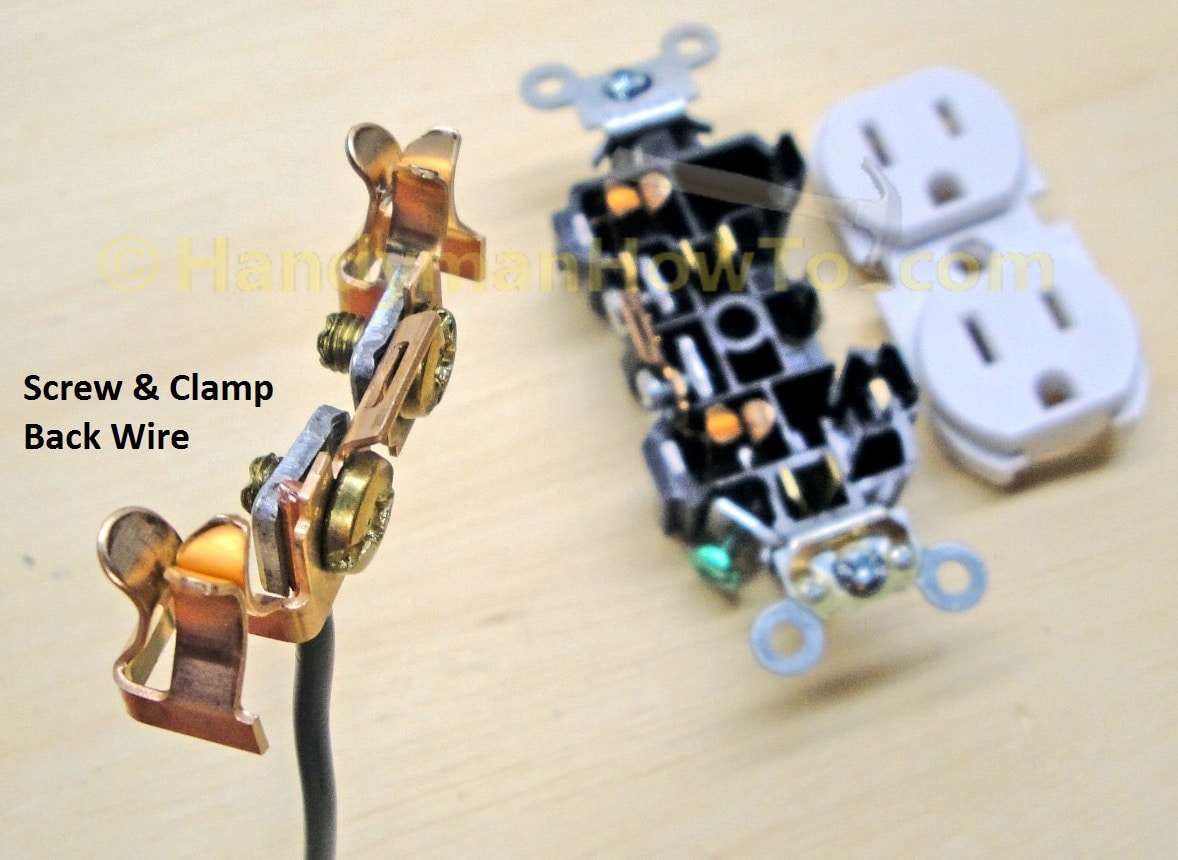
note: i believe the newer back wire screw and clamp version is acceptable, comments?
Last edited: