To avoid these ads, REGISTER NOW!

Brand new concrete pour(s)

motormitch

Well-known member
Joined
Aug 27, 2012
Messages
636
Location
Austin TX
First, I have read many threads till my eyes are crossed before posting this question and it is confusing and chaotic out there in thread world so I thought I would just ask exactly what I need to know. I make this statement so you won't answer with, there are already many threads covering this question.

BACKGROUND for question.

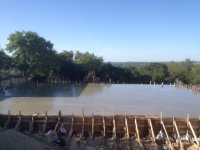
I am pouring my new shop slab tomorrow, followed by the driveway in a few days. This is a big shop (4,000 sq.ft.) and a lot of driveway (7,000 sq.ft.) i.e. expensive and I want to protect my investment at reasonable cost.

Shop uses are just about everything, auto restoration, antique restoration, etc.. Think a mini version of "American Restoration" I will have lifts, paint booth, media blasting, light welding and plasma cutting and some of my cars WILL leak something for sure.

I will also have cars in various states sitting outside, also sure to leak something.

DESIRED LOOK: Nothing fancy, just a nice professional shop or factory floor on the inside and simply oil/stain resistant on the outside and inside.

FIRST BIG QUESTION: (I will ask a couple of more after this time sensitive one)

Is there anything I should do that is time critical while the pours are fresh for the inside shop floor or the outside driveway.
 
To avoid these ads, REGISTER NOW!

skulldrinker

Well-known member
Joined
Dec 25, 2011
Messages
1,171
Location
Bolingbrook, IL
Be there to watch and take video of the pour. Make sure not to much water is added to the concrete during unloading. Keep it at a 4 or 5 inch slump. Hire an inspector for $100 for the day to take samples and keep an eye on the contractors adding water. Remember if you order a 4" and they add too much water to make it self flowing you have the right to reject that load. Having an inspector there taking slump tests will back you up. Make sure the rebar is raised off the ground as the concrete is placed. Same thing if wiremesh is used. Lazy contractors will just leave it laying on the stone surface instead of lifting it with a hook to mid level as they go along. Don't let allow them to give you a cold joint make sure there is no stop in the pouring progress long enough to create a cold joint. Make sure lines are cut with sufficient spacing and locations to prevent jagged cracks in the future. Now's the time to plan placement of sinking in steel i beams or hooks to provide pulling anchors for any future body or frame work. Have coffee and donuts in the morning for the crew.
 
OP
M

motormitch

Well-known member
Joined
Aug 27, 2012
Messages
636
Location
Austin TX
Good and detailed advice. Any type of treatment that I need to do with the inside or outside after the pour to prep for good sealing or protection? Any type of treatment that needs to be done before full curing?
 

pauls340

Well-known member
Joined
Jan 27, 2009
Messages
321
Location
North of Motown
Motormitch, put Vapor Lock 20/20 in that concrete and all your moisture related problems will not show up. VL stops moisture drive out of concrete and waterproofs it....But, probably too late. Put it in your driveway.
 

PT Doc

Well-known member
Joined
Nov 12, 2010
Messages
3,197
I find it hard to believe that someone would work for $100 for the day especially a concrete inspector.
 

bygasper

Well-known member
Joined
Oct 2, 2012
Messages
118
This is VERY GOOD information. Very well put!

Be there to watch and take video of the pour. Make sure not to much water is added to the concrete during unloading. Keep it at a 4 or 5 inch slump. Hire an inspector for $100 for the day to take samples and keep an eye on the contractors adding water. Remember if you order a 4" and they add too much water to make it self flowing you have the right to reject that load. Having an inspector there taking slump tests will back you up. Make sure the rebar is raised off the ground as the concrete is placed. Same thing if wiremesh is used. Lazy contractors will just leave it laying on the stone surface instead of lifting it with a hook to mid level as they go along. Don't let allow them to give you a cold joint make sure there is no stop in the pouring progress long enough to create a cold joint. Make sure lines are cut with sufficient spacing and locations to prevent jagged cracks in the future. Now's the time to plan placement of sinking in steel i beams or hooks to provide pulling anchors for any future body or frame work. Have coffee and donuts in the morning for the crew.
 

skulldrinker

Well-known member
Joined
Dec 25, 2011
Messages
1,171
Location
Bolingbrook, IL
I find it hard to believe that someone would work for $100 for the day especially a concrete inspector.

$100 bucks or whatever.....i just threw that number out there.

If you need to argue about it go call one up in your area and get a price. I'd do it for $100 if you asked. Take a few slump tests and a couple of cylinders maybe an air test if he ordered an air mix nothing to it. Of course coffee and donuts goes without saying.

PS just for the hell of it to keep everyone on their toes during the first truck i would pull out a couple of test cylinders and "properly" fill them up. When the contractor sees you do that he might think twice about pouring a "60/40" mix. Take that one step further and have the contractor tell the redi mix plant to put a couple of cylinders on the truck and bring them to the job. That way the Redi mix plant will think twice about using some "hot" concrete from a previous delivery mixed in with your load. Test cyl only cost a couple of bucks so it's not like you'll go broke.
 
Last edited:
To avoid these ads, REGISTER NOW!

Lunker

Well-known member
Joined
Feb 6, 2012
Messages
350
Interested in coming to the NW side of Chicago this summer when I pour a parking pad at an apt building I own ? I'd pay you $100 to test the mix
 

LegacyIndustrial

ALLIANCE MEMBER
Joined
Jun 7, 2010
Messages
7,995
Location
deerfield, IL
It can be treated with a densifier or sealer as soon as the forms are pulled.

This will help retard evaporation, like plastic sheeting would.
 
Last edited:
OP
M

motormitch

Well-known member
Joined
Aug 27, 2012
Messages
636
Location
Austin TX
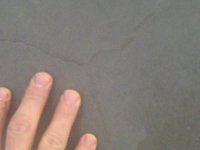
The pour is almost 24 hours ole and there are spider cracks all over the surface. I kept the concrete wet last night and this morning. They we pull the forms this morning. The temperature at the start of the pour was 54 and when they finished polishing it was 80 at 4:00 in the afternoon. The slap is 70x55 and is using a post tensioning system which had not been tightened yet.

Here is a picture. Please tell if this is normal and if I show be worried. I also made it very clear to the build I would be using a clear finish and wanted a beautiful slab.
 

Attachments

  • spider cracks.jpg
    spider cracks.jpg
    55.7 KB · Views: 100

ConCretin

Well-known member
Joined
Jan 20, 2011
Messages
3,379
Location
Central Maine
Motormitch, I suspect the cracking you are seeing is the result of crusting. This occurs most often on thicker slabs in hot and/or windy conditions. The surface sets quicker than the underlying concrete. The surface appears ready to finish but can't support the weight of finishers resulting in cracks.

The cracks won't be very deep and don't substantially affect the structural performance of the slab. It is primarily an aesthetic issue but unfortunately the cracks will probably become even more pronounced will a clear sealer.

The only way to prevent this problem completely is to avoid placing slabs in hot or windy weather - not a very practical solution. There are chemical evaporation retarders that can be sprayed on right after bull-floating that will help keep the surface from setting as fast but they can only do so much.
 
Last edited:
To avoid these ads, REGISTER NOW!
Top Bottom