To avoid these ads, REGISTER NOW!

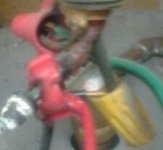
melted wirenut on hotwater heater

cutthroatxxx

Well-known member
Joined
Jul 24, 2012
Messages
86
This has nothing to do with my garage but I've been doing some remodeling in my home which my grandfather built some 30 years ago. He didn't sub nothing out did the electrical,plumbing,framing,roofing etc etc with him&my old man.Well in the middle of doing this we bought a new dryer which sits in the same room as our electric hot water heater.I had to move the washer out to make room&when I touched the hot water spicket I got a shock.I looked@ the ground on the water heater & noticed it was loose also that ot wasn't solid wire but the kind like you would wire your bike with..Idk what its called anyways tightened it up.No more shock...Oh also noticed he had it split like a V with the screw going through the middle.The electrician that is.
Well later on I smelled plastic burning but couldn't find nada tonite I noticed the red /hot wirenut had melted the point the inner spiral of the nut is all that was left.I flipd the breaker&disconnected everything I plan on buying the correct wire for ground&more wirenurse.When I looked@ the wire which runs to it,it says 30 w its on a 40 breaker but there's the ground that just has paper around it when you splice it,then there's the red&black but inside the wire in the wall there is also a white wire that connects to nada.
So my ?s are Could the bad ground cause the hot to melt?&what about this white wire?I'm also thinking that the nut didn't have the best connection oh also should I wrap the two wires together before going into wirenut or not?
A little unrelated we were tearing down an addition same day&didn't know wire ran through there cut right through it luckily I didn't kill myself.I spliced it back together still no power@ that outlet.I have one of those plug in testers said all was fine but I pulled it&all the wires were fried so I put wirenuts & tape over em gonna pull it& run new.I traced it down stairs straight to box.The hw heater I also traced nothing else runs off of it.Please help if you can.Sorry so long.
Please excuse any typos or terseness: this email was sent from my mobile and I have clumsy fingers.
 

Attachments

  • 20130624_004725-1-1.jpg
    20130624_004725-1-1.jpg
    6.3 KB · Views: 108
To avoid these ads, REGISTER NOW!

rockchucker

Well-known member
Joined
Mar 27, 2010
Messages
1,764
Location
Seattle WA
Call an Electrician before you have a fire. Sorry but it sounds like a few things need to be checked out by a professional.
 
OP
C

cutthroatxxx

Well-known member
Joined
Jul 24, 2012
Messages
86
Can't really afford to do that my kid brother died a few months ago then I found my father dead then as a result of all of the death my other brother lost it shot a couple guys &was then shot dead so Ive paid for the final costs of my 2 brothers&dad in the last few months & I have some very bad health issues blah blah not trying so make noone feel sorry for me I'm just busted all of the remodel stuff I have I got before all if this happened.I shouldn't be doing this myself but too broke to pay anyone I have spinal stenosis,r.a., fibromialgia, some disc issues pinched nerve, 24/7back spasms& can't hold my right arm up for more than a minute @ a time.I don't have insurance&my meds cost more than some make in a month.So Can't call an electrician right now.
If I have to I can pull the wire&run new to box I wired my whole shop with 110&220 so I can handle it all I really want to know is could the ground of done this or was the wirenut just not tight enough?&what the white wire is.The rest seems simple..not enough heat to flip the breaker ,wasn't a power surge they tend to blow things up not melt.My grandpas was the a journeying linen building high tension towers then the head electrician for the m.t.a. the kroger then border/r&f pasta when he retired..the later two head of maintenance /foreman so I know he wired everything right The fault I belive lies in the electrician who touched the hot water heater.
 

rockchucker

Well-known member
Joined
Mar 27, 2010
Messages
1,764
Location
Seattle WA
Sorry for your recent losses Sir.


For starters I would cut off the burnt end of the Wires. Use brand new Wire Nuts and make sure they are large enough for 220v. Usually the Red Wire Nuts are a bit larger to accept the larger wire. Make sure they are VERY tight. If it has lasted for this long chances are the wire is fine and just the Wire Nut was loose. Since the Water Heater has been off all of the water inside will be cold. Once you turn it back on it will be heating for the longest period of time and that is the time to watch it closely. Get a chair and have a couple beers when you turn the power back on to make sure nothing happens.

I would also make sure a working smoke detector is right above the Water Heater. You don't want anything to catch fire when you are sleeping and not know about it.
 

westom

Well-known member
Joined
Aug 16, 2009
Messages
221
If I have to I can pull the wire&run new to box I wired my whole shop with 110&220 so I can handle it all I really want to know is could the ground of done this or was the wirenut just not tight enough?
You describe a serious water heater failure. Apparently the safety ground wire was also loose or not large enough (it must be as thick as the other wires). Once a safety ground was restored, then other problems from the same failure may have occurred.

Now, some installers do not understand how to use wire nuts. First, both wires must be twisted together as to remain connected on their own. Only then is a wire nut installed to further protect that connection. Even many electricians fail to twist those wires together. Sometimes resulting in a melted wire nut. In rare cases, fire has resulted.

With ground disconnected, you should have felt no electric current. That was your primary layer of human protection. And then the safety ground should have provided secondary protection.

I would be concerned with the quality of workmanship. Your 'not too detailed' description sounds like numerous unsafe shortcuts were taken. For example, how thick are each incoming AC and ground wires? It may be marked on the cable (with an 'AWG'). Or measure that wire. Or go to a hardware store to compare a wire piece with what is in the store.

Sounds like you still have a defective water heater. Since even without the safety ground, no electricity should have been felt. And if those wires had been properly twisted together before using the wire nut, then a wire nut should not melt or be a potential house fire.

Less likely but still possible - a circuit breaker is also defective. Per chance, are they Federal Pacific?
 
OP
C

cutthroatxxx

Well-known member
Joined
Jul 24, 2012
Messages
86
Ill check the breakers but I know forsure the wires were not twisted together before he put the nuts on.
 

mds5951

Well-known member
Joined
Aug 15, 2010
Messages
322
I would question the water heater in this case, there's no reason the heater should energize like that because of a loose wire.

The white wire shorted inside the wall is MOST LIKELY an unused neutral. But since you wired up your whole shop, you should know that wires are just wires and color means nothing if they weren't installed right/to color code norm.
 
OP
C

cutthroatxxx

Well-known member
Joined
Jul 24, 2012
Messages
86
Well we live in a very small town I called the hardware store I bought it from&he came by&said loose connections.
 

Trey T

Well-known member
Joined
Aug 3, 2011
Messages
3,749
Location
Houston, TX
If it's burnt there and not anywhere else, the culprit is most likely be at that termination. Like one guy said, cut it off, twist it, and wirenut it.

google about wire nuts to see how ppl do it properly. Those other wire nuts looks loose or insulation cut too far back and exposed.
 

warren57

Well-known member
Joined
Nov 4, 2011
Messages
103
Location
Lochbuie, CO
This has nothing to do with my garage but I've been doing some remodeling in my home which my grandfather built some 30 years ago. He didn't sub nothing out did the electrical,plumbing,framing,roofing etc etc with him&my old man.Well in the middle of doing this we bought a new dryer which sits in the same room as our electric hot water heater.I had to move the washer out to make room&when I touched the hot water spicket I got a shock.I looked@ the ground on the water heater & noticed it was loose also that ot wasn't solid wire but the kind like you would wire your bike with..Idk what its called anyways tightened it up.No more shock...Oh also noticed he had it split like a V with the screw going through the middle.The electrician that is.
Well later on I smelled plastic burning but couldn't find nada tonite I noticed the red /hot wirenut had melted the point the inner spiral of the nut is all that was left.I flipd the breaker&disconnected everything I plan on buying the correct wire for ground&more wirenurse.When I looked@ the wire which runs to it,it says 30 w its on a 40 breaker but there's the ground that just has paper around it when you splice it,then there's the red&black but inside the wire in the wall there is also a white wire that connects to nada.
So my ?s are Could the bad ground cause the hot to melt?&what about this white wire?I'm also thinking that the nut didn't have the best connection oh also should I wrap the two wires together before going into wirenut or not?
A little unrelated we were tearing down an addition same day&didn't know wire ran through there cut right through it luckily I didn't kill myself.I spliced it back together still no power@ that outlet.I have one of those plug in testers said all was fine but I pulled it&all the wires were fried so I put wirenuts & tape over em gonna pull it& run new.I traced it down stairs straight to box.The hw heater I also traced nothing else runs off of it.Please help if you can.Sorry so long.
Please excuse any typos or terseness: this email was sent from my mobile and I have clumsy fingers.


A loose connection causes this...
 

dlleno

Well-known member
Joined
Dec 29, 2011
Messages
93
A loose connection causes this...


yes.. more generally, a high resistance point, such as a loose/dirty/rusted/painted/coated/oxidized or otherwise compromised connection, causes I^2 R power dissipation at that point. Wires that are bent or otherwise abused can also develop failure points where the same thing happens. when you force current through a high resistance you have created a heating element :D

if you are repairing a junction that develops heat, turn off the power in that circuit and look for compromised surfaces. don't just twist together the same old material. cut off / clean the offending material and make sure you have bright bare metal contact.

the same caution goes for indoor appliance cords and plugs. I'm always on the look out for a warm vacuum cord/plug or whatever -- it gets repaired or tossed sooner than I can type "fire/injury hazard" :D
 
Last edited:

SiGmA_X

Well-known member
Joined
Aug 13, 2005
Messages
1,111
Location
Portland, OR
You don't have to pretwist wires before putting on the wirenuts. Old timers do that and it won't hurt but read the directions, it is NOT required.
Yeah it may be code to not pretwist, but I (and you, I think I've read!) recommend pretwisting. It creates a mechanical lock and reduces the possibility of issues... So OP, pretwist!
 

G_P

Well-known member
Joined
Jul 11, 2010
Messages
7,135
Location
Central CT
The ground on that water heater may now be live. Meaning every ground in your house is live.

Check that heater carefully. Could be a pinched wire near one of the elements.

Sent from my SPH-M920 using Tapatalk 2
 

Milton Shaw

Well-known member
Joined
Feb 11, 2011
Messages
4,845
I would check the heating elements to ground with ohm meter. Sounds like you have a shorted heating element causing the grounding issues. There should be an open (no ohms) reading between either of the elements to the metal housing of the water heater. Heating elements themselves are not very expensive but do require draining the tank to replace. Probably has a split outer covering shorting the element to the water inside. Not enough of a short to trip breaker but enough to create shock hazard on ungrounded water heater. Fix it before some one is hurt.
 

westom

Well-known member
Joined
Aug 16, 2009
Messages
221
To be definitive: to have an electrically hot heater means multiple failures exist. Both a missing or compromised safety ground. And a defective or otherwise somehow energized heater. At least two failures must exist. Both must be corrected.

Code does not demand twisting wires. Failures occur because wires were not twisted before attaching a wire nut. We don't just meet code. We exceed it to have quality and fewer potentially harmful faults.
 

Highbeam

Well-known member
Joined
Feb 15, 2011
Messages
2,292
Location
Mt Rainier foothills, WA
Yeah it may be code to not pretwist, but I (and you, I think I've read!) recommend pretwisting. It creates a mechanical lock and reduces the possibility of issues... So OP, pretwist!

Not me, I've never pretwisted before wirenutting in my life. I do tighten the bajeepers out of the wire nut though.
 

Professur

Well-known member
Joined
Apr 7, 2010
Messages
3,911
Location
Mo-Ray-Al, K-bec, Ka-Na-Da
So ....When installing a new light fixture with stranded wire to solid 14ga copper ... you always pre-twist? Love to see that.

I agree, it's good policy to pre-twist ... but pre-twisting isn't always possible, or even a sensible idea.
 

SiGmA_X

Well-known member
Joined
Aug 13, 2005
Messages
1,111
Location
Portland, OR
So ....When installing a new light fixture with stranded wire to solid 14ga copper ... you always pre-twist? Love to see that.

I agree, it's good policy to pre-twist ... but pre-twisting isn't always possible, or even a sensible idea.
I've only installed stranded to solid a couple times, for a light fixture. What I did was to twist the stranded on itself, and then twist it around the solid, and then install the nut. The wires were VERY secured held. I would love input on it, I just did this because it seemed a lot more secure than when the wires were not twisted... I freaking hate stranded to solid connections. I'd much rather solder them (I'm an automotive person, and worked as a multilayer PCB production modifier in highschool, I know how to solder way too well!) but I understand that is a big no-no due to cold joints... Not something that concerns me, but it concerns the NEC so I steer clear.
 
To avoid these ads, REGISTER NOW!

mds5951

Well-known member
Joined
Aug 15, 2010
Messages
322
So ....When installing a new light fixture with stranded wire to solid 14ga copper ... you always pre-twist? Love to see that.

I agree, it's good policy to pre-twist ... but pre-twisting isn't always possible, or even a sensible idea.

Lol ironically this is the only time I pretwist. I strip the stranded longer, twist it by itself then wrap it around the solid. I've had several stranded "pop out" when I didn't (it was usually in groups of 3+ wires, and only one stranded)
 

westom

Well-known member
Joined
Aug 16, 2009
Messages
221
I agree, it's good policy to pre-twist ... but pre-twisting isn't always possible, or even a sensible idea.
Even when combining a stranded wire with a solid wire, pretwisting is possible. It takes practice and patience. But it can be done.

Whereas pretwisting is recommended for copper wire. Not pretwisting aluminum wire has created serious house fires. Without pretwisting, pictures have shown a wire nut creating a flame.

How to identify a good electrician from a lesser trained one? Better electricians always pretwist. And know why it makes more reliable wiring.
 

Highbeam

Well-known member
Joined
Feb 15, 2011
Messages
2,292
Location
Mt Rainier foothills, WA
How to identify a good electrician from a lesser trained one? Better electricians always pretwist.

Obviously that is your opinion. Heavily biased due to the fact that you have spent hours (years) of extra time pretwisting and would like to think that it was valuable.

Following directions and meeting the spec does not require a pretwist. It's an extra step that doesn't hurt but certainly isn't a sign of superior work.
 

Defender Chassis

Well-known member
Joined
Dec 7, 2007
Messages
1,129
Location
Williamstown, WV
Obviously that is your opinion. Heavily biased due to the fact that you have spent hours (years) of extra time pretwisting and would like to think that it was valuable.

Following directions and meeting the spec does not require a pretwist. It's an extra step that doesn't hurt but certainly isn't a sign of superior work.

It is a sign of extra attention to detail that is typical of craftsmen.
 

Professur

Well-known member
Joined
Apr 7, 2010
Messages
3,911
Location
Mo-Ray-Al, K-bec, Ka-Na-Da
I've only installed stranded to solid a couple times, for a light fixture. What I did was to twist the stranded on itself, and then twist it around the solid, and then install the nut. The wires were VERY secured held. I would love input on it, I just did this because it seemed a lot more secure than when the wires were not twisted... I freaking hate stranded to solid connections. I'd much rather solder them (I'm an automotive person, and worked as a multilayer PCB production modifier in highschool, I know how to solder way too well!) but I understand that is a big no-no due to cold joints... Not something that concerns me, but it concerns the NEC so I steer clear.

Lol ironically this is the only time I pretwist. I strip the stranded longer, twist it by itself then wrap it around the solid. I've had several stranded "pop out" when I didn't (it was usually in groups of 3+ wires, and only one stranded)

Even when combining a stranded wire with a solid wire, pretwisting is possible. It takes practice and patience. But it can be done.


Wasn't being sarcastic when I said, I'd love to see it. I usually twist the stranded, but lay it side by side with the solid to ensure that the wirenut gets a good bite into both. By preference, I'd tin the end of the stranded so that I could twist it, but that seems to violate code.
 

westom

Well-known member
Joined
Aug 16, 2009
Messages
221
I usually twist the stranded, but lay it side by side with the solid to ensure that the wirenut gets a good bite into both.
Some wire nuts were constructed to not obtain a good bite when wires were not pretwisted. In rare cases, a wire nut fire resulted.

Code also did not specifically require aluminum wire to be pretwisted. Those wire nut fires were even more common. Connection met code and fire still resulted.

I also prefer a stranded wire with a tinned end. Trick is to only tin the end and leave rest of that wire untinned. Solder pots are useful. However I believe you are correct - it is frowned upon by code.
 

porschedude996TT

Well-known member
Joined
Oct 28, 2007
Messages
2,384
Location
Santa Maria, California
I understand the code and believe it is the minimum requirement for an installation. My point is that anytime you increase the surface area of contact you reduce heat and resistance. By twisting before one installs a wirenut you increase the surface contact of the wires. Adding all the other things that can and do go wrong over time (moisture, heat cycles, oxidation, etc) then adding a little more surface contact can't be bad only good. In some cases of installation I solder the wires which increases the contact surface to the maximum.
 

jeff000

Well-known member
Joined
May 6, 2012
Messages
437
Whereas pretwisting is recommended for copper wire. Not pretwisting aluminum wire has created serious house fires. Without pretwisting, pictures have shown a wire nut creating a flame.

How to identify a good electrician from a lesser trained one? Better electricians always pretwist. And know why it makes more reliable wiring.
Some wire nuts were constructed to not obtain a good bite when wires were not pretwisted. In rare cases, a wire nut fire resulted.

I'm not sure if you're an electrician or not. But in either case you need to stop giving electrical advice.

As per manufacturer specs, do NOT pre twist wires.

If you are mixing solid and stranded use the appropriate wire nut.
If you are mixing copper and aluminum, use the appropriate wire nut and and nolox as required. I'd recommend not using a twist wire nut as there are better alternatives.
If you are using just aluminum, use the appropriate wire nut. And again, there are better alternatives than a wire nut for aluminum.

I've never seen a manufacturer say pre twist, they all say do not pre twist.
Also the code does not mention needing to twist, as it says you are to follow manufacturer specs.

If you cut the wirenut off after tightening without pre twisting you'll see the wires are perfectly twisted and the metal part inside the plastic is twisted nice and tight around a good bit of the wire. Pretwisting the metal part inside doesn't grab as much of the wire.
 
Last edited:

wyliesdiesels

Well-known member
Joined
Aug 14, 2012
Messages
20,066
Location
Modesto, CA
I'm not sure if you're an electrician or not. But in either case you need to stop giving electrical advice.

As per manufacturer specs, do NOT pre twist wires.

If you are mixing solid and stranded use the appropriate wire nut.
If you are mixing copper and aluminum, use the appropriate wire nut and and nolox as required. I'd recommend not using a twist wire nut as there are better alternatives.
If you are using just aluminum, use the appropriate wire nut. And again, there are better alternatives than a wire nut for aluminum.

I've never seen a manufacturer say pre twist, they all say do not pre twist.
Also the code does not mention needing to twist, as it says you are to follow manufacturer specs.

Most of the sparkies on here think that WESTOM is a fan of CTRL-C and CTRL-V.
 

Alchymist

Well-known member
Joined
Mar 1, 2009
Messages
4,423
Location
Central PA
"To twist or not - that is the question" - Shakingspear.

I will say that if I can untwist your newly installed wire nut with my hands, you didn't install it correctly.
 

krivasgarage

Well-known member
Joined
Oct 22, 2010
Messages
196
Lol. Twisted nuts argument. Gotta love GJ. Not to mention "hot water heater" police. Since silliness abounds, thought I would give everyone a chuckle:


Best Mythbusters episode ever.

Seriously, don't screw around when it comes to water heaters.
 
Last edited:

westom

Well-known member
Joined
Aug 16, 2009
Messages
221
If you are mixing solid and stranded use the appropriate wire nut.
If you are mixing copper and aluminum, use the appropriate wire nut and and nolox as required. I'd recommend not using a twist wire nut as there are better alternatives.
If you are using just aluminum, use the appropriate wire nut. And again, there are better alternatives than a wire nut for aluminum.
Nothing posted by anyone contradicts that. Obviously nobody said or even implied mixing aluminum and copper wire. Why are you reading things not posted or implied?

Copper is more forgiving. But better wired buildings have wire nut connectons as if every wire was less forgiving alumimun. That means pretwisting wires - to exceed code requirements and meet the reliablity I would hope everyone demands.

A best connection (more reliable, lower resistance, less heat) is when wires are twisted and held together on their own. And then a wire nut further increases conductivity; to keep connections firm. As porschedude996TT demonstrates. Long time electricians learned this by finding and fixing numerous failures due to wires not properly twisted.

If you don't pretwist wires, then wrap a wire nut and wires in tape so that the nut is less likely to fall off. And so that wires will tend to stay together. Code also does not demand that. But then only lesser electricians only meet code.

Many electricians frown on taped wire nuts as an example of unprofessional workmanship. A kludge solution because wires were not pretwisted.

An example learned because wires were not pretwisted:
http://www.doityourself.com/forum/e...ishwasher-melted-wire-nut-first-go-round.html

An electrical connection must be sufficient so that vibration, thermal changes, or other movement does not compromise a connection. Loose wire nuts have, in rare cases, caused a fire. Or have been found so damaged by heat as to shatter. A failure that does not happen when wires are first pretwisted.

A house full of wire nut connections without pretwisting is worthy of extra scrutiny. Because that elecrician though code was sufficient. Better electricians don't just meet code. Quality means exceeding code. Buildings wired by better electricans will maintain all connnections even if a wire nut falls off or becomes loose.

Please read only what was posted; not your assumptions. Please stop encouraging others to only meet code - to do a lesser quality job. Code is only a minimal requirement - is not sufficient.
 
Last edited:

cnc-me

Well-known member
Joined
Jan 6, 2010
Messages
1,183
Location
MI
I don't know what other problems you may have, but one thing is for sure
don't use wire nuts on high current items like a water heater, or large
motors, they are nothing but problems.

Use split bolt connectors wrapped with high quality rubber tape, and then vinyl tape over the outside. Just my two cents worth.
 

jeff000

Well-known member
Joined
May 6, 2012
Messages
437
Nothing posted by anyone contradicts that. Obviously nobody said or even implied mixing aluminum and copper wire. Why are you reading things not posted or implied?

Copper is more forgiving. But better wired buildings have wire nut connectons as if every wire was less forgiving alumimun. That means pretwisting wires - to exceed code requirements and meet the reliablity I would hope everyone demands.

A best connection (more reliable, lower resistance, less heat) is when wires are twisted and held together on their own. And then a wire nut further increases conductivity; to keep connections firm. As porschedude996TT demonstrates. Long time electricians learned this by finding and fixing numerous failures due to wires not properly twisted.

If you don't pretwist wires, then wrap a wire nut and wires in tape so that the nut is less likely to fall off. And so that wires will tend to stay together. Code also does not demand that. But then only lesser electricians only meet code.

Many electricians frown on taped wire nuts as an example of unprofessional workmanship. A kludge solution because wires were not pretwisted.

An example learned because wires were not pretwisted:
http://www.doityourself.com/forum/e...ishwasher-melted-wire-nut-first-go-round.html

An electrical connection must be sufficient so that vibration, thermal changes, or other movement does not compromise a connection. Loose wire nuts have, in rare cases, caused a fire. Or have been found so damaged by heat as to shatter. A failure that does not happen when wires are first pretwisted.

A house full of wire nut connections without pretwisting is worthy of extra scrutiny. Because that elecrician though code was sufficient. Better electricians don't just meet code. Quality means exceeding code. Buildings wired by better electricans will maintain all connnections even if a wire nut falls off or becomes loose.

Please read only what was posted; not your assumptions. Please stop encouraging others to only meet code - to do a lesser quality job. Code is only a minimal requirement - is not sufficient.

I was making a point to use the proper wire nut since people started talking about different things. So stop reading to far into what I said, but at the same time at least read what I said.

By pre twisting the wire you are breaking code, not exceeding it. Code says to follow the manufacturer. Manufacture says do not pre twist.

Like I said no need to pre twist for the wires to twist in the wire nut. Now go out to your garage, grab a couple feet of #14 or whatever you have around, strip the ends about a cm and place them side by side with the ends even. Now take your favorite wire nut rated for the number of conductors and wire size you grabbed and twist that mofo on till it's tight. Now cut the plastic off that wire nut.
Take notice how the wires are perfectly twisted together and the metal in the wire nut is nice and tight and high up. Now take that same wire and follow the same steps but before putting the wire nut on pre twist those wires and then put the wire nut on nice and tight. Now cut the plastic off it and compare to the non pre twisted wires.

If you have a wire nut covering a splice that is not twisted together it it not because it wasn't pre twisted. it is because it was not torqued on properly.

Pre twisting increases the chances of the wire breaking off as you are over twisting them because the wire nut is designed to twist the wires.

You need to stop trying to push this misnomer that quality means exceeding code. Quality means doing it as per manufacture specs and with nice workmanship. There are times that going "above the min" is actually worse off.
Want to go above and beyond, why not put a terminal strip and ferrels instead of wire nuts?

Your example of why to pre twist is an example of why home owners should not play with electricity. Had that wire nut been torqued on it would have been perfectly fine and exactly how the manufacturer wanted it to be done.

Do your job properly, and you have nothing to worry about. And if you are a sparky you should know that just because wires are twisted does not mean you have a proper connection, I have seen hundreds of splices where they have been pre twisted but one wire is either hardly in the wire nut or maybe not at all even.
Once I got all my guys to stop pre twisting I never had issues with wires not in the wire nut properly and them jamming too many wires into a too small wire nut.
I've since moved to Oilfield, where wire nuts are avoid at almost all costs. Everything is terminal strips and ferrels. Where there is a wire nut it is tapped, as per spec.
 

westom

Well-known member
Joined
Aug 16, 2009
Messages
221
Had that wire nut been torqued on it would have been perfectly fine and exactly how the manufacturer wanted it to be done.
Well ,we are saying the same thing. Wires must be twisted together so as to remain connected even if the wire nut is missing. Many installations exist where wires were not twisted together inside the wire nut. And the electrician then fixed his poor workmanship by wrapping electrical tape around the wire nut and wires. Because (as you note) a wire nut can fall off or become loose. Movement due to vibration, heat, etc is a problem for wire nuts in all locations. Therefore wires inside a wire nut must be twisted together to remain connected even when a wire nut falls off.

The OP describes a wire nut failure that could be traceable to wires not properly twisted together inside that wire nut. He also describes what is probably an electrical fault inside the heater. That other problem also must be identified and then fixed. Simply connecting an earth ground to that heater did not solve his serious human safety problem.

What could explain an electrically hot heater? A failed neutral wire connection that was then using the ground wire as a neutral. Poorly attached wires (not twisted together) inside a wire nut then failed on that high (maybe 30 amp) current.

OP describes what is probably multiple problems. All that create a human safety threat.
 

Alchymist

Well-known member
Joined
Mar 1, 2009
Messages
4,423
Location
Central PA
Well ,we are saying the same thing. Wires must be twisted together so as to remain connected even if the wire nut is missing. Many installations exist where wires were not twisted together inside the wire nut. And the electrician then fixed his poor workmanship by wrapping electrical tape around the wire nut and wires. Because (as you note) a wire nut can fall off or become loose. Movement due to vibration, heat, etc is a problem for wire nuts in all locations. Therefore wires inside a wire nut must be twisted together to remain connected even when a wire nut falls off.

The OP describes a wire nut failure that could be traceable to wires not properly twisted together inside that wire nut. He also describes what is probably an electrical fault inside the heater. That other problem also must be identified and then fixed. Simply connecting an earth ground to that heater did not solve his serious human safety problem.

What could explain an electrically hot heater? A failed neutral wire connection that was then using the ground wire as a neutral. Poorly attached wires (not twisted together) inside a wire nut then failed on that high (maybe 30 amp) current.

OP describes what is probably multiple problems. All that create a human safety threat.

Water heaters typically don't use a neutral. Most common failure is sediment building up in the bottom and causing element rupture due to overheating. This will place voltage on the sheet metal IF the ground fails. Depending on where the rupture occurs, the breaker may or may not trip even with a good ground.
 

wyliesdiesels

Well-known member
Joined
Aug 14, 2012
Messages
20,066
Location
Modesto, CA
I'm not sure if you're an electrician or not. But in either case you need to stop giving electrical advice.

As per manufacturer specs, do NOT pre twist wires.

If you are mixing solid and stranded use the appropriate wire nut.
If you are mixing copper and aluminum, use the appropriate wire nut and and nolox as required. I'd recommend not using a twist wire nut as there are better alternatives.
If you are using just aluminum, use the appropriate wire nut. And again, there are better alternatives than a wire nut for aluminum.

I've never seen a manufacturer say pre twist, they all say do not pre twist.
Also the code does not mention needing to twist, as it says you are to follow manufacturer specs.

If you cut the wirenut off after tightening without pre twisting you'll see the wires are perfectly twisted and the metal part inside the plastic is twisted nice and tight around a good bit of the wire. Pretwisting the metal part inside doesn't grab as much of the wire.

Really? Have u ever read a box of 3M wire nuts. It says wires can be untwisted OR TWISTED!! Better read more carefully next time!

I don't know what other problems you may have, but one thing is for sure
don't use wire nuts on high current items like a water heater, or large
motors, they are nothing but problems.

Use split bolt connectors wrapped with high quality rubber tape, and then vinyl tape over the outside. Just my two cents worth.

We use wire nuts on sml and medium size motors at work all the time with no problems. Also, have u ever hooked up a water heater and tried to fit split bolts in the H20 heater junction box? They dont fit! Ive used wire nuts on every electric water heater I've done and have never had an issue!

Well ,we are saying the same thing. Wires must be twisted together so as to remain connected even if the wire nut is missing. Many installations exist where wires were not twisted together inside the wire nut. And the electrician then fixed his poor workmanship by wrapping electrical tape around the wire nut and wires. Because (as you note) a wire nut can fall off or become loose. Movement due to vibration, heat, etc is a problem for wire nuts in all locations. Therefore wires inside a wire nut must be twisted together to remain connected even when a wire nut falls off.

The OP describes a wire nut failure that could be traceable to wires not properly twisted together inside that wire nut. He also describes what is probably an electrical fault inside the heater. That other problem also must be identified and then fixed. Simply connecting an earth ground to that heater did not solve his serious human safety problem.

What could explain an electrically hot heater? A failed neutral wire connection that was then using the ground wire as a neutral. Poorly attached wires (not twisted together) inside a wire nut then failed on that high (maybe 30 amp) current.

OP describes what is probably multiple problems. All that create a human safety threat.

Nice try but the OPs water heater doesnt use a neutral because its 240v and most H20 heaters are 240v. Also, the OP said the ground wire wasnt even hooked up so this doesnt make sense! Try again!
 
Last edited:

westom

Well-known member
Joined
Aug 16, 2009
Messages
221
Water heaters typically don't use a neutral. Most common failure is sediment building up in the bottom and causing element rupture due to overheating.
Interesting failure mode. Never saw that one before. Especially when the heaters are inside a fiberglass tank.

Some heaters use neutral. I am thinking of one right now that does. Other use 240 (no neutral). And still no current should be on its safety ground wire. Current on a safety ground should never be so large as to apparently cause a wire nut failure. If current is that large, a circuit breaker should trip. Another possible suspect.

Bottom line: multiple problems would have to exist. All should be identified and corrected. Fixing only one may only cure symptoms leaving another problem remaining.
 

wyliesdiesels

Well-known member
Joined
Aug 14, 2012
Messages
20,066
Location
Modesto, CA
To the anti wire twist natzis, i just checked a box of Ideal wire nuts and it says pretwisting is acceptable! So I'm curious what brand of nuts specifically ibstructs the user to NOT pretwist the wires!!!

EDIT: found a box of Ideal nuts, which also says pretwisting is optional!
 
Last edited:
To avoid these ads, REGISTER NOW!
Top Bottom