I gather that each of these fixtures have four F32T8 tubes. Presuming that's the case, that works out to only about 62 lumens/ft.^2, even before we deduct for the losses incurred at "working height" vs. their installed height. I would consider that marginal, at best, and downright inadequate for fine detail work and/or folks with less than perfect eyesight (and virtually everyone over 40 falls into that latter category

).
That helps, of course; but it can't perform miracles.
I'm guessing that you're on the young side, and/or have never experienced truly
effective shop lighting.
No way.
Even 28 tubes, at 2,800 lumens each, would total only 78,400 source lumens. Spread that over 1,200 ft.^2, and you're back to 65 lumens/ft.^2 (again, based on SOURCE lumens). And perhaps even more importantly, with that few fixtures to cover that much space, the ability to light it all EVENLY would suffer significantly.
Your photo is grossly misleading. The camera's auto-exposure control saw all that dark exterior space in the frame, and tried to compensate for it by extending the exposure. Per the EXIF data in the image, it was shot on an iPhone 4, with the lens wide open (f/2.8) and a 1/15-second shutter speed, with the ISO setting jacked up to 640. (Then you ran it through Photoshop, which further means all bets are off.) Attached is your photo, after bringing the Brightness, Contrast, and Gamma settings down to more reasonable levels using "showFoto" (a Linux-based photo editor). Note that most of the interior (especially the back wall) is still completely blown out from gross over-exposure -- proof-positive that the lighting in there isn't REALLY anywhere near as bright as your photo would imply at first blush.
Very nice shop! And nicely lit, too.
Any DECENT lighting calculator will take both surface reflectivity AND the photometrics of the particular fixture(s) being used into account. Beyond that, it is at least a gross over-simplification to state that "fluorescent tubes cast roughly 3/4 of their light up at the ceiling and walls." This depends almost completely on the fixtures into which those fluorescent tubes are installed; and even open-tube strip lights direct more of their output downward than upward.
Very true. But you at least have to start with the theory, or you're just throwing darts in the dark, so to speak.
Again, very nice. How did you get the bikes up on that platform? It does not appear to be a lift.




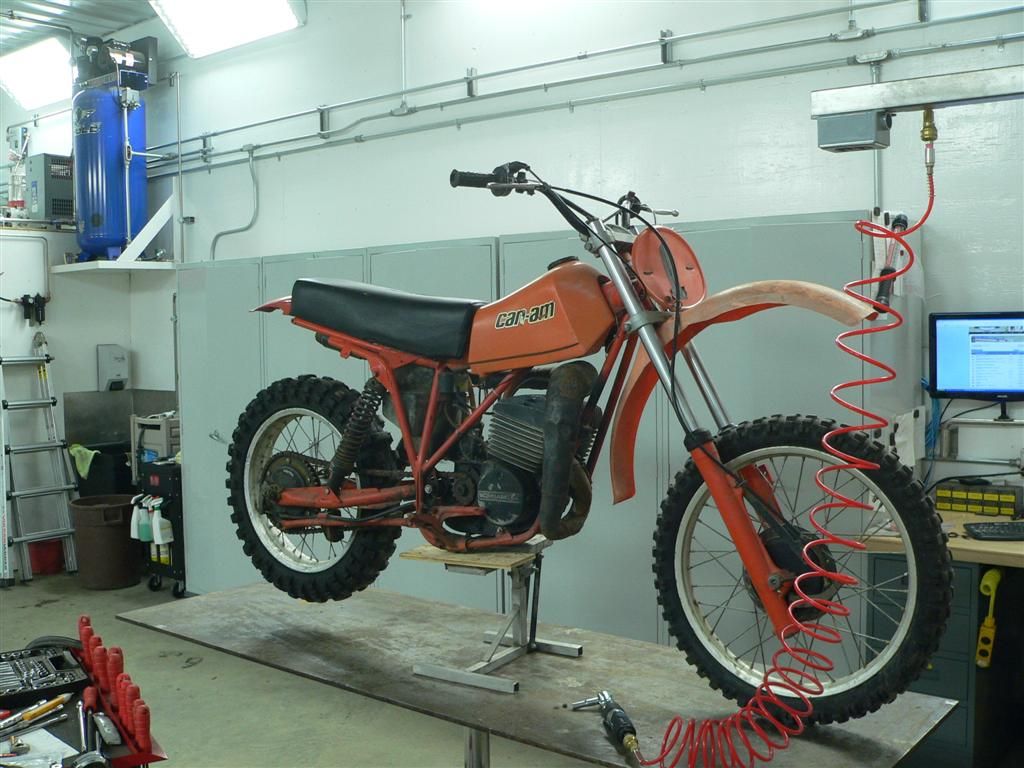
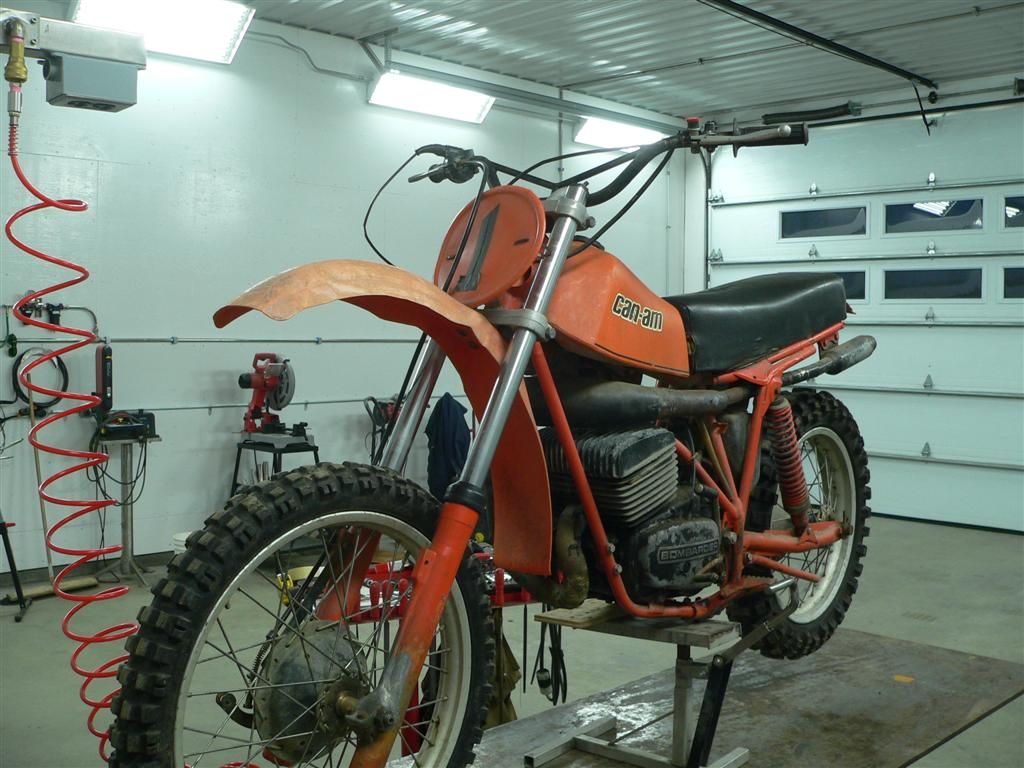

 I put them on two switches with each switch operating every other light on both sides. Plenty of light!