To avoid these ads, REGISTER NOW!

Need Some Welding Advice

DSLTRK

Well-known member
Joined
Jan 7, 2012
Messages
1,118
Location
PHELAN, CA
I'm refurbishing a 10kW residential wind turbine.
The turbine ran on the Oregon coast since 2002,
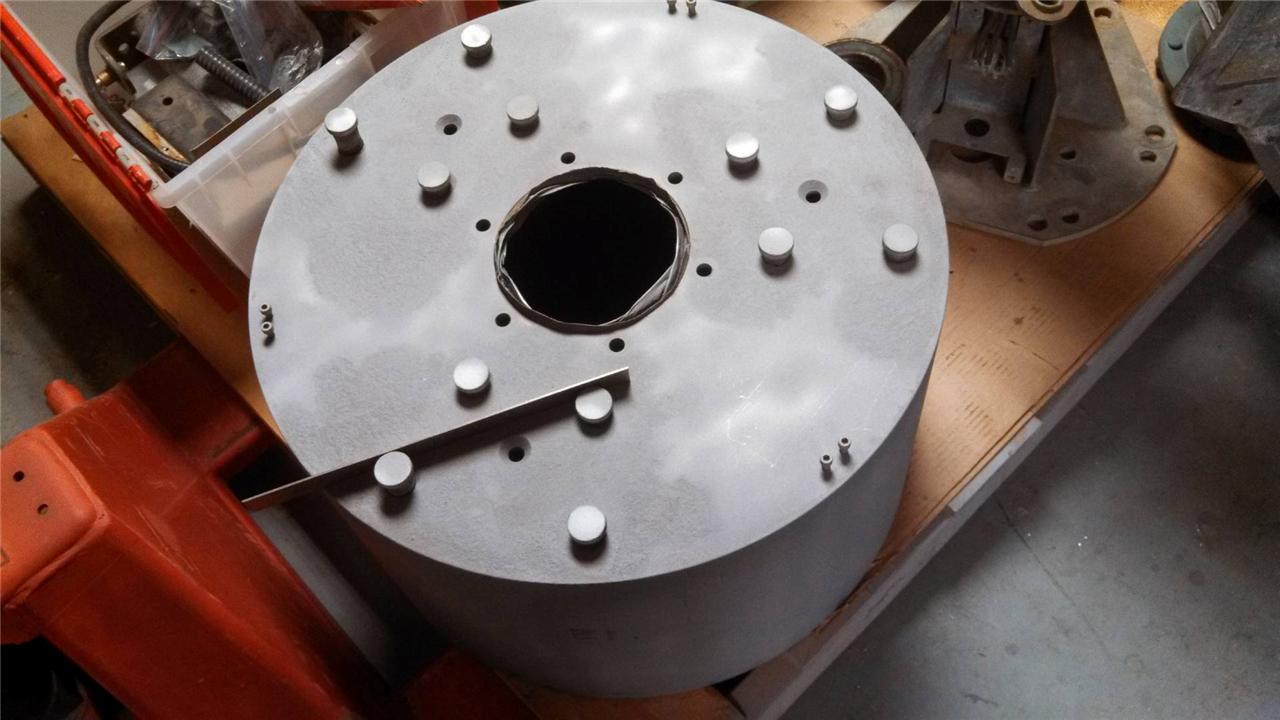
and experienced extensive corrosion on the alternator's face, where the blades mount.

The turbine is a Bergey Excel-S:
small-wind-turbine-bergey.jpg

http://bergey.com/documents/2012/11/10kw-exploded-view-alternator.pdf

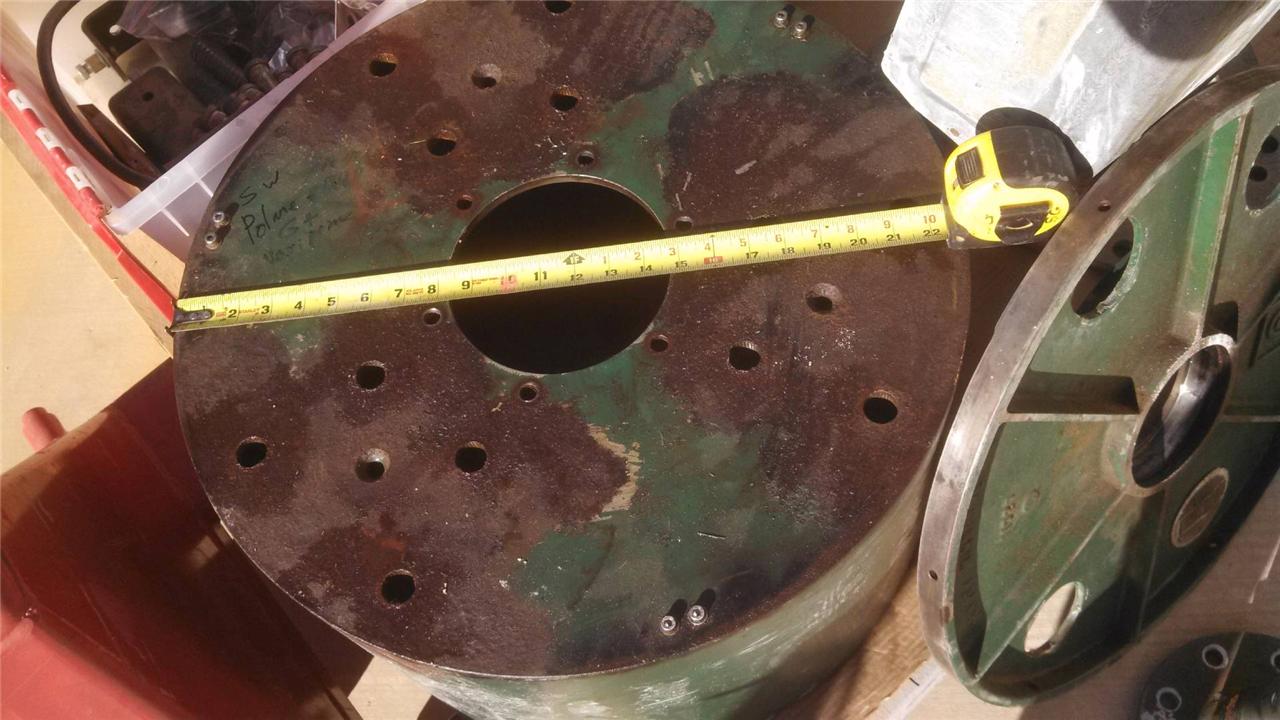
Alternator is made of 0.4375" thick mild steel, with a 23" diameter face and 13" depth.
It represents the shape of a "can".
Refer to part #1 in diagram(Magnet can) Link attached above)

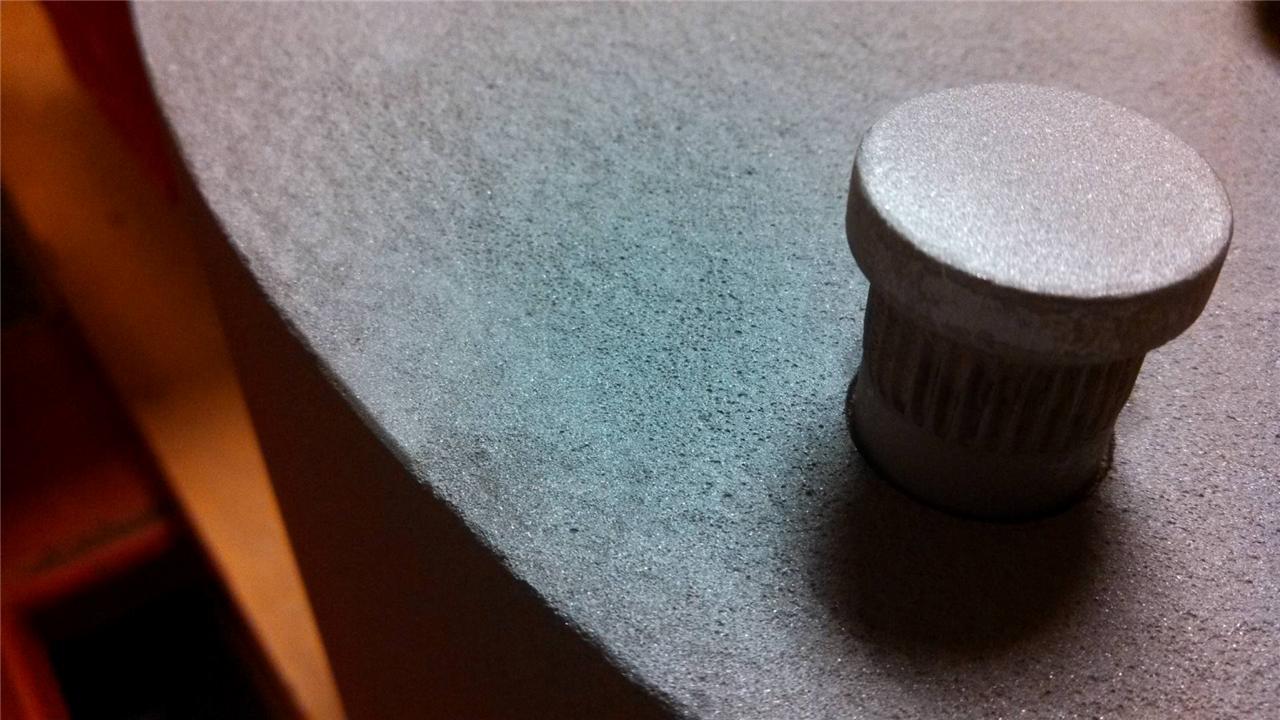
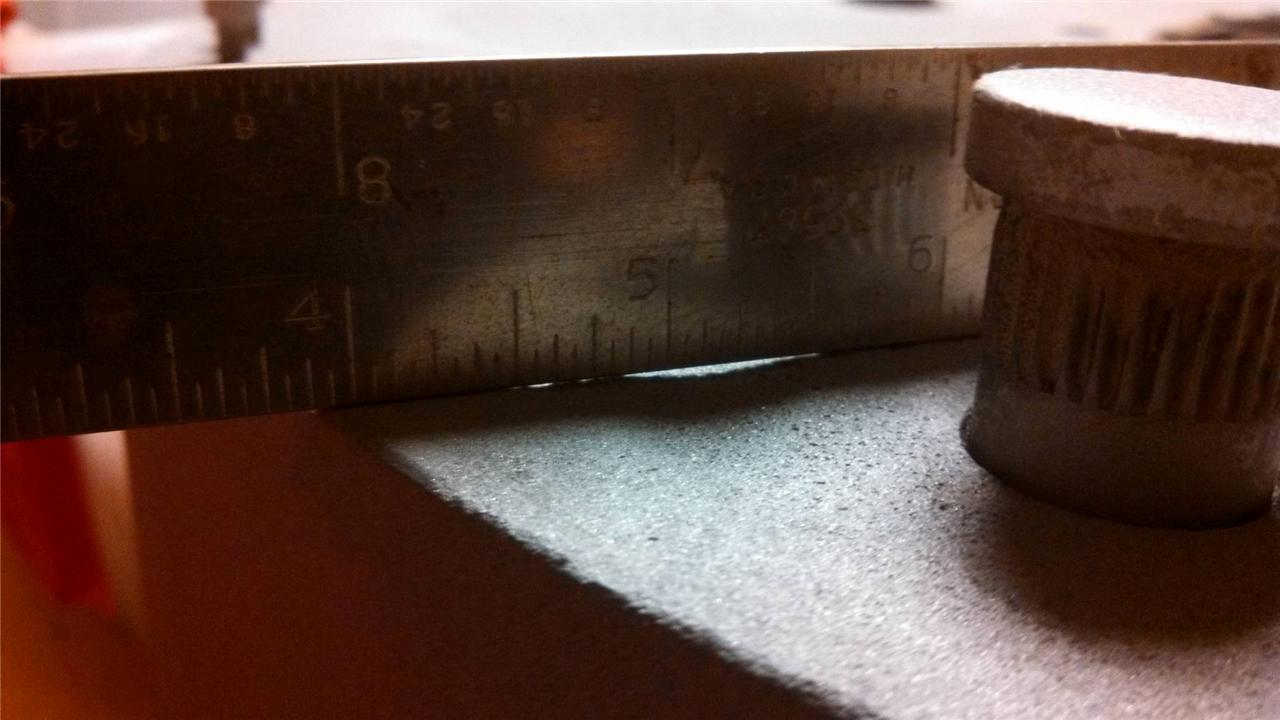
I sandblasted the exterior of the alternator to get an idea of how bad the rust really was. Deepest area extends a little over 0.0625"

My original plan was to turn it down on a lathe, then spray weld the surface, and turn it
down again, but that proved to be too costly.

My next idea was to do a pad weld over the affected areas then turn it down to spec, but that presents another problem by itself, warping.

I have a Lincoln 180HD mig. My plan is to do short (under 1" at a time) beads, and peen them to reduce shrinkage. I would alternate beads on each side each time I did a new pass.

What would you guys suggest? I don't know if I should run the beads radially or toward the center of the axis. Any help/ideas to reduce warping are welcomed. Thanks
730345465_o.jpg

730345470_o.jpg

730345473_o.jpg

730345477_o.jpg

730345479_o.jpg
 
To avoid these ads, REGISTER NOW!

Warrenator

Well-known member
Joined
May 31, 2008
Messages
781
Location
Newberg, OR
Is it actually corroded too thin to be usable? If it is still structurally sound I would not weld more metal onto it, worried it would warp and be out of balance. Have it galvanized or powdercoated and put it back up.

If you need to build up strength or thickness maybe weld reinforcing plates onto it in a symmetrical pattern. Or buy a new one from the factory. Good luck.
 

koditten

Well-known member
Joined
Apr 10, 2008
Messages
5,528
Location
Midland, Michigan
I would have just welded the surface up then ran over it with a bridgeport mill, but, again I don't know what kind of balance it has.

Thinking logicly. It is now out of balance with the matarial removed from the pits. Correct?

If you weld up the pits and suface the drum, it will be closer to balanced. Correct?

.43 is close to being 3/8" thick iron. If you do the filler welding in many stages, the chance of warpage is pretty slim.

I have welding table that has a 3/8" surface. I weld to it all the time and have not noticed any warpage. There again, I don't know what tolerances you have to work with.
I will admit I'm curious on how this goes.
 

Caddis295

Well-known member
Joined
Feb 20, 2013
Messages
139
Location
GA
DSLTRK,

I have looked over the photos and the exploded diagram. From what I can assess, the cylinder in question is the orange housing that the fan blades are attached?

Based on the diagram, the area you are concerned about is the end of the magnet asssembly?

Has the metal corrosion dramatically changed the thickness of the assembly, therefore the structural integrity?

Are there balance issues?

I would be concerned about warpage of that plate from welding, as it would effect the bearing alignment.

Unless the turbine under load can flex that metal to the point that the bearing shaft/race is affected, I would think the casing is servicable. Steps should be taken to prevent further rust development and painted to provide longevity.


Best of luck,

Dino
 
Last edited:
OP
D

DSLTRK

Well-known member
Joined
Jan 7, 2012
Messages
1,118
Location
PHELAN, CA
I would have just welded the surface up then ran over it with a bridgeport mill, but, again I don't know what kind of balance it has.

Thinking logicly. It is now out of balance with the matarial removed from the pits. Correct?

If you weld up the pits and suface the drum, it will be closer to balanced. Correct?

.43 is close to being 3/8" thick iron. If you do the filler welding in many stages, the chance of warpage is pretty slim.

I have welding table that has a 3/8" surface. I weld to it all the time and have not noticed any warpage. There again, I don't know what tolerances you have to work with.
I will admit I'm curious on how this goes.

I didn't get to see this unit run because the Rohn tower folded over due to loose leg bolts/lack of maintenance. Amazingly, nothing besides the blades/tail was damaged. So I don't know how balanced it was.

I'd suspect the rust did create a balance issue, as rust is heavier than steel. I'd be using mild steel mig wire, so the densities should be the same.

i really don't want to turn it down without building it up as the blades are held on with truck studs pressed in to the front face. The thicker the better.
 

mechan

Well-known member
Joined
Apr 16, 2009
Messages
401
I didn't get to see this unit run because the Rohn tower folded over due to loose leg bolts/lack of maintenance. Amazingly, nothing besides the blades/tail was damaged. So I don't know how balanced it was.

I'd suspect the rust did create a balance issue, as rust is heavier than steel. I'd be using mild steel mig wire, so the densities should be the same.

i really don't want to turn it down without building it up as the blades are held on with truck studs pressed in to the front face. The thicker the better.

If you are looking to have the face be a flat mounting surface you could Belzona the face and then machine it. (http://www.belzona.com) Belzona is exactly the *best* fix in the world, but I've seen it used on large shafts for bearing fitments and even to surface coat corroded vessels in low pH environments.

If you weld it I think you will end up balancing the weldment post machining regardless of using ER70 or something similar. If you want to do it with welding maybe look at a bronze silica wire or something. You would have less heat input into the base metal. If you do weld it I would put a good size heat sink on the backside while you are welding. (e.g. large piece of brass or copper)
 

red92s

Well-known member
Joined
Dec 16, 2009
Messages
334
I'd have no qualms about having the entire face machined or ground to get back to a flat plane.
 

sabercatt

Well-known member
Joined
Mar 12, 2009
Messages
288
why not just make a whole new piece, cut the old one off and weld the new one on.
 
OP
D

DSLTRK

Well-known member
Joined
Jan 7, 2012
Messages
1,118
Location
PHELAN, CA
If you are looking to have the face be a flat mounting surface you could Belzona the face and then machine it. (http://www.belzona.com) Belzona is exactly the *best* fix in the world, but I've seen it used on large shafts for bearing fitments and even to surface coat corroded vessels in low pH environments.

If you weld it I think you will end up balancing the weldment post machining regardless of using ER70 or something similar. If you want to do it with welding maybe look at a bronze silica wire or something. You would have less heat input into the base metal. If you do weld it I would put a good size heat sink on the backside while you are welding. (e.g. large piece of brass or copper)

The Belzona sounds interesting. I wonder if the density is close to steel.
 

mechan

Well-known member
Joined
Apr 16, 2009
Messages
401
The Belzona sounds interesting. I wonder if the density is close to steel.

According to the spec sheet and the density of mild steel, no, it is lower. You could check out Devcon it is another Belzona type product it may be denser.
 

MoonRise

Well-known member
Joined
Nov 5, 2010
Messages
4,031
Location
NJ
The "magnet can" is the rotor. The permanent magnets inside the rotor (magnet can) could be damaged from welding heat.

Besides, welding some 0.43 inch thick steel with a Lincoln PM180HD is not really the right tool for the job (the material is too thick for the power ouput of the welder using solid MIG wire and the 'standard' Lincoln NR-211-MP FCAW wire in either 0.035 or 0.045 wire diameter would be exceeding the workpiece thickness limitation of the NR-211 wire itself, as well as the machine not really having enough output power for welding on that thick of a piece of steel.)

Sandblast it (done), call Bergey to see if some 0.06" deep 'divots' on the face of the can are anything to be concerned about (structurally, almost certainly not an issue, may or may not noticably affect balance/vibration and may or may not be an issue for the mounting of the blades).

Call Bergey re: the 0.06" corrosion depth. Proceed from there.

But welding with a PM180 is not going to be the fix, no matter what (not enough ouput power to short-arc onto some 0.43" thick steel plate). That thick of a plate is really going to call for a big TIG or some stick welding. Or some spray-mode transfer with something like a PM250 or 'bigger'.

IMNSHO.
 
OP
D

DSLTRK

Well-known member
Joined
Jan 7, 2012
Messages
1,118
Location
PHELAN, CA
I spoke to Bergey's tech in Oklahoma. Main concerns are balance and resulting resonations if it is left alone since the rotor is variable speed. My concern is also the surface is unlevel, and it could damage the pultruded blade pad when it is torqued down.

If I do the pad weld technique, I want to keep heat as low as possible. These welds aren't intended for structural repair, just to fill in the damaged steel.

I have gotten good penetration on .5" thick steel with the 180HD, but for short passes only, which is what I planned on doing with this project anyway.
 

ez-duzit

Well-known member
Joined
Jun 24, 2013
Messages
5,101
Location
Marina del Rey
The sandblasting $ has been wasted because you were not prepared to apply a finish instantly. It has already begun to rust.

If you cannot remove the electrical internals, don't weld on it.

The occasional 1/16" deep pit will not be enough to destroy that housing's integrity. I would re-sandblast, then immediately fill the pits and coat with epoxy, within a few hours, and without allowing it to dry between filling and coats.
 

JamieK

Well-known member
Joined
Aug 13, 2009
Messages
1,760
Location
Winston-Salem, NC
Since its not a structural repair, why not just build it up with something requiring less heat than welding; i.e. brazing or silver solder. Then machine that back to a flat surface on the lathe.

How many rpms will it be turning anyway? With the weight you are talking about(i.e. specific gravity of missing metal compared to filler metal), its going to have to turn pretty fast for any vibrations to make a significant difference.
 
OP
D

DSLTRK

Well-known member
Joined
Jan 7, 2012
Messages
1,118
Location
PHELAN, CA
Since its not a structural repair, why not just build it up with something requiring less heat than welding; i.e. brazing or silver solder. Then machine that back to a flat surface on the lathe.

How many rpms will it be turning anyway? With the weight you are talking about(i.e. specific gravity of missing metal compared to filler metal), its going to have to turn pretty fast for any vibrations to make a significant difference.

That's true. RPM for this machine is up to 400. Someone mentioned I could use a bronze alloy mig wire for a pad weld to keep distortion and heat down.
 
To avoid these ads, REGISTER NOW!

MoonRise

Well-known member
Joined
Nov 5, 2010
Messages
4,031
Location
NJ
If you just want to 'fill' the divots, how about just bronze brazing them (as suggested above by mechan).

Density of the bronze filler is about 10% greater than the density of steel, but that's a much closer match than from steel-to-air (which is what the divots have now).

Less heat than steel welding, but still hot (for you and for the magnets).

Again, watch out for heat and magnets (magnets don't like heat, enough heat and they become 'not-magnets').

For a max divot depth of ~0.060" though, I'd most likely just face the surface flat and 'true' and not really be worried about losing that 0.060" of thickness. Prime and paint and done (on the magnet can, at least).

If that 0.060" thickness 'loss' shifts the back of the blades too close to the rest of things, put in some 0.060" shims between the mating surfaces of the front of the magnet can and the back of the blades.

More than one way to 'fix' the corrosion loss.

But IMNSHO, trying to short-circuit GMAW some steel filler onto some 0.43" thick plate steel with a Lincoln PM180 (hey, I like Lincoln, but that is just not enough machine to do this job) is not the way to go.

Textbook situation for lack of fusion/penetration (aka cold-lap). Once you face away most of the weld bead, the thin remainder of steel filler is mostly going to be just sitting on top of the much thicker steel plate and not fused into it at all. Add in any flex from the rotor blades and that thin layer of not-really attached steel wled filler is just going to pop off or come loose.

If you don't melt the parent material (workpiece) and only the filler is melted on top of the plate steel, then you have textbook classic GMAW cold-lap, aka lack of fusion, aka lack of penetration.

:beer:
 

sabercatt

Well-known member
Joined
Mar 12, 2009
Messages
288
That would cost way too much, and the part(stud hole locations) is precision cnc machined.

i cant imagine it costing much to have a machine shop make the new end and put all the holes in it. i didnt realize there were magnets inside but couldnt you remove them, cut the old face off and weld the new one back one, then reinstall the magnets? could you get the company to send you the print of the face with the measurements to give to a machine shop?
 

ez-duzit

Well-known member
Joined
Jun 24, 2013
Messages
5,101
Location
Marina del Rey
You can insure a perfectly flat surface, when you epoxy fill/coat, by letting it cure with the can inverted on top of a heavy glass plate or microflat, using poly film or wax paper to release.
 

dr_clyde

Well-known member
Joined
Jan 7, 2009
Messages
6,461
Location
Holland, MI
I agree that your welder is too small to do this job effectively. If the magnets cannot be removed, they will be damaged by the heat from welding.

If the the surface is not load bearing or anything, I'd look into thermal spraying. The base metal stays cool, and molten metal is literally sprayed like paint. Not to be confused with spray transfer wire welding.
 
OP
D

DSLTRK

Well-known member
Joined
Jan 7, 2012
Messages
1,118
Location
PHELAN, CA
How much would you guys think a machine shop would charge to turn the alternator back down on a lathe? I was quoted about $700 for just the front face to be done.:eyecrazy:
 

mechan

Well-known member
Joined
Apr 16, 2009
Messages
401
How much would you guys think a machine shop would charge to turn the alternator back down on a lathe? I was quoted about $700 for just the front face to be done.:eyecrazy:

Well it is a 23" diameter part so it won't just be a random 10" tool room lathe they chuck it up in. What tolerance did you say you wanted it faced off to? Every decimal place drives the cost up. Did you tell them something like +/- 0.005" or +/- 0.0005"? Also, a turning operation would usually be along the longitudinal axis of the part and I thought you wanted to have the front of the part "faced off"?

Note... Depending on how square the backside of that part is I would be tempted to just face it off on a mill with a fly cutter.
 

ez-duzit

Well-known member
Joined
Jun 24, 2013
Messages
5,101
Location
Marina del Rey
caution

I didn't get to see this unit run because the Rohn tower folded over due to loose leg bolts/lack of maintenance...

In the early '60's, the company I worked for, as a draftsman, got a contract to install one of their small wind generators on a mountain peak near Jet Propulsion Lab's Goldstone Tracking Station airfield, in the California desert. They needed a marker light for their pilots. The wind generator kept a bank of batteries charged to power the light.

Well, I joined the installation crew as a strong pair of hands. For about a week, every single bit of material had to be flown up to that peak in a helicopter, cement, sand and water for footings; the tower strapped, in sections, under the chopper; batteries and weatherproof housings; work crew, gasoline generator, and all the tools necessary to complete the install.

About a month after completion (IIRC), the tower came down when a windstorm vibrated a turnbuckle loose on one of the guy cables. Everything a total loss because of a missing cotter pin.

Check everything twice.
 

FriendOfYours

Well-known member
Joined
Feb 26, 2012
Messages
303
How has no one even said "Don't worry about it."

The balance hasn't been messed up with that TINY amount of surface rust. You're looking to spend money and time where there is no problem. 400 rpm? Pfff
 

Zeke

Well-known member
Joined
Aug 13, 2009
Messages
17,176
Location
Long Beach CA, the sewer by the sea.
How has no one even said "Don't worry about it."

The balance hasn't been messed up with that TINY amount of surface rust. You're looking to spend money and time where there is no problem. 400 rpm? Pfff

I would think this to be the case. The blades are what need to be balanced. The further from the center the more critical weight discrepancies are. The only issue I see with the face not flat is the blades not all being in the same plane.

Shims will take care of that.
 

LG63

Well-known member
Joined
Sep 7, 2012
Messages
1,003
You can insure a perfectly flat surface, when you epoxy fill/coat, by letting it cure with the can inverted on top of a heavy glass plate or microflat, using poly film or wax paper to release.

I like this approach best. Seems like a perfect app for Devcon Steel Putty now that it has blasted anchor pattern.
 

sberry

Banned
Joined
Jun 18, 2005
Messages
35,747
Location
Brethren, Michigan
I was reading the last of the threads to suggest don't fuk with it. If I wanted to fill some pits would likely JB weld or Devcon with bondo spreader and whack it with a DA. This hub ebing out of balance a gnats azz wont mean much with long blades on it.
 

gorilla

Well-known member
Joined
Dec 13, 2007
Messages
1,655
Strong electrical fields around magnets is a BAD idea! Consider filling the low spots with the metalized epoxy of your choice and then make a 1/8" SST plate to cover the whole front of the hub. This would give you a flat and hard surface for the blades to attach to.
 

theknurl

Banned
Joined
Dec 18, 2010
Messages
921
Location
SoCal
weld the face with silicone bronze wire and have it Blanchard ground;

balance issue gone

corrosion issue gone

if it's corroding that bad, I'd look for a grounding/dissimilar metal problem too
 
To avoid these ads, REGISTER NOW!
Top Bottom