To avoid these ads, REGISTER NOW!

Preferred method or wiring receptacles/wire strippers

green.bubbly

Well-known member
Joined
Dec 14, 2008
Messages
2,156
Location
Lafayette, LA
Almost at the point of installing all the receptacles in my house. I have seen a few different methods of connecting the wires to the receptacles and wanted to hear pros/cons or referred methods from the more experienced people.

The way I have always done it was to connect the two hots and two neutrals to the screws of the receptacle. Then using a ground pigtail to connect the ground. I have also seen it done using a pigtail on the hot, neutral and ground. I am starting to like this method but it does require more wire nuts and potential for loose connections I guess. Seems like it would be easier to stuff the entire mess back in the box using pigtails though. Thoughts?


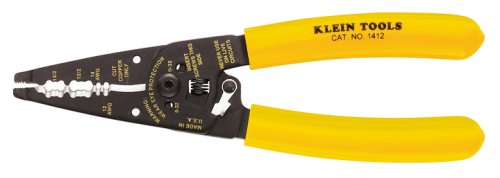
Second question is on a suggestion for a good wire stripper for 12 gauge NM Romex type wire. I was looking at something like this...


http://www.amazon.com/dp/B000OQ21CA/?tag=atomicindus08-20
 
To avoid these ads, REGISTER NOW!

mrjaw14

Well-known member
Joined
May 22, 2012
Messages
1,958
Location
Nashville, TN
I don't like to "back stab", meaning insert the wires in the spring loaded holes on the back. I perfer to use the side screws. I also don't like to daisy chain outlets using the side screws if I can avoid it. When you daisy chain that way all the power flows through every outlet along the path. The more correct way is to connect the outlet via a pig tail to the wires that are supplying the power with wire nuts, along with any downstream plugs. When you use wirenuts, take linesman pliers and twist the conductors together. Don't trust the wirenut to keep the conductors together. I've seen wires come loose when the bundle gets pushed into a box and the stress on the wires causes one to come loose. That can cause all sorts of issues.

For romex I have this little tool from ideal that slits the romex, then I use my side cutters to nip the sheath off. I just use regular wire strippers to strip the wire. same if I'm using individal wires in conduit.
 

The FIB

Well-known member
Joined
Jan 8, 2014
Messages
266
Location
chicagoland
We don't get to run much NM in the Chicago area, but I use the cheapo metal clam shell
type stripper to cut the outer jacket, then to strip the wire itself I use a pair of lineman
pliers, the 9 inch pliers will give you the best leverage. I prefer the pliers because I can cut, strip, and twist all with the same tool, I find stripping tools awkward to use, plus it means you have to carry one extra tool around,
When stripping the wire, insert the wire as far back in to the cutting area as possible, let the end of the wire stick out past the other side of the tool about a quarter inch, then squeeze with just the right pressure and pull on the wire. Be careful you don't squeeze to hard or you will nick the wire.
I suggest you try it on a scrap piece of wire first, with a little practice you can get a perfect strip almost every time.
 

The FIB

Well-known member
Joined
Jan 8, 2014
Messages
266
Location
chicagoland
I prefer to use the pigtail method, when you use the side screws you put the circuit load trough the receptacle, if the receptacle fails you can lose the rest of the devices down stream. When I worked as a construction electrician, years ago, many of the commercial jobs I was on required pigtails in their job specifications.
I never back stab, most of the failed receptacles I have come across have been back stabbed.
 

The FIB

Well-known member
Joined
Jan 8, 2014
Messages
266
Location
chicagoland
As mrjaw14 said, twist your wires before nutting them,
line the wires up, trim them, twist them clockwise (this will form kind of a thread), screw on your wire nut by hand, finish it off by twisting with your pliers until the wires just start twisting around themselves. They will not come apart.
 

ishiboo

Well-known member
Joined
Oct 27, 2010
Messages
9,481
Location
Oshkosh, WI
Use backwire outlets, no need to pigtail anything but the ground.

Klein NM strippers for the wiring, available at Home Depot. Nobody really uses automatic strippers on NM that I've seen.

318ZZ0ARBWL.jpg
 

CoopVA

Well-known member
Joined
Jan 20, 2014
Messages
2,144
Location
Virginia
I always use Pigtails on devices, not necessary, just prefered. You cannot go wrong with Klein strippers. Those automatic ones are ****.
 

67carl

Well-known member
Joined
Dec 10, 2013
Messages
3,911
Location
California
X2 on the Klein strippers. I've just done my garage and laundry room and they are a breeze to use. I also shared your concern regarding pigtails and the extra wire nuts, but I did it anyway and cursed the whole time. It wasn't until I was almost done that I came across these Wago connectors. They come in the Halo recessed lights and are a dream to use. I ordered them on Amazon and have used them in a few areas. Soooo much easier than wire nuts and take up less space.

You'll get lots of opinions on them, both for and against, but the bottom line is they are UL approved and standard in mass used devices like the Halo cans. The pic below is the end of a run and you can see the Wago connectors. You can search "Wago" in this forum and read more about them.
 

Attachments

  • image.jpg
    image.jpg
    128.2 KB · Views: 256
Last edited:

CoopVA

Well-known member
Joined
Jan 20, 2014
Messages
2,144
Location
Virginia
Those Wagos are great. They were **** when they first came out, but they've greatly improved.
 

ishiboo

Well-known member
Joined
Oct 27, 2010
Messages
9,481
Location
Oshkosh, WI
I've used the push-in Wagos as well, never had a single failure.

I switched though to the Wago lever nuts though, they are a bit easier to use and work well with finely stranded wire like in overhead light fixtures, and you can much more easily remove wires without damaging them.

4134717.jpg
 

C96

Well-known member
Joined
Nov 30, 2013
Messages
1,251
Proper way is to always pigtail and use the correct size wire nuts.

Don’t care much for the Wago, might be a little faster, but not as secure a connection.
 

jvitez

Well-known member
Joined
Nov 30, 2009
Messages
2,429
Location
Big Sky Country, Canada
Pigtailing (is that a word?) everything does make sense, but in our neck of the woods (Canadian prairies), receptacles are just daisy chained unless something is re-worked and you need extra wire length to install a new device. No rash of failures here.
 

CoopVA

Well-known member
Joined
Jan 20, 2014
Messages
2,144
Location
Virginia
Pigtailing (is that a word?) everything does make sense, but in our neck of the woods (Canadian prairies), receptacles are just daisy chained unless something is re-worked and you need extra wire length to install a new device. No rash of failures here.

You can daisy chain them, but it's not a good practice to run the circuit through the device. If you loose a device that's in the middle of the circuit, you loose everything downstream...
 

LS6 Tommy

Well-known member
Joined
Dec 27, 2013
Messages
26,162
Location
Northern NJ
You can daisy chain them, but it's not a good practice to run the circuit through the device. If you loose a device that's in the middle of the circuit, you loose everything downstream...


Daisy chaining receptacles doesn't run the circuit through the receptacles. They're in parallel with the circuit, not series. That is, unless it's being done REALLY wrong...

Tommy
 

MixManSC

Well-known member
Joined
Jan 6, 2014
Messages
154
Location
South Carolina
I've come to like the back wire outlets and switches since I don't have to mess with wrapping around screws. In this I mean screw down back wire, NOT the push in type back wired, those are junk and will fail. Also love the wago (wall nuts, etc) connectors but I only use them as final connections for light fixtures. Maybe I'm just old but I just don't feel like there is enough surface area in the connection for higher amperage uses like plug outlets.

As far as daisy chaining versus pigtails - personal preference really. The 2 terminals on the side of an outlet are one single brass plate (with a slightly thinner bridge). No less or more reliable than a pigtail (would then have 3 wires nutted together and a fat wad of nutted wires jammed in behind the outlet). Even if the outlet degrades from heat and breaks apart, the odds of the bridge on the brass plate somehow breaking in 2 are slim to none. If it's come to that then what is downstream is really irrelevant as repairs are needed which will require killing the circuit for a bit regardless. Pigtailed or daisy chained, if there is a damaged outlet or whatever, the circuit is compromised and unsafe and needs to be fixed. I guess the question is - are 3 wires nutted together more reliable a connection (and more surface area making the connection) than 2 wires securely screwed to a brass plate?

Me personally, I just daisy chain them at the outlet. As LS6 said - if you have somehow wired it to run through the outlet then something is very very wrong. I do actually have something set this way - a test jig where the hot is run through a light socket. I use it for testing antique electronics...... put a 100 watt bulb in line. You will blow the bulb before you blow the motor, electronics, etc and can quickly determine if whatever is pulling way too much juice before giving it 15+ amps of potential.
 
Last edited:

MrMark

Well-known member
Joined
Jan 25, 2010
Messages
4,626
Location
Southern Cal.
Yes it does. They are in parallel but part of the parallel path is the tiny strip of metal that connects the screw terminals together.
 

CoopVA

Well-known member
Joined
Jan 20, 2014
Messages
2,144
Location
Virginia
I've come to like the back wire outlets and switches since I don't have to mess with wrapping around screws. In this I mean screw down back wire, NOT the push in type back wired, those are junk and will fail. Also love the wago (wall nuts, etc) connectors but I only use them as final connections for light fixtures. Maybe I'm just old but I just don't feel like there is enough surface area in the connection for higher amperage uses like plug outlets.

As far as daisy chaining versus pigtails - personal preference really. The 2 terminals on the side of an outlet are one single brass plate (with a slightly thinner bridge). No less or more reliable than a pigtail (would then have 3 wires nutted together and a fat wad of nutted wires jammed in behind the outlet). Even if the outlet degrades from heat and breaks apart, the odds of the bridge on the brass plate somehow breaking in 2 are slim to none. If it's come to that then what is downstream is really irrelevant as repairs are needed which will require killing the circuit for a bit regardless. Pigtailed or daisy chained, if there is a damaged outlet or whatever, the circuit is compromised and unsafe and needs to be fixed. I guess the question is - are 3 wires nutted together more reliable a connection (and more surface area making the connection) than 2 wires securely screwed to a brass plate?

Me personally, I just daisy chain them at the outlet. As LS6 said - if you have somehow wired it to run through the outlet then something is very very wrong. I do actually have something set this way - a test jig where the hot is run through a light socket. I use it for testing antique electronics...... put a 100 watt bulb in line. You will blow the bulb before you blow the motor, electronics, etc and can quickly determine if whatever is pulling way too much juice before giving it 15+ amps of potential.

Point taken. I prefer to use pigtails for many reasons.

I have been in the commercial electrical trade for over 20 years. Went through the IBEW Apprenticeship program. I was taught to do it that way. If you need to change or replace a device, you will not shut off the rest of the devices in the circuit. That's the bottom line of it.

All the receptacles in my house are oriented with the ground up and all the screws in my device plates have the slots all vertical... and any device I change out or add is pigtailed...
 

MixManSC

Well-known member
Joined
Jan 6, 2014
Messages
154
Location
South Carolina
Now I will agree that a pigtail does make it faster and easier to replace an outlet. I also like that you have the grounds on top (that is actually the proper way to install them I think). I also install outlets with the ground up - I use a LOT of metal outlet plates... :) I also will frequently replace a switch or outlet on a hot circuit but I strongly recommend others to not do so, I don't want to be responsible if they shock themselves. Working on live circuits also get an order of magnitude more tricky when you are working on a setup which is all metal conduit, boxes, etc which is all grounded - don't let the outlet/switch get too close to the side of the box. lol
 
To avoid these ads, REGISTER NOW!

CoopVA

Well-known member
Joined
Jan 20, 2014
Messages
2,144
Location
Virginia
Technically, we are not supposed to work on anything hot, BUT... if your working in a hospital, critical mission facility or a BSL lab you can't just shut things off... Besides, 120 kinda tickles...
 

67carl

Well-known member
Joined
Dec 10, 2013
Messages
3,911
Location
California
Now I will agree that a pigtail does make it faster and easier to replace an outlet. I also like that you have the grounds on top (that is actually the proper way to install them I think). I also install outlets with the ground up - I use a LOT of metal outlet plates... :) I also will frequently replace a switch or outlet on a hot circuit but I strongly recommend others to not do so, I don't want to be responsible if they shock themselves. Working on live circuits also get an order of magnitude more tricky when you are working on a setup which is all metal conduit, boxes, etc which is all grounded - don't let the outlet/switch get too close to the side of the box. lol

You guys have given me lots to think about; strong argument that pigtails aren't really necessary (as mentioned the brass "bridge" not really going to fail), surface/contact area of the Wago connectors, working on live circuits (unless your a pro and working in a critical area that needs power on - why do it?), etc... Good debate with reasoned arguments, not baseless blather. Thanks for the education.

Now whats the reason for "grounds on top (that is actually the proper way to install them..."? What's proper about that orientation?
 

CoopVA

Well-known member
Joined
Jan 20, 2014
Messages
2,144
Location
Virginia
If you drop something on the plug and pull it out of the socket you will be less likely to make contact the hot blade... It's a safety requirement in industrial/commercial settings...
 
Last edited:
OP
G

green.bubbly

Well-known member
Joined
Dec 14, 2008
Messages
2,156
Location
Lafayette, LA
Thanks to all for all the great input. Guess I will go with pigtails as it will be easier to stuff the receptacle into the box. I would like to do the back wired receptacles but so far it seems that this option is only available on commercial receptacles such as the Leviton 5252. Also seem to be about 8 times the cost of a Leviton residential unit. So I am going with pigtails and side wired and a nice Klein strippers.
 

ishiboo

Well-known member
Joined
Oct 27, 2010
Messages
9,481
Location
Oshkosh, WI
If you drop something on the plug and pull it out of the socket you will be less likely to make contact the hot blade... It's a safety requirement in industrial/commercial settings...

In theory, it was switched for this reason. In practice, the chance of occurrence is very minute. Certain installs prefer it up, residential is not one as there is zero data to back it up. Like "in theory" a larger plug would be safer as your fingers are far away from the contacts, but in practice…

The chance or likelihood of having wall warts, fixed right angle plugs, night lights, etc. all designed to have the "correct" original orientation is much more likely. So for a residence/garage I would definitely keep it ground down.

This is different than many larger plugs which are now supposed to be installed "ground up" and are molded that way.
 

CoopVA

Well-known member
Joined
Jan 20, 2014
Messages
2,144
Location
Virginia
I suggest you get the Commercial Grade receptacles. Don't get the cheaper Residential Grade...
 

jmarkwolf

Well-known member
Joined
Jan 15, 2013
Messages
1,824
Location
Southeast Michigan
I just recently wired my new detached garage.

One useful tool I used was a screwdriver with a short "post" protruding from the handle adjacent to the blade.

Makes it fast and easy to make a wire loop.

Can't remember the brand name right now but I can look tomorrow.
 

ishiboo

Well-known member
Joined
Oct 27, 2010
Messages
9,481
Location
Oshkosh, WI
Thanks to all for all the great input. Guess I will go with pigtails as it will be easier to stuff the receptacle into the box. I would like to do the back wired receptacles but so far it seems that this option is only available on commercial receptacles such as the Leviton 5252. Also seem to be about 8 times the cost of a Leviton residential unit. So I am going with pigtails and side wired and a nice Klein strippers.

Both HD and Lowes have reasonably priced, backwire outlets. Lowes for example has the Cooper, though in my upstairs I did the Leviton commercials.

$2.70 is not a bad price for a backwire receptacle and well worth it over the $1-2 el cheapo outlets.
 

CoopVA

Well-known member
Joined
Jan 20, 2014
Messages
2,144
Location
Virginia
In theory, it was switched for this reason. In practice, the chance of occurrence is very minute. Certain installs prefer it up, residential is not one as there is zero data to back it up. Like "in theory" a larger plug would be safer as your fingers are far away from the contacts, but in practice…

The chance or likelihood of having wall warts, fixed right angle plugs, night lights, etc. all designed to have the "correct" original orientation is much more likely. So for a residence/garage I would definitely keep it ground down.

This is different than many larger plugs which are now supposed to be installed "ground up" and are molded that way.

Points taken. It's still required in nearly all projects I work on... It's also my personal preference to install them ground up...
 

Tyberius

Well-known member
Joined
Nov 26, 2013
Messages
312
Location
Wilmette, IL
I strip a section out of the wire and connect the hot and neutral to the fixture - without breaking the wire.

No specific ground if as it is all emt, unless the device came with a pigtail already.

Tape exposed screws with a couple of turns of tape.
 

MrMark

Well-known member
Joined
Jan 25, 2010
Messages
4,626
Location
Southern Cal.
Thanks to all for all the great input. Guess I will go with pigtails as it will be easier to stuff the receptacle into the box. I would like to do the back wired receptacles but so far it seems that this option is only available on commercial receptacles such as the Leviton 5252. Also seem to be about 8 times the cost of a Leviton residential unit. So I am going with pigtails and side wired and a nice Klein strippers.

home depot does have leviton backwired receptacles for above 5 dollars. The regular ones are about 2.

I would use the more expensive receptacles for the most often used outlets, every house has a few that get used all the time and others almost never.
 

laser3kw

Well-known member
Joined
Nov 17, 2012
Messages
7,276
Location
northen IL
I appreciate reading the advice and experience of the pros, the semi-pros and the amateurs.
I have done some wiring and typically use the screws as connection. I read about the pigtailing and have tried it. The problem I run into is stuffing everything back into the box. I try to use short lengths bu no matter what I try , it seems I am squeezing 10 lb of **** into a 5 lb sack. I don't feel comfortable doing that.
I confess, I do buy my stuff at the BBS, but try to buy the boxes, receptacles and other items to the recommended specs. I am going to be wiring my garage this spring and would really like to conquer the pigtail. Could someone post some pictures of a well constructed pigtail?
 

Norcal

Well-known member
Joined
Mar 16, 2008
Messages
13,769
Points taken. It's still required in nearly all projects I work on... It's also my personal preference to install them ground up...


Only required as part of job specs.

I prefer ground prong up myself, but anyone says that either method is the "correct" way, they are flat wrong, NEC code committees refuse to touch the issue, & professional electrical forums shut threads down on the topic quickly.
 
Last edited:

67carl

Well-known member
Joined
Dec 10, 2013
Messages
3,911
Location
California
Maybe I'm missing something but a 20 amp commercial grade receptacle at HD is $3.18. While I'm not made of money that doesn't seem too bad:

http://t.homedepot.com/p/Leviton-20...x-Power-Outlet-White-R62-CBR20-00W/202066702/

You only have to make the first outlet GFCI.

If you look at the picture I posted regarding the Wago connectors earlier in this thread you'll see a pigtail. Line comes in with each wire going into a Wago, then two wires coming out, each to a separate receptacle. If this was a middle run receptacle the load wire going on to the next receptacle would have it's wires in the Wago as well.

I've attached a pic of the back wire $3.18 HD Leviton receptacle. What I found helpful was using the Google image search for pictures of various connections. I like pictures better than descriptions.
 

Attachments

  • image.jpg
    image.jpg
    141.2 KB · Views: 142

BigGMC

Well-known member
Joined
Jun 6, 2012
Messages
278
Location
Land of Confusion - NY
One useful tool I used was a screwdriver with a short "post" protruding from the handle adjacent to the blade.

Makes it fast and easy to make a wire loop.
.


Most quality strippers have holes in the jaws for this purpose as well. In the picture posted earlier, they are the two holes just above the hinge point.
 

LS6 Tommy

Well-known member
Joined
Dec 27, 2013
Messages
26,162
Location
Northern NJ
Yes it does. They are in parallel but part of the parallel path is the tiny strip of metal that connects the screw terminals together.

That "tiny strip of metal" is a bus bar capable of carrying much more load than the receptacle is rated for. When you back wire you have a much smaller contact area between the wire & the locking tooth...

Tommy
 

LS6 Tommy

Well-known member
Joined
Dec 27, 2013
Messages
26,162
Location
Northern NJ
If you drop something on the plug and pull it out of the socket you will be less likely to make contact the hot blade... It's a safety requirement in industrial/commercial settings...


It's purely personal preference. Once in a blue moon it might be indicated by design spec by the engineering firm/architect. It is NOT required by NEC code, residential or commercial.

Tommy
 

MrMark

Well-known member
Joined
Jan 25, 2010
Messages
4,626
Location
Southern Cal.
That "tiny strip of metal" is a bus bar capable of carrying much more load than the receptacle is rated for. When you back wire you have a much smaller contact area between the wire & the locking tooth...

Tommy

If by "much more" you mean 20 amp feed through on a 15 amp receptacle, then I agree. That, however, has nothing to do with your original comment to which my reply was directed. And, you are talking about "back stab" with your second sentence. I'm not sure how that is relevant to the points being discussed regarding the feed through on the device. The metal (not sure they are brass, either) strip connecting the screw terminals may be rated for 20 amp feed through but they are quite cheesy compared to a proper pigtailed install.
 

LS6 Tommy

Well-known member
Joined
Dec 27, 2013
Messages
26,162
Location
Northern NJ
I'm sorry if I sounded confusing. You said the receptacle feeds the remainder of the circuit. I said it doesn't. It's in parallel, not series. You're not feeding through the receptacle. Period.
Whether you use pigtails or daisy chains, the rating of the circuit is the same. Using one feed wire to the receptacle and one wire over to the next receptacle and then one wire out to the next box is no different in terms of capacity than one wire from each receptacle wire nutted along with feed coming in and another wire going out to feed the next box.

Yeah, the comment about backstabbing was kind of vague. I was comparing the contact area between the conductor and the locking tooth and the contact area of the conductor and the screw terminal. Sorry about that!

Tommy
 
Last edited:
To avoid these ads, REGISTER NOW!
Top Bottom