To avoid these ads, REGISTER NOW!

TIG instead of MIG

sberry

Banned
Joined
Jun 18, 2005
Messages
35,747
Location
Brethren, Michigan
Mine was wasting space on a truck. This is a turd for a home hobby guy, it is for me as is tig in general in most cases. My general service truck has a smaller machine with AC power and no tig. They just don't need to do stainless piping and they do need to do the mower deck, some rust repair, build shelves, weld small structural steel and dozens of brackets. 200A mig.
 

Attachments

  • SA 200 finished.JPG
    SA 200 finished.JPG
    38.8 KB · Views: 31
Last edited:
To avoid these ads, REGISTER NOW!

Moose-LandTran

Well-known member
Joined
Mar 8, 2008
Messages
15,945
Location
The Brink of Insanity (England)
My LN-25 is collecting dust

TIG and never look back

I bought a TIG over a MIG because it was what i wanted to learn more.

Then i had to do stuff at work like welding new sills on rotten cars than failed safety inspection! :lol:

As a welding noob, laying on my back with my feet up to hold myself still and welding overhead was immensly frustrating!
 

ADSR

Well-known member
Joined
Jan 12, 2013
Messages
10,713
You're absolutely correct, This experience is highly prejudiced, it is my personal opinion based on my (40) years of welding experience. This is a forum and people reply based on their experiences in life. The OP set the perimeters and asked for input. I answered according to that. He was interested in the Mig and Tig processes and using them for body panel work. With (2) off chassis restorations using the Mig process for panel restoration, I felt if optimal quality was the desired result, Tig would give better metal fit and finish with less filler involved.

Motoretro

Here is the problem with TIG for bodywork. Your metal fit up will have to be spot on with no gaps at all. Most DIY guys can't get this close. Most pro body guys can't get their work that close either. There's a big difference between a welder and a sheet metal tech. The welder doesn't fit his own panels and the sheet metal guy doesn't weld. Two different worlds.

DIY guys need a forgiving way to get the best of both worlds and not get frustrated in the process of banging the job off.
 

zkling

Well-known member
Joined
Jan 23, 2007
Messages
16,939
What would that good reason be?

Ramp up time of the heating cycle. Unless one is very careful with the mig when welding 4130 it will lead to brittle welds from the much faster ramp up temperature time inherent with the mig process compared to the tig process. Can 4130 be mig welded, sure, done quite a bit in production, however those that do it know what they are doing and it is not done in some guy's back yard on a friday night with a 115v compact feeder. I think NHRA kinda assumes that if the home builder can produce a solid tig weld they have enough knowledge to properly weld 4130.

I'd like to know how they would be able to tell.

MIG like TIG is getting a lot of attention.

http://www.garagejournal.com/forum/showpost.php?p=1669266&postcount=6


And yes, i wish ZTFAB would throw his 2 cents in here.

A trained eye knows. Although ZTFab makes some beautiful welds, they are clearly mig welds.
 
Last edited:

dr_clyde

Well-known member
Joined
Jan 7, 2009
Messages
6,464
Location
Holland, MI
Its pretty easy to tell the difference between a MIG and TIG bead. Even if the MIG bead has distinct ripples like a TIG bead, it will be much larger. I've welded a lot of roll cages, and even the nicest MIG welds look nothing like TIG welds around tubing.
 

zkling

Well-known member
Joined
Jan 23, 2007
Messages
16,939
Right now I'll be mostly doing body panels on cars, so steel will be the name of the game but in the future who knows what I'll want to weld. My whole thought was that I'm not in a production environment so the speed of a MIG isn't much of a benefit and if I'm going to drop $1500 on a welder, I'd like it to be as versatile as possible. Also, I've got my trusty stick welder for anything really heavy duty. How does TIG do on thicker stock? I know it's good for really thin stuff but I've never really investigated its upper thickness limit.

Tom


Sent from my iPhone using Tapatalk

I'll leave the choice up to you, but will put a vote in for a good used AC/DC tig welder. It will be slower, a bit difficult to learn and frustrating at times, but in the end I think you will be further ahead and much more versatile.

As for the thick stuff with the tig? Commonly about the thickest one would weld would be ~1/4", after that the other processes start to win out. But keep in mind that almost all full blown tig welder double as a stick welder so thicker steel stock can be tackled that way. Welding thick aluminum is no fun and is not commonly seen in the home garage outside of say case or head repair. Which is a whole nother discussion.

The problem with the home welder is the wide variety of tasks he or she may wish to weld. If someone planned on making a sand rail or some other type of tube framed chassis or building an entire set of panels for say a 30's roadster, in that case a good mig machine might win out. But again that is pretty limiting to say .125" and thinner steel stock.

I'll leave you with this, I do general fab and repair on the side, lots of random B.S. for folks. Not to be arrogant but I also happen to own two of what are considered by many to be the best tig and mig machines ever produced (bought used, no I'm not rich). Quite honestly, most of the time I could do without the mig machine. Is it handy when putting together say a ladder rack or the like out of 2x2" 0.120" square tubing? Absolutely, but still nothing the tig or stick and a bit more patience can't handle. Realize that the mig process was developed to increase speed in a production environment, it has been carried over to other markets due to a combination of benefits. :beer:
 

BigMike782

Well-known member
Joined
Dec 19, 2008
Messages
1,879
Location
49120
I say if you don't go out and get a Big Blue Air pack, a Dynasty 700 and a Deltaweld 450 all your swingin between your legs is a 3/32 6013 stub:lol:
 

mechan

Well-known member
Joined
Apr 16, 2009
Messages
401
Ramp up time of the heating cycle. Unless one is very careful with the mig when welding 4130 it will lead to brittle welds from the much faster ramp up temperature time inherent with the mig process compared to the tig process. Can 4130 be mig welded, sure, done quite a bit in production, however those that do it know what they are doing and it is not done in some guy's back yard on a friday night with a 115v compact feeder. I think NHRA kinda assumes that if the home builder can produce a solid tig weld they have enough knowledge to properly weld 4130.


A trained eye knows. Although ZTFab makes some beautiful welds, they are clearly mig welds.

Except you can build NHRA roll cages out of tubing other than 4130, but if you'd like to pick the tubing that they do require GTAW to make your case that is fine. It is just not true that roll cages cannot be welded with GMAW in NHRA they just cannot be made of 4130. Yay for 0.118" wall mild steel.

So much fail....
 

mechan

Well-known member
Joined
Apr 16, 2009
Messages
401
I'll leave the choice up to you, but will put a vote in for a good used AC/DC tig welder. It will be slower, a bit difficult to learn and frustrating at times, but in the end I think you will be further ahead and much more versatile.

As for the thick stuff with the tig? Commonly about the thickest one would weld would be ~1/4", after that the other processes start to win out. But keep in mind that almost all full blown tig welder double as a stick welder so thicker steel stock can be tackled that way. Welding thick aluminum is no fun and is not commonly seen in the home garage outside of say case or head repair. Which is a whole nother discussion.

The problem with the home welder is the wide variety of tasks he or she may wish to weld. If someone planned on making a sand rail or some other type of tube framed chassis or building an entire set of panels for say a 30's roadster, in that case a good mig machine might win out. But again that is pretty limiting to say .125" and thinner steel stock.

I'll leave you with this, I do general fab and repair on the side, lots of random B.S. for folks. Not to be arrogant but I also happen to own two of what are considered by many to be the best tig and mig machines ever produced (bought used, no I'm not rich). Quite honestly, most of the time I could do without the mig machine. Is it handy when putting together say a ladder rack or the like out of 2x2" 0.120" square tubing? Absolutely, but still nothing the tig or stick and a bit more patience can't handle. Realize that the mig process was developed to increase speed in a production environment, it has been carried over to other markets due to a combination of benefits. :beer:

So where do you base lines for "commonly only up to a 1/4" with tig" come from?
 

mechan

Well-known member
Joined
Apr 16, 2009
Messages
401
Here is the problem with TIG for bodywork. Your metal fit up will have to be spot on with no gaps at all. Most DIY guys can't get this close. Most pro body guys can't get their work that close either. There's a big difference between a welder and a sheet metal tech. The welder doesn't fit his own panels and the sheet metal guy doesn't weld. Two different worlds.

DIY guys need a forgiving way to get the best of both worlds and not get frustrated in the process of banging the job off.

In what world don't welders fit? I suppose the world where that welder is golden arm and doesn't work often. Why can't you have gaps when you are tig welding...? Are evil ferries going to cause you to input too much heat and blow a hole? Lack of skill does not equate to a crappy process that has to have odd constraints.

I am not saying I think op should go run out and get a Dynasty, as I said before I think the 211 and his portable rig would be the route to go, but he defiantly could go get a nice tig welder and do any of the welds he could do with a wire feeder. There would just be a different learning curve would the tig welder.

There is *no* right answer on what the Op should get. There is only subjective opinion that is wildly skewed by personal experience. I would wager that most of the opinions being offered based on experience aren't all that diversified in the grand scheme of things.
 

trackwelder

Well-known member
Joined
Jun 22, 2005
Messages
2,608
Location
n.y
If I had to choose one or the other it would be a mig. I find the tig nice for the bench and the rare job that requires small amounts of an exotic filler metal. 95% or better of my welding needs in the garage the mig is superior.
 

MP&C

Well-known member
Joined
Oct 21, 2009
Messages
4,405
Location
Leonardtown, MD
Tom, it sounds like you are primarily looking at automotive sheet metal work, a lot of your machine choice will be determined by how well you do in panel fitup. Mig is a bit more forgiving in wider and inconsistent panel gaps, as it is constantly adding feed wire. Let's call it a point and shoot. Tig is more of a manual dexterity challenge, as your feed hand needs to keep up with the torch hand, in coordination with the foot pedal. Now add a little excess panel gap and not enough feed and the heat will burn away at the parent metal, easily blowing a hole.

I haven't read much of the previous posts as much appeared to be non-related to sheet metal. So please excuse if I cover something already posted.


Given the limited panel thickness in welding sheet metal, heat control is a must. In using a Mig, it is nearly impossible to try a full pass weld with any semblance of consistency. Your start may be a little cold, showing little to no weld penetration on the back side, a little further along and you'll be getting a nice bead with full weld penetration, a little further once the panel has heated up and the weld will likely blow through. For this reason, and to try and have any consistency with the welds, Mig welding sheet metal is usually welded one dot at a time with the welder set hotter than normal to insure full weld penetration, wire feed a bit faster to help prevent any blowout, and weld size controlled by the length of the "zap".

Unfortunately, every time you weld one of these dots, the weld and HAZ (heat affected zone) shrink, pulling the surrounding panel in toward the center of the weld from all sides. This is best corrected by planishing each weld dot individually, and then grinding down to get it out of the way for the next set...

Example:


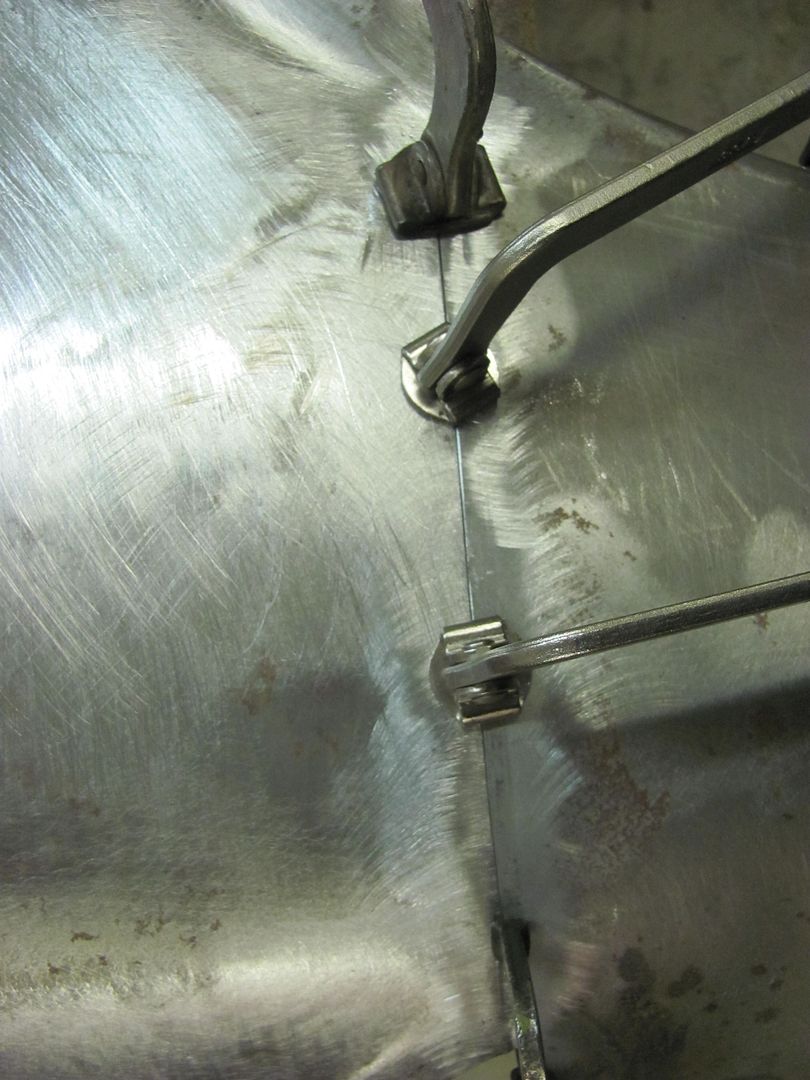
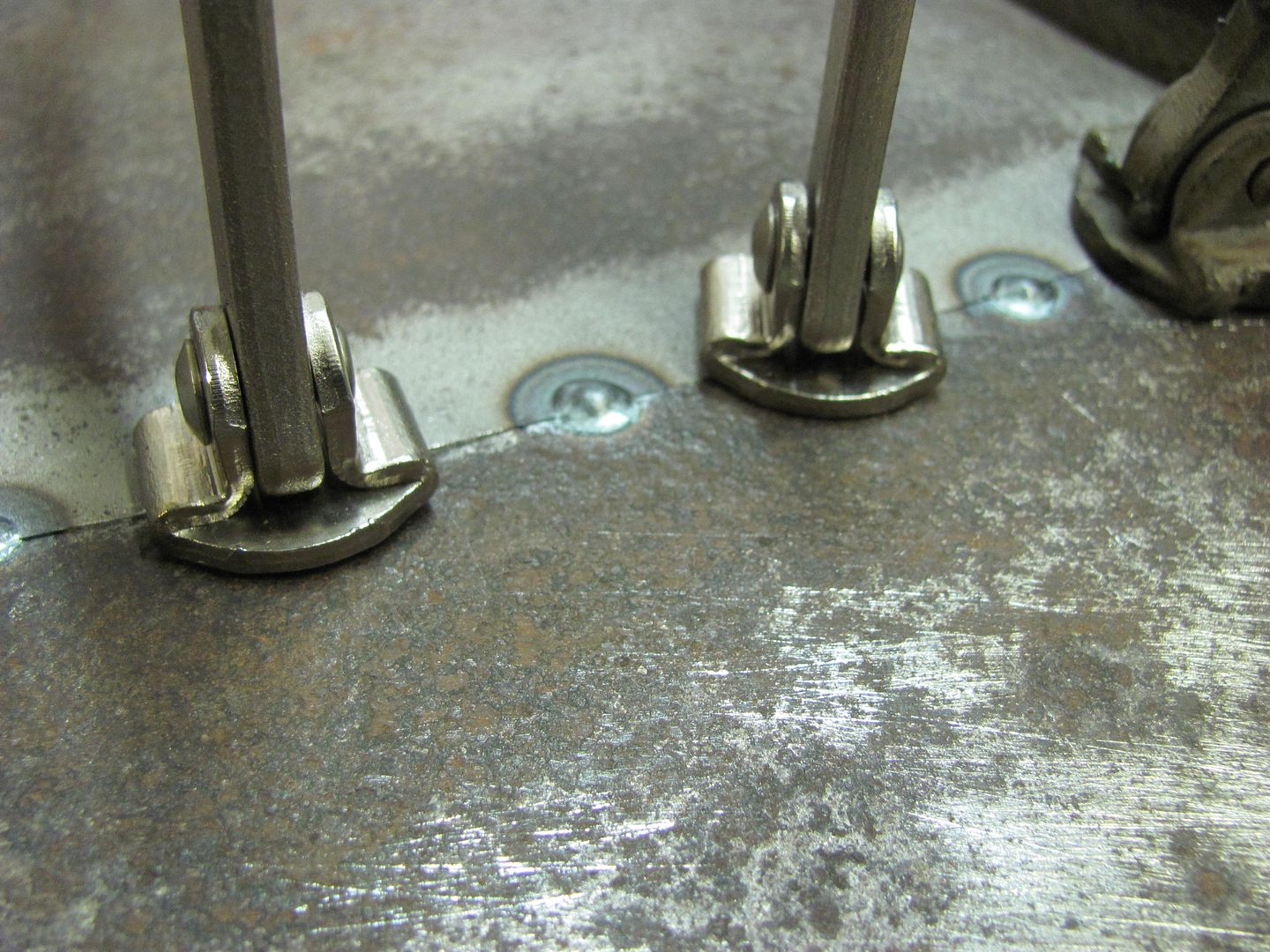
Tight fitting panels, no gaps..

Picture150-1.jpg


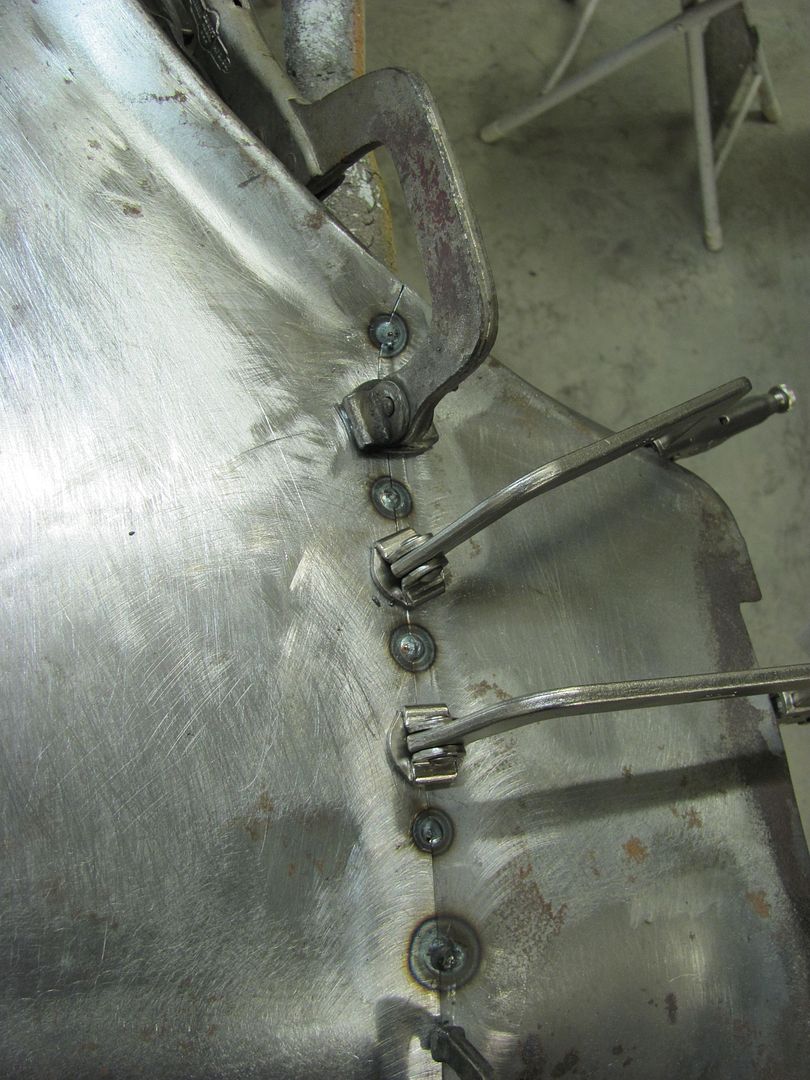
First set of tacks...


Picture151-1.jpg


Picture152-1.jpg


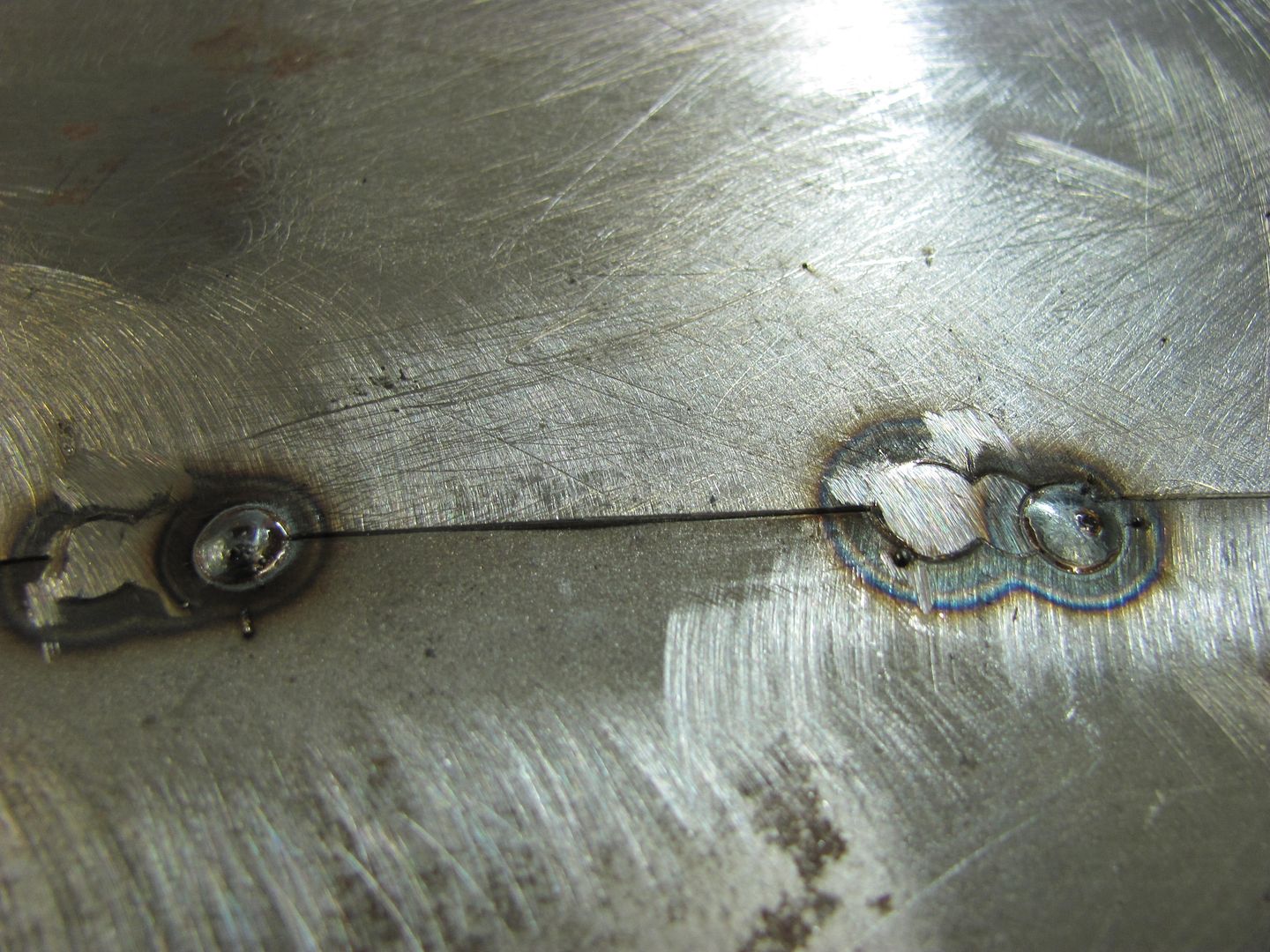
Weld penetration, the back side....


Picture153-1.jpg


Picture154-1.jpg


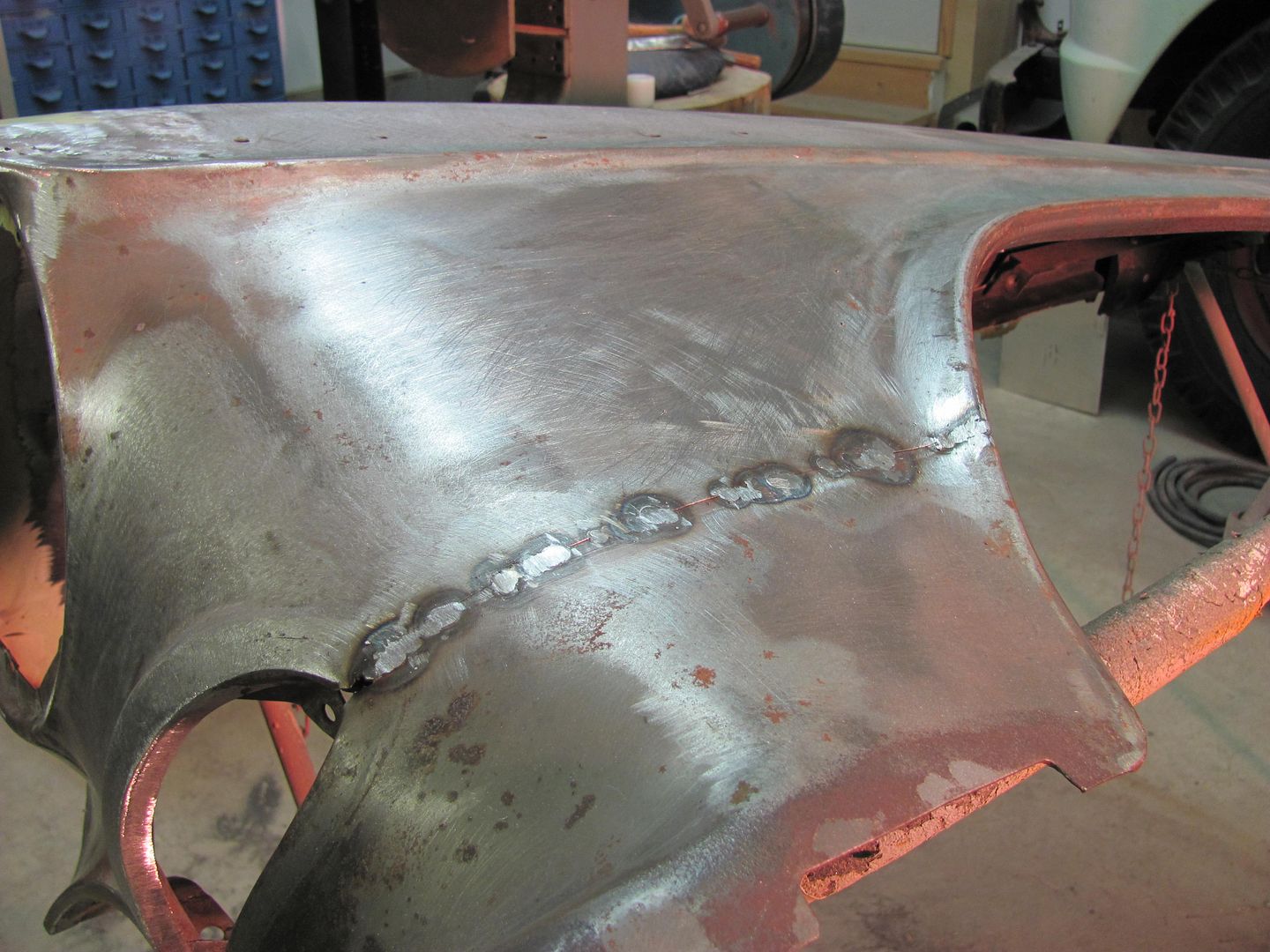
Weld, planish, grind, overlap, repeat...


Picture156-1.jpg


Picture160-1.jpg


Planishing as you go helps to keep the panel's shape in check...


Picture162-1.jpg


Picture163-1.jpg


Picture164-1.jpg


When welding patches and panels together you need full penetration welds to duplicate the factory metal by filling the seam. With a bit of metal bumping, the results above are about as filler free as you can get.

The ER70S-6 wire that typically comes with all Mig machines is a bit troublesome for sheet metal welding in that it hardens up a bit as it cools. This makes it more difficult to planish, and more of a chore to grind and sand down flush. There are other options to make this easier, EZ-Grind wire is softer making it easier to planish and grind, ER70S-7, in addition to those features, has more manganese in it's formulation for better wetting properties, which means better flowout to the parent metal and less proud on the weld. This helps to limit the amount of cleanup work afterward, and make what does need done easier. Still not as clean as a TIG, but it helps.


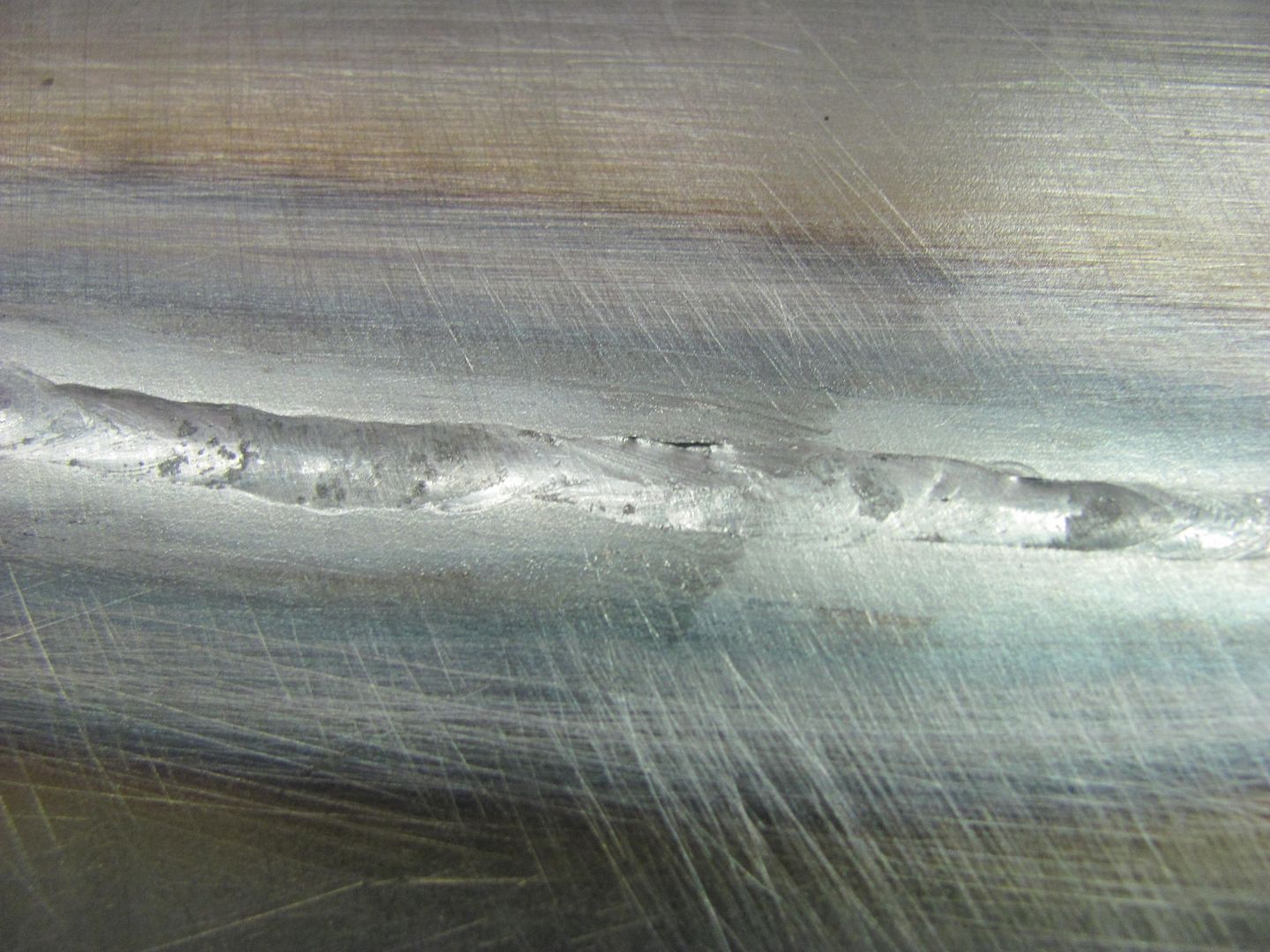
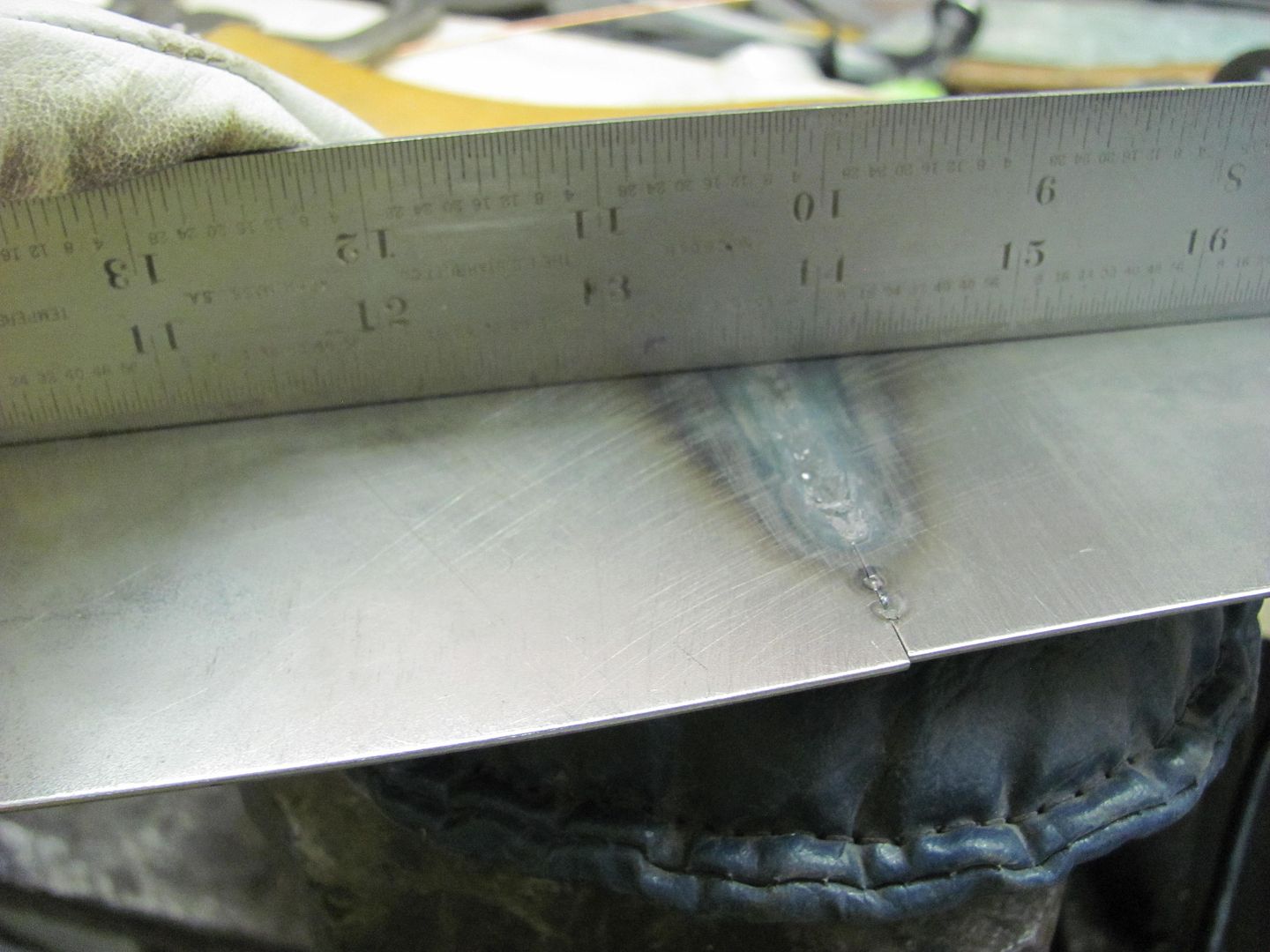
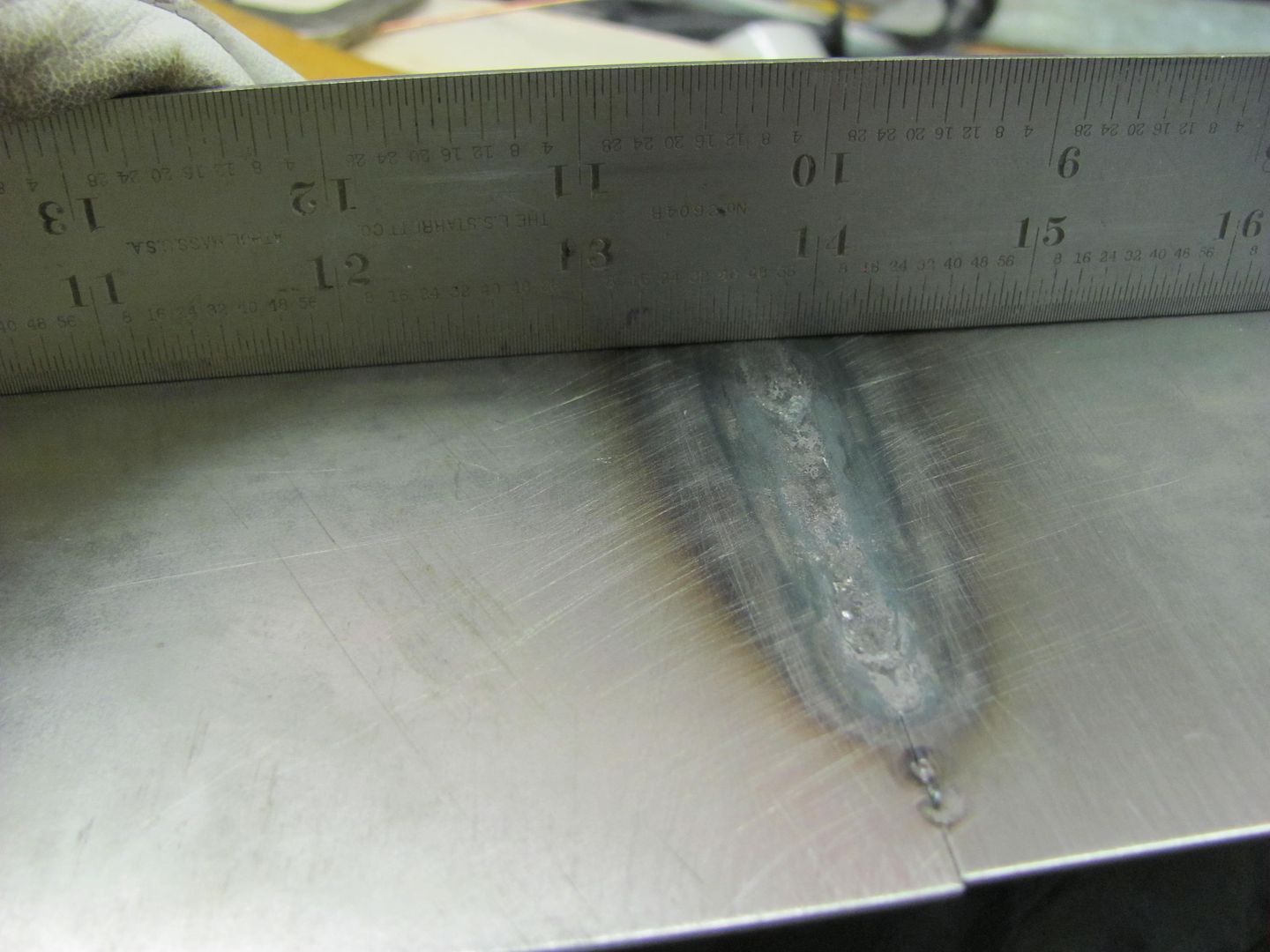
Tig. Welds are typically softer than the -6 Mig wire for an easier job of planishing the sheet metal, easier grinding/sanding the panel smooth. Full penetration Tig weld beads are typically less "proud" than their Mig counterpart, for less cleanup. Tig welding a continuous bead (as on a panel that has been tacked together) will have less shrinking and thus distortion issues than Mig. The continuous weld bead heats up and cools down progressively across the panel, so the shrinking effects are comparatively less than that of the shrink that occurs around each weld dot in Mig welding. For those really skilled at panel fitup, Tig also adds the option of fusion welding, ie: using no filler at all. This is beneficial on all aspects as there is virtually no grinding afterward, just a bit of planishing..:

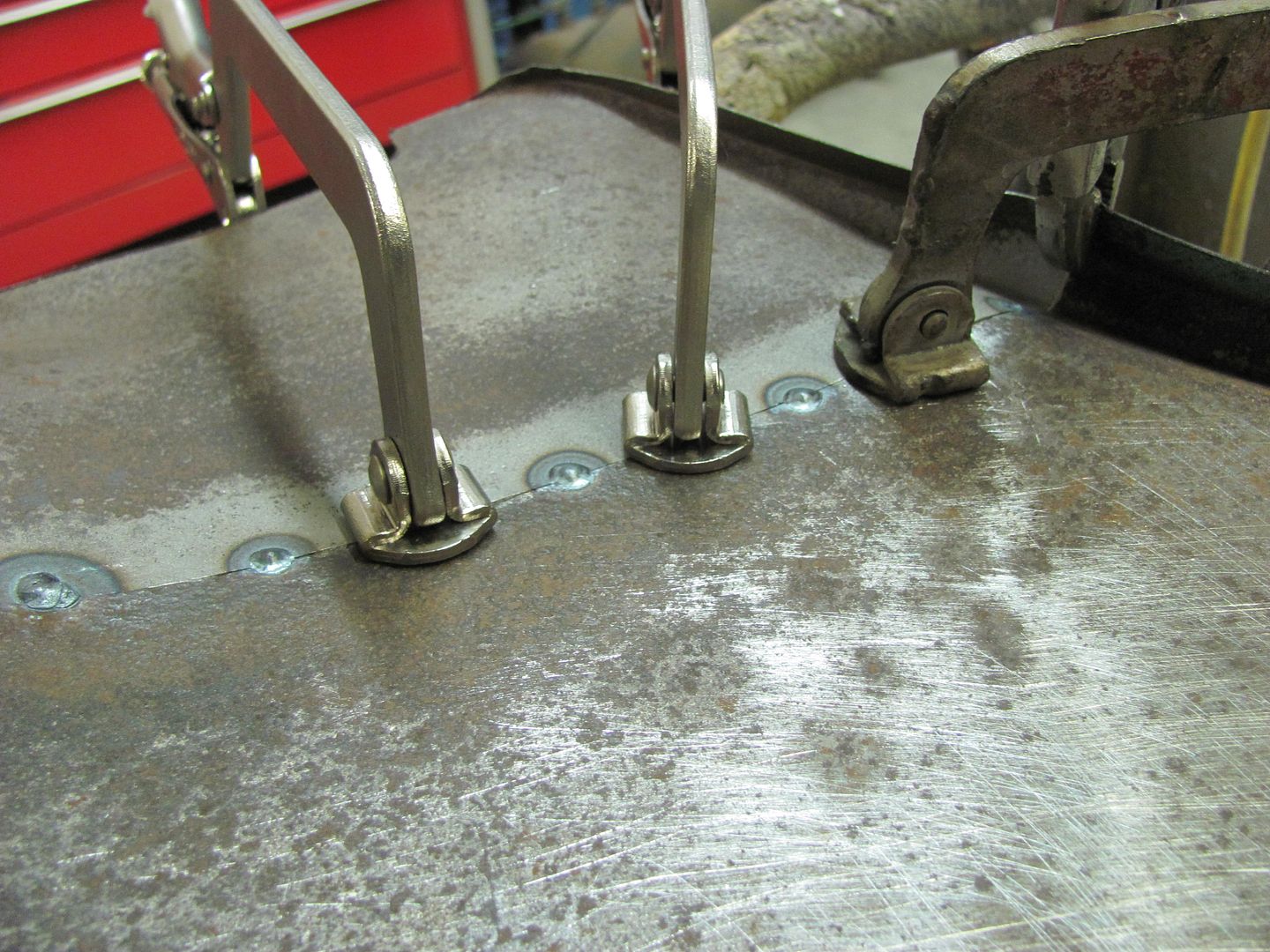
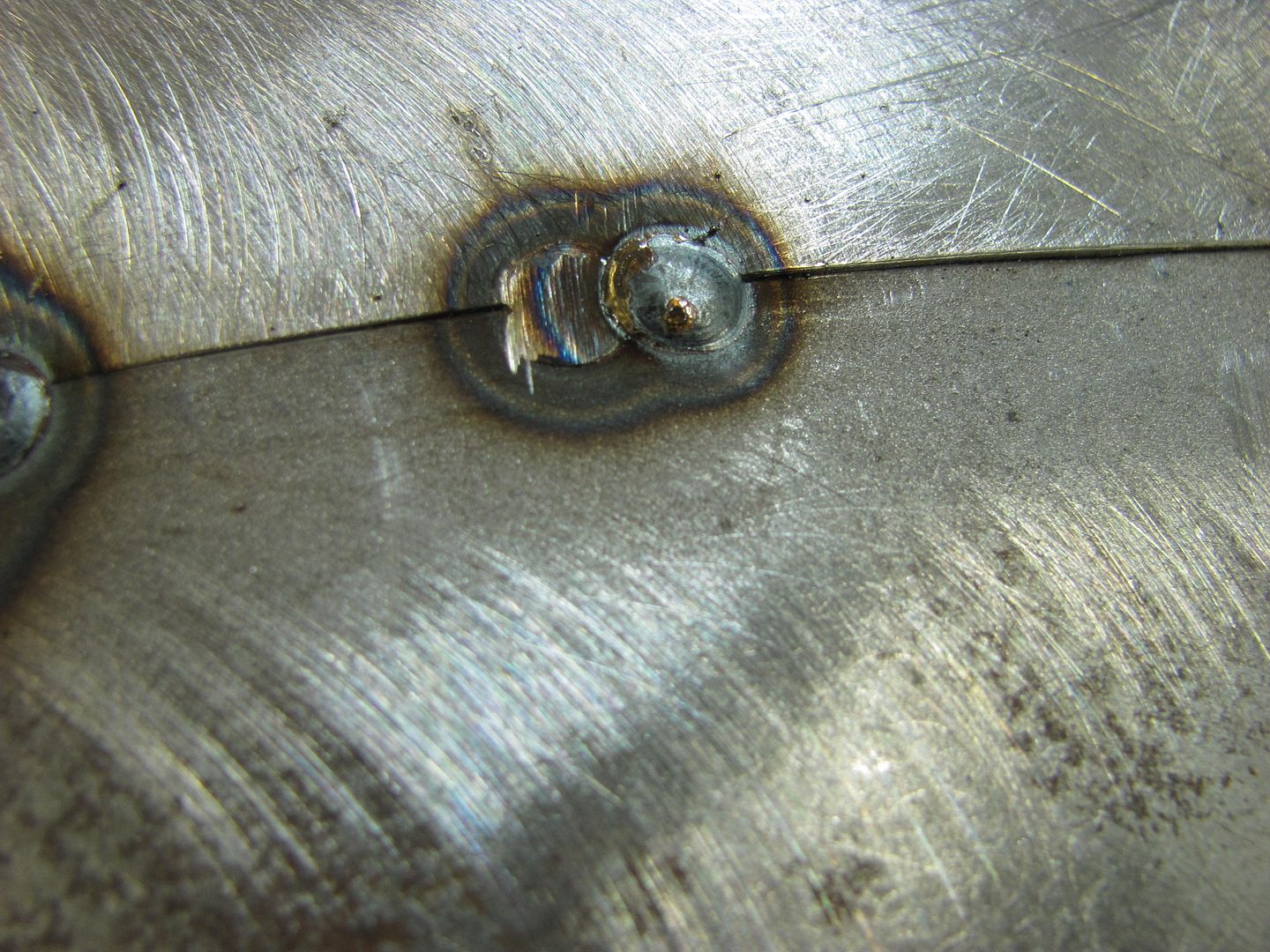
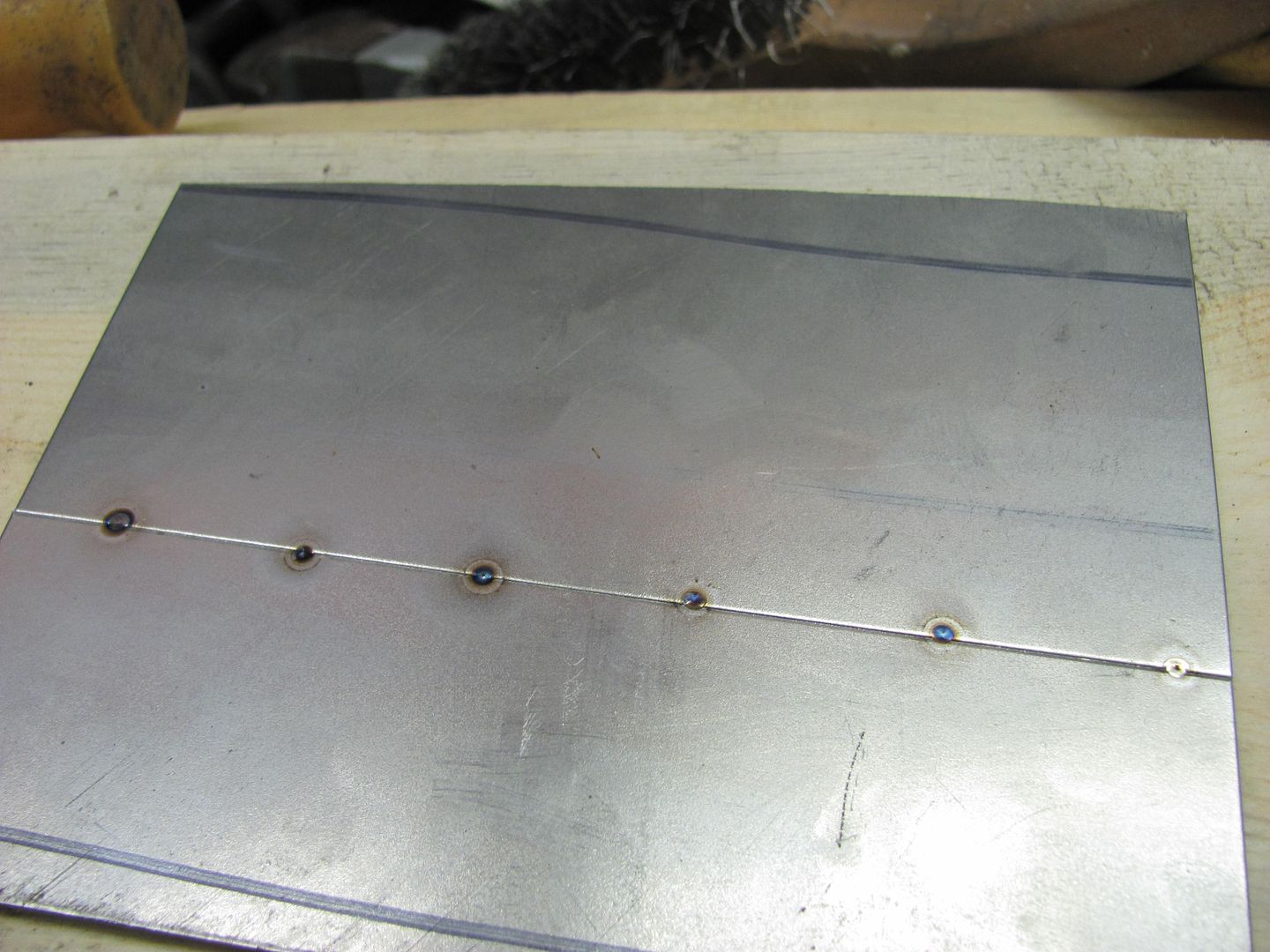
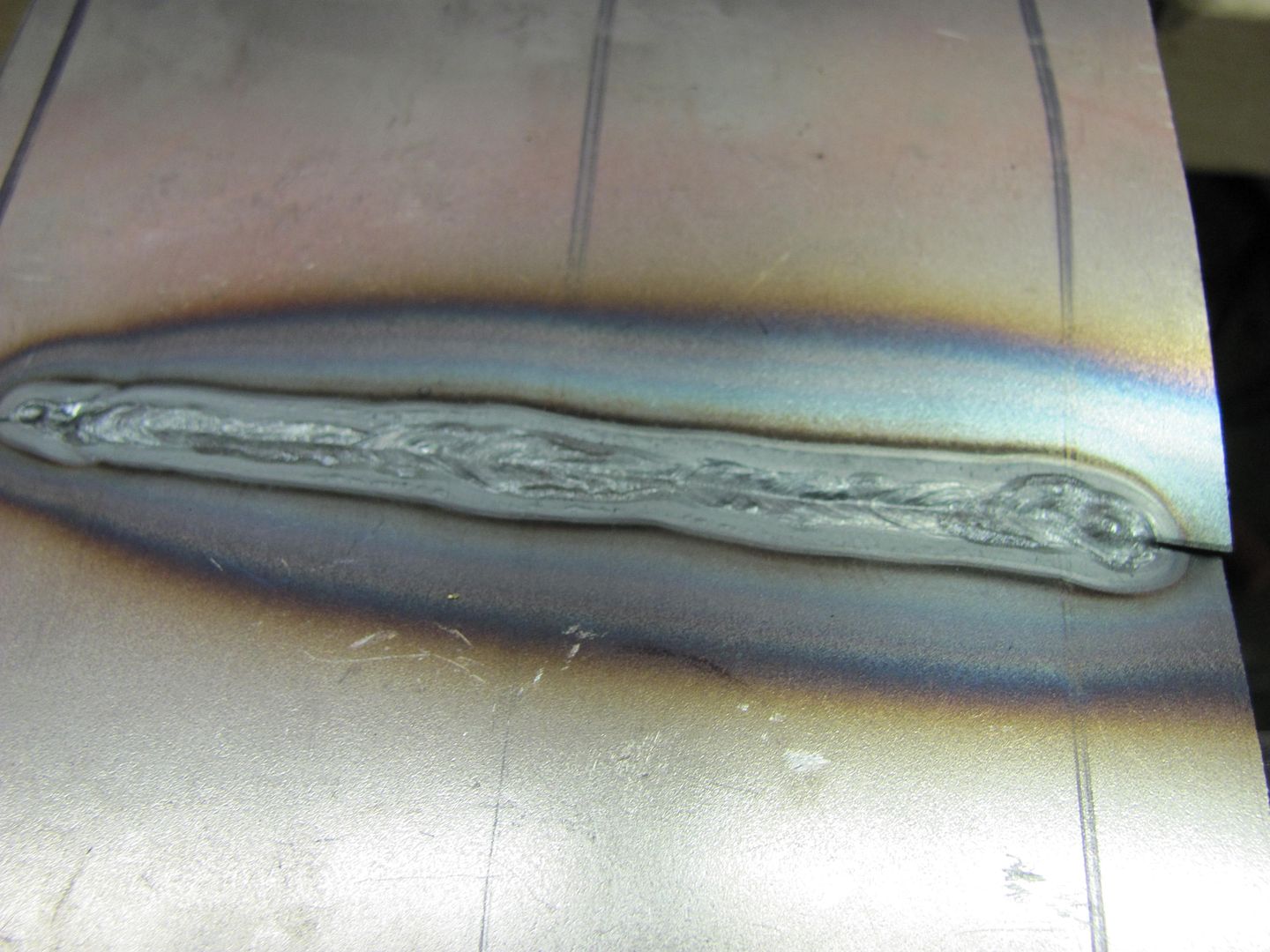
OK, you guys have been hearing me talk about fusion welding and since I was in the shop today I decided to show a sample of the TIG fusion welding. This takes me a bit out of my comfort zone, as I normally pick up the MIG, but here we go. Separate halves tacked together:

Picture128-2.jpg


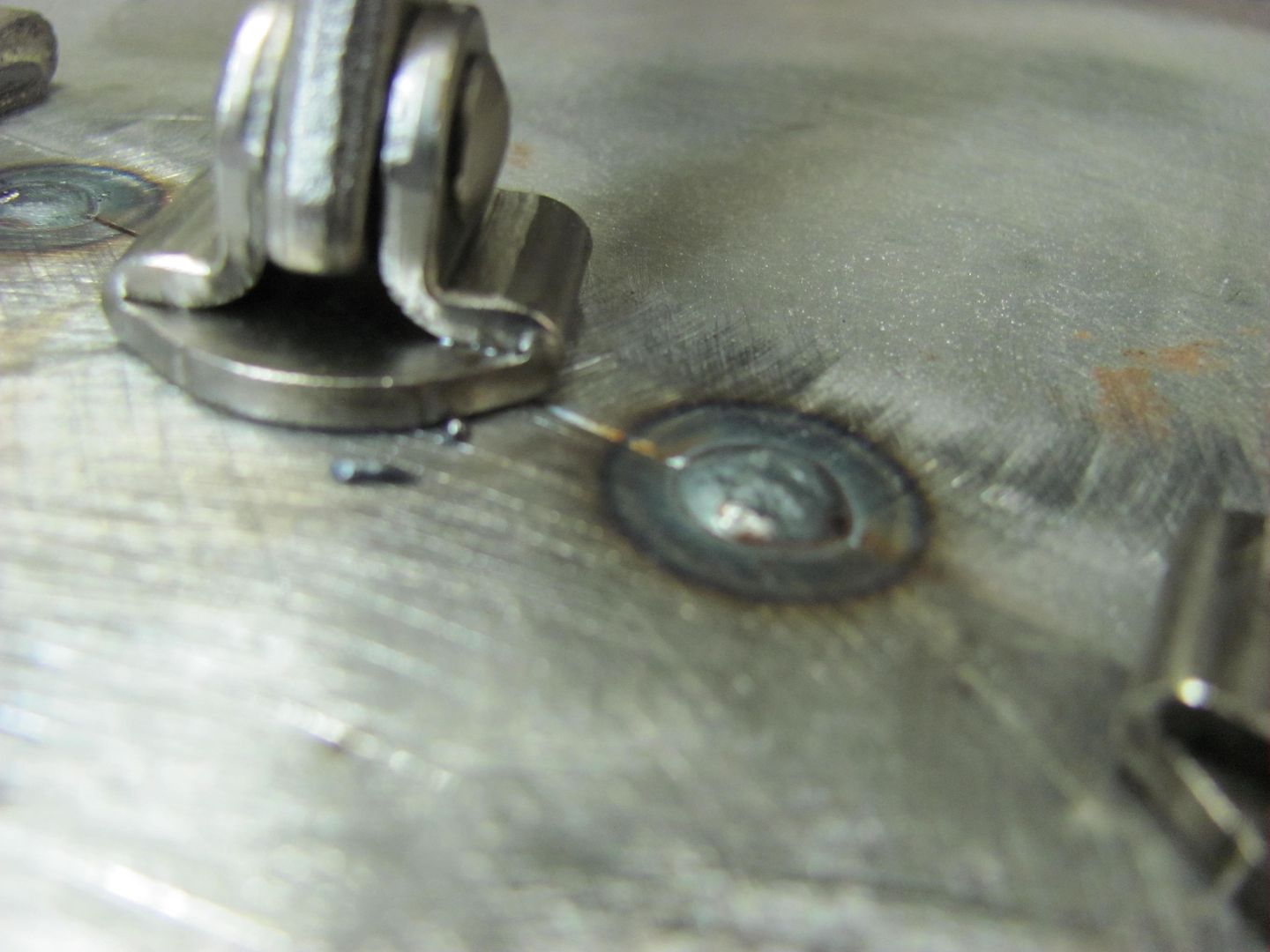
Note the lack of/minimal amount of HAZ around the tacks. This was accomplished by holding the electrode as close as you can without touching and using a quick zap. If held farther away from the panel, you see more blue HAZ surrounding the tack. Here is the fusion weld, no filler added.

Picture114-1.jpg


Picture115-1.jpg


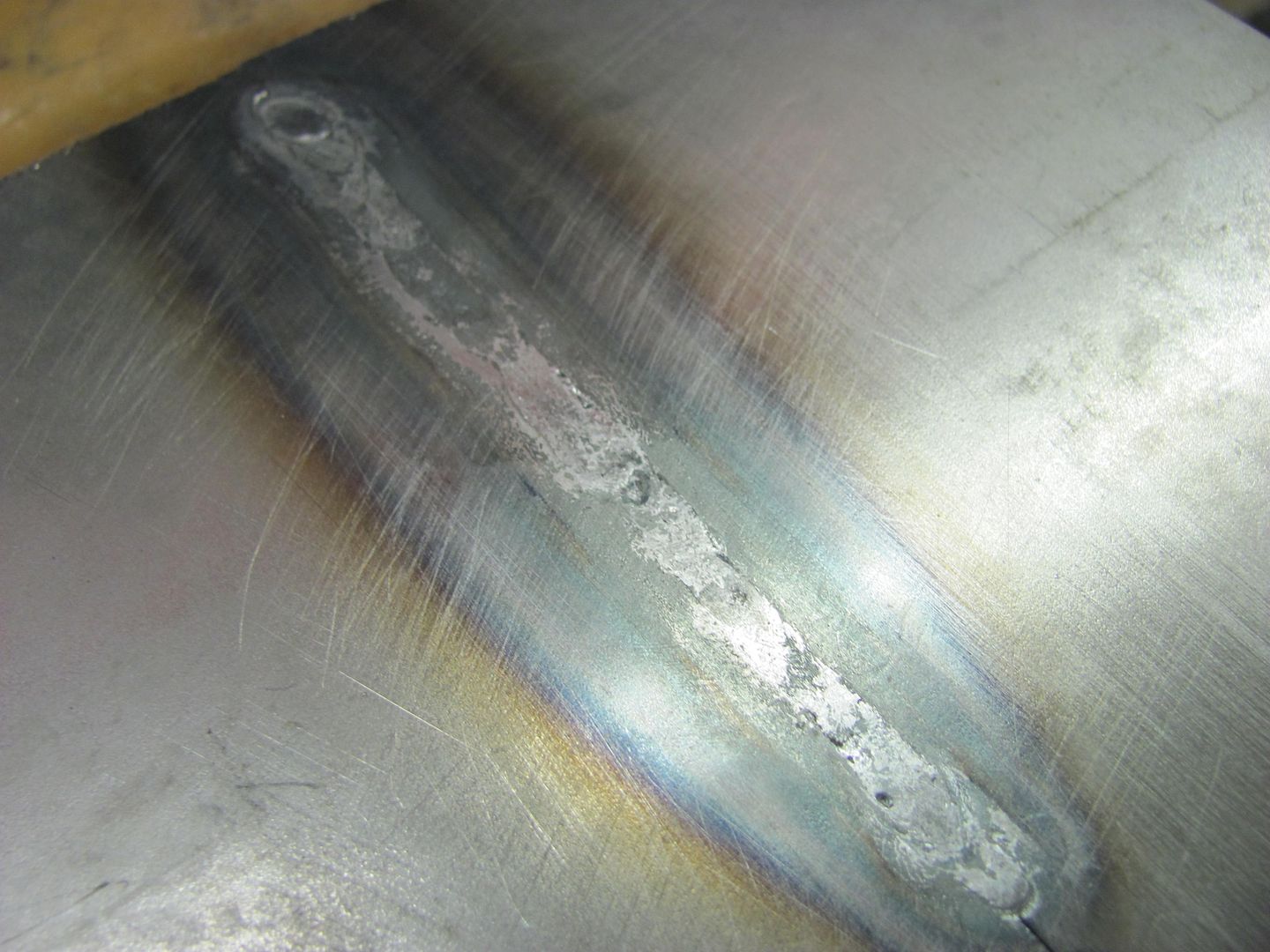
Back side.....

Picture116-1.jpg


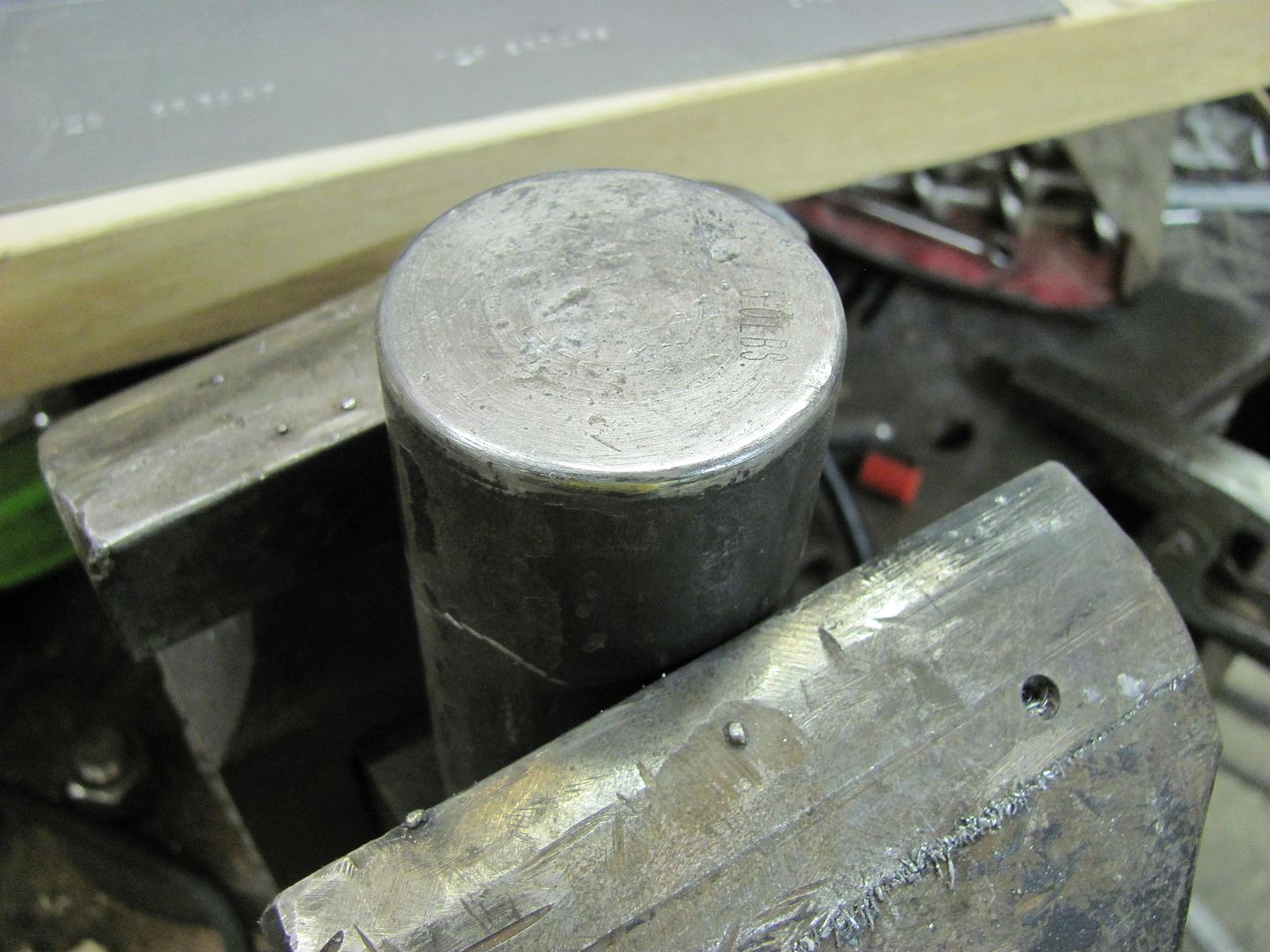
Then, using this anvil to planish out the weld and HAZ:

Picture104-1.jpg


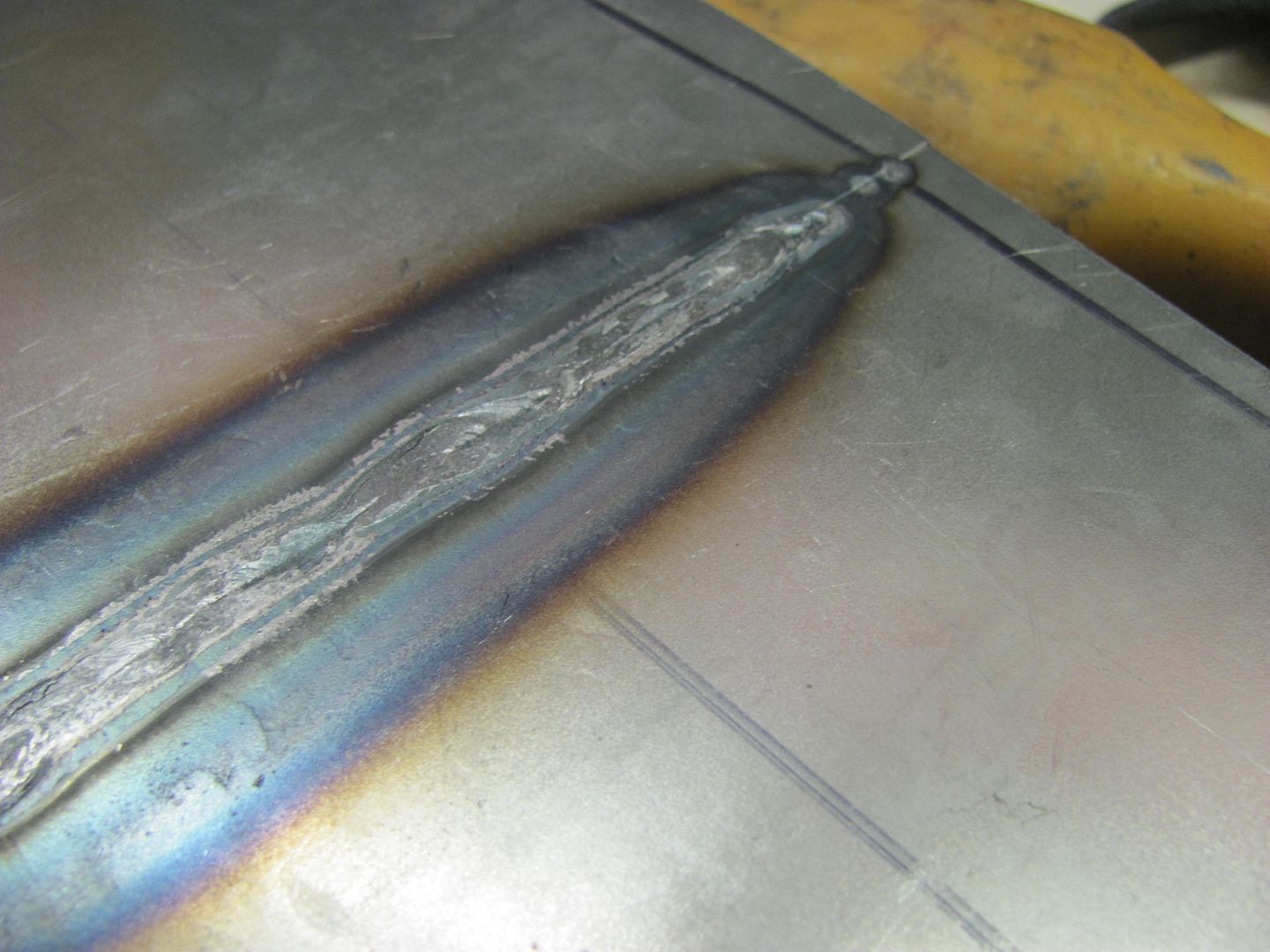
Results in this:

Front

Picture117-1.jpg


Back

Picture118-1.jpg


Nice and flat, no grinding required (in this case)

Picture119-1.jpg


Picture120-1.jpg


This method requires having an absolute tight joint, so fitment will be more time consuming, but just imagine all the time just saved over dressing out a MIG weld...


Sometimes welding on cars will put you in precarious positions that include laying on your back, under a car, under a dash, etc, where filler feed, torch hand, and pedal application just don't seem to want to work together harmoniously. It is predicaments like this that the "point and shoot" of a Mig comes in handy. I think you have a leg up in that you have already been exposed to the Tig machine, so you should know up front if this would be an issue for you. Also, even though you have a scratch start machine, you should still be able to practice at the fusion welding to see if that is a process at your disposal. Hopefully that gives you some pros and cons to consider in the Mig vs. Tig as pertaining to sheet metal.
 

zkling

Well-known member
Joined
Jan 23, 2007
Messages
16,939
So where do you base lines for "commonly only up to a 1/4" with tig" come from?

Personal experience, and working in a production environment, and writing weld procedure specs.

Except you can build NHRA roll cages out of tubing other than 4130, but if you'd like to pick the tubing that they do require GTAW to make your case that is fine. It is just not true that roll cages cannot be welded with GMAW in NHRA they just cannot be made of 4130. Yay for 0.118" wall mild steel.

So much fail....

EXCEPT if you would pull your head out of your *** you could see where he specifically asked a question about 4130. :rolleyes:

Give this a read through. I'm sure it is in there some where I don't have the time or quite honestly the give a damn to look it up for you.

http://www.nhra.com/userfiles/file/2014 Rule Book General Regulations_120413.pdf
 
Last edited:
To avoid these ads, REGISTER NOW!

mechan

Well-known member
Joined
Apr 16, 2009
Messages
401
I see someone said they have not found a case where they needed tig for their racing needs and someone else going OH MY GOD BUT YOU CAN'T MIG CHROMEMOLY! When there are other options that make mig perfectly compliant by their rules.
 

mechan

Well-known member
Joined
Apr 16, 2009
Messages
401
Personal experience, and working in a production environment, and writing weld procedure specs.


EXCEPT if you would pull your head out of your *** you could see where he specifically asked a question about 4130. :rolleyes:

Give this a read through. I'm sure it is in there some where I don't have the time or quite honestly the give a damn to look it up for you.

http://www.nhra.com/userfiles/file/2014 Rule Book General Regulations_120413.pdf

That use of mild steel tubing is allowed? Yes it is in there. It is also in there that mild steel tubing can be either welded via GMAW or GTAW and that chrome-moly is to be welded via GTAW.

Not sure the point you are making?
 

2tomplum

Well-known member
Joined
Mar 17, 2013
Messages
45
I found myself a few months ago really needing to upgrade my equipment. I had previously replaced my old Miller Thunderbolt that had a carrier problem with a CL stick that really was borderline safe. I also had a 110 V Miller mig that just didn't quite cut it. I've never TIG'd before but wanted to learn. I bought a thermal Arc 3 in 1 unit that so far gets great marks from me. I figured that if I really liked TIG and had the desire to do aluminum, I would take the leap. I bought the spool gun figuring that I did want to do some aluminum fab, but that is still in the box. If I choose to aluminum MIG, that will at least use the straight argon that I use for TIG. I like playing w/ the TIG and the pedal -so that is this winter's learning experience.
 

zkling

Well-known member
Joined
Jan 23, 2007
Messages
16,939
That use of mild steel tubing is allowed? Yes it is in there. It is also in there that mild steel tubing can be either welded via GMAW or GTAW and that chrome-moly is to be welded via GTAW.

Not sure the point you are making?

That you are an idiot. Let's retrace our steps now, I hope you can follow along I'll go slow for you.


NHRA will not sanction a MIG welded Chromolly Cage for good reason

What would that good reason be?

Are you following along so far? I hope I don't loose you at the next step. :rolleyes:

Ramp up time of the heating cycle. Unless one is very careful with the mig when welding 4130 it will lead to brittle welds from the much faster ramp up temperature time inherent with the mig process compared to the tig process. Can 4130 be mig welded, sure, done quite a bit in production, however those that do it know what they are doing and it is not done in some guy's back yard on a friday night with a 115v compact feeder. I think NHRA kinda assumes that if the home builder can produce a solid tig weld they have enough knowledge to properly weld 4130.


A trained eye knows. Although ZTFab makes some beautiful welds, they are clearly mig welds.

Then you come in with this off topic B.S. of not even talking about 4130. I never said they have to be 4130, now did I NO.

Except you can build NHRA roll cages out of tubing other than 4130, but if you'd like to pick the tubing that they do require GTAW to make your case that is fine. It is just not true that roll cages cannot be welded with GMAW in NHRA they just cannot be made of 4130. Yay for 0.118" wall mild steel.

So much fail....

Yet you want to talk about "So much fail" WOW.
 
Last edited:

mechan

Well-known member
Joined
Apr 16, 2009
Messages
401
That you are an idiot. Let's retrace out sets now, I hope you can follow along I'll go slow for you.


Are you following along so far? I hope I don't loose you at the next step. :rolleyes:


Then you come in with this off topic B.S. of not even talking about 4130. I never said they have to be 4130, now did I NO.


Yet you want to talk about "So much fail" WOW.

You seem upset ... :)
 

mechan

Well-known member
Joined
Apr 16, 2009
Messages
401
Had you left out the "So much fail" comment it would be a different story, but no that dug the hole right then and there.

Not sure about the hole, but you are providing my entertainment for the night.
 

e-tek

Well-known member
Joined
Dec 19, 2007
Messages
10,690
Location
Saskatoon, SK
MP&C said:
I haven't read much of the previous posts as much appeared to be non-related to sheet metal. So please excuse if I cover something already posted.

Maybe rather than copy and paste a 300 word post that already resides elsewhere, you might actually read the previous posts to see if yours is relevant.... :bounce:

j/k of course...


Now, to get us back on topic, maybe you don't have to choose: has anyone looked at the MIG/TIG/STICK combo welders out now - for a good price too. Thermalarc Fabricator is one:

1000x1000.jpg
 

ADSR

Well-known member
Joined
Jan 12, 2013
Messages
10,713
In what world don't welders fit? .

The real world. Last time I checked, pipe fitting was its own trade. So is tin bashing. I guess you don't understand how union jobs work. If a welder tried to fit his own pipe on the job, he would be in big ****.
 

mechan

Well-known member
Joined
Apr 16, 2009
Messages
401
The real world. Last time I checked, pipe fitting was its own trade. So is tin bashing. I guess you don't understand how union jobs work. If a welder tried to fit his own pipe on the job, he would be in big ****.

I had a book in my pocket from the UA, bout you? Welding is not considered its own trade, it is considered a tool of the trades. (Open shop based craziness aside.) Let me know what the "welders" union is if you could please.

I am guessing you don't understand how the trade lines thing works. I could be wrong, but that would be my assumption given your statement. A pipefitter for example depending on the job would have a vessel considered his work to fit and weld, but depending on the size and application for the vessel it would belong to the boilermakers. (CRAZY BOILERMAKERS BEING TANK BUILDERS! BUT IT ISN'T IN THE NAME!)

Boilermakers would also own all the pipe to the first flange / valve on a system usually. (Crazy cause its pipe and they are boilermakers!) They also, similar to millwrights working under the Westinghouse contract, own just about everything inside their world of the boiler, e.g. scaffolding, which wouldn't normally be something that would be thought of as apart of their trade.

If you had a "welders" union you would have to completely ratify basically all trade union agreements. If you didn't then two things would happen either the welders of the exclusive welders union would never work because it would already be covered by that respective trade or the welders union would be scabbing out others guys work.

In house unions, e.g. USW or IAM, would be their own ball of wax. You didn't reference those though, so I suppose it is a moot point to discuss them. Note the USW is pretty big on multi-trades nowadays though. :)
 
Last edited:

MP&C

Well-known member
Joined
Oct 21, 2009
Messages
4,405
Location
Leonardtown, MD
Maybe rather than copy and paste a 300 word post that already resides elsewhere, you might actually read the previous posts to see if yours is relevant.... :bounce:

j/k of course...

I could go back and read the entire thread, but I think I'd find mine was the most relevant to the OP's questions re: automotive sheet metal. I think the only thing I left out was to show some chicken scratch welding of how not to do it...

Here's a cut and paste,

106_6449.JPG


(j/k of course)

.
 
Last edited:

zkling

Well-known member
Joined
Jan 23, 2007
Messages
16,939
Now, to get us back on topic, maybe you don't have to choose: has anyone looked at the MIG/TIG/STICK combo welders out now - for a good price too. Thermalarc Fabricator is one:


I posted this above but I will move it down here in more neutral terrority. :beer:


The major downside is that they usually give up one aspect that alot of home guys like, AC tig which is commonly used for thin-er aluminum. I'd be willing to bet if you took a poll of hobby welding a major gripe is that outside of the offshore machines a low budget machine capable of welding say an aluminum intake, tank or catch can is out of the question. Not to say that there is something wrong with those small multiprocess machines but just a heads up for people that think they my be getting the best of all worlds with one.
 

mechan

Well-known member
Joined
Apr 16, 2009
Messages
401
I posted this above but I will move it down here in more neutral terrority. :beer:


The major downside is that they usually give up one aspect that alot of home guys like, AC tig which is commonly used for thin-er aluminum. I'd be willing to bet if you took a poll of hobby welding a major gripe is that outside of the offshore machines a low budget machine capable of welding say an aluminum intake, tank or catch can is out of the question. Not to say that there is something wrong with those small multiprocess machines but just a heads up for people that think they my be getting the best of all worlds with one.

They also seem to lack the same quality in arc characteristics you find in non-multi process machines.
 

sberry

Banned
Joined
Jun 18, 2005
Messages
35,747
Location
Brethren, Michigan
I agree that a good share of the rules against mig are to limit the 115v HF crowd from working on highly sensitive cages, figure if they cant afford a good machine they may not be able to run it either.
 

K13

Well-known member
Joined
Oct 24, 2007
Messages
2,233
Location
St. Albert, AB Canada
I have both being used in a home garage car building hobby type situation and since buying my TIG my MIG has been pretty much collecting dust. The other huge bonus of a TIG for me that hasn't been mentioned is you are not shooting a bunch of hot sparks all over the place every time you use the machine. For me, working in a home garage and not a shop, that alone is a pretty much a deal breaker for MIG.
 

Voi

Well-known member
Joined
Oct 10, 2010
Messages
5,151
Location
Western South Dakota
Now, to get us back on topic, maybe you don't have to choose: has anyone looked at the MIG/TIG/STICK combo welders out now - for a good price too. Thermalarc Fabricator is one:

A welding inspector I know has high praise for the MIG function on the Millermatic 200's. If I remember the rest of the conversation correctly, he said TIG was okay, around the same is other inverter DC TIG machines, and that the Arc was lacking.
 

Chris Ball

New member
Joined
Aug 30, 2012
Messages
1
I was in exactly the same boat a few (four, six, something?) years ago. After looking around and thinking about what all I would like to be able to weld I ended up with a tig. I was more torn between getting an oxy acetylene rig (and forgoing any thoughts of aluminum) and going all out for the tig rather than a mig but that was largely because a mere 20ish years earlier I had good results in grade nine shop class with one, and the ability to heat seized up parts seemed like kind of a bonus (over my propane torch), or if you prefer serious cheap vs. the other extreme.

I finally swung over to tig in part (besides that was what I wanted rather than what I could legitimately afford) because my house insurance made it clear, I could have all the argon around I'd like but I was paying for an extra (pretty expensive) rider if I brought oxygen or acetylene into the garage.

I ended up with the little dynasty over a syncrowave (chose your red equivalents) because after factoring in all the electrical costs for wiring, the gulf between the dynasty and the syncrowave narrowed considerably.

All told I couldn't be happier. There are definitely jobs where I could be faster with a mig, but despite always being pressed for time (kids) I'm never that pressed. Besides the first truck repair I did nearly paid for the thing (rotted out hinge mounts on the gwagen I had at the time). When I bought it I picked up a pedal for table work and one of the fingertip jobbies for when I was under the truck and for what I have done that has worked out well. I don't need to use the fingertip jobbie often and as such I'm not that great with it, but when you need it, you need it.

Chris.
 

80WTI_55_CHEV

Well-known member
Joined
Dec 8, 2012
Messages
820
Location
bundamba australia
I own a couple of migs and 2 tigs, i hardly ever use a mig anymore but in saying that i do have the 2 tigs setup for different jobs, 1 being for stainless and mild steel up to 4mm thick and the other setup for thicker steel and alloy ( bigger torch head and bigger amp machine) I don't think there is a right or wrong answer to this as you can get a nice job from either but preparation is the key to any good job.
 
To avoid these ads, REGISTER NOW!
Top Bottom