To avoid these ads, REGISTER NOW!

Critique My Electrical and Lighting Layout (20' x 23')

Mystic_Cobra

Well-known member
Joined
Feb 10, 2013
Messages
65
Location
Northern VA
I'm insulating and wiring my 2-car attached garage. House built in '65. I'm planning to do all the work myself. The ceiling is sheetrocked. The walls are concrete block. The attic above is accessible via pull down stairs. Attic will get new insulation after I'm done. I'm adding a few exterior lights during this project (garage door side and front sidewalk) and adding cabinets (leftover from Kitchen redo) as well. The panel was recently replaced, is in the garage, and is 200A with at least (one installed isn't used) 12 slots free.
Here's a 3D sketchup:

Here's what one framed wall looks like. Note the exterior man door and electric panel.

Primary purpose of garage is for car work of all kinds. I own three Mustangs (one road race car, one '65 street car, one '94 DD.) Again, I do everything myself.

I just finished the framing and I'm getting ready to start the electrical.

I've read a bunch on here so I am planning to put the outlets at 52". The existing (green dots) ceiling lights are standard single bulb CFLs on 3-way switches at the two man doors. I was planning to leave these as-is. Suggestions? They share a circuit with other things in the house. One switch is just inside the exterior door at left and the other is inside the living room at bottom.
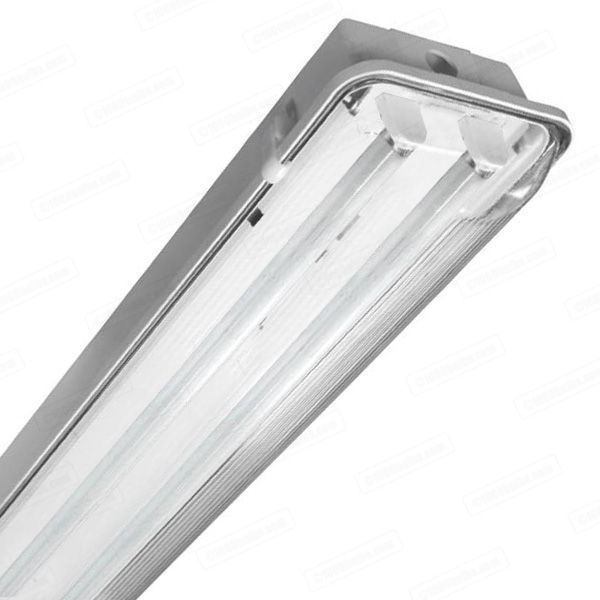
I'm planning to put a bank of three switches just left of the living room man door on the chimney to control the 15 ceiling 4' twin-tubes (yellow rectangles) on a new 15A circuit.
The receptacles would be on two 20A circuits (one existing, one new). I'm still contemplating how many receptacles will be double duplex or single duplex. How many is too many? I have three now on the one existing circuit.
I'm changing from old-school garage doors with horizontal springs and chain drives to ALL NEW torsion spring doors with jack shaft openers (later). Wiring to be done now, doors will come later in the year. One new 15A circuit for these.
I'm planning to put some outlets inside the cabinets so I can run LED strip lighting on the toe kicks for some "under-car" lighting.
I spend most of my time in the lower right quadrant of this garage near the utility sink. The racecar lives on this side and gets more attention than my other Mustangs, the truck, trailer, and the wife's car combined.
Air compressor is a horizontal 110V Craftsman and will likely go under a custom cabinet. Also, in the plan but not on the drawings, is a mini-split AC/heat pump that will go over the exterior man door. Receptacle is on the drawing.
 
Last edited:
To avoid these ads, REGISTER NOW!

Mustang51js

Well-known member
Joined
Jan 24, 2014
Messages
1,734
Location
Haskell nj
Are you framing out the walls or leaving the concrete,everything looks good but does seem like you have a lot of outlets, you could do a couple quad outlets to save some extra work.
 
OP
M

Mystic_Cobra

Well-known member
Joined
Feb 10, 2013
Messages
65
Location
Northern VA
It's hard to see in the pic but some of those red dots have a "C" on them for counter level, "H" for high on the wall, or "L" for low on the wall. In the top left corner, there will be outside receptacles for my trailer (30A) and truck engine block heater placed about 12" off the ground. In the lower right hand corner, I'm putting one outlet and cable drop up high for the TV.
 
OP
M

Mystic_Cobra

Well-known member
Joined
Feb 10, 2013
Messages
65
Location
Northern VA
Are you framing out the walls or leaving the concrete,everything looks good but does seem like you have a lot of outlets, you could do a couple quad outlets to save some extra work.

Yes, framing out all the walls except the interior walls. I put 1" XPS foam on the exterior walls, then the 2x4 framing and will do batt insulation. The interior wall gets no insulation. The chimney is getting 1" XPS only. Half of it isn't used and it gets cold. Walls will be OSB.

So, one quad outlet (split on two different 20A circuits) for a four foot long wall segment instead of two duplex outlets?
 
Last edited:
OP
M

Mystic_Cobra

Well-known member
Joined
Feb 10, 2013
Messages
65
Location
Northern VA
I just had a thought. When I move from chain drive GDOs to jack shaft, I'm going to lose those handy lights in the middle of the ceiling. What do jack-shaft people normally do for entry lights? Keep in mind that 90% of the time the cars I drive on a daily basis are kept outside so it isn't critical.
 

Mustang51js

Well-known member
Joined
Jan 24, 2014
Messages
1,734
Location
Haskell nj
Yes, framing out all the walls except the interior walls. I put 1" XPS foam on the exterior walls, then the 2x4 framing and will do batt insulation. The interior wall gets no insulation. The chimney is getting 1" XPS only. Half of it isn't used and it gets cold. Walls will be OSB.

So, one quad outlet (split on two different 20A circuits) for a four foot long wall segment instead of two duplex outlets?

Yeah that's up to you, there's no code in garages for spacing of outlets, as long as you have one gfi outlet your good. What a lot of guys do is run quad outlets around the garage and have two or three circuits between them, alternating the outlets on different lines if you know what I mean. So say if you did four quad outlets then the left outlet for each one would be one line and the right another.
 

2ManyProjects

Well-known member
Joined
Jul 18, 2013
Messages
757
I'm insulating and wiring my 2-car attached garage. House built in '65. I'm planning to do all the work myself. The ceiling is sheetrocked. The walls are concrete block. The attic above is accessible via pull down stairs. Attic will get new insulation after I'm done. I'm adding a few exterior lights during this project (garage door side and front sidewalk) and adding cabinets (leftover from Kitchen redo) as well. The panel was recently replaced, is in the garage, and is 200A with at least (one installed isn't used) 12 slots free.

So far, so good. And it looks like you're doing a nice job in general.

Here's a 3D sketchup:
{image deleted}
Here's what one framed wall looks like. Note the exterior man door and electric panel.
{image deleted}
I just finished the framing and I'm getting ready to start the electrical.
{image deleted}

Unfortunately, your ImageShack links don't work for me; so I can't see a lot of detail in this diagram. But I do have some comments...

I've read a bunch on here so I am planning to put the outlets at 52".

Presuming you mean to the bottom of the boxes, that's fine.

The existing (green dots) ceiling lights are standard single bulb CFLs on 3-way switches at the two man doors. I was planning to leave these as-is. Suggestions? They share a circuit with other things in the house.

Personally, I'd probably rip them out, and move on. Once you get the "real" garage lighting in, they will be uselessly redundant anyway; and if nothing else, you "free up" a little capacity on whatever circuit they're currently shared with.

One switch is just inside the exterior door at left and the other is inside the living room at bottom.
I'm planning to put a bank of three switches just left of the living room man door on the chimney to control the 15 ceiling 4' twin-tubes (yellow rectangles) on a new 15A circuit.

I would recommend that AT LEAST whatever forms your "walk-through" lighting be controlled by switches at EVERY possible entry point, including both sides of the overhead doors. It can't hurt to also have control of the other lights from these points, as well. More on that later.

The receptacles would be on two 20A circuits (one existing, one new). I'm still contemplating how many receptacles will be double duplex or single duplex. How many is too many? I have three now on the one existing circuit.

For your general-purpose 120V outlets, my usual "recipe" is: Put one double-gang box every 6-8 feet around the entire perimeter of the space, with each of the two duplexes in that box fed from a different breaker than the other one. On the wall with the two overhead doors, I'd put one pair of duplexes on each side, AND a pair on that center post (this might seem like "overkill"; but I like having outlets handy WHEREVER I'm working). In small shops (such as yours), two 20A circuits will normally handle the whole thing; in larger shops, split it up further as you see fit. And finally, note that at least in anything which might be considered a "residential garage", NEC now requires that ALL 120V outlets be GFCI protected.

I'm changing from old-school garage doors with horizontal springs and chain drives to ALL NEW torsion spring doors with jack shaft openers (later).

Good move. That will help clean things up significantly.

Wiring to be done now, doors will come later in the year. One new 15A circuit for these.

Make that a 20A circuit, on general principles. Probably not a big deal unless you happen to hit both buttons at once; but it can't hurt. Also, DO plan on hard-wiring those GDOs, as opposed to using a plug & receptacle.

I'm planning to put some outlets inside the cabinets so I can run LED strip lighting on the toe kicks for some "under-car" lighting.

Well... OK. This is more in the realm of "silly decorative stuff" than a practical consideration; so do whatever floats your boat. Just note that you will probably need to leave space for at least one transformer/power-supply; and you probably WON'T need all that much juice (certainly not a separate circuit) just to run a few low-intensity LEDs.

I spend most of my time in the lower right quadrant of this garage near the utility sink. The racecar lives on this side and gets more attention than my other Mustangs, the truck, trailer, and the wife's car combined.
Air compressor is a horizontal 110V Craftsman and will likely go under a custom cabinet.

If I were you, I would plan now for a more ambitious compressor -- not only in terms of an electrical supply; but also the physical location and (hopefully) some sort of sound-insulating enclosure for it. Depending on the dimensions (I can't really tell), that "notch" adjacent to the chimney bump-out might be an ideal spot; it's near-certainly useless waste space for much of anything else.

Also, in the plan but not on the drawings, is a mini-split AC/heat pump that will go over the exterior man door. Receptacle is on the drawing.

That should get its own circuit, regardless of whether the manufacturer claims it is "necessary" or not.

It's hard to see in the pic but some of those red dots have a "C" on them for counter level, "H" for high on the wall, or "L" for low on the wall.

I can understand a few strategically placed "High" outlets for such things as TV, Stereo, etc.; but what is the point of the "Low" outlets?

In the top left corner, there will be outside receptacles for my trailer (30A) and truck engine block heater placed about 12" off the ground.

I'd bring those up MUCH higher. This will not only make them easier to use (no bending over), it will keep them more out of harms way from such things as snow drifts, lawnmower-flung debris/shrapnel, etc.

In the lower right hand corner, I'm putting one outlet and cable drop up high for the TV.

Covered above.

Yes, framing out all the walls except the interior walls. I put 1" XPS foam on the exterior walls, then the 2x4 framing and will do batt insulation. The interior wall gets no insulation. The chimney is getting 1" XPS only. Half of it isn't used and it gets cold. Walls will be OSB.

I probably would have used 2-inch polyisocyanurate; but it's not a big deal at this point, and you're already past that point anyway.

Also, you MIGHT want to consider "SlatWall" in place of the OSB, for at least the upper half of each wall:

http://www.gershelbros.com/product0.html
swstandardfull.jpg


http://www.mygaragestore.com/detail.aspx?ID=1478
sw_bracket_banner.jpg


http://kc-store-fixtures.com/blog/?p=298
slatwall_brackets_heavy.jpg

slatwall_faceouts_square.jpg

slatwall_hooks1.jpg


It's attractive, pre-finished, and provides EXTREMELY flexible storage options, which can be easily changed around at will as needed. And at least with the optional aluminum channel reinforcements, it can carry a LOT of load (it's fairly capable stuff even without those reinforcements).

So, one quad outlet (split on two different 20A circuits) for a four foot long wall segment instead of two duplex outlets?

It's really six of one, half-dozen of the other. After all, that "quad outlet" really is just two duplexes in the same box. And by having ALL the boxes wired the same way, it's easy to keep track of which circuit you're plugging what into, if that ever becomes a concern. Every four feet is arguably overkill (except perhaps immediately adjacent to the workbench areas); but if you WANT to do that, it only hurts in the wallet.

I just had a thought. When I move from chain drive GDOs to jack shaft, I'm going to lose those handy lights in the middle of the ceiling. What do jack-shaft people normally do for entry lights?

The GDO will surely have (at least) a relay contact which can be used to control external lighting. It MAY even have a switched receptacle for this purpose; but I'd likely not use that even if available. Instead, I'd wire the relay contact into something like this:

http://www.smarthome.com/2450/IOLin...-Contact-Closure-Interface-1-In-1-Out-/p.aspx
2450big.jpg


And in turn, interface that to the main lighting control system.

Which brings us to my comment above regarding the switching/control system in general...

With as many potential entry points (and thus desired control locations) as you have, you are a near-ideal candidate for using something like Insteon controllers in place of conventional mechanical switches. For example:

http://www.smarthome.com/2477S/Swit...-Remote-Control-Switch-Dual-Band-White/p.aspx
2477sbig.jpg


http://www.smarthome.com/2487S/Keyp...pad-with-On-Off-Switch-Dual-Band-White/p.aspx
2487sbig.jpg


Note that these are actually EASIER to wire for than conventional "3-way" and 4-way" switches; and they offer a TON more flexibility, which makes setting up a "multi-stage" lighting system a piece of cake.

 
OP
M

Mystic_Cobra

Well-known member
Joined
Feb 10, 2013
Messages
65
Location
Northern VA
My question is "Why is the track for your garage door opener so low?

Raise that sucker up to about 4" below the ceiling

Both doors are going to get replaced. I'm planning to do high lift conversions on both and get them tight to the ceiling as you suggest.
 
OP
M

Mystic_Cobra

Well-known member
Joined
Feb 10, 2013
Messages
65
Location
Northern VA
So far, so good. And it looks like you're doing a nice job in general.
Thanks!

Unfortunately, your ImageShack links don't work for me; so I can't see a lot of detail in this diagram. But I do have some comments...

Is there a better way to share images?

Personally, I'd probably rip them out, and move on. Once you get the "real" garage lighting in, they will be uselessly redundant anyway; and if nothing else, you "free up" a little capacity on whatever circuit they're currently shared with.

With the one switch inside on a freshly painted wall (and me not being a real electrician) I feel like it would be a lot of work to change these. I'd love to know if there is an easy way to do it. Getting rid of those giant 150W equivalent CFLs would make the joint look classier, for sure.

I would recommend that AT LEAST whatever forms your "walk-through" lighting be controlled by switches at EVERY possible entry point, including both sides of the overhead doors. It can't hurt to also have control of the other lights from these points, as well. More on that later.

Both sides of the doors? Wow, that's a lot of switches.

Make that a 20A circuit, on general principles. Probably not a big deal unless you happen to hit both buttons at once; but it can't hurt. Also, DO plan on hard-wiring those GDOs, as opposed to using a plug & receptacle.

I'm sure I'll open both at once so I'll take that advice. Does hard wiring clean up the install? What's the advantage there?

Well... OK. This is more in the realm of "silly decorative stuff" than a practical consideration; so do whatever floats your boat. Just note that you will probably need to leave space for at least one transformer/power-supply; and you probably WON'T need all that much juice (certainly not a separate circuit) just to run a few low-intensity LEDs.

NO, I actually planned for those lights to be useful. I have some in a cabinet I built and they are bright. If LED strips won't give me any real light, I'll ditch that idea. I spend A LOT of time under the car. I pulled the engine 5 times in 18 months. And I HATE working in poor light.

If I were you, I would plan now for a more ambitious compressor -- not only in terms of an electrical supply; but also the physical location and (hopefully) some sort of sound-insulating enclosure for it. Depending on the dimensions (I can't really tell), that "notch" adjacent to the chimney bump-out might be an ideal spot; it's near-certainly useless waste space for much of anything else.

Good idea. It's a great place to hide a compressor. That compressor won't keep up when I'm grinding or sanding and it's awfully noisy! That nook beside the chimney will be about 20"x30" when finished. I was thinking about shelves or cabinets there

I can understand a few strategically placed "High" outlets for such things as TV, Stereo, etc.; but what is the point of the "Low" outlets?
I'd bring those up MUCH higher. This will not only make them easier to use (no bending over), it will keep them more out of harms way from such things as snow drifts, lawnmower-flung debris/shrapnel, etc.

Low outlets were to provide power inside the cabinets (for the toe kick lights) and the outdoor receptacles. I'll take your advice and move up those outdoor receptacles. And I love to hear any ideas for under-car lighting. No lift now but probably in the future. I work on jack stands.

Also, you MIGHT want to consider "SlatWall" in place of the OSB, for at least the upper half of each wall:
It's attractive, pre-finished, and provides EXTREMELY flexible storage options, which can be easily changed around at will as needed. And at least with the optional aluminum channel reinforcements, it can carry a LOT of load (it's fairly capable stuff even without those reinforcements).

I'll look into it. I have cabinets from the kitchen redo that I was planning to refinish (new hardware/paint) and use. They are drawn to scale in my drawing.

It's really six of one, half-dozen of the other. After all, that "quad outlet" really is just two duplexes in the same box. And by having ALL the boxes wired the same way, it's easy to keep track of which circuit you're plugging what into, if that ever becomes a concern. Every four feet is arguably overkill (except perhaps immediately adjacent to the workbench areas); but if you WANT to do that, it only hurts in the wallet.

I'll have counters across the whole side wall with the two windows, an 8' counter/bench next to the sink, and two roughly 40" counters on the wall with the back door. I like the consistency and cleanliness (less work, too) of having fewer quads.

The GDO will surely have (at least) a relay contact which can be used to control external lighting. It MAY even have a switched receptacle for this purpose; but I'd likely not use that even if available. Instead, I'd wire the relay contact into something like this:

And in turn, interface that to the main lighting control system.
Which brings us to my comment above regarding the switching/control system in general...
With as many potential entry points (and thus desired control locations) as you have, you are a near-ideal candidate for using something like Insteon controllers in place of conventional mechanical switches.

I will definitely look into these. I'm a computer systems engineer so this is right up my alley.
 
Last edited:

2ManyProjects

Well-known member
Joined
Jul 18, 2013
Messages
757
Is there a better way to share images?

Well, you can upload them to a personal folder here at GJ, then link as needed; I'm not sure about size limits, etc., as I've only done it once or twice. Even ImageShack CAN work. I've used it on occasion when posting to other "vBulletin"-based boards; but you need to be careful about how you form the links (which preferably go DIRECTLY to the raw full-size image itself, as opposed to any of their "helpful" ad-laden pages).

With the one switch inside on a freshly painted wall (and me not being a real electrician) I feel like it would be a lot of work to change these. I'd love to know if there is an easy way to do it. Getting rid of those giant 150W equivalent CFLs would make the joint look classier, for sure.

The existing switch need not be a big deal. You might even be able to re-use it (and the wire loop leading to it), such as for your "walk through" lighting or even for one of those Insteon keypads. The details will depend on exactly HOW that switch is currently wired, and how the wire serving it is routed.

{re: my perhaps "generous" switch recommendations}
Both sides of the doors? Wow, that's a lot of switches.

The point is to have one handy wherever and whenever you might need it at any given moment. And as alluded to earlier, if you go with Insteon, adding additional switches/keypads is very simple and does NOT require complicated "multi-way" wiring schemes. Now, on that particular wall, you MIGHT get away with a single switching location on the center post between the two overhead doors; but that spot will probably already be fairly busy with other "stuff", so I was assuming that you'd not want to clutter it up more than necessary.

{re: Garage Door Openers}
I'm sure I'll open both at once so I'll take that advice. Does hard wiring clean up the install? What's the advantage there?

Yes, it's neater & cleaner, IMCO; but really, it has more to do with the current NEC requirements, one of which is for ALL 120V outlets in garages to be GFCI-protected. GFCIs and motors sometimes don't "play nicely together"; so it's best to avoid that combination whenever reasonably feasible to do so.

{re: LEDs in the cabinet toe-kicks}
NO, I actually planned for those lights to be useful. I have some in a cabinet I built and they are bright. If LED strips won't give me any real light, I'll ditch that idea.

It depends in part on the particular LEDs; but I would not expect ANYTHING mounted at floor level, AND neither directly under the car nor pointing more-or-less straight up, to provide much in the way of useful under-car illumination.

I spend A LOT of time under the car. I pulled the engine 5 times in 18 months. And I HATE working in poor light.

Understood. And more on under-car lighting later. In the meantime, take pity on the NASCAR guys who (at least used to) do that job at least a couple times per weekend (more, back in the days of having separate dedicated "practice engines", "qualifying engines" and "race engines").

Good idea. It's a great place to hide a compressor. That compressor won't keep up when I'm grinding or sanding and it's awfully noisy! That nook beside the chimney will be about 20"x30" when finished. I was thinking about shelves or cabinets there

Hmmm... 20 by 30 inches is not much, and may well severely limit your choice of compressor, especially if "30 inches" is in the depth direction. But still, if you can indeed find an appropriate compressor which will fit nicely, I can't think of a better place for it. If you do go this route, I suggest that some form of venting to the outside also be installed, both for a ready supply of "compressible" air, and for cooling.

Low outlets were to provide power inside the cabinets (for the toe kick lights) and the outdoor receptacles. I'll take your advice and move up those outdoor receptacles. And I love to hear any ideas for under-car lighting. No lift now but probably in the future. I work on jack stands.

Everybody and his brother has a different idea on how to solve the under-car lighting problem, probably because NONE of the solutions thus far dreamt up are either clearly superior to the others, or completely satisfactory in and of themselves.

Beyond the obvious things like a cord reel with a hand-held drop-light on it, the three approaches which most appeal to ME are:

A. - A home-brew "light sled", using some form of LED lighting (to keep heat under control and generally reduce fragility), mounted on a low-profile frame with casters on the bottom. If the budget will permit, you could even use something like this:

http://www.lithonia.com/commercial/led+bay+lighting.html
http://www.homedepot.com/p/Lithonia-Lighting-2-ft-White-LED-High-Bay-Light-IBH-11L-MV/203812710
6c03025b-1f9f-4883-84bd-441d389f7baf_1000.jpg


as the light source. In any event, the whole thing is low enough that it can get wheeled under the car even when it's only on jack stands.

B. - If you DO have a lift, I'd consider mounting something like these:

http://www.1000bulbs.com/product/59133/TCP-WL4WA254USPQS.html
59133_aed333bc136fa843c33291b5763dc0339059dbd5_original_x_600_1371807454.jpg


http://www.homedepot.com/p/Lithonia...Fluorescent-Fixture-XWL-2-32-120-RE/202034431
ce081708-cec2-4b85-9218-af9e7a2901dd_1000.jpg


at about chest height on the lift posts themselves -- presumably on both the "forward" and rearward" post faces in the case of a two-post lift, as long as all the controls and such are (or can be moved to) the "outward" faces (the "inside" faces are by definition consumed by the lift tracks and such).

C. - IF suitable "heavy duty" fixtures with well-sealed heavy glass "access doors" can be found (and I have yet to see anything which REALLY fits the bill here), mounting lights directly IN the concrete floor, pointing up, could potentially provide the best lighting of the entire undercarriage. But it's a safe bet that neither the fixtures nor the installation would be inexpensive.

{re: SlatWall}
I'll look into it. I have cabinets from the kitchen redo that I was planning to refinish (new hardware/paint) and use. They are drawn to scale in my drawing.

In which case, you have two choices: I think you can get hardware to "hang" such cabinets on the SlatWall (as opposed to buying pre-made upper cabinets, which probably wouldn't be cost-effective). OR... You could still mount those cabinets conventionally, then use SlatWall between the bottom of the upper cabinets and the top of the workbench(es), as well as in the various other areas where there would otherwise just be blank wall or perhaps home-brew shelving.

{re: Insteon}
I will definitely look into these. I'm a computer systems engineer so this is right up my alley.

Go for it. But fair warning: Once you get started down the road of "Home Automation", it can be an addictive pursuit.


amwalker

Well-known member
Joined
Jan 17, 2007
Messages
62
Location
Okinawa, Japan
I just had a thought. When I move from chain drive GDOs to jack shaft, I'm going to lose those handy lights in the middle of the ceiling. What do jack-shaft people normally do for entry lights? Keep in mind that 90% of the time the cars I drive on a daily basis are kept outside so it isn't critical.

My Liftmaster 8500 came with a separate light that mounts to the ceiling where a traditional opener would mount and is controlled by the jackshaft opener via radio signals/magic. The light also plugs into the outlet that a traditional opener uses so it's a pretty slick set up.

Only because I had a good experience with the company, here is a link to their site. Direct 2U Garage Door Outlet
 

TractorJeff

Well-known member
Joined
Dec 8, 2013
Messages
3,309
Location
Elkhorn, WI
I would be interested in knowing more about how you secured the 1 inch Foam to the wall. I'll start a thread over on the heating page to stay "Politcally Correct".
 
OP
M

Mystic_Cobra

Well-known member
Joined
Feb 10, 2013
Messages
65
Location
Northern VA
I guess I should look at compressor options right away. I just remeasured that nook. It will be 20.5" wide after the walls go on. I could replace the 2x4s on the exterior side with 2x3s but only if that extra inch will increase my options in good compressors. My guess is probably not. My horizontal compressor is just under 20" wide with the wheels.
 

2ManyProjects

Well-known member
Joined
Jul 18, 2013
Messages
757
I guess I should look at compressor options right away. I just remeasured that nook. It will be 20.5" wide after the walls go on.

Ouch.

That does make things tight. Just to throw a dart (I am NOT necessarily recommending these makes/models/etc.), here are a few representative samples.

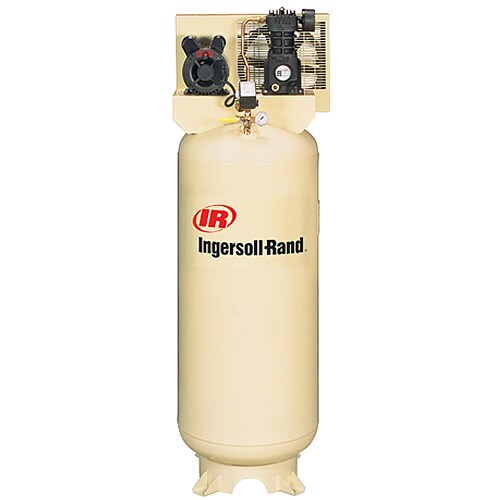
http://www.aircompressorsdirect.com/Ingersoll-Rand-SS3L3-Air-Compressor/p688.html
SS3L3_500.jpg

Dimensions listed as: 20L x 23W x 66H

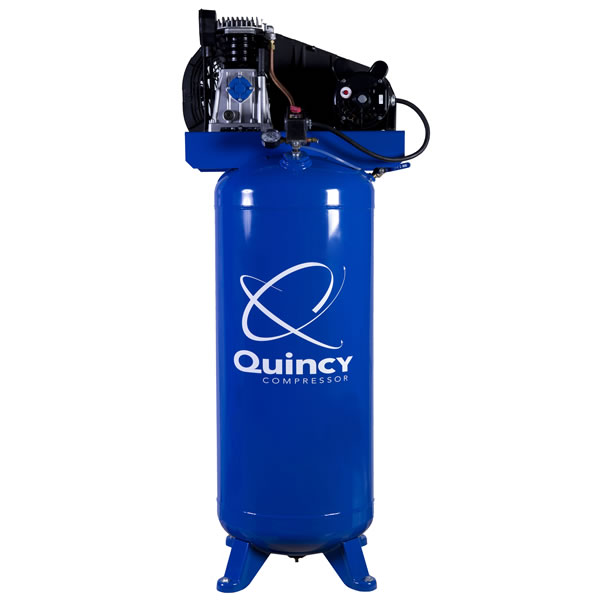
http://www.aircompressorsdirect.com/Quincy-Q13160VQ-Air-Compressor/p12330.html
Q13160VQ_12330_600.jpg

Dimensions listed as: 30L x 22W x 68H

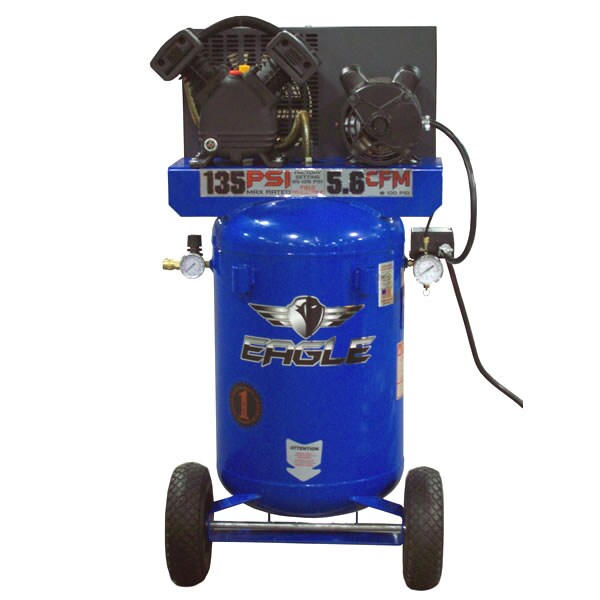
http://www.aircompressorsdirect.com/Eagle-P3124V1-CC-Air-Compressor/p5485.html
P3124V1-CC_5485_600.jpg

Dimensions listed as: 25L x 17W x 45H

http://www.aircompressorsdirect.com/Ingersoll-Rand-P1.5IU-A9-Air-Compressor/p8473.html
product_8473_500.jpg

ingersollp151ua9feature_500.jpg

Dimensions listed as: 22L x 23W x 43H
(But that presumably includes the wheels, which appear to be the widest part; I'm guessing they can be removed for a "permenent" installation.)


I could replace the 2x4s on the exterior side with 2x3s but only if that extra inch will increase my options in good compressors. My guess is probably not.

I dunno... Judging from the samples above, that extra inch just might make all the difference.

 
OP
M

Mystic_Cobra

Well-known member
Joined
Feb 10, 2013
Messages
65
Location
Northern VA
The GDOs are only 1 amp each. So, if I use a 20A circuit for two garage door openers and hardwire them, that's a lot of waste.
I'm going to need to extend the circuit for the future Lift Master wall mount GDOs so it covers the current GDOs on the ceiling via one ceiling outlet as well. Is it okay to put a receptacle (covered obviously) with nothing attached and have that same circuit run to an outlet in the ceiling? Is there a better way?
 

Mustang51js

Well-known member
Joined
Jan 24, 2014
Messages
1,734
Location
Haskell nj
I normally would do the garage door outlets first and then to outlets on the wall,no gfci protection for garage door outlets and a gfci outlet at the first one down the wall if that's what your talking about. You don't want the garage door openers on a gfi but they can be on the same circuit as the other outlets
 
To avoid these ads, REGISTER NOW!
OP
M

Mystic_Cobra

Well-known member
Joined
Feb 10, 2013
Messages
65
Location
Northern VA
I was going to have one dedicated circuit for the GDOs based on the suggestions above and the fact that they are already on one. It's a 15A circuit. BUT I'm changing the garage doors and openers later after this wiring/insulating project is done so I don't want to have to rewire unless absolutely necessary. I guess I'll just leave the GDO circuit as is and extend it to a covered receptacle where the Lift Masters will go.
 
OP
M

Mystic_Cobra

Well-known member
Joined
Feb 10, 2013
Messages
65
Location
Northern VA
How far do I need to go with my wiring before calling for the rough-in inspection?

Do I need pigtails on the wires in the receptacle boxes?


Do I need any protection around this opening in the plastic box?


I'm doing rows of fluorescent tube fixtures on the ceiling. Do I need to do anything with the wires hanging out of the ceiling that are going to be connected inside the ceiling fixture raceways?
 
Last edited:
OP
M

Mystic_Cobra

Well-known member
Joined
Feb 10, 2013
Messages
65
Location
Northern VA
How far do I need to go with my wiring before calling for the rough inspection?

Do I need pigtails on the wires in the receptacle boxes?


Do I need any protection around this opening in the plastic box?


Do I need to do anything with the wires hanging out of the ceiling that are going to be connected inside the ceiling fixture raceways?

thanks!
 
Last edited:

Mustang51js

Well-known member
Joined
Jan 24, 2014
Messages
1,734
Location
Haskell nj
You need ground tails in the first picture,two of them, one for each outlet. In the last pic you need a romex connector, the issue isn't shorting out against the box it's the wires can move around and rub through the insulation
 

Mustang51js

Well-known member
Joined
Jan 24, 2014
Messages
1,734
Location
Haskell nj
When you do switches you need ground tails and also the neutrals have to be wirenutted and tucked in the back. Outlets you only need grounds done up, and in the last pic it looks like 2x4 is on the flat, which makes it hard to get the 1 1/4 spacing away from outside of stud. In those cases I use plastic cable stackers that mount to the wood and keeps the wires away from the stud in case a screw misses
 
OP
M

Mystic_Cobra

Well-known member
Joined
Feb 10, 2013
Messages
65
Location
Northern VA
Thanks! Is a ground tail and a pigtail the same? Are we talking about a 6-8" wire twisted into the nut for the switch/outlet connection? Are these needed for the hots and neutrals, too?
 
Last edited:

pattenp

Well-known member
Joined
Jun 4, 2008
Messages
10,175
Location
Virginia - USA
In theses switch boxes see how the neutrals are nutted together and the grounds are nutted with pigtails.

neutrals-made-up.jpg


Blacks nutted with pigtails where power passes through to continue the circuit.
power-wires-made-up.jpg
 
Last edited:
OP
M

Mystic_Cobra

Well-known member
Joined
Feb 10, 2013
Messages
65
Location
Northern VA
A few more clarifications...
1. I have an outlet at the end of the run (like above), so just one 12/2 coming in. Do I need pigtails for all three or just for the bare ground? If just the ground, why? Why not consistent rules across all three wires?
2. I have a pair of duplex outlets in one quad box BUT both are on separate 20A circuits. Do the whites get nutted together under one wirenut or separate for each circuit?
 

pattenp

Well-known member
Joined
Jun 4, 2008
Messages
10,175
Location
Virginia - USA
1. You don't need pigtails on a end of run with a single duplex outlet. The wire directly connects to the outlet. Pigtails can be used when the circuit continues on to other boxes.

2. Keep the neutrals separate for different circuits.
 
OP
M

Mystic_Cobra

Well-known member
Joined
Feb 10, 2013
Messages
65
Location
Northern VA
Do I need to prep the wires running out of the ceiling if the connections are all being handled inside the (4 ft twin tube) fluorescent fixture's raceways?
 
OP
M

Mystic_Cobra

Well-known member
Joined
Feb 10, 2013
Messages
65
Location
Northern VA
1. You don't need pigtails on a end of run with a single duplex outlet. The wire directly connects to the outlet. Pigtails can be used when the circuit continues on to other boxes.

2. Keep the neutrals separate for different circuits.

Roger that. Is the reason for (1) because you don't want two wires under one screw?
 

navin

Well-known member
Joined
Jan 5, 2012
Messages
101
Subbed -- similiar size garage to mine and I want to upgrade from my 2 8' bulb fixture.

Also in N.VA area :0
 
OP
M

Mystic_Cobra

Well-known member
Joined
Feb 10, 2013
Messages
65
Location
Northern VA
Navin, take a look at my design layout on post #1. The only changes I made to the lighting were to move the two fixtures near the interior door (lower right corner of drawing) together.
I decided to skip the fancy fixtures. I'm going to put the two 4' fixtures down the middle on the 3-way switches for walk-though lighting and get rid of the old screw in fixtures in the middle of the ceiling above the cars. Then use a single switch for the right bank and a switch for the left bank of new fixtures.
 
To avoid these ads, REGISTER NOW!
Top Bottom