A lot depends on what the definition of gravel is in your area.
Where I am, it is typically crushed limestone (aka crusher run, run of crusher). Its a great product (provided you have properly prepared your subgrade), but it can generate dust and can be difficult to plow. An hour south of me, gravel will get you bank run gravel. Bank run is naturally found rounded gravel that is quarried from natural deposits. Because it does not have the angular surface that crusher run has, it does not lock in as well to form a nice tight base. Additionally, it tends to not have as many fines in it.
Crushed concrete will behave similarly to crusher run, assuming it is free of rebar, brick, and other debris. It is also important to make sure that it is screened and well graded (has an appropriate mix of aggregate size).
In my opinion, the best material for a driveway other than asphalt or concrete is what is called millings. Millings, like stone, goes by several names depending on location. I've heard it called regrind, recycled asphalt, bituminous base, and I believe another poster called it crushed tar or something similar.
Essentially millings are the byproduct of milling out an existing asphalt road. Screened millings will generally leave you with aggregate from 1 1/2" on down, all coated it asphalt. You can place as you would stone (although a paver can also be used), and then roll them. Its best to roll them on a nice hot day. They do have some compaction and movement issues, but as long as you are not placing a rigid pavement like concrete over them, it won't be an issue. They can easily be regraded and rerolled should rutting occur in the future, they're cheap, they plow better than stone, and they will not generate much dust.


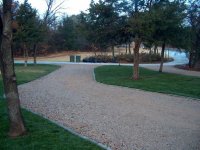

 I hate it. Can not keep anything clean, it is always covered in fine dust. I am going to put gravel over the top this fall.