To avoid these ads, REGISTER NOW!

A/C effectiveness

Whiskeymike

Well-known member
Joined
Oct 31, 2013
Messages
775
Location
Austin, TX
I have a 30x40 shop in Austin, Tx and this summer has been pretty hot. I have HVAC and the metal walls are lined with insulation in a thick white plastic barrier, although it's probably only an inch thick. I find that that AC works pretty well, but can't keep up in the peak of the day. Generally it keeps it about 10-15 degrees below the peak (so inside 85-90, when it's 100 outside)

I'm assuming that the air gaps, lack of additional insullation is the culprit and it just can't keep up when it hits 95-105.

Without adding another layer of insullation through out the whole building, is there a way to detect air leaks or other things that might improve the situation?

I'm a hobbiest, so it's mainly weekends, week nights that I'm out there, so it's not worth a few thousand for another layer of insullation as this point.

If I added a fan to the air intake to pass more air through the filter/coil, would it up the circulation level? would that have a benefit?
 
To avoid these ads, REGISTER NOW!

Paul1956

Well-known member
Joined
Oct 22, 2013
Messages
488
Location
San Antonio, TX
I am in San Antonio and have no trouble keeping my
house at 68 - 69 on the hottest of days.

That metal heats up and stays warm... what color is
it on the outside?

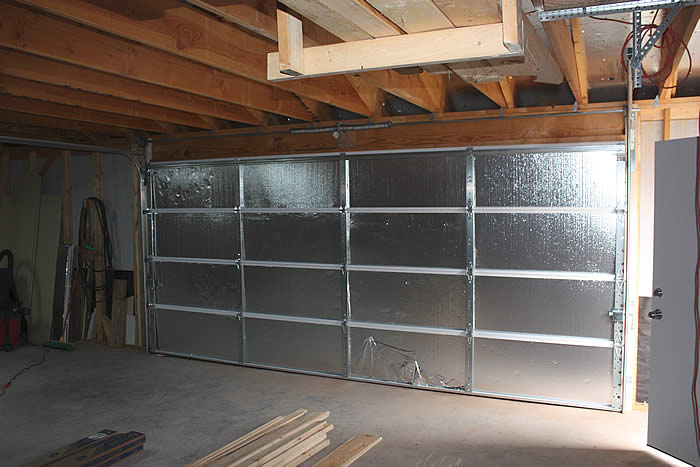
Garage doors are notoriously leaky.

I think the insulation is insufficient.
 

Rockhead261

Well-known member
Joined
Aug 28, 2013
Messages
1,911
Location
10509
How big is your system? Is it working at 100% capacity? A 1,200 sq.ft 'loose' metal building with an 8' ceiling would need ~48K BTU (4 ton) of A/C to cool to 20F below outdoor temp.
 

CWO4GUNNER

Well-known member
Joined
Aug 17, 2014
Messages
229
Location
BHC AZ
Usually all metal type warehouse garages larger then that size here in AZ are equipped with 4 commercial grade 6000 CFM evaporative coolers and a manual skylight opening for blower ventilation. They work pretty darn good even with little insulation as long as the humidity stays below 30% its tolerable, below 20% and it can get cold and need to use the thermostat. The great thing about them is you can have your bays open with them running full blast and wound not suffer any compressor failures like with an AC and you can come home to a hot garage 100F and not have to overload the AC system with a hot pull-down waiting hours for it to cool down the building. My neighbor bought a hobby storage building in town with 4 bays and about 5000 SF of space. He asked me to get the coolers running which had never been serviced full of calcified water and bad pumps. Took a day and when started it only took minutes to cool that hot building. Coolers will also help an installed AC unit initially to get the building cooled down when starting hot metal building. Once the temps drop from 100 down to 80, then they can be shut down and sealed and the AC turned on. If I were you I would DIY install an Evaporative cooler for about $600, then figure the added load that is causing my AC not to keep up and add tonnage using a mini-split single head system, probubly 2 tons for about $1200. Come home on a hot day start with the cooler for 15 minutes then switch over to your AC and if needed your mini-split on hotter days. But that's me, Im sure someone will give you an ideal answer of full blown insulation, and in space ducted suspended AC for about $12000, or a packaged unit with vertical duct-works saving you and only costing $9000 installed.
 

pseudorealityx

Well-known member
Joined
Nov 10, 2009
Messages
999
Location
USA
Usually all metal type warehouse garages larger then that size here in AZ are equipped with 4 commercial grade 6000 CFM evaporative coolers and a manual skylight opening for blower ventilation. They work pretty darn good even with little insulation as long as the humidity stays below 30% its tolerable, below 20% and it can get cold and need to use the thermostat. The great thing about them is you can have your bays open with them running full blast and wound not suffer any compressor failures like with an AC and you can come home to a hot garage 100F and not have to overload the AC system with a hot pull-down waiting hours for it to cool down the building. My neighbor bought a hobby storage building in town with 4 bays and about 5000 SF of space. He asked me to get the coolers running which had never been serviced full of calcified water and bad pumps. Took a day and when started it only took minutes to cool that hot building. Coolers will also help an installed AC unit initially to get the building cooled down when starting hot metal building. Once the temps drop from 100 down to 80, then they can be shut down and sealed and the AC turned on. If I were you I would DIY install an Evaporative cooler for about $600, then figure the added load that is causing my AC not to keep up and add tonnage using a mini-split single head system, probubly 2 tons for about $1200. Come home on a hot day start with the cooler for 15 minutes then switch over to your AC and if needed your mini-split on hotter days. But that's me, Im sure someone will give you an ideal answer of full blown insulation, and in space ducted suspended AC for about $12000, or a packaged unit with vertical duct-works saving you and only costing $9000 installed.


I know you love evaporative coolers, but give it a rest. Austin Texas isn't AZ. Maybe you missed psychrometric day at HVAC school?
 

brewchief

Well-known member
Joined
Sep 20, 2008
Messages
2,371
Location
Michigan
A good insulation company will have a FLIR infrared camera and will be able to find the air leaks and other problem areas pretty easy.

Make sure what you have for A/C is clean(coils and filters) and working the best it can, it may just be undersized.

Plan ahead as much as you can and avoid opening doors to move cars in and out at the hottest times of the day.

What size A/C do you have now?
 

Falcon67

Well-known member
Joined
Jun 11, 2009
Messages
18,371
Location
Merkel, TX
Yes x2 - evap cooler in Austin would just make a bad situation wet. Gulf moisture likes to move up I-35. Fixing leaks can make a huge improvement. Otherwise time for more BTUs.
 
To avoid these ads, REGISTER NOW!

sourdough

Well-known member
Joined
Dec 3, 2012
Messages
132
Location
Pe Ell, WA
I know you love evaporative coolers, but give it a rest. Austin Texas isn't AZ. Maybe you missed psychrometric day at HVAC school?

LOL. Give him a break. He's looking at HIS environment. Wouldn't work in WA State for me. My son lives in Tucson and he will admit that evap coolers don't work in all situations (monsoon season, et al) and that maintenance is a pain. That's why he has a mechanical refrig system for backup.

To each his/her own.
 

pseudorealityx

Well-known member
Joined
Nov 10, 2009
Messages
999
Location
USA
LOL. Give him a break. He's looking at HIS environment. Wouldn't work in WA State for me. My son lives in Tucson and he will admit that evap coolers don't work in all situations (monsoon season, et al) and that maintenance is a pain. That's why he has a mechanical refrig system for backup.

To each his/her own.

Part of providing good HVAC advise/ideas is to understand what works in what situations. When the OP specifically states Austin, it should be pretty clear that an evaporative cooler isn't a solution. It's likely to just confuse others who may not know much.

I don't have a lot of experience with evaporative coolers, which is why I don't post in those specific threads. Same with residential boilers, in-floor heating, etc.
 

Falcon67

Well-known member
Joined
Jun 11, 2009
Messages
18,371
Location
Merkel, TX
When I got out of high school - living in Fort Worth - all we had in the apartment was a small swamp cooler. With new pads and some day with under 30% humidity, it'd work pretty good. However, most times it's over 40% and more. So the way you get AC out of it then would be to load that sucker with ice. Our freezer was 90% ice cube trays.

Looking at average weather for Austin: "There are two periods in the year that are most comfortable: The first is between February 18 and April 27 and the second is between October 6 and November 30. The air feels neither too dry nor too muggy during these periods."
 
OP
W

Whiskeymike

Well-known member
Joined
Oct 31, 2013
Messages
775
Location
Austin, TX
I am in San Antonio and have no trouble keeping my
house at 68 - 69 on the hottest of days.

That metal heats up and stays warm... what color is
it on the outside?

Garage doors are notoriously leaky.

I think the insulation is insufficient.

Color of building is a light cream, so it's pretty good for bouncing the heat.

I'm not sure how to tell the size of the unit. I'll look at the labels tonight and google the model and specs.

I just had an AC guy tune it up and clean everything. Added 2 lbs of freon, changed the contactor for compressor.

One thing I noticed last night is I have a vent, looks like a dryer vent on the outside and a flimsy plastic cover on the inside. Seems to allow the balance of air in/out when you close the door, etc.. It's about a 4 inch diameter hole. Is there a decent way to insulate that up? Seems like those kinds of air leaks would make a difference. Is it worth spraying foam like "great stuff" around the garage door? Or is it the door itself because it flexes?

It's really only an issue a couple months, so it's probably not worth spending much brain cells on. My fridge stays cold, so I can make due.
 

Falcon67

Well-known member
Joined
Jun 11, 2009
Messages
18,371
Location
Merkel, TX
If your door is uninsulated, putting even some 1/2 foil back Styrofoam in the door panels will help a bunch. That's what I use on the doors here. Makes a big difference in winter too.

During build:
BigDoor5.jpg
 

DEnd

Well-known member
Joined
Oct 25, 2008
Messages
218
To answer your question a fan won't help the temps, unless you are seeing more than a few degree difference in spots in your shop, but it will probably help you be a bit more comfortable in there.

Secondly is it metal framed? If your insulation is what I'm thinking it is, and installed how I normally see it installed, then it is likely compressed at the framing members. Where it is compressed you have an R-value of basically nothing. If your building is metal framed then those framing members are basically giant radiators conducting heat into your building. At this stage wood would do the same thing and you will have the same amount of heat entering. The difference is that if you add insulation to the interior with wood framing the wood has r-4 to r-6, where as with steel that framing will still transmit the same amount of energy into your space. The only way to stop that is to fully insulate around the steel framing members, if you are adding insulation in the interior side only.

You are correct in assuming you have inadequate insulation and a lot of air leaks. Metal buildings like yours are quite leaky. There is not an easy and inexpensive way to fix this once they are built. If you really want to see how leaky your building is the easiest way is to build your own blower door. This is a pretty good tutorial: http://www.builditsolar.com/Projects/Conservation/BlowerDoor/BlowerDoor.htm#ACH Then get your self a smoke pen, smoke stick, or smoke puffer. Then depressurize the building with your blower door, break out the ladder and start hunting for leaks. Alternatively if you have access to a fog machine you can fog up the building and then pressurize it then you should be able to find the leaks from the exterior.

Since you only use it as a hobby shop, and for only a few hours a week, then it will probably be cheaper for you to just add some cooling capacity in the form of window units, permanently mounted. It wouldn't be cost effective to run them 24/7 but if you can stand the time it takes for them to cool the place down then it'd be a great solution. If however you are out in your shop a few hours a day most or every day, then the cost effective solution is to air seal and insulate.

If you air seal and insulate don't forget to add ventilation in. It seems counter intuitive but it really is a good thing. It ensures you actually have ventilation, right now even with your leaky building you do not have guaranteed ventilation. It will also help combat VOC build up in your shop, which you likely have now but will get worse when you air seal it.
 
Last edited:
To avoid these ads, REGISTER NOW!
Top Bottom