To avoid these ads, REGISTER NOW!

VISE REPAIR 101 all vise repairs, lubricants, sources for parts and the tricks to fix

To avoid these ads, REGISTER NOW!

McBrownie

Well-known member
Joined
Mar 27, 2014
Messages
1,827
Location
Cleveland, OH
Ok, you guys talked me into it. Japanning supplies are ordered. I'll be following the steps in that link I provided earlier. Time for a vise barbecue. :)
 
OP
D

drivesitfar

Well-known member
Joined
Oct 23, 2013
Messages
36,032
Location
Pacific Northwest
McB: i'd love to see some old 100 year old cast Japanned by you. i'm wishing you the best and hoping you are able to give us all the pros and cons of doing so with lots of pictures like you did on your Parker vise posts.

good luck

Verg: i'll try to get you the measurement for my Wilton C2's base so you can see if one of their swivel bases will work. i also have a 6 inch Tradesman i'll measure if i can remember to.
 

Verg

Well-known member
Joined
Sep 10, 2014
Messages
106
Location
To close to DC
Drivesitfar,

Thank you very much for all the assistance! I greatly appreciate all your input. In less then a week the vise should be cleaned, primed, painted and bolted to a stand or my work bench. I haven't decided yet; makes me happy just thinking about it.

Thanks again!
 

JeremyBurke

Well-known member
Joined
Nov 5, 2013
Messages
609
Location
Near Portland, OR
I just finished up another Reed 204R nearly the same vise as my Craftsman 5186. Very similar steps to before. Cleaning with Simple green, 1-2 days in the electrolysis tank. Then slow wire wheel work with a drill powered wire wheel and hand brushes. I then primed and painted all cast parts and shined up the steel parts with a deburring wheel.

Here are the before pictures if people wanted to see them.

14183721888_00f3f2b3db_c.jpg

I used Rustoleum navy blue and hammered silver for the lettering.

14801991246_4ce4e3bc50_c.jpg


Here are a few more pictures of the Reed since its newest.


14989408922_23aac8a729_c.jpg

For the Reed I used hammered black and hammered silver in the lettering again.

15229046108_d70ba36c7b_c.jpg


This one shows the comparative scars from use the 2 have. The Craftsman is a little older and more roughed up.
15228961660_b90512a6a5_c.jpg

15228018687_f16cd50646_c.jpg

Big thanks to redleader for the deburring wheel recommendation, for the shinny bits. And Big thanks to nine4gmc for the FluidFilm recommendation to keep them that way. You can trust a man from Louisiana on how to keep rust at bay.
 

McBrownie

Well-known member
Joined
Mar 27, 2014
Messages
1,827
Location
Cleveland, OH
Time for a Japanning update with my Prentiss No. 19. I'll post a whole write up later, but I wanted to get something up here today as I am really happy with the results so far.

Here is where I started:

http://lumberjocks.com/JayT/blog/32398

But, I was quickly disappointed with a small test combining the Gilsonite with Polyurethane Spar Varnish. It turned out cloudy and I didn't feel that it as a true period finish from the 1920's. Then I found this:

http://www.cranialstorage.com/Wood/japanning.html
and the link to this:
http://www.mtfca.com/encyclo/P-R.htm

Which described what I was looking for - the Ford F-102 Spec finish for 1920's Model T's. Perfect!

I started with buying this pre-mixed Gilsonite:
http://www.dickblick.com/products/asphaltum-liquid/#description

The MSDS reads that this is 50% Asphaltum and 50% Mineral Spirits.

I got close enough to the Ford spec by doing a 4:1 ratio of Gilsonite to Linseed oil (I used Boiled Linseed Oil) which, according to my math, gave me a 40% Asphaltum, 40% Mineral Spirits, 20% Boiled Linseed Oil mixture.

No, this is not a jager bomb, but this is how it looked before mixing. The linseed oil is on the bottom and really added to the flow characteristics of the Gilsonite. Going with 100% Gilsonite would be tough.

View media item 43845
Here is the mopping brush that I used and the nice small swivel base.

View media item 43846
I did a quick wipe down with lacquer thinner, but didn't go nuts with surface prep. Again, I was thinking, "How much time did they put into prep when this vise was built? Probably not a whole lot." Here it is wet. I have to say that brushing on a finish is 1000 times more satisfying than spraying as far as I am concerned. :thumbup:

View media item 43847
Now this is where I really went against the Lumberjock post. The blogger there said to wait 24 hours before curing with heat. He was dealing with a hand plane and was worried about all sorts of things like warping and cracking. I thought "What would Henry Ford do? He would cook it immediately. It's a vise after all, not a Rolex." So, into the gas grill it went. I started with the grill cold and let it climb to 375-400 degrees F. with the swivel base in it. After an hour at temperature, I turned off the gas and let it cool in the grill with the lid closed for another hour and here is the result. By the way, this really stunk up the deck outdoors for the first 30 minutes. I would not recommend doing this indoors.

View media item 43848View media item 43849View media item 43850
At this point, the finish is pretty darn hard. I'm going to let it cure for a day and check again, but I am very pleased. It seems like a very durable finish. It is hard to describe, the color looks black, but not like black plastic. It is tar-based after all and has a softer, almost brownish, characteristic to it. Anyone asked to describe it would say that it is black, but I can see a slight difference.

So, if you feel like "varnishing your vise with driveway sealer" ;) and getting what appears to be a pretty tough period correct finish, then give this some serious thought. I hope to have the rest of the vise finished up in the next few weeks and will do a full write up then.
 
Last edited:

McBrownie

Well-known member
Joined
Mar 27, 2014
Messages
1,827
Location
Cleveland, OH
I'm very interested in final results. I considering doing this to my 19.

5 Stitches Garage
http://www.garagejournal.com/forum/showthread.php?t=211899
Florida GJ Group
http://www.garagejournal.com/forum/group.php?groupid=117

Let's talk about sharing supplies. I have enough for 100 vises. What do you think about the lettering? I always do them in a contrasting color on Parkers, because that's what the vintage adds show. The adds don't show that on the Prentiss', but I hate not to show off the graffiti. ;)
 
Last edited:
OP
D

drivesitfar

Well-known member
Joined
Oct 23, 2013
Messages
36,032
Location
Pacific Northwest
McB: Happy to see you are getting great results and also that it is you doing this treatment (Japanning) because you are so thorough and your posts have lots of pictures. best of luck with the rest of the work on your nice Prentiss and i'm pretty sure they didn't paint the lettering. if i were you i'd paint the letters a silver or white or whatever dang color you like, but if it was me i'd probably paint them.

Jeremy: awesome job on those 2 Reeds. looking forward to seeing your Holland's 15 that you are restoring mounted to that awesome bench you built.

Verg: now you are teaching me about swivels for a C3 and a 1780 and making me wish i owned either one or both of those vises. keep up the great work and if you decide to restore one or both of them please post plenty of pictures with the process on this thread if you can.

All: a member PM'd me to add the following. "I would add permatex to the lubricant section. I found a couple guys here use it and tried it with good success." in the future you surely can PM me, but i do check this thread pretty often so please post your suggestions and vise restorations, tips or other thoughts to the thread for all to see and maybe ask questions. thanks
 
Last edited:

taumac

Well-known member
Joined
Aug 30, 2011
Messages
8,104
Location
Brooksville, Fl
McBrownie.
I did mine quickly with a silver paint pen. My lettering is as crisp as I would like but imo think if you did it white next to that black it would really pop.
1f253b2170bc3d309d5d7cdfa1ada199.jpg


5 Stitches Garage
http://www.garagejournal.com/forum/showthread.php?t=211899
Florida GJ Group
http://www.garagejournal.com/forum/group.php?groupid=117
 

macgee

Well-known member
Joined
Jan 11, 2014
Messages
2,834
Location
Sepulveda Pass, CA
Time for a Japanning update with my Prentiss No. 19. I'll post a whole write up later, but I wanted to get something up here today as I am really happy with the results so far.

Here is where I started:

Which described what I was looking for - the Ford F-102 Spec finish for 1920's Model T's. Perfect!

I started with buying this pre-mixed Gilsonite:
http://www.dickblick.com/products/asphaltum-liquid/#description

The MSDS reads that this is 50% Asphaltum and 50% Mineral Spirits.

I got close enough to the Ford spec by doing a 4:1 ratio of Gilsonite to Linseed oil (I used Boiled Linseed Oil) which, according to my math, gave me a 40% Asphaltum, 40% Mineral Spirits, 20% Boiled Linseed Oil mixture.

So, if you feel like "varnishing your vise with driveway sealer" ;) and getting what appears to be a pretty tough period correct finish, then give this some serious thought. I hope to have the rest of the vise finished up in the next few weeks and will do a full write up then.


Hey McBrownie,

I think what your doing is so awesome, this was something I was going to do myself about a year, in fact I too had read the Lumberjocks thread you posted however I didn't persevere like you have. Japanning is so old school that I found it hard getting detailed and well documented step by step info online.

The info and way you have been posting your progress will be very useful for anyone who searches online on how to do Japanning.

I quickly lost steam in the process when realizing that I didn't have a good way to bake the japanning. We're big cookers in our house and wasn't prepared to use one of our ovens or bbq. After reading your posts and the idea of finding an old sacrificial bbq for baking and heating is s good one. I could also use the old bbq for prepping items to weld or paint..

The color of Japanning is hard to show online but it's beautiful and hard to beat. I have bunch of vintage Bailey Planers that are still beautiful. I can't wait to see your vise when it's complete.

A good suggestion that was mentioned in the Lumberjock thread for the ones who can't do the baking process, there's a person who restores old wood planers that has found a good alternative to traditional japanning. He and others have recommended a spray paint called "Dupli-Color DE1635 Ceramic Ford Semi-Gloss Black Engine Paint".

While it's not a traditional time period finish; it is giving very good results and a look of japanning. It's suppose to be really durable and able to handle 500 degree temps.

The color of Japanning is hard to show online but it's beautiful and hard to beat. I have bunch of vintage Bailey Planers that are still beautiful. I can't wait to see your vise when it's complete.

Cheers
 

Verg

Well-known member
Joined
Sep 10, 2014
Messages
106
Location
To close to DC
McB: Happy to see you are getting great results and also that it is you doing this treatment (Japanning) because you are so thorough and your posts have lots of pictures. best of luck with the rest of the work on your nice Prentiss and i'm pretty sure they didn't paint the lettering. if i were you i'd paint the letters a silver or white or whatever dang color you like, but if it was me i'd probably paint them.

Jeremy: awesome job on those 2 Reeds. looking forward to seeing your Holland's 15 that you are restoring mounted to that awesome bench you built.

Verg: now you are teaching me about swivels for a C3 and a 1780 and making me wish i owned either one or both of those vises. keep up the great work and if you decide to restore one or both of them please post plenty of pictures with the process on this thread if you can.

All: a member PM'd me to add the following. "I would add permatex to the lubricant section. I found a couple guys here use it and tried it with good success." in the future you surely can PM me, but i do check this thread pretty often so please post your suggestions and vise restorations, tips or other thoughts to the thread for all to see and maybe ask questions. thanks

Drivesitfar,

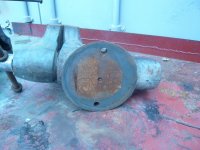
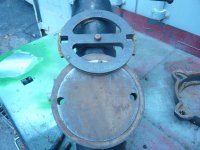
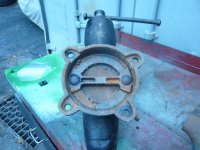
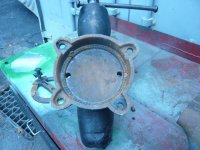
I havent posted the info in this thread yet! So in my quest i ended up buying a 1780 to see for myself how all this worked out. Below is what i posted in the wilton 1780 thread:

I can absolutely see why the swivel bases are completely insufficient. most likely the reason why Wilton change the c3 base to the 800s base, 7'' vs 9'' diameter for inner locking plate (i don't have the dimensions of the actual base just the inner locking plate for the 800s). Unless i can CNC up a base (delusions of grandeur) i doubt i am going to add one now. The early C3's (pre 1984) share a smaller base with a ton of Wilton 6 & 8 inch vises that can be had relatively cheaply new online. After 1984 they switched to the large base, shared only with the 800s , that's a couple hundred dollars more new. I also noticed my C3 does not have a centering dowel for the center ring while the 1780 does not have a step for the outer ring to sit in.

I will get some better pictures with an familiar object to reference the size of these vises off of.
 

Attachments

  • P1020976 (Copy).jpg
    P1020976 (Copy).jpg
    113.5 KB · Views: 78
  • P1020974 (Copy).jpg
    P1020974 (Copy).jpg
    132.8 KB · Views: 64
  • P1020973 (Copy).jpg
    P1020973 (Copy).jpg
    131.3 KB · Views: 66
  • P1020971 (Copy).jpg
    P1020971 (Copy).jpg
    137.9 KB · Views: 68
  • P1020970 (Copy).jpg
    P1020970 (Copy).jpg
    144.1 KB · Views: 72
  • P1020961 (Copy).jpg
    P1020961 (Copy).jpg
    100 KB · Views: 83

GETRIDAONE

Well-known member
Joined
May 21, 2013
Messages
1,549
Location
Auburn, GA
ale, I noticed most of your vises are black. Are they japanned or some other process ? They don't look to be spray painted, maybe brushed with some paint mixture ? Those small Parkers are very cool and like "hens teeth" to find.
 
OP
D

drivesitfar

Well-known member
Joined
Oct 23, 2013
Messages
36,032
Location
Pacific Northwest
Ale: Good to see you found this thread and happy to hear you like it. there are a lot of good posts already and i'm sure a lot more to come. feel free to ask questions if you might have any or if you have any process or tricks to add please post them.

McB: how is the Japanning going? i was just curious once you make up the magic potion do you have any idea how long it will be able to used out of that jar you mixed it in? I've been trying to figure out a spot in my garage to put an oven so i can pre heat vises before painting them and also bake the paint on after painting, but haven't done it yet. now i have another reason to own one so i can bake the Japanning instead of using the BBQ we use for meals or the family's oven.

ALL: I asked this question over on the vise thread and will ask here in case we find the right group of guys (and gals) to discuss this. Since Parker made vises from the mid 1800's and bought Prentiss vise company that also made vises from the 1800's does anybody know what happened to Parker's vise company after Union bought them in 1957? i know Union kept producing Parker's vises and stamping their name and new model #'s on them, but what happened to Union and all that old Prentiss and Parker vise factories and inventory? Ale posted a 1964 Union catalog on the vise thread showing Parker vises on the cover and I for one would like to know the history. since most of the Googling ends up on Garage Journal for vises I'm thinking that the members here might know the answer or actually be related to the Union owners.
 
Last edited:

ukumit

New member
Joined
Aug 21, 2013
Messages
1
Hi Everyone,

I am Ümit KAPLAN from Kanca Hand Tools and I work at the export sales. And I should tell that I am a big fan of this forum, I really learn a lot. Thank you for these type of threads about vices.

When i check your manufacturer list i could not see the KANCA brand. I want to introduce Kanca Hand Tools to you..

KANCA HAND TOOLS/ FROM TURKEY

We are a forging company which also produces its own high quality hand tools. We produce most of our own products and export them all-around the world especially to Europe...

We also have a hand tool branch and we manufacture ; forged bench vice, clamps, forged anvils, metal shears, snips, hammers, bolt cutters, drill vices, pipe vices, pipe wrench, etc

Also, anyone can get in touch with me about Kanca products through this forum or directly from my e-mail address; [email protected]

Thank you all for your comments and interest. We are very pleased to be mentioned in this forum.

Regards
Ümit KAPLAN
 
OP
D

drivesitfar

Well-known member
Joined
Oct 23, 2013
Messages
36,032
Location
Pacific Northwest
Ukumit: welcome to garage journal and hope you stick around to learn and teach us what you know. always good to have another tool company person. since you are letting us know about a vice we might not know of yet i'll add it to the list when i get time. I found a couple pictures online to post.

if you have better pictures of a few different vices that you make please post them and i'll mention them in the vice company list on which post to find them.

thanks
 

Attachments

  • 9620.jpg
    9620.jpg
    31.2 KB · Views: 59
  • 54714_a.jpg
    54714_a.jpg
    46.3 KB · Views: 54

macgee

Well-known member
Joined
Jan 11, 2014
Messages
2,834
Location
Sepulveda Pass, CA
Ukimit & Drive:

I think you posted a Kanca on the left and a Bessey vise on the the right. I like these vises and they seem quite popular in Europe but a lot of the time I see the same vise being sold by several different manufactures like Bessey, Ridgid, Kanca and others. Spec's claim to be made with 90,000-PSI drop forged alloy steel which is higher than Wiltons.

My question is, are these being made made by Kanca and then private labeled?

Second question to Ukimit, why were these vises designed not to have replaceable jaws? Is there also a feature to help eliminate backlash like Reed vises?

I do like seeing the gibs on the vises to help eleminate any wear and play.
 
Last edited:
To avoid these ads, REGISTER NOW!
OP
D

drivesitfar

Well-known member
Joined
Oct 23, 2013
Messages
36,032
Location
Pacific Northwest
VA: nice job. you finally found the 695 pound Railroad vise? also it looks like you figured out how to use the paperclip to attach your pictures instead of just using Photobucket. nice:bowdown:
 

JAKE-THE-TOOL-MAN

Well-known member
Joined
Oct 20, 2010
Messages
1,157
Location
Bremerton, WA


Does anyone know where I can source a new handle for my Reed? I bent it back as straight as I could with a torch but its not good enough for a Resto. Also the teeth on the jaws arent the sharpest, I'm thinking about just putting copper jaws on them?
 
Last edited:
OP
D

drivesitfar

Well-known member
Joined
Oct 23, 2013
Messages
36,032
Location
Pacific Northwest
Jake: Ritzblitz makes the best vise handles i know of so PM him and see what you two can figure out for your Reed. he owns several Reed vises so he might have a good idea on the style you can have him make to either be the same as original or a design you two agree on. some of the other members might make them too, but the handles I've seen on member's vises made by Ritzblitz are awesome. the first two pictures are a couple of Ritzblitz' handles he made.

your jaws look ok and if they are too sharp they could damage the part you are trying to hold. i use Wilton copper 6 inch jaws on most of my vises for a little extra holding power that i buy on Ebay for $35 shipped from a great seller in Florida if they still have them. since your vise is only a 4 inch you can trim the sides of the 6 inchers to match your 4 inch vise or use the 6 inch ones to have a little extra grip on the ends. here's a bad picture of a Wilton C1 that i think was 4.5 inches with a pair of the 6 inch Wilton copper jaws on them.

by the way Jeremy just restored a Craftsman made by Reed in post #245 so you can see how yours could shine up. he shined up the bare steel with a deburring wheel on his grinder. it's a slightly different vise, but you get the idea of what these old vises can look like when they are taken care of.

PS i'm not related to Ritzblitz or the Ebay seller nor getting any kickback for mentioning them, but just saying they are quality people with quality products.
 

Attachments

  • WP_20131217_001.jpg
    WP_20131217_001.jpg
    91.4 KB · Views: 119
  • user218165_pic42904_1409500076.jpg
    user218165_pic42904_1409500076.jpg
    128.3 KB · Views: 141
  • attachmentKGVAJXEX.jpg
    attachmentKGVAJXEX.jpg
    137.8 KB · Views: 127
  • 14819500421_aefef62c6d_c.jpg
    14819500421_aefef62c6d_c.jpg
    112.8 KB · Views: 104
  • 14183721888_00f3f2b3db_c.jpg
    14183721888_00f3f2b3db_c.jpg
    119.4 KB · Views: 105
Last edited:
OP
D

drivesitfar

Well-known member
Joined
Oct 23, 2013
Messages
36,032
Location
Pacific Northwest
PC: thanks for the advice and do you happen to have any pictures of the set up you used in your shop's press when you straightened the handles? also i'm sure you took the main screw out of the vise to do this or did you just leave it inside the dynamic jaw or entire vise and get a little exercise?
 

PCO6

Well-known member
Joined
Dec 25, 2008
Messages
4,573
Location
Newmarket, Ontario
^^^ - I don't have any pictures but I basically use any kind of metal blocks that I need to get it done. "V" blocks, 4" or so, generally work the best.

I prefer to dismantle the vice and put only the main screw/handle in the press. I did a No.6 Record once without taking it apart and that was basically ... DUMB!
 

JAKE-THE-TOOL-MAN

Well-known member
Joined
Oct 20, 2010
Messages
1,157
Location
Bremerton, WA
Thanks for the replies and advice guys. That's an old picture of my vice that I posted, I've stripped it to hair metal since then. I don't have acess to a press unfortunately. I guess I will message RitzBlitz and see what can be done. Btw I picked up my Reed for free, I was also trying to score a Chas Parker 6 in swivel base with pipe jaws but it was missing a chunk out of it and one side of the pipe jaws so I left it
 
OP
D

drivesitfar

Well-known member
Joined
Oct 23, 2013
Messages
36,032
Location
Pacific Northwest
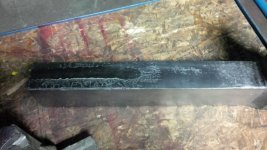
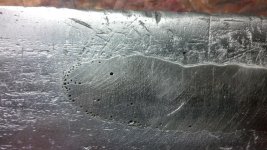
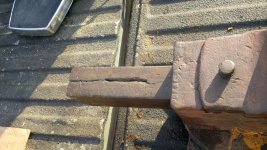
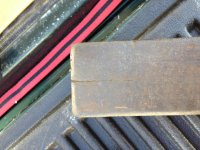
All: I had a GJ member and friend pick up this Monarch 223 vise for me and he has younger eyes and has restored a few vises and still didn't notice this crack on the back top of slide of the dynamic jaw. now it was an honest mistake and this vise will probably work great for another 100 years and just wanted to show what we all see in various degrees of damage.

a lot of the old guys using these old vises used the back of the dynamic's slides as an anvil and hammered on them. maybe just broke off and others have cracks way worse than mine.

so when i learn to braze or have one of my friends help me repair this i'm wondering if that is the best fix and what would be the best method to do the fix.

i'm thinking that drilling a hole at the end of the crack as i have seen Fretters and others do that will stop the crack from continuing. then maybe taking an angle grinder and cutting a V shaped slot where the crack is now to fill in with a braze weld? then grind, sand or even mill the fix perfectly flat?

any input would be helpful for not only me, but also others that might have a nice vise with the same issue.

by the way this Monarch 223 is a 6 inch wide jaw and weighs over 100 pounds so well worth saving and i do like the lion's head on these old Prentiss made vises.
 

Attachments

  • 01313_4sGUnh4tbHz_600x450.jpg
    01313_4sGUnh4tbHz_600x450.jpg
    20.5 KB · Views: 72
  • 00t0t_7DSyn4H5Krn_600x450.jpg
    00t0t_7DSyn4H5Krn_600x450.jpg
    22.4 KB · Views: 83
  • IMG_7035.jpg
    IMG_7035.jpg
    142.8 KB · Views: 90
  • IMG_7032.jpg
    IMG_7032.jpg
    140.7 KB · Views: 91
  • 00c0c_g64PDo75VK4_600x450.jpg
    00c0c_g64PDo75VK4_600x450.jpg
    18.8 KB · Views: 75
Last edited:

Verg

Well-known member
Joined
Sep 10, 2014
Messages
106
Location
To close to DC
Drivesitfar,

That Monarch is still a very attractive vise. At the machine ship i worked in we (not me) would occasionally cold stitch blocks and heads. The cost of the process typically exceed the cost of a new/used cast iron head. Here is a good write up and link on the process:
http://www.moparmusclemagazine.com/...pp_1203_cast_iron_cylinder_head_crack_repair/

As the crack is at the top of the rear slide experiencing minimal force its a great place to try out the process.
 
Last edited:

Carla

MEMBER EMERITUS
Joined
Nov 27, 2010
Messages
672
All: I had a GJ member and friend pick up this Monarch 223 vise for me and he has younger eyes and has restored a few vises and still didn't notice this crack on the back top of slide of the dynamic jaw. now it was an honest mistake and this vise will probably work great for another 100 years and just wanted to show what we all see in various degrees of damage.

a lot of the old guys using these old vises used the back of the dynamic's slides as an anvil and hammered on them. maybe just broke off and others have cracks way worse than mine.

so when i learn to braze or have one of my friends help me repair this i'm wondering if that is the best fix and what would be the best method to do the fix.

i'm thinking that drilling a hole at the end of the crack as i have seen Fretters and others do that will stop the crack from continuing. then maybe taking an angle grinder and cutting a V shaped slot where the crack is now to fill in with a braze weld? then grind, sand or even mill the fix perfectly flat?

any input would be helpful for not only me, but also others that might have a nice vise with the same issue.

by the way this Monarch 223 is a 6 inch wide jaw and weighs over 100 pounds so well worth saving and i do like the lion's head on these old Prentiss made vises.

Hi, DIF,

Quite a few years ago, I repaired a 'Prentiss Bull Dog' vise, which had the same crack. Its a 'not easy' job, but in that instance, the vise was believed to have been bought new, by its owner's grandfather, who used it for many years, so it had significant sentimental value.

Its readily possible to make a good, sound repair, but does take a good bit of work.

In that instance, I ground out a fairly wide 'V', a little bit past the crack, and then went over the ground area with a Carboloy rotary file, in a die grinder, to remove any traces of the 'bonding' material of the grinding wheel.

I then warmed the inside of the jaw beam with the torch, to remove any traces of congealed oil, and wire-brushed out the bits of carbonised oil which emerged at the bottom of my 'V', getting the part temporarily hot enough to be sure of clean iron. I then put a c-clamp on the beam, to ensure that the crack would not spread when heated.

I 'faked up' a fire-brick 'nest' for the jaw casting, and rigged some propane flames to slowly heat the entire jaw casting to a 'black heat', meaning just before it begins to show a dim red colour.

After the casting was hot, I brazed up the crack with a nickel brazing rod, taking care that the iron was well fluxed, and the braze 'wetted' fully to the bottom of the 'V', with a 'root pass' at the bottom of the 'V'.

With the 'root pass' showing correct bonding to the iron, I then did the 'filler' pass, bringing the braze at least 1/16" above the milled flat of the casting.

After the braze was done, I turned the propane flames down a bit, to cool the casting as slowly as I could, with the casting covered with a scrap of sheet metal to retain heat. Over some hours time, I kept turning down the flames, as the casting slowly cooled, eventually turning the flames off, and covering the casting with shop rags, to cool until the next day.

After the casting was dead cold, I set it up in the vertical mill, and used a single-point 'fly-cutter' with a 370 Carboloy lathe tool-bit, to mill the braze down to match the original surface, staying .001 to .002 high. (370 is a steel cutting grade, which does better at staying sharp with the shock loading of an interrupted cut.)

I then 'blended-in' the braze with the original surface, using emery paper and a small flat block. The braze wasn't dramatically noticeable when the jaw beam was freshly polished, but, of course, the iron would go patina over time, and the braze would become more noticeable.

Refinishing that vise was 'as usual'. I glass-blasted the castings, and 'knifed-in' a bit of Devcon epoxy/steel powder putty, sanded, and painted the castings. Polishing out the screw and handle were 'as usual' with 400 emery on a cotton buff.

This one being a Prentiss, the jaw faces were easily removable, so I re-ground them in the surface grinder. (I have a bit of an 'attitude' about the common usage of 'knurled' or 'chequered' vise jaws, which leave 'idiot marks' in finished workpieces.)

On final assembly, I tightened the re-ground jaws, and checked for parallelism when tightened, with feeler-gages. I had to re-grind one jaw a few thou, just using little shims on the mag chuck in the surface grinder, til the jaws would hold a piece of .001 feeler stock at all four corners when moderately tightened.

Would I do this again?.....well, no, I get to be 'retired' these days......its someone else's turn to be doing this class of work.....its not at all 'difficult' or 'challenging' work, actually, just rather seriously time-consuming.

(that is to say, its the class of item which can be done for amusement, for one's own tooling, or as 'good kharma' when done for a friend.....but takes too much working time to be commercially viable)

cheers

Carla
 
Last edited:

JeremyBurke

Well-known member
Joined
Nov 5, 2013
Messages
609
Location
Near Portland, OR
WOW Carla, as always thanks for all the details. That is amazing.

Before I go on I feel duty bound to confess, Drives was kind not to, but I am the "young eyes" that missed the crack. I make no excuses other than vise blindness, it is the biggest vise I have seen in person and I let my excitement get the best of me. I swear I looked for this very issue, seems to be prevalent in Prentiss vises, and still somehow missed it. OK Confession over.

Carla, many here and else where have stated drilling a small hole at the end of the crack helps prevent spreading as well. Is there a reason you chose not to do this in your repair?

Again thank you for all the details. And a public apology to Drives, you are most gracious.

Cheers,
Jeremy
 
OP
D

drivesitfar

Well-known member
Joined
Oct 23, 2013
Messages
36,032
Location
Pacific Northwest
Jeremy: no need to apologize again and in the forum because you did your best which is always improving. not to mention you picked it up on your lunch break from work so i'm guessing you might have been a bit rushed too. thanks again and i'm sure it will be a great vise and can't wait to get my hands on it.

Carla: what can i say. i would like to drive down all my old vises and have you watch over me while i try to get somewhere close to the talent you have running in your blood. i to wonder if you recommend the drilling a hole at the end of the crack even if to do so long before the braze weld can be done. any more thoughts to share?

Verg: nice link and thought of sticking a ton of threaded screws into the crack and then smoothing them off. probably would work, but i like the brazing for a vise method better if i have a choice. by the way have you found a swivel base for your C2 yet and any pictures of the two big Wiltons with a $1 bill in the pictures or did i miss those?
 

Verg

Well-known member
Joined
Sep 10, 2014
Messages
106
Location
To close to DC
Drivesitfar,

I wonder if a compromise between stitching and brazing could be done. Drill and plug 1 hole at the end of the crack (stops the crack) and braze the remainder? The level of machining i learned at the automotive machine shop was well beneath the experience Carla has shared. What ever you decide i cant wait to see the pictures!

For the Wilton's; i have not posted new pictures yet. I got tired moving the C3 around and decided it was time to figure out how to start the restoration. It just finished a nice 3 day bath in a caustic alkaline solution (i'll have pic's) and i have prepped it for painting (too much rain and humidity to start). The Wilton bases i looked at old and new that would fit, just feel too weak for the C3. I payed with the idea of using another brand base and machining to fit (possibly a Colombian 605 base). In the end i think it will be more pragmatic to make my own. Currently i am looking for some stock to start with (a normal 8 dbl xxl pipe or sch 160 would be perfect). I don't have access to a plethora of machines so machining operations must be simple making my material choices more narrow. Playing around with the idea of making a crankshaft + flywheel+ truck drum vise stand (i have a ruined jag v12 crank (very silly customer)+ flywheel or get a scrap diesel crank).
 

KMScott

Well-known member
Joined
Feb 14, 2012
Messages
4,642
Location
Daufuskie Island, South Carolina
WOW Carla, as always thanks for all the details. That is amazing.

Carla, many here and else where have stated drilling a small hole at the end of the crack helps prevent spreading as well. Is there a reason you chose not to do this in your repair?

Cheers,
Jeremy

Carla nice explanation, ole fashion brazing lesson, your way of communicating is so enjoyable to read.

I wanted to mention that drilling a hole to stop the crack is good practice. But I also wanted to mention that the crack we see so often is not really a crack but a knit line. When they fill the cavity the molten material meets at that top area, usually the center of the square slider. The knit line is colder material that is already solidifying and does not create a good bond or a good mix. You see this in plastic parts. The knit line is a weak area and must be engineered such that it is in a area that does not see stress. You control this by where the plastic in injected in the cavity, the gate area. I hope this makes sense.
 

JeremyBurke

Well-known member
Joined
Nov 5, 2013
Messages
609
Location
Near Portland, OR
Carla nice explanation, ole fashion brazing lesson, your way of communicating is so enjoyable to read.

I wanted to mention that drilling a hole to stop the crack is good practice. But I also wanted to mention that the crack we see so often is not really a crack but a knit line. When they fill the cavity the molten material meets at that top area, usually the center of the square slider. The knit line is colder material that is already solidifying and does not create a good bond or a good mix. You see this in plastic parts. The knit line is a weak area and must be engineered such that it is in a area that does not see stress. You control this by where the plastic in injected in the cavity, the gate area. I hope this makes sense.

We see a lot of this in my line of work as well, for all cast parts. Iron, Die Cast aluminum, Plastic. I fully believe that this line originated on the knit line and even because of the knit line but unfortunately I'm pretty sure this one is a crack. Thanks so much for the additional information Reverend Scott. I do truly hope I'm wrong.
 

Carla

MEMBER EMERITUS
Joined
Nov 27, 2010
Messages
672
Carla nice explanation, ole fashion brazing lesson, your way of communicating is so enjoyable to read.

I wanted to mention that drilling a hole to stop the crack is good practice. But I also wanted to mention that the crack we see so often is not really a crack but a knit line. When they fill the cavity the molten material meets at that top area, usually the center of the square slider. The knit line is colder material that is already solidifying and does not create a good bond or a good mix. You see this in plastic parts. The knit line is a weak area and must be engineered such that it is in a area that does not see stress. You control this by where the plastic in injected in the cavity, the gate area. I hope this makes sense.

Hi, Kevin,

I thank you for the nice compliment, but, really, that is an example of a quite simple and easy repair, which pretty much anyone can do, if they are willing to accept the time-consuming nature of the work, and patiently take the time to 'do it right'.

I'll concur about drilling a stop hole being the correct way to deal with a crack......truth is, the item I mentioned was done quite a few years ago.....I probably did drill the stop hole, just didn't remember doing it....or.....I ran the 'V' well into sound metal, til I was certain I'd gone well clear of the extent of the crack....one or the other, I don't remember exactly.

And....yes, the 'knit line' can be, for all practical purposes, what the foundry workers call a 'cold shut'. This is an intrinsically unsound casting, which should have been caught by an inspector at the foundry, and sent back to the cupola.

From the relatively few I've actually worked on, I'm tempted to think that the Prentiss works didn't always do 'best practice' in this particular detail.

At a guess, the foundry workers would have quite a few moulds set up, for any particular pour, and the iron in the ladle may have lost 'just enough' heat by the time the last few moulds were poured, to do a bit of a cold shut condition at the thin section, as the mould filled from both sides, and the flowing iron 'met in the centre'.

This, of course, is only a guess, theorising that the already somewhat cooled iron of the last pour had 'just enough' time to chill ever so slightly as it ran around the core. Combining incomplete fusion in a thin section with the even thinner section after milling would result in a weakened part.

Even with a relatively 'weak' part, tho, the ones we see cracked were abused by workers who used them as an anvil surface.

cheers

Carla
 

Carla

MEMBER EMERITUS
Joined
Nov 27, 2010
Messages
672
Drivesitfar,

I wonder if a compromise between stitching and brazing could be done. Drill and plug 1 hole at the end of the crack (stops the crack) and braze the remainder? The level of machining i learned at the automotive machine shop was well beneath the experience Carla has shared. What ever you decide i cant wait to see the pictures!.

Hi, Verg,

There's no need to use a taper pin on a job like that, one simply does the 'V' right up to the stop hole, and fills the stop hole with braze.

It really is easy to do, you can do it well with a bit of practice, watching the brazing bronze 'wet' and 'bond' to the iron, then simply 'running the puddle' of bronze, adding more filler rod as needed, until your 'V' is filled.

Its only on complex castings that one needs to bring them up to a black heat slowly, and cool very slowly.

For many repairs of a simple section, just bringing the prepared 'v' surfaces to a dull red, fluxing, and noting that the bronze 'flows' well to bond with the iron or steel, will be quite adequate for a sound braze repair. Once you get the feel of giving 'just right' heat with the torch, to have the 'root pass' flow out and bond, you'll 'get the idea'. You'll keep the torch flame moving, putting just the right amount of heat where it is needed, and backing the flame away if a little too hot.....the torch flame 'dances' over the work, so to speak, approaching the work, then backing away, to keep the 'just right' level of heat on the puddle, as you add filler rod. You bring the end of the filler rod to the puddle, and a little bit at a time will appear to be 'pulled in', and flow into the puddle.

Some prefer to braze 'fore-hand' with the flame running down the 'V' yet to be filled, others prefer 'back-hand' with the flame 'looking back' at the braze done so far.......you can find the explanation of all this on the internet, with a 'search' programme.

There's also varieties of brazing rod for different classes of work......the 'Eutectic' make is best, tho expensive. The common 'Tobin bronze' (actually a brass) sold by your local welding supplier will be adequate for most work. Flux coated rod is a luxury, but convenient.

Obviously, experiment with some scrap parts, first.....you'll easily see the difference between 'too hot' and 'too cold', or other errors, once you've done a few practice parts, and tested them to failure in a press.

Once you 'get the feel', you will be pleasantly surprised at just how easy it is to run a good sound braze......... : )

cheers

Carla
 
Last edited:

Fretters

Well-known member
Joined
Jan 25, 2014
Messages
4,217
Location
South Yorkshire, England
If that were mine, I'd be tempted to just leave the crack as is, bar drilling a hole at the end. That's not going to be detrimental to use.

Regarding finding the absolute end of a crack, (not always an easy task by eye alone), I've found that either pouring then wiping off else dousing a rag and wiping, some white spirit or similar on there, is simplest. It wicks into the crack, but what gets into the crack evaporates far more slowly than the remaining surface spirit, so you end up with a readily visible wetline.

From memory, (I haven't brazed for a long, long time), one thing to add to the brazing info is to keep the flame away from the rod tip itself. That can lead to misleading results. The metal itself needs to be hot enough to melt and wick the rod. Getting the flame on the rod tip can make it appear that's happening when it's actually not.
 
Last edited:
OP
D

drivesitfar

Well-known member
Joined
Oct 23, 2013
Messages
36,032
Location
Pacific Northwest
Carla: of course i always love reading your posts and i hope you keep teaching us what you know. i'm not a welder yet, but i do certainly have a love for steel so i'm moving that direction fairly quickly. thanks for mentioning that either drilling a hole or putting the V up to the end of the crack to get to solid steel is the key to a good repair.

I've heard from several of our wise members that heating up the vise or the piece of cast that you are trying to braze first is a key and some use a BBQ an oven or a torch as you mentioned. also i like the idea of having the cast iron project and in this case a vise near a hot propane type flame to cool it gradually, but i also heard sticking the finished project in a pile of sand works too. would you (and others please chime in) stick the vise after it is brazed in a pile of sand or is the propane or natural gas flame or oven turned down gradually a far better method?

Fretters: thanks again for sharing your wisdom and just curious once i do find the exact end of the crack should the hole drilled just be a hair bigger than the crack? or does it matter what size hole to drill?

KM: i'm betting you can help Verg in his quest to make a new swivel base for his C3 so maybe you guys can fix a flaw that Wilton has in maybe their best vise they make. i think i remember you making a few swivels for your smaller Wiltons some time ago which didn't sound like it was easy, but maybe a bit easier than making jaws for a Parker vise.

Verg: KM might have some advice to add or maybe even make a swivel base for your C3 (not C2 sorry i said that) if you PM him and Carla i think had some parts from her old vise restorations she might be willing to sell you that might work.

ALL: any of the other members that might have pictures of their repair of a crack on the back of the dynamic slide please post. also has anybody made a new swivel base for Wilton C3 that cracked and care to share their weld or braze fix on the original one?

here is a picture of a Prentiss #23 that a GJ member repaired so we can see a few pictures. here is the link to that thread in case anybody wants to read more about it. this crack is much worse than mine and i'm guessing if it wasn't a 200 pound plus vise that this might have ended up being a parts vise or scrap with all the issues it had to start with. i know i would have not bought it when i saw this posted the first part of 2014, but look at the vise now in the last picture. http://www.garagejournal.com/forum/showthread.php?t=234755&highlight=prentiss+broken+slide&page=3
 

Attachments

  • IMG_00000613_zps6e849dc8.jpg
    IMG_00000613_zps6e849dc8.jpg
    73 KB · Views: 103
  • IMG_20140304_172840_zps71cd42e4.jpg
    IMG_20140304_172840_zps71cd42e4.jpg
    61.5 KB · Views: 113
  • IMG_00000620_zps14f36b95.jpg
    IMG_00000620_zps14f36b95.jpg
    81.1 KB · Views: 101
  • IMG_00000619_zps13ddac91.jpg
    IMG_00000619_zps13ddac91.jpg
    55.4 KB · Views: 104
  • IMG_00000618_zps705b83a0.jpg
    IMG_00000618_zps705b83a0.jpg
    64.2 KB · Views: 98
  • IMG_00000622_zps10ea9898.jpg
    IMG_00000622_zps10ea9898.jpg
    116.2 KB · Views: 101
  • IMG_00000585_zps3c71c747.jpg
    IMG_00000585_zps3c71c747.jpg
    139.6 KB · Views: 108
Last edited:

Fretters

Well-known member
Joined
Jan 25, 2014
Messages
4,217
Location
South Yorkshire, England
Size doesn't really matter. As long as the crack definitely finishes at the hole, a crack will never progress past a round. I generally tend to think an 1/8" is ample. You can go bigger if you feel the urge though. :D
 
To avoid these ads, REGISTER NOW!
Top Bottom