
You are using an out of date browser. It may not display this or other websites correctly.
You should upgrade or use an alternative browser.
You should upgrade or use an alternative browser.
Snap-On YA-700 question for Hiball
- Thread starter johninct
- Start date
I rebuilt my Snap-On YA-700 and it works fine. I now see that some oil is leaking out of the Safety Overload Valve (I set it the same number of turns out ). Is that a problem and what should I do to stop it? Thanks!!
A little seepage is somewhat expected, and it's possible that it's set too light as the springs loose some tension over the years. Did you replace the concave freeze plug?
I replaced both freeze plugs during the rebuild last winter. I noticed the other day that some oil was leaking out , so I popped out both plugs and saw the safety valve hole was full of oil. I had to carry my jack to my other building and back so maybe lifting/ tilting it caused some oil to leak out?
I replaced both freeze plugs during the rebuild last winter. I noticed the other day that some oil was leaking out , so I popped out both plugs and saw the safety valve hole was full of oil. I had to carry my jack to my other building and back so maybe lifting/ tilting it caused some oil to leak out?
If you know your not exceeding the lift load you can try tightening it down another 1/4 of turn, but generally if the freeze plug is uniformly flattened it should address any oil under it. It's also possible that the seat is damaged, this can happen if when reinstalling the components the ball is not centered and the spring it tightened down. Although generally in a case like this you will have poor performance under load.
Last edited:
Just be aware that there is an oil return gallery connected to the overload so, if and when, the overload works, the oil can go back to the oil tank. So, the oil over the overload plug could have come from the tank itself and not necessarily coming from the overload not seating correctly or bypassing earlier than it should. Does your pump has a breather plug? Just moving the jack around can make the oil slosh and splash the oil, sending some of it into the overload area. Mysterious things can happen inside the pump...
If there was no oil return passage to the tank, where would the bypassed oil go? It has to go somewhere, doesn't it.
If there was no oil return passage to the tank, where would the bypassed oil go? It has to go somewhere, doesn't it.
Last edited:
I have a breather on the tank. I am pretty sure that it was dry before I lifted up my car but was wet after I let the jack down and the jack sat a while..
You can check it when you you tear it apart, but im almost 100% sure the return vein port for the overload is below the adjusting screw and it re-enters the reservoir via a port near the top of the unit. IMO The only way oil gets on "top" of the adjusting screw is when pressurized oil sits pressurized against the adjusting plug waiting its turn to travel through the small return vein. I'm really not sure if Non-pressurized oil could make its way through those sharp threads, I suppose if the Jack was inverted for a period of time, it's possible.

Just to Clarify.. Ive literally tore down 100's if not thousands of Walker/Lincoln based jacks with the same overload setup and it's not uncommon to see a bit of oil/residue when popping the plug out for disassembly. Obviously Walker expected some oil, or they never would have utilized plugs to cover the valves.
I agree that with pressurized oil, because of a faulty bypass, the oil would get past the threaded adjusting plug faster, but still, the plug is not leak proof. For that, liquid thread sealant would be required.
It is also true that for Walkers, as well as for any other pump with bypasses, made in the USA or import, the return hole would be under the adjusting plug. Still, that position for the hole does not prevent oil from going up to the top of the threaded plug, no matter how sharp the threads are; it will probably take just a little longer. In about half of the jacks I have worked, I have seen oil over the adjusting plug and the bypass has been working properly, the problem was somewhere else.
On the other hand, if there is "pressurized" oil over the adjusting plug because of a faulty bypass, that would mean that the bypass was actually bypassing while attempting to use the jack to raise a vehicle. Oil being bypassed would be noticed immediately as the jack would not go up any further from the point it started bypassing. No matter how much he pumps, as long as it is bypassing, the jack is going nowhere.
Since the OP did not complain about the jack not lifting the vehicle when pumping the handle, I have to assume that the bypass is working properly and not leaking or bypassing. Had the OP complained of any problems lifting the vehicle after the arm raised it a little, then I could have assumed that the oil over the threaded plug came from oil under pressure bypassing the steel ball. As a matter of fact, the OP says that the jacks is working fine. A bypassing pump would never, ever work fine, not even well enough. And I would give anything to see a pump being able to lift a vehicle while actually bypassing; that would be a first in the hydraulic industry.
So you see, oil over the adjusting plug, in this particular case, it is highly improbable that it comes from a faulty bypass. It should be coming back to the bypass area thru the return hole, no matter how weird this may sound.
It is not so easy to explain things away, because the easy explanation begs further explanation.
It is also true that for Walkers, as well as for any other pump with bypasses, made in the USA or import, the return hole would be under the adjusting plug. Still, that position for the hole does not prevent oil from going up to the top of the threaded plug, no matter how sharp the threads are; it will probably take just a little longer. In about half of the jacks I have worked, I have seen oil over the adjusting plug and the bypass has been working properly, the problem was somewhere else.
On the other hand, if there is "pressurized" oil over the adjusting plug because of a faulty bypass, that would mean that the bypass was actually bypassing while attempting to use the jack to raise a vehicle. Oil being bypassed would be noticed immediately as the jack would not go up any further from the point it started bypassing. No matter how much he pumps, as long as it is bypassing, the jack is going nowhere.
Since the OP did not complain about the jack not lifting the vehicle when pumping the handle, I have to assume that the bypass is working properly and not leaking or bypassing. Had the OP complained of any problems lifting the vehicle after the arm raised it a little, then I could have assumed that the oil over the threaded plug came from oil under pressure bypassing the steel ball. As a matter of fact, the OP says that the jacks is working fine. A bypassing pump would never, ever work fine, not even well enough. And I would give anything to see a pump being able to lift a vehicle while actually bypassing; that would be a first in the hydraulic industry.
So you see, oil over the adjusting plug, in this particular case, it is highly improbable that it comes from a faulty bypass. It should be coming back to the bypass area thru the return hole, no matter how weird this may sound.
It is not so easy to explain things away, because the easy explanation begs further explanation.
I agree that with pressurized oil, because of a faulty bypass, the oil would get past the threaded adjusting plug faster, but still, the plug is not leak proof. For that, liquid thread sealant would be required.
It is also true that for Walkers, as well as for any other pump with bypasses, made in the USA or import, the return hole would be under the adjusting plug. Still, that position for the hole does not prevent oil from going up to the top of the threaded plug, no matter how sharp the threads are; it will probably take just a little longer. In about half of the jacks I have worked, I have seen oil over the adjusting plug and the bypass has been working properly, the problem was somewhere else.
On the other hand, if there is "pressurized" oil over the adjusting plug because of a faulty bypass, that would mean that the bypass was actually bypassing while attempting to use the jack to raise a vehicle. Oil being bypassed would be noticed immediately as the jack would not go up any further from the point it started bypassing. No matter how much he pumps, as long as it is bypassing, the jack is going nowhere.
Since the OP did not complain about the jack not lifting the vehicle when pumping the handle, I have to assume that the bypass is working properly and not leaking or bypassing. Had the OP complained of any problems lifting the vehicle after the arm raised it a little, then I could have assumed that the oil over the threaded plug came from oil under pressure bypassing the steel ball. As a matter of fact, the OP says that the jacks is working fine. A bypassing pump would never, ever work fine, not even well enough. And I would give anything to see a pump being able to lift a vehicle while actually bypassing; that would be a first in the hydraulic industry.
So you see, oil over the adjusting plug, in this particular case, it is highly improbable that it comes from a faulty bypass. It should be coming back to the bypass area thru the return hole, no matter how weird this may sound.
It is not so easy to explain things away, because the easy explanation begs further explanation.
Well let's talk about the Bold section above, there are a couple things to factor in when talking about cylinder pressure and a overload, Not only do you have to take into consideration the equalized pressure of the cylinder in regards to the the overload/tonnage setting, but you must also factor in the insurge of pump piston pressure/oil/rate into that cylinder and its effects on cylinder psi based off load. It's 100% plausible with a improperly set overload/weakened spring set to factory setting etc...(OP) That the transfer is temporarily exceeding the setting and lifting the overload to allow some pressurized oil bypass till things equalize. It's exactly why when trying to get 4 tons out of some of these smaller jacks, the amount of oil being transferred from each pump becomes less and less as the load rises, yet it still rises slowly but surely as long as more is coming in versus leaving during the equalizing period.
Explained? In all Honesty, Without knowing what the OP was lifting and the "actual" overload setting, it's impossible to diagnose and No Amount of typing will change those factors. It could be something as simple as concave plug wasn't uniformly flattened as I mentioned in #4.
Last edited:
To the uneducated, it gives the impression that it was beautifully explained, however...
The amount of oil transferred each time you pump should be the same, with a pump piston seal in good condition, because the space inside the pump piston remains the same. When you pump the handle, all the oil in the pump cylinder will be pushed behind the ram, not just a part depending on how high or low is the load. Only thing that happens is that it gets harder to pump as the load rises. You see, the pump piston will draw always the same amount of oil from the tank, with a stroke of the same length, if nothing prevents it from doing so. A higher load will not prevent that from happening.
Equalization of oil pressures has nothing to do with how the bypass works. The moment the weight of the vehicle exceeds the setting of the bypass, the bypass opens, as simple as that. There is no "slight overcoming of the bypass until pressures equalize". And as long as the weight is higher than the setting, the bypass valve will bypass, no matter how much equalization happens ( which it doesn't anyway).
This does not works as an air compressor, where the bypass valve will open to lower the air pressure but still, whatever pressure is available in the tank will do the work required. When the bypass in a jack pump works, the pressure, generate by the pumping, is lost right away and the pump does no works at all. And if you pump again, again the pressure would be lost at the instant of the pumping. There is no remaining pressure to allow some oil to bypass and then lift the vehicle, as you stated. So "equalization" does not works here the way you explained it. What happens is that the oil pumped is diverted towards the oil tank, therefore it does not do any work at all, like lifting a load. The pumped pressure is lost completely the instant the bypass opens. So no work is done.
The pressure behind the ram is held in by the steel ball in the one way valve and this pressure stays there when the bypass stays bypassing. So that pressure in the ram is retained, it does not affect, or promotes, or prevents, the bypassing in any way, nor does it requires any equalization for the pumped oil to do its work.
The bypassing prevents any further increase of pressure entering the ram space. The oil pumped pushes against the one way valve to allow oil to enter the ram but if the bypass bypasses at that moment, the one way valve does not move at all, preventing further the lifting of the arm. It will just stay in the same position as it was when the bypassing starts.
As I stated before, when the bypass works, the jacks does not lifts at all, either slow or fast.
Has the OP bypass being bypassing the jack would have not work fine as he said. It would have not worked at all. Period. This is a "go" or "no go" situation; there are no mid points here.
You can certainly have some bypassing in the one way valve that controls the ram, and if you pump the handle, the jack would still lift, but the moment you stop pumping, the leaky one-way valve would allow the jack to leak down. Not the same with an overload bypass, once the bypass bypasses, no amount of pumping will lift the arm, unless the weight lifted is reduced or the bypass adjusted for higher loads.
If I were you, I would not explain anything further, because every time you explain, your ship sinks a little more. And it is not my fault. It is all yours...
The amount of oil transferred each time you pump should be the same, with a pump piston seal in good condition, because the space inside the pump piston remains the same. When you pump the handle, all the oil in the pump cylinder will be pushed behind the ram, not just a part depending on how high or low is the load. Only thing that happens is that it gets harder to pump as the load rises. You see, the pump piston will draw always the same amount of oil from the tank, with a stroke of the same length, if nothing prevents it from doing so. A higher load will not prevent that from happening.
Equalization of oil pressures has nothing to do with how the bypass works. The moment the weight of the vehicle exceeds the setting of the bypass, the bypass opens, as simple as that. There is no "slight overcoming of the bypass until pressures equalize". And as long as the weight is higher than the setting, the bypass valve will bypass, no matter how much equalization happens ( which it doesn't anyway).
This does not works as an air compressor, where the bypass valve will open to lower the air pressure but still, whatever pressure is available in the tank will do the work required. When the bypass in a jack pump works, the pressure, generate by the pumping, is lost right away and the pump does no works at all. And if you pump again, again the pressure would be lost at the instant of the pumping. There is no remaining pressure to allow some oil to bypass and then lift the vehicle, as you stated. So "equalization" does not works here the way you explained it. What happens is that the oil pumped is diverted towards the oil tank, therefore it does not do any work at all, like lifting a load. The pumped pressure is lost completely the instant the bypass opens. So no work is done.
The pressure behind the ram is held in by the steel ball in the one way valve and this pressure stays there when the bypass stays bypassing. So that pressure in the ram is retained, it does not affect, or promotes, or prevents, the bypassing in any way, nor does it requires any equalization for the pumped oil to do its work.
The bypassing prevents any further increase of pressure entering the ram space. The oil pumped pushes against the one way valve to allow oil to enter the ram but if the bypass bypasses at that moment, the one way valve does not move at all, preventing further the lifting of the arm. It will just stay in the same position as it was when the bypassing starts.
As I stated before, when the bypass works, the jacks does not lifts at all, either slow or fast.
Has the OP bypass being bypassing the jack would have not work fine as he said. It would have not worked at all. Period. This is a "go" or "no go" situation; there are no mid points here.
You can certainly have some bypassing in the one way valve that controls the ram, and if you pump the handle, the jack would still lift, but the moment you stop pumping, the leaky one-way valve would allow the jack to leak down. Not the same with an overload bypass, once the bypass bypasses, no amount of pumping will lift the arm, unless the weight lifted is reduced or the bypass adjusted for higher loads.
If I were you, I would not explain anything further, because every time you explain, your ship sinks a little more. And it is not my fault. It is all yours...
To the uneducated, it gives the impression that it was beautifully explained, however...
The amount of oil transferred each time you pump should be the same, with a pump piston seal in good condition, because the space inside the pump piston remains the same. When you pump the handle, all the oil in the pump cylinder will be pushed behind the ram, not just a part depending on how high or low is the load. Only thing that happens is that it gets harder to pump as the load rises. You see, the pump piston will draw always the same amount of oil from the tank, with a stroke of the same length, if nothing prevents it from doing so. A higher load will not prevent that from happening.
Equalization of oil pressures has nothing to do with how the bypass works. The moment the weight of the vehicle exceeds the setting of the bypass, the bypass opens, as simple as that. There is no "slight overcoming of the bypass until pressures equalize". And as long as the weight is higher than the setting, the bypass valve will bypass, no matter how much equalization happens ( which it doesn't anyway).
This does not works as an air compressor, where the bypass valve will open to lower the air pressure but still, whatever pressure is available in the tank will do the work required. When the bypass in a jack pump works, the pressure, generate by the pumping, is lost right away and the pump does no works at all. And if you pump again, again the pressure would be lost at the instant of the pumping. There is no remaining pressure to allow some oil to bypass and then lift the vehicle, as you stated. So "equalization" does not works here the way you explained it. What happens is that the oil pumped is diverted towards the oil tank, therefore it does not do any work at all, like lifting a load. The pumped pressure is lost completely the instant the bypass opens. So no work is done.
The pressure behind the ram is held in by the steel ball in the one way valve and this pressure stays there when the bypass stays bypassing. So that pressure in the ram is retained, it does not affect, or promotes, or prevents, the bypassing in any way, nor does it requires any equalization for the pumped oil to do its work.
The bypassing prevents any further increase of pressure entering the ram space. The oil pumped pushes against the one way valve to allow oil to enter the ram but if the bypass bypasses at that moment, the one way valve does not move at all, preventing further the lifting of the arm. It will just stay in the same position as it was when the bypassing starts.
As I stated before, when the bypass works, the jacks does not lifts at all, either slow or fast.
Has the OP bypass being bypassing the jack would have not work fine as he said. It would have not worked at all. Period. This is a "go" or "no go" situation; there are no mid points here.
You can certainly have some bypassing in the one way valve that controls the ram, and if you pump the handle, the jack would still lift, but the moment you stop pumping, the leaky one-way valve would allow the jack to leak down. Not the same with an overload bypass, once the bypass bypasses, no amount of pumping will lift the arm, unless the weight lifted is reduced or the bypass adjusted for higher loads.
If I were you, I would not explain anything further, because every time you explain, your ship sinks a little more. And it is not my fault. It is all yours...
Anytime you transfer oil from the pump cylinder via the check valve (upper ball) into the cylinder you are increasing the PSI of that cylinder based off the raising of the load and flow of oil into the cylinder. I never once said that a constant bypassed overload would allow a Jack to function, I believe I coverd that in #4. Not to mentioned I've probably explained the operation of a backup 2658 times here at GJ. If Your argument is that the unknown overload setting, along with unknown lifting tonnage is bypassing at the beginning of the lift cycle and not near the end, I would like to know How exactly are you coming up with that? Don't answer.. I think I'll just go under the assumption that Edgar knowseverything and it's not possible for for a overload to lift at the end of a cycle and allow less oil to escape versus what was transferred.
I'm absolutely not arguing the fact that if a overload is set to open at 3457lbs regardless if it's a 2 ton Jack or 10 ton, it's not going to allow the Jack to lift a pound more.. No arguments there. Let's go back to the OP's situation, say his Jack does indeed have a light overload based of manufacturer specs and he has been using it on the same vehicle for a year and it's been say for arguments sake the setting is right about what he has been lifting, if he is anywhere close even a couple times it's extremely possible that the overload was slightly lifting on occasion, thus over time filling the galley. If anyone here has ever tried to blatantly exceed a overload setting, it comes with a pretty obvious lack of resistance to the Jack handle when the overload opens, normally followed with a whoosh of oil being moved internally. I know from setting overloads and being around presses with gauges that there is a subtle drop in pressure after loading up against a solid object, if that's not equalization, whether it's from the oil compression rate changing or whatever I'd definitely be curious to know why it's a common repeatable occurrence.
Why I even try having a conversation with you is beyond me, it's blantanty obvious that your mindset is that you are always right, Want to talk about heel plates versus backups? Didn't think so... Even after I took your advice and contacted Shinn fu and they shot your theory down, nothing was said...
I'm going to bed... Blah
Last edited:
First, to you, back up washers were only spacers, you repeated so in earlier threads many times. It was not until I pointed to you that backups were not spacers that you started to understand what they were, furthermore you said that you, in most of the supposedly 1000's of jacks you have worked on, you have never seen a backup, when in fact most jacks, with u-cups, have backups. Were you blindfolded when working on these supposedly 1000's of jacks?
The Shinn Fu person you spoke with may not know what a modular backup is. Probably he does not has any experience in the hydraulic industry per se, only might have experience in the floor jack business. For that person to be able to answer the question you asked him, first you needed to ask him if he knew what a modular back up was. Not everyone knows what it is. You yourself, with all the supposedly experience you have, do not know what it is. So you wasted your time by not asking the right questions. Since I already tried to explain to you what a modular backup is, I will now let you find for yourself what it is.
I still sustain that the thick, nylon washer is a modular backup, or modular bearing, as it is also called, and it works the same way other backups work. Remember that the thick nylon backup is a close fit in the cylinder and after repeated expansion and contraction cycles, as back ups do, to work correctly, it stays expanded and jams inside the cylinder which makes it difficult to remove if the u-cup is broken, as the ram comes out but the back up stays inside the cylinder. How many times do I have to explain this before you can understand it?
Are you telling me that Shinn FU goes to the trouble of spending money designing and installing back ups in all their jacks, whether these are Hein Werners, the lowly Pro Lifts, Omegas, BLackhawk Banners, Craftsman jacks, Michelins, some ATDs, Steelman jacks and others, and they leave out the backup in the 93642 series, about the most important, or notable, jack they sell? If you believe that, then you are either crazy or you are the biggest fool in all of Wisconsin. Even all of the mini 2 ton jacks they make have backups, but hey!, let us not put one in the HW 93642! Why should we, it would be to expeeeensive as we already spent all of our money by putting backups in our lesser lines of floor jacks and bottle jacks. Silly thoughts, aren't they?
You should find information about this for your own betterment, not for my sake, I already know what these are. Now, if you like to live in ignorance, by all means do so.
Sometimes you dish out some misinformation which is against all logic and common sense. Now, it is not a problem when that misinformation stays with you and you don't share it with anyone else. But when you start sharing that misinformation with others, I have two choices of action. Either I can look the other way (you wish!), or, I can try to correct that misinformation.
The problem is that if you share that misinformation with others, those persons are going to believe it and then, they will forward, unknowingly, that misinformation, just because you said so. Then, who is going to correct them at a later time, when the misinformation is widely spread? Better to nip it on the bud. I have already explained this to you a few times before in other posts, but you do not seem to understand it. And you, because you don't know any better, as usual, think that I am trying to make you look bad by correcting you. Totally wrong. And then you get all immature and start attacking me with childish and mocking remarks, just like you did in your previous post. Your skin is very thin and you simply can't stand being corrected by anyone. Please, try to show some humility and do not let the "expert" statusgiven to you by some persons here go to your head. So who thinks that he knows everything? It is you, not me. I don't know everything but I like to find information about stuff, whether it is on books (which you despise), hydraulic suppliers manuals and catalogs, online or asking questions when in doubt. And I don't do half hour searches as you once said you did (and you were weary after just half an hour of searching). I do spend some good time looking for information and trying to learn more. You just rely on made up facts for lack of actual information.
I am going to repeat it once more, if the bypass works, the jack does not lift, the arm stays were it started bypassing. Whether you like it or not, there is not such thing as "a little bypassing and a little lifting". When the bypass opens, all the pumping pressure provided by the pump piston when the handle is lowered, is lost at that instant. With a full stroke, all the oil pumped is diverted to the tank. With a half stroke, half the oil is diverted to the oil tank. So on and so forth. Any person with good knowledge in hydraulic jacks knows this. How come you don't know it?
As for the Shinn Fu guy, I am preparing an e-mail to ask him, first, if he knows what a modular backup is. If he does not know what it is, any further questioning would be a waste of time. He simply would not be qualified to talk about something he knows nothing about, if that were the case.
The Shinn Fu person you spoke with may not know what a modular backup is. Probably he does not has any experience in the hydraulic industry per se, only might have experience in the floor jack business. For that person to be able to answer the question you asked him, first you needed to ask him if he knew what a modular back up was. Not everyone knows what it is. You yourself, with all the supposedly experience you have, do not know what it is. So you wasted your time by not asking the right questions. Since I already tried to explain to you what a modular backup is, I will now let you find for yourself what it is.
I still sustain that the thick, nylon washer is a modular backup, or modular bearing, as it is also called, and it works the same way other backups work. Remember that the thick nylon backup is a close fit in the cylinder and after repeated expansion and contraction cycles, as back ups do, to work correctly, it stays expanded and jams inside the cylinder which makes it difficult to remove if the u-cup is broken, as the ram comes out but the back up stays inside the cylinder. How many times do I have to explain this before you can understand it?
Are you telling me that Shinn FU goes to the trouble of spending money designing and installing back ups in all their jacks, whether these are Hein Werners, the lowly Pro Lifts, Omegas, BLackhawk Banners, Craftsman jacks, Michelins, some ATDs, Steelman jacks and others, and they leave out the backup in the 93642 series, about the most important, or notable, jack they sell? If you believe that, then you are either crazy or you are the biggest fool in all of Wisconsin. Even all of the mini 2 ton jacks they make have backups, but hey!, let us not put one in the HW 93642! Why should we, it would be to expeeeensive as we already spent all of our money by putting backups in our lesser lines of floor jacks and bottle jacks. Silly thoughts, aren't they?
You should find information about this for your own betterment, not for my sake, I already know what these are. Now, if you like to live in ignorance, by all means do so.
Sometimes you dish out some misinformation which is against all logic and common sense. Now, it is not a problem when that misinformation stays with you and you don't share it with anyone else. But when you start sharing that misinformation with others, I have two choices of action. Either I can look the other way (you wish!), or, I can try to correct that misinformation.
The problem is that if you share that misinformation with others, those persons are going to believe it and then, they will forward, unknowingly, that misinformation, just because you said so. Then, who is going to correct them at a later time, when the misinformation is widely spread? Better to nip it on the bud. I have already explained this to you a few times before in other posts, but you do not seem to understand it. And you, because you don't know any better, as usual, think that I am trying to make you look bad by correcting you. Totally wrong. And then you get all immature and start attacking me with childish and mocking remarks, just like you did in your previous post. Your skin is very thin and you simply can't stand being corrected by anyone. Please, try to show some humility and do not let the "expert" status
given to you by some persons here go to your head. So who thinks that he knows everything? It is you, not me. I don't know everything but I like to find information about stuff, whether it is on books (which you despise), hydraulic suppliers manuals and catalogs, online or asking questions when in doubt. And I don't do half hour searches as you once said you did (and you were weary after just half an hour of searching). I do spend some good time looking for information and trying to learn more. You just rely on made up facts for lack of actual information.I am going to repeat it once more, if the bypass works, the jack does not lift, the arm stays were it started bypassing. Whether you like it or not, there is not such thing as "a little bypassing and a little lifting". When the bypass opens, all the pumping pressure provided by the pump piston when the handle is lowered, is lost at that instant. With a full stroke, all the oil pumped is diverted to the tank. With a half stroke, half the oil is diverted to the oil tank. So on and so forth. Any person with good knowledge in hydraulic jacks knows this. How come you don't know it?
As for the Shinn Fu guy, I am preparing an e-mail to ask him, first, if he knows what a modular backup is. If he does not know what it is, any further questioning would be a waste of time. He simply would not be qualified to talk about something he knows nothing about, if that were the case.
Last edited:
I am going to repeat it once more, if the bypass works, the jack does not lift, the arm stays were it started bypassing. Whether you like it or not, there is not such thing as "a little bypassing and a little lifting". When the bypass opens, all the pumping pressure provided by the pump piston when the handle is lowered, is lost at that instant. With a full stroke, all the oil pumped is diverted to the tank. With a half stroke, half the oil is diverted to the oil tank. So on and so forth. Any person with good knowledge in hydraulic jacks knows this. How come you don't know it?
Again, either you are not understanding or it's simply your plan to continue to throw words at the problem hoping you convince everyone about overloads. I've Never said that a Jack will function properly with a "Open" Overload, Absolutely... Any transfer of pressure after the overload is open is completely lost, regardless of it happens at 20% or 80% of handle stroke. I described that in detail earlier on how exactly the handle reacts and the whooshing sounds that follow.
As for the rest of it... Lol, Shinn fu didn't design the previous HW line, heel plates and Backups where well in use and identified correctly long before they even came into the picture. I do find it mildly amusing that you insisted that I contact them, made the assumption that I probably wouldn't believe them in the case you was right.. And now... Here we are. If you have problems reaching him I still have is emails I'm sure, iRc his phone number is at the bottom. Oh.. And make sure you get a Explanation of exactly how the supposed "Backup", you know the one they call a "Heel plate" functions as a backup considering only like 50% or less (leaning towards less) of the back is supported. I know of NO other hydraulic backup application, including the fore mentioned brands that don't have 100% of a backing plate to rest against. As far as the tolerance levels and your mentioning of the "Heel Plates" getting stuck in the cylinder, Absolutely... As they aged they swelled up and changed colors and when the Ucup deteriorated they quickly found themselves lodged in the bore with nothing to keep the Ram. I've already mentions this once, but anyone who has replaced A old heel plate with a New one knows that there not that tight. As previously mentioned.. A Heel plate whether it's in the case of the Newer 9xxxx floor jacks or referenced as the older Metal version lives up to its name, like the Heel of a shoe/boot it provides a base or backing plate for the seal to rest against. Since HW does use backups behind Ucups in there bigger jacks and label accordingly, why on earth do you think they wouldn't follow suit on the smaller units?
Last edited:
Shinn FU uses backups in every jack they build, whether smaller or bigger, lower or higher priced, than the 93XXX. I explained that to you already. As usual, you did not understand it.
HW did not design the HW, true, but they equip all the jacks they produce with backups. Why waste so much money on that, when even the smaller, $20.00 jacks have backups? Are the Shinn Fu people stupid by spending money on unneeded backups? I don't think so.
I also already explained that the persons who designed the earlier 93xxx jacks must have been different persons, with different ideas, from the ones that designed later jacks. No other jack manufacturers use modular backups in their jacks, so the one in the 93XXX jacks is the exception, because this jack was designed when modular backups were popular, and many designer of hydraulic equipment were using these in their designs. Now-a -days, these backups are not so popular and are hardly used in new designs. I already explained this to you, but as usual you also did not understand this.
If you do not believe me about modular backups, which actually exist, and most seal manufacturers sell them, why don't you ask about it to someone why experience in general hydraulic equipment and not to someone who has only experience with floor jacks.
All the Shinn FU jacks have backups, and their best known floor jack is not equipped with one? How stupid is that.
I am sorry if you are unable to understand how a backup works. Sometime ago, I sent you a PM with information about how a backup works and you thanked me for it because up to that point you were clueless on how they worked. I still have that PM, so I might post it here to show what you don't know.
I do have the e -mail for the Shinn Fu guy. Thanks.
Anyway, all this talk about the bypass opening does not answer the question about why there is oil on top of the threaded adjustment plug.
And now I am going to point out the mistake you made when answering the OP question.
You now there is an oil return hole inside the chamber where the steel ball and spring reside, you said it yourself. And this hole is open all the time, so it is a free flow hole. So any oil entering this chamber, because the bypass opened, will flow right trough to the tank, without any chance of building any amount of pressure inside this chamber.
So because of this hole, you are going to have zero, zip, nada oil pressure inside this chamber, and with no oil pressure inside this chamber, you will not have oil pushed upward, under pressure, as you incorrectly stated, by the "sharp" threads, and reach the top of the threaded adjusting plug. Any oil on top of that adjusting plug gets there by other means I already explained in an earlier post and not the way you stated.
So, you see, another one of your mistakes corrected by me. The problems is that you do not analyze things at all, you just shoot from the hip, and therefore, miss the target.
I am beginning to think that you are just a glorified parts changer, like many car mechanics, who simply change many parts until the problem is solved. You have a lot of experience changing parts, I give you that.
For any one interested, below is some information on how backups work. I am pretty sure anyone will be able to understand this but not Hiball.
HW did not design the HW, true, but they equip all the jacks they produce with backups. Why waste so much money on that, when even the smaller, $20.00 jacks have backups? Are the Shinn Fu people stupid by spending money on unneeded backups? I don't think so.
I also already explained that the persons who designed the earlier 93xxx jacks must have been different persons, with different ideas, from the ones that designed later jacks. No other jack manufacturers use modular backups in their jacks, so the one in the 93XXX jacks is the exception, because this jack was designed when modular backups were popular, and many designer of hydraulic equipment were using these in their designs. Now-a -days, these backups are not so popular and are hardly used in new designs. I already explained this to you, but as usual you also did not understand this.
If you do not believe me about modular backups, which actually exist, and most seal manufacturers sell them, why don't you ask about it to someone why experience in general hydraulic equipment and not to someone who has only experience with floor jacks.
All the Shinn FU jacks have backups, and their best known floor jack is not equipped with one? How stupid is that.
I am sorry if you are unable to understand how a backup works. Sometime ago, I sent you a PM with information about how a backup works and you thanked me for it because up to that point you were clueless on how they worked. I still have that PM, so I might post it here to show what you don't know.
I do have the e -mail for the Shinn Fu guy. Thanks.
Anyway, all this talk about the bypass opening does not answer the question about why there is oil on top of the threaded adjustment plug.
And now I am going to point out the mistake you made when answering the OP question.
You now there is an oil return hole inside the chamber where the steel ball and spring reside, you said it yourself. And this hole is open all the time, so it is a free flow hole. So any oil entering this chamber, because the bypass opened, will flow right trough to the tank, without any chance of building any amount of pressure inside this chamber.
So because of this hole, you are going to have zero, zip, nada oil pressure inside this chamber, and with no oil pressure inside this chamber, you will not have oil pushed upward, under pressure, as you incorrectly stated, by the "sharp" threads, and reach the top of the threaded adjusting plug. Any oil on top of that adjusting plug gets there by other means I already explained in an earlier post and not the way you stated.
So, you see, another one of your mistakes corrected by me. The problems is that you do not analyze things at all, you just shoot from the hip, and therefore, miss the target.
I am beginning to think that you are just a glorified parts changer, like many car mechanics, who simply change many parts until the problem is solved. You have a lot of experience changing parts, I give you that.
For any one interested, below is some information on how backups work. I am pretty sure anyone will be able to understand this but not Hiball.
Attachments
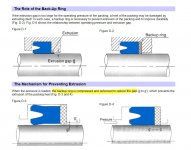
Last edited:
HW uses backups in every jack they build, whether smaller or bigger, lower or higher priced, than the 93642. I explained that to you already. As usual, you did not understand it.
Just to Clear up some things.. HW does not equip all there jacks with documented Backups on all the Piston Applications on the Main Ram for all the HW Jacks they produce. Its extremely plausible that outside of the HW side of things SHINN FU uses them on all there Imported models. I cant confirm NOR Deny because Im not going to take the time to go thru every exploded view diagram and as ive mentioned many times, Most customers don't want to pay to get them fixed because its not cost effective.
I also already explained the persons who designed the earlier 93xxx jacks must have been different persons, with different ideas, from the ones that designed later jacks. No other jack manufacturers use modular backups in their jacks, so the one in the 93XXX jacks is the exception, because this jack was designed when modular backups were popular, and many designer of hydraulic equipment were using these in their designs. Now-a -days, these backups are not so popular and are hardly used in new designs. I already explained this to you, but as usual you also did not understand this.
Here is My Issue.. And Ive been very patient with your explanations, Even when you seem to always want to impose that your opinion is more important than MINE. I can deal with that, its the Internet.. Your not the First and wont be the last. You can go back to the 7xx/8xx Series days and clearly see that in the Manufacturing diagrams they call the Brass Washer that the Piston seal rides against a "HEEL PLATE", I can get part numbers if you don't believe me. Its not a difficult voyage. IF your explanation that the Current production jacks and even Lincoln branded ones from when they switched to the All Metal backing plate to the White Material for the Piston seals to ride against. Why do they still call these "HEEL PLATES"? You think its because of different "Persons with Different Ideas"? Ok Fair enough its your opinion, But why do they also label the bigger bore jacks with Backups and Still ride against Heel plates?
If you do not believe me about modular backups, which actually exist, and most seal manufacturers sell them, why don't you ask about it to someone why experience in general hydraulic equipment and not to someone who has only experience with floor jacks.
I am sorry if you are unable to understand how a backup works. Sometime ago, I sent you a PM with information about how a backup works and you thanked me for it because up to that point you were clueless on how they worked. I still have that PM, so I might post it here to show what you don't know.
I do have the e -mail for the Shinn Fu guy. Thanks.
Its Not a Issue of Not believing, Don't take it personal.. I clearly understand how backups work, And ther sole job is to prevent extrusion. Did I have issues understanding why some jacks with Ucups utilize them and others don't, Even when they are similar bore and tonnage and Make? Absolutely.. Admitted.. Enough times to own up to mistakenly thinking they where spacers.. Over and OVER, Didn't know they where under Ucups/Thought they where spacers for the 17th time, don't try and twist it all up. I simply ask you to show me 1 example of a backup NOT being supported 100% in either Piston form or Gland form in a Hydraulic application. Ive done the Leg work, I contacted Shinn Fu, Made a Personal inquisition to the actual responsibility of the "HEEL PLATE", You didn't like it.. Claimed I spoke with someone out of the Know. I cant Help that.. Ive also contacted Parker this AM, I received confirmation that they have received my inquiry and im awaiting to hear back from the Engineered Polymer Systems Division in Salt Lake City. Will you believe Parker?
Anyway, all this talk about the bypass opening does not answer the question about why there is oil on top of the threaded adjustment plug.
And now I am going to point out the mistake you made when answering the OP question.
You now there is an oil return hole inside the chamber where the steel ball and spring reside, you said it yourself. And this hole is open all the time, so it is a free flow hole. So any oil entering this chamber, because the bypass opened, will flow right trough to the tank, without any chance of building any amount of pressure inside this chamber.
So, you see, another one of your mistakes corrected by me.
For any one interested, below is some information on how backups work. I am pretty sure anyone will be able to understand this but not Hiball.
Absolutely.. there is a Return hole to the Reservoir and it uphill to the very top of the Reservoir. I recall this because when I was kid trying to learn how things worked, I fished piano wire through every Hole I could find to try and learn how things operate. Is it possible that a Overfilled Reservoir is allowing oil to seep into the Overload Galley? Very possible, I believe I confirmed that earlier in this thread and also commented that its possible that oil could get around the threads while waiting for its turn to head thru the small return vein at the bottom end of the plug. I have to Ask? Have you ever tried to fill one of the Older jacks that doesn't have a fill plug on the Reservoir? I have.. Its Not easy trying to get oil to move via a small Vein when is a 1 way street and Oil/Air need to switch places. I was also thinking about the Overload today, I suspect another issue that could cause small bursts of overload seepage is if the Owner started lowering the Vehicle and then decided to stop it by closing off the Release. I know im guilty of doing it to make sure the Stands are positioned correctly etc.. It definitely puts a shock on the Lift Arm. Of course that would depend on the Overload Setting, Load and Decent rate, But extremely plausible I suppose.
I am beginning to think that you are just a glorified parts changer, like many car mechanics, who simply change many parts until the problem is solved. You have a lot of experience changing parts, I give you that.
Oh so you rebuild your seals when they go Bad? Id be interested in learning about that Process..
I still sustain that the thick, nylon washer is a modular backup, or modular bearing, as it is also called, and it works the same way other backups work.
Wait a Minute.. And I didn't catch this earlier, but after talking to another Hydraulic Shop Member here, Are you Now saying that Modular Bearings are the same as Modular Backups? I Mean Seriously you have spent a lot of bandwidth trying to convince everyone that your knowledge of backups and extrusion are so grand that they have led to personal attacks on yours truly. (between me and you that's ok though). My Understanding and Differences between the 2.
Modular Backups, Which do come in Low Profile also according to the Parker Handbook, but lets go with the Thicker version that you linked earlier to represent the Heel Plate that HW utilizes. In your Initial and up until a couple posts ago was that they where in fact Modular backups, You have linked pictures showing them, Pictures showing backups expand under load and close extrusion gaps etc.. I never could wrap my head around it because they so friggin Hard, In the HW/Lincoln Applications they aren't fully supported on the Back side, So in My Mind how are they supposed function correctly? So.. While waiting on Parker, I scrolled over to the Parker handbook and did a little reading myself. What do I find?
Modular back-up rings disperse pressure from the
seal throughout the gland to fill the extrusion gap and
protect the seal
Modular Bearings.. I think you might have accidently stumbled onto something here, Ive Always bought Heel Plates directly from HPS and Previously Lincoln mainly because they where fairly cheap and I never found a direct source for replacement. I actually do believe them to Be Bearings after talking to another Hydraulic Shop Owner here, I also don't believe they offer any Expansion/Extrusion properties outside of there initial size being closely comparable to the Bore. I still believe there sole purpose is to provide a Solid back bone for the Seal to ride against (Or heel Plate), I believe they also reduce friction and aid in keeping the Piston head centered in the Bore. I believe If you scroll back to our previous discussion in the Overseas rebuild thread you will see I made many statements that represent Guides/Centering and Cost effective changes from when they changed from the Brass Heads to the White Heel plates. I also believe the OEM Heel plates to have some Nylon characteristics, as while reading the Parker handbook I seen mention of them expanding when introduced to moisture, Which absolutely makes sense after literally pulling 100's of them out of the Bore. Its amazing what tidbits of knowledge a person can pickup by simply putting there Hands on something. I realize the Internet makes people think they Einstein, but there is No replacement for Using your Own head over something as stupid simple as seeing Manufacturers change from a solid hunk of Brass/Steel for a guide to a Piece of White Nylon and Understanding Why.
The modular bearing is used in both rod and piston applications. The modular bearing acts as a wear and load bearing surface to help extend the life of a loaded or unloaded U-cup.
Some might call the above description a Heel Plate? And Maybe the Only difference between them is the Material they are made of or Application/Supplier? Im still awaiting Parker, but I will be a follow up question.
Last edited:
I turned in the screw 1/4 turn but wasn't able to jack up anything yet , my shop is too full right now.
Curious? How many turns is the overload out right now?
During the rebuild I set it to where I found it under the knockout , it was set at 3/4 turn out. I now turned it in 1/4 turn to 1/2 turn out.
That seems a bit Heavy, have you owned the Jack since New? Ever been serviced?
paulsomlo
Well-known member
I was also thinking about the Overload today, I suspect another issue that could cause small bursts of overload seepage is if the Owner started lowering the Vehicle and then decided to stop it by closing off the Release. I know im guilty of doing it to make sure the Stands are positioned correctly etc.. It definitely puts a shock on the Lift Arm. Of course that would depend on the Overload Setting, Load and Decent rate, But extremely plausible I suppose.
Intuitively, this makes sense, so I dug a little further.
I found an online calculator that, given the amount of "drop", the vehicle weight and the stopping distance, spits out the impact force. I assumed that the jack was holding up 1000 lbs., that the vehicle dropped 1", and that it came to rest in 1/4". Although I had to do some conversion, the results are shown below. The impact force is 19280N or roughly 4300 lbs. If the vehicle comes to rest in less distance than the 1/4" I assumed, the impact force would be higher still. I'll also include the link to the calculator in case anyone wants to play with the numbers. http://hyperphysics.phy-astr.gsu.edu/hbase/flobi.html#c1". Maybe someone out there can double check my numbers, just to confirm.
Paul
Attachments

That seems a bit Heavy, have you owned the Jack since New? Ever been serviced?
I bought it 24 years ago used and I believe, the only time it was rebuilt was by me last winter. Both knockouts were in place. The only time I ever overloaded it was 15 years ago trying to jack up my Chevy C-70 dump truck. I do jack up large full size cars and 4x4 pickup trucks. Since the rebuild it works fine except for the oil that came out of the screw.
I do lower the jack then stop like when I want to be 100% sure my jack stands are in the exact spot etc. I try to go slow.Intuitively, this makes sense, so I dug a little further.
I found an online calculator that, given the amount of "drop", the vehicle weight and the stopping distance, spits out the impact force. I assumed that the jack was holding up 1000 lbs., that the vehicle dropped 1", and that it came to rest in 1/4". Although I had to do some conversion, the results are shown below. The impact force is 19280N or roughly 4300 lbs. If the vehicle comes to rest in less distance than the 1/4" I assumed, the impact force would be higher still. I'll also include the link to the calculator in case anyone wants to play with the numbers. http://hyperphysics.phy-astr.gsu.edu/hbase/flobi.html#c1". Maybe someone out there can double check my numbers, just to confirm.
Paul
I bought it 24 years ago used and I believe, the only time it was rebuilt was by me last winter. Both knockouts were in place. The only time I ever overloaded it was 15 years ago trying to jack up my Chevy C-70 dump truck. I do jack up large full size cars and 4x4 pickup trucks. Since the rebuild it works fine except for the oil that came out of the screw.
Sounds like it's been a good Jack? Thanks for replying, did you manage to find some replacement plugs?
Sounds like it's been a good Jack? Thanks for replying, did you manage to find some replacement plugs?
Is 1/2 turn too tight? I was planning to contact you to get some plugs and was wondering if you can get rebuild kits for an Amco 2 ton air jack like they use on front end machines?
Is 1/2 turn too tight? I was planning to contact you to get some plugs and was wondering if you can get rebuild kits for an Amco 2 ton air jack like they use on front end machines?
You Know I hate to Say that is too tight, because albeit this springs are fairly uniform in size, Its possible that when your Jack was New and had the overload set, That's is where it came out at. The Thing about Overloads is, They are Safety Devices, As long as you KNOW your not exceeding the Limits of the Ram Ucup, you could literally weld that Overload seat completely closed. NOW.. I Obviously don't recommend that, Nobody for Liability reasons will tell what the correct setting is or should be, because without a test station its impossible to set properly. My Suggestion, Leave it where it was, Use common sense, Don't put yourself in a situation where your property or yourself can get hurt by falling loads. Utilize Jacks stands at All times you are working on or around a supported vehicle.
I received some Information today, Did a Little research, Caught up with a Friend in the Hydraulic field. Mr Flora with Hydraulic Parts supply, He is aware of GJ based off some Members who have tipped him off to the Website (thanks Guys!!), I hope he joins because he would be valuable asset to the community. I wouldnt Hesitate to say Steve has probably forgotten more about Hydraulic Repair than myself or anyone here at GJ will ever know. Im thinking somewhere around 50+ years in the business, Actually I just looked at some Old Catalogs, They Originated in Brownsville Texas in 1957.
Ive yet to Hear back from Parker in regards to my Request about Modular Backups and what there sole purpose is based off there application and there Material Properties. I did speak with a Mr. Lazzar who is a Member here, I spoke with Mr. Flora this afternoon in regards to the Heel Plates on these jacks and what there purpose was, Whether they where strictly used as Guides or your prototypical Backup to control Extrusion under pressure. The general consensus was that where strictly designed as a guide for the Seal to rest against. I fully 100% Agree.. There is NO WAY IN HELL that piece of Heel Plate is designed to prevent extrusion anywhere outside the limits of Original Size in comparable to the Bore/Gap. It is literally Hard as a Rock. One thing I thought about recently was OK.. Maybe the Heel plate will Expand under pressure, but How is something that is Extremely Hard, and I wouldn't be afraid to say its twice as Hard, going to prevent a UCUP that is resting on it from extruding prior to reaching the PSI that would expand the Heel plate to act as a backup. Food for Thought? Anyone? You don't have to have college degree for this stuff, Just use your Head.
I also spoke with Hercules Seals out of FLA, While I was talking to the Tech department, I was simply scrolling thru the Paper Catalog I have here at the House and what do I find.

Modular Backups and this Interesting Description:
These Back-up rings, Made from Urethane or Nylon, are commonly used as Spacers for U-seals...
Wait a Minute.. Did they say Spacers? Holy Batman they did, You don't want to say that too loud around here. Also Note they put that in the "Wear Ring" Section.. Hmm Interesting.. And Look at the Material Urethane, Nylon or Hard Hytrel. Interesting...
Curious? Well I wonder How Martin Fluid Power categorizes there Modular Backups?

Hmm.. They Categorize it in the "Back up Ring" Category and its description reads as follows (Not sure if you can read the picture) but notice the Material off to the Side, Urethane of a 55 Shore D. A quick google puts that right about on par with your typical Urethane Ucup with a Durometer of 90-95 A. Which makes sense, iMO a backup would need to be a tear resistant material with properties that would expand at a appropriate pressure "Prior" to the actual UCup extruding, otherwise how would it work.
Square Section backup ring, designed for space filler, and Extrusion Gap filler with Polyseals and Poly O's.
So here we go.. and im just strictly making a educated guess, but Modular bearings and Modular Backups are essentially the Same thing. The Only difference and Most import aspect that pertains to this little spat between me and Edgar is that there Job is entirely dependent on the Material used along with application. Obviously I don't see something nearly twice as hard (Just a guess based off feel/compression, Nylon comes in many different flavors) preventing a softer material from extruding well before a Nylon Heel plate gets a chance to extrude, Not to mention that Heel plate is 3/8" in Height compared to 1/4" Ucup. Secondly, I agree there are Backups that are utilized in the Bigger Bore HW jacks, They are clearly marked as Backups in the Manual, and they Rest on Heel Plates. I suspect they are there to prevent extrusion, NO IFS ands or Butts, Im not 100% sold on the fact that all of the Labeled Backups sitting behind Ucups in the SHINN FU Import line are actual backups and Not Spacers. Because what have we Learned? Hercules and MFP has clearly stated that they can be used as spacers..My gut tells me that the ones that are fairly thin in comparison to the Ucup height are to prevent extrusion, the thicker ones are utilized as heel plates/backing plates. I have no intentions of reinventing the Wheel or Re-engineering a Hydraulic Operation, If the Jack has a Spacer/Backup/heel Plate whatever the application has, simply Re-use it.
Simply looking for positive discussion, I grow tired of the Im Right and you are Wrong routine that runs rampant here.
Ive yet to Hear back from Parker in regards to my Request about Modular Backups and what there sole purpose is based off there application and there Material Properties. I did speak with a Mr. Lazzar who is a Member here, I spoke with Mr. Flora this afternoon in regards to the Heel Plates on these jacks and what there purpose was, Whether they where strictly used as Guides or your prototypical Backup to control Extrusion under pressure. The general consensus was that where strictly designed as a guide for the Seal to rest against. I fully 100% Agree.. There is NO WAY IN HELL that piece of Heel Plate is designed to prevent extrusion anywhere outside the limits of Original Size in comparable to the Bore/Gap. It is literally Hard as a Rock. One thing I thought about recently was OK.. Maybe the Heel plate will Expand under pressure, but How is something that is Extremely Hard, and I wouldn't be afraid to say its twice as Hard, going to prevent a UCUP that is resting on it from extruding prior to reaching the PSI that would expand the Heel plate to act as a backup. Food for Thought? Anyone? You don't have to have college degree for this stuff, Just use your Head.
I also spoke with Hercules Seals out of FLA, While I was talking to the Tech department, I was simply scrolling thru the Paper Catalog I have here at the House and what do I find.

Modular Backups and this Interesting Description:
These Back-up rings, Made from Urethane or Nylon, are commonly used as Spacers for U-seals...
Wait a Minute.. Did they say Spacers? Holy Batman they did, You don't want to say that too loud around here. Also Note they put that in the "Wear Ring" Section.. Hmm Interesting.. And Look at the Material Urethane, Nylon or Hard Hytrel. Interesting...
Curious? Well I wonder How Martin Fluid Power categorizes there Modular Backups?

Hmm.. They Categorize it in the "Back up Ring" Category and its description reads as follows (Not sure if you can read the picture) but notice the Material off to the Side, Urethane of a 55 Shore D. A quick google puts that right about on par with your typical Urethane Ucup with a Durometer of 90-95 A. Which makes sense, iMO a backup would need to be a tear resistant material with properties that would expand at a appropriate pressure "Prior" to the actual UCup extruding, otherwise how would it work.
Square Section backup ring, designed for space filler, and Extrusion Gap filler with Polyseals and Poly O's.
So here we go.. and im just strictly making a educated guess, but Modular bearings and Modular Backups are essentially the Same thing. The Only difference and Most import aspect that pertains to this little spat between me and Edgar is that there Job is entirely dependent on the Material used along with application. Obviously I don't see something nearly twice as hard (Just a guess based off feel/compression, Nylon comes in many different flavors) preventing a softer material from extruding well before a Nylon Heel plate gets a chance to extrude, Not to mention that Heel plate is 3/8" in Height compared to 1/4" Ucup. Secondly, I agree there are Backups that are utilized in the Bigger Bore HW jacks, They are clearly marked as Backups in the Manual, and they Rest on Heel Plates. I suspect they are there to prevent extrusion, NO IFS ands or Butts, Im not 100% sold on the fact that all of the Labeled Backups sitting behind Ucups in the SHINN FU Import line are actual backups and Not Spacers. Because what have we Learned? Hercules and MFP has clearly stated that they can be used as spacers..My gut tells me that the ones that are fairly thin in comparison to the Ucup height are to prevent extrusion, the thicker ones are utilized as heel plates/backing plates. I have no intentions of reinventing the Wheel or Re-engineering a Hydraulic Operation, If the Jack has a Spacer/Backup/heel Plate whatever the application has, simply Re-use it.
Simply looking for positive discussion, I grow tired of the Im Right and you are Wrong routine that runs rampant here.
Last edited: