To avoid these ads, REGISTER NOW!

Seeking Frozen Drain Pipe BandAid

Platonic Solid

Well-known member
Joined
Nov 29, 2014
Messages
3,587
Location
CT-USA
I'll start with the primary question (if you don't want to read the whole story):
Is there some kind of heating device that works internal or external to a 2" ABS water only dry-well drain pipe?

The whole story: (Started with this thread "Plumbing DWV question")

I moved the furnace condensate drain from electric pump to directly draining into plumbing and all seemed fine for a while. Came home from work Friday to find the garage filled with water from the washing machine. Girlfriend says: “I noticed a little water in the garage near the new furnace drain this morning while looking for the ice scraper.” To which I replied:” Then why did you run the washing machine this afternoon?”

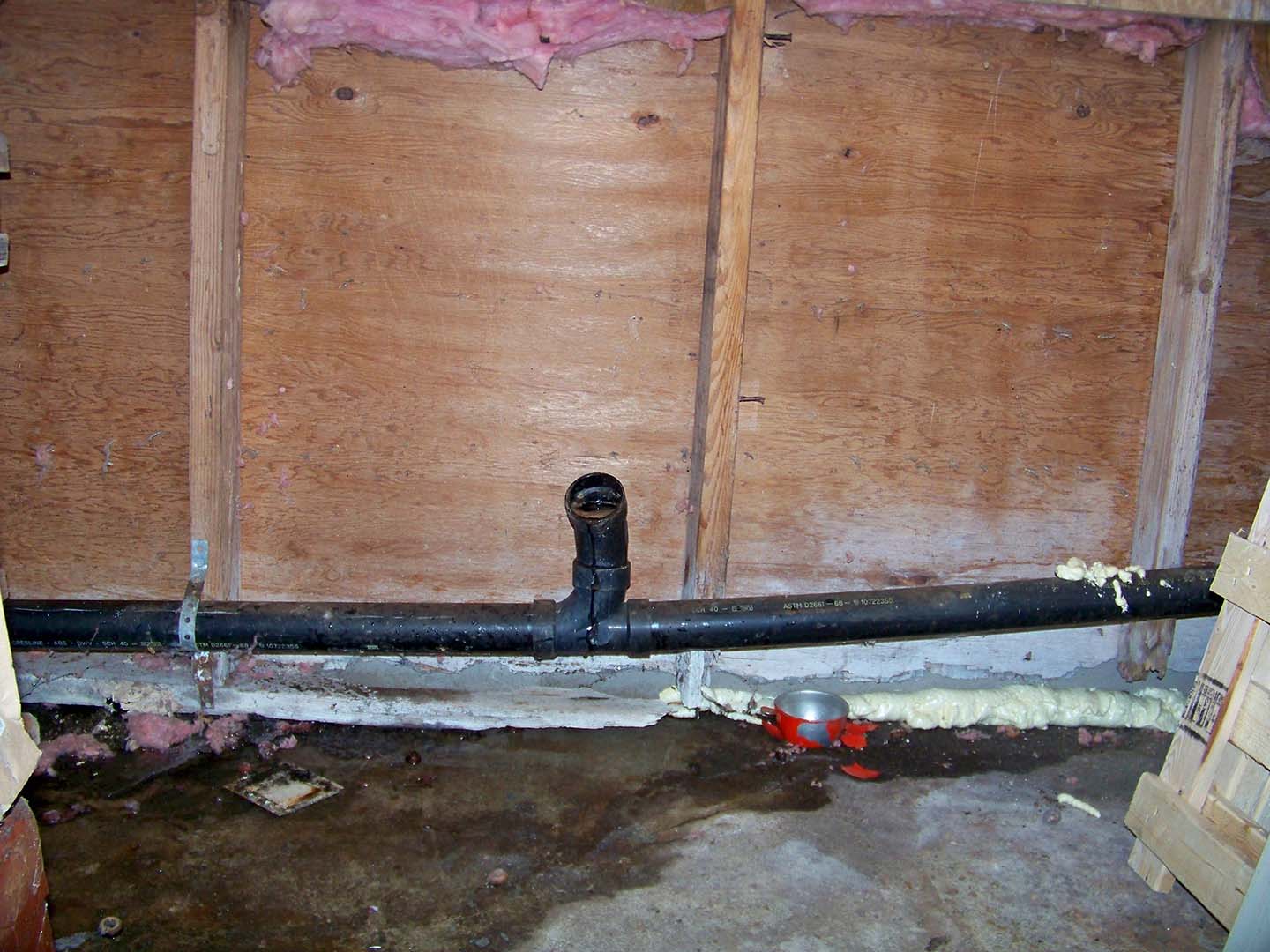
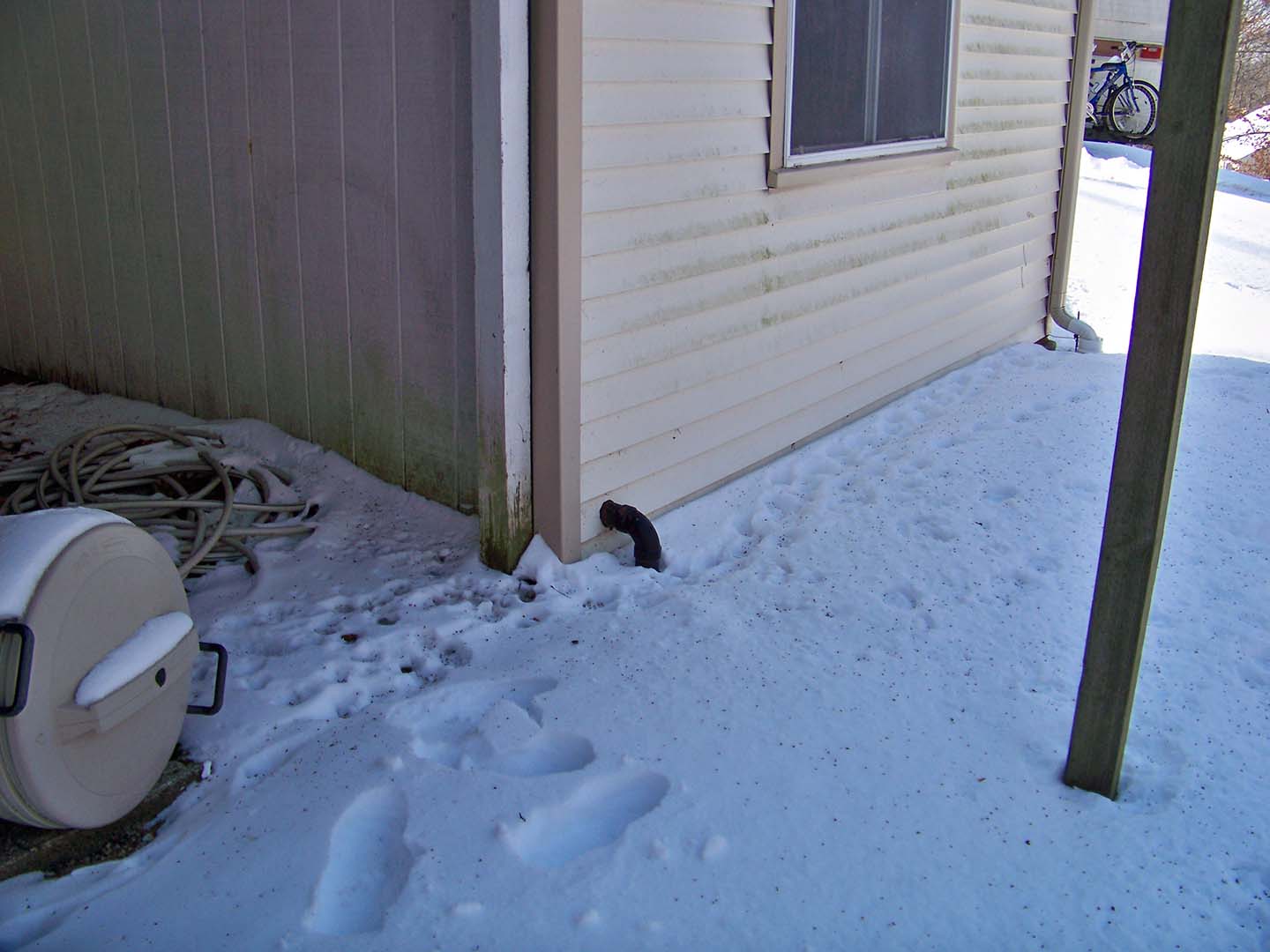
Anyway, it’s not actually the new furnace condensate drain I installed causing the problem. Had I not installed it, all the water would have been at the washing machine in the house. So this 2” ABS drywell drain pipe runs from laundry sink and washing machine through the wall into the garage (next to the furnace) then takes a right turn into an uninsulated 8’x10’ shed (that some previous owner attached to the house) built on a slab that is about 9” below the house slab height. The pipe then exits the shed to the outside and makes a 90° turn into the ground. In the shed I discover an open Wye pipe with a frozen solid waterfall coming out of it.

Obviously none of this is done right and it explains why the sill of one shed walls is completely rotted away (I can push the wall and it moves). I need a temporary solution until I can get this fixed properly. I purchased a water pipe heater thinking I’d just wrap the ABS pipe with it then insulate it, but the instructions state “only for use on pipes always filled with water” and “not for use on drain pipes”. Also this does little to address the 90° angled pipe outside the shed.

I don't think the new furnace condensate drain has helped things any. The water from the furnace now slowly drips into the drain, thus making it more likely to freeze than when it was connected to the electric condensate pump.

I currently have an electric heater in the shed, but that's too expensive to keep that way all winter (though I may have no choice) and it does nothing to address the 90° angle outside the shed. The water in the pipe has thawed in the shed, but it's still clogged further down. I poured ice melt in there yesterday, but still clogged this morning.
 
Last edited:
To avoid these ads, REGISTER NOW!
OP
P

Platonic Solid

Well-known member
Joined
Nov 29, 2014
Messages
3,587
Location
CT-USA
Dang, now when I google for a solution the #1 search result is this thread. That's not a good sign.
 

roscoe2000

Well-known member
Joined
Sep 22, 2009
Messages
264
Location
Seat Pleasant Md
Most heat tape would be made to maintain the water temp in the pipe about freezing. They would not and could not recommend it's use on a drain line since they are too many variables.

In your situation, you have no choice but to try it, since it would be a temporary fix. With a number of years in the commercial building maintenance field, we have used heat trace tape on PVC drain lines and often with the intended results. I have even seen them use on storm gutter.
 

Richard Cranium

Well-known member
Joined
Apr 22, 2011
Messages
18,552
Location
central Washington
The snow birds will wrap their motor home drain pipes with the big out side Christmas lights to put just a little bit of heat into them to keep their holding tanks and pipes from freezing...Don't know if this would help or not, Just what I have seen many of them do...Rich
 

CNGsaves

Well-known member
Joined
Sep 26, 2012
Messages
13,233
Location
KS and OK
Sounds like time for "Mike Holmes style" . . . . tear out and Do It Right !!

I'd be cutting off what doesn't work, and putting in makeshift that DID work until you can get the overall gameplan established. Good luck.
 
OP
P

Platonic Solid

Well-known member
Joined
Nov 29, 2014
Messages
3,587
Location
CT-USA
The snow birds will wrap their motor home drain pipes with the big out side Christmas lights to put just a little bit of heat into them to keep their holding tanks and pipes from freezing...Don't know if this would help or not, Just what I have seen many of them do...Rich
That's pretty creative. I think I may have missed the Christmas clearance sales. Interesting turn of events - "Wanted: inefficient lighting".

Reminds me of what happened in Europe when they discontinued the A19 incandescent bulb, some guy reintroduced them to the market as energy efficient "Heat Balls".

As much as I like this solution I think I'd be creating a major rodent party spot.
 
Last edited:

Muttly

Well-known member
Joined
Dec 11, 2007
Messages
216
Location
Mid-MI
did the washer always drain to the hacked together non-insulated shed invading dry well?

Is there a way to hook it back up to the regular dwv of the house?

Do you have a basement where you can run the line in to the regular plumbing?
 
OP
P

Platonic Solid

Well-known member
Joined
Nov 29, 2014
Messages
3,587
Location
CT-USA
Most heat tape would be made to maintain the water temp in the pipe about freezing. They would not and could not recommend it's use on a drain line since they are too many variables.

In your situation, you have no choice but to try it, since it would be a temporary fix. With a number of years in the commercial building maintenance field, we have used heat trace tape on PVC drain lines and often with the intended results. I have even seen them use on storm gutter.
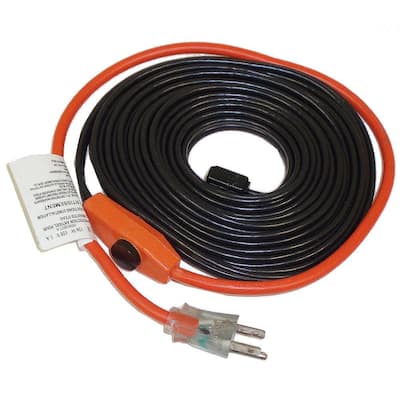
This is what I got. I didn't need 30ft, but it was the only length left:

Frost King 30 ft. Automatic Electric Heat Cable Kit (image linked to HomeDepot)

 
OP
P

Platonic Solid

Well-known member
Joined
Nov 29, 2014
Messages
3,587
Location
CT-USA
Muttly,

The washer has drained to the hacked together non-insulated shed invading dry well for at least the last 40 years. House is 50 yrs old.

There is a regular DWV washer hookup in a closet. It's a major reconstruction project to put it back where it was.

The house is a raised ranch, so I'm already in the basement so-to-speak.

I do have plans to tear down the shed and the 2 story sun-porch which were obviously constructed at the same time, probably around 1970, with the same complete disregard for any logic or building code compliance (if there was any). Sun-porch has storage room beneath (all interior space) with a wood floor build 4" above dirt. No real foundation - just porch footing style.
 
OP
P

Platonic Solid

Well-known member
Joined
Nov 29, 2014
Messages
3,587
Location
CT-USA
The main interior vertical 3" Copper DWV line is close enough to tap into, but I'm not 100% on how to do that. Assuming that it's just: cut copper pipe and add PVC Wye with fernco's, I still have the highly acidic furnace condensate to deal with and I've already seen what that does to copper. I did fill the condensate trap with marble chips to neutralize the acid, but not sure how effective that is.
 
Last edited:

dfiler2

Well-known member
Joined
Dec 15, 2014
Messages
2,859
Location
NW Minnesota
I think the real problem is the condensate line, I had to deal with this last winter in my parents home after they left for the winter. The condensate line would slowly drip into the drain and freeze, because there was never a large amount of water being introduced the ice kept building up until it blocked the line. The solution was to run it into a pump first so there would be enough flow to melt the small layer of ice in the drain each time it ran. To thaw the drain the first time I used a small pump up sprayer filled with hot water with a length of stiff 1/4" line hooked to where the spray nozzle was. Generally speaking a drain line will never freeze unless a faucet is left dripping or there is some other slow introduction of water.

You would probably be better off using a low voltage heat tape, if you decide to use what you've shown be sure to not double up or cross the line over itself, it will melt the plastic drain line.
 
Last edited:
OP
P

Platonic Solid

Well-known member
Joined
Nov 29, 2014
Messages
3,587
Location
CT-USA
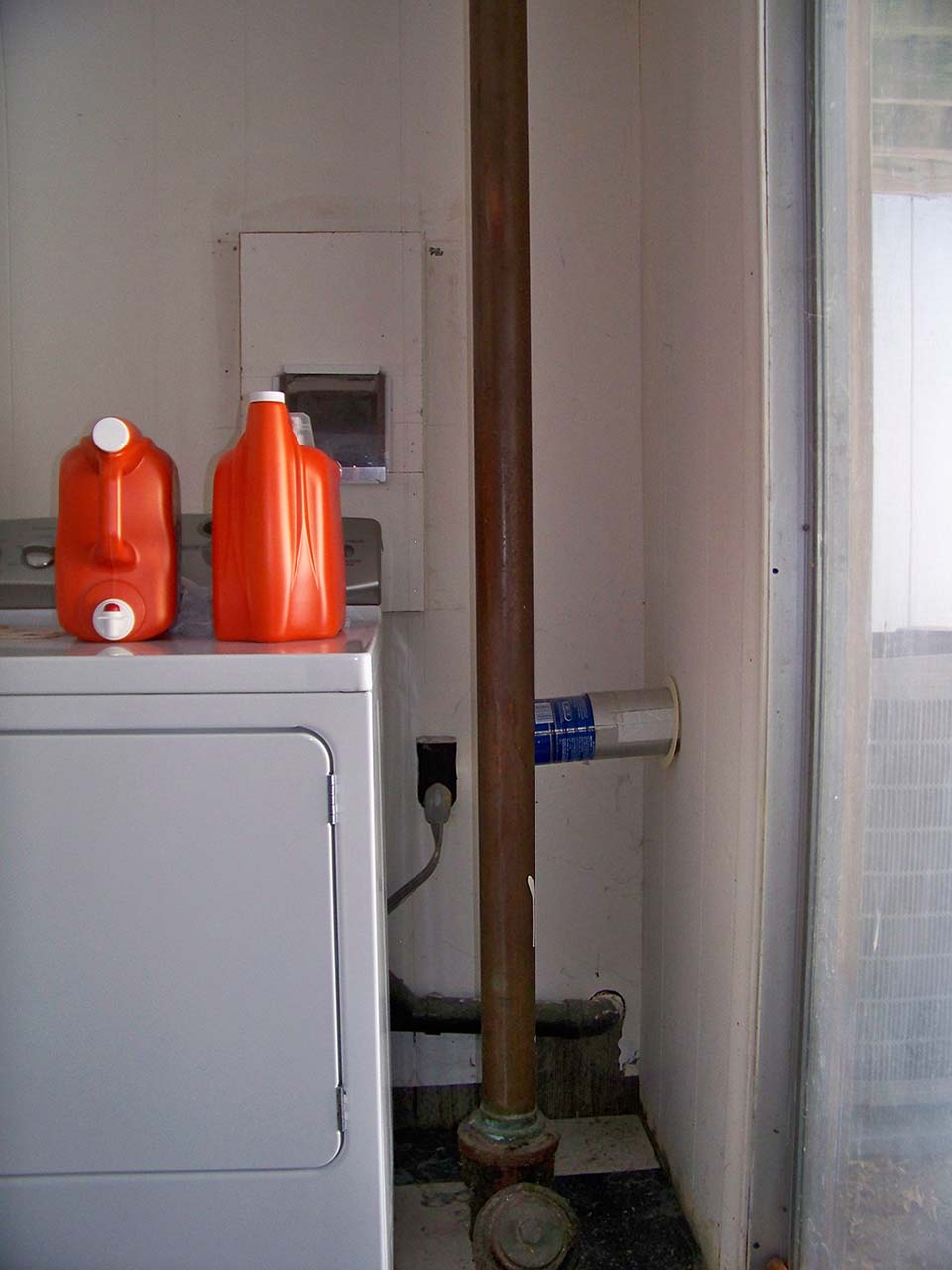
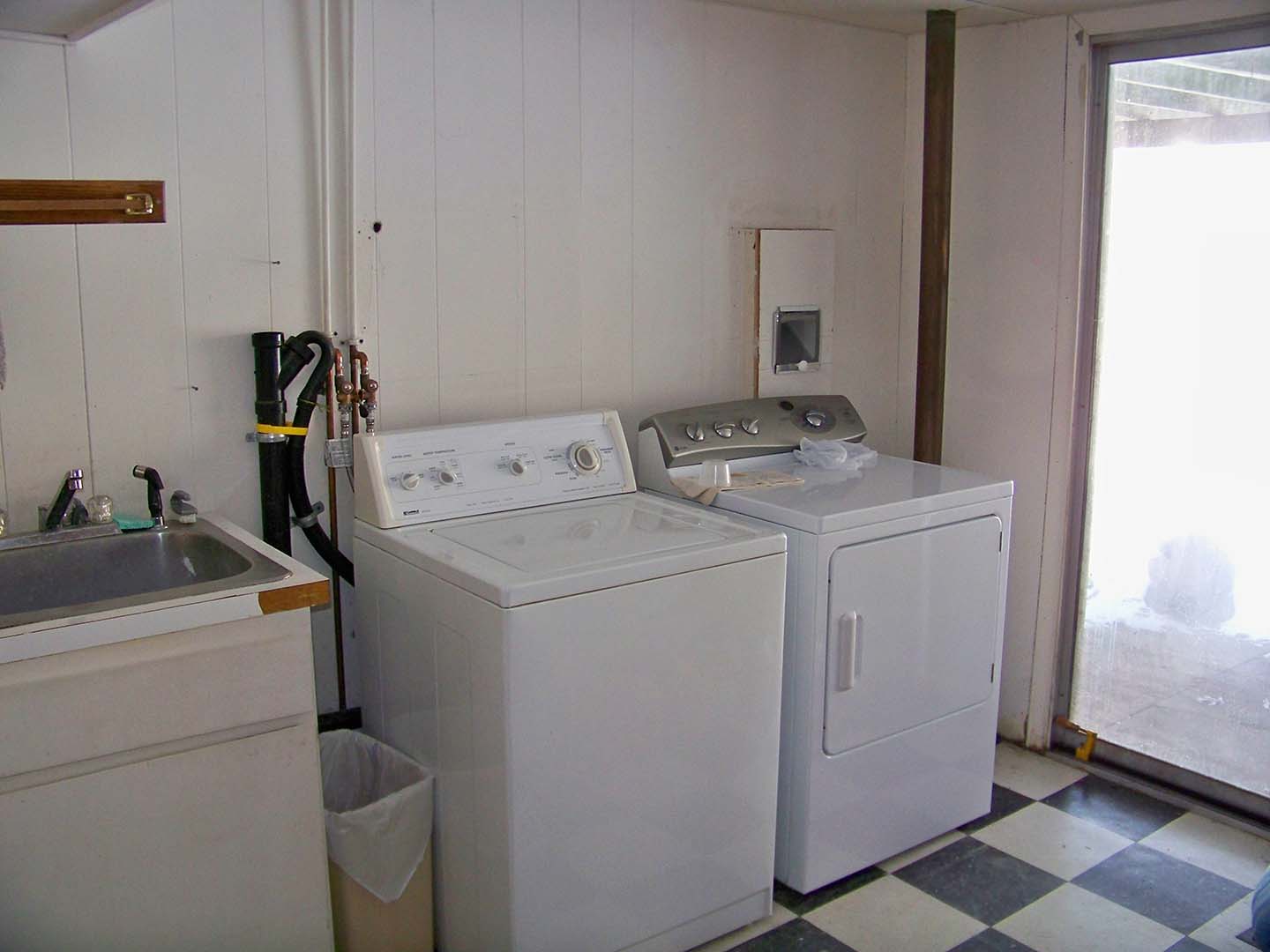
Just ignore the coffee can, I had to relocate the dryer vent when I had the new AC installed under the deck. Didn't want lint buildup in the AC unit.
main-dwv-line.jpg


laundryroom.jpg


Shed interior:
interior-dwv-shed.jpg


Shed exterior:
exterior-dwv-drywell.jpg
 
Last edited:
OP
P

Platonic Solid

Well-known member
Joined
Nov 29, 2014
Messages
3,587
Location
CT-USA
I think the real problem is the condensate line, I had to deal with this last winter in my parents home after they left for the winter. The condensate line would slowly drip into the drain and freeze, because there was never a large amount of water being introduced the ice kept building up until it blocked the line. The solution was to run it into a pump first so there would be enough flow to melt the small layer of ice in the drain each time it ran. To thaw the drain the first time I used a small pump up sprayer filled with hot water with a length of stiff 1/4" line hooked to where the spray nozzle was. Generally speaking a drain line will never freeze unless a faucet is left dripping or there is some other slow introduction of water.
That's painfully logical. I'll add the dang pump back in.

You would probably be better off using a low voltage heat tape, if you decide to use what you've shown be sure to not double up or cross the line over itself, it will melt the plastic drain line.
I'll see what I can find at the hardware store. Need to head there now before they close.
 

dfiler2

Well-known member
Joined
Dec 15, 2014
Messages
2,859
Location
NW Minnesota
Ok, the pictures help, first thaw the drain with a hair dryer, it won't take long. Then straighten out the sag in the drain line in the unheated building. Then use electrical tape to attach your heat cable in one length to the bottom of the drain, or make sure a few gallons of water get poured through the drain at one time daily.
 

RECox286

Well-known member
Joined
Apr 11, 2012
Messages
1,399
Location
South Joisey (yeah, that is part of the USA)
The newer, more efficient heating plants may be less costly

to run, but they do create another problem by creating more

condensate, which does not run up the chimney, but out of

the drain. Well, you have found that out. We had to deal

with the problem for many years, watching vacation homes

during the winter, and icing was always the number one

problem that we dealt with in a variety of ways. We found

that if we could eliminate running the line in a cold prone

spot, like to the main waste pipe for the house, we could

run all winter with no problems. One place I watched had

no such solution, and I ended up running the condensate into

a 5 gal bucket, which I had to empty daily. The bucket sat

in a small kiddie pool in case I couldn't get out on a particular

day and I do remember several times having to bail the pool due

to overflow. All this b/c the owner would come down several

weekends in the off season. And, we kept the heat low; 45*

to keep the domestic water from freezing. If you must, it may

be easier to use a system like that, since you live at the house

and it wouldn't take much time to empty the bucket morning and

evening by hand. The only other trick would be to rethink the

drain location...maybe dig it down to below the frostline where

it would more safe to work by itself. If the waste line for the

house is higher than the condensate drain, you could opt to add

a condensate pump and tubing to get to the waste line.

(???)

Uncle Bob
 

FullRaceMerc

Well-known member
Joined
Jan 9, 2015
Messages
3,870
Location
SoCal (SGV)
Heat tape & foam pipe insulation was what we used for walk-in freezer condensate lines inside the box when I worked for a restaurant service company. It was smaller copper pipe instead of your larger ABS. The pipe would be empty most of the time. We had no failures of the tape while heating empty pipes.

It was a commercial product that we would buy at the supply houses. I don't know about the differences between that & the tape you have. A quick search shows some pretty expensive self regulating heat tape at Graingers that looks like the stuff we used. I don't think we were paying that sort of money for it.

The only problem I saw was when they tried to run the tape only during the defrost cycle. The tape was designed to maintain the pipe above freezing when on 24 hours a day, not heat to it up in the relatively short time of the defrost cycle. The pipe was too cold for the tape to overcome. I think a little water would remain in the pipe & freeze once the tape was off, then repeatedly build up & eventually split the lines. Once there was a little ice in the line it was over. It takes a lot more BTUs to melt ice than to keep water from freezing. The key was to always keep the line a little above freezing.

It seems like for your situation the tape would probably work if it was on anytime temps got around freezing. Since you're looking for a temporary BandAid fix remembering to plug it in when it gets cold would probably do. If it were long term some sort of thermostat control seems better.
 
Last edited:
To avoid these ads, REGISTER NOW!

big.jim

Well-known member
Joined
May 11, 2011
Messages
1,011
Location
derbyshire uk
this is a common problem on condensate drain lines and there have been several manufactured solutions ,there is a condensate heat tape available that fits inside the pipe and some manufacturers have gone to a syphonic trap so it does not dribble down the drain but flushes a plug of tepid water in one go helping to keep the drain clear, you could use something like a urinal auto syphon flush to feed your condensate into then when it gets full it will flush a larger amount of room temp water down the drain
 

CNGsaves

Well-known member
Joined
Sep 26, 2012
Messages
13,233
Location
KS and OK
I see a clean-out on your big 4" main sewer pipe. Why not jerry rig a P trap that directly connects to that main line and directly route laundry sink and W/M water over?? That would still be in heated area that wouldn't freeze . . . right??

Worst case temporary fix is cutoff 90 elbow outside and just run onto surface with gutter or some similar way to get water away from house.
 

JRC3

Well-known member
Joined
Jun 30, 2014
Messages
12,481
Location
Southwestern OH
I see a clean-out on your big 4" main sewer pipe. Why not jerry rig a P trap that directly connects to that main line and directly route laundry sink and W/M water over?? That would still be in heated area that wouldn't freeze . . . right??

Worst case temporary fix is cutoff 90 elbow outside and just run onto surface with gutter or some similar way to get water away from house.

That's what I was thinking. Or just tap right into the copper vent pipe right above the Y and cleanout.
 

BD1

Well-known member
Joined
Mar 18, 2007
Messages
4,602
Location
north side
Does the sink drain ok to the left ? Could you stick washing machine hose to discharge into sink ?
 

zmaxmotorsports

Well-known member
Joined
Jan 11, 2013
Messages
11,948
Location
South of omaha
Id shovel the snow off the ground around the pipe,then toss a big pile of straw over it.
On the inside of shed Id insulate the walls to keep whatever heat you use out there in the shed.;)
 
OP
P

Platonic Solid

Well-known member
Joined
Nov 29, 2014
Messages
3,587
Location
CT-USA
...You would probably be better off using a low voltage heat tape, if you decide to use what you've shown be sure to not double up or cross the line over itself, it will melt the plastic drain line.
Hardware store didn't have anything like that.

... It was a commercial product that we would buy at the supply houses. I don't know about the differences between that & the tape you have. A quick search shows some pretty expensive self regulating heat tape at Graingers that looks like the stuff we used. I don't think we were paying that sort of money for it.
...
It seems like for your situation the tape would probably work if it was on anytime temps got around freezing. Since you're looking for a temporary BandAid fix remembering to plug it in when it gets cold would probably do. If it were long term some sort of thermostat control seems better.
That's some price tag.

this is a common problem on condensate drain lines and there have been several manufactured solutions ,there is a condensate heat tape available that fits inside the pipe and some manufacturers have gone to a syphonic trap so it does not dribble down the drain but flushes a plug of tepid water in one go helping to keep the drain clear, you could use something like a urinal auto syphon flush to feed your condensate into then when it gets full it will flush a larger amount of room temp water down the drain
I was thinking about something like that. Wasn't sure it existed. I'll have to google it. May just end up putting the condensate pump back in the loop.

That's what I was thinking. Or just tap right into the copper vent pipe right above the Y and cleanout.
I'll tap into the main line eventually for the washing machine. Think I'll leave the other line for the condensate though. I don't trust the acidic condensate not to eat away the main sewer line.

Does the sink drain ok to the left ? Could you stick washing machine hose to discharge into sink ?
Sink and washing machine are on same dry well drain.
 
OP
P

Platonic Solid

Well-known member
Joined
Nov 29, 2014
Messages
3,587
Location
CT-USA
Naturally, after buying every conceivable item needed, I get back home and the temp got up to 32° and the drain is no longer clogged. I fixed the droop in the line and still have the electric heater out there for now. Furnace is currently draining into a bucket until I hook the condensate pump back up. Girlfriend is doing laundry again now, so we'll see how that goes.
 

Charles (in GA)

Well-known member
Joined
Jan 11, 2006
Messages
12,489
Location
50 mi south of Atlanta
I see a clean-out on your big 4" main sewer pipe. Why not jerry rig a P trap that directly connects to that main line and directly route laundry sink and W/M water over?? That would still be in heated area that wouldn't freeze . . . right??

Worst case temporary fix is cutoff 90 elbow outside and just run onto surface with gutter or some similar way to get water away from house.

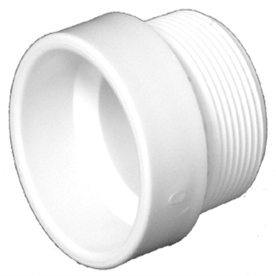
My thinking as I read thru this. Find a PVC fitting that screws into the threads that the plug fits, and go from there. Be sure and use the correct PVC to ABS glue. My Lowes still carries ABS DWV pipe and fittings, but its only a matter of time before it disappears from the market. My 1984 vintage house is plumbed with ABS DWV pipe.

Charles

Something that looks like this......... Known as a "trap adapter"

611942032211lg.jpg
 
Last edited:

zmaxmotorsports

Well-known member
Joined
Jan 11, 2013
Messages
11,948
Location
South of omaha
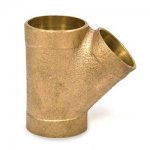
Heres a better fix,Cut a dwv copper wye into the stack and solder it up.Youll also need a 45 and a little 2" copper.
Once you come off that 45 with a little chunk of copper you can use a no hub reducing coupling and finish the job with pvc.
 

Attachments

  • dwv.jpg
    dwv.jpg
    15.6 KB · Views: 14
Last edited:
OP
P

Platonic Solid

Well-known member
Joined
Nov 29, 2014
Messages
3,587
Location
CT-USA
Heres a better fix,Cut a dwv copper wye into the stack and solder it up.Youll also need a 45 and a little 2" copper.
Once you come off that 45 with a little chunk of copper you can use a no hub reducing coupling and finish the job with pvc.
I can't move the top of the stack up to get the copper wye in - at least not without cutting the stack at the first elbow in the ceiling.
 

59 wagon man

Well-known member
Joined
Oct 25, 2010
Messages
1,589
Location
hollywood fla
are you sure the drain line is not clogged from something other then ice? drain lines should be pitched and not holding water.
 

zmaxmotorsports

Well-known member
Joined
Jan 11, 2013
Messages
11,948
Location
South of omaha
I can't move the top of the stack up to get the copper wye in - at least not without cutting the stack at the first elbow in the ceiling.

You could take the piece you cut out of stack and cut it in 1/2,Then sweat one piece on the bottem of the wye and other piece on the top of wye.
Then hold it up to the stack with bottem of piece on bottem of wye flush with bottem cut on pipe,then mark where top cut needs to be on the stack for it to fit.
Give yourself an extra 1/4-3/8" to allow room for the no hub couplings,support the stack above while cutting and installing the wye.;)
 

roscoe2000

Well-known member
Joined
Sep 22, 2009
Messages
264
Location
Seat Pleasant Md
Be mindful of the highly corrosive nature of the condensate. It will giving the time eat thur copper, cast iron and steel pipe. Brass is an option or small treatment tank to allow time to lower the PH prior to discharge into your sewer line.
 
OP
P

Platonic Solid

Well-known member
Joined
Nov 29, 2014
Messages
3,587
Location
CT-USA
You could take the piece you cut out of stack and cut it in 1/2,Then sweat one piece on the bottem of the wye and other piece on the top of wye.
Then hold it up to the stack with bottem of piece on bottem of wye flush with bottem cut on pipe,then mark where top cut needs to be on the stack for it to fit.
Give yourself an extra 1/4-3/8" to allow room for the no hub couplings,support the stack above while cutting and installing the wye.;)
Yeah, I had a feeling Fernco's would appear in this equation. Thx

edit: Wait a minute. If I'm using Fernco's why the expensive copper wye?
 
Last edited:
OP
P

Platonic Solid

Well-known member
Joined
Nov 29, 2014
Messages
3,587
Location
CT-USA
Be mindful of the highly corrosive nature of the condensate. It will giving the time eat thur copper, cast iron and steel pipe. Brass is an option or small treatment tank to allow time to lower the PH prior to discharge into your sewer line.
I agree, thus am not willing to drain the condensate into my septic system. I hear it even eats through cement. What a dumb-*** furnace system.
 
To avoid these ads, REGISTER NOW!
Top Bottom