To avoid these ads, REGISTER NOW!

Spray foam insulation under roof decking

TheBadDog

Well-known member
Joined
Dec 9, 2012
Messages
112
Location
Phoenix
Not specifically garage related, but certainly applies to garages as well. Executive summary is, do any of you have experience with the spray foam insulation on the underside of the roof deck?

I've got an older house that I'm fixer-upper-ing. That includes some restructuring and rewiring in the near future, which involves swimming through about 20" of blown fiberglass insulation looking for wires and so on. And oh what fun when we have to drop some of the ceiling. Also, here in Phoenix, summer attic temperatures can get totally ridiculous. And even though I've wrapped/sealed my split AC attic units and ducts, it blows HOT air for over a minute when it kicks on. So my plan is to have the underside of the roof deck sprayed with 5-6" of expanding foam. Air tight, and makes the attic climate controlled. So better AC, storage options, and MUCH easier for subsequent renovation. Not cheap, but over all benefits in total "seem" to make it well worth it.

So then the garage part. I just got through repairing water damaged ceiling caused by a leaking swamp cooler line. Fixing the leak was a mofo. Unlike the house which is nice old school open rafter construction, the shop is engineered truss construction. The leak was over 20' from the access, and you can't go through the lower truss openings because of the 20"+ insulation (combination of bat on the bottom, and blown on top). So I had to make like lizard man with knee pads to hobble my way through the upper cross opening. I then decided to add a ceiling fan and some overhead electrical outlets. I should have just shot myself in the head, it would be easier. Can't move around in the trusses, can't find the wires in the fiberglass. I finally got the ceiling fan done, but mainly because there was already a junction box there that I found behind the damaged sheet rock that I removed. I finally just gave up on the outlet boxes, maybe I'll run them surface mount conduit, or just deal with tripping over extension cords.

Anyway, this got me thinking maybe I see how much extra they will charge to blow the attic of the shop too. Just think how easy it would then be to run new circuits, attic storage, and other options. I might even just drop the entire sheetrock ceiling out. Easier (and cheaper?) to do the spray insulation, not to mention other changes later. I doubt the price will be worth it for the shop, but I can't be the first person who considered it. I'm going to call first of the week to get them to add an option to their quotes to do both.

So, any of you go this route in house and/or garage? If so, how did it work out?
 
To avoid these ads, REGISTER NOW!

slice

Well-known member
Joined
Jun 16, 2010
Messages
331
Yes. Whole house and house garage. Well worth it. (Houston Tx ). I am building new garage 50x36. I am having foam in walls and upstairs play room. The pay back is both in dollars and comfort levels.
 

yeldogt

Well-known member
Joined
Jan 2, 2012
Messages
18,184
The stuff is amazing. Once you use it there is no going back. I doing all spray in my new build .. all the roof decks are sprayed.
 

Denwood

Well-known member
Joined
Sep 22, 2014
Messages
4,192
Location
Thunder Bay, Ontario, Canada
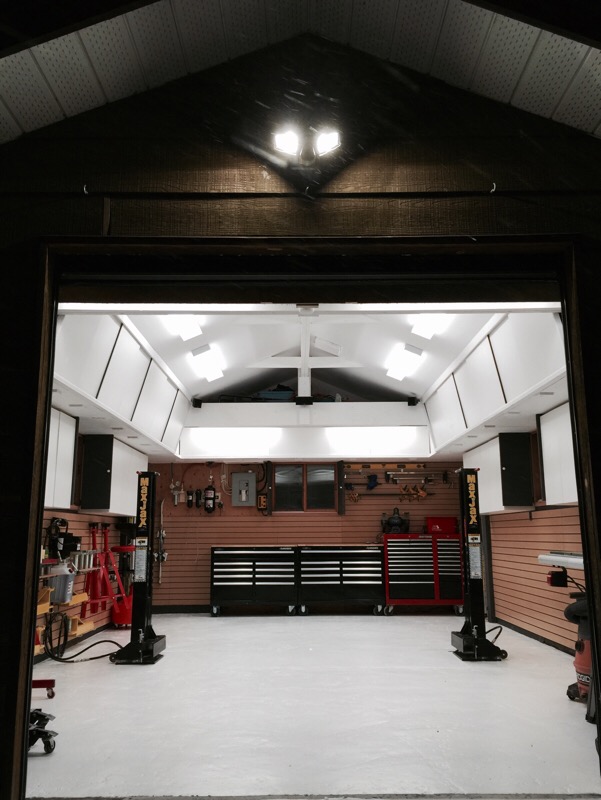
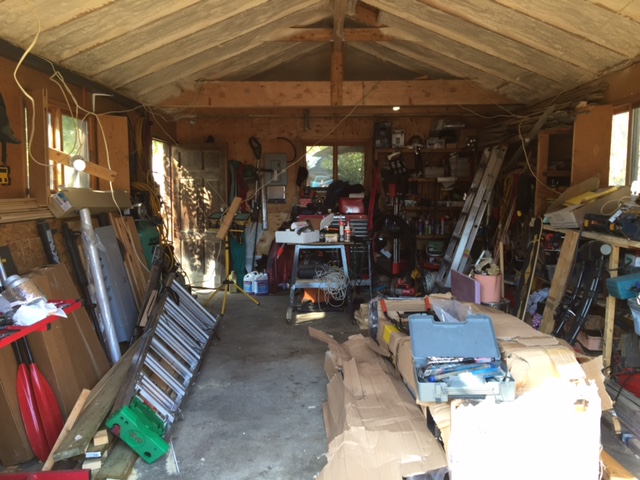
Just did my shop that way. I also took thermal images on pretty cold days. The spray foam on roof deck is quite effective, even at a relatively low thickness due to complete air seal. It also permitted a fairly efficient "roof raise" project.

mess.jpg


final1.jpg


Temps in this pic around 0C (32F). Note that the roof deck is cooler than the walls, even though rated R value of the 2.5" of spray foam is similar to the R20 walls. In other words, the spray foam roof deck is more efficient than the walls.

outceiling.jpg
 
Last edited:

Kaizen

Well-known member
Joined
Jan 9, 2015
Messages
6,948
Location
New England
did the cheap open cell in two ceilings. for a moderate climate I don't think I'd ever do it again. in yours maybe. definitely awesome for sealing the envelope but pricing up here at 1inch per 1 square foot is ridiculous. same price 38 r value was 1 sixth of the price
 

C2 Turbo

Well-known member
Joined
Mar 18, 2014
Messages
392
Location
Out skirts of Louisville, KY
did the cheap open cell in two ceilings. for a moderate climate I don't think I'd ever do it again. in yours maybe. definitely awesome for sealing the envelope but pricing up here at 1inch per 1 square foot is ridiculous. same price 38 r value was 1 sixth of the price

You don't want to do the close cell on the roof anyway or else you will never know the leak.

I am doing a considerable size residential project and seeing how a house is build, there's no way bat insulation can seal a house the way a foam spray insulation would especially around the windows and between the studs.

I did 7" open cell not only on all outside walls but thru out the roof (between the rafters) so the attic space is same temp as the house which would definitely help the HVAC ducts maintain their temp not to mention the clean look of an attic.
 

larry4406

Well-known member
Joined
Jan 27, 2006
Messages
19,358
Location
Northern Virginia
I am interested in this for the same reasons as the OP. My house renovation and attic experience is identical. There is a YouTube video where a guy takes a harbor freight dust collector and 4" flex pipe and uses it to **** out the blown insulation prior to foam insulation.

My understanding when you do this you also need to spray fully down to the soffit closing off the soffit vents and insulating over the top of the walls.
 

yeldogt

Well-known member
Joined
Jan 2, 2012
Messages
18,184
You don't want to do the close cell on the roof anyway or else you will never know the leak.

I am doing a considerable size residential project and seeing how a house is build, there's no way bat insulation can seal a house the way a foam spray insulation would especially around the windows and between the studs.

I did 7" open cell not only on all outside walls but thru out the roof (between the rafters) so the attic space is same temp as the house which would definitely help the HVAC ducts maintain their temp not to mention the clean look of an attic.


Closed cell is used on roof decks all the time. I have never understood this leak worry. In some places the foam is used as the roof membrane? I would rather have the closed foam so that on the rare leak occurrence -- I don't get a leak.

I never use open -- it must be thicker and it will allow vapor to pass. Open can create a problem with moisture - closed ....not.

Closed is great for old leaky buildings -- tightens everything up and the thinner 2x sizes will allow high enough R value. With open in an old building often foam board must be used to reach current R values. Building new with the ability to use thicker walls and new sealing sheathing a case can be made for other insulations .. although still not up to foam standards.

IMO -- do it once. Foam makes for a comfy space
 

Homerr

Well-known member
Joined
Mar 16, 2012
Messages
379
Location
Seattle, WA
We call out 2" closed cell + balance of rafter space in batts all the time in high-end residential work. We do this in flat roof ocean-front and pitched roof high up in snow country.
 

Beemer533

Well-known member
Joined
May 9, 2014
Messages
2,057
Location
Syracuse, NY
You guys spraying the roof with closed cell aren't doing any ventilation correct? You are just spraying right to the underside of roof decking?

With my finished attic I really need to do something like this this year.. With the winter we had I had some ridiculous ice dams.
 

Chevy-SS

Well-known member
Joined
Feb 11, 2010
Messages
1,492
Location
Rhode Island
Just did my shop that way. I also took thermal images on pretty cold days. The spray foam on roof deck is quite effective, even at a relatively low thickness due to complete air seal. It also permitted a fairly efficient "roof raise" project.

mess.jpg


final1.jpg

....


Those are perhaps the most impressive "before" and "after" pics I have ever seen! Nice work. :thumbup:


-
 

volleyball

Well-known member
Joined
Aug 29, 2011
Messages
4,127
Location
NY, not NYC
You guys spraying the roof with closed cell aren't doing any ventilation correct? You are just spraying right to the underside of roof decking?

With my finished attic I really need to do something like this this year.. With the winter we had I had some ridiculous ice dams.

My attic was done years ago. I had tremendous venting and it all went away. I used foam blocks stuffed into the soffits. They got sprayed over to seal the envelope. I got no ice dams or icicles.
I did 2 passes of closed cell. I agree that closed cell is the only way to go. You do have to do the attic walls also. All material that is exposed to the outside. Not just roof deck, the rafters all need to be done.
Because of the closed cell you don't have a moisture problem. Air is not passing through it. No condensation ever. HVAC is all in conditioned space, not cold or hot air first blasting out of the ducts.
So easy to work in attic without all that blown in.
You do in NY either cannot use the space for living or storage unless you use the expensive "paint". or drywall.
 

C2 Turbo

Well-known member
Joined
Mar 18, 2014
Messages
392
Location
Out skirts of Louisville, KY
Closed cell is impermeable to water so in situation where it is used for the roof deck (rafters) and the roof sustains a leak, what would happen? The water will not show up on the underside of the roof/ceiling and will keep getting trapped on the surface of the foam (facing out) resulting in moisture/mold and rotting up the wood etc .

What is recommended is to use open for the roof so that you can spot a leak/fix it rather than hiding and not facing the fact that you have a roof leak.

Hope that helps.
 
Last edited:

Commendatore

Well-known member
Joined
Mar 5, 2015
Messages
179
Location
Central NC
The mechanical code is pretty clear in that you cannot create an enclosed, unventilated space. IMO best practice might be to add a single supply duct to the attic similar to sealed crawl spaces.
 

finn

Well-known member
Joined
Mar 27, 2005
Messages
16,294
Location
The UP, God's country
I just had a new kitchen addition spray foamed. Instead of spraying directly on the deck, they installed conventional soffit & ridge vents and an osb "perfect vent" air space between the trusses.

We used open cell above grade (~10 inches) and closed (~2") cell below grade.

The thicker open cell costs the same as the thinner open cell per square foot.

Adding the vent probably increases cost (I didn't ask), but probably extends shingle life to offset that labor.
 

Homerr

Well-known member
Joined
Mar 16, 2012
Messages
379
Location
Seattle, WA
You guys spraying the roof with closed cell aren't doing any ventilation correct? You are just spraying right to the underside of roof decking?

With my finished attic I really need to do something like this this year.. With the winter we had I had some ridiculous ice dams.

Yes, sprayed to underside of decking, also acts as moisture barrier. A couple of inches creates this barrier and then the balance of the rafter space is filled with conventional batts, with no air pockets. This is then unvented, it eliminates a lot of problematic detailing. Used in flat and vaulted ceilings or for living spaces (heated) under waterproof decks.
 
OP
T

TheBadDog

Well-known member
Joined
Dec 9, 2012
Messages
112
Location
Phoenix
Thanks to all, great feedback!

My one guy who came out so far was all but insistent on using open cell for the potential identifying a roof leak. But I'm not completely sold, particularly with the dry climate here. I'm also considering the possibility of a metal roof in the next few years, which was the only exception to the guy's open cell rule. But even at that, as low as humidity is here, and the rarity of rain, and the superiority of the sealing from closed cell, I don't want to eliminate it from consideration. I've got 2 others coming for inspection and quotes first of the week. We'll see what they say.

Of everyone I spoke to, only one guy said anything about the need to provide air transfer to the sealed space. But other things he said made me feel less than comfortable with his work. Everyone else has said it must be sealed completely. Roof, gables, soffits, everything. We are already in the mid 90s this week, typical summers hit 113-115, and I've seen 120+, though it's been a while. I can't imagine intentionally providing a build in air leak for that.
 

volleyball

Well-known member
Joined
Aug 29, 2011
Messages
4,127
Location
NY, not NYC
Closed cell is impermeable to water so in situation where it is used for the roof deck (rafters) and the roof sustains a leak, what would happen? The water will not show up on the underside of the roof/ceiling and will keep getting trapped on the surface of the foam (facing out) resulting in moisture/mold and rotting up the wood etc .

What is recommended is to use open for the roof so that you can spot a leak/fix it rather than hiding and not facing the fact that you have a roof leak.

Hope that helps.

The idea is backwards. No leak means at worst a sheet or two of plywood goes bad when you replace the roof. Not all that moldy insulation and drywall. Your nice hardwood floors aren't buckling and your wife has no reason to buy new furniture and rugs.
You do not want to put any venting between the deck and foam. It is just someone who doesn't understand the science thinking of what people did with other products.
Low density foam is a waste of money IMO, for just about any use. It will peel off easier and the extra thickness on the roof deck means once you are up there doing some work, it will be coming off in chunks.
 
To avoid these ads, REGISTER NOW!

joe_padavano

Well-known member
Joined
Feb 26, 2011
Messages
1,788
Location
Northern VA
Yeah, this is my question too. I was taught to always have venting.......

Actually, the issue of Fine Homebuilding that arrived yesterday covered exactly this topic. Their recommendation was, if you can't ventilate, use spray foam on the underside and batts to fill the rest. No venting required.
 
OP
T

TheBadDog

Well-known member
Joined
Dec 9, 2012
Messages
112
Location
Phoenix
I'm curious about that description, that has now shown up a few times. Why would you spray and then add batts? Why not just spray thicker and call it done? The spray for the extra volume isn't nearly enough more expensive to justify the labor and potential for R nullifying airflow (particularly in years to come). So there must be some other benefit than cost, though I can't see what it might be. Perhaps a higher total R value when perfectly fitted? But then what happens in 20 years? The original batts in this house are collapsing. What I believe were once 6" batts in my vaulted ceiling are now about 2-3" thick at most. The roll insulation stapled to the 2x4 stud walls around our "atrium" (to the skylights) have gotten brittle and torn/pealed away, seemingly under their own weight. I can't imagine stapled roll batting in the rafters under a 2" spray foam being in for the long haul.
 

easyrider13

Well-known member
Joined
Oct 28, 2013
Messages
47
Location
Sarasota, FL
I am building a new home in Florida.
I had icynene foam sprayed above the residential area as well as above the detached garage. My HVAC isn't running yet but I can already feel the difference. On a hot day it is easily 10 to 15 degrees cooler than before they sprayed.
 

volleyball

Well-known member
Joined
Aug 29, 2011
Messages
4,127
Location
NY, not NYC
The only downside to using hi density is that you do it in 2" increments. Well that , off gassing and costs.
So going thick means repeated application, not the one shot.
Because it is totally encompassing, you don't need the same R value as other methods. But a lot of places require a number, not an effective number.
I think the bats fulfill this.
I am hoping there will be a new, safer foam coming out and I will encapsulate what I have with that. Add insulation and be safer.
 

Denwood

Well-known member
Joined
Sep 22, 2014
Messages
4,192
Location
Thunder Bay, Ontario, Canada
What lights do you have in there?

C2, the lights are 4" T8, Philips TL-950.

Those are perhaps the most impressive "before" and "after" pics I have ever seen! Nice work. :thumbup:
-

Chevy, thanks for the comments.

My shop ceiling was spray foamed as pictured, but we also did the house attic. The attic had winter frost issues which needed to be addressed. To remedy, the house 2nd floor (plaster/lathe) attic area was vacuumed out. Then we did 2" closed cell spray foam, and sealed the soffit areas as well to air seal the attic. R60 of cellulose was added over that as it is much more cost effective. We had a February with average temps of -21C...coldest ever. No ice dams, and no spring leaks upstairs from frost melting :)
 
Last edited:

homebuilt burner

Well-known member
Joined
Dec 8, 2014
Messages
1,763
Location
central Wisconsin
I am currently having these same discussions. Our home is a story and a half or cap cod style, which means the upstairs has the half wall/ceiling up against the 2by rafters. I have talked to a number of closed cell guys and they all come to the same conclusion. The best way would be to shoot 3" of closed cell all the way to the peak even the unconditioned portion. When I asked about doing 3" of foam with an additional 3.5" of fiberglass in the rafter bays all of them said the efficiency of the foam makes the fiberglass a waste of money. So what I am planning is just that and not even insulate the ceiling just drywall. also no venting in the attic. I still am drawn by conventional venting teaching and trying to change my thinking.
 

volleyball

Well-known member
Joined
Aug 29, 2011
Messages
4,127
Location
NY, not NYC
The venting issue was because of the condensation caused on the surface and the resulting stuff growing and rotting. Without that, venting is useless.
The thing with capes is that you need to do the entire rafter. Best way I know to do this is to nail strips of hi den foam boards to the bottom of rafters. The spray them in. You do lose some ceiling height but will save you money and not give you those lines in the ceiling where the raftersare.
 

DC73

Well-known member
Joined
Dec 27, 2014
Messages
1,627
Location
Lubbock TX
Different climates may require different applications. Warm dry climates can make good use of open cell foam but cold climates may require a certain thickness of closed cell foam.

The best thing anyone can do who is considering spray foam is to educate yourself by researching the subject on these two websites:

BuildingScience.com
(Joe Lstiburek is one of the foremost experts in the field of building science)

GreenBuildingAdvisor.com
(this site has a forum where some of the experts hang out to answer these types of questions.)

DC
 

C2 Turbo

Well-known member
Joined
Mar 18, 2014
Messages
392
Location
Out skirts of Louisville, KY
Different climates may require different applications. Warm dry climates can make good use of open cell foam but cold climates may require a certain thickness of closed cell foam.

The best thing anyone can do who is considering spray foam is to educate yourself by researching the subject on these two websites:

BuildingScience.com
(Joe Lstiburek is one of the foremost experts in the field of building science)

GreenBuildingAdvisor.com
(this site has a forum where some of the experts hang out to answer these types of questions.)

DC

Exactly and yes I have read those sites numerous times. One would need a membership for Green Building Advisor site though. They have a free trial period of 10 days but you would have to register with your CC ($14/month) charge which would get activated after the trial period. Can cancel anytime.

Definitely worth reading if you are building.
 

Denwood

Well-known member
Joined
Sep 22, 2014
Messages
4,192
Location
Thunder Bay, Ontario, Canada
I am currently having these same discussions. Our home is a story and a half or cap cod style, which means the upstairs has the half wall/ceiling up against the 2by rafters. I have talked to a number of closed cell guys and they all come to the same conclusion. The best way would be to shoot 3" of closed cell all the way to the peak even the unconditioned portion. When I asked about doing 3" of foam with an additional 3.5" of fiberglass in the rafter bays all of them said the efficiency of the foam makes the fiberglass a waste of money. So what I am planning is just that and not even insulate the ceiling just drywall. also no venting in the attic. I still am drawn by conventional venting teaching and trying to change my thinking.

I'd disagree with their comment on "waste of money" in terms of added insulation. In our climate, r60 is a good target for attics...to get this in foam is not practical. Air seal with closed cell foam (2" at minimum of 6lb closed cell foam is required here to replace vapour barrier) followed by blow in glass or my preference, cellulose, makes a lot of sense.

Our attic space is still vented, more now for summer coooling rather than winter vapour/condensation management.

As mentioned above, it's very important to read these posts with a correlation to geography. Every climate has an ideal insulation/vapour barrier/venting scenario.
 
Last edited:

DC73

Well-known member
Joined
Dec 27, 2014
Messages
1,627
Location
Lubbock TX
One would need a membership for Green Building Advisor site though. They have a free trial period of 10 days but you would have to register with your CC ($14/month) charge which would get activated after the trial period. Can cancel anytime.

Definitely worth reading if you are building.

Actually, you can get quite a lot of information there without being a member and you can participate in the forums without being a member. Some good info is within the member only area but there's still plenty available elsewhere on the site.

Here's a link to one good article: http://www.greenbuildingadvisor.com/blogs/dept/musings/how-build-insulated-cathedral-ceiling

DC
 

LX-Markham

Well-known member
Joined
Apr 27, 2013
Messages
2,930
Location
Markham, Ont.
Yes, sprayed to underside of decking,...This is then unvented, it eliminates a lot of problematic detailing. Used in flat and vaulted ceilings....
Fine Homebuilding... Their recommendation was, if you can't ventilate, use spray foam on the underside ...No venting required.

Vaulted ceiling in my garage to make room for the lift, and this was my problem. I can vent the one side of the roof from the soffit, but the other side is a shared wall and obviously no soffit.

So we sprayed the underside of the roof deck directly, no venting.

image_zps3df6965f.jpg
 

volleyball

Well-known member
Joined
Aug 29, 2011
Messages
4,127
Location
NY, not NYC
There is a lot of good information but you do have to understand that some articles are opinions and not necessarily correct. Sometimes using old "truths" and new technology, you don't always get the correct answer. Not to say anyone here knows better.
For example a guy says no to foam board on exterior studs under the sheathing. Well its been done for decades to great success. But the author doesn't think its a good idea and the magazine agrees.
 

Falcon67

Well-known member
Joined
Jun 11, 2009
Messages
18,371
Location
Merkel, TX
The mechanical code is pretty clear in that you cannot create an enclosed, unventilated space. IMO best practice might be to add a single supply duct to the attic similar to sealed crawl spaces.

I know of two houses here done in full foam. The entire envelop of the house becomes the conditioned space. They do have to add some sort of external air exchange to prevent the house air from becoming stale. But these houses have no "venting" in the traditional way. Temp in the attic of one I've been in was around 80F on a summer day. Day when the underside of my roof deck would be 120~140F.

It is dang weird to go up in one of those and see the entire ceiling bare, just wires and stuff running around. From a rework standpoint, it's wonderful. Run a new circuit? No problem finding tops of walls, etc.

And talking with the owner of the smaller house - 1600~2000 sq/ft, I forget exactly - they can "heat it with a candle".
 
Last edited:

yeldogt

Well-known member
Joined
Jan 2, 2012
Messages
18,184
I am currently having these same discussions. Our home is a story and a half or cap cod style, which means the upstairs has the half wall/ceiling up against the 2by rafters. I have talked to a number of closed cell guys and they all come to the same conclusion. The best way would be to shoot 3" of closed cell all the way to the peak even the unconditioned portion. When I asked about doing 3" of foam with an additional 3.5" of fiberglass in the rafter bays all of them said the efficiency of the foam makes the fiberglass a waste of money. So what I am planning is just that and not even insulate the ceiling just drywall. also no venting in the attic. I still am drawn by conventional venting teaching and trying to change my thinking.


Are you speaking of insulating the ceiling with fiberglass? I would agree -- waste of money. Insulate the roof rafters and anyplace else you can with the foam. I have the same type of house .. Cape Cod's leak! -- with the dormers and knee walls. In more moderate climates using a combination of foam and fiberglass is a way to get the code R value needed. Spray 3" of foam and then fiberglass. With 6" of closed cell .. you don't need anything.
 
To avoid these ads, REGISTER NOW!
Top Bottom