To avoid these ads, REGISTER NOW!

No drip leg

wyliesdiesels

Well-known member
Joined
Aug 14, 2012
Messages
20,021
Location
Modesto, CA
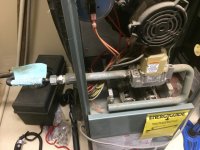
I just moved into a new to me house(built '96) and i noticed that the gas plumbing that feeds my water heater AND furnace is missing a drip leg.

Im an electrician(I usually hang out in the garage journal electrical forum) but have done some gas lines so i know a little about gas plumbing.

How important are drip legs? Im guessing not so much, seeing as Ive seen numerous houses that either dont have 'em or have 'em but are done wrong(such as drip leg not vertically south of the incoming gas line just before the appliance).

So, what u say? How important are they?
 

Attachments

  • image.jpg
    image.jpg
    92.4 KB · Views: 139
Last edited:
To avoid these ads, REGISTER NOW!

Rock knocker

Well-known member
Joined
Aug 14, 2014
Messages
704
Seattle removed the code requirement for NG drip legs in 2008 because the quality of gas had increased to the point where it was no longer a necessity. Im sure that's true in the Central Valley also.
 

d33pt

Well-known member
Joined
Oct 26, 2008
Messages
547
what is the point of the drip leg? debris in the gas? my plumber put one on my tankless water heater.
 

Rockhead261

Well-known member
Joined
Aug 28, 2013
Messages
1,911
Location
10509
OP, that application would not require a drip leg as the gas is flowing up; the line before the T serves as a drip leg.
 
OP
W

wyliesdiesels

Well-known member
Joined
Aug 14, 2012
Messages
20,021
Location
Modesto, CA
Seattle removed the code requirement for NG drip legs in 2008 because the quality of gas had increased to the point where it was no longer a necessity. Im sure that's true in the Central Valley also.

Wow, interesting...

what is the point of the drip leg? debris in the gas? my plumber put one on my tankless water heater.

Yes, suppose to keep debris from entering the appliance...

OP, that application would not require a drip leg as the gas is flowing up; the line before the T serves as a drip leg.

Ok thx for the info. That makes sense...
 

Rock knocker

Well-known member
Joined
Aug 14, 2014
Messages
704
NFPA still requires them.


Or do they?


408.2 Drips. Where wet gas exists, a drip shall be provided at
any point in the line of pipe where condensate could collect. A
drip shall also be provided at the outlet ofthe meter and shall be
installed so as to constitute a trap wherein an accumulation of
condensate will shut off the flow of gas before the condensate
will run back into the meter.
408.3 Location of drips. Drips shall be provided with ready
access to permit cleaning or emptying. A drip shall not be located
where the condensate is subject to freezing.
408.4 Sediment trap. Where a sediment trap is not incorporated
as part of the gas utilization equipment, a sediment trap
shall be installed downstream ofthe equipment shutoff valve as
close to the inlet of the equipment as practical. The sediment
trap shall be either a tee fitting with a capped ****** in the bottom
opening ofthe run ofthe tee or other device approved as an
effective sediment trap. Illuminating appliances, ranges,
clothes dryers and outdoor grills need not be so equipped.
 

Jackfre

Well-known member
Joined
Dec 26, 2010
Messages
4,411
Location
N CA
I've been putting them in for 50 years. A gas line just doesn't look right without it.
 

Rock knocker

Well-known member
Joined
Aug 14, 2014
Messages
704
G2419.1 (408.1) Slopes. Piping for other than dry gas condi- tions shall be sloped not less than 0.25 inch in 15 feet (6.4 mm in 4572 mm) to prevent traps.
G2419.2 (408.2) Drips. Where wet gas exists, a drip shall be provided at any point in the line of pipe where condensate could collect. A drip shall also be provided at the outlet of the meter and shall be installed so as to constitute a trap wherein an accumulation of condensate will shut off the flow of gas before the condensate will run back into the meter.
G2419.3 (408.3) Location of drips. Drips shall be provided with ready access to permit cleaning or emptying. A drip shall not be located where the condensate is subject to freez- ing.
G2419.4 (408.4) Sediment trap. Where a sediment trap is not incorporated as part of the appliance, a sediment trap shall be installed downstream of the appliance shutoff valve as close to the inlet of the appliance as practical. The sediment trap shall be either a tee fitting having a capped ****** of any length installed vertically in the bottommost opening of the tee as illustrated in Figure G2419.4 or other device approved as an effective sediment trap. Illuminating appliances, ranges, clothes dryers, decorative vented appliances for installation in vented fireplaces, gas fireplaces, and outdoor grills need not be so equipped.

Seattles code. So if you NG piping isn't sloped, you may consider it dry gas. As such, and drip leg isn't required but there is no prohibition against installing one.
 

Zeke

Well-known member
Joined
Aug 13, 2009
Messages
17,176
Location
Long Beach CA, the sewer by the sea.
Natural gas lines in the West and in CA in general don't have drip legs that I have ever seen. Many times a short lateral and a flex line to the appliance with a shut off valve in between as yours is. I have heard of other parts of the country running copper for NG but we don't seem to do that here. At one time it may have been due to corrosive additives to NG but I think today it has more to do with durability. Hard to hurt a piece of iron pipe.

All IP that I have wrecked out was clean as a whistle after years. It just smells like gas and can never be used for water. A little OT but I thought I'd toss that in.
 

Rookie2

Well-known member
Joined
Feb 27, 2013
Messages
1,925
Location
Western Pa.
I had a service call (first start up) on a generator that was out side, after doing my inspection I started it and went thru my set up procedure and turned it off but NG kept flowing out of the air cleaner area. Some dumb *** cut the yellow plastic line with a saw when he installed the supply . The plastic curly cues made their way to the electric gas valve and held it open . A drip leg would have caught them .
 

Rock knocker

Well-known member
Joined
Aug 14, 2014
Messages
704
The purpose of a drip leg is to catch condensate in wet gas, it is not there to catch ancillary detritus from dumb asses. You can't base code on "what if".
 

CNGsaves

Well-known member
Joined
Sep 26, 2012
Messages
13,233
Location
KS and OK
Drip leg is for BOTH condensation . . . plus any rust or debris in NG line. By directing the flow of NG to bounce against T in line (and NG go UP), the drip leg below is just handy place to catch that moisture/debris.

OP . . . need better pics of your setup, but since NG is going up to HWH looks like no immediate need to change out any pipes. OP, do you have earthquake straps on the water tank ??

Quality of NG around the country varies . . . . maybe OP in CA has nice dry gas. However, there are guys running NG home compressors in Ohio that HAVE to put desiccant dryers on "pipeline quality" NG line from GasCo since it has so much moisture. The moisture was destroying his NG compressor and putting water in his CNG tank. :sad: Same goes for guy in Alaska. Thus . . . YMMV.

Drip leg is good practice . . . . regardless what your particular code says.
 

CNGsaves

Well-known member
Joined
Sep 26, 2012
Messages
13,233
Location
KS and OK
"Drip leg" is the generic term that everyone in world calls a . . . DRIP LEG !!! :D

They are one in the same for all practical purposes. No benefit in micro analyzing / naming when 99.999999% of population knows Drip Leg !! :lol_hitti

However, if for GJ purposes a new acronym of DL/ST (drip leg / sediment trap) needs put into the GLOSSARY OF TERMS . . . . that could be a project for Rock Knocker !! ;)
 

Rock knocker

Well-known member
Joined
Aug 14, 2014
Messages
704
However, if for GJ purposes a new acronym of DL/ST (drip leg / sediment trap) needs put into the GLOSSARY OF TERMS . . . . that could be a project for Rock Knocker !! ;)

It's already been done. Please see the various codes
 
To avoid these ads, REGISTER NOW!

CNGsaves

Well-known member
Joined
Sep 26, 2012
Messages
13,233
Location
KS and OK
^ ^ ^ You're right of course . . . I was just razzing ya !! ;)

With more and more locations capturing bio-methane (ie landfills, sewage treatment, etc), there is chance for "wet gas" if the GasCo doesn't dry the NG in pipeline before it gets to customer. This may be contributing factor to Ohio wet gas as they do harvest methane from landfill.

OP, let's see couple more pics of your HW tank and NG setup. Would be curious if you also have drip leg (ie DL/ST) at your furnace . . . at NG clothes dryer ??
 

volleyball

Well-known member
Joined
Aug 29, 2011
Messages
4,127
Location
NY, not NYC
I go by the code you need a leg for any appliance that is self controlled so furnaces and water heaters but not stoves.
 

JackDiddly

Well-known member
Joined
Oct 6, 2014
Messages
185
Location
SE WI
I recommend it even if it isn't necessary (Seattle), only reason why is I worked in the Seattle area for a couple of years and besides myself no one I worked with piped them in, they said it wasn't necessary - The company I worked for did a lot of NG conversions on peoples homes that were mostly all old oil furnaces. I was sent back one day to a job one of the other installers was responsible for to tie in all the appliances after the gas inspection was complete. I pulled the cap off the 1/2" drop that he piped in for the h20 heater and out poured about 1/2 quart of threading oil that had pooled in the bottom of the line.:eyecrazy: I realize it was probably poor practice on the side of the guy who did it. I keep a few rags handy and tilt the cut pipe into the oil pan to wipe off the residual oil from the threading machine, however, some people obviously do not! Assurance you won't unnecessarily be replacing a gas valve on any appliance is worth it in my book.
 
OP
W

wyliesdiesels

Well-known member
Joined
Aug 14, 2012
Messages
20,021
Location
Modesto, CA
CNGsaves- what addl pics donu need?

If u look at the photo i posted originally, the shut off valve on the right goes to the WH and the one on the left goes to the furnace.

Heres some more pics
 

Attachments

  • image.jpg
    image.jpg
    136.3 KB · Views: 46
Last edited:

CNGsaves

Well-known member
Joined
Sep 26, 2012
Messages
13,233
Location
KS and OK
That pic helps to get some perspective. For the HWH itself, doesn't CA require the upper body of tank be strapped to wall (ie plumber's tape screwed into studs at both ends) so that any earthquake shaking won't knock it over (ie potentially break gas line causing leak) ?? That's part of reason I was wanting another pic of HWH.

Looks like you're 100% NO DRIP LEG . . . "California style" . . . on both the HWH and furnace !! :D

Since gas line is shared right there, could make some changes and incorporate drip leg/sediment trap.

Pipe looks more like galvanized from the pics . . . . or is it really Black Pipe steel ??
 
OP
W

wyliesdiesels

Well-known member
Joined
Aug 14, 2012
Messages
20,021
Location
Modesto, CA
OP, that application would not require a drip leg as the gas is flowing up; the line before the T serves as a drip leg.

I just noticed this comment.

So I guess i dont need a DL/ST? :confused:

That pic helps to get some perspective. For the HWH itself, doesn't CA require the upper body of tank be strapped to wall (ie plumber's tape screwed into studs at both ends) so that any earthquake shaking won't knock it over (ie potentially break gas line causing leak) ?? That's part of reason I was wanting another pic of HWH.

Looks like you're 100% NO DRIP LEG . . . "California style" . . . on both the HWH and furnace !! :D

Since gas line is shared right there, could make some changes and incorporate drip leg/sediment trap.

Pipe looks more like galvanized from the pics . . . . or is it really Black Pipe steel ??

I just gotta ask- whats a hot water heater? A steam generator? Lol :lol_hitti

Yes the WH is strapped to the wall via an L bracket at the top.

Not sure if its BP or galvi...will have to scratch some paint off and check...
 

CNGsaves

Well-known member
Joined
Sep 26, 2012
Messages
13,233
Location
KS and OK
^ ^ You know . . . HWH is more "clear" . . . . just WH might get construed to mean Walter Heisenberg from Breaking Bad or somethin' !!! :D
 

jonjon1

Well-known member
Joined
Mar 11, 2015
Messages
1,036
I put them in, no matter what the code says, its under $3 in parts and a minute of time. Even when a gas line is ran verticle I install them, I'll install a swing joint if I have to, my rule is always a drip leg. Inspectors around here stopped caring if they were there a few years back..
 

volleyball

Well-known member
Joined
Aug 29, 2011
Messages
4,127
Location
NY, not NYC
It is a hot water heater. The water is hot to start with, just not hot enough.
If water doesn't have heat in it, it is frozen.
 

volleyball

Well-known member
Joined
Aug 29, 2011
Messages
4,127
Location
NY, not NYC
Frozen water above absolute zero has heat in but it is hard to keep it that cold.
My statement is correct though. Insert silly laughing icon here.
 

bbrz

Active member
Joined
Jun 24, 2014
Messages
39
Location
E. Central IL
As is common where I live, the drip leg is under the floor in the crawlspace.
The riser goes up to the appliances. Nothing is going to be forced vertical with
meager pressure on a residential gas supply.
Home inspection (you did say you recently bought) should have caught it otherwise.
 

mygarageone

Well-known member
Joined
Oct 16, 2013
Messages
2,691
Location
Munising , Mich
The state code or municipality for your area could still require a drip leg.
And yes they were originally for wet gas or condensate , like Jon jon said for what little time and materials , put one in , I still do and always will .
Like it was mentioned , looks funny with out it.
By the way , if a instruction manual show and calls for one. The inspector may make you put one in no matter. They think the furnace manufactors are gods now with there install manuals.
How do I know ? My mechanical inspector wants the equip installed per instruction manual
 
Last edited:

zmaxmotorsports

Well-known member
Joined
Jan 11, 2013
Messages
11,948
Location
South of omaha
The state code or municipality for your area could still require a drip leg.
And yes they were originally for wet gas or condensate , like Jon jon said for what little time and materials , put one in , I still do and always will .
Like it was mentioned , looks funny with out it.
By the way , if a instruction manual show and calls for on. The inspector may make you put on in no matter. They think the furnace manufactors are gods now with there install manuals.
How do I know ? My mechanical inspector wants the equip installed per instruction manual

Ive always used them,it would feel really strange not to have one.;)
 

Scott r c

Well-known member
Joined
May 28, 2013
Messages
1,056
I personally think drip legs are a joke. We a required to put them in. I bet the fitting and ****** manufacturers rally hard for it each year.
 
To avoid these ads, REGISTER NOW!
Top Bottom