To avoid these ads, REGISTER NOW!

Tool Science - Chrome Plating

Stuey

Well-known member
Joined
Jan 8, 2008
Messages
11,034
Location
28m above sea level
I have started a new category theme on ToolGuyd called Tool Science 101 that I hope you will all enjoy.

The first Tool Science 101 post is part 1 of a four part series describing the chromium plating process.

This thread will serve as a general discussion medium, and will contain a Table of Contents for the individual ToolGuyd and GJ posts of the chromium plating series.

Part 1: Introduction via ToolGuyd | GJ Discussion (current thread)
Part 2: Cleaning (& Basic Surface Prep) via ToolGuyd | GJ Discussion

Questions that I would like you to consider:

Which topics would you like to see covered in the future. Currently being considered is black-oxide, titanium-oxide, and anodised coatings. But what else?

Also, what level of detail should I go into? I can comfortably explain the science, but at what level of complexity would most of you remain interested?
 
Last edited:
To avoid these ads, REGISTER NOW!

superautobacs

Well-known member
Joined
Oct 31, 2008
Messages
3,997
Location
Vancouver, BC
I was hoping to see the "Click here to view the rest of the article" button. I'd like to read further into the science of hard chromium.
 

The Rusty Gear

Well-known member
Joined
Feb 15, 2006
Messages
359
Location
Edmonton, Canada
I decided to start a new ToolGuyd category - tool science 101.

The first such post briefly covers chrome platings.

ToolGuyd Linky

I'm wondering what should be covered in the future. I'm thinking black-oxide, titanium-oxide, and anodised coatings. But what else?

Also, what level of detail should I go into? I can comfortably explain the science, but at what level of complexity would any of you guys remain interested?

From the article, chrome is used "to prevent seizing or galling" ? ? ? ? ? Has anyone ever had a wrench that siezed or galled on them? ? ?

I've never heard of this as a reason to plate hand tools. Moving parts yes, but not tools. Just seemed out of place to me.
 
OP
S

Stuey

Well-known member
Joined
Jan 8, 2008
Messages
11,034
Location
28m above sea level
I was hoping to see the "Click here to view the rest of the article" button. I'd like to read further into the science of hard chromium.

How much do you want to know? I'm somewhat familiar with the process, and can dig up much more info if you desire.

I'm waiting on the arrival of the full ASM volume that covers surface engineering.

In the meantime, here's a patent from the 40s that gives a pretty darned good summary of the process.

From the article, chrome is used "to prevent seizing or galling" ? ? ? ? ? Has anyone ever had a wrench that siezed or galled on them? ? ?

I've never heard of this as a reason to plate hand tools. Moving parts yes, but not tools. Just seemed out of place to me.
Wrenches aren't the only tools that are chromed. Hex keys are one example of tools can definitely gall or seize - not to an extreme effect, but I've certainly gotten hex keys temporarily stuck in small machine screws before.
 
Last edited:

The Rusty Gear

Well-known member
Joined
Feb 15, 2006
Messages
359
Location
Edmonton, Canada
Wrenches aren't the only tools that are chromed. Hex keys are one example of tools can definitely gall or seize - not to an extreme effect, but I've certainly gotten hex keys temporarily stuck in small machine screws before.

hex keys eh? Kind of funny because most hex keys I've seen AREN'T Chrome plated :lol_hitti
 

J.A.F.E.

Well-known member
Joined
Sep 25, 2008
Messages
1,745
Location
Formerly Area 49 now Area 52
Cadmium plating. Even though it is no longer used many WWII era tools were plated with it. The stuff is highly toxic if you try to wire brush it or grind/sand it. Perhaps some background info, visual identification and some safety warnings.
 

T56 Impala

Well-known member
Joined
Dec 8, 2007
Messages
3,650
Location
Roswell GA
Yes on Cadmium. As J.A.F.E. pointed out, you MUST be sure to state, in no uncertain terms, that Cadmium is VERY poisonous. I can't tell you how many of the WF Plomb tools I have that have been wire wheeled.

You might also do a short comment about plain finish on tools. Some never had finish other than plain steel.
 
OP
S

Stuey

Well-known member
Joined
Jan 8, 2008
Messages
11,034
Location
28m above sea level
hex keys eh? Kind of funny because most hex keys I've seen AREN'T Chrome plated :lol_hitti

Yea, but the nicer (and more expensive) ones are. I have used all kinds of hex keys, and definitely prefer the ones which are either polished or coated with a low friction surface.

Still, several sources mentioned chroming tools for anti-seizing and anti-galling possibilities. Without knowing what was on all their minds, I threw "hex keys" in as an example of chromed/plated tools that I know have improved anti-galling properties.

Cadmium plating. Even though it is no longer used many WWII era tools were plated with it. The stuff is highly toxic if you try to wire brush it or grind/sand it. Perhaps some background info, visual identification and some safety warnings.
I'll take a look into that. I won't be able to show any good examples (as far as I know, nothing I have is Cad plated), but some background info shouldn't be an issue.

Yes on Cadmium. As J.A.F.E. pointed out, you MUST be sure to state, in no uncertain terms, that Cadmium is VERY poisonous. I can't tell you how many of the WF Plomb tools I have that have been wire wheeled.

You might also do a short comment about plain finish on tools. Some never had finish other than plain steel.
I also don't have that many plain finish tools. Would Craftsman raised panels fall into that category?

I might be able to scrounge up enough ideas to turn Tool Science 101 into a biweekly schedule.
 
OP
S

Stuey

Well-known member
Joined
Jan 8, 2008
Messages
11,034
Location
28m above sea level
Stuey - wouldnt mind a tool history as well. I volunteer my speedee ratchet on youtube if you want ;)
That might be a bit too endeavorous for me to attempt.

I could give it a try, but honestly wouldn't quite know where or how to start.

Wow, that was a bit much to absorb from a single read. Got bored 3 mins. into reading. :p123

Ah, so now you understand why I was strongly motivated to keep that post relatively short.

But that patent was written a bit dryly. I'm still going to attempt to tackle a "chrome plating 2.0" post once my references are delivered to the library.
 

J.A.F.E.

Well-known member
Joined
Sep 25, 2008
Messages
1,745
Location
Formerly Area 49 now Area 52
I have a WF8 that still has the cad plating (althought it's pretty dirty). I'll be happy to snap a few or even lend it to you to take your own. I also have some plain steel finish tools which I'll make the same offer.
 
To avoid these ads, REGISTER NOW!
OP
S

Stuey

Well-known member
Joined
Jan 8, 2008
Messages
11,034
Location
28m above sea level
If you don't mind taking a few photos, I'd gladly put them up with full credit. You could (should) also put them up on GJ or GH.

From what I can tell via google, the cad-plated tools look a bit golden. I've definitely not seen that before.
 

v8garage

Well-known member
Joined
Jun 27, 2007
Messages
901
Location
Texas
I would like to see some pictures of the high end chrome plated hex wrenches mentioned here. The only ones I have ever seen chrome plated were some cheap quality asian ones.
V/8
 

Bolster

Well-known member
Joined
Jul 8, 2008
Messages
4,056
Location
Mexifornia
Cadmium plating. Even though it is no longer used many WWII era tools were plated with it. The stuff is highly toxic if you try to wire brush it or grind/sand it. Perhaps some background info, visual identification and some safety warnings.

That's a great idea. When I tried to learn how to ID cadmium, I found that visual samples on the web of vintage cad were almost nonexistent (wasn't gold back in the day). You'd be doing the world a great service if you could help people identify cad plating and give a warning.

You could expand on this idea (don't you love it when we give you work assignments) and show vintage tool finishes in general. This is what vintage hard chrome looks like, this is vintage nickel plate, etc.

To show finishes you would have to use a decent photo setup, NOT on camera flash.

I'd help but I think I've sold off anything that's cad. I'll take another look.
 
Last edited:
Joined
Jun 26, 2009
Messages
22
Location
The Lone Star State
Stuey,
Yes I`m very much intrested in learning any kind of plating for I do restoration of old machinist chests and rusty hardware is an issue. I understand that one must prep the base material first by sanding, buffing ,polishing,said simply getting the pits out.

So a plating process in LAYMENS TERMS would be most benaficial .I havent had the chemestry back ground and don`t quite get the chemical side of things.

Where would one get the elotrolytes salts ? are there substitutes that one can use possibly from typical off the shelf house hold items? Acids are obtainable at many hardware stores.

Thanks John
 

Thedroid

Well-known member
Joined
Feb 16, 2009
Messages
718
Location
New Mexico
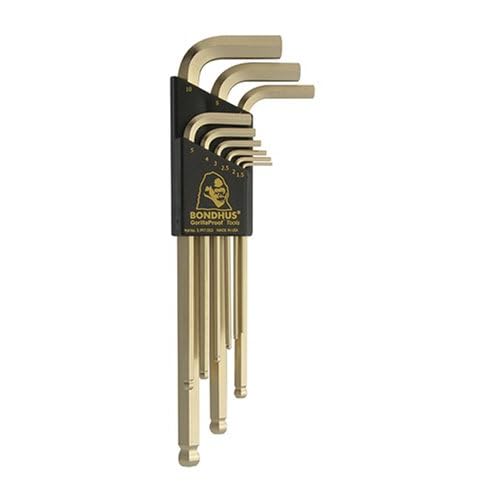
I use the Bondhus briteguard and goldguard. They are the best hex keys I've used. I have never broken a ball on one of these bad boys.
wolthuis.aspx

BON-17095-2.jpg

31491DEN4DL._SS500_.jpg
 
OP
S

Stuey

Well-known member
Joined
Jan 8, 2008
Messages
11,034
Location
28m above sea level
Stuey,
Yes I`m very much intrested in learning any kind of plating for I do restoration of old machinist chests and rusty hardware is an issue. I understand that one must prep the base material first by sanding, buffing ,polishing,said simply getting the pits out.

So a plating process in LAYMENS TERMS would be most benaficial .I havent had the chemestry back ground and don`t quite get the chemical side of things.

Where would one get the elotrolytes salts ? are there substitutes that one can use possibly from typical off the shelf house hold items? Acids are obtainable at many hardware stores.

Thanks John
That's something that I wouldn't want to touch upon. On one hand, there are many resources available online and in text, and I probably couldn't phrase anything better.

On the other hand, there's a liability issue. Suppose that I make a mistake or even describe everythig perfectly and someone is injured following my instructions. I simply cannot afford that liability or even the risk of accidentally steering someone wrong, at least at this time.

Stuey let me know what kind of photos you want and file size you want and I'll snap some pics of the cad plated ratchet.
Anything that you would be willing to provide would be appreciated. I post photos at 400-450 px in width most of the time, but when I take photos, I use the maximum resolution available to me and crop or resize as needed.

All photo credits will be clearly designated, and any other information that you provide would be clearly marked as being your own - either with your real name or GJ handle.

A 1000+ page reference on surface engineering is waiting for at the library, so I should hopefully be able follow up with additional plating and coating posts within a reasonable amount of time.
 
OP
S

Stuey

Well-known member
Joined
Jan 8, 2008
Messages
11,034
Location
28m above sea level
Oh, goodness.

So, I thought that I was going to be able to wrap things up with just one more post - you know, a single in-depth update.

Well, I was wrong.

A few hours later, I now have part 2 written up and scheduled for tomorrow. I just hope that it's not too long, or worse - boring!

Tomorrow's post contains an introduction to the cleaning process. A future update will describe the finishing steps, and then will come another more detailed plating post.

I did this for several reasons. While this series is concerned with chromium plating, other plating methods require similar steps. This way, I can refer back to the cleaning steps, finishing steps, or plating steps as necessary.
 
To avoid these ads, REGISTER NOW!
Top Bottom