To avoid these ads, REGISTER NOW!

Help - in need of a special tool

Stuey

Well-known member
Joined
Jan 8, 2008
Messages
11,034
Location
28m above sea level
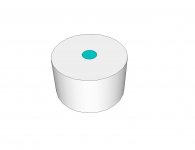
I mount small fragile ceramic discs - 1/4" diamater by 1/8" thick, in cylindrical molds of 1" diamater, and then fill the molds with epoxy. After it cures, I polish the disc.

Now, are there any tools that can be used to remove the discs from the epoxy mounts? Previously we used cold chisels and cutting tools, but I'm looking for an easier/simpler method. Something like a plug cutter or coring bit that can be used with a hammer instead of a drill.

Any ideas are welcome! Thanks in advance!
 

Attachments
  • Mounted Sample.jpg
    Mounted Sample.jpg
    58.8 KB · Views: 11
  • Mounted Sample Cross Section.jpg
    Mounted Sample Cross Section.jpg
    57.4 KB · Views: 17
Last edited:
To avoid these ads, REGISTER NOW!
OP
S

Stuey

Well-known member
Joined
Jan 8, 2008
Messages
11,034
Location
28m above sea level
Let's see pics of the work proces to get an idea of what you are trying to do.
I added quick renders of the mounted setup to the 1st post.

The sample is mounted in epoxy for polishing, and so it then has to be carefully removed so that the sample can be remounted in the opposite direction so that the bottom can be polished. The sample then has to be removed once more in a manner that does not risk ruining the polish.

Can you modify the molds so that they have an ejection screw to push the ceramic out?
The mold is simply a cylindrical cup.

I suppose that as a last resort, I'll just find a coring bit, but I was hoping that it wouldn't come to that.
 

Packard V8

Well-known member
Joined
Mar 16, 2009
Messages
7,380
Location
Spokane, WA
Same here - I'd look at mounting a length of polished 1/4" stainless rod centered in the mold, spray it with dry lube and set the disc on it, pour the epoxy around it. When curing and disc polishing is completed, hold the mold vertically in hand, disc up. Tap the bottom end of the exposed rod on a solid surface and the disc should be ejected.
 
OP
S

Stuey

Well-known member
Joined
Jan 8, 2008
Messages
11,034
Location
28m above sea level
A gasket punch might do the trick.
I'll take a look into this, thanks!

Same here - I'd look at mounting a length of polished 1/4" stainless rod centered in the mold, spray it with dry lube and set the disc on it, pour the epoxy around it. When curing and disc polishing is completed, hold the mold vertically in hand, disc up. Tap the bottom end of the exposed rod on a solid surface and the disc should be ejected.

This also sounds like a good idea as well, perhaps in conjunction with a gasket punch or hand-held coring bit. I'll try to order some rods and give it a try.
 

scottg1952

Well-known member
Joined
Sep 7, 2009
Messages
112
Location
Happy Camp
Why is epoxy necessary? Wouldn't another adhesive hold long enough for polishing?
I customarily turn hard tropical hardwood in a lathe, mounted with nothing but heavy double stick tape.
I have also glued things together with paper inbetween and then split the paper afterward, but you have to scrape the glue and 1/2 paper back off later and this would risk your polish.
Maybe a solvent release glue and paper?
best luck
yours Scott
 
OP
S

Stuey

Well-known member
Joined
Jan 8, 2008
Messages
11,034
Location
28m above sea level
Solvent-release temporary adhesive may be an option, but the high chance of residue demands more solvent than I would be comfortable subjecting the sample to.

It must be embedded to help provide for a uniform polish. Polishing a 1" diameter face will provide much more uniformity than polishing a 1/4" diameter face would.
 

eborcim

Well-known member
Joined
Apr 5, 2009
Messages
2,425
Location
Central, MO
What about a poured-in flexible rubber mold used to remake hard-to-find plastic knobs and hard rubber pieces? You could put the disc in, let the rubber dry, polish and then pop it out.

The ejector described above might be your easiest method with the existing setup.
 
OP
S

Stuey

Well-known member
Joined
Jan 8, 2008
Messages
11,034
Location
28m above sea level
What about a poured-in flexible rubber mold used to remake hard-to-find plastic knobs and hard rubber pieces? You could put the disc in, let the rubber dry, polish and then pop it out.

The ejector described above might be your easiest method with the existing setup.
I'm not sure that would be too feasible. Epoxy and other 2-part polymer setting materials are virtually universally accepted and available.

Plus, if the rubber were soft enough, it could make things much, much worse. For example, I have enough issue with the epoxy trapping polishing compounds. If a softer compound were used, even more cleaning and sonicating would be required.

One of the things I plan on trying next is heating the epoxy to see if I could deform it away from my samples.
 

rsanter

Well-known member
Joined
Dec 22, 2007
Messages
18,506
Location
visalia ca
why not machine a holder out of aluminum or steel that will hold the item to be polished.
then you can remove it with a screw/bolt pushing from the back

bob
 
To avoid these ads, REGISTER NOW!
OP
S

Stuey

Well-known member
Joined
Jan 8, 2008
Messages
11,034
Location
28m above sea level
why not machine a holder out of aluminum or steel that will hold the item to be polished.
then you can remove it with a screw/bolt pushing from the back

bob

For one, not all samples will be the same size. Right now they're 5mm in diamater, but they might change in the future. A colleague of mine is looking into it, but for the most part this would increase the complexity by quite a bit.

I'm also having trouble visualizing such a holder. There would still need to be a larger face in contact with the sanding/polishing papers to produce a perfectly planar surface.

Whether we continue to polish manually or move to use an automatic polisher, the manner of polishing will be the same - the mounted samples are held against a rotating 8" wheel.
 

scottg1952

Well-known member
Joined
Sep 7, 2009
Messages
112
Location
Happy Camp
This is still a tough ask.
I have no idea -why- the little ceramic buttons are made or examined at all? What is the real goal here?
Also, barely can discern the method of polishing them? Its a guy addressing a spinning disk freehand?

So anyway, kind of one detail at a time.

It is beginning to sound like a firm urethane or other decent quality polymer cylinder, with a screw pusher to remove the sample from the back, might be good.
The seat for the sample to be accurately machined for a very light press fit.
No adhesive or residue necessary.

Aluminum would work as well but the sample may be too fragile to take even a light pressing. Some press jig pushing straight in and supported might be useful?

Any machine lathe could machine a cylinder pocket accurately, quickly, for uniform samples.

If the samples themselves are not actually uniform in size, the entire line of planning would require a whole new tack.

More background please!!
yours Scott
 

rsanter

Well-known member
Joined
Dec 22, 2007
Messages
18,506
Location
visalia ca
For one, not all samples will be the same size. Right now they're 5mm in diamater, but they might change in the future. A colleague of mine is looking into it, but for the most part this would increase the complexity by quite a bit.

I'm also having trouble visualizing such a holder. There would still need to be a larger face in contact with the sanding/polishing papers to produce a perfectly planar surface.

Whether we continue to polish manually or move to use an automatic polisher, the manner of polishing will be the same - the mounted samples are held against a rotating 8" wheel.

the aluminum holder would look just like the white part of the holder in your drawing. basically the part that you are making now as epoxy would be machined from steel or aluminum. one change is that there will be a hole or a threaded hole in the middle to allow for a bolt or punch to knock the part out.
the part will be hald in as a 'press fit' however if you cannot press it in for fear of damage, you could heat the holder so it will expand, and then drop the part in and when the holder cools it will shrink and grab the part
for several different sizes you will need several different holders


bob
 
OP
S

Stuey

Well-known member
Joined
Jan 8, 2008
Messages
11,034
Location
28m above sea level
Scott, the samples are very similar to each other in size, but some variation is expected - enough that any machined holder would have to have an adjustment mechanism. Such an adjustment mechanism might not provide as solid a contact as epoxy.

The fragile ceramic buttons are made for the purpose of scientific research. Some of the analysis techniques I wish to use demand as high a polish as possible.

Our polishing wheel closely resembles a horizontal disc sander, if that helps.

Mounting samples in epoxy for polishing is essentially an accepted practice, even for some companies with very deep pockets.

Edit: rsanter, the problem with such a holder is that aluminum and steel are much harder than epoxy, and might even be harder than the samples. This may create unforseen complications during the polishing process. Possible concerns would be sample contamination, sample damage due to metal dust embedded in the paper, or uneven polishing.
 
Last edited:

scottg1952

Well-known member
Joined
Sep 7, 2009
Messages
112
Location
Happy Camp
OK it actually sounds like epoxy mounting is probably the best, especially as you are used to getting your preferred polish this way.
So...............
How about a bandsaw and a cold chisel?
Set up a jig that you can saw off the cylinder just below the button, leaving, say 1/8" or less of epoxy below the sample.
Then a light tap with a small hammer n chisel should neatly split the now fragile epoxy very easily?
yours Scott
 

bgott

Well-known member
Joined
Oct 31, 2005
Messages
3,512
Location
Houston, TX.
Just throwing this out there, I can think of a dozen ways that it might be a dumb idea. Have you thought about designing a fixture that would hold the disk in place with vacuum?
 
OP
S

Stuey

Well-known member
Joined
Jan 8, 2008
Messages
11,034
Location
28m above sea level
OK it actually sounds like epoxy mounting is probably the best, especially as you are used to getting your preferred polish this way.
So...............
How about a bandsaw and a cold chisel?
Set up a jig that you can saw off the cylinder just below the button, leaving, say 1/8" or less of epoxy below the sample.
Then a light tap with a small hammer n chisel should neatly split the now fragile epoxy very easily?
yours Scott
I don't have access to a bandsaw, but a diamond saw should work. We just figured that if a sharp circular chisel existed, it would be easier and quicker.

Just throwing this out there, I can think of a dozen ways that it might be a dumb idea. Have you thought about designing a fixture that would hold the disk in place with vacuum?
I don't think this would be feasible for such small specimens.
 

scottg1952

Well-known member
Joined
Sep 7, 2009
Messages
112
Location
Happy Camp
We just figured that if a sharp circular chisel existed, it would be easier and quicker.

Sure, hollow punches are available in any size you want and any thickness of punch you need.
I don't think you'd like them on an inch thick block of epox, at least at first.
They seldom line up just perfect between the punch and hammer for an even blow against a firm surface. I have tried.
Hollow punches are generally used for soft materials like leather and gasket stock.
If you do this 98 times a day though, practice might get the job done.
http://shop.ebay.com/i.html?_nkw=ho...286.m270.l1313&_odkw=hollow+punches&_osacat=0

You might also consider a flypress. A jewelers arbor press with a big toggle on top of a screw in place of the rack and pinion on a standard arbor press.
The flypress can deliver more delicate but still very rapid pressure straight down.
A hollow punch might be just the thing to use with this.

I would still saw off the excess epoxy regardless.
yours Scott
 

Bobby B.

Well-known member
Joined
May 5, 2009
Messages
112
Location
Southern California
Hopefully this wont sound too dumb (and if you already passed over using a metal object and I missed it, sorry) but since you mentioned hollow punch-like object, what about a spent bullet casing?

I used to use these to cut holes in gaskets. Maybe since brass is softer or more malleable, that might work for you? They're also easy to get and cheap, if not free if you shoot or have friends that do. Available in a bunch of sizes.
 
OP
S

Stuey

Well-known member
Joined
Jan 8, 2008
Messages
11,034
Location
28m above sea level
We have a few hydraulic presses around, so pressure wouldn't be an issue. A bullet casing just might work, or something like it.
 
To avoid these ads, REGISTER NOW!
Top Bottom