VA,
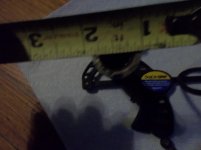
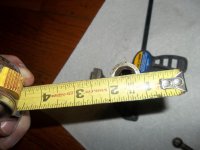
I am using the slide diameter and the width of the jaws under the premise that the slide was engineered to withstand the weight of the jaws, the weight of the "maximum load" the designer felt was appropriate for his jaws and the clamping force applied by the screw against the jaw faces. (There are a good deal of factors at work here, area of the jaw faces, size of the screw and nut, length and diameter of the slide, the length and diameter of the handle and probably more.)

In an attempt to simplify the calculation as much as possible, let's use the ratio of slide diameter and the width of the jaws to get a number to relate the jaw size of a small Pgh to a Big Pgh. (Pgh is the old Postal designation for Pittsburgh, the only city east of the Mississippi to end in GH).
So, if your vise has a slide diameter of 7/8 (.875) inch and a jaw width of 1.75 inch, the division works out to 2, the jaw width is twice the diameter of the slide.
According to the ad, the Big Pgh has a slide diameter of 7.0 and the ratio (multiplier) derived from your vise is 2, the Big Pgh would have a jaw size of 14 inches (7x2). I may be able to use the slide length, as the ad states the vise opens to 15 inches, but it is difficult to exactly determine the manufacturers definition of fully open and a users definition of fully open - hopefully, fully open means that the end of the screw is even with the nut, but...?
So, to Bcom's question, based on this simplistic formula, I would expect the Big Pgh to have a jaw width of 14 inches.

JKB
Please excuse the pedantic nature of this, but I formerly taught High School science.