To avoid these ads, REGISTER NOW!

Cold room ceiling

Fixed

Well-known member
Joined
Nov 18, 2015
Messages
397
Location
Ontario, Canada
Warning: not strictly related to the garage. But it's keeping me out of the garage trying to figure this out, so hopefully someone can point me in the right direction.

I have a concrete porch poured over a cold room, it's a pain in the *** and we don't use it. So would like to bring it into the house. I'm quite comfortable finishing it out properly, but the ceiling in there has me stumped. It's OSB, supported by 2x4s that rest ON the foundation...

Which makes me think that it's structural, since if it was just a form, why bother? This wouldn't be a problem, but it has been rotting, and there is some serious mold in the plywood (a moisture issue that I have been fixing).

I've googled the problem, found a couple people with similar installs, but have had no luck finding any info on what to do.

Would be very appreciative if anyone can shed some light on this.

6c55d93ea4a9b96b628ddfba761556e4.jpg
 

Attachments

  • 6c55d93ea4a9b96b628ddfba761556e4.jpg
    6c55d93ea4a9b96b628ddfba761556e4.jpg
    44.9 KB · Views: 0
To avoid these ads, REGISTER NOW!
OP
F

Fixed

Well-known member
Joined
Nov 18, 2015
Messages
397
Location
Ontario, Canada
do you know how thick the concrete pad is?
as per building code in Ontario, wood cannot structurally support masonry so doubtful it's structural
Not exactly sure on the thickness, I can pop out tomorrow and see if I can get a measurement though.

And the guys that built the house were morons, so unfortunately I can't count anything out.

Sent from my Nexus 5 using Tapatalk
 

Saleenguy94

Member
Joined
Jan 10, 2017
Messages
5
I have a cold room as well, and to support the weight of the concrete, I had to have an engineered report telling what size and how many pressure treated 2x10 or 2x12's and on top of them I ended up using corrugated steal and the cement went on top of that, been in the house now for 7 yrs and no issues whatsoever ...


Sent from my iPhone using Tapatalk
 

matt_i

Well-known member
Joined
Mar 14, 2008
Messages
10,728
Location
SE Michigan
I have something like that in my basement. Essentially the foundation goes out and supports the edges of concrete pad that's leads to the front entry of the house above it. Wood framing similar and I forget the dimension of timber but iirc its either a 2x4 or 2x6.

The concrete has no cracks other than a corner way out by the edge and I don't see any detriment to the plywood.

I have wondered the exact same thing...did they pour the 'crete directly on top of the wood? Or was something like ice+water shield used?

I would be leery to take it out without knowing if there's a corrugated steel pan or other support above it.
 
OP
F

Fixed

Well-known member
Joined
Nov 18, 2015
Messages
397
Location
Ontario, Canada
I have a cold room as well, and to support the weight of the concrete, I had to have an engineered report telling what size and how many pressure treated 2x10 or 2x12's and on top of them I ended up using corrugated steal and the cement went on top of that, been in the house now for 7 yrs and no issues whatsoever ...


Sent from my iPhone using Tapatalk

When you say to support, are you referring to the form for it? Or is it a permanently installed structure?
 
OP
F

Fixed

Well-known member
Joined
Nov 18, 2015
Messages
397
Location
Ontario, Canada
I have something like that in my basement. Essentially the foundation goes out and supports the edges of concrete pad that's leads to the front entry of the house above it. Wood framing similar and I forget the dimension of timber but iirc its either a 2x4 or 2x6.

The concrete has no cracks other than a corner way out by the edge and I don't see any detriment to the plywood.

I have wondered the exact same thing...did they pour the 'crete directly on top of the wood? Or was something like ice+water shield used?

I would be leery to take it out without knowing if there's a corrugated steel pan or other support above it.
Yeah, maybe I'll drill a small hole and check for steel above it... Although if the steel is resting right on the wood, can't imagine it would be doing much :headscratch:

Sent from my Nexus 5 using Tapatalk
 

Kaizen

Well-known member
Joined
Jan 9, 2015
Messages
6,948
Location
New England
Please tell me I'm not the only one here who just learned what a "Cold Room" is?


It's a Canada thing. If you were into prepping or canning or gardening you would see it. In the north where there is ice thick in ponds you can dig one out and put in ice with sawdust and that ice will last clear through to august.

Op I remember seeing several shows on that Home inspector show. Mike somebody. Most are issues as they were filled in improperly. I would see if you can see any solutions there.
If not and it was me I would cut out some ply and see what's up there. Bringing it into the house envelope will be tough. Any porch drainage issues will now be inside house issues. I'd cut some vents in the side and put and exterior door on it. Use for storage. Don't insulate it


Sent from my iPhone using Tapatalk
 

Kaizen

Well-known member
Joined
Jan 9, 2015
Messages
6,948
Location
New England

GMCGarage

Well-known member
Joined
Jan 31, 2017
Messages
1,264
Warning: not strictly related to the garage. But it's keeping me out of the garage trying to figure this out, so hopefully someone can point me in the right direction.

I have a concrete porch poured over a cold room, it's a pain in the *** and we don't use it. So would like to bring it into the house. I'm quite comfortable finishing it out properly, but the ceiling in there has me stumped. It's OSB, supported by 2x4s that rest ON the foundation...

Which makes me think that it's structural, since if it was just a form, why bother? This wouldn't be a problem, but it has been rotting, and there is some serious mold in the plywood (a moisture issue that I have been fixing).

I've googled the problem, found a couple people with similar installs, but have had no luck finding any info on what to do.

Would be very appreciative if anyone can shed some light on this.

6c55d93ea4a9b96b628ddfba761556e4.jpg


Is the concrete separated from the footing by this wood, or does the concrete have a face that comes down around the sides? what I am getting at, if you rip out the wood, is the slab going to drop the thickness of the 2x4 and OSB?

The safest solution is to have someone come out and xray or scan the slab for reinforcing. Then it can be checked for the span.
 

Attachments

  • 6c55d93ea4a9b96b628ddfba761556e4.jpg
    6c55d93ea4a9b96b628ddfba761556e4.jpg
    42.6 KB · Views: 0

73RR

Blank Email
Joined
Dec 13, 2016
Messages
300
Location
Central Ory-Gun
2x4's and osb are not going to support much of a concrete slab so hopefully something else is holding the slab in place...just what is the size of the area ?
If the 2x4 and osb were simply used for forms then there should be some evidence of something supporting the 2x4....4x6/8 beams at 4-5-6 ft on center? and columns to the floor?
...and this was just form material then it should have been removed because osb and concrete is a poor combination.
 
OP
F

Fixed

Well-known member
Joined
Nov 18, 2015
Messages
397
Location
Ontario, Canada
Op I remember seeing several shows on that Home inspector show. Mike somebody.
That's funny you mention it, because I'm actually doing this because it's what he recommends! http://homes.winnipegfreepress.com...hill-out-of-your-basement's-cold-room/id-1076


Is the concrete separated from the footing by this wood, or does the concrete have a face that comes down around the sides? what I am getting at, if you rip out the wood, is the slab going to drop the thickness of the 2x4 and OSB?

The safest solution is to have someone come out and xray or scan the slab for reinforcing. Then it can be checked for the span.

The concrete is definitely resting on the foundation, I can see that the wood is NOT supporting the entire thing.

If I wanted to get an expert opinion (I know a lot of the posters here are extremely knowledgeable, but there's only so much you can do online) who the heck would I be calling? Concrete guy? Masonry contractor?
 

GMCGarage

Well-known member
Joined
Jan 31, 2017
Messages
1,264
That's funny you mention it, because I'm actually doing this because it's what he recommends! http://homes.winnipegfreepress.com...hill-out-of-your-basement's-cold-room/id-1076


The concrete is definitely resting on the foundation, I can see that the wood is NOT supporting the entire thing.

If I wanted to get an expert opinion (I know a lot of the posters here are extremely knowledgeable, but there's only so much you can do online) who the heck would I be calling? Concrete guy? Masonry contractor?

Call an engineer first.

What is the thickness of the concrete, and whats the span, front to back? its a small span, so might not even need much reinforcing. the price you pay is verifying the reinforcing is in the correct location.
 

73RR

Blank Email
Joined
Dec 13, 2016
Messages
300
Location
Central Ory-Gun
Call an engineer first.

What is the thickness of the concrete, and whats the span, front to back? its a small span, so might not even need much reinforcing. the price you pay is verifying the reinforcing is in the correct location.


...and just how do you determine this? X-ray glasses?

Concrete has zero strength is tension, that is why we add rebar, in the proper amounts/sizes, in the proper locations, but once it is buried.......
 

GMCGarage

Well-known member
Joined
Jan 31, 2017
Messages
1,264
...and just how do you determine this? X-ray glasses?

Concrete has zero strength is tension, that is why we add rebar, in the proper amounts/sizes, in the proper locations, but once it is buried.......

Yes, Xray or Scan it with GPR. There are companies that do this.

https://www.us.hilti.com/measuring-systems/detection-systems/r83732 - you can buy your own.

Concrete has some strength under tension, usually in round numbers about 1/10 of the compressive strength. But, once its cracked, yes, then 0 strength, thus the rebar.

Take a concrete block or paver and stand on it with the ends supported. More than likely it didnt fail. Some tension capacity there.

ACI concrete code has sections for Un-reinforced concrete design. Its an easy design for engineer experienced in concrete design.
 
Last edited:

73RR

Blank Email
Joined
Dec 13, 2016
Messages
300
Location
Central Ory-Gun
X-ray and GPR are not usually in the homeowner domain. Unless you work for free it gets expensive to check a small slab.
...and back in the dark ages 'we' did not assign any value to tension in design work. Just wasn't deemed practical. Perhaps the 'new' engineering school dogma allows for it. BTW, un-reinforced concrete is not something that should be used for a perimeter suspended slab. The folks at the Corvette museum used an unreinforced slab on grade and it didn't work out so well for them....

As for your brick/paver analogy...pavers are often made with a 10ksi mix and then with similar thickness to length ratio, how thick will the op's slab have to be for similar performance??
 
To avoid these ads, REGISTER NOW!

GMCGarage

Well-known member
Joined
Jan 31, 2017
Messages
1,264
X-ray and GPR are not usually in the homeowner domain. Unless you work for free it gets expensive to check a small slab.
...and back in the dark ages 'we' did not assign any value to tension in design work. Just wasn't deemed practical. Perhaps the 'new' engineering school dogma allows for it. BTW, un-reinforced concrete is not something that should be used for a perimeter suspended slab. The folks at the Corvette museum used an unreinforced slab on grade and it didn't work out so well for them....

As for your brick/paver analogy...pavers are often made with a 10ksi mix and then with similar thickness to length ratio, how thick will the op's slab have to be for similar performance??

Hence my comment to call an engineer. In this field, they will have the equipment.

There is no 'dogma' about it, concrete has always had some tensile strength. Not sure what 'new' engineering you are talking about. I can find books from the 50's with the same information.

As for the corvette museum, its a slab on grade. Its not expected to end up having to span 40'-0". It would have had to be about 18" thick with #6 bars at 6" just to support its own weight to span 40'.

A properly prepared slab on grade should need no reinforcing if the sub grade and mix, placement, and finishing is done correctly.

For this application, a 4" -6" un-reinforced slab could span about 8'-0"-10-0" depending on the live load required.

Isnt science and facts great!?
 

zak77

Well-known member
Joined
Sep 18, 2014
Messages
1,354
Location
Monson, MA
This was starting to be a somewhat popular amenity for new houses built about 8-10 years ago with hopes of utilizing more storage space or at the very least move the oil tank out of the main basement area. Seemed to catch on but then quickly tapered off and i rarely see that nowadays. The ones i've seen constructed have used corrugated steel as the structure to support it however i've heard of people having very humid basements and what happens when that warm moist air hits that cool steel ceiling?? Yup, lots of condensation to the point people couldn't store anything in there. Some houses did not have that issue so it depends.
 

GMCGarage

Well-known member
Joined
Jan 31, 2017
Messages
1,264
OP - Let us know the span and the thickness when you can.

If it is a form, then the structure obviously can hold the weight, (or did, concrete does not get lighter as it cures).
 

Saleenguy94

Member
Joined
Jan 10, 2017
Messages
5
Yea it's a permanent structure... Just like you would frame out a deck, 2x10's doubled up and every 16" and then the corrugated steal and cement


Sent from my iPhone using Tapatalk
 
OP
F

Fixed

Well-known member
Joined
Nov 18, 2015
Messages
397
Location
Ontario, Canada
OP - Let us know the span and the thickness when you can.

The slab as measured from the outside, is approximately 7' x 8'

4" thick at the edge, but it almost looks like there's a bit of an "apron" to it (not sure of the concrete term for that). So it may not be that thick all the way through.

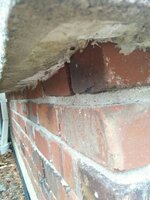
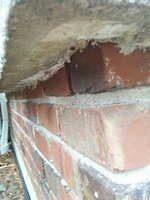
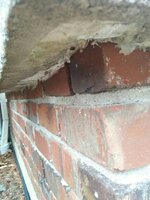
There is visible reinforcement embedded in it (see pic). I'll drill a hole in the OSB tonight when I have a chance.

1e015ddbde9efcd9d89c86fb99d0529b.jpg

67f74e0a85bbc28b446221138b25dabd.jpg
 

Attachments

  • 67f74e0a85bbc28b446221138b25dabd.jpg
    67f74e0a85bbc28b446221138b25dabd.jpg
    62.4 KB · Views: 0
  • 1e015ddbde9efcd9d89c86fb99d0529b.jpg
    1e015ddbde9efcd9d89c86fb99d0529b.jpg
    73.7 KB · Views: 0
Last edited:

btdobie

Well-known member
Joined
Mar 21, 2016
Messages
611
Location
Southern Minnesota
You could drill a hole in the OSB and see if there is some corrugated steel under it.:dunno: Its hard to judge without seeing it in person. It is unlikely that 2x4s would support that, but I would get some professional eyes on it if it were my house.
 

Crfdell

Well-known member
Joined
Dec 22, 2012
Messages
103
Location
Cambridge Ontario Canada
Its for forming the rop slab only it can be removed if desired i se it all the time. I am a building inspector in ontario. I still recommend leaving it in as it doesnt hurt anything. Issue with thes is that the overhang at the exterior should have a drip edge cut in or a metal flahing type drip edge installed to keep water from running into the interface and caulk the transition prior to finishing to reduce water seppage ruining your work.
 

GMCGarage

Well-known member
Joined
Jan 31, 2017
Messages
1,264
The slab as measured from the outside, is approximately 7' x 8'

4" thick at the edge, but it almost looks like there's a bit of an "apron" to it (not sure of the concrete term for that). So it may not be that thick all the way through.

There is visible reinforcement embedded in it (see pic). I'll drill a hole in the OSB tonight when I have a chance.

1e015ddbde9efcd9d89c86fb99d0529b.jpg

67f74e0a85bbc28b446221138b25dabd.jpg

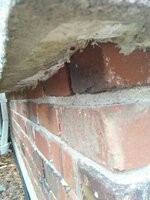
Based on what I see, the slab might be 3" thick, with 1/2" dia rebar. The fact that the bar is sticking out the end tells me that the contractor did a ****** job. Over time that will rust and spall the concrete. You can see it has cracked already at the rebar as it expands due to rust.

If I put my engineer hat on, I would tell you to leave the structure under it. I would also tell you you need to waterproof the slab above better.

Start with a drip edge under the apron.

Add some epxoy paint/waterproofing too. to the whole slab. Moisture will still wick through the concrete.
 

Attachments

  • 67f74e0a85bbc28b446221138b25dabd.jpg
    67f74e0a85bbc28b446221138b25dabd.jpg
    59.4 KB · Views: 0
  • 1e015ddbde9efcd9d89c86fb99d0529b.jpg
    1e015ddbde9efcd9d89c86fb99d0529b.jpg
    70 KB · Views: 0
OP
F

Fixed

Well-known member
Joined
Nov 18, 2015
Messages
397
Location
Ontario, Canada
You could drill a hole in the OSB and see if there is some corrugated steel under it.:dunno: .

Just did exactly that, and there's nothing underneath it, which again makes me think that it's a form. :confused: (see attached pic)

IMG_20170217_113339.jpg


So a cold room room is just a room added to the basement?

Yup, no connection to the rest of the house, in terms of airflow or anything.


I am a building inspector in ontario. I still recommend leaving it in as it doesnt hurt anything. Issue with thes is that the overhang at the exterior should have a drip edge cut in or a metal flahing type drip edge installed

Based on what I see, the slab might be 3" thick, with 1/2" dia rebar. The fact that the bar is sticking out the end tells me that the contractor did a ****** job. Over time that will rust and spall the concrete. You can see it has cracked already at the rebar as it expands due to rust.

If I put my engineer hat on, I would tell you to leave the structure under it. I would also tell you you need to waterproof the slab above better.

Start with a drip edge under the apron.

Add some epxoy paint/waterproofing too. to the whole slab. Moisture will still wick through the concrete.

Yes, the contractors that built this house did a terrible job, in every trade. The stories I could tell...

I would totally agree with just leaving the structure, but: it's moldy. I do plant to seal the exposed concrete on the inside, and I have done some waterproofing up top, which has dramatically improved the moisture issues down there.

I would just leave the cold room, but honestly the design that is used for these is just terrible. I've been in brand new houses, with properly installed ventilation etc, and they still smell like mildew.

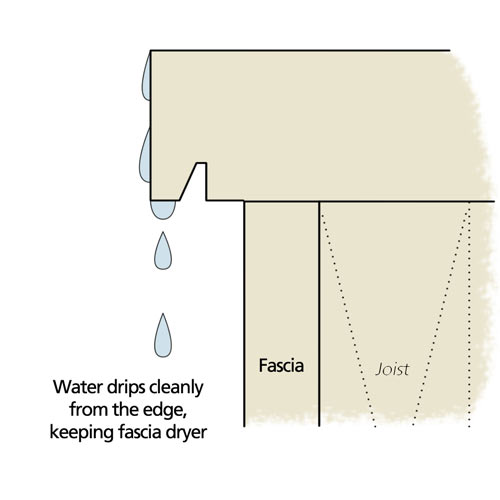
As for the drip edge, do you guys mean something like this?
fascia7.jpg


Again, thanks for the info, I've reached out to a couple friends that work with concrete, neither was willing to offer any advice, so it's incredibly helpful to hear some criticism of my plan. :rocker:
 

GMCGarage

Well-known member
Joined
Jan 31, 2017
Messages
1,264
Would you consider replacing the 2x4's with a steel structure, pehaps some angles or small tubes? Then you could not worry so much about the mold.

Drip edge as shown in your detail would work great.

Short term, I think you would be ok without the wood, but long term, I would not want to just have the slab be the onlything.

Last option is to tear it up and pour it right.
 

ishiboo

Well-known member
Joined
Oct 27, 2010
Messages
9,481
Location
Oshkosh, WI
There is no 'dogma' about it, concrete has always had some tensile strength. Not sure what 'new' engineering you are talking about. I can find books from the 50's with the same information.

Functionally, a piece of paper has tensile strength... but when you're designing a structure, since it's so minimal, it's effectively zero. His point is for all design purposes, the tensile strength of concrete would never be used in an equation in engineering a solution... it would ALWAYS require steel.

Besides the fact that it starts with little tensile strength, as mentioned the moment a single crack developed it would go immediately to zero in that dimension.
 

Sawdustmaker

Well-known member
Joined
Jan 15, 2017
Messages
928
Location
Placentia, Orange Co., California
It's a Canada thing. If you were into prepping or canning or gardening you would see it. In the north where there is ice thick in ponds you can dig one out and put in ice with sawdust and that ice will last clear through to august.

Op I remember seeing several shows on that Home inspector show. Mike somebody. Most are issues as they were filled in improperly. I would see if you can see any solutions there.
If not and it was me I would cut out some ply and see what's up there. Bringing it into the house envelope will be tough. Any porch drainage issues will now be inside house issues. I'd cut some vents in the side and put and exterior door on it. Use for storage. Don't insulate it


Sent from my iPhone using Tapatalk

My dad was born in Missouri. His family moved to Big Valley, Alberta when he was 3. His growing up years were spent there, moving to CA when he was 17. He often spoke about how everyone would go out to the lake and cut ice and store it in dugouts with straw. Yes, it would last well into August.
 

Kaizen

Well-known member
Joined
Jan 9, 2015
Messages
6,948
Location
New England
My dad was born in Missouri. His family moved to Big Valley, Alberta when he was 3. His growing up years were spent there, moving to CA when he was 17. He often spoke about how everyone would go out to the lake and cut ice and store it in dugouts with straw. Yes, it would last well into August.


Funny fact. In my town there is a pond next to the railroad tracks and another one a couple miles away. They both were used to harvest and sell ice to Boston. The one near the railroad tracks was cheaper because the soot from the train would make it less pretty and people showing off their new icebox wanted it pretty


Sent from my iPhone using Tapatalk
 

GMCGarage

Well-known member
Joined
Jan 31, 2017
Messages
1,264
Functionally, a piece of paper has tensile strength... but when you're designing a structure, since it's so minimal, it's effectively zero. His point is for all design purposes, the tensile strength of concrete would never be used in an equation in engineering a solution... it would ALWAYS require steel.

Besides the fact that it starts with little tensile strength, as mentioned the moment a single crack developed it would go immediately to zero in that dimension.

I have designed many footings and slabs without reinforcing steel. The builidng code allows it and has design parameters.
 

73RR

Blank Email
Joined
Dec 13, 2016
Messages
300
Location
Central Ory-Gun
Based on what I see, the slab might be 3" thick, with 1/2" dia rebar. The fact that the bar is sticking out the end tells me that the contractor did a ****** job. Over time that will rust and spall the concrete. You can see it has cracked already at the rebar as it expands due to rust.

If I put my engineer hat on, I would tell you to leave the structure under it. I would also tell you you need to waterproof the slab above better.

Start with a drip edge under the apron.

Add some epxoy paint/waterproofing too. to the whole slab. Moisture will still wick through the concrete.

...aren't you the guy that said an unreinforced slab could span 10'? what could some moldy 2x4 possibly add to the mix? :evil:
 

GMCGarage

Well-known member
Joined
Jan 31, 2017
Messages
1,264
...aren't you the guy that said an unreinforced slab could span 10'? what could some moldy 2x4 possibly add to the mix? :evil:

I said For this application, a 4" -6" un-reinforced slab could span about 8'-0"-10-0" depending on the live load required.

With the thickness of this slab and the condition its in, I would not recommend it since I know have the facts and some better information. It appears to be a cracked slab, maybe 3" thick, hence my thoughts. :rocker:
 
OP
F

Fixed

Well-known member
Joined
Nov 18, 2015
Messages
397
Location
Ontario, Canada
Would you consider replacing the 2x4's with a steel structure, pehaps some angles or small tubes? Then you could not worry so much about the mold.

Drip edge as shown in your detail would work great.

Short term, I think you would be ok without the wood, but long term, I would not want to just have the slab be the onlything.

Last option is to tear it up and pour it right.

I'm open to the idea, but feel a bit hesitant, since I don't feel confident that my incredibly limited background in design qualifies me to do it. Although, it wouldn't take much to exceed the strength of a half dozen 2x4s...

I can definitely score a drip edge, that's not an issue at all. I had no idea that one was required for porches, but it makes perfect sense.

As for tearing it out, the idea does not thrill me, which I think most people would agree with considering the expense, and that while the pour isn't ideal, it also doesn't see to be in immediate danger of collapse...

I'm currently considering removing that wood, waterproofing the underside, and replacing with better materials (plywood instead of OSB, maybe double up the 2x4s.

If anyone knows why that would be a dumb idea, I'm very interested in knowing why.
 
To avoid these ads, REGISTER NOW!
Top Bottom