
You are using an out of date browser. It may not display this or other websites correctly.
You should upgrade or use an alternative browser.
You should upgrade or use an alternative browser.
Craftsman 5198. Who made these awesome vises!!
- Thread starter drivesitfar
- Start date
alfagarage
Active member
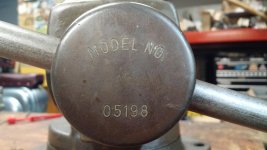


Shiftless
Well-known member
alfa:

Just like most of the regulars here, I have been looking for one of those for years.
Kudos on finding one, especially in what looks to be great condition.
Just like most of the regulars here, I have been looking for one of those for years.
Kudos on finding one, especially in what looks to be great condition.
Last edited:
Cope
Well-known member
Here is my 5198 in as found condition.
I will check the date tomorrow when i go out to the garage.
That is a sweet vise, and too nice to restore. They're only original once.
OP
drivesitfar
Well-known member
Alph: I agree that your 5198 is maybe the nicest one yet that i've seen before a restoration and with just a little cleaning and maybe some new grease you have a perfect user, but don't beat on that one. or I bet there are some members close to you that would trade a bigger vise for yours if you need a beater or a bigger vise.
thanks for posting yours and yes when you get the date pictures to post that should be on the top of the slide please do and more pictures of your vise if you have time.
ALL: so yes Japan lost the war, but i'm guessing not all their manufacturing was disabled cause they were still making ships, jets and ammunition until we dropped the bombs.
that said i think we agree that either Rock Island made the jaws or their patent was used or are they Morgan type jaws which are somewhat similar? also the handle has a Starrett look, but Morgan also has similar handles or di back in the 50's.
so didn't Morgan get Uncle Sam's contract to make vises after WWII which almost put Wilton out of the vise business. at the time these 519x's were being made Rock Island was also scaling down their vise business that Birtman Electric had bought and eventually quit selling vises in the late 50's when surprisingly the 519x's stopped being made. COINCIDENCE or ??
so since there are so many vise company patents or similarities to the 519x's that leads me to believe maybe they were built in Japan or possibly Taiwan. not sure when Taiwan started manufacturing but guessing it was after WWII.
If anybody worked for any of the companies above and has any information about this please let us know or if any of you have catalog or company paperwork showing more information on who made these 519x's and where we'd all love to know.
cheers
thanks for posting yours and yes when you get the date pictures to post that should be on the top of the slide please do and more pictures of your vise if you have time.
ALL: so yes Japan lost the war, but i'm guessing not all their manufacturing was disabled cause they were still making ships, jets and ammunition until we dropped the bombs.
that said i think we agree that either Rock Island made the jaws or their patent was used or are they Morgan type jaws which are somewhat similar? also the handle has a Starrett look, but Morgan also has similar handles or di back in the 50's.
so didn't Morgan get Uncle Sam's contract to make vises after WWII which almost put Wilton out of the vise business. at the time these 519x's were being made Rock Island was also scaling down their vise business that Birtman Electric had bought and eventually quit selling vises in the late 50's when surprisingly the 519x's stopped being made. COINCIDENCE or ??
so since there are so many vise company patents or similarities to the 519x's that leads me to believe maybe they were built in Japan or possibly Taiwan. not sure when Taiwan started manufacturing but guessing it was after WWII.
If anybody worked for any of the companies above and has any information about this please let us know or if any of you have catalog or company paperwork showing more information on who made these 519x's and where we'd all love to know.
cheers
Drivesitfar - After review I would tend to agree with you that a threaded sleeve is needed. I did come up with a solution, as I have no idea where one would find such a sleeve. I purchased a 3/4" shaft collar with set screw and some machinery bushings. Slid the main screw into the housing, then the bushing and collar onto the screw. Tightened the set screw and I'm back in business. Would be nice to know if any other 05195 owners could comment and if a source is known to obtain the proper part.
I appreciate all the assistance. Didn't realize there was so much to learn about vises. Glad I happened upon this source. Hopefully I didn't screw it up (no pun intended)
Glad you got your vise functional again. I may have a 5196 collar, don't know if it's the right size.
i believe i have a 5195 somewhere in the garage at home. acquired it many years ago and forgot about it until following this thread. iirc, it has surface rust/patina but is otherwise in nice working condition without pitting and the badge is close to pristine. i'll search for it when i clean up the garage in the coming weeks.
Shiftless
Well-known member
Alfa:
 to that
That is a sweet vise, and too nice to restore. They're only original once.
to thatPghJKB
Well-known member
All,
I have already put my 2¢ here. Now for the $1.00 version.
My thoughts as to the origins of the 519x series of vises:
How about a short story, may be fact, may be fiction, may be a bit of both. In any case, this is my story and I am sticking to it. You can consider it a straw man and you are welcome to shred, or burn, it.
Directly following WW2, the Marshall Plan: (The following is a direct quote from Wikipedia, minus the footnotes and citations)
The Marshall Plan (officially the European Recovery Program, ERP) was an American initiative to aid Western Europe, in which the United States gave over $12 billion (approximately $120 billion in current dollar value as of June 2016) in economic support to help rebuild Western European economies after the end of World War II. The plan was in operation for four years beginning April 8, 1948. The goals of the United States were to rebuild war-devastated regions, remove trade barriers, modernize industry, make Europe prosperous once more, and prevent the spread of communism. The Marshall Plan required a lessening of interstate barriers, a dropping of many regulations, and encouraged an increase in productivity, labour union membership, as well as the adoption of modern business procedures.
More, directly from Wikipedia: (again minus the footnotes and citations)
Aid to Asia
From the end of the war to the end of 1953, the US provided grants and credits amounting to $5.9 billion to Asian countries, especially China/Taiwan ($1.051 billion), India ($255 million), Indonesia ($215 million), Japan ($2.44 billion), South Korea ($894 million), Pakistan ($98 million) and the Philippines ($803 million). In addition, another $282 million went to Israel and $196 million to the rest of the Middle East. All this aid was separate from the Marshall Plan.
My story:
WW2 is over, the US government comes up with a plan - it is going to "buy" the friendship of our enemies by pouring money into their economies. The idea is to rebuild these economies by giving them the means to manufacture products that would be sold to American consumers. I.E. Cheap foreign goods. Hey, who else had money in those days?
To make this plan work the government needs US retailers on board. So it goes to US retailers and encourages them to import stuff from Europe and Asia. Sears is the largest retailer in the US and surely must have participated.
Now to Japan. What is an easy industry to quickly rebuild? How about metal casting? Casting is not a high tech process; humans have been casting metals for centuries. To turn up a foundry what do you need? You need a source for the metal, the appropriate type of green sand to form the molds, flasks to hold the molds, a heat source(fire), crucibles to heat and pour the metals. One can literally turn up a back yard foundry in a couple of days. See issues of Popular Mechanics from this time period to see how to do it.
The Japanese are excellent metalsmiths and have been working with steel for centuries. How about Samurai swords?
So, one of the Big Heads at Sears decides to use Japan to produce a cast product. The Craftsman people decide they would like a line of heavy duty premium vises made on the cheap.
Now for the design. Sears shows the Big Heads at the Japanese foundry some of the vises that Sears has sold in the past: Rock Islands and Reeds. Maybe they throw in an Athol as well. Or the Japanese foundry owners go to the US and buy a selection of US made vises and use them as prototypes for their soon to be vise. Any way they do this, they now have some examples of what American vise consumers want in a vise.
So the Japanese foundry owners combine what they consider to be the best features of their examples into a single vise: Rock Islands jaws, Reeds low profile Mack truck like fixed jaw, four footed swivel base and toothed swivel wedge. The beefy slide and main screw of the Athols, and for some reason, a "glass chin" as the slide support.
One other thing that needs to be dealt with, COOL - Country Of Origin Laws. After all, you would have to be a complete fool to believe that American males would buy tools made by the same Japanese that were shooting at them just a few years before. So the gov looks the other way and lets the vises come into the country with no COO markings. Hence no Made In Japan anywhere on the vise, and no Made In U.S.A. either.
How does making a heavy product like a vise make economic sense from a shipping point of view? (and, please remember that Sears did import Japanese made vises in the late 1970's early 1980's(? Not sure when the 391 vises started being imported).
There are a large number of ships from the US delivering US made industrial equipment to Japan. Heavy industrial equipment. (My Father was Maintainer working for the Pennsylvania Railroad from 1949 until 1989. His territory was the Mon Valley, probably the most industrialized area on this plant. As a young boy I vividly remember seeing hundreds of flat cars, box cars open and covered gondolas and specialized delivery cars coming out of the Mon Valley plants and mills (home of US Steel, Mesta, and many others) marked for Japan, Italy, Poland Yugoslavia, India, Brazil, etc., etc.) Big, heavy pieces of equipment. A train with all the pieces you would need to build a rolling mill, a finishing plant, a structural plant.... I also remember him saying repeatedly: there goes that equipment, there go our jobs…
So all this heavy equipment is being delivered to these countries. Once this equipment is off loaded what are the ships going to do? Return empty? Or is there something they can carry back? Does it make sense to load them with water as ballast (ballast is needed for stability purposes) and send them home otherwise empty? Or, how about filling them up with products for the US market?
Early on in the industrialization process there is a need for Japanese made product with weight. The heavier the better - these ships need to get home, they need weight for stability. Metal product has weight, So, we have an ideal situation here for the product of iron foundries. Heavy product as ballast, something like a vise, would fill this need nicely. For an example of ships needing ballast weight, see: http://www.oldsaltblog.com/2014/02/...last-cobblestones-blitz-bricks-bristol-basin/
BTW As a child my Grandparents telling me the story of ships bringing Belgian Block to the US as ballast in a similar situation. (Three of four of my Grandparents were OTB.) The US was the "Workshop of The World" so empty ships or ships carrying immigrants would arrive here. The human cargo and Belgian Block ballast would be unloaded and American made goods would be loaded up with for the ships' return trip to Europe. Which made a lot of sense to me as there are literally hundreds of streets here in the 'burgh made of Belgium Block.
So, once again, this is my story and I am sticking to it.
JKB
I have already put my 2¢ here. Now for the $1.00 version.
My thoughts as to the origins of the 519x series of vises:
How about a short story, may be fact, may be fiction, may be a bit of both. In any case, this is my story and I am sticking to it. You can consider it a straw man and you are welcome to shred, or burn, it.
Directly following WW2, the Marshall Plan: (The following is a direct quote from Wikipedia, minus the footnotes and citations)
The Marshall Plan (officially the European Recovery Program, ERP) was an American initiative to aid Western Europe, in which the United States gave over $12 billion (approximately $120 billion in current dollar value as of June 2016) in economic support to help rebuild Western European economies after the end of World War II. The plan was in operation for four years beginning April 8, 1948. The goals of the United States were to rebuild war-devastated regions, remove trade barriers, modernize industry, make Europe prosperous once more, and prevent the spread of communism. The Marshall Plan required a lessening of interstate barriers, a dropping of many regulations, and encouraged an increase in productivity, labour union membership, as well as the adoption of modern business procedures.
More, directly from Wikipedia: (again minus the footnotes and citations)
Aid to Asia
From the end of the war to the end of 1953, the US provided grants and credits amounting to $5.9 billion to Asian countries, especially China/Taiwan ($1.051 billion), India ($255 million), Indonesia ($215 million), Japan ($2.44 billion), South Korea ($894 million), Pakistan ($98 million) and the Philippines ($803 million). In addition, another $282 million went to Israel and $196 million to the rest of the Middle East. All this aid was separate from the Marshall Plan.
My story:
WW2 is over, the US government comes up with a plan - it is going to "buy" the friendship of our enemies by pouring money into their economies. The idea is to rebuild these economies by giving them the means to manufacture products that would be sold to American consumers. I.E. Cheap foreign goods. Hey, who else had money in those days?
To make this plan work the government needs US retailers on board. So it goes to US retailers and encourages them to import stuff from Europe and Asia. Sears is the largest retailer in the US and surely must have participated.
Now to Japan. What is an easy industry to quickly rebuild? How about metal casting? Casting is not a high tech process; humans have been casting metals for centuries. To turn up a foundry what do you need? You need a source for the metal, the appropriate type of green sand to form the molds, flasks to hold the molds, a heat source(fire), crucibles to heat and pour the metals. One can literally turn up a back yard foundry in a couple of days. See issues of Popular Mechanics from this time period to see how to do it.
The Japanese are excellent metalsmiths and have been working with steel for centuries. How about Samurai swords?
So, one of the Big Heads at Sears decides to use Japan to produce a cast product. The Craftsman people decide they would like a line of heavy duty premium vises made on the cheap.
Now for the design. Sears shows the Big Heads at the Japanese foundry some of the vises that Sears has sold in the past: Rock Islands and Reeds. Maybe they throw in an Athol as well. Or the Japanese foundry owners go to the US and buy a selection of US made vises and use them as prototypes for their soon to be vise. Any way they do this, they now have some examples of what American vise consumers want in a vise.
So the Japanese foundry owners combine what they consider to be the best features of their examples into a single vise: Rock Islands jaws, Reeds low profile Mack truck like fixed jaw, four footed swivel base and toothed swivel wedge. The beefy slide and main screw of the Athols, and for some reason, a "glass chin" as the slide support.
One other thing that needs to be dealt with, COOL - Country Of Origin Laws. After all, you would have to be a complete fool to believe that American males would buy tools made by the same Japanese that were shooting at them just a few years before. So the gov looks the other way and lets the vises come into the country with no COO markings. Hence no Made In Japan anywhere on the vise, and no Made In U.S.A. either.
How does making a heavy product like a vise make economic sense from a shipping point of view? (and, please remember that Sears did import Japanese made vises in the late 1970's early 1980's(? Not sure when the 391 vises started being imported).
There are a large number of ships from the US delivering US made industrial equipment to Japan. Heavy industrial equipment. (My Father was Maintainer working for the Pennsylvania Railroad from 1949 until 1989. His territory was the Mon Valley, probably the most industrialized area on this plant. As a young boy I vividly remember seeing hundreds of flat cars, box cars open and covered gondolas and specialized delivery cars coming out of the Mon Valley plants and mills (home of US Steel, Mesta, and many others) marked for Japan, Italy, Poland Yugoslavia, India, Brazil, etc., etc.) Big, heavy pieces of equipment. A train with all the pieces you would need to build a rolling mill, a finishing plant, a structural plant.... I also remember him saying repeatedly: there goes that equipment, there go our jobs…
So all this heavy equipment is being delivered to these countries. Once this equipment is off loaded what are the ships going to do? Return empty? Or is there something they can carry back? Does it make sense to load them with water as ballast (ballast is needed for stability purposes) and send them home otherwise empty? Or, how about filling them up with products for the US market?
Early on in the industrialization process there is a need for Japanese made product with weight. The heavier the better - these ships need to get home, they need weight for stability. Metal product has weight, So, we have an ideal situation here for the product of iron foundries. Heavy product as ballast, something like a vise, would fill this need nicely. For an example of ships needing ballast weight, see: http://www.oldsaltblog.com/2014/02/...last-cobblestones-blitz-bricks-bristol-basin/
BTW As a child my Grandparents telling me the story of ships bringing Belgian Block to the US as ballast in a similar situation. (Three of four of my Grandparents were OTB.) The US was the "Workshop of The World" so empty ships or ships carrying immigrants would arrive here. The human cargo and Belgian Block ballast would be unloaded and American made goods would be loaded up with for the ships' return trip to Europe. Which made a lot of sense to me as there are literally hundreds of streets here in the 'burgh made of Belgium Block.
So, once again, this is my story and I am sticking to it.
JKB
OP
drivesitfar
Well-known member
JKB: so to end your story MADE IN JAPAN is your best 2 cents? which makes a lot of sense to me and thanks for the good read and taking time to write your story.
ALL: here are a few reasons why it makes sense besides what JKB just mentioned.
it was and maybe is one of the finest vises ever made so why doesn't every bench have one sitting on it? yes i'm sure MADE IN JAPAN after having 4 years of war against that very same country might have been a good reason that is for certain.
also with the 519x's having so many different vises best qualities maybe only SEARS owners know how they were able to get the vises made. also maybe another reason why there were not as many sold cause there are some that still won't buy an item that was patented here then made cheaper and imported.
and another reason is if you look at vise prices in the Sears catalogs and compare them to their other CHEAPER vises and other company vises the 519x's weren't exactly CHEAP.
still looking for PROOF in writing, but i'm liking the story.
so anybody know if Rock Island vise company might have moved some of their factories to Japan or maybe Taiwan like Columbian did?
ALL: here are a few reasons why it makes sense besides what JKB just mentioned.
it was and maybe is one of the finest vises ever made so why doesn't every bench have one sitting on it? yes i'm sure MADE IN JAPAN after having 4 years of war against that very same country might have been a good reason that is for certain.
also with the 519x's having so many different vises best qualities maybe only SEARS owners know how they were able to get the vises made. also maybe another reason why there were not as many sold cause there are some that still won't buy an item that was patented here then made cheaper and imported.
and another reason is if you look at vise prices in the Sears catalogs and compare them to their other CHEAPER vises and other company vises the 519x's weren't exactly CHEAP.
still looking for PROOF in writing, but i'm liking the story.
so anybody know if Rock Island vise company might have moved some of their factories to Japan or maybe Taiwan like Columbian did?
Shiftless
Well-known member
pghjkb:
Thanks for the detailed explanation of your theory (or is it a hypothesis?)
I'm sure it is not as easy as deciphering foundry marks, right?
I had a Craftsman purchased new from Sears in the middle 70's with a BF foundry mark cast into the bottom. BF=Daido in Japan.
I am still searching for the elusive 519x in original condition. My only lead is an 80 something widow in my town who is holding onto her husband's for nostalgic reasons. I saw it...it was mint! She told me I was welcome to buy it from her estate after she was gone.
Thanks for the detailed explanation of your theory (or is it a hypothesis?)
I'm sure it is not as easy as deciphering foundry marks, right?
I had a Craftsman purchased new from Sears in the middle 70's with a BF foundry mark cast into the bottom. BF=Daido in Japan.
I am still searching for the elusive 519x in original condition. My only lead is an 80 something widow in my town who is holding onto her husband's for nostalgic reasons. I saw it...it was mint! She told me I was welcome to buy it from her estate after she was gone.
Last edited:
Trying to keep track of the dates! It may help us narrow down when these were started being made.
Honza.vosalick post #2 5196 dated 10-48 Heritage badge
Econotrk post #7 5198 dated 3-54 Heritage badge
mlisac post #25 5191 dated 10-51 Heritage badge
fullthrottle24 post #27 5196 dated 10-54 Heritage badge
cbacres post #47 5191 dated 4-56 Raised logo
ncboat post #57 5197 dated 9-52 Heritage badge
Alfagarage post #96 dated 2-51 Heritage badge
Honza.vosalick post #2 5196 dated 10-48 Heritage badge
Econotrk post #7 5198 dated 3-54 Heritage badge
mlisac post #25 5191 dated 10-51 Heritage badge
fullthrottle24 post #27 5196 dated 10-54 Heritage badge
cbacres post #47 5191 dated 4-56 Raised logo
ncboat post #57 5197 dated 9-52 Heritage badge
Alfagarage post #96 dated 2-51 Heritage badge
Last edited:
fullthrottle24
Well-known member
JKB, well thought out theory. I just don't agree. The date you state funding from the US was April 8, 1948. Our earliest vise here was October of 1948. That is an amazing turn around for a war torn nation. Not to mention MITI was established in 1949. I don't see how Sears would be selling their best vises made overseas while other top line products they sold were being made stateside. There is no question Japan made products and vises post war, I just don't think it was that soon.
If you can prove that these vises are in fact "Made in Japan", mine will be for sale. My keepers are made in the good ol' US of A.
If you can prove that these vises are in fact "Made in Japan", mine will be for sale. My keepers are made in the good ol' US of A.
alfagarage
Active member
Sorry for the delay in getting some more pics.
Kids come first!
It was just luck that I found this one. I have been a member here for years, i just don't post much read lots though, so I know how long some of you have been looking for this one and how many have been found.
I have no intention of restoring it! You are right it is only original once.
As for letting it go, i did think about it, however I have a son who has laid claim to it not knowing how rare it is, so even if I was thinking of selling it, I promised it to him. I have a 6" beat up Morgan to do my dirty work on.
For right now it is sitting on the corner of my bench already have a few vises mounted up to use so no rush to put into service.
Just love the style of this series and was beyond excited when I went to pick this up and saw 5198 on the screw.
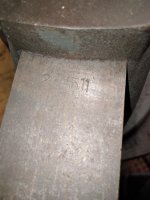
Anyhow here is some more teasers for all of you.
Kids come first!
It was just luck that I found this one. I have been a member here for years, i just don't post much read lots though, so I know how long some of you have been looking for this one and how many have been found.
I have no intention of restoring it! You are right it is only original once.
As for letting it go, i did think about it, however I have a son who has laid claim to it not knowing how rare it is, so even if I was thinking of selling it, I promised it to him. I have a 6" beat up Morgan to do my dirty work on.
For right now it is sitting on the corner of my bench already have a few vises mounted up to use so no rush to put into service.
Just love the style of this series and was beyond excited when I went to pick this up and saw 5198 on the screw.
Anyhow here is some more teasers for all of you.
Attachments


alfagarage
Active member
By the way, it is not sitting on the edge of my bench like the picture shows, I pulled it out to get the pictures.
OP
drivesitfar
Well-known member
Alfa: thanks for posting up more pictures of your 5198. it's a gem that is for certain and you and then your son will enjoy using it no matter what company or where it was built. it might be the one of the best vises ever made.
i'm shaking my head a bit about your date stamp that looks like 2/55, but what are the 11's doing there?
FT: i understand your MADE IN USA mentality, but Japan has some pretty smart people and not all of them hate us or want to shoot at us. some just want to live and do the best job that they can and i for one love HONDA motors. if we find out the 519x's were made in Japan or Taiwan i'd be happy to take any and all of yours and anybody elses because i think they are some of the best vises ever made.
ALL: anybody else have a 519x vise to post pictures of and especially the date stamp and any other cast or stamped markings that would help. also if you have an opinion or want to produce some catalog pages or newspaper articles or more facts that might help us solve this mystery please post them.
thanks for all your help
i'm shaking my head a bit about your date stamp that looks like 2/55, but what are the 11's doing there?
FT: i understand your MADE IN USA mentality, but Japan has some pretty smart people and not all of them hate us or want to shoot at us. some just want to live and do the best job that they can and i for one love HONDA motors. if we find out the 519x's were made in Japan or Taiwan i'd be happy to take any and all of yours and anybody elses because i think they are some of the best vises ever made.
ALL: anybody else have a 519x vise to post pictures of and especially the date stamp and any other cast or stamped markings that would help. also if you have an opinion or want to produce some catalog pages or newspaper articles or more facts that might help us solve this mystery please post them.
thanks for all your help
fullthrottle24
Well-known member
Drives, I think alfa's date is 2/51. Looks like it was double struck.
I understand the Japanese made/make quality tools and products. I just have an appreciation for the American products made by people like my grandfather.
I understand the Japanese made/make quality tools and products. I just have an appreciation for the American products made by people like my grandfather.
OP
drivesitfar
Well-known member
FT: I totally wish our grandfathers and the owners of all US made products in the past still had the same quality and thinking today. i know there are still a few company's owners and workers that do, but a lot of them have went a totally different direction.
ALL:I agree on the double stamped so 2/51 for ALFSA's 5198 is the thinking?
ALL:I agree on the double stamped so 2/51 for ALFSA's 5198 is the thinking?
OP
drivesitfar
Well-known member
BB: thanks for keeping track and this thread should be a lot easier than the Wilton Date stamp thread you took on and did a fantastic job on. i bet you also learned a little more about Wilton bullets too didn't you?
thanks again for all you do to help make this forum the only internet forum I participate on!!
ALL: speaking of date stamps i know there are a ton of you Craftsman 519x's owners so how about snapping a few pictures of them and their date stamps and posting them up?
also anybody else have craftsman catalog pages to post with the 519x's so maybe we can see if there were any changes and what years they were actually sold?
thanks in advance for helping me (us) solve this mystery!!
thanks again for all you do to help make this forum the only internet forum I participate on!!
ALL: speaking of date stamps i know there are a ton of you Craftsman 519x's owners so how about snapping a few pictures of them and their date stamps and posting them up?
also anybody else have craftsman catalog pages to post with the 519x's so maybe we can see if there were any changes and what years they were actually sold?
thanks in advance for helping me (us) solve this mystery!!
OP
drivesitfar
Well-known member
Nines: do you have an old Rock Island vise cause I think they might fit? or email KMScott or PM him would be my guess. or maybe a Rock Island made Craftsman vise from pre WWII might have similar jaws too.
Balane: since you had several Craftsman 519x's and some Rock Islands apart maybe at the same time did you ever try to see if the jaws were interchangable? i remember you saying that the Rock Island vise you had weighed almost to the pound the same as a Craftsman 519x of the same jaw size?
hope you are doing ok and would love to see the stump with a few of your gems on it if you have time to post some.
Balane: since you had several Craftsman 519x's and some Rock Islands apart maybe at the same time did you ever try to see if the jaws were interchangable? i remember you saying that the Rock Island vise you had weighed almost to the pound the same as a Craftsman 519x of the same jaw size?
hope you are doing ok and would love to see the stump with a few of your gems on it if you have time to post some.
Last edited:
cbacres
Well-known member
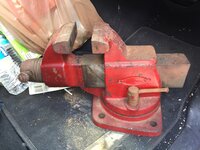
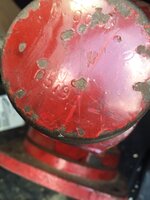
Here's my latest addition to this group of CM vises. A member alerted me to a CL listing for this one and I was lucky to have one of our trucks in the area, as it was 400 miles away.
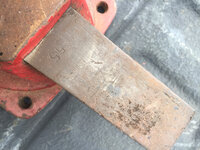
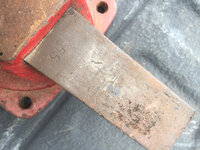
It's a 5196 dated 2/55. It's been beat on a little, but seems to be fine. I'll go over it more tonight when I get home.
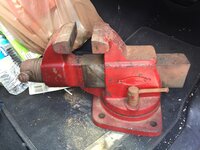
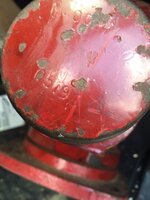
It's a heritage logo, that has been painted over. Any ideas on how to get the red paint off and preserve the original logo?
Been searching for one of these for a while, finally, I get one.
It's a 5196 dated 2/55. It's been beat on a little, but seems to be fine. I'll go over it more tonight when I get home.
It's a heritage logo, that has been painted over. Any ideas on how to get the red paint off and preserve the original logo?
Been searching for one of these for a while, finally, I get one.
Attachments
Shiftless
Well-known member
Nice find!
I'm not sure about the Craftsman heritage logo, but I have had success removing rattle can paint from tools using a paper towel soaked with Acetone and giving a quick wipe multiple times so nothing soaks in deeply. Worked great last night cleaning a Makita chop saw with a spray painted over label.
You could experiment by starting to remove paint from elsewhere on that vise and see how easily the paint comes off. Who knows how many years it has been red!
A GJ standard is soaking in undiluted Simple Green.
Others will chime in with their favorite products and techniques.
I'm not sure about the Craftsman heritage logo, but I have had success removing rattle can paint from tools using a paper towel soaked with Acetone and giving a quick wipe multiple times so nothing soaks in deeply. Worked great last night cleaning a Makita chop saw with a spray painted over label.
You could experiment by starting to remove paint from elsewhere on that vise and see how easily the paint comes off. Who knows how many years it has been red!
A GJ standard is soaking in undiluted Simple Green.
Others will chime in with their favorite products and techniques.
OP
drivesitfar
Well-known member
CB: i removed red spray bomb off a cabinet that had red painted lettering underneath it pretty well by putting paper towels on it that were soaked in Simple Green. keep the towels wet and every now and again give the spray bomb a rub and most of mine came off.
i haven't used acetone but if it doesn't take off original paint that might be ok. i smells a lot worse than SG though as you probably already know.
elbow grease is involved and time with SG.
thanks for posting your 519x and best of luck with the old paint removal.
also electrolysis I hear might remove it since it looks like it has some rust to be removed too.
i haven't used acetone but if it doesn't take off original paint that might be ok. i smells a lot worse than SG though as you probably already know.
elbow grease is involved and time with SG.
thanks for posting your 519x and best of luck with the old paint removal.
also electrolysis I hear might remove it since it looks like it has some rust to be removed too.
fullthrottle24
Well-known member
Electrolysis will remove all the paint. If you are just trying to remove top coat, I would stick to a chemical strip as mentioned above. It's been my experience that most repaints don't have good adhesion due to poor prep. In this case, that should work in your favor.
cbacres
Well-known member
Electrolysis will remove all the paint. If you are just trying to remove top coat, I would stick to a chemical strip as mentioned above. It's been my experience that most repaints don't have good adhesion due to poor prep. In this case, that should work in your favor.
That's what I'm hoping for, a crappy prep job before it was painted
cbacres
Well-known member




OP
drivesitfar
Well-known member
CB: nice find. your 519x's stable is getting bigger isn't it? thanks for posting the date stamps too.
just curious if the Simple green or another method worked to uncover that old Craftsman's heritage badge?
ALL: anybody have any information about WHO MADE THE 519x's??
thanks in advance
just curious if the Simple green or another method worked to uncover that old Craftsman's heritage badge?
ALL: anybody have any information about WHO MADE THE 519x's??
thanks in advance
Smokeshow69
Well-known member
Re: Two 519x's
Any update on these? In all seriousness, if you are looking to part with them I would be willing to give them a shot !
Camera seems to be working well, so here are some images of my Craftsman 519x series.
A word of caution, both were found in adverse conditions and they are the worse for it. Discretion is advised.
The 5195 was on an old concrete floor (poured before before vapor barriers were used) on the bottom of a pile of junk covered with a canvas tarp against the outside wall of a garage that was below grade and looked to pass a good deal of moisture. The canvas retained the moisture and the front jaw, handle and nose are pretty much toast. There is significant pitting all over.
The 5191 also sat on the floor of an old garage, under a bench. It was on its side and also has some moisture problems. Apparently the previous owner was a Tarzan type who beat on things held in vise jaws with a heavy hammer. The "chin" is missing. From my research, these things tend to have glass chins....
My plan, once the weather warms up, is to e-tank them, take them apart and combine the two. Front jaw of the 91 to the rear jaw of the 95.
Have not gotten enough corrosion off to be able to move the front jaws or read the date stamps.
My 2¢ on the manufacturer is Made In Japan. They have some Rock Island characteristics, they have some Reed characteristics, they have some Starrett characteristics, and No Where is the vise marked Made In U.S.A.. For me, this is typical post war Japan - no innovation, but a tremendous ability to improve on the designs of others.
Once I get them e-tanked, I am going to compare the jaws to the ones on my Craftsman 518x series and my RI 574. See how they stack up - Sears may have had the vises made in Japan but sourced the jaws from Rock Island.
JKB
Any update on these? In all seriousness, if you are looking to part with them I would be willing to give them a shot !
PghJKB
Well-known member
Re: Two 519x's
Smokeshow69
Why would I want to part with them? My opinion - they are art. Especially if they are Japanese made.
Right now they are in plastic waiting for their turn in the e-bath.
JKB
Any update on these? In all seriousness, if you are looking to part with them I would be willing to give them a shot !
Smokeshow69
Why would I want to part with them? My opinion - they are art. Especially if they are Japanese made.
Right now they are in plastic waiting for their turn in the e-bath.
JKB
Smokeshow69
Well-known member
No worries... Just was anxious to see the progress on them !
Sent from my iPhone using Tapatalk Pro
Sent from my iPhone using Tapatalk Pro
jreb10
Well-known member
Back on post #6 bluebolt suggested we compare casting numbers between Rock Island and Craftsman 51xx . On post #8 econotrk showed a photo of his 5198 base with the number cast in.
On the Rock Island History thread I just noticed post #43 by guaybito showed his Rock Island 505A base. I will repost his photo here:

And here is the number on my 5198 base, the same number as econotrk showed:

Rock Island 505A: "3V5510"
Craftsman 5198: "3V7816S"
I find the number formats to be strikingly similar.
On the Rock Island History thread I just noticed post #43 by guaybito showed his Rock Island 505A base. I will repost his photo here:
And here is the number on my 5198 base, the same number as econotrk showed:
Rock Island 505A: "3V5510"
Craftsman 5198: "3V7816S"
I find the number formats to be strikingly similar.
scooternut
Well-known member
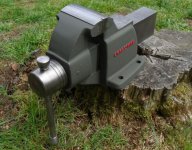
Smokeshow69
Well-known member
Wow that is nice! Which member did that one ?
Sent from my iPhone using Tapatalk Pro
Sent from my iPhone using Tapatalk Pro
OP
drivesitfar
Well-known member
Jreb: i meant to say thanks for the post with pictures and more possible clues that lead to maybe Rock Island making these awesome 519x's. THANK YOU!!
Scooter: that has to be a member's vise or somebody that really does nice restorations. that wrinkle army green paint is ok in my book too and that vise looks almost new.
is it near you on CL or did it sell?
ALL: anybody else have vises with date stamps, parts #'s, catalog pages or any other clues to who made these awesome 519x's please post them.
Scooter: that has to be a member's vise or somebody that really does nice restorations. that wrinkle army green paint is ok in my book too and that vise looks almost new.
is it near you on CL or did it sell?
ALL: anybody else have vises with date stamps, parts #'s, catalog pages or any other clues to who made these awesome 519x's please post them.
Shiftless
Well-known member
smokeshow:
If I am not mistaken, that beautiful vise was Balane's
OP
drivesitfar
Well-known member
Shift: yep it does look like Balane's stump doesn't it? and that looks like the quality of his work he used to do too. i think we ran out of cheap vises in the PNW so he's probably doing other things now cause i haven't seen or talked to him in a while.