To avoid these ads, REGISTER NOW!

Insulating an open truss space

justinmc

Well-known member
Joined
May 25, 2006
Messages
2,239
Location
KCMO
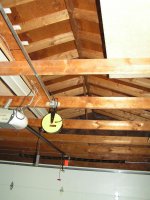
So my little 1 car "attached" is a truss style setup that currently has an uninsulated roofline. The trusses are open from below and I like it because I use it to store things up in the trusses. So if I were going to insulate the roof (plywood decking with 2 layers asphalt shingles) should I put a 4mil vapor barrier THEN some fiberglass insulation or should it be the other way around? Would a styrofoam sheet insulation be the better option?

Being heated with a hanging dayton radiant setup.. I need this to be fairly warm/snug as a bug for the winter as I've got a car I'm going to be building.

Also my trusses terminate past the exterior walls and it vents through the eves rather than a roof vent. Is there anything or suggestion to avoid having cold air blow up/in through those eves this winter without compromising the venting? Thanks!
 
To avoid these ads, REGISTER NOW!

Motofixxer

Well-known member
Joined
Oct 10, 2009
Messages
681
You would have a better R value if you used normal rolls of fiberglass filling the truss bay. So for best results 4-6mil plastic on bottom of trusses 1/2" drywall minimum on ceiling then fiberglass rolled insulation from above. Leave an opening for attic access as large as you need. Maybe install a pull down steps etc. Or like I did just made a hinged door and use a ladder. Then you can use plywood on top of the trusses to set stuff on etc. My 1 car attached has rafter framing and ties front to back so no real ceiling. So I framed some ceiling joists and leveled the sagging ties to create a decent ceiling. Then drywall and insulation with a 3'x3' access hatch to storage above with 1/2" OSB to store stuff on. I think I spent about $200 total.

You need air flow on the underside of the roof plywood from the soffit up to the peak. Hopefully you have decent soffit vents and pop vents or peak vents also. So there is no real good way to install insulation and ceiling above the bottom of the trusses without cutting around all the webbing of the trusses etc. The foil foam has a higher R value than the pink stuff. But in using it for normal insulation you would have to have perfect cuts, and up at the peak etc the miters between the different angles would have to be perfect to seal and insulate properly. Or you would have condensation and moisture building up. Its possible to make a drop type ceiling. It just isn't practical or reasonable to effectively insulate any other way than a normal ceiling if I understand your question. Maybe someone else has come up with another option but I don't see any.
 
Last edited:
OP
J

justinmc

Well-known member
Joined
May 25, 2006
Messages
2,239
Location
KCMO
You would have a better R value if you used normal rolls of fiberglass filling the truss bay. So for best results 4-6mil plastic on bottom of trusses 1/2" drywall minimum on ceiling then fiberglass rolled insulation from above. Leave an opening for attic access as large as you need. Maybe install a pull down steps etc. Or like I did just made a hinged door and use a ladder. Then you can use plywood on top of the trusses to set stuff on etc. My 1 car attached has rafter framing and ties front to back so no real ceiling. So I framed some ceiling joists and leveled the sagging ties to create a decent ceiling. Then drywall and insulation with a 3'x3' access hatch to storage above with 1/2" OSB to store stuff on. I think I spent about $200 total.


I guess my thought was to actually put the insulation up against the roof sheathing and leave the entire truss span "open" rather than drywalling up a ceiling and having an access hatch. Any thoughts on that plan?
 

unpredictable1

Well-known member
Joined
Jan 1, 2009
Messages
397
Location
Under a rock on the front lawn
I'm doing this myself. I spoke we a few 'old hands at home depot regarding it as well.

The Roxul insulation they have can be put against the roof sheeting, it also resists moisture and mold. (for 24 inch on centers is what I got)

What I will be doing is (and I already started...) is put the batts in between the truss channels from the soffet all the way up to the peak. I may or may not put up a vapor barrier before I install tongue n groove boards against the roof to close it all in. Figure that would be easier to work with that trying to horseshoe sheets of drywall or osb up there.

The boards will be painted, but I live in a very dry climate. I know by looking at it, vapor barrier will be a pain to install up there too.

I spoke to a local insulation company and they said I wouldn't bake my shingles off by insulating in the channels like that, which was a concern of mine.

The old fellas at home depot, one of them in particular had his open rafters (in a loft area) in his home insulated against the roof sheeting with just the old traditional pink stuff and when he did some renos which involved pulling down the inside panelling, the insulation looked the same as it did when it first went in 25 years ago. (which he did himself) I tend to think there is the potential for more moisture to develop inside a house than a garage but who knows, I'm no expert.

To each their own I guess, I read so many threads on this webpage and conflicting arguments and asked so many people that I decided enough readin and start doin.
 

Motofixxer

Well-known member
Joined
Oct 10, 2009
Messages
681
I basically addressed that in the whole second paragraph saying it's possible. But it would not be advised directly on the roof ply. Your roof will rot quickly without the airflow. Aside from the complications with it for starters attaching the insulation...how? Anything attached to the roof ply will be messed with if you ever have to reshingle\tear off ply. The foam could be glued to the ply...but still same issues. It just gets into a very time consuming issue and likely won't have good results. A normal ceiling is the best option for functionality, looks and resale. If your completely opposed to a normal ceiling I guess you could maybe place 2x4 on edge perpendicular to the top chords of the trusses then place fiberglass insulation in between them. Then plastic on the bottom of the new 2x4. Then figure out how to keep an air space for air flow at the bottom of the roof where the wall meets the roof. There are styrofoam or cardboard baffles that attach to the bottom of the roof ply to keep insulation from touching the roof ply to maintain airflow. Then if you wanted to drywall it would be a nightmare trying to get the pieces up there and cut around everything. It would be more time consuming and work to use any other approach than a normal ceiling. I personally wouldn't put any insulation against the roof ply. I considered all the same issues before I did my ceiling. In the end a normal ceiling is simplest cheapest and least time consuming.
I think I understand your want to keep the truss space open for storage...but I don't see it as worthwhile motivation for avoiding a normal ceiling construction. Attic access can be easily addressed for storage.
 
Last edited:
OP
J

justinmc

Well-known member
Joined
May 25, 2006
Messages
2,239
Location
KCMO
I basically addressed that in the whole second paragraph saying it's possible. But it would not be advised directly on the roof ply. Your roof will rot quickly without the airflow. Aside from the complications with it for starters attaching the insulation...how? Anything attached to the roof ply will be messed with if you ever have to reshingle\tear off ply. The foam could be glued to the ply...but still same issues. It just gets into a very time consuming issue and likely won't have good results. A normal ceiling is the best option for functionality, looks and resale. If your completely opposed to a normal ceiling I guess you could maybe place 2x4 on edge perpendicular to the top chords of the trusses then place fiberglass insulation in between them. Then plastic on the bottom of the new 2x4. Then figure out how to keep an air space for air flow at the bottom of the roof where the wall meets the roof. There are styrofoam or cardboard baffles that attach to the bottom of the roof ply to keep insulation from touching the roof ply to maintain airflow. Then if you wanted to drywall it would be a nightmare trying to get the pieces up there and cut around everything. It would be more time consuming and work to use any other approach than a normal ceiling. I personally wouldn't put any insulation against the roof ply. I considered all the same issues before I did my ceiling. In the end a normal ceiling is simplest cheapest and least time consuming.
I think I understand your want to keep the truss space open for storage...but I don't see it as worthwhile motivation for avoiding a normal ceiling construction. Attic access can be easily addressed for storage.

So I'm sitting here scratching my head and thinking.. there is an easy solution for this. I found it. However before I get to that.

Let me say that you misunderstood the purpose/design of this garage. This is basically a shed that was "tacked onto" the side of my house. Its got 3 exterior walls and the 4th wall is actually the outside wall of my house (it was built that way when it was new in the 1960's..). This is a early prefab or "package" house design in which people basically said.. I want this house but I want the garage on this side instead of this side, etc. The garage has no doorway into the house. The only way to currently access the garage is to roll up the garage door. (This is another issue I'm addressing as well). So its not any sort of finished space that will add value to the home.. simply I need a warm place to work. I'll post some photos later so you can see what I'm getting at.

So I was sitting here going.. you are right about not wanting to lay the insulation directly up against the decking material for a variety of reasons including moisture, ice damns, etc, etc. So thinking.. gosh I know this can be done but how. So I asked my old man because they built a house a few years ago with a cathedral ceiling. How'd you guys insulated the ceiling? The solution.. truss vent chutes. They basically create a layer/barrier 1" away from the decking material and terminate at the soffit vents allowing the roof layer to have ventilation and not expose the insulation to moisture.

http://www.adoproducts.com/duro.html

Here's the ones I'll be using.. home depot sells them for $1.26 per 48" or 4' section. Perfect.
 

unpredictable1

Well-known member
Joined
Jan 1, 2009
Messages
397
Location
Under a rock on the front lawn
I bought some of that too but, what are you going to do at your peak? You can have the end down at your sofit open for air to come in, but where does it vent at the top?

This is what the old fella at Home Depot told me - it wouldn't work. Maybe he doesn't know... But if you create a channel for the air to come in at the bottom, it has to go somewhere - it can't just stop at the peak with nowhere to go.

The Roxul insulation that can be used for lofts does not have the duravent or equivalent listed as being required.
 
OP
J

justinmc

Well-known member
Joined
May 25, 2006
Messages
2,239
Location
KCMO
I bought some of that too but, what are you going to do at your peak? You can have the end down at your sofit open for air to come in, but where does it vent at the top?

This is what the old fella at Home Depot told me - it wouldn't work. Maybe he doesn't know... But if you create a channel for the air to come in at the bottom, it has to go somewhere - it can't just stop at the peak with nowhere to go.

The Roxul insulation that can be used for lofts does not have the duravent or equivalent listed as being required.

Hmm good question. I'm assuming my parents setup used a ridge vent. I don't have a ridge vent in my setup currently. Dang.. this is pretty typical for this house though. Because of the way it was built it wasn't designed to be upgraded later on. Which means any updates I do takes about 10x more work than it should.

I'll look at Roxul.. my biggest thing is I just don't want the heat going up and out. Maybe I should look at a foil type insulation with a fan to circulate the air downwards.
 

unpredictable1

Well-known member
Joined
Jan 1, 2009
Messages
397
Location
Under a rock on the front lawn
Yeah the fella at Home Depot said I was better off putting the moisture and mold resistant insulation up in the channels, vapor barrier, then sheet it in. I plan on using tongue and groove boards across the inside of the roof deck. easier to get them up inbetween the trusses and easier to work with. (I have sky lights)

Like I said, he had this setup in his home in a loft area and it was still good when it did renos 25 years later, and he used the cheap pink stuff.
 
OP
J

justinmc

Well-known member
Joined
May 25, 2006
Messages
2,239
Location
KCMO
Yeah the fella at Home Depot said I was better off putting the moisture and mold resistant insulation up in the channels, vapor barrier, then sheet it in. I plan on using tongue and groove boards across the inside of the roof deck. easier to get them up inbetween the trusses and easier to work with. (I have sky lights)

Like I said, he had this setup in his home in a loft area and it was still good when it did renos 25 years later, and he used the cheap pink stuff.

Hmmm I suppose in reality I'm not looking for this stuff to last 25 years.. or if it does I won't be there in 25 years. Hahaha.. seriously though. I wasn't even planning on sheeting mine in. I was just going to plastic over it and leave it.
 

unpredictable1

Well-known member
Joined
Jan 1, 2009
Messages
397
Location
Under a rock on the front lawn
Hmmm I suppose in reality I'm not looking for this stuff to last 25 years.. or if it does I won't be there in 25 years. Hahaha.. seriously though. I wasn't even planning on sheeting mine in. I was just going to plastic over it and leave it.

I'm going to sheet it in to give it a bit of a finished look, especially since it's so bright up there with the 4 skylights.

But I may get the insulation in, and then sometime next year do the boards.

Cheers,

lbrowne
 

Motofixxer

Well-known member
Joined
Oct 10, 2009
Messages
681
Yep Durovents, I couldn't think of the name of them things. But that's what I was referring to. There are cardboard variations too.
I see what you guys are saying with your ideas. But it's all these little things that add complication and time. So in the end...I think it's simplest and fastest to simply put up some drywall plastic and insulation. Make a normal ceiling of it. I can almost guarantee it will have higher R value and better end results than any other method mentioned. There are certainly other options...but I always weigh all the pros and cons. Justinmc you could even just put up the plastic and lay some insulation and leave it at that...simple quick and cheap. For the cheap price of drywall I would put some on the ceiling to help support the insulation so you dont push it down when your storing stuff above. But you could get by without it. In the end it's all about what your looking for and how much you want to do. Oh and as for the comment about not adding value to the house. Think about all the people on this board and ask yourself if they considered garage\workspace when they were looking for a house. I guarantee that it could make or break a sale. When I was looking I certainly did pass on houses that had no working space or room to expand. It was part of my criteria. Some had small garages that would have worked for a while. But I needed some room to expand. People have different needs. Your space could be just what somebody had in mind, or can work with. The more potential your place has the higher value and possibilities you have.
In a nutshell, put lot's of brainstorming into projects and you end up with a very good final product.
On another thought...if you need more time to figure things out. Just throw a piece of plastic up on the bottom of your trusses to buy you some time. You would be surprised how much heat just that will hold. I have installed plastic in garages on open stud walls and ceiling, thrown 2 heaters in there and heated the space so floor slabs could be thawed and completed in low winter temps. Not very efficient, but the job gets done.
 
Last edited:

D.J.

Well-known member
Joined
Sep 16, 2009
Messages
1,116
Location
New Haven IL
Does motorfixxer understand you have skylights and want to keep them functioning? Why not cut in and install a ridge vent system, then use the durovents all the way up to the ridge? Pictures or crude drawings would really help some figure out what you are trying to accomplish! he just updatred and I guess he does, think about plain old cardboard on the underside of the plastic. Won't pass code by any means!
thanks D.J :confused:
________
Latina Webcams
 
Last edited:

unpredictable1

Well-known member
Joined
Jan 1, 2009
Messages
397
Location
Under a rock on the front lawn
Does motorfixxer understand you have skylights and want to keep them functioning? Why not cut in and install a ridge vent system, then use the durovents all the way up to the ridge? Pictures or crude drawings would really help some figure out what you are trying to accomplish! he just updatred and I guess he does, think about plain old cardboard on the underside of the plastic. Won't pass code by any means!
thanks D.J :confused:

The OP doesn't have skylights, I do. I was just suggesting what I'm doing and not really questioning what Motofixxer was saying.
 

Motofixxer

Well-known member
Joined
Oct 10, 2009
Messages
681
DJ, my name has no "R" in it...but anyway
I think I do understand what Dustinmc is trying to accomplish. But we are all just making assumptions anyway. We are merely giving him ideas and guidance, which is what he was looking for. Only he can decide how much time or $ he wants to invest in the idea. I am guessing he wants something quick and easy, to get him by for now. Which isn't always the best motivation. It usually leaves you wondering in the future why you didn't just do a little more in the beginning to save more in the end. Trying to install a ceiling up in the trusses can be done, but will require more time and effort and likely frustration. And will likely not give as good of an end result in look and function ie: R value. Perhaps he or the next buyer wants to make that small garage into another room for the house which is done quite frequently. With a traditional ceiling it would be essentially finished regarding the ceiling except for adding more insulation. In contrast with the foam insulated which would likely have to get ripped out and a traditional ceiling installed anyway. As well as the much lower R value of the foam. And in the scenario, the foam ceiling would likely never pass code as living space where I live anyway.
Justinmc mentioned he wanted the easy access storage space in the trusses. Maybe he values that higher than all the extra time and frustrations with trying to use a less traditional method. Only he can answer that. I just see too many complications with the way he was originally thinking. I'm not saying he can't overcome them, but at what expense, time and frustration? And in the end it won't have as high R value, and more possibilities for moisture. I'm guessing by his questioning he has not done a lot construction type projects. So I'm going to try and steer him from a situation with a lot of potential for problems. In the end it's his choice and I will offer suggestions or opinion on any of it.
Oh and ridge vents and or pop vents in a roof are always a good idea, so if you don't have any, get some in no matter what your ceiling/roof situation is. I'm guessing though that is more work\expense than Justinmc wants to do.
Lbrowne I think I can picture your idea. When it's done...It would have a kinda untraditional look to it which I like. Not sure I would bother with the extra expense of the boards etc...and all that time but make sure you show us pics of it. And if that's the way you wanna do then go for it.
 
OP
J

justinmc

Well-known member
Joined
May 25, 2006
Messages
2,239
Location
KCMO
DJ, my name has no "R" in it...but anyway

Oh and ridge vents and or pop vents in a roof are always a good idea, so if you don't have any, get some in no matter what your ceiling/roof situation is. I'm guessing though that is more work\expense than Justinmc wants to do.

Motofixxer.. I appreciate the input. I'm about to post up some photos of when I first moved in to give you some ideas of what the space "was" and some look at the truss system.
 
OP
J

justinmc

Well-known member
Joined
May 25, 2006
Messages
2,239
Location
KCMO
So lets take a look at the space with photos...

here's an exterior shot of the day I closed on the house.. nevermind the ugly garage door color thats been fixed! Notice however the difference in height between the house structure and the garage.. the garage is basically 3 walls and a roof stuck to the side of the house. There is no man door to access the garage from the house.
movein-3.jpg


Now you can see the interior walls, etc when I moved in.. nothing fancy here. Just standard 2x4 stud walls with trusses on top of them. Also notice the unique situation on the right (looking into the garage) side of the garage where there is the exposed concrete basement wall and the exterior of the side of the house unfinished.
movein-2.jpg


Here's a shot of the joists and the decking.. notice at one point the ceiling was sheetrocked (no sign of insulation previously installed though). I can tell when the new roof was installed (about 6 years ago; 2 years before I moved in) they replaced quite a bit of decking in the garage and probably tore out the roof/sheetrock that had gotten wet/damaged. Obviously the garage roof wasn't built as well the first time around.. in my attic there was no signs of rotted or replaced decking just in the garage. So quite a bit of the decking is newish.
movein-4.jpg

movein-5.jpg


I have since sheetrocked the left/outside wall and insulated.. the back wall has pegboard (with insulation behind it) and when I do this insulation for the roof I'm installing a 32" steel entry door in the back wall of the garage so I can go in/out without opening the main garage door and the access is in my backyard and not visible to the street. I have a dayton hanging radiant heater that should put off quite a bit more heat than I need.

As for insulation/open truss options... I wonder how hard it would be to create a "loft" in the front half of the garage with sheetrock ceiling and insulation laid in between the trusses... then on the back half have the insulation run along the roofline. While the R value might not be perfect as you can see I'm not working with a 100% perfect space and really I need it to be warm while I'm working but otherwise if I can maintain somewhere above freezing (40ish degrees) thats fine. At some point I do need to install a ridge vent or some sort of roof vent.. the house has roof vents but the garage doesn't. Thoughts/input? I am not a construction guru but I understand basic stick construction and engineering principles plus I stayed a a Holiday Inn Express last night.. lol :lol_hitti Seriously though I feel comfortable enough to tackle this and figure my lack of experience presents this garage as a good place to work on some of my skills. I can build cars surely I can do this. LOL
 

D.J.

Well-known member
Joined
Sep 16, 2009
Messages
1,116
Location
New Haven IL
Motofixxer sorry about the spelling It was late when I was typing and I really **** at typing and spelling anyway! sorry about the misunderstanding on the wrong poster about the skylights!
________
Michigan Medical Marijuana
 
Last edited:

Motofixxer

Well-known member
Joined
Oct 10, 2009
Messages
681
D.J. No problem...I have been called worse :) Don't worry I won't stalk you and :uzi: for it.
Justinmc what is your main intentions for the ceiling area. Do you want the long space to store long items up there? Do you just want something quick and easy that's insulated? Do you want a fully finished inside or just insulation visible is ok? How much are you looking to put into the project?
If your just looking to insulate the roof and leave it at that. Then I could picture building out the front and back trusses so they are a normal 3 1\2" thickness. So basically you should add 2" to the inside of the end trusses spaced 16" apart then insulate and plastic. Then for the roof you can do like I mentioned in one of my first posts. Create kind of a drop ceiling up near the top of the truss by placing 2x4's on edge running perpendicular to the trusses spaced 24". Place them on the underside of the top chord of the trusses toenailed into the bottom of the top truss chord. Then where you can't run them through the trusses you would have to cut short pieces roughly 14 1\2" between the solid sections of the trusses. So what your doing is basically putting in typical truss braces, but they are on edge instead of flat. Then you install R13 insulation in that new rafter space that is 3 1\2" down from the roof plywood which leaves room for air flow. Then you can put plastic for a vapor barrier or if you used the faced insulation that would be ok as long as you sealed it all off everywhere you cut it etc. And your only costs are the lumber, insulation, and plastic if needed. That would be much more labor intensive than a traditional ceiling. But would leave most of truss open if thats your goal.
Also if your gonna put in a door I would recommend a 36" in any case. The additonal cost is usually minimal.
As for the loft idea. That would require more height than you have. If your willing to take the roof off and get different trusses etc, that would certainly be an option.
 

NUTTSGT

Super Moderator
Staff member
Joined
Sep 14, 2009
Messages
50,925
Location
Northern Central Ohio
Do you have vented soffits?


What I did in part of my garage was to put up fiberglass insulation, stapled to the trusses and then put foil-backed 1/2 rigid insulation on top of that.
 
To avoid these ads, REGISTER NOW!

rsanter

Well-known member
Joined
Dec 22, 2007
Messages
18,506
Location
visalia ca
I think I would either install rigid foam insulation at the roof level or the fiberglass with the paper stapled to the joists to hold it up.
you may also want to look at installing 1/4 plywood or 1/8 moulan on the upper rafters anf use the blow in insulation to fill it. then if you paint the plywood/moulan and the trusses you will get better reflected light in there.

you can also get the foam insulation that you spray on the underside of the roof

bob
 
OP
J

justinmc

Well-known member
Joined
May 25, 2006
Messages
2,239
Location
KCMO
Do you have vented soffits?


What I did in part of my garage was to put up fiberglass insulation, stapled to the trusses and then put foil-backed 1/2 rigid insulation on top of that.

Soffits are vented... otherwise no ridge or roof vents in the garage area (different roofline/not shared with the rest of the house).
 

GDA

Well-known member
Joined
Nov 19, 2006
Messages
935
Location
Dallas, Texas
I had a similar situation to deal with on my 2 car detached and in researching the best options without installing ceiling at the lower truss level I went down this route. Installed batts in 2x4 walls and covered in 6mil plastic. Installed batts in 2x6 rafters after installing ridge vent channels. I had to install four soffit vents in the overhangs so that I would have adequate flow up to the 2 large whirlybirds. Then installed batts in the rafters which left the entire ceiling open. I have not installed any drywall or anything over the batts in the rafters yet but might do it at a later date to provide a more finished look. Overall, its worked out even better than I had expected.

Here are a couple pics of the work in progress from earlier last fall/this spring.

Garmk1pics011.jpg


Garmk1pics020.jpg


Garmk1pics019.jpg


Good luck,
Greg
 

Motofixxer

Well-known member
Joined
Oct 10, 2009
Messages
681
GDA Those duravents are narrower than any that I have seen. And in that situation the insulation would be compressed more than it should be which loses R value. I'm sure it works for you in your climate, but with the temp extremes I wouldn't use that idea locally. But any insulation is better than none.
Dustinmc if your going to frame that back wall for a door, I would suggest framing an opening for an air conditioner. Then just buy a 5-8000 btu room air conditioner and install it in there. I bet it gets pretty warm there in the summer. Once you work in an air conditioned space you will wonder how you ever worked without it. And for the $90 unit cost, its well worth it.
 

GDA

Well-known member
Joined
Nov 19, 2006
Messages
935
Location
Dallas, Texas
Greg, did you put the duravent/truvent all the way up or did you leave it ended where it is in the picture?

Those pics were made when I was only about 1/3 done...

I ran a foot wide channel from soffit all the way up to the ridge beam on every section. Several of the old timers at HD told me that was way overkill but since they were like $2 to do each section I just did them all. I didn't perceive any compression of the R-19 due to the venting channel. YMMV
 
OP
J

justinmc

Well-known member
Joined
May 25, 2006
Messages
2,239
Location
KCMO
Greg,

Thanks for posting up the pics and your input.. thats exactly what I'm looking to do. Yesterday morning before turkey time I went ahead and pulled down my pegboard and insulation where I'll be installing the man door and took some time to look at the overall design, etc a little more. I think the durovents run to the ridge will work. I actually have a slight ridge vent that looks like it was installed when they did the roof I just couldn't see the gap until I was up in the rafters digging around.

Motto thats a good idea on framing for a a/c unit. I actually have a spare window unit (when I moved in the old woman who lived there had a window unit in her bedroom on top of central air!!.. I went in during July and you could almost hang meat in the house.. really it was THAT cold). I haven't plugged it in since I moved in but I'll have to plug it up and make sure it still works. I'm sure it does. Its a pretty heavy/older unit though. I might look at getting a smaller unit. Thanks guys!
 

Motofixxer

Well-known member
Joined
Oct 10, 2009
Messages
681
Brainstorming is the step before a solution. Always good to get lots of ideas then discuss and arrive at a conclusion that will work for each situation. I have received a lot of good info on forums over the years, so it's always good to pass it on if you have it.
On the A/C idea, I would be more inclined to just buy a cheap new one. Then you know it will last a while. Otherwise you may get an old one installed and the next week it dies and needs to be replaced. I would make the opening a little bit larger, then use trim boards on the outside to finish it off. Then it's easier to change the size later if the need arises.
 

E30bimmer

Well-known member
Joined
Dec 1, 2009
Messages
79
Location
Chicago
Great info here guys--glad I found this. I'm getting started on improving my garage by installing a ceiling and then insulating so I can work comfortably this winter, but can tell visually that my trusses (24') are sagging just slightly and want to level them and secure with vertical 2x4's from the 2X8 ridge beam above. Is this the best way to do it or will this tend to be a "pull" on the roof?
 

Motofixxer

Well-known member
Joined
Oct 10, 2009
Messages
681
If you can jack them from below then add more bracing and tie it all in, you should be ok. Wouldn't hurt to add some reinforcement to the ridge beam underneath if need be. This is without seeing the situation. Start a thread with some pics, maybe post a link here then others can comment.
 

E30bimmer

Well-known member
Joined
Dec 1, 2009
Messages
79
Location
Chicago
Here's a shot of my roof--and a shot of my bimmers resting in the stable. The ridge is a 2 x 8. You may be able to notice the bottom of the rafters are just slightly sagged in the middle. As I mentioned previously, planning on shoring these up by installing vertical 2x4's down from this to each of the 9 lower rafters and installing an insulated ceiling. If anyone has better advice l'd appreciate it.
 

Attachments

  • Garage Roof.jpg
    Garage Roof.jpg
    143.2 KB · Views: 91
  • Garage Shot 12-2-09.jpg
    Garage Shot 12-2-09.jpg
    142.6 KB · Views: 58

Motofixxer

Well-known member
Joined
Oct 10, 2009
Messages
681
I would be a little uncomfortable with that small of a ridge beam. I would add a little extra support underneath it. One option would be to add some support by putting a Microlam\LVL beam under it. But the problem is getting the beam up there. I haven't figured out an idea for that yet without cutting stuff. Or you could essentially build your own trusses in place. Shore up those ties you have there so everything is level where it needs to be. Then essentially just cut 2x4's to make internal webbing like a regular truss. If you can go to your local lumber yard and find a truss that's similar length you could copy the approx dimensions of it. If you have to add bottom chords between what you have so you have 24" OC then use the same size lumber then you get a nice surface up top to put some plywood etc for storage. Then you have a ceiling you could insulate and drywall.
 

kah68

New member
Joined
Dec 4, 2009
Messages
3
I'm not a fan of 'Hot Roof' construction. If your climate becomes very hot in the summer it will, over time, rot your plywood and deteriorate your shingles faster.
 

kah68

New member
Joined
Dec 4, 2009
Messages
3
Here's a shot of my roof--and a shot of my bimmers resting in the stable. The ridge is a 2 x 8. You may be able to notice the bottom of the rafters are just slightly sagged in the middle. As I mentioned previously, planning on shoring these up by installing vertical 2x4's down from this to each of the 9 lower rafters and installing an insulated ceiling. If anyone has better advice l'd appreciate it.

Talk to a contractor and or building official before doing anything. The building code will include a span table so you can use to see for yourself if the construction meets code or not. Deflection is normal so some sagging is possible, but keep your dollars in your wallet until you know for sure that repairs need to be done, too many 'Vila's' out there want to tell you 'what you need' and have no clue themselves.
 

FryZ

Well-known member
Joined
Nov 4, 2009
Messages
117
Location
Tha Cuse, NY
Here's a shot of my roof--and a shot of my bimmers resting in the stable. The ridge is a 2 x 8. You may be able to notice the bottom of the rafters are just slightly sagged in the middle. As I mentioned previously, planning on shoring these up by installing vertical 2x4's down from this to each of the 9 lower rafters and installing an insulated ceiling. If anyone has better advice l'd appreciate it.


My garage (built in 1960) is constructed the same way, except my ridge is perpendicular (runs side to side). The PO put 20' rafters in from the garage door end to the back wall end and tied them in the way you are describing with no ill effects that I can see, and it's been like that 40+ years. He put 2 2x4s on each rafter, one on each side roughly halfway between the ridge and outside wall. I don't put anything heavy up there, just the summer time stuff when winter hits (kids bikes, patio sets, plastic chairs, etc.
 
Last edited:

E30bimmer

Well-known member
Joined
Dec 1, 2009
Messages
79
Location
Chicago
My garage (built in 1960) is constructed the same way, except my ridge is perpendicular (runs side to side). The PO put 20' rafters in from the garage door end to the back wall end and tied them in the way you are describing with no ill effects that I can see, and it's been like that 40+ years. He put 2 2x4s on each rafter, one on each side roughly halfway between the ridge and outside wall. I don't put anything heavy up there, just the summer time stuff when winter hits (kids bikes, patio sets, plastic chairs, etc.

This is kinda what I'm leaning towards. I don't put anything at all up there either.Are the 2x4's just installed vertically or at an angle?
 

E30bimmer

Well-known member
Joined
Dec 1, 2009
Messages
79
Location
Chicago
I'm not a fan of 'Hot Roof' construction. If your climate becomes very hot in the summer it will, over time, rot your plywood and deteriorate your shingles faster.

When spring comes around I was figuring on installing more soffit vents so that it creates air flow up to the two roof vents. I'm also planning on a vent opening in the ceiling when I do that too. Shouldn't be a problem then, right?
 
OP
J

justinmc

Well-known member
Joined
May 25, 2006
Messages
2,239
Location
KCMO
I'll post photos later.. I ultimately (in the name of time and ease of install for this winter) just ended up stuffing 4x8 sections of "whiteboard" (prefinished 1/8" particleboard) above the joists and laying insulation on top of it. I worked out there all this weekend using only a kerosene "mushroom" type heater and it kept it roughly mid 60's without much of an issue. I decided this was the best solution until I can really decide on expanding the garage. I can always take it back down and move it around if I need.
 

E30bimmer

Well-known member
Joined
Dec 1, 2009
Messages
79
Location
Chicago
It's 3 degrees here today. Forecasted high is 13. Last night I switched over to steelies and snow tires on "Black Betty"--my wife's black sedan. Heater kept the temp at 55, outside temp was 30, still with open rafters to the roof vents. Kept a window slightly cracked open for venting also. As I posted previously, I was able to turn the heater down to barely on after 15 mins. Thinking about getting one of the vertical column electric heat units to see if it would maintain temp after running propane unit. Noticed some fogging of the car windows this time. Decided to just put up some 3 mil plastic (with an opening in the middle for venting) as a temporary ceiling for now, until I can go look at a good truss design that I could duplicate as someone else suggested.
 

Attachments

  • Betty's Winter Shoes.jpg
    Betty's Winter Shoes.jpg
    142.6 KB · Views: 14
To avoid these ads, REGISTER NOW!
Top Bottom