To avoid these ads, REGISTER NOW!

Need hammer advice for a special purpose

bdog

Well-known member
Joined
Oct 17, 2007
Messages
227
We pound 3/8" stainless steel stakes about 10" in the ground for geological testing. Thousands of them a week. We also have to dig small holes maybe 4" in diameter and just a couple inches deep.

We have been doing this with 2lb sledges. Most the crew hits the stakes in with the hammer turned sideways so they have more surface area and are less likely to miss. They then beat the ground with the sledge a few times to dig the little holes. It works we have literally done probably 50,000 of each but I can't help but think there is a better hammer for this. They are already carrying a ton of stuff so it has to be only one tool.

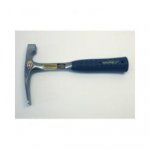
Something like the attached picture but about 2lb and with a larger contact surface on the hammer would be perfect but I can't find one.
 

Attachments

  • IMG_9501.jpg
    IMG_9501.jpg
    3.9 KB · Views: 140
To avoid these ads, REGISTER NOW!

Ole Slewfoot

Well-known member
Joined
Feb 22, 2016
Messages
5,098
Location
Freedom, CA
I'd cut the end off a 3/8-1/2 SDS bit and weld a sleeve to it.
Then use a cordless (unless you have power) SDS drill to drive the stakes in with it.
Maybe you would need SDS+?
Our SDS max shoots 3/4 pipe feet into pretty rocky soils.
 

kctyphoon

Banned
Joined
Jun 9, 2014
Messages
9,102
Location
Jersey/Staten Island
I'd cut the end off a 3/8-1/2 SDS bit and weld a sleeve to it.
Then use a cordless (unless you have power) SDS drill to drive the stakes in with it.
Maybe you would need SDS+?
Our SDS max shoots 3/4 pipe feet into pretty rocky soils.

Im gonna assume they don't wanna be carrying that around.. they are just banging stakes into the ground, not even a foot deep.. this is massive overkill for them.
 

CGT80

Well-known member
Joined
Aug 29, 2014
Messages
864
Location
IE, SoCal, USA
I'd cut the end off a 3/8-1/2 SDS bit and weld a sleeve to it.
Then use a cordless (unless you have power) SDS drill to drive the stakes in with it.
Maybe you would need SDS+?
Our SDS max shoots 3/4 pipe feet into pretty rocky soils.

I had the same thought.

You can get 12v chargers, run an inverter, or even get portable solar panel/battery units which I have seen pro photographers use when hiking to remote locations for days at a time.

Unless you have a ton of people spread out all over, it seems an electric hammer would be much better. Doing it by hand is like hearing about a drywall guy using a screwdriver to run in drywall screws with a screwdriver. Heck, a framer would drive framing nails more easily with a hammer, vs. a nail gun than driving spikes by hand. To hammer a spike once in a while is one thing, for a single person to hammer possibly hundreds of spikes per week would be quite a work out and people eventually wear out or get injured. Repetitive motions are not always good. 17 years in the construction industry put some wear and tear on my body. I can only guess what is best based on the info given.

More details about the working conditions could help, if any of the suggestions from this thread don't fit the bill.
 
Last edited:

bdelmar2

Well-known member
Joined
Apr 5, 2013
Messages
276
What is the problem with the current hammer?

Sounds like it does both jobs and they have them already. The only issue you kind of hint at is that they turn them sideways, or some do, but that doesn't sound like an problem to me really.

Its very possible to create more of an issue than you solve if you change.

Never having done what you are talking about I wouldn't care to guess at what might be 'better'.

What are they already carrying? How big an area are we talking here? Do the soil conditions vary? How long is this going to go on? Will they move to a different area with different conditions?
 
OP
B

bdog

Well-known member
Joined
Oct 17, 2007
Messages
227
Maybe something like this would work...

Blade would be perfect for the 4"holes.
Large diameter striking surface.

http://www.baselineequipment.com/page_2019_214/estwing-fireside-friend-splitting-tool

That would be perfect if the blade was rotated 90 degrees.

The trapping hammers look like the ticket. I did not know you could weld on a hammer like that? We have lots of welders but thought a hammer was some kind of treated steel. If we can weld a tab on like that then that is what we will likely do.
 
OP
B

bdog

Well-known member
Joined
Oct 17, 2007
Messages
227
I'd cut the end off a 3/8-1/2 SDS bit and weld a sleeve to it.
Then use a cordless (unless you have power) SDS drill to drive the stakes in with it.
Maybe you would need SDS+?
Our SDS max shoots 3/4 pipe feet into pretty rocky soils.

While this would sure get them in the ground it is too much to carry. We have 5 guys pounding these in the ground and don't want to buy 5 hammer drills plus they couldn't carry them, something to dig with, and the stakes.

Also the stakes have little tabs on them and springs attached so might not be good to be spinning them around.
 
OP
B

bdog

Well-known member
Joined
Oct 17, 2007
Messages
227
What is the problem with the current hammer?

Sounds like it does both jobs and they have them already. The only issue you kind of hint at is that they turn them sideways, or some do, but that doesn't sound like an problem to me really.

Its very possible to create more of an issue than you solve if you change.

Never having done what you are talking about I wouldn't care to guess at what might be 'better'.

What are they already carrying? How big an area are we talking here? Do the soil conditions vary? How long is this going to go on? Will they move to a different area with different conditions?

The current hammers work, but are not very good at the digging. Turning sideways I don't care if they do that I was just alluding to the fact that a hammer like I posted a picture of wouldn't work well because they like the large face.

The stakes are placed 20' apart and we drive 1-1.5 miles of them in the ground a day in separate lines that have 50 to 100 stakes each. Cross country through sometimes thick brush. Some rocks but mostly kind of sandy. The guys carry the stakes and hammers and a jug of salt water. They dig the small hole, pound the stake in the middle of it, and fill the hole with the salt water. It is done to measure the earths resistance. Another group of guys comes along behind them and connects a cable to the stakes the is connected to a computer that takes the readings.

We lost a hammer yesterday (doesn't happen very often), one has the head falling off, and the rubber grip fell off another. I need to buy some new ones and instead of just getting the default that the local hardware store had I thought maybe I could find something that would make the job easier.
 

Ole Slewfoot

Well-known member
Joined
Feb 22, 2016
Messages
5,098
Location
Freedom, CA
While this would sure get them in the ground it is too much to carry. We have 5 guys pounding these in the ground and don't want to buy 5 hammer drills plus they couldn't carry them, something to dig with, and the stakes.

Also the stakes have little tabs on them and springs attached so might not be good to be spinning them around.
You might only need one guy, and you should look into how an SDS drill works. no spinning involved.
 

rlitman

Well-known member
Joined
Oct 18, 2010
Messages
24,609
Location
Long Island
While this would sure get them in the ground it is too much to carry. We have 5 guys pounding these in the ground and don't want to buy 5 hammer drills plus they couldn't carry them, something to dig with, and the stakes.

Also the stakes have little tabs on them and springs attached so might not be good to be spinning them around.

You might only need one guy, and you should look into how an SDS drill works. no spinning involved.

+1 SDS is used all the time to drive ground rods. Most SDS drills have rotation-stop modes. You'd be amazed at what can be done with a tiny 12V SDS drill.

You could probably also get an auger bit to make your hole with the drill on rotation mode, or just have a regular cordless drill for this purpose.
When my wife and I are planting cell packs of annual flowers, I walk around with one of these in the cordless drill:
http://www.homedepot.com/p/Ames-24-in-Planting-Auger-2917500/206297060
and she follows with the flowers. We can plant a few dozen plants a minute!
 
To avoid these ads, REGISTER NOW!

rnscustom

Well-known member
Joined
Mar 20, 2017
Messages
340
Location
Plympton MA
Sounds like what you are doing is fine , was on a job where the roof sheathing was 4x6 tongue and groove fir . The carpenters were all using their 28oz steel shank estwings sideways to drive the spikes in.
 
OP
B

bdog

Well-known member
Joined
Oct 17, 2007
Messages
227
You might only need one guy, and you should look into how an SDS drill works. no spinning involved.

I will look into it and we do have a hammer drill with a concrete bit for when run into solid rock or very hard ground. We have to use it on about 5 stakes a day on average.

The need for 5 guys is to carry everything and cover the distance. The hammering isn't super difficult I was just looking for a little better tool to do it.
 

T45

Well-known member
Joined
Nov 20, 2014
Messages
3,252
We have lots of welders but thought a hammer was some kind of treated steel.

Hammers are heat treated steel, so you need to be somewhat careful about this. Accordin to Picard, european hammer maker, a typical hammer face is made to a spec of HRC 50 to 58 for a thickness of 3mm, and the rest of the core of the head/hammer is HRC 30.

This provides a hard striking surface that wont ding/mar or mushroom, along with a head which retains some toughness so it wont shatter or shrapnel. They also indicate the striking face should have a 45* bevel for similar reasons (so you dont chip edges of the striking face).

The main point here being to simply just look into what you need to work. Plenty of hammers are hand made. You should n't have any issues as long as you know what you are starting from and understand where you end up and don't use the hammer in a way that is inconsistent with its final properties.

One other thought is have you thought about changing the shape or spec of the spikes to make them easier to drive? Have no idea if that is a feasible thing (ie, one and done purchase or if you buy new ones for every survey, or annually, etc).

:beer:
 
Last edited:

PFSard

Well-known member
Joined
Sep 12, 2013
Messages
2,423
Location
Mesa, AZ
As usual, good ideas here. I would try contacting manufacturers. You already wrote out a good summation of your needs and issues.
 
OP
B

bdog

Well-known member
Joined
Oct 17, 2007
Messages
227
Hammers are heat treated steel, so you need to be somewhat careful about this. Accordin to Picard, european hammer maker, a typical hammer face is made to a spec of HRC 50 to 58 for a thickness of 3mm, and the rest of the core of the head/hammer is HRC 30.

This provides a hard striking surface that wont ding/mar or mushroom, along with a head which retains some toughness so it wont shatter or shrapnel. They also indicate the striking face should have a 45* bevel for similar reasons (so you dont chip edges of the striking face).

The main point here being to simply just look into what you need to work. Plenty of hammers are hand made. You should n't have any issues as long as you know what you are starting from and understand where you end up and don't use the hammer in a way that is inconsistent with its final properties.

One other thought is have you thought about changing the shape or spec of the spikes to make them easier to drive? Have no idea if that is a feasible thing (ie, one and done purchase or if you buy new ones for every survey, or annually, etc).

:beer:

Thanks for the info. I ordered 5 estwings like in the picture and will weld tabs on them. I am hoping that welding the tabs on the side of the hammer that will not be used to strike with shouldn't hurt the striking face too much. I may TIG them.

The stakes are expensive about $40 each. They are stainless steel, 3/8", have sharpened points, a little spot to attach the cable to, and a stainless spring. We have been using the same ones for the past 4 years. They get bent from time to time and we just straighten them up in a vise in the shop.
 

finn

Well-known member
Joined
Mar 27, 2005
Messages
16,257
Location
The UP, God's country
I wouldn't recommend a home brew modification to a striking tool (hammer) for a business application, strictly because of liability issues.

Have you ever seen a splinter on a hammer, chisel, or splitting wedge? There's a reason all, or almost all hammers have a warning label on them.

I'd seriously look at the SDS type driver as suggested previously by others. Repetitive stress is not to be ignored.

It seems like you made up your mind that a hammer was the solution before you asked the question.

How about giving an impact tool a chance by investing in one as a trial. They are used to drive electrical grounding rods all the time.

Your workers will thank you.
 
OP
B

bdog

Well-known member
Joined
Oct 17, 2007
Messages
227
It will be a hammer. The guys complained about the weight when I bought some 3lb hammers so we went back to 2LB hammers. They need to carry a jug of salt water, the stakes, and a hammer. They dig the holes with the hammer. If they went SDS they would need to carry something else to dig the holes - too much stuff. Also with 5 guys spread out over a mile dealing with batteries would be a headache. Not to mention the toll the dirt and rain would take on the cordless tools.

SDS for an 8' ground rod sure. These are small stakes going about 10" in the ground. They are not difficult to pound in. Each guy only ends up pounding 75 or so per 10 hr day. It isn't that bad. The main issue and reason for my post was not with the hammering but rather the hole digging. We wanted hammers with one end suited for digging.
 

Al Borland

Well-known member
Joined
Jan 20, 2016
Messages
1,598
They make a tool for this. Fencepost hammer.
It's basically a steel cylinder/tube with one closed end. Cylinder goes over the stake and gets slid up and slammed down on the stake. Kinda like using a slide-hammer.
Used to use them to drive in a soil gas probe for phase II/III environmental audits and remediation planning.
The siol probes were hollow Stainless Steel tubes, maybe 1/2" in diameter with a perforated "Nose cone".
Damn things were expen$ive, so we had to be careful and not wreck them. Only had to use a torch to straighten one.
 
Last edited:

skruft

Well-known member
Joined
May 9, 2011
Messages
759
For the small holes there are tools of all sizes that are used for planting plants.
 
OP
B

bdog

Well-known member
Joined
Oct 17, 2007
Messages
227
They make a tool for this. Fencepost hammer.
It's basically a steel cylinder/tube with one closed end. Cylinder goes over the stake and gets slid up and slammed down on the stake. Kinda like using a slide-hammer.
Used to use them to drive in a soil gas probe for phase II/III environmental audits and remediation planning.

Wouldn't work for this. You can only slide something over the top of the stake down maybe an inch before you get to the thing the cable connects to. The entire stake is only maybe 15" long.
 
OP
B

bdog

Well-known member
Joined
Oct 17, 2007
Messages
227
For the small holes there are tools of all sizes that are used for planting plants.

Yes but can they hammer also?

I want one tool that on one end has a hammer to pound the stakes in and on the other has something to dig with.

This is what I am going to try
 

Attachments

  • hammer.jpg
    hammer.jpg
    4.4 KB · Views: 11
To avoid these ads, REGISTER NOW!
Top Bottom