To avoid these ads, REGISTER NOW!

Shortening power tool electrical cords

Gy1

Member
Joined
Jul 16, 2017
Messages
6
I have a number of corded electrical power hand tools (of course more and more battery ones too).

Trying to improve my shop and I hate all the cords.

Does it make any sense to shorten the cords down to 12" or less and just use one extension cord to the nearest outlet?

I know it would require the effort to cut and splice. But when I'm ready to put the tool away, I don't have to fool with all the cords.

Thanks!
 
To avoid these ads, REGISTER NOW!

manwithtools

ALLIANCE MEMBER
Joined
Aug 24, 2015
Messages
13,826
Location
Lebanon, TN
No, it does not make any sense to shorten cords. I value my older tools with longer cords. Work with them long enough and you will understand why.
 

rlitman

Well-known member
Joined
Oct 18, 2010
Messages
24,597
Location
Long Island
The angle grinders by my bench mostly have 10' or longer cords, when a 6' cord is plenty, since the outlet is so close. What I do, is tie up the last few feet of the cord by the plug end into a loop held together with a velcro strap:
http://www.homedepot.com/p/VELCRO-Brand-8-in-x-1-2-in-Reusable-Ties-50-Pack-90924/202261940

Then, when I put the tool away, I just have the 6' at the tool end to loop up. And if I ever need the extra length, the cord is still there.
 

PelicanPines

ALLIANCE MEMBER
Joined
Apr 30, 2014
Messages
38,112
Location
New Jersey, USA, Earth, My own reality
I have heard the arguments for stubby cords... with the idea of always using an extension cord... to save in storage of each power tool... to not have long cords to bundle get tangled... etc etc... yea it saves some of that...

So count me as a vote ... HELL NO... make em longer.
 

ard

Well-known member
Joined
Feb 16, 2015
Messages
4,391
Location
Sierra Foothills... California
Just what I want- a connector, tied in a knot to keep it plugged int, 12 inches from my work!

Big no.

Love tools with the longer cords (Milwaukee 25' FTW baby- when doing work on a ceiling or drilling studs for a rooms worth of wiring...)
 

rsanter

Well-known member
Joined
Dec 22, 2007
Messages
18,514
Location
visalia ca
Construction people that are always using extension costs tend to do this. If it always seems like you are using a cost then this will work. If not then you are adding a step to your process
 

Whitworth

Well-known member
Joined
Dec 26, 2011
Messages
2,087
I wish all power tool cords came nice and long, ten or more feet. I also wish they'd come with a snag-proof tapered plug as found apparently only on drywall screw guns.

If a cord gets worn or damaged I always add a longer cord. If it's a two prong plug, I grind down the polarized neutral prong.
 

Hilltopmasonry

Well-known member
Joined
Oct 12, 2015
Messages
2,167
Construction people that are always using extension costs tend to do this. If it always seems like you are using a cost then this will work. If not then you are adding a step to your process


Yup I agree, I always need an xcord anyhow so a super long cord on the tool is annoying since it is a pain storing it ever day in the truck


Sent from my iPhone using Tapatalk
 

Marctrees

Well-known member
Joined
Mar 5, 2015
Messages
6,265
Location
TX/LA border - Toledo Bend
The lump you would create 12" from tool will often be snagging on workpieces.

Catching on workbench edges, etc.

You would too often find yourself needing to hold the lump in your other hand to try not to snag. Marc
 
Last edited:

LS6 Tommy

Well-known member
Joined
Dec 27, 2013
Messages
26,162
Location
Northern NJ
I'm in the "keep it the same" crowd. A short cable would be a pain to me.

Just FYI in case you are a contractor or an employer-
Replacing or modifying a power cord with other than a UL rated equivalent removes the UL rating and may be an OSHA violation.


Tommy
 

Hilltopmasonry

Well-known member
Joined
Oct 12, 2015
Messages
2,167
Construction people that are always using extension costs tend to do this. If it always seems like you are using a cost then this will work. If not then you are adding a step to your process


Yup I agree, I always need an xcord anyhow so a super long cord on the tool is annoying since it is a pain storing it ever day in the truck


Sent from my iPhone using Tapatalk
 

Stuart in MN

Well-known member
Joined
Sep 8, 2005
Messages
23,104
Location
Minneapolis
There was a trend back in the 1970s for manufacturers to sell power tools with 12" long cords on them, but the trend didn't last very long. It will work, but it's up to your personal preference.
 

Lwel9226

Well-known member
Joined
Jun 7, 2014
Messages
764
Location
So Oregon
Most of my tools have 12 1/2 ft. x #14 ga cords (50 ft cut into 4 equal pieces). I always use 3 wire cord caps, even on 2 wire equipment, (stay plugged in better).

LynnW
 

wyliesdiesels

Well-known member
Joined
Aug 14, 2012
Messages
20,006
Location
Modesto, CA
I wish all power tool cords came nice and long, ten or more feet. I also wish they'd come with a snag-proof tapered plug as found apparently only on drywall screw guns.

If a cord gets worn or damaged I always add a longer cord. If it's a two prong plug, I grind down the polarized neutral prong.

Thats VERY foolish. :shocking:

You do realize if you plug that in backwards and the tool has a fault to the housing, you could very well energize the housing and potentially insert yourself between hot and neutral/ground.

Theres a very good reason for polarized plugs.

This has got to be one of the dumbest things Ive read on here in a while.
 

alwaysFlOoReD

Well-known member
Joined
Sep 24, 2013
Messages
2,398
Location
Airdrie, Alberta, Canada
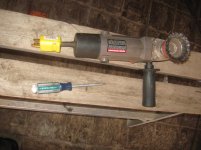
I made a grinder tree;

IMG_1418.jpg

IMG_1422.jpg

The cords got in the way and tangled. So I cut them down;

IMG_1437.jpg

It works, sorta. The connectors come undone too easily. Next time I will add long cords that are flexible to -40*.
 
Last edited:

James-W

Well-known member
Joined
Feb 3, 2013
Messages
12,432
Location
Southeastern Wisconsin
Welcome to the forum from S.E. Wisconsin.

If I have a power cord on a tool that needs to be replaced, I always get a longer one to replace it with, and most times I get a cord that is a bit heavier duty as well.
 
To avoid these ads, REGISTER NOW!

American Locomotive

Well-known member
Joined
Jan 8, 2017
Messages
10,957
Location
Rhode Island
I wish my tools had longer cords. 10 foot cords would be nice on everything. I just wrap the cords up around the tool when I'm done. So I don't see the big deal.

Most of the time when I'm using a power tool, I'm within 10 feet of an outlet. With an ultra-short cord I now have to waste more time dealing with a 25 foot extension cord just to remove a bur on a piece of metal sitting on my work bench - 2 feet from an outlet.
 
Last edited:

Whitworth

Well-known member
Joined
Dec 26, 2011
Messages
2,087
Thats VERY foolish. :shocking:

You do realize if you plug that in backwards and the tool has a fault to the housing, you could very well energize the housing and potentially insert yourself between hot and neutral/ground.

Theres a very good reason for polarized plugs.

This has got to be one of the dumbest things Ive read on here in a while.

Tools have been double insulated since the 1970's. At best a polarized plug is a redundancy. And not a very effective one. It has more to do with protecting from shocks with Edison sockets.
 

the gypsy

Well-known member
Joined
Mar 13, 2013
Messages
1,780
Location
Montreal, Quebec, Canada
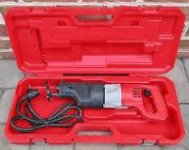
I personally like the plugs on the SUPER sawzall which plug into the tool. You can buy a plug with a much longer cord.
 

Attachments

  • super sawzall.jpg
    super sawzall.jpg
    8.1 KB · Views: 46

nsula_country

Well-known member
Joined
May 23, 2013
Messages
1,534
Location
Northwestern Louisiana
I wish all power tool cords came nice and long, ten or more feet. I also wish they'd come with a snag-proof tapered plug as found apparently only on drywall screw guns.

If a cord gets worn or damaged I always add a longer cord. If it's a two prong plug, I grind down the polarized neutral prong.

You are kidding, right? This is a joke, correct...

CT
 

nsula_country

Well-known member
Joined
May 23, 2013
Messages
1,534
Location
Northwestern Louisiana
Tools have been double insulated since the 1970's. At best a polarized plug is a redundancy. And not a very effective one. It has more to do with protecting from shocks with Edison sockets.

If this is your belief, fine.

But this is not good advice on a public forum that may mislead others. If someone did this to an appliance (ie freezer) it would cause an unsafe condition...

CT
 

wyliesdiesels

Well-known member
Joined
Aug 14, 2012
Messages
20,006
Location
Modesto, CA
Tools have been double insulated since the 1970's. At best a polarized plug is a redundancy. And not a very effective one. It has more to do with protecting from shocks with Edison sockets.

Not all tools. And many people still use non double insulated tools that are older.

The polarized plug is a safety feature. How is it not effective?

Why would you waste time grinding down a polarized plug?

Not only is it a waste of time (and money) but is pure stupidty.

I just cant understand the logic behind this.

Is it that youre too lazy to plug it in correctly?

If you want to do that to your tools thats your choice, but dont post that info on a forum where others who dont have much knowledge on the subject may think this is ok to do!
 

rlitman

Well-known member
Joined
Oct 18, 2010
Messages
24,597
Location
Long Island
...The polarized plug is a safety feature. How is it not effective?
...Is it that youre too lazy to plug it in correctly?...

That raises an interesting question. GFCI outlets are rated to be used without grounds, to allow the code-compliant use of tools with grounded plugs.

So, why do GFCI outlets have polarized positions? Why not make them with two wide slots?
 

Whitworth

Well-known member
Joined
Dec 26, 2011
Messages
2,087
Not all tools. And many people still use non double insulated tools that are older.

The polarized plug is a safety feature. How is it not effective?

Why would you waste time grinding down a polarized plug?

Not only is it a waste of time (and money) but is pure stupidty.

I just cant understand the logic behind this.

Is it that youre too lazy to plug it in correctly?

If you want to do that to your tools thats your choice, but dont post that info on a forum where others who dont have much knowledge on the subject may think this is ok to do!


Perhaps you should not post on a public forum as you may be providing misleading information, you seem to be confusing ground fault protection with polarized plugs. Different things. And the effectiveness of polarized circuits in certain appliances (most generic use of the term) for protection of users is almost nil. Modern hand held power tools are in that category. And, also, non-double insulated tools as well will not benefit from polarized plugs, rather giving the user a false sense of safety if proper maintenance and ground protection is lacking.

People will say neutral side is safe/safer (0 volts to ground) than hot, but fail to understand as soon as the device is switched on the “neutral” side of the appliance is now hot. The fact that your body is now in series with the load (motor, or light bulb, for instance) is irrelevant as you will become energized if grounded yourself, and it certainly won’t matter how the plug is inserted in the wall.

And, BTW, this assumes the household wiring is not reversed neutral-hot, a condition I’ve seen many times. Most home-owners wouldn’t know what or how to check for that.

Now, for certain appliances like lamps and toasters, as has been stated polarized circuit makes sense, but for the simple reason the metal, consumer contact parts are and should be on the neutral side of the switch. Example: the threaded brass part of an Edison socket, as opposed to the small contact down at the bottom. (BTW, have you ever got a shock screwing in a light bulb because your fingers were touching the metal base of the bulb?)

If an old power tool (1960’s or older) with metal case were to have a short to the case maybe in some instances a polarized plug would prevent shock if you were to touch the case. But even then, as soon as you pull the trigger the circuit would energize the case. And that’s assuming the short were to conveniently occur AFTER the switch, not before. (And assuming no ground fault protection, as I’m sure we’re in agreement such a tool should have.)
 
OP
G

Gy1

Member
Joined
Jul 16, 2017
Messages
6
Thanks for the replies. I'll probably stay with what they have. I guess where I was coming from is the simplicity of air tools and the quick coupler. Also I have a very small shop and the cords seem redundant and cluttered. I was thinking if I used a heavier ga main Xcode it would simplify. One of the comments that I thought was really on target is the "lump" to contend with. All and all, I'll take the good advices, move on and eventually replace with batteries.
 

American Locomotive

Well-known member
Joined
Jan 8, 2017
Messages
10,957
Location
Rhode Island
Perhaps you should not post on a public forum as you may be providing misleading information
You're the one spreading misinformation.
You seem to be confusing ground fault protection with polarized plugs. Different things. And the effectiveness of polarized circuits in certain appliances (most generic use of the term) for protection of users is almost nil.
Sorry, you're wrong. Polarized plugs provide protection for all kinds of appliances. Even something simple like a slot-toaster. If they didn't have polarized plugs, the elements would be live all the time, even when the toaster is off. That makes for a very unsafe condition when cleaning the toaster or reaching in grab a bagel that didn't quite make it all the way out.

Having an un-polarized plug on even something like a plastic-bodied hand-drill can create inherent risk. Especially on a higher-end tool that has replaceable brushes. A quick field-change of motor brushes could become lethal since the commutator would be hot, even with the tool powered off. A power drill's chuck could become live if the commutator/windings short out against the rotor.
People will say neutral side is safe/safer (0 volts to ground) than hot, but fail to understand as soon as the device is switched on the “neutral” side of the appliance is now hot. The fact that your body is now in series with the load (motor, or light bulb, for instance) is irrelevant as you will become energized if grounded yourself, and it certainly won’t matter how the plug is inserted in the wall.
This is 100% incorrect, and shows you have a very poor understanding of electrical circuits. The neutral is called the neutral because it is ALWAYS at 0v relative to ground. When you switch an appliance on, the neutral is still at 0v.
 

rlitman

Well-known member
Joined
Oct 18, 2010
Messages
24,597
Location
Long Island
...The neutral is called the neutral because it is ALWAYS at 0v relative to ground. When you switch an appliance on, the neutral is still at 0v.

Actually, once the neutral carries current, it will be at a non-zero voltage with respect to ground. How much voltage depends on the amount of current, and the resistance (length and gauge) of the neutral back to ground. Still, it should be pretty close to zero (usually within a volt or two).
 

American Locomotive

Well-known member
Joined
Jan 8, 2017
Messages
10,957
Location
Rhode Island
Actually, once the neutral carries current, it will be at a non-zero voltage with respect to ground. How much voltage depends on the amount of current, and the resistance (length and gauge) of the neutral back to ground. Still, it should be pretty close to zero (usually within a volt or two).
I'm aware, but within the context of this discussion, the voltage is effectively 0. It will generally be well under 1 volt on the neutral, unless you're pulling serious current through an undersized cord. Even then at you'd probably end up with 4-5 volts on the neutral.

Either way, it's still disingenuous to describe the neutral side as "hot" when the appliance is on.
 

rlitman

Well-known member
Joined
Oct 18, 2010
Messages
24,597
Location
Long Island
I'm aware, but within the context of this discussion, the voltage is effectively 0. It will generally be well under 1 volt on the neutral, unless you're pulling serious current through an undersized cord. Even then at you'd probably end up with 4-5 volts on the neutral.

Either way, it's still disingenuous to describe the neutral side as "hot" when the appliance is on.

That much is true, when everything is working as it should be.
But we're talking about safety, and that's a field where such assumptions cannot be made.

I have for example been shocked by a neutral which measured at 38 V, because of improper grounding in a panel.
 

mike93lx

ALLIANCE MEMBER
Joined
Dec 9, 2013
Messages
37,515
Location
Richmond, VA
Thanks for the replies. I'll probably stay with what they have. I guess where I was coming from is the simplicity of air tools and the quick coupler. Also I have a very small shop and the cords seem redundant and cluttered. I was thinking if I used a heavier ga main Xcode it would simplify. One of the comments that I thought was really on target is the "lump" to contend with. All and all, I'll take the good advices, move on and eventually replace with batteries.

The key difference is that air tools have a mechanism for a strong connection to the air hose. While locking plugs exist, they are bulky and expensive.
 

Whitworth

Well-known member
Joined
Dec 26, 2011
Messages
2,087
You're the one spreading misinformation.

Sorry, you're wrong. Polarized plugs provide protection for all kinds of appliances. Even something simple like a slot-toaster. If they didn't have polarized plugs, the elements would be live all the time, even when the toaster is off. That makes for a very unsafe condition when cleaning the toaster or reaching in grab a bagel that didn't quite make it all the way out.

Having an un-polarized plug on even something like a plastic-bodied hand-drill can create inherent risk. Especially on a higher-end tool that has replaceable brushes. A quick field-change of motor brushes could become lethal since the commutator would be hot, even with the tool powered off. A power drill's chuck could become live if the commutator/windings short out against the rotor.

This is 100% incorrect, and shows you have a very poor understanding of electrical circuits. The neutral is called the neutral because it is ALWAYS at 0v relative to ground. When you switch an appliance on, the neutral is still at 0v.

I didn’t say touching a properly wired neutral was dangerous, (under most conditions)

Rather, if there is a defect in the wiring of the appliance (short to case,) the polarized plug will not offer much protection in a modern, double-insulated device. And as mentioned, even assuming the receptacle wiring is correct, as a hot-neutral interchanged would result in a permanently energized toaster case. (BTW, most toasters have double pole switches now to avoid this.)

If, for instance, a wire on the return side of a switch is frayed and in contact with the metal body of a tool, then indeed there may be plenty of potential voltage present as the return path to ground is compromised and your body may be grounded sufficiently to carry current, (standing on a wet floor, for instance.) This is regardless of how the plug is inserted in the wall.

To assume and put forth as others have in this thread that putting a polarized plug on an old tool affords some significant protection against shock is misleading at best. It doesn’t substitute for ground fault protection.

And for changing brushes… I’m surprised you would advocate, even hypothetically, doing such while the tool is plugged in. Unplug before making any adjustments. Again, the receptacle may be reversed hot-neutral.
 
OP
G

Gy1

Member
Joined
Jul 16, 2017
Messages
6
I think I started a war.
Maybe they read my subject line as "Shorting" Electrical cord...
I should have added "Shortening the Length..."
Oh well, very interesting additional thoughts.
 

prostreetamx

Well-known member
Joined
Dec 19, 2016
Messages
222
Location
Las Vegas
Those yellow plastic cord caps ****. We replace cord caps all the time where I work and we normally buy the better grade black and white caps that have an adjustable strain relief that better matches the cord. When I have a power tool cord go bad I normally replace it with a new cord that has a factory molded cap. Those replacement caps are just too bulky for me. I can see where a short cord might be better for job sights where you put your tools away after use but for workbench work I want a long cord so I can move around without the cap hitting stuff.
 
To avoid these ads, REGISTER NOW!
Top Bottom