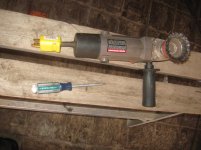
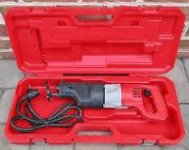
Not all tools. And many people still use non double insulated tools that are older.
The polarized plug is a safety feature. How is it not effective?
Why would you waste time grinding down a polarized plug?
Not only is it a waste of time (and money) but is pure stupidty.
I just cant understand the logic behind this.
Is it that youre too lazy to plug it in correctly?
If you want to do that to your tools thats your choice, but dont post that info on a forum where others who dont have much knowledge on the subject may think this is ok to do!
Perhaps you should not post on a public forum as you may be providing misleading information, you seem to be confusing ground fault protection with polarized plugs. Different things. And the effectiveness of polarized circuits in certain appliances (most generic use of the term) for protection of users is almost nil. Modern hand held power tools are in that category. And, also, non-double insulated tools as well will not benefit from polarized plugs, rather giving the user a false sense of safety if proper maintenance and ground protection is lacking.
People will say neutral side is safe/safer (0 volts to ground) than hot, but fail to understand as soon as the device is switched on the “neutral” side of the appliance is now hot. The fact that your body is now in series with the load (motor, or light bulb, for instance) is irrelevant as you will become energized if grounded yourself, and it certainly won’t matter how the plug is inserted in the wall.
And, BTW, this assumes the household wiring is not reversed neutral-hot, a condition I’ve seen many times. Most home-owners wouldn’t know what or how to check for that.
Now, for certain appliances like lamps and toasters, as has been stated polarized circuit makes sense, but for the simple reason the metal, consumer contact parts are and should be on the neutral side of the switch. Example: the threaded brass part of an Edison socket, as opposed to the small contact down at the bottom. (BTW, have you ever got a shock screwing in a light bulb because your fingers were touching the metal base of the bulb?)
If an old power tool (1960’s or older) with metal case were to have a short to the case maybe in some instances a polarized plug would prevent shock if you were to touch the case. But even then, as soon as you pull the trigger the circuit would energize the case. And that’s assuming the short were to conveniently occur AFTER the switch, not before. (And assuming no ground fault protection, as I’m sure we’re in agreement such a tool should have.)