To avoid these ads, REGISTER NOW!

Best tool option to sand down floors

branimal

Well-known member
Joined
May 31, 2016
Messages
1,938
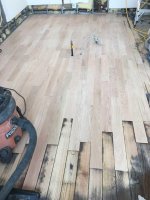
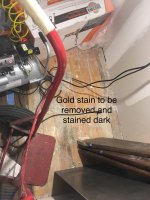
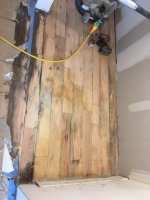
I need to sand down about 130 sq feet of hardwood flooring before I stain and apply a water based poly. The majority of flooring is new unfinished 3/4” red oak. The remainder is stained and has a poly layer on it.

Here are some options:
1. The rental shop at home depot recommended a floor maintainer and an edger with the appropriate pads.
2. Pro-tool rental shop recommended a drum sander and an edger.
3. Use a 3”x18” belts sander but that would take a lot of time.


Containing the dust is a concern for me.

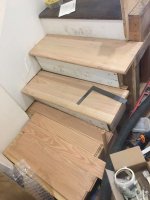
I’ve snapped some pics of the areas that need sanding.

What do you guys recommend?

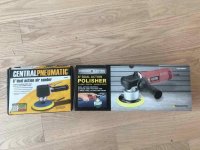
Also, the water based polyurethane says that sanding b/w coats is an option but not mandatory. So I picked an air dual action sander and a electric dual action polisher from harbor freight just in case i needed them for the job. The dual action creates a random orbital pattern for a “Swirl free finish”. In your experience do i need to sand b/w coats of water based poly?

IMG_1171.jpg
IMG_1172.jpgIMG_1173.jpg

IMG_1170.jpg


Sent from my iPhone using Tapatalk
 
To avoid these ads, REGISTER NOW!

Bruce 993 SEA

Well-known member
Joined
Oct 22, 2016
Messages
1,033
Location
La Conner, WA
I have used the 3 pad random orbital from Home Depot rentals with pretty good success...but this in on my rental homes.

For this small area it should work and not take too long. The big drum sander can take off a lot of material fast and gets new wood really flat. Not for the inexperienced though. You can make an repairable divot real fast.

If this is a showcase house it might be better to find a floor guy who does this every day...if you can find one. One of the guys that I have used up here is out 6 months for his next opening.

We had another guy we found refinish the floors in a rental that we rehabbed for sale and they came out glorious. Areas that were refinished previously and some newer wood all blended in really well. They used a big 220V drum sander. The finish work and stain were perfect too. It just took some dead presidents.

Also, Dust will go everywhere no matter the vacuum system on the sander. You should use a Zip Wall or these:

https://www.harborfreight.com/2-in-1-support-cargo-bar-66172.html

Cheers!
 

Bretny

Well-known member
Joined
Jul 31, 2017
Messages
3,918
Location
Dutchess county NY
I have done what your looking to do on the same unfinished red oak.
Do not use a belt or a drum sander. You just dont need to take off that much wood. You can do major damage if you dont know how to use these tools.

Use the 3/4 head orbital sander that HD has. It will take time and more sandings discs than you think but you will be left with a very nice floor.

I did about 400sqft and it took about 4hrs not doing the edges. I started prety agressive 60g and ended with about 320. Then used a tongue oil stain. Its been 5yrs and have 2 4yr old bloxers. They scratch the floor but you cant see due to the stain soaking through the wood, not just the surface.
 

Eric29

Well-known member
Joined
Apr 18, 2008
Messages
499
Location
Western NY
Drum sander. It takes forever with the 3 pad orbital sander. Plus, you get a better job with a drum sander.

The drum sander will give you a problem only if you keep it in one place and don't move it while it's sanding. Why would anyone do that? I'm far from a professional and I've never had a problem with a drum sander, even when using it for the first time.

For the edges, I bought a 5" orbital sander and hooked it up to my shop vac. That way, you can finish with the rental and take it back and spend some time on the edges. they take the longest.
 

engineer2

Well-known member
Joined
Dec 13, 2009
Messages
11,801
Location
Chicago burbs
The one picture shows a nice little stair landing. If there is empty space under it, it makes a nice place to store shoes. Just make a lift-up lid with Soss hidden hinges and line the inside with some oak. I did something like this in my house, and everybody loves it.

If you do the sanding yourself, a difficulty you can run into is fine sanding dust in the pores of the wood. The poly can pull it out and it can cause a grainy finish. You need to clean the sanded floors thoroughly. I've used a vacuum with a brush and then wipe down with mineral spirits, but that was a small area. You can also use an air hose, but that will make more dust. I don't know how the pros do it, but maybe someone here can chime in.
 

rlitman

Well-known member
Joined
Oct 18, 2010
Messages
24,599
Location
Long Island
Drum sander. It takes forever with the 3 pad orbital sander. Plus, you get a better job with a drum sander...

I own a 4-pad USand like the HD rental machines. Dust collection is excellent, and the finish is FAR better than you get from a drum sander. I can ALWAYS spot drum sanded floors in the pattern that they dig into the surface. No matter much much you move the drum around, it always has to start and stop a certain distance from the wall, so there will always be a visible ramp at each end.

The USand will give a superb finish, so long as you don't skip steps between grits (or else you will end up with swirl tracks), and spend sufficient time on each grit to sand out the previous grit's marks. Most people who run drum sanders take big skips between grits, because they mistakenly believe that the tracks left by their grit go unnoticed, since they are in the direction of the grain. It is true that the random orbital's tracks often cross the grain, which can create a more visible swirl, but tracks left in the direction of the grain lead to a surface roughness that just doesn't look right either.

As for taking forever, the slowest stage with these RO sanders is removing the existing poly. Don't make the mistake of starting on too fine a grit. Be sure you start with 24 grit open coat pads to get through the bulk of the poly, or you will indeed be at it forever. A little extra weight on my 4-pad machine helps in this step too. And since most of your flooring is raw wood, you won't have to worry too much about this part. The RO does get bogged in the poly, but cuts wood just as fast as you could want.

Yes, if you're a flooring contractor paying your help on the clock, you'll make much more profit by handing your worker drum sanders. But I'm not.
 

rlitman

Well-known member
Joined
Oct 18, 2010
Messages
24,599
Location
Long Island
...If you do the sanding yourself, a difficulty you can run into is fine sanding dust in the pores of the wood. The poly can pull it out and it can cause a grainy finish. You need to clean the sanded floors thoroughly. I've used a vacuum with a brush and then wipe down with mineral spirits, but that was a small area. You can also use an air hose, but that will make more dust. I don't know how the pros do it, but maybe someone here can chime in.

Well, my USand vacuums quite a bit. Between each grit, I'll still quickly go over the floor with a brush head on the vacuum, just to pick up what's missed. The biggest issue between sanding grits is the actual grit particles being left behind, as these can get ground in by the next pad, leaving tracks.

Before the first coat, after the brush vacuuming, I'll go outside, and blow off my work clothing with compressed air and put a hat on (hairs were one of my most annoying contaminants), and then return to wipe the surface with a tack cloth.

You can make your own tack cloth with a VERY thinned out varnish or oil finish applied sparingly to a cheese cloth (so sparingly that it leaves the cloth tacky, without allowing any of the finish to transfer to the wood). Put this cloth in a plastic bag, and give it at least a day for the treatment to soak in and even out!

One other source of contamination was in errant fibers from the application mop head. I've had good luck by first blowing on the dry patch with compressed air (this removes a lot), and then washing the head in the proper solvent for the finish (either water, or mineral spirits).
 
Last edited:

yeldogt

Well-known member
Joined
Jan 2, 2012
Messages
18,184
The professional refinishers use the 240v drum sanders -- in the correct hands that are quick and provide a very flat surface. In the wrong hands they can destroy a floor. Any stopping or mis-movement will leave a mark. If you go that route (drum)-- waste a medium/ fine grit paper and practice. It's actually better iMO for newbies to stay away from the very corse grit papers .. takes a bit longer but less potential damage. Watch a few videos.

The other sanders will work they just take longer -- especially the big pad.

Pros use a rotary floor buffer with synthetic steel wool pad under it between coats. I have had good luck using drywall sander and synthetic steel wool.
 

ssdave

Banned
Joined
Apr 11, 2015
Messages
2,913
Location
Eastern Oregon
I'd personally use the big pad sanders; if you don't do this a lot, it's easy to screw up a floor with any of the other, more agressive ones. Don't use a belt sander, they contour to the wood grain hardness and make it really hard to finish the floor flat.

For the small amount of floor you have to do, the pad sander will do a great job, and won't take too much time. A day to go through all the grits will do it. Use a hand held half sheet pad sander or even a 1/4 sheet one to do the edges if you need to.

The learning curve for drum or orbital sanders is too great for a job of this size. Learn on a few other peoples houses before you do your own with one of them.
 

kbs2244

Well-known member
Joined
Nov 11, 2006
Messages
14,065
I would call in a pro
They not only have the tools but the experience to use them.
 

The Cobbler

Super Moderator
Staff member
Joined
Oct 24, 2013
Messages
25,892
Location
Niagara Region, Ontario, Canada
Drum sander with 40 or 60 grit to get the stain/urethane down/ then 100 to go over it .
drum sander can quickly cause major damage, keep it moving at all times the drum is in contact with the floor. only go with the grain.
use a pad sander as final sand .
it aint rocket science, but it requires a bit of practice and lots of muscle.
 

6768rogues

Banned
Joined
Nov 28, 2007
Messages
4,524
Location
Western NY
About 35 years ago I borrowed a commercial type floor sander and an edger. I sanded our 100 year old oak floors and finished them. It took a long time and I hated doing it. A couple of years ago we hired a guy to do it again and he did it in a few hours, came back and screened it and put on a second coat, and it was done. Much better than when I did it. Not again for me.
 

pcmeiners

Well-known member
Joined
Aug 13, 2009
Messages
7,903
Location
In the only town in Pennsylvania, Bloomsburg.
"2. Pro-tool rental shop recommended a drum sander and an edger. "
2 kinds, the older type, non leveling, is dangerous, only suited for pros as they can dig holes easily. New type is self leveling, fairly safe. Edgers can dig deep if not self leveling .

3. Use a 3”x18” belts sander but that would take a lot of time.
No way unless you like seeing waves throughout the floor. No way to do it properly with a belt sander.
 
OP
B

branimal

Well-known member
Joined
May 31, 2016
Messages
1,938
Some great advice.
I think I’m going to stay away from the drum sander.

I’m going to use a multi head pad sander a lot of you have recommended. What is the sanding pad grit progression you recommend? I’ve read 30-40, 50-60, 80-100.

Just to verify this is the sander you guys are recommending? Pics below.
https://www.homedepot.com/tool-truck-rental/Random-Orbit-Floor-Sander/07163A/index.html

What tool do you guys recommend I use to sand b/w water based poly coats? The poly instructions don’t REQUIRE sanding but I’ve read its recommended.

Should I bother with renting an edger or should I just buy a 5” random orbital sander with dust collection? I have a finishing sander I can use in the corners.

Thanks!

IMG_1180.jpg
IMG_1181.jpg


Sent from my iPhone using Tapatalk
 
Last edited:

rlitman

Well-known member
Joined
Oct 18, 2010
Messages
24,599
Location
Long Island
If you're removing existing urethane, I suggest starting with 24 grit open coat (this has the grit more spaced out). Then continue with 36 grit until no more urethane remains. 36 will also level the edges between new wood.

IIRC I also have 40. It may seem like not much of a step, but it goes far to remove the marks from the previous two grits. From there, 60,80, and maybe 100.

After that, I used to go 120, then 150 or 180 (a coarser finish will accept more stain), but on a harder floor (maple or hickory, or white oak for example), you might want to continue up another grit.

But in the last few rooms I've done, I've stopped at 100, and then switched from standard sanding pads to Norton Sand Dollar pads:
https://www.nortonabrasives.com/sit...ument/Flyer-Pads-SandDollar-8507.pdf?t=855389

These foam backed pads seem to work better at getting you a better finish in less steps.

So, after sanding, there's the cleaning. Religiously!

If you're using an oil based stain, then give it adequate time to dry (LONGER than what it says), and burnish it with the finest sandpaper and then clean again before your finish (or better yet, hand rub it with a cotton cloth, but it requires VIGOROUS rubbing).

If you're skipping the stain step, then a dewaxed shellac sealer gives a warm tone that does not require sanding after.

As for intercoat sanding:

With oil based poly, absolutely yes (I only mention this, because all sorts of people may end up reading this thread down the road). BUT, it is VERY important that you give the poly adequate drying time before sanding. With just 1 day to dry between coats, the sanding dust will contain some still curing finish, so as with oily rags, the sanding dust can spontaneously combust!

With your water based poly, the last stuff I used suggested a greatly accelerated schedule that worked quite well for me. With a sealed and dry surface (shellac dries in a half hour), you apply the first coat of water based poly. Being water based, this dries quickly, and you can then go over this with a second coat within IIRC 2 hours. When re-coating, there is no sanding between these two coats. You follow this up no sooner than 24 hours later with an intercoat sanding, and then 1 or 2 more coats (depending on how much buildup you desire).
 

Milton Shaw

Well-known member
Joined
Feb 11, 2011
Messages
4,837
You might also look at a Porter Cable Restorer its a portable hand held drum sander. It might be ideal for edges and a little more of the floor. I have been impressed with mine.
 

Bruce 993 SEA

Well-known member
Joined
Oct 22, 2016
Messages
1,033
Location
La Conner, WA
If you go with the Home Depot 3 pad random orbital rental, take their advice (and mine too) and buy way more pads than you think you need...and more by 2 or 3 times what you would think.

I have used this RO sander with my shop vac with bag to keep dust down:

https://www.homedepot.com/p/RIDGID-...der-with-AIRGUARD-Technology-R26011/100053683

The Ridgid orange replacement hose for the vac fits tight on the sander. Works better than expected with pads with the holes in them.
 

LifeLongWNYer

Well-known member
Joined
Oct 23, 2013
Messages
1,231
Location
South of Rochester, NY
This winter, I put in a new floor in an enclosed part of a terrace. I wanted a "semi-rough" finish to coordinate with the concrete on the surrounding terrace. I laid a 2x2 subfloor with foam insulation and covered it with plywood. The look of floorboards was obtained by grooving the plywood with a router, then going over it with a handheld random orbital sander. Two coats of Minwax stain and 3 of polyurethane were the finishes. ( You might remember my thread here when the poly was very slow drying )

Obviously, if you want a mirror-like finish, this isn't for you, but I wanted a "rough and tumble" look, and am very happy. The room is 12'x14' and each sanding took about 75-90 minutes and went well. I was tempted to rent a larger sander, but the day i went to get it, they were all gone. I when home, got the hand-held and went to town. It wasn't bad.

In real like, it isn't as orange as it looks, the camera changed the hue.

Oh-oh, just remembered that I can't post photos.
 
Last edited:

Handyfarmer

Well-known member
Joined
Dec 20, 2014
Messages
316
Location
in the high plains of Colorado
you said 130 sq feet, that is about the same as 4 sheets of plywood,

one could buy or use a palm random orbit hand sander, I have used hand random orbit on some small projects, a large rental or commercial drum sander on a small place is very to use in a small area, ( I would consider my self an advanced DIY), I have my own drum sander and edger,

If I was to rent I would consider the orbital or pad sander in your situation, but would consider the palm sander,

In the good old days they hand scraped the floors, similar to a paint scraper, to scrape off the high spots,
 

rlitman

Well-known member
Joined
Oct 18, 2010
Messages
24,599
Location
Long Island
you said 130 sq feet, that is about the same as 4 sheets of plywood,

one could buy or use a palm random orbit hand sander, I have used hand random orbit on some small projects, a large rental or commercial drum sander on a small place is very to use in a small area, ( I would consider my self an advanced DIY), I have my own drum sander and edger,

If I was to rent I would consider the orbital or pad sander in your situation, but would consider the palm sander,

In the good old days they hand scraped the floors, similar to a paint scraper, to scrape off the high spots,

You'll be sanding 130 sq feet for weeks with a palm sander.

A hand scraper is still useful. I've found that it often beats an edger, and will get you all the way into corners and around pipes and other obstructions under radiators for example. It does leave a rougher surface than good sanding though.

Oh, as for those obstructions, here's something I came up with to apply the urethane under spaces where the mop will not fit. Buy yourself a paint pad refill sheet (it's the fuzzy vellux like sheet that goes onto a paint pad holder). Cut it into around 3"x3" squares. Now take a stick of wood, and cut the end at 45 degrees. Finally, staple the cut pad square onto the wood to give it an angled handle. Now you have a disposable finishing pad that will fit into a mouse hole.
 
Last edited:
To avoid these ads, REGISTER NOW!

jetnow1

Well-known member
Joined
Jun 27, 2016
Messages
511
Location
CT.
My local Home Despot says they cannot give you the bag to catch the dust as someone managed to put one on fire. My local rental place provided the same machine with the bag.
 

Bretny

Well-known member
Joined
Jul 31, 2017
Messages
3,918
Location
Dutchess county NY
My home depot said the same thing about the dust bag. Guy dumped it into a fire and it all lit up on him...yet he said no one ever hurt them self with the rental chainsaw.
 
OP
B

branimal

Well-known member
Joined
May 31, 2016
Messages
1,938
Got the 3 pad sander from HD last night. They only had 36/60/100 grit. Got lots of those pads. All unused pads can be returned.

Also bought the ridgid RO sander.

I’ll hook it up to my shop vac. Hopefully I won’t need to setup my zipwall. But something tells me that’s the smart thing to do.

Thanks for all the advise. I’ll post pics along the way.


Sent from my iPhone using Tapatalk
 

77Birdman

Well-known member
Joined
Nov 6, 2017
Messages
235
Location
North Eastern MD
Sounds like you have the sander figured out, good luck. As far as the finish, if you prep right and control dust, you should not have to sand between coats with the water base finish. I like to vacuum well when finished sanding (hooking a hose up to the blower side, venting outside through a window). If possible we will let the room sit overnight to let the dust settle. Vacuum again next morning. First coat dries quick, can recoat again in the afternoon. Then coat again the next morning, and if possible again the next afternoon. The water base is good but I like to get at least 4 coats on it. You can use a pad made specifically for water based or a brush. We do both with great results.
2018-03-09_05-01-35 by Kerry Grubb, on Flickr
Heres one we finished this past winter with water base. No sanding in between, smooth as a.....well you know what!
 

rlitman

Well-known member
Joined
Oct 18, 2010
Messages
24,599
Location
Long Island
Got the 3 pad sander from HD last night. They only had 36/60/100 grit. Got lots of those pads. All unused pads can be returned.

Also bought the ridgid RO sander.

I’ll hook it up to my shop vac. Hopefully I won’t need to setup my zipwall. But something tells me that’s the smart thing to do.

Thanks for all the advise. I’ll post pics along the way.

The bag on mine collects dust very well. Your shop vac should do at least as well. Anyway, the dust from old and cured urethane and just wood will not auto-ignite. It's the oil based stuff that's been down for less than a week that you need to worry about.

36/60/100. You can work with that, but if you can find the Sand Dollar pads for the finishing passes, you'll get better results. Anyway, switch pads when they get clogged or stop cutting well, and spend more time on each grit than you think you really need.

I haven't given you any pointers on applying the urethane. You'll want to mop it on with the grain, maintaining a wet edge. Try not to have any starts and stops visible across the grain, or stop and lift at the same time.

To achieve that, I'll do this:

Start at the end of some planks, at the wall. Following the grain, mop away from the wall at least 2', and then lift the mop. Then walk out the planks to the opposite wall. Starting at that wall, mop towards the wet edge you left 2' from the wall. Once you cross it, keep the mop moving towards the wall, but slowly lift it. If you stop the mop and pick it up, you'll see that. You want to kind of lift the mop in a brushing motion.
 
OP
B

branimal

Well-known member
Joined
May 31, 2016
Messages
1,938
Finished sanding - 36/60/80/100. (Didn’t realize they threw in an 80).

Used a shop vac with a no hub pipe coupling to contain the dust. Dust really wasn’t an issue.

Most of of the ridges are gone.

I’m not sure how I’m going to blend the dark and new wood so as to not have a shadow effect.

IMG_1211.jpgIMG_1212.jpgIMG_1213.jpgIMG_1207.jpg


Sent from my iPhone using Tapatalk
 
OP
B

branimal

Well-known member
Joined
May 31, 2016
Messages
1,938
Im getting ready to apply the stain tomorrow afternoon. The directions call for an 8-hour wait until a poly layer is applied. I’ll be opening the windows to get the odors out. I’m worried about the dust in the surrounding work areas getting blown around with the incoming breeze and contaminating the poly layer. There is simply too much “stuff" around to clean up and remove all the dust. Should I setup a zip wall around the new floor or is that not necessary?

Rlitman - great call on how to apply the poly layer. And that machine really picked up the dust. I wore a dark colored T-shirt to see how bad the dust was. Almost none on me.

77Birdman - good call on the blower hose out the window. I use a fine particle filter and dust bag in my shop vac, but why not send it the excess outside! Nice finish on those floors. What gloss level was it? Satin?


Thanks to everyone for all the great advice.


Sent from my iPhone using Tapatalk

 
OP
B

branimal

Well-known member
Joined
May 31, 2016
Messages
1,938
The Cobbler; said:
probably could have stained the new floor similar to the existing, then sand it all

hindsight !


What grit paper would you use for that job?

Thx


Sent from my iPhone using Tapatalk
 

Roberts210

Well-known member
Joined
Dec 21, 2015
Messages
3,177
Location
Missouri
Years ago I sanded down all the floors in my 1-bdr apartment using my old Porter Cable locomotive sander. Spent a couple of days on my knees but it came out looking great.
 

acer66

Well-known member
Joined
Dec 4, 2010
Messages
4,418
Location
Western North Carolina
Also, Dust will go everywhere no matter the vacuum system on the sander. You should use a Zip Wall or these:

Cheers!

I thought the same but I had just a house redone and they only had a small vacuum and created no dust besides on the floor itself.

They used a 240V drum sander which was turning pretty slow.
 

rlitman

Well-known member
Joined
Oct 18, 2010
Messages
24,599
Location
Long Island
I thought the same but I had just a house redone and they only had a small vacuum and created no dust besides on the floor itself.

They used a 240V drum sander which was turning pretty slow.

Dust collection has improved a lot over the years.
 
OP
B

branimal

Well-known member
Joined
May 31, 2016
Messages
1,938
Got the stain down this morning. Dry time is 8 hours. Can I put a fan on the floor to accelerate that dry time?

Polyurethane —> I should be able to get 2 water poly layers on tonight. The goal is to get on 4. Does the finish come out better if I get the four poly layers in one shot - within 8 hours. Or is waiting 12 hours b/w coats 2 & 3 just as good? The directions specify to sand if you wait longer than 24 hours b/w coats. I don’t want to sand.

Once the last coat of poly has been laid, the directions say wait 24 hours before light use. 72 hours before normal use. Can I accelerate that 72 hour number with the use of fans?

Thanks

IMG_1241.jpg


Sent from my iPhone using Tapatalk
 

rlitman

Well-known member
Joined
Oct 18, 2010
Messages
24,599
Location
Long Island
Is that an oil based stain (Minwax perhaps)? If so, 8 hours is not nearly enough.

For the poly, I would not suggest you do 4 coats of water based without sanding. It's too much buildup with too little time, and you'll get orange peeling as the top shrinks at a different rate from the bottom. 2 coats without sanding in between is as far as I'd push it. Then give it a day, and 2 more coats after a LIGHT sanding. The inter-coat sanding is basically just one pass. It should only take a few minutes.

Fans won't speed it up that much. Heat will do far more to accelerate the curing.
Still, the surface will be soft for the first few weeks. Maybe even a month, so do be extra careful when you decide to move furniture back in.
 
OP
B

branimal

Well-known member
Joined
May 31, 2016
Messages
1,938
rlitman; said:
Is that an oil based stain (Minwax perhaps)? If so, 8 hours is not nearly enough.

For the poly, I would not suggest you do 4 coats of water based without sanding. It's too much buildup with too little time, and you'll get orange peeling as the top shrinks at a different rate from the bottom. 2 coats without sanding in between is as far as I'd push it. Then give it a day, and 2 more coats after a LIGHT sanding. The inter-coat sanding is basically just one pass. It should only take a few minutes.

Fans won't speed it up that much. Heat will do far more to accelerate the curing.
Still, the surface will be soft for the first few weeks. Maybe even a month, so do be extra careful when you decide to move furniture back in.


It is a Minwax oil based stain. How long would you wait before applying poly?

What grit do you use when sanding poly? I’ll use my newly acquired Ridgid 5” RO sander.

How much will a heater decrease dry time by? A friend is going to lend me this heater.

The space is a kitchen and the cabinets are arriving Monday morning. That’s why I’m in a rush to get the poly dry. I can wait till Tuesday or so to start the install.

Should I cover the non cabinet areas of the flooring with red rosin paper to prevent scratches?

Thanks

IMG_1246.jpg


Sent from my iPhone using Tapatalk
 
Last edited:

rlitman

Well-known member
Joined
Oct 18, 2010
Messages
24,599
Location
Long Island
Well, here's a comment I found from Minwax:

SUBJECT: Minwax Water Based Polyurethane Over Minwax Wood Finish Stains

You may apply the Minwax Water Based Polyurethane over a fully cured Minwax Wood Finish Stain (oil-based). Please use the following guidelines:

To ensure the color fastness of Minwax Wood Finish prior to applying Minwax Water-Based Polyurethane:
1.) Allow final coat of stain to dry 8-24 hours (Dry time is affected by your ventilation, temperature, and relative humidity).
2.) Wipe down the stained surface using a soft, lint-free cloth dampened with 100% pure mineral spirits. If the stain is cured and inactive, the mineral spirits will not affect the color. You should not have any color pick-up onto the cloth. The mineral spirits will remove any active/excess stain from surface and help the stain to cure out.
3.) Allow the mineral spirits to evaporate/flash off the surface.

Once the stain color is set and cured (passed the color-fast test), apply 3 coats of the Minwax Water Based Polyurethane per label directions.

Sincerely,
Consumer Affairs


Now, here's my take. Minwax oil based stain is a product that should be rubbed off. Like any linseed oil finish, applied sparingly, it dries well, but applied too thickly, and it takes forever to dry and turns gummy. Ideally, you want to wipe off as much as possible during the application.

Around 8 hours after applying the stain, buff it vigorously with a cotton cloth (be careful about how you hold it, so as not to get splinters). You'll get a little stain transfer to the cloth at just 8 hours (unless you were baking it), but this will remove any excess that will stay gummy and waxy for a LONG time if you don't rub it off. Then let it dry some more. Following up by wiping with mineral spirits on a rag at 20+ hours is a good idea. This should be dry within say 30 minutes.

I'd give it the full 24 hours before trying to coat in urethane, so two coats tomorrow morning, and 1 or 2 more coats on Sunday morning (220 grit just to degloss first), and socks for walking on it until Wednesday.

Heater? Just turn up the thermostat.

As for paper, it is a good idea to protect the surface, but it may stick if you leave it overnight within that 72 hour window (and perhaps even after that). Still, you'll want scratch protection if you'll be working in there, and paper would let you put down a ladder or a tool. Just remove the paper every night for a few days.

I wouldn't use a canvas dropcloth directly on the floor, because a textile can leave an impression in the soft surface where you press on it with something hard (say where a cabinet was placed down on it, or a ladder). But as protection on top of the paper as insurance, it's also a good idea for a few days.
 

MoonRise

Well-known member
Joined
Nov 5, 2010
Messages
4,028
Location
NJ
As for intercoat sanding:

With oil based poly, absolutely yes (I only mention this, because all sorts of people may end up reading this thread down the road). BUT, it is VERY important that you give the poly adequate drying time before sanding. With just 1 day to dry between coats, the sanding dust will contain some still curing finish, so as with oily rags, the sanding dust can spontaneously combust!

BTDT.

Except it was when I used a decent RO Dewalt sander with its built-in dust collection canister.

Oil-based floor polyurethane, about 24 hours drying time, so the poly was dry (but it turns out not fully "cured"), scuff sanded the floor with the Dewalt.

Then I smelled something burning.

It was the fine poly dust. In the sander's dust-collection canister. That was smoldering faster and was like a glowing coal as it was being fed a nice stream of forced air (and more poly dust) into the canister from the sander's dust-collection fan and 'duct'.

Yeah, that was an eye-opener to me.


With your water based poly, the last stuff I used suggested a greatly accelerated schedule that worked quite well for me. With a sealed and dry surface (shellac dries in a half hour), you apply the first coat of water based poly. Being water based, this dries quickly, and you can then go over this with a second coat within IIRC 2 hours. When re-coating, there is no sanding between these two coats. You follow this up no sooner than 24 hours later with an intercoat sanding, and then 1 or 2 more coats (depending on how much buildup you desire).

If you apply a water-based finish to bare wood, you WILL raise the wood fibers. (unless you go and dampen the wood to purposely raise the grain and then sand that raised grain down and repeat until your OCD can detect no more raised grain at all. Oh, sand just enough to sand off the raised grain and not down into the wood itself, else you have exposed new wood fibers that will raise up when THEY get wet/damp.)

Unless you go with the aforementioned shellac (alcohol-based solvent in that in case you didn't realize it) as a 'sanding sealer'. Still need to lightly scuff sand the shellac so that there is a mechanical 'tooth' for the poly to mechanically bond to (on base wood, the first coat of poly will bond to/into the wood pores and fibers and grain and subsequent coats will chemically bond if you apply them within the stated 'recoat' times on the instructions. If you go past the stated recoat times, then you have to scuff sand the poly to get the mechanical 'tooth' for the coats to connect to one another.
 
OP
B

branimal

Well-known member
Joined
May 31, 2016
Messages
1,938
It turns out I did not clean off enough of the stain with a rag while i was wiping it. I went to check the floor today (24 hours ) and it was still tacky. I wiped off the floor with paint thinner (Minwax specifically said DO NOT USE ODORLESS Mineral Spirits, I couldn’t find Odorless MS).

The color is way lighter than the rest of the floor. I tried applying another layer of Minwax Jacobean (the color on the rest of the floors) and waited anywhere from 10/20/30 minutes in the hope the color will darken. No luck. I tried the next darker color up, Ebony, and waited 25 minutes. It got a little darker.

Has the oil stain formed a skin on the oak floors, preventing a substantial change in the color or do I need to just keep apply stain every 4 hours until I get a match with the older wood color?

Thanks


IMG_1250.jpg
IMG_1251.jpg


Sent from my iPhone using Tapatalk
 
Last edited:

rlitman

Well-known member
Joined
Oct 18, 2010
Messages
24,599
Location
Long Island
Minwax is a pigment based stain. It will not form an impervious "skin", but each successive coat will soak in less than the previous (it seals the surface a little), and it is the pigment that soaks in that creates the color effect. This is why it doesn't darken as it dries.

Jacobean is pretty dark. Ebony is quite a bit darker. If ebony didn't darken you too much, then keep working with it. IIRC they're basically of the same palette.

Since ebony didn't help enough, you could try sanding a little more. A more coarsely sanded finish will accept more stain. What grit did you finish with? The 100 I saw above is already quite coarse.

My fear is that red oak has little tubes (exposed in those dark areas), that soak up stain much better than the rest of the wood. So you may have trouble getting the rest to take up much more stain without some sanding. And if that is the case, you will continue to build contrast between the dark and light areas, rather than darken it all together. That may look nice in many instances, but will hurt your matchup.

Just keep in mind that as you go thicker on the stain, it will take more time to dry. I hate to say it, but I'd suggest pushing your timeline a couple of days.
 
Last edited:

MoonRise

Well-known member
Joined
Nov 5, 2010
Messages
4,028
Location
NJ
{Critical critique mode ON}

Matching an old existing stain/finish on old wood with some new wood and trying to stain it to match is sometimes rather difficult. As in really-really-really hard to do.

Ebony Minwax stain wasn't dark enough? IIRC, I've used that before on oak and it came out the desired BLACK color. Or maybe it was actual black stain, it was maybe 10 years ago after all. :D

And if your stain was still tacky after 24 hours, then something really isn't right. Environmental conditions (heat and humidity), application method, something else.

https://www.minwax.com/how-to-finish-wood/staining-wood/

https://www.minwax.com/wood-products/stains-color-guide/#woodfinish

Exactly WHAT Minwax stain product did you use?

Sometimes, to really match the stain, you are better off sanding off the old finish (stain and top coat) down to bare wood and then just redoing the entire stain and finish to better blend in the new wood and the old wood. Even then, sometimes you will have some visible shade differences just because the new wood and the old wood are not 'exactly' the same (in base 'color' and in how they accept stain).
 
To avoid these ads, REGISTER NOW!
Top Bottom