To avoid these ads, REGISTER NOW!

How would you insulate this garage?

DOHC427

Well-known member
Joined
Nov 29, 2017
Messages
66
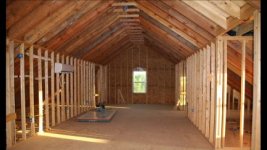
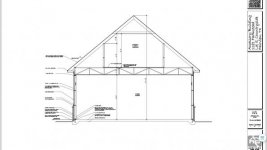
How should we insulate this room above our new garage?

This garage design has an upstairs area
that allows for some storage spaces on the sides
of the walls.
It will have four dormers. The idea right now is to
use it as a storage and then someday sheetrock the room
for an office or recreation room.

The photo below of the completed garage is not mine
but is very similar. The roof of our project will be decked next week.
We have Tech Shield radiant barrier decking but I learned you can’t use spray foam if you use the radiant barrier decking.


I would like the storage area to be tolerable temperatures until it is built out.

Please share your insulation ideas and suggestions.

attachment.php


attachment.php
 

Attachments

  • E3B6934F-9162-4CB3-9CE7-F6C818FE7F83.jpg
    E3B6934F-9162-4CB3-9CE7-F6C818FE7F83.jpg
    21 KB · Views: 707
  • 6CA1EC6A-F5BE-4C4A-96D5-F1C04569B213.jpg
    6CA1EC6A-F5BE-4C4A-96D5-F1C04569B213.jpg
    18.5 KB · Views: 707
Last edited:
To avoid these ads, REGISTER NOW!

polizei1

Well-known member
Joined
Feb 2, 2017
Messages
243
Location
Cinci, OH
I have a cathedral ceiling in my garage, they just used regular batts of insulation. No reason why you couldn't do the same.
 

rsanter

Well-known member
Joined
Dec 22, 2007
Messages
18,521
Location
visalia ca
Go to a full venter roof deck. Ridge vent and full perimeter vent.
Add OSB to the underside or the roof trusses and then insulate there

Bob
 

yeldogt

Well-known member
Joined
Jan 2, 2012
Messages
18,184
You can use foam w/ tech shield you just will not get the radiant benefits from the foil .. you will naturally get the benefits of the foam.

There is a guy that like to use both -- but it requires a double layered roof. Seems like over kill.

Foam is great with cathedral ceiling areas - where there is only the 2x space between you and the roof.
 
OP
D

DOHC427

Well-known member
Joined
Nov 29, 2017
Messages
66
I’ve been doing a little homework today...I’ll admit that I don’t know much at all about insulation. I am hesitant about spray foam because it just seems expensive and could be a bear if you want to run new wiring or make modifications down the road.

Here’s what I’ve come up with:

I’m thinking about using the Tech Shield and a fully vented ridge and soffits.

Then later put in baffles to maintain about an inch of clearance for ventilation and some type of foam board or Roxul, then sheetrocking it. The rafters are 2 x 6.

This sound like a good plan?
 

yeldogt

Well-known member
Joined
Jan 2, 2012
Messages
18,184
I'm assuming you are in a hot climate ? You are not going to get much insulation in the bays.
 
OP
D

DOHC427

Well-known member
Joined
Nov 29, 2017
Messages
66
I'm assuming you are in a hot climate ? You are not going to get much insulation in the bays.

Yes, I’m in a hot climate.

If you use the spray foam do you still vent the ridge and soffits? How thick do they spray it? Open or closed cell? Cost?
 

ace10

Well-known member
Joined
Dec 17, 2017
Messages
1,490
Location
Rural NoVA
You can trade headroom for R value by padding out the rafters.

A 2x2 gets you space for the vents and R23 Roxul, for example.
2x4 on edge gets you to an R30.

Roxul is easy to remove and reinstall if/when you want to run electrical.
 

yeldogt

Well-known member
Joined
Jan 2, 2012
Messages
18,184
Yes, I’m in a hot climate.

If you use the spray foam do you still vent the ridge and soffits? How thick do they spray it? Open or closed cell? Cost?

I have only used closed -- and yes in my area we spray directly onto the roof deck and no vent -- all conditioned space. I'm currently doing a church conversion into my home and the old deck is closed foam w/ slate roof and metal on the addition. You can stand next to the roof and not feel the heat 4" away. This is not possible with batts.

Most shingle manufacturers have eliminated the venting issue and test show the temp difference to be small 20 degrees .. but, not knowing your area and roof material I can't speculate on what the warranty is. Most venting is not very effective.

The cost of foam seems to be regional -- where i'm building in PA it's a very common choice .. so many installers.
 

stm317

Well-known member
Joined
Aug 8, 2017
Messages
1,339
You didn't specify your location, but if you live someplace warm, That's going to be an oven if you don't get adequate R value in there. You're probably going to want something like R38 in the ceiling based on energystar suggestions:
https://www.energystar.gov/index.cfm?c=home_sealing.hm_improvement_insulation_table

Fiberglass usually has an R value around 3.8 per inch of thickness, so you'd need fiberglass insulation 10 inches thick to hit the R 38 target.
XPS rigid foam boards have an R value around 5 per inch, so you'd get R 38 with less than 8 inches of thickness.
Closed cell polyiso has an R value around R6 per inch, so you'd only need about 6.5 inches of thickness.

Closed cell foam (either spray foam or rigid foam panels) is so much more efficient than fiberglass, roxul, etc that it's really the best option for traditional cathedral ceilings. Spray foam is usually priced by the board foot (1 sqft, 1 " thick). So an area of 100 sqft, 4 inches thick, would be 400 board feet. It gets expensive quickly. Rigid foam panels will be cheaper than spray foam, and can be done yourself, but they won't have the same sealing capability as spray foam. Of course you can always hang the sheets, and then use cans of spray foam yourself to seal the edges.

The right type of foam insulation can cost more than fiberglass, but the batts will require thicker framing to achieve the proper thickness/r value. So with foam, you spend more on the insulation stage of your project, but less on the framing.
 
Last edited:

Colin Len

Well-known member
Joined
Jan 30, 2013
Messages
1,233
Location
Long Beach CA
From everything I've read it seems that foam is the best way to insulate, primarily due to it's air sealing ability vs batts. The more research I've done the more I think any vented design is just not ideal. You're never going to see new LEED buildings designed that way. We're moving towards more air sealing and thicker walls for the best insulation.

Ideally, I'd foam all the exterior walls and roof deck. Depending on the price and the framing you have you could do a flash of foam to seal and then add batts over that.

Also, regarding foam - there's some info out there about not comparing foam R-value to batts. Batts may have a higher R-value but the air sealing difference will negate that higher R-value.
 

thammel

Well-known member
Joined
Oct 3, 2005
Messages
2,245
Location
Maryland
I have an attic room also above the garage. I did all the insulating myself and used fiberglass batts/rolls. You want to basically wrap the second floor. So come up the side walls of the attic and then over head also. Be sure to maintain good ventilation outside of the insulation up to the ridge vent, assuming you have one. You may need to install shields (thin extruded foam shields to keep insulation from blocking soffit and ridge vents). These are available at all big box stores. My garage is really nice and warm in the winter and cool in the summer.....also have mini splits and a reznor heater.

Tom
 
To avoid these ads, REGISTER NOW!

yeldogt

Well-known member
Joined
Jan 2, 2012
Messages
18,184
I have an attic room also above the garage. I did all the insulating myself and used fiberglass batts/rolls. You want to basically wrap the second floor. So come up the side walls of the attic and then over head also. Be sure to maintain good ventilation outside of the insulation up to the ridge vent, assuming you have one. You may need to install shields (thin extruded foam shields to keep insulation from blocking soffit and ridge vents). These are available at all big box stores. My garage is really nice and warm in the winter and cool in the summer.....also have mini splits and a reznor heater.

Tom

The success -- depends on the framing. Many times the framing does not allow much in the way of batt thickness and vent channels can and often do make the problem worse because they provide a pathway for air infiltration -- into every bay.

Any structure exposed on all sides needs special consideration.
 

tyme2par4

Well-known member
Joined
May 16, 2016
Messages
571
Location
NH
Looks like the design is the same as a standard Cape Cod style house. That is what I have.
There are really 2 schools of thought on how to insulate.
The old way was to do the ceiling of the first floor and the knee walls of the second floor. Unfortunately this allows the kneewall attic to reach temps over 150 degrees, and the heat just radiates into the living space.
The newer way is to insulate the roof and make the kneewalls into a conditioned space. You can do 2 different methods really. 1 spray foam the entire roof deck, and have a hot roof.
2 Or maintain the air channel and use either foam board, blown in, or batts in the knee wall roof. Then use blown in cellulose in the small attic space above the second floor.
I'm going with the second option for my house, as it has terrible insulation right now. R60 cellulose in the attic, then I'm thinking I'll use a combination of foam board in the rafters to air seal, and then flow in another 6" of cellulose under it.

https://www.finehomebuilding.com/2016/03/06/two-ways-to-insulate-an-old-cape
 
OP
D

DOHC427

Well-known member
Joined
Nov 29, 2017
Messages
66
Looks like the design is the same as a standard Cape Cod style house. That is what I have.


Funny, the garage is built to kind of match our Cape Cod colonial house.
My plan is to just finish the downstairs garage and insulate the upper level next spring. I’m now thinking about closed cell foaming the whole roof and storage spots.
 

CombatNinja

Well-known member
Joined
Aug 24, 2013
Messages
1,456
Is your end game to have the area outside the knee walls conditioned for storage or are you just looking to condition the room, leaving the areas outside the knee walls be unconditioned? That is two very different kettles of fish.

I'm guessing that you just want to condition the room so the biggest challenge you face is moving the air from the uninsulated eaves up along the roof deck to get up into the peak to go out the ridge vent (assuming you have a ridge vent, no?). What are the cathedral portions framed with? Even 2 x 8s are tough to get in a baffle and then enough fiberglass to meet code, which is r30 in most places. I had to fur mine out to give me enough room to do so.
 
Last edited:

danski0224

Well-known member
Joined
Jan 29, 2005
Messages
13,442
Location
Near Naperville, IL
Fiberglass or any other batt insulation will not deliver the "rated" R-value unless it is touching (but not compressed by) building materials on all 6 sides.

I have yet to see a roof deck or knee walls that are insulated properly at all. Poor detailing of standard exterior walls and ceilings is common. Detailing the stuff that goes into the walls and ceilings also needs to be addressed.

Spray foam can also be installed improperly.
 

tyme2par4

Well-known member
Joined
May 16, 2016
Messages
571
Location
NH
Fiberglass or any other batt insulation will not deliver the "rated" R-value unless it is touching (but not compressed by) building materials on all 6 sides.

I have yet to see a roof deck or knee walls that are insulated properly at all. Poor detailing of standard exterior walls and ceilings is common. Detailing the stuff that goes into the walls and ceilings also needs to be addressed.

Spray foam can also be installed improperly.

To clarify, it needs to be air sealed on 6 sides. Fiberglass doesn't provide any air sealing, so if air can pass through the cavity, it does a poor job of insulating.
Even most walls are not air sealed, so you still get a lot of air movement.
 

yeldogt

Well-known member
Joined
Jan 2, 2012
Messages
18,184
To clarify, it needs to be air sealed on 6 sides. Fiberglass doesn't provide any air sealing, so if air can pass through the cavity, it does a poor job of insulating.
Even most walls are not air sealed, so you still get a lot of air movement.

That's what people don't understand about the baffles -- they introduce a massive amount of leakage into a building by allowing air to flow into each stud bay. They obvious are not tight enough to the deck to seal out air movement. Air is then able to flow into and out of the stud bays. Just the stack effect of heating a space will create air movement through the insulation ... Not to mention that most vented spaces really don't vent very well. It's like putting holes all over the place.

We retrofitted a place years ago -- Since I was not ripping everything out. I ended up adding the baffles and then foaming over them on all the areas of the third floor that we opened up. Partial venting is worse -- that's a moisture producer in many climates.
 

CombatNinja

Well-known member
Joined
Aug 24, 2013
Messages
1,456
That is why I site-built my own baffles using rigid foam panels spaced 1" off the roof deck and then sealed with expanding foam along the edges. I then insulated under that with r 30. So the fiberglass is encased on all sides. The foam plus the fiberglass gives me roughly r35 in the cathedral portion. I used the same rigid foam to back the knee walls along with r19 to give about r24. The other key I can't emphasize enough is blocking in the floor joists below the knee walls. This prevents cold air in the winter from washing under your room and making the floor cold. I'm not talking about loose fit cardboard, I mean actual wood or rigid foam cut to fit snugly and then sealed with foam. Keep your ceiling penetrations to a minimum (don't install tons of can lights) and don't put too many windows in a bonus room. My wife wanted to make an entire wall of windows at one end and I said no. She was pissy about it but so many neighbors have unusable bonus rooms unless the temperature is 65 degrees outside. The room is sealed up tighter than a gnat's *** and it actually lowered our monthly utility bills for the whole house to add 500+ square feet because now the ceiling above the vast majority of the first floor is now climate controlled and not just ambient temp in winter and 150 degrees in the summer.
 

yeldogt

Well-known member
Joined
Jan 2, 2012
Messages
18,184
That is why I site-built my own baffles using rigid foam panels spaced 1" off the roof deck and then sealed with expanding foam along the edges. I then insulated under that with r 30. So the fiberglass is encased on all sides. The foam plus the fiberglass gives me roughly r35 in the cathedral portion. I used the same rigid foam to back the knee walls along with r19 to give about r24. The other key I can't emphasize enough is blocking in the floor joists below the knee walls. This prevents cold air in the winter from washing under your room and making the floor cold. I'm not talking about loose fit cardboard, I mean actual wood or rigid foam cut to fit snugly and then sealed with foam. Keep your ceiling penetrations to a minimum (don't install tons of can lights) and don't put too many windows in a bonus room. My wife wanted to make an entire wall of windows at one end and I said no. She was pissy about it but so many neighbors have unusable bonus rooms unless the temperature is 65 degrees outside. The room is sealed up tighter than a gnat's *** and it actually lowered our monthly utility bills for the whole house to add 500+ square feet because now the ceiling above the vast majority of the first floor is now climate controlled and not just ambient temp in winter and 150 degrees in the summer.

Using foam board in the way you did is effective ... but, it requires careful attention to detail ... many many cans of foam. It's expensive (labor). A garage bonus room is right up there with a single story bump out addition (flat/low slope roof) in terms of difficulty to insulate (retrofit).

There is just not much one can do with typical construction after the fact -- just not enough space. A friend of mine used 2" foam on top the framing and then the roof sheathing -- typical insulation inside .. no vents. It worked .. but it throws off all the details .. spray foam is easier. I don't vent my builds -- all conditioned space.
 

CombatNinja

Well-known member
Joined
Aug 24, 2013
Messages
1,456
There is just not much one can do with typical construction after the fact -- just not enough space.

Agreed, and the bonus room over garage is the most challenging as the garage underneath it is not likely to be conditioned. I had to fur out pretty much every bit of framing to get the insulation where I wanted it. I condition my 45' x 13' space with a single ductless minisplit unit so I knew it had to be tight in order to be comfortable. It is truly all in the details and after talking to several contractors I realized that to get the result I wanted either I would have to do it myself or pay someone $100/sq. foot to finish it.
 
To avoid these ads, REGISTER NOW!
Top Bottom