To avoid these ads, REGISTER NOW!

Ideas to block air drafts old house

gygeneral

Well-known member
Joined
Dec 13, 2011
Messages
167
Location
Ontario, Canada
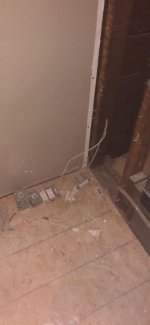
I'm helping fix up my daughter's 100 yr old home, it has "balloon" framing and as all old houses no insulation in the wall cavities. Now its cost prohibitive to add insulation I am focusing to at least minimize the air gaps. One that i noticed when i pulled the baseboards is there is a gap between the floor and the wall as shown in the picture. What would be a good product to use to block that air gap. I was thinking somekind of tape that is thin enough that I can put on the wall and floor in a L shape to block this gap. Then if its thin enough I can reinstall the base boards and floor on top without any issues.

Any ideas would be appreciated
 

Attachments

  • house walls.jpg
    house walls.jpg
    30.8 KB · Views: 205
To avoid these ads, REGISTER NOW!

Ehcrain

Well-known member
Joined
Mar 29, 2015
Messages
106
Location
Dinwiddie, VA
I might try caulk, even the cheap painters caulk would be better than nothing

Sent from my SM-G950U using Tapatalk
 

unslow1

Well-known member
Joined
Mar 3, 2012
Messages
7,880
Location
Illinois
You say that insulating exterior walls is cost prohibitive. Have you considered blow-in? I've done a few houses that would've cost a fortune to do with fiberglass batts. You can do it from the outside, inside or top of a wall. The power bill will fall off a cliff.
 

rayra

Well-known member
Joined
Dec 1, 2014
Messages
4,724
Location
Escaped from Los Angeles
Another vote for foam backer rod, just tuck it in the gap and be done.

But I would also suggest stripping the interior wall finish of the bedroom and insulating at least its walls. A little too late in the year to get that done, though.
 
OP
G

gygeneral

Well-known member
Joined
Dec 13, 2011
Messages
167
Location
Ontario, Canada
Good ideas, some gaps are quite large because the plaster is all damaged down that low, that's why i was thinking some kind of tape or maybe even tar paper.

This houses framing is this balloon framing so the cavity goes from the 2nd story right to the foundation in the basement. Real long studs all one piece. I had never seen that before.

Many contractors say to not insulate these old house unless you do all the outside walls and put the proper vapor barrier. They say these types of walls need to breathe to manage the humidity coming from inside. Withour that your just inviting mold issues.

So for now, I am going to try and manage the drafts at least and when we re-side the house I can put insulation on the outside at that time.
 

ard

Well-known member
Joined
Feb 16, 2015
Messages
4,391
Location
Sierra Foothills... California
Many contractors say to not insulate these old house unless you do all the outside walls and put the proper vapor barrier. They say these types of walls need to breathe to manage the humidity coming from inside. Withour that your just inviting mold issues.

so thats what Id do.

Vapor barrier isnt rocket science.

So for now, I am going to try and manage the drafts at least and when we re-side the house I can put insulation on the outside at that time.

An inch or two of rigid foam is better than nothing....but blown in or other filling those walls will break even in a few years, if you are DIYing.

GL - daughter is lucky. ;)
 

DGersic

Well-known member
Joined
Mar 12, 2017
Messages
6,333
Location
DeKalb, IL
My house is late 1940s or early 1950s construction, had no insulation in the walls. Wood siding outside, and plaster over rock lathe inside.

We removed one course of siding, drilled 3” holes, and blew in cellulose insulation, then put the siding back on.

Big improvement.


Sent from my iPad using The Garage Journal mobile app
 

firebirdparts

Well-known member
Joined
Jun 8, 2016
Messages
10,633
Location
Kingsport, TN
In a house like that I don't see how contractors expect you to generate humidity inside. It wouldn't be easy.

Just saying. People talk a lot. Sometimes they don't make much sense.
 
OP
G

gygeneral

Well-known member
Joined
Dec 13, 2011
Messages
167
Location
Ontario, Canada
In a house like that I don't see how contractors expect you to generate humidity inside. It wouldn't be easy.

Just saying. People talk a lot. Sometimes they don't make much sense.

Agree, I guess their saying after you insulate you will trap humidity and that is where the problem will start.

Thanks for your ideas everyone, I'm going to use caulk, backer rod and spray foam to at least try and minimize drafts for now and later look into insulating with foam boards on the outside before re-siding

:beer:
 

Bretny

Well-known member
Joined
Jul 31, 2017
Messages
3,918
Location
Dutchess county NY
If i was going to reside in the future i would cut a strip out of the top of each wall. Blow in insulation and screw the siding back on. Do this at about 7-8ft then at the top of the next story and so on. At this point you can decide if you really need more foam or just siding.

My house is 90yrs old and putting up foam board on the rim board and foaming around it really helped. I also suggest you get an outside air kit for your heating appliance. This will allow the hot air going out the chimney to be replenished by cold outside air and not **** warm air from in the hous.

These OAKits can be as simple as a dryer duct connected to the furnace.
 

NUTTSGT

Super Moderator
Staff member
Joined
Sep 14, 2009
Messages
50,998
Location
Northern Central Ohio
If the house is balloon framing and you are opening the walls, I'd suggest you add some blocking between the floor levels. In case of fire, this will prevent the walls from acting like a chase when the fire can go from the basement right to the attic space.

My house is old and has blown/fiberglass batts in the walls and attic and built on 10" beams. It also has vertical beams in the corners. When I gutted the utility room last winter, I screwed a 3" piece of wood covered with stretch wrap (plastic will do) at the floor level on top of the sill beam. I filled this area between studs with spray foam, in layers, allowing for expansion. The stretch wrap merely acts a release agent so the spray foam doesn't stick to the board. Once it's cured, remove the board and add insulation.

You need to stop the air movement and this helped out utility room out greatly.
 
To avoid these ads, REGISTER NOW!
OP
G

gygeneral

Well-known member
Joined
Dec 13, 2011
Messages
167
Location
Ontario, Canada
If the house is balloon framing and you are opening the walls, I'd suggest you add some blocking between the floor levels. In case of fire, this will prevent the walls from acting like a chase when the fire can go from the basement right to the attic space.

My house is old and has blown/fiberglass batts in the walls and attic and built on 10" beams. It also has vertical beams in the corners. When I gutted the utility room last winter, I screwed a 3" piece of wood covered with stretch wrap (plastic will do) at the floor level on top of the sill beam. I filled this area between studs with spray foam, in layers, allowing for expansion. The stretch wrap merely acts a release agent so the spray foam doesn't stick to the board. Once it's cured, remove the board and add insulation.

You need to stop the air movement and this helped out utility room out greatly.

I'm not planning at this point to opening the outside walls, that picture you see if just a section I took out to install jack studs because I'm removing a supporting wall in one of the bedrooms. That's another story in itself, I was not aware of balloon framing methods so when I opened the wall I had nothing to support the jack studs under the beam. So what I did I dropped a couple studs right down the the foundation to support that beam.:shocking:

If I was gutting the place then I would surely insulate properly. Their gas bill is $90/month Cdn which I'm suprised is that low, so it would take a long time to pay the demolition of walls from the inside and rebuilding costs.
 

K'ledgeBldr

Well-known member
Joined
Aug 22, 2011
Messages
1,925
Location
Johns Creek, GA
Lessening and/or completely eliminating the "stack effect" in balloon framing can be quite the undertaking due to the fact that the framers built in many different ways.

Knowing there is a lack of "standardized" balloon framing calls for a lot of investigating to choose the right course of action for eliminating the "stack effect". I have found through a few preservation projects that having a basement or crawl space sealed- this to include access point, vents, wall penetrations, and all floor (ceiling of basement/crawl) penetrations (plumbing, electrical, HVAC, etc.)- can certainly curtail the "stack effect". Doing the exterior walls in the "conditioned" space can help, but certainly isn't the main culprit if all of the trim- mainly baseboard/shoe mold- is installed tightly and caulked.

If you could 100% seal an exterior wall- and it had no insulation in it at all- your R-value would actually be higher than what most people think- kinda like IG glass.

Just for informational purposes, blowing-in any type of insulation into wall cavities is not a 100% done and good! With plumbing, electrical, blocking, bracing, and no-telling what else, it's fairly common to have voids. I have seen much better results from a slow/minimal expansion foam. But, for the sake of argument you can vastly improve the overall heat lose/heat gain with sufficient insulation in the attic.
 
OP
G

gygeneral

Well-known member
Joined
Dec 13, 2011
Messages
167
Location
Ontario, Canada
. I have found through a few preservation projects that having a basement or crawl space sealed- this to include access point, vents, wall penetrations, and all floor (ceiling of basement/crawl) penetrations (plumbing, electrical, HVAC, etc.)- can certainly curtail the "stack effect". Doing the exterior walls in the "conditioned" space can help, but certainly isn't the main culprit if all of the trim- mainly baseboard/shoe mold- is installed tightly and caulked.

Can you explain further, are you saying if I put say rigid styrofoam in the cavity in the basement to block it that would help. I'm thinking all that cold air in the wall cavity right now just drops to the basement. The basement is cold, but its only used for storage as its only 6ft tall. I didn't think about doing this as I was under the impresion I had to leave it open for ventilation.
 
OP
G

gygeneral

Well-known member
Joined
Dec 13, 2011
Messages
167
Location
Ontario, Canada
Just for informational purposes, blowing-in any type of insulation into wall cavities is not a 100% done and good! With plumbing, electrical, blocking, bracing, and no-telling what else, it's fairly common to have voids. I have seen much better results from a slow/minimal expansion foam. But, for the sake of argument you can vastly improve the overall heat lose/heat gain with sufficient insulation in the attic.

I agree, just in the two cavities I opened up there was some protruding floor boards into the cavity so that would block whatever blown insulation you trying to get in there from falling down.
 

Kaizen

Well-known member
Joined
Jan 9, 2015
Messages
6,948
Location
New England
I'm not planning at this point to opening the outside walls, that picture you see if just a section I took out to install jack studs because I'm removing a supporting wall in one of the bedrooms. That's another story in itself, I was not aware of balloon framing methods so when I opened the wall I had nothing to support the jack studs under the beam. So what I did I dropped a couple studs right down the the foundation to support that beam.:shocking:

If I was gutting the place then I would surely insulate properly. Their gas bill is $90/month Cdn which I'm suprised is that low, so it would take a long time to pay the demolition of walls from the inside and rebuilding costs.

You sure thats all it is? Thats nuts.
I have a similar home. The not to insulate due to mold is bs. Trust me they blew in cellulose from the outside in the 70s or 80s. They drilled holes in the exterior as they were vinyl siding it. To this day when i pull an interior wall its as packed and as white as new. Zero mold issues because there are still a thousand other air leak points. Unless something dumb is done like not venting a bathroom fan or there are water leaks it will be fine. The return on investment needs to be looked at with that cheap price of gas. This is an entire house for 90 bucks a month?????
Suggestions that are cheap. i'd get a batt of insulation and tear it apart and push it into that joint. foam in cans gets expensive fast. if you are stuck on tape use a window flashing tape. if baseboard is not flush after just caulk the top of it.
Also cut one foot pieces and put up over the foundation in the basement. It stops air coming in at the sill and from going up into the walls.
If you ever open up a corner wall interior you'll be amazed at the cross bracing that is mortised into those balloon studs.
 

yeldogt

Well-known member
Joined
Jan 2, 2012
Messages
18,184
Foam is the best product along the wall floor joint -- after you practice a bit you will be able to run out a nice thin line that will fill it up. You don't want or need much -- don't get the super expanding.

The proper lose fill insulation is the way they are done -- done properly it will fill every spot. The products used are not the same as the fiberglass used in batt insulation -- they do not hold water like the batts. No mold issues -- dries to inside and outside.

If some guy dropped 20' studs (or longer) in your driveway -- would you cut them up? Very common to balloon 100 years ago ... why not? lumber was wide and long -- old growth trees.
 
OP
G

gygeneral

Well-known member
Joined
Dec 13, 2011
Messages
167
Location
Ontario, Canada
You sure thats all it is? Thats nuts.
The return on investment needs to be looked at with that cheap price of gas. This is an entire house for 90 bucks a month?????
Suggestions that are cheap. i'd get a batt of insulation and tear it apart and push it into that joint. foam in cans gets expensive fast. if you are stuck on tape use a window flashing tape. if baseboard is not flush after just caulk the top of it.
Also cut one foot pieces and put up over the foundation in the basement. It stops air coming in at the sill and from going up into the walls.
If you ever open up a corner wall interior you'll be amazed at the cross bracing that is mortised into those balloon studs.

LOL yep 90 month, that's all we have up here i guess oil and gas. Good idea on bunching up batt insulation to fill those gaps.
I will also look at stuffing something downstairs, its only a foot high.
This balloom framing is something else. But my floors, fisrt and second floor, are sitting on a 2x4 nailed to the inside of the outside wall stud. So all that is supporting the foor on the edge is this. This wall stud which is only a 2x4 rough cut, from basement to second floor is like 18 feet long. Hard to find that these days
 

Kaizen

Well-known member
Joined
Jan 9, 2015
Messages
6,948
Location
New England
He wants to block the air coming in/going out, not filter it.


Agree spray foam would be great but I offered cheap alternative. Without insulating walls air will still be moving around spray foam. Insulation as described will help. Call it a bandaid until complete insulation can be done


Sent from my iPhone using Tapatalk
 

Rockcam

Well-known member
Joined
Jan 16, 2010
Messages
256
Location
Grand Rapids
Having lived in a 1920's era house with basically zero insulation, my opinion is that some caulk and backer rod here and there will do almost nothing to make the house more comfortable or lower heating costs (if that's even a priority). Old houses have lots of cracks and holes - if you fill this one up, warm air will find the next one.

Cellulose is an inexpensive and highly effective way to insulate balloon framed houses.

Recommendations around insulation and especially vapor barriers have changed over the years. Go to buildingscience.com and greenbuildingadvisor.com for solid, science-based recommendations rather than opinions,

Not sure what the size of the house is, but $90/month is crazy cheap.
 
OP
G

gygeneral

Well-known member
Joined
Dec 13, 2011
Messages
167
Location
Ontario, Canada
Having lived in a 1920's era house with basically zero insulation, my opinion is that some caulk and backer rod here and there will do almost nothing to make the house more comfortable or lower heating costs (if that's even a priority). Old houses have lots of cracks and holes - if you fill this one up, warm air will find the next one.

Cellulose is an inexpensive and highly effective way to insulate balloon framed houses.

Recommendations around insulation and especially vapor barriers have changed over the years. Go to buildingscience.com and greenbuildingadvisor.com for solid, science-based recommendations rather than opinions,

Not sure what the size of the house is, but $90/month is crazy cheap.

Thanks for those websites, I will check them out, I guess natural gas is cheaper up here, the house is about 1300 square ft, two stories. What do you guys pay. My personal house is about 200 sq ft, well insulated and it cost me 1300 per Cdn.
I know there are lots of cracks but the obvious ones like my picture I would like to close.
 
To avoid these ads, REGISTER NOW!
Top Bottom