To avoid these ads, REGISTER NOW!

The VISES of Garage Journal

drivesitfar

Well-known member
Joined
Oct 23, 2013
Messages
36,018
Location
Pacific Northwest
Fier: i'm not ready to confirm 100% that Smitty's vise is a Fulton, but DAMN that's quite a specimen you posted that has a lot of style points. is it yours? (sorry I couldn't find my Fulton pics on this laptop and I thought the anvil one was a fulton and looks like it's a Cheney). anyway the LMV has the Columbian type hub/meatball.

Mark: speaking of style points your Bison on it's new power arm you made for it has pretty much all of them too. VERY WELL DONE!!!

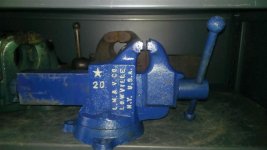
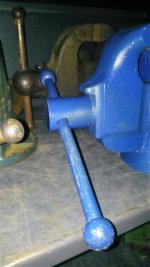
ALL: speaking of Fulton and LMV here's a few pictures of a couple of mine that don't look like Fier's Fulton 245, but my older Fulton with the anvil look does have the round type hub/meatball on the end of the screw.
 

Attachments

  • WP_20160920_001.jpg
    WP_20160920_001.jpg
    151.8 KB · Views: 81
  • WP_20171008_001.jpg
    WP_20171008_001.jpg
    113.7 KB · Views: 79
  • WP_20171008_004.jpg
    WP_20171008_004.jpg
    62.5 KB · Views: 66
To avoid these ads, REGISTER NOW!

Asport

Well-known member
Joined
Feb 10, 2017
Messages
112
Location
Chicago area
Smitty...The meatball looks like a vise made in Lowville, NY. It's either an unbranded Fulton Machine & Vise Co. or the later Lowville Machine & Vise Co. Both companies produced many generic "Peerless" model vises with just the model # cast.

Really enjoying all the vise photos you've posted, however winter has come early to Chicago and the palm tree in the background of your photos is starting to annoy me. :(

Nice job of identification Fierljeppen!
 

Mark in Indiana

Well-known member
Joined
Aug 11, 2010
Messages
3,057
Location
Southern Indiana
All:
Thanks for the compliments about my power arm. How I made it out of a saw vise:
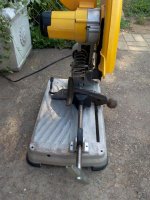
1st picture; Clamped in the chop saw to remove the excess from the ball mount.
2nd picture; Chucked in the milling machine to face off the ball mount surface. This is where I'll attach an adaptor plate for the vise.
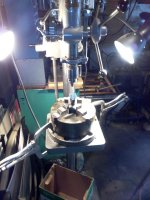
3rd picture; Before drilling/tapping the mounting holes in the ball mount, I have to make sure that it's straight. To hold the ball mount, I used a 4 jaw chuck, mounted to a large flange plate. Very handy for holding irregular shaped objects.
4th & 5th picture; Drilling & tapping the ball mount.

Next post I'll talk about the adaptor plate.
 

Attachments

  • REWORKING THE SAW VISE6.jpg
    REWORKING THE SAW VISE6.jpg
    34.3 KB · Views: 61
  • REWORKING THE SAW VISE5.jpg
    REWORKING THE SAW VISE5.jpg
    106.7 KB · Views: 57
  • REWORKING THE SAW VISE4.jpg
    REWORKING THE SAW VISE4.jpg
    87.3 KB · Views: 58
  • REWORKING THE SAW VISE3.jpg
    REWORKING THE SAW VISE3.jpg
    97.6 KB · Views: 60
  • REWORKING THE SAW VISE2.jpg
    REWORKING THE SAW VISE2.jpg
    97.5 KB · Views: 62
  • REWORKING THE SAW VISE1.jpg
    REWORKING THE SAW VISE1.jpg
    128.5 KB · Views: 57

Mark in Indiana

Well-known member
Joined
Aug 11, 2010
Messages
3,057
Location
Southern Indiana
All:
Here's how I made the adaptor plate to secure the vise on the ball mount. BTW: Unable to weld the plate to the ball mount.

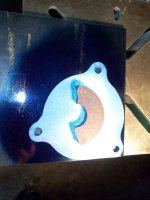
1st picture; Using paper to make a template from the bottom of the vise, I placed it on a 1/4" piece of steel plate and sprayed it with blue die.
2nd picture; After drilling holes in the plate for the vise, I clamped & centered it on a rotary table. Yes, it would have been faster to cut the shape on a horizontal band saw, but it was more fun to use the RT. After that I transferred the threaded holes in the ball mount on the plate and drilled.
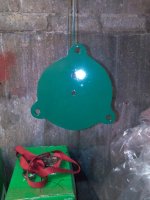
3rd picture; The finished adaptor plate, in the paint room waiting to dry. I'll admit the holes in the plate to attach it to the ball mount are a offset. This was to make up for an occupational misadventure I had at the drill press with the ball mount. The plate will be centered when mounted on the ball mount.
4th picture; Painted pieces waiting to be assembled.
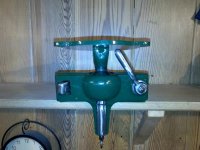
5th picture; final assembly before attaching the vise.
 

Attachments

  • MAKING THE MOUNTING PLATE3.jpg
    MAKING THE MOUNTING PLATE3.jpg
    90.2 KB · Views: 49
  • MAKING THE MOUNTING PLATE2.jpg
    MAKING THE MOUNTING PLATE2.jpg
    148 KB · Views: 56
  • MAKING THE MOUNTING PLATE1.jpg
    MAKING THE MOUNTING PLATE1.jpg
    82.7 KB · Views: 48
  • FINISHED PIECES.jpg
    FINISHED PIECES.jpg
    64.1 KB · Views: 55
  • FINISHED ASSEMBLY.jpg
    FINISHED ASSEMBLY.jpg
    142.9 KB · Views: 49

Mark in Indiana

Well-known member
Joined
Aug 11, 2010
Messages
3,057
Location
Southern Indiana
Mark, Love seeing this work you do. Just a awesome build. Rotary Table work is a lost art, harder if you do not have a digital readout. Fun stuff.

All:

Thanks for the kind words on this build. I hope that others will benefit from this idea.

KM: A compliment from you, with your skill set is awesome. Originally I bought that RT to make some swivel bases. The lathe chuck mounted on it is great for milling small round work (like c-clamp spindle feet). At this time I don't have room for a lathe. Also, running a 1938 Cincinnati milling machine is very therapeutic.


Here are some pictures of a grinding wheel dresser bracket I made for my Lisle drill bit sharpener.
1st picture; Reducing the diameter of some round stock. I'm using a 4 jaw lathe chuck for this one. Most of the time on this job was spent on indicating the chuck on the RT and indicating the round stock to be centered in the chuck. It's good practice and fun.
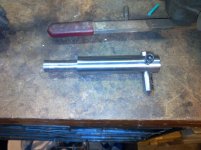
2nd picture; The finished bracket.
3rd picture; Using the dresser.
 

Attachments

  • LISLE GRINDING WHEEL DRESSER2.jpg
    LISLE GRINDING WHEEL DRESSER2.jpg
    138.7 KB · Views: 63
  • LISLE GRINDING WHEEL DRESSER1.jpg
    LISLE GRINDING WHEEL DRESSER1.jpg
    149 KB · Views: 63
  • ROD STOCK WORK.jpg
    ROD STOCK WORK.jpg
    117.7 KB · Views: 73

Smitty

Well-known member
Joined
Sep 4, 2018
Messages
2,409
Location
USA
Smitty...The meatball looks like a vise made in Lowville, NY. It's either an unbranded Fulton Machine & Vise Co. or the later Lowville Machine & Vise Co. Both companies produced many generic "Peerless" model vises with just the model # cast.


Really enjoying all the vise photos you've posted, however winter has come early to Chicago and the palm tree in the background of your photos is starting to annoy me. :(


It’s 59° and raining today, hopefully this helps.
582d5ca373af2b73a361a146c895a365.jpg


Sent from my iPad using The Garage Journal mobile app
 
To avoid these ads, REGISTER NOW!

Smitty

Well-known member
Joined
Sep 4, 2018
Messages
2,409
Location
USA
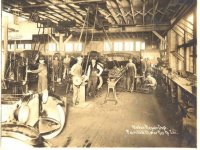
Smitty, are those hydro powered implements in that second pic, or is there some sort of power unit that I ain't seeing?
I initially posted the pic for the vises on the window wall and the anvil on the floor. It does appear to be a belt driven shop. The description of the photo is Spokane repair shop. It’s probably hydro, that town is full of rivers.
 

kenc184

Well-known member
Joined
Feb 25, 2012
Messages
718
Location
Nor Cal
Ken
I am definitely not a Wilton expert and frankly no vise expert period. But I have seen broken tradesman jaw inserts in person and to be honest at the breakage point the structure was very grainy. Now does sample of 2 make good statistics, probably not. But the question might be is powdered steel as strong as say tool steel?

It will for sure be interesting to hear what experts like Dr Scott and Autopts have to say about this.

PS
I found the one of the posts that I had seen regarding tradesman jaw inserts. It is by AngryBeaver who has bought, repaired and sold a good number of tradesmans. Here are couple of snippets (you can read the full post below, including photo of some of the his tradesmans below)

I've had about 10 of these over the last year.
.......
if you get it for yourself, get a pair of Kevins jaws. the factory tradesman jaws are powdered steel (not tool steel like the machinist vises). they are brittle and break easy.

https://www.garagejournal.com/forum/showpost.php?p=7350121&postcount=65523

PS PS
I could not find the photos of the busted Tradesman jaw inserts that I had in my possession, but I did find the photos of the pipe jaws that were also busted and that are made from the same powdered steel. The grainy texture (large steel crystal grains) almost look like inside of a Kit Kat.

All considered, unless his price drops, think I will wait on a c2
 

va.grouseman

Well-known member
Joined
Mar 26, 2011
Messages
4,965
Location
Southern-Central VA.
Originally posted by Smitty.

I initially posted the pic for the vises on the window wall and the anvil on the floor.
----------------------------------------------------------------------------------------------


Oh I didn't miss those.---They were the first thing spotted.---Tried to figure what brand the vises might be but just too fuzzy.


With out a doubt, vises and anvils played a huge part in shaping the industrial age into what it is today.---I guess that's why I have such an affinity for them.---I used two different vises today for two different jobs and couldn't have accomplished either without one.---I just never did master holding a piece of bar stock with one hand and sawing it with the other.
 

gman007

Well-known member
Joined
May 17, 2017
Messages
2,731
Location
West Michigan
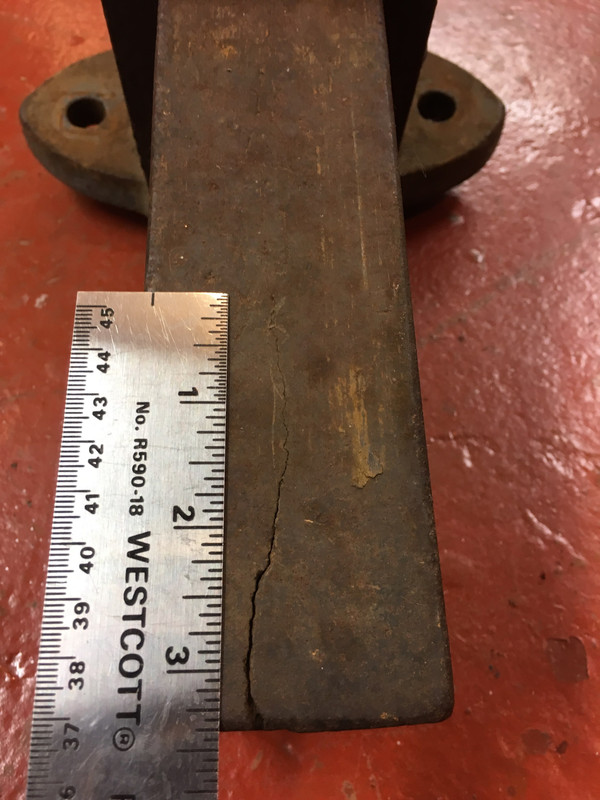
Hey look, a flat metallic surface, it must be an anvil, lets beat up on it.
Once again, testimony to the fact that no vise can be made idiot/gorilla proof and slides crack when abused.

It is too bad about cracked slide, otherwise the price is not too unreasonable (not great but acceptable) for a 105 and seller lives very close to me. :(
 

Attachments

  • Reed 105 a.jpg
    Reed 105 a.jpg
    150 KB · Views: 70
  • Reed 105 b.jpg
    Reed 105 b.jpg
    140.3 KB · Views: 66
Last edited:

kenc184

Well-known member
Joined
Feb 25, 2012
Messages
718
Location
Nor Cal
anyone know what this is? Couple of design elements look like Prentiss, but that collar?
Owner says no marks of any kind.

00K0K_hjgwDJtMsi6_600x450.jpg
 

MayerMR

Well-known member
Joined
Feb 13, 2018
Messages
831
Location
Dallas, Texas
Hey look, a flat metallic surface, it must be an anvil, lets beat up on it.
Once again, testimony to the fact that no vise can be made idiot/gorilla proof and slides crack when abused.

It is too bad about cracked slide, otherwise the price is not too unreasonable (not great but acceptable) for a 105 and seller lives very close to me. :(

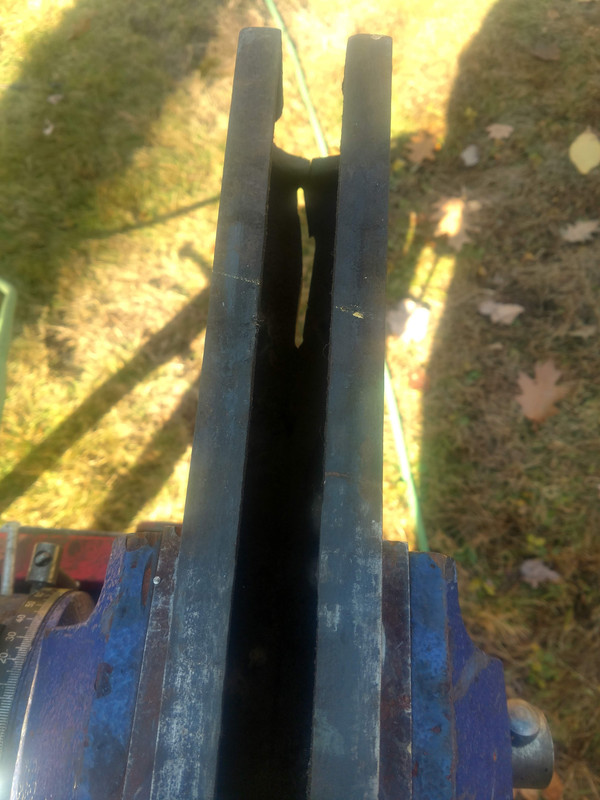
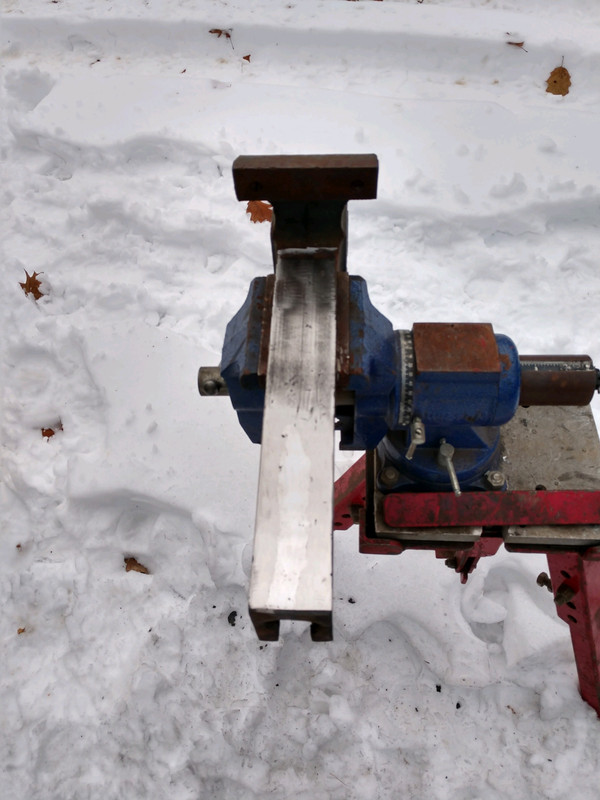
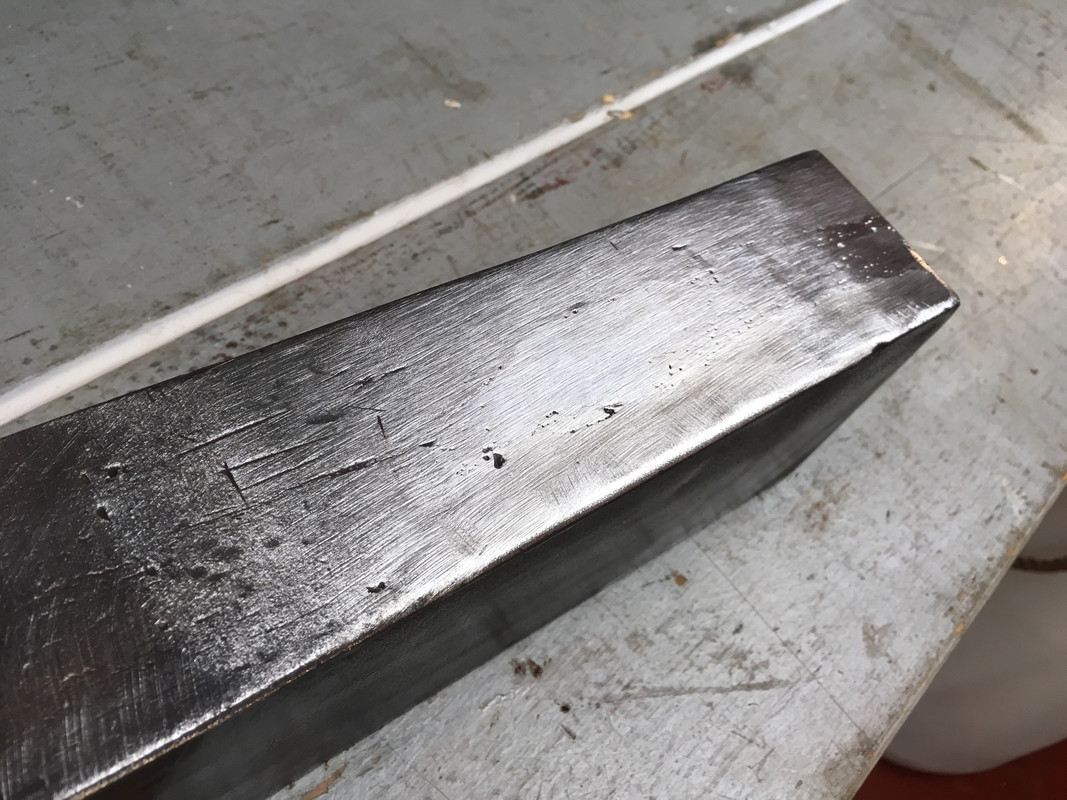
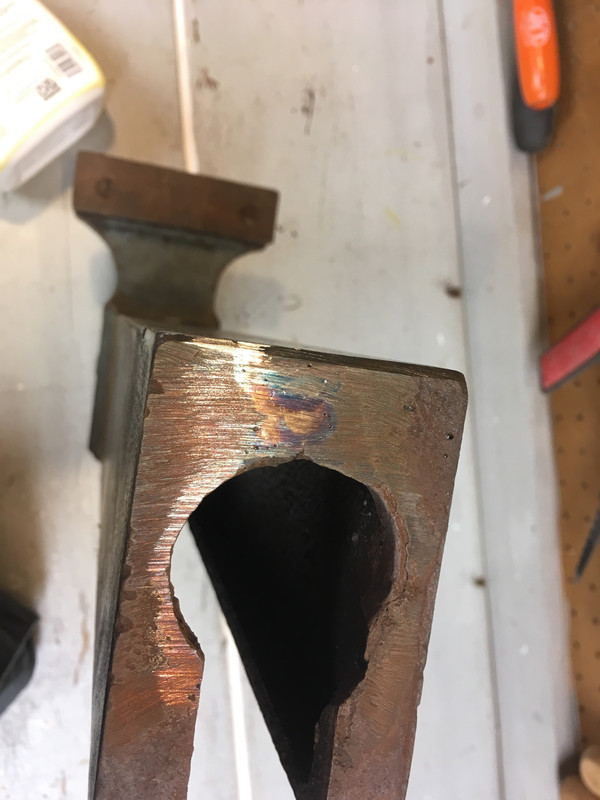
A buddy of mine (and fellow GJ member and vise nutter, like the rest of us) recently had a vise that had a crack repaired by a local welder who specializes in cast iron. Repair looked really good.

563054915.jpg


IMG-20181-02.jpg


IMG-20181.jpg


564181908.jpg


564181885.jpg
 

gman007

Well-known member
Joined
May 17, 2017
Messages
2,731
Location
West Michigan
A buddy of mine (and fellow GJ member and vise nutter, like the rest of us) recently had a vise that had a crack repaired by a local welder who specializes in cast iron. Repair looked really good.
Mayer
That is one nice repair job!

In the past I have also seen couple other members that did an amazing job fixing cracked slide but unfortunately I can not recall who they were. One of these member has a whole very nice thread detailing how he did it (I thought I had saved the link somewhere but now I can not find it).
 

MayerMR

Well-known member
Joined
Feb 13, 2018
Messages
831
Location
Dallas, Texas
That’s pretty damn impressive. Nice work.

Mayer
That is one nice repair job!

In the past I have also seen couple other members that did an amazing job fixing cracked slide but unfortunately I can not recall who they were. One of these member has a whole very nice thread detailing how he did it (I thought I had saved the link somewhere but now I can not find it).

I wish I could claim it was my work, or heck, even my vise! But alas, it belongs to a friend of mine up in the bitter cold tundra that is the NE.

However, I do have a Parker with a cracked slide (and, as we all know, ALL Parkers either have or *will have* cracked slides :bounce: ) that I'm seriously considering trying to see if I can't get it sent up to this fella for a repair job.
 

gman007

Well-known member
Joined
May 17, 2017
Messages
2,731
Location
West Michigan
I wish I could claim it was my work, or heck, even my vise! But alas, it belongs to a friend of mine up in the bitter cold tundra that is the NE.

However, I do have a Parker with a cracked slide (and, as we all know, ALL Parkers either have or *will have* cracked slides :bounce: ) that I'm seriously considering trying to see if I can't get it sent up to this fella for a repair job.

Mayer

When I posted my comment, I already knew that it was your friend's great handy work and was simply complimenting him, but I have also to compliment you on having found a talented friend which can be very handy :bounce: :beer:.

There are couple of things that I remember about the slide repair that another member did.

1- He drilled a hole at the end of the crack to stop the crack from growing which is standard practice to stop any fracture in most materials from growing.

2- He then carefully drilled a small countersunk hole across the two side walls of the slide (at the very end of the slide) and used a bolt and nut to pull the cracked end together and to further strengthen the repair.

3- He then did a braze job to fill the crack as well as cover and fill the countersink hole (ie cover the bolt and nut).

4- Then he ground and sanded all the brazed surfaces.

Now that I am thinking about it, may be he posted the detailed steps in the vise repair thread. If you are planning to do such a repair, I highly recommend you find this post, it was very informative and detailed.

PS
I really like the idea of countersunk hole and putting a bolt through it.
 
Last edited:

MayerMR

Well-known member
Joined
Feb 13, 2018
Messages
831
Location
Dallas, Texas
Mayer

When I posted my comment, I already knew that it was your friend's great handy work and was simply complimenting him, but I have also to compliment you on having found a talented friend which can be very handy :bounce: :beer:.

There are couple of things that I remember about the slide repair that another member did.

1- He drilled a hole at the end of the crack to stop the crack from growing which is standard practice to stop any fracture in most materials from growing.

2- He then carefully drilled a small countersunk hole across the two side walls of the slide (at the very end of the slide) and used a bolt and nut to pull the cracked end together and to further strengthen the repair.

3- He then did a braze job to fill the crack as well as cover and fill the countersink hole (ie cover the bolt and nut).

4- Then he ground and sanded all the brazed surfaces.

Now that I am thinking about it, may be he posted the detailed steps in the vise repair thread. If you are planning to do such a repair, I highly recommend you find this post, it was very informative and detailed.

PS
I really like the idea of countersunk hole and putting a bolt through it.

I think it'd be fun to try to do that. I'll have to look up that write-up when I get around to doing it.

Just out of curiosity though; any reason he just didn't use another vise to bring the two pieces together for the brazing rather than drilling two more holes to pull the crack together? Seems that would do the same thing without having to drill additional holes?
 

gman007

Well-known member
Joined
May 17, 2017
Messages
2,731
Location
West Michigan
I think it'd be fun to try to do that. I'll have to look up that write-up when I get around to doing it.

Just out of curiosity though; any reason he just didn't use another vise to bring the two pieces together for the brazing rather than drilling two more holes to pull the crack together? Seems that would do the same thing without having to drill additional holes?

I believe the idea of the thin hole and bolt was to permanently bring and pull the crack together (not just for the duration of brazing)! After all a braze/weld job no matter how good, is not going to keep the two sides together as good as a bolt. So you can say he used double protection of bolt combined with the braze job. And remember what they taught you in high school, always use protection :evil:

BTW, as you can see in your last photo, there is a lot of metal at the top portion of the slide and I believe he drilled the thin hole through this area. He might have even taped the hole to thread the bolt through it (can not recall exactly)
 
Last edited:

MayerMR

Well-known member
Joined
Feb 13, 2018
Messages
831
Location
Dallas, Texas
I believe the idea of the thin hole and bolt was to permanently bring and pull the crack together (not just for the duration of brazing)! After all a braze/weld job no matter how good, is not going to keep the two sides together as good as a bolt. So you can say he had double protection of bolt combined with the braze job. And remember what they taught you in high school, always use protection :evil:

BTW, as you can see in your last photo, there is a lot of metal at the top portion of the slide and I believe he drilled the thin hole through this area.

Ooooh, so you meant it was a permanent bolt through? I was picturing a temporary thru-bolt w/nut to pull it together for the brazing that was then removed and the holes also brazed over.

Ok that seals it; I have to search through that repair thread tonight and see if I can't find that section. :beer:
 

gman007

Well-known member
Joined
May 17, 2017
Messages
2,731
Location
West Michigan
Ooooh, so you meant it was a permanent bolt through? I was picturing a temporary thru-bolt w/nut to pull it together for the brazing that was then removed and the holes also brazed over.

Ok that seals it; I have to search through that repair thread tonight and see if I can't find that section. :beer:

Exactly. And the reason for the countersunk hole was so that the bolt and nut were not protruding from the two faces of the slide.
 

Smitty

Well-known member
Joined
Sep 4, 2018
Messages
2,409
Location
USA
I jonesing for a new vise right now, the boards have been really quiet this week. At this point I’d probably jump on a Zyliss Profi-king (in the original box) if it popped up on CL
 
To avoid these ads, REGISTER NOW!
Top Bottom