
You are using an out of date browser. It may not display this or other websites correctly.
You should upgrade or use an alternative browser.
You should upgrade or use an alternative browser.
Bronze Billings Monkey Wrench
- Thread starter Mr onetwo
- Start date

Sevenhills1952
Well-known member
There are Billings wrenches on eBay, but I didn't see a bronze one. I'm guessing yours was made bronze so it's spark proof, used around flammable gas or liquid area.
Just my guess.
This is interesting...
http://alloy-artifacts.org/billings-spencer-company-p2.html
Sent from my SM-S320VL using Tapatalk
Just my guess.
This is interesting...
http://alloy-artifacts.org/billings-spencer-company-p2.html
Sent from my SM-S320VL using Tapatalk
Private Lugnutz
Well-known member
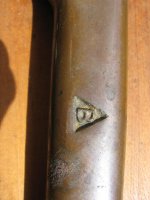
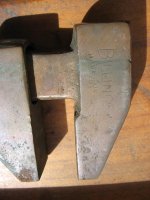
Nice. That's a No. 91, Coes pattern. Non-sparking, as Sevenhills alluded to. Late 40's. What is the marking on the static jaw opposite the branding?
Private Lugnutz
Well-known member
Good eye. That would seal it as a late 40's Coes pattern No. 91 then. I've never seen a Bronze, BeCu or AlBr specimen. Pretty neat.
davethorik
Well-known member
Rare. As for value, you have a two-fold challenge that I've encountered before: first, you have to convince people it's real. Next, you have to convince people that it matters.
Yeah this is a bronze tool on the GJ. Literally no one cares unless it's polished and hung on a wall.

crguy
Well-known member
Rare. first, you have to convince people it's real.
I doubt anybody made any fake ones.
rickhigginshtbr
Well-known member
Yeah this is a bronze tool on the GJ. Literally no one cares unless it's polished and hung on a wall.
exactly, show it off for a year then try to sell


twertsy
Well-known member
Yeah this is a bronze tool on the GJ. Literally no one cares unless it's polished and hung on a wall.
That's just wrong...…...I don't polish any of my tools before hanging them on the wall

3baygarage
Well-known member
Very nice. I like the patina on these tools without the polish. Can we see that logo up top?
That wrench may be made of BeCu (beryllium-copper alloy), which was used for decades to make non-sparking tools, and which looks like bronze as it ages. If indeed it is BeCu, you don't want to polish it, because beryllium dust is toxic when inhaled.
However, the page below certainly indicates Billings made a lot of bronze forgings.

However, the page below certainly indicates Billings made a lot of bronze forgings.
Rare. As for value, you have a two-fold challenge that I've encountered before: first, you have to convince people it's real. Next, you have to convince people that it matters.
Looks real to me. Not like the home-plated copper **** some try to pass off as the genuine article...

woody 73
Well-known member
That is one very interesting tool that I wish I could read more information about it, thank you for sharing it on the GJ.
Any idea how rare this beast is? Solid bronze
Let me know if you are interested in a trade for that wrench. In one of my business endeavors, I have a need for non-magnetic tools.

I ended up selling that wrench to a direct descendant of JP Danielson, and who knew more about the inner working of the company than all the so-called experts put together, including the knowledge of Danielson's electroplating capabilities. He also bought the Danielson diagonals I had with the OD green paint finish, even though the experts thought military wartime tools were not painted. I won't say for how much, but let's just say I had to buy additional insurance over the USPS Priority Mail Commercial Plus level of included insurance to cover it. So, in the end, all the scoffers were wrong, and I had the last laugh. Quite a hearty and deeply fulfilling laugh. And it found the absolute right home in the right collection.Looks real to me. Not like the home-plated copper **** some try to pass off as the genuine article...

Last edited:
Private Lugnutz
Well-known member
I recall these pliers and the conversation, but I don't recall saying anything as broad as "military wartime tools were not painted." Paint (more specifically, enamel) was one of several specified alternatives to nickel- or chrome-plating. Empirically, and according to federal and kit-level specifications for trucks and general maintenance, wartime pliers weren't typically enameled, and when enamel was used on tools (more typically wrenches), it was typically black, and in the case of the Navy, ocean grey. Some equipment and some special tools were painted OD green. And occasionally we see a hand tool show up OD green, raising immediate concerns about it being painted by an overzealous and uninformed collector. In summary, it's possible those pliers were WWII, but unlikely and not typical. That's different than saying your dykes were definitively not WWII or that military tools were not painted. If you find the original thread and I said anything different than any of this in gist, I would be surprised, and I would correct myself.He also bought the Danielson diagonals I had with the OD green paint finish, even though the experts thought military wartime tools were not painted.
As for your sale, having a descendent of J.P. Danielson buy the pliers at any price has no impact whatsoever on any of the empirical or documented facts I just summarized for your information, again, about the use of paint on wartime hand tools.
Last edited:
Private Lugnutz
Well-known member
Here is a link to the pliers and thread in question, I stand by what I said at that time and what I just said in more elaboration above, 100%. And, now that I have re-read the thread, your recollection of what was said - "even though the experts thought military wartime tools were not painted" - is sorely mistaken.
Didn't mean to disrespect your knowledge on the subject, Lugz, which to me is genuinely vast, impressive and awe-inspiring. I mean that sincerely. I probably shouldn't have even mentioned the dykes. No doubt they were rare. Forgive me if the impression I was left with from my posting the dykes was that in the general response they were largely dismissed.I recall these pliers and the conversation, but I don't recall saying anything as broad as "military wartime tools were not painted." Paint (more specifically, enamel) was one of several specified alternatives to nickel- or chrome-plating. Empirically, and according to federal and kit-level specifications for trucks and general maintenance, wartime pliers weren't typically enameled, and when enamel was used on tools (more typically wrenches), it was typically black, and in the case of the Navy, ocean grey. Some equipment and some special tools were painted OD green. And occasionally we see a hand tool show up OD green, raising immediate concerns about it being painted by an overzealous and uninformed collector. In summary, it's possible those pliers were WWII, but unlikely and not typical. That's different than saying your dykes were definitively not WWII or that military tools were not painted. If you find the original thread and I said anything different than any of this in gist, I would be surprised, and I would correct myself.
As for your sale, having a descendent of J.P. Danielson buy the pliers at any price has no impact whatsoever on any of the empirical or documented facts I just summarized for your information, again, about the use of paint on wartime hand tools.
My main point was the copper adjustable. And you know I received some uncommon, even outrageous attempts to discredit it while completely ignoring certain important evidence on the wrench itself. So please permit me (and forgive me) the satisfaction of my gloat over it. I feel it was earned. I'm still fully expecting someone to attack me for it. It is, after all, the GJ.
Last edited:
Private Lugnutz
Well-known member
Absolutely no disrespect or offense taken, DadsTools. I just wanted to set the record straight. I am sorry you felt the dykes were dismissed. My impression of your posting is that they were a good example of just another in a long line of anomalies we see pop up here from time to time. Glad to see someone found them collectible.
As for the copper-plated adjustable, I do remember people disagreeing with you about them being copper-plated at the factory.
My thoughts on that are that mystery tools, odd ducks, and anomalies show up here all the time and the hard scrutiny and challenges they receive are actually good for the hobby. We shouldn't be too quick to draw conclusions and drop our conventional wisdom.
By the same token, we shouldn't be overly resistant to accepting tools that stretch, bend, or break the rules of heretofore conventional wisdom, and hence change or expand the knowledge base, and there may have been too much resistance to your copper-plated adjustable, but I think that "discredit" is too strong a term.
As for finding satisfaction, that was clearly and incontrovertibly already found. Turns out there was a whole class of vintage tools that were copper-plated as a final rust-proofing finish (not an undercoat for nickel- or chrome-plating) and a whole class of vintage tools that were copper-plated or -coated for spark reduction (different from, less capable than, and sort of compromised approach to spark resistant, where the composition is entirely bronze, BeCu, or AlBr), including prominent makers such as Snap-on and Plomb. I dedicated a whole thread ("The Curious Copper Caper") to the subject, linked here, and I linked your adjustable find, which I believe was plausibly part of the second category, in the very first post.
As for the copper-plated adjustable, I do remember people disagreeing with you about them being copper-plated at the factory.
My thoughts on that are that mystery tools, odd ducks, and anomalies show up here all the time and the hard scrutiny and challenges they receive are actually good for the hobby. We shouldn't be too quick to draw conclusions and drop our conventional wisdom.
By the same token, we shouldn't be overly resistant to accepting tools that stretch, bend, or break the rules of heretofore conventional wisdom, and hence change or expand the knowledge base, and there may have been too much resistance to your copper-plated adjustable, but I think that "discredit" is too strong a term.
As for finding satisfaction, that was clearly and incontrovertibly already found. Turns out there was a whole class of vintage tools that were copper-plated as a final rust-proofing finish (not an undercoat for nickel- or chrome-plating) and a whole class of vintage tools that were copper-plated or -coated for spark reduction (different from, less capable than, and sort of compromised approach to spark resistant, where the composition is entirely bronze, BeCu, or AlBr), including prominent makers such as Snap-on and Plomb. I dedicated a whole thread ("The Curious Copper Caper") to the subject, linked here, and I linked your adjustable find, which I believe was plausibly part of the second category, in the very first post.
Thank you, Lugz, for your very thoughtful and considerate reply.Absolutely no disrespect or offense taken, DadsTools. I just wanted to set the record straight. I am sorry you felt the dykes were dismissed. My impression of your posting is that they were a good example of just another in a long line of anomalies we see pop up here from time to time. Glad to see someone found them collectible.
As for the copper-plated adjustable, I do remember people disagreeing with you about them being copper-plated at the factory.
My thoughts on that are that mystery tools, odd ducks, and anomalies show up here all the time and the hard scrutiny and challenges they receive are actually good for the hobby. We shouldn't be too quick to draw conclusions and drop our conventional wisdom.
By the same token, we shouldn't be overly resistant to accepting tools that stretch, bend, or break the rules of heretofore conventional wisdom, and hence change or expand the knowledge base, and there may have been too much resistance to your copper-plated adjustable, but I think that "discredit" is too strong a term.
As for finding satisfaction, that was clearly and incontrovertibly already found. Turns out there was a whole class of vintage tools that were copper-plated as a final rust-proofing finish (not an undercoat for nickel- or chrome-plating) and a whole class of vintage tools that were copper-plated or -coated for spark reduction (different from, less capable than, and sort of compromised approach to spark resistant, where the composition is entirely bronze, BeCu, or AlBr), including prominent makers such as Snap-on and Plomb. I dedicated a whole thread ("The Curious Copper Caper") to the subject, linked here, and I linked your adjustable find, which I believe was plausibly part of the second category, in the very first post.
Your comments and assessment are right on. Especially with regard to rejecting an artifact just because it doesn't fit in with known information. Or just because a collector has never seen one before. The debate on whether it was factory plated or not was legitimate. The real clue that the debate was drifting into intellectual dishonesty was some of the ridiculous ideas proposed as to what it might be instead, and the justifications for those wild speculations. This closed-mindedness--this snobbery, if you will--actually caused folks to ignore important evidence on the artifact itself. And yes, someone came to the rescue with a Plomb catalog reference that showed, like in the M&M commercial with Santa, they do exist! Others then came forward with their personal knowledge of such copper plated tools. But yes, the embracing of the artifact by a direct descendant of JP with a vast collection (including such one-off rarities like a prototype set of stainless steel Danielsons) and knowledge of the internal workings of the company was the real vindication.
Sometimes an artifact must be allowed to speak for itself. In the case of both tools, the dates were correct. The evidence from the edges where the finish was worn off on both were strong indications that they were applied in some professional factory setting. On the dykes, the color was correct. Speaking of wear, both showed considerable signs of use, the dykes perhaps years of use. Very unlikely someone would paint or plate tools like these themselves on a whim, even if they could duplicate the degree of factory-applied quality and consistency, then go and beat them up with hard use. Very unlikely. No one tried to defraud me or anyone else with them, so there was no motive to deceive anyone, and neither was offered at any kind of price even remotely suggesting an attempt to deceive. In other words, there was nothing about the tools themselves or the circumstances surrounding their acquisition that gave any tangible, even plausible indication that they were anything other than precisely what they appeared to be. Which made their genuineness a highly likely explanation for them. They talked, walked and acted like a duck.
But what was the justification to ignore significant evidence displayed on the tools themselves? "Doesn't fit neatly into surviving information" or "Never seen one before myself." I understand the value of healthy skepticism and debate, but not to the point of intellectual dishonesty or dogmatic exclusionism. Many great discoveries have been made in all kinds of fields that didn't fit into known paradigms or that no one had ever seen before.
Private Lugnutz
Well-known member
Yup. I want one.
It's yours if you want it... https://maine.craigslist.org/tls/d/owls-head-monkey-wrench-billings/6843674679.html