It's a dc power supply on a boat. All I need is a meter with a min/max feature that doesn't have an auto shut off.
I'm not convinced that just connecting a logging meter and leaving it is the best way to diagnose the problem. If you see something in the logs, you'll know there's a problem, but you won't have any clues as to the cause.
I'd start by just connecting a meter, or better yet, a scope (in case the supply voltage sag is a short transient event) across the DC power input at your equipment, and just spending a few minutes cycling all the major power devices connected to the boat's DC system.
Does your system fail while the engine is running, or only when it's stopped?
Are the boats alternator(s) charging the batteries properly?
If it's a small boat, and there's only one battery for both engine starting and running the DC accessories, simply starting and restarting a cold engine can cause a big short term voltage sag in the system, especially if the battery is not fully charged, or in the best of shape. If it's a larger boat, with separate starting and house battteries, try cycling every big DC load - bilge pumps, washdown pumps, anchor windlass, stereo system, searchlights, etc. while watching your meter. On bigger boats, you often see stuff like microwave ovens that are a huge current draw while they're in operation.
If that doesn't show any problems, turn on a bunch of DC acessories and load up your DC supply and see if the battery voltage starts to fall over time.
Maybe your customer's house batteries are in bad shape, or maybe they're undersized for the load.



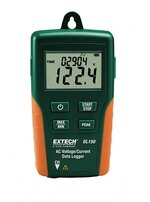
 but I don't know anything about boats... AC or DC, a data logger would be what OP needs, min/max can't tell time.