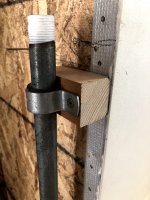
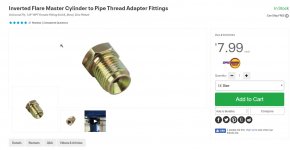
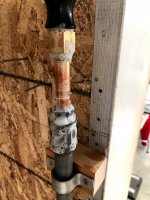
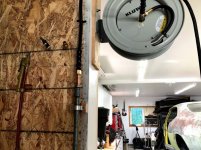
The thread is likely identified incorrectly on Northern's site as there's no such thread as a FNTP. A female swivel pipe thread as shown in the OP's pic is most always a NPSM thread which is National Pipe Straight Mechanical.
A NPSM thread will screw onto a male NPT thread, but the seal is made against a 30* chamfer that's cut on the ID of the male pipe. This is a common connection on hydraulic equipment.
A typical example would be the connection between a hydraulic cylinder port and a hydraulic hose. The cylinder would be tapped female NPT. Then, if the swivel nut is to be on the cylinder, an NPT x NPSM hose adapter fitting would be screwed into the cylinder port. The mating hose fitting would be male NPT with the chamfer cut on the ID of the hose fitting. Pic of the adapter at
https://www.grainger.com/product/EATON-AEROQUIP-Male-NPT-to-Female-NPSM-Swivel-2F375
Alternatively, if the swivel nut is on the hose, then an NPT x NPT hose adapter would be in the cylinder port. This fitting looks like a short hex ****** but it also has the mating hex chamfer cut on its ID. Pic at https://www.grainger.com/product/EATON-AEROQUIP-Male-NPT-to-Male-NPT-Hex-******-2F455
The OP's application needs to connect to a male NPT with the internal chamfer to seal as designed. A fitting like this one
https://www.grainger.com/product/EATON-AEROQUIP-MNPT-to-FNPT-Reducer-Pipe-38YN19 would have the internal chamfer on the male end and would also reduce from 1/2 to 3/8 pipe. I've found it simpler in cases like this to use a short hydraulic hose with male pipe ends for the connection rather than hard piping to the hose reel as hard piping all the way is difficult to accomplish without ending up with a strain on the connection at the reel.
FWIW, the male threads on hydraulic adapters will seal in a standard tapered female pipe thread as well as sealing against the seat in a NPSM swivel fitting. IOW, the only thing special about them, as compared to a standard hex ******, is the chamfer on the ID. The same is true for NPT hydraulic hose end fittings. I used links to Grainger for illustration only, and would recommend purchasing actual fittings from hydraulic suppliers such as Parker as the people in a hydraulics store will be much more knowledgable than the blank stare you usually get at Grainger if you ask for a product by anything other than the specific part number.