To avoid these ads, REGISTER NOW!

Another compressor question!

mad57

Well-known member
Joined
Jan 30, 2009
Messages
1,698
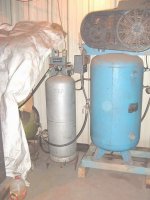
Ok i installed the compressor in the out side shed as pre posted in older posts, i ran about 85 ft of 10-2 to power it and 30 amp breaker, and after along phone conversation with champion on the right way to wire it , its fires up but still sounds like a low idle no real rpms out of it, slow. It gets to pressure of 150 shuts off ect but takes about 10 minutes. I tryed running my d/a it works but has no balls and pressure steadly drops cant keep up.The electrician friend said maybe its a power loss from the 10-2 wire , so i bought a 120 ft roll of 8-2 and just ran it to the breaker to the compressor and same thing. . Now either my compressor is bad ,only other option i have is to take this beast out of the shed i built around it:( and hook it up about 3 ft from the panel box to test it or buy another one. heres the spec tag on the motor am i missing something??
deletecomptag.jpg
 
To avoid these ads, REGISTER NOW!

OccupantRJ

Well-known member
Joined
May 15, 2009
Messages
11,262
Location
Eastern North Carolina
Maybe it's me, but that motor sure seems to pull a lot of amps for 3 hp. Try temporarily using both the #8 and #10 wires together in parallel to see what happens. Check the actual voltage at the panel, and at the breaker lugs, also at the compressor motor terminations. A clamp-on amp meter would also help determine the issue. Can you hear the centrifugal switch drop out (click)when you shut the motor off?
 

Fubar

Well-known member
Joined
Jan 22, 2010
Messages
360
Location
Cape Cod Ma
Get an amp probe and measure the starting and running amperage. Then you'll have an idea of whats going on.
 
OP
M

mad57

Well-known member
Joined
Jan 30, 2009
Messages
1,698
Maybe it's me, but that motor sure seems to pull a lot of amps for 3 hp. Try temporarily using both the #8 and #10 wires together in parallel to see what happens. Check the actual voltage at the panel, and at the breaker lugs, also at the compressor motor terminations. A clamp-on amp meter would also help determine the issue. Can you hear the centrifugal switch drop out (click)when you shut the motor off?

Damn, i returned the wire allready.. but i did check the voltage at the breaker and compressor lugs 220 same, i never though about running both wires at the same time, the compressor lugs would be cramped barely enough room for 10-2 and the other wires.
 

sberry

Banned
Joined
Jun 18, 2005
Messages
35,747
Location
Brethren, Michigan
The wire is not the problem, the 10 will power that unit fine. Either a valve problem or really worn rings. The motor is wired for the correct voltage we assume, it must be.
 

Kev442

Well-known member
Joined
Jan 15, 2009
Messages
5,386
Location
Wi
Maybe I'm missing the obvious, but if the DA has no balls off of 150 PSI in the tank, there is something else going on there. Now, if you are saying that the DA is great for 1-2 minutes and then the compressor can't keep up, welcome to reality. No 3 hp compressor is going to run a DA, my 5hp can't keep up with mine.
 

bdog

Well-known member
Joined
Oct 17, 2007
Messages
227
What size pump and tank? You didn't mention it but did the compressor work fine when it was close by or is this the first time you tried it? What kind of hose/pipe/fittings etc do you covering the 85 feet?

There should be no problems with that #8 wire, in fact the #10 should have worked fine.

You should be somewhere around 12 CFM with a decent pump and that motor.
 
OP
M

mad57

Well-known member
Joined
Jan 30, 2009
Messages
1,698
Its a commercial champion compressor , 3 hp with 60 tank. the d/a does work for say 2/3 minutes on full bore then *****, its all 3/4 in steel pipe feed from compressor from about 25/ 30 feet away, i bought it used so no clue on how it was from a closer location to the panel box. What size compressor would work a d/a and others at full bore with out and recoupe time, keep in mind home garage no 3 phase hook up, plans are some spraying, lots of d/a, and blast cabinet. would like to keep current set up in outside shed area,thks.
 

sberry

Banned
Joined
Jun 18, 2005
Messages
35,747
Location
Brethren, Michigan
Is there an air regulator in here anywhere? Running a DA at tank pressure will eat the air fast. I have a similar unit, 3 hp champ and 60 gal, use it as my primary with another one as secondary. It is a little light for continuous DA without a little waiting, as I recall about 6 minutes, maybe a little less from 0 to shut off @ 175. I haven't sanded a car lately, but I say maybe 5 minutes of run (with regulator at 100 or so) I think kick on is 120 or so, but 5 or 6 minutes and a couple 3 wait or so. About 18 or 20 needed to run a DA full bore.
The champ resides behind an insulation blanket to knock the sound down, works well, the big one rarely comes on, only when sanding continuous.
 

Attachments

  • aircomps_mod.JPG
    aircomps_mod.JPG
    70.5 KB · Views: 27
Last edited:

Zrexxer

Well-known member
Joined
Jan 23, 2007
Messages
5,058
Location
Pflugerville, TX
What pump's that thing got? The smallest pump Champion's made for quite a while takes a 5 HP motor at the least. But like Kev says, 150 psi is 150 psi, regardless of compressor or motor. If your sander won't run on tank pressure then you're chasing other issues.
 
OP
M

mad57

Well-known member
Joined
Jan 30, 2009
Messages
1,698
It runs on tank pressure just for only 2 maybe 3 minutes then slowly bogs down, to where i can push it down on the car and stop it, from what im reading here looks like im heading to a new compressor.
 
To avoid these ads, REGISTER NOW!

OccupantRJ

Well-known member
Joined
May 15, 2009
Messages
11,262
Location
Eastern North Carolina
It runs on tank pressure just for only 2 maybe 3 minutes then slowly bogs down, to where i can push it down on the car and stop it, from what im reading here looks like im heading to a new compressor.

Look at whether an electric DA sander such as Dewalt or others have will do your job. That's what I use now, to keep the wear down on my compressors. Variable speed. I sanded 700 sq ft of my plywood shop walls with it, and it performed most excellently. Cord is easier to fight than a hose. I also use an electric impact for wheels and such.
 

the spyder

Well-known member
Joined
Jan 1, 2007
Messages
589
Location
Oregon
It runs on tank pressure just for only 2 maybe 3 minutes then slowly bogs down, to where i can push it down on the car and stop it, from what im reading here looks like im heading to a new compressor.

Dont jump quite yet.

Go ahead and untension the belts + remove them. Start the compressor, run the motor for 10-15 minutes. See how warm it gets. Repeat with the belts attached. Is there any chance your unloader is stuck or the pump is rotating backwards?

There are plenty of things to check and you will not find a nicer built pump then the champion.
 

bdog

Well-known member
Joined
Oct 17, 2007
Messages
227
It runs on tank pressure just for only 2 maybe 3 minutes then slowly bogs down, to where i can push it down on the car and stop it, from what im reading here looks like im heading to a new compressor.

Do this calculation below and see what CFM you compressor is putting out. Let us know. Your compressor may be undersized or you may nbeed a better sander. Generally the higher quality sanders are more efficient. My $30 DA sander works fine but it is an air pig.


Look at your pressure gauge on your tank and write down what pressure it kicks on at and kicks off at. Subtract this to find the PSI change.

Now time how long in seconds it takes your compressor to go from on to off.

Look and see the capacity of your tank in gallons.

Now for the math.

1) Convert gallons to Cubic feet. Simply divide the number of gallons by 7.48.

2) Divide psi difference number by 14.7 (atmospheric pressure).

3) Multiply 1 & 2.

4) Convert the pump up time in seconds to minutes. Take your answer from 3, divide it by the number of seconds then multiply by 60. This is the approximate CFM of your compressor
 

sberry

Banned
Joined
Jun 18, 2005
Messages
35,747
Location
Brethren, Michigan
Maybe the belts are loose????? It is the most simple and common problem especially as it works harder when pressure increases. He still needs a regulator. FWIW, these were sturdy little pumps on these units, they run good long time. Mine is 40 years old, with that motor on it I would say it was sold by Montgomery Wards. Only thing I ever did to mine was a rod brg and set of rings but I really work the snot out of it. Cost 12 or 1300 40 yrs ago, is a quality unit.
 
OP
M

mad57

Well-known member
Joined
Jan 30, 2009
Messages
1,698
I checked the head temp while running with belts 140 was highest, the belts dont seem to be slipping theres no glazing or burnt rubber smell, bad rain here has forced me back inside house( compressor is in out side shed). thanks guys so far. p.s this unit says 1989 man factor date.
 

the spyder

Well-known member
Joined
Jan 1, 2007
Messages
589
Location
Oregon
Sounds better then my 1948 date :-D

What model of pump do you have? Your "3hp" motor is a real 3hp and I believe on a R15 pump gives 15.x CFM. (5hp =18.xcfm in my case).
 
OP
M

mad57

Well-known member
Joined
Jan 30, 2009
Messages
1,698
Found this while searching the web, pretty good info here. long but worth the read.

Air compressors for newbies -

Picking a compressor means treading a minefield of fraudulent claims. No matter what it says on the side of the tank, ALL consumer grade compressors are deceptively or fraudulently rated. I'm not suggesting they won't compress air or give good service. I'm saying you have to divide the available specs by a large BS factor get a compressor capable of fulfilling your requirements.
Here’s an introduction to home shop air compressors


The belt driven compressor pump is built along the lines of an internal combustion engine where the crankshaft and other parts run in a sealed crankcase and are either splash or pressure lubricated with oil. There is no particular advantage to a pressure lubricated compressor over a splash lubricated compressor provided they are properly designed. Examples of each have given reliable service for generations with little or no maintenance beyond oil replentishment.

The vulnerable part of any compressor pump is the valves. It’s generally a good idea to buy a valve and gasket kit when you buy the compressor. You’ll need them ten years in the future on Christmas Eve when the compressor dies just before you need to apply the final coat of lacquer on the blanket chest intended for your about-to-be-married granddaughter.

If a belt driven compressor dies any part of it including the motor and the pump can be readily replaced with standard items for lower cost than replacing the whole unit.

The pressure switch senses the tank pressure and shuts off the power when it reaches the set-point. The set-point and the differential are usually separately adjustable. The set point (PSI to turn off the compressor) is adjusted to 150 PSI, for example, and the differential is adjusted to turn the compressor on at 20 or 30 lb below the setpoint. Thus it cycles, turning on at 120 PSI and shutting off at 150.

The pressure relief (pop-off) valve is a safety device designed to open when the tank pressure exceeds its safe working pressure, blowing down the pressure to a safe level, then automatically closing. If the pressure switch failed closed, it’s conceivable the unit would keep on pumping until the tanks bursts. Thus, the pressure relief valve is a safety device.

There’s been some horrific accidents attributed to pressure vessel failures. The energy of the pressurized air is something like a weak bomb. Ductile or fatigue failure of the shell may be sudden and the reaction of a large volume of 150 PSI air released in 1/4 second is enough to shoot the entire compressor off like a rocket, smashing anything in its path. Be sure the pressure relief valve on your compressor is exercised once a year and that nothing is allowed to interfere with its proper operation.

The check valve prevents tank pressure from flowing back to the pump. Its function is often combined with the unloading valve.

The unloading valve relieves trapped pump discharge so when the compressor starts it doesn’t have to start against tank pressure. When the compressor comes up to speed the unloading valve directs pump pressure to the tank. The PPSSsssst you hear when the compressor shuts off is the unloading valve - well - unloading..

The main function of the air tank is to serve as a reservoir, radiate the heat of compression, and to condense water entrained in the compressed air. The tank is a pressure vessel whose manufacture and testing is controlled by UL procedures similar to steam boilers and compressed gas cylinders. US Dept of Commerce regulations requires a sheet metal label to be permanently welded to the exterior of any air tank sold in the US certifying its service, safe pressure, hydrostatic test pressure, and other data including the alloy and gage of the sheet metal used for the shell and heads.

A common belief is that a large tank (actually, “receiver”) is advantageous and will somhow compensate for an undersized compressor. Not true: A large air tank gives you nothing more than a few extra seconds of surge capacity for short term, high demand tools like impact wrenches. As soon as the compressor kicks in, it's only the compressor delivery that runs the tool. The size of the tank determines the length of the charge/discharge cycle.

Induction motors are the most reliable component in an air compressor but they are not bullet proof. It’s important that their fans and air inlets are vacuumed (not blown) free of dust and lint. A few small pancake compressors are driven by a series wound motor. If you find it necessary to replace the brushes, you may find it maddening to get at them. Pay close attention to disassembly order.

Most any small oil-less compressor will serve a nailor, pump up the snow tires, and supply an occasional blast of air while lasting for a good many years. I have a heavy duty 23 CFM compressor I seldom use except for sandblasting. 99% of my compressed air is supplied by a 7 year old 1 HP Costco hot dog compressor.

As soon as you consider sprayguns and rotary air tools like a 4" sander, you instantly leave the 115 volt plug-in-the-wall-outlet compressor bracket.

Cheap import sanders are under-rated for air consumption. Furthermore any rotary air tool is VERY inefficient, even the expensive models used in industry. They typically require 5 HP of compressor power to generate 3/4 HP of air tool power. If an import sander spec says it requires 6 CFM at 90 PSI, count on 9 to 11 CFM of actual air consumption. If a 4" disk sander requires 9 CFM you need an 18 CFM compressor to run it, otherwise, you waste time waiting for the compressor to catch up.

According to traditional wisdom, you have to size a compressor to about double the largest air demand. Restating: to size a compressor, pick your air tool having the largest continuous demand (as opposed to a tool used in bursts) and double it to spec a compressor suited for your shop.

A three HP compressor is about the point where thermo-dynamic efficiency makes a two stage compressor economical. A two stage compressor pumps 20 to 30% more CFM per motor HP thanks to the heat of compression dissipated by the intercooler installed between the low pressure and high pressure cylinders. Add up the power savings over the 15 year working life of a two stage compressor compared to a single stage and you’ll find the 20% represents enough to pay for the two stage compressor several times over.

A two cylinder compressor is not necessarily a two stage compressor. The cylinders may be in a V configuration or side by side. In a two stage compressor a larger first stage cylinder takes atmospheric air and compresses it to about 1/3 the delivery pressure. The intermediate pressure air passes through the intercooler (the finned tube behind the pump flywheel) to be cooled by windage and into the second stage where it’s compressed to the delivery pressure. The first stage cylinder head will have a separate pressure relief valve. A common alternative design has two low pressure cylinders pumping through an intercooler into a third high pressure cylinder in a “W” configuration. In this design the low pressure cylinders are only slightly larger than the high pressure cylinder.

A two cylinder single stage compressor will have two side-by-side cylinders of equal size and no intercooler. Unscrupulous marketers may sometimes peddle a two cylinder single stage compressor as “two stage” so be alert if you find a “bargain”.

A consumer grade compressor run continuously will fail prematurely. A typical spraygun requires 5 to 8 CFM. doubling the largest rating equals 16 CFM. That requires a real 5 HP two stage compressor whose induction motor draws 22 Amps @ 240 Volts. A 5 HP 60 gallon vertical tank compressor occupies only a little more floor space than a 3 gal pancake but, because it’s nearly 6 feet high, it won't fit under the workbench.

Here's a list of applications and motor HP and electrical demand in ascending order:

Fill bicycle tires or run a nailor 1/2 to 1 HP (10 Amp @ 120 Volts)

Spray paint 2HP (9 Amp at 240 Volts)

General automotive use where air rachets and impact tools are employed 3 to 5 HP (12 to 22 Amps @ 240 volts

Running a blast cabinet 3 to 7.5 HP depending on nozzle diameter (12 to 33 amps @ 240 Volts)

Home Depot sells a good 5 HP two stage Ingersol Rand home duty compressor with an 60 gallon tank for $899. I regard it as a good buy for the home shop user (No plug intended).

The Sears oil-less two stage compressor is not suitable to power rotary air tools. While it is a true two stage compressor and will deliver 175 PSI, the Sears two stage compressor, if honestly rated, would be about 2 real HP. Once the Sears two stage is drawn down to cycling it won't quite keep up with an import 4" air sander under load (yes, I ran a test).

As a side issue, I use electric sanders and avoid the whole problem of large compressors and rotary air tools with their carried over oil and water sprayed on my projects. The electric 4" sanders have 115 volt 6 Amp motors which draw about 1/7 the juice of a 240 Volt 22 Amp compressor motor.

By the way and for what it's worth, most two stage compressors are set for 175 PSI service - too high for most air tools and shop service. If air is compressed much over the required line pressure, energy is wasted when when tank pressure is reduced to line pressure at the regulator. If you change out the motor pulley for one about 20% larger (calculate the actual diameter using Boyle's Law and common sense) and reset the pressure switch to kick in at 105 PSI and out at 125 PSI, you'll have extra delivery, lower duty cycle, cooler compressor operation, and lower power bills.

Any extra wear caused by higher pump speed is more than offset by the lower interstage and discharge pressures and lower head and reed valve temperatures.
 
OP
M

mad57

Well-known member
Joined
Jan 30, 2009
Messages
1,698
How do i test to see if the motor is running on the right phase? The sticker on the back says it can run 208. while i assume my elec friend knows what hes doing, is it possible he over looked this? I forget what it sounded like back 2 yrs ago when i bought it from the shop , i dont remember, like i said it seems to run rather slow. thks sorry for all this posting and questions but hell its raining here;)
 

Rudyjr

Well-known member
Joined
Dec 28, 2009
Messages
555
Location
Central Ohio
You do have this wired to a 30 amp double pole breaker? And the wiring on the motor has the correct leads tied together and the correct leads to both 110 volt legs as per the nameplate? This motor even though it will run on 110 volts should be wired to 220 volts for a compressor application.
 
OP
M

mad57

Well-known member
Joined
Jan 30, 2009
Messages
1,698
You do have this wired to a 30 amp double pole breaker? And the wiring on the motor has the correct leads tied together and the correct leads to both 110 volt legs as per the nameplate? This motor even though it will run on 110 volts should be wired to 220 volts for a compressor application.

Yes to both. is there a diffrent hook up for 3 phase and how do i test it to see if thats the case?
 

the spyder

Well-known member
Joined
Jan 1, 2007
Messages
589
Location
Oregon
Motors are either single phase or 3 phase, not both. Your motor clearly states 1ph 115/230v operation.

How is it wired? Do you have a magnetic starter or just a pressure switch?
 
OP
M

mad57

Well-known member
Joined
Jan 30, 2009
Messages
1,698
Motors are either single phase or 3 phase, not both. Your motor clearly states 1ph 115/230v operation.

How is it wired? Do you have a magnetic starter or just a pressure switch?

on the back of the motor it states 208 can be used isnt that 3 phase?
 

OccupantRJ

Well-known member
Joined
May 15, 2009
Messages
11,262
Location
Eastern North Carolina
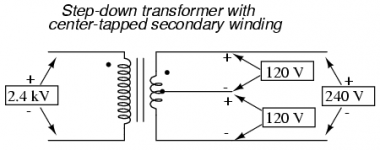
Our factory 208 is 3 phase. I could pull off of 2 of the 3 phases and run that motor as a single phase motor. Remember, 2 phases can still be referred to as single phase operation. Confusing, isn't it? 3 phase at our factory is derived from three seperate transformers, each one providing a hot leg, therefore 3 phases. A home is usually done as pictured in this pic, using one transformer on a pole or in a box near your home. It may serve several homes. Note the 240 comes off one transformer and is center tapped. A 3 phase motor has 3 power inputs feeding it, and can be reversed by simply switching any 2 of the 3 wires in relation to each other.
The phases use each other for "returns". No neutral needed.
 

Attachments

  • 02169.png
    02169.png
    5.4 KB · Views: 16

nehog

Well-known member
Joined
Jan 2, 2010
Messages
7,935
Location
Jaffrey, NH
It runs on tank pressure just for only 2 maybe 3 minutes then slowly bogs down, to where i can push it down on the car and stop it, from what im reading here looks like im heading to a new compressor.

I had the same problems with an impact wrench. Could not figure it out, then a light went off... Found that the quick disconnect on the hose was bad (don't remember, but maybe a bit of teflon tape got clogged in it...)

I even replaced the impact wrench thinking that it was bad! But when my new IR wrench did the same thing, I realized there was more to the story.

It worked fine as long as the tank was at 'full' pressure, but once it dropped even a couple of PSI the power dropped way off, even before the pressure switch kicked in.
 
To avoid these ads, REGISTER NOW!
Top Bottom