
You are using an out of date browser. It may not display this or other websites correctly.
You should upgrade or use an alternative browser.
You should upgrade or use an alternative browser.
Lifetime guarantee tap and die sets
- Thread starter theoldwizard1
- Start date
Maddog3355
Well-known member
- Joined
- Feb 25, 2018
- Messages
- 128
Looks like some good deals.
gahrajmahal
Well-known member
Thanks for posting. Something I have always wanted but couldn’t e price of good sets.
Malaworkerbee
Well-known member
Read there Amazon reviews. They don't honor the lifetime warranty
superskaterxes
Well-known member
biggest scam ever, dont buy
biggest scam ever, dont buy
^^^Agree. The fact that they plaster USA everywhere simply means they're trying to deceive the consumer into thinking the actual product is made in the USA.
I bet it's all low end Chinese but nowhere do they state COO.
The best guarantee is buying quality name brand taps and dies. (Hanson, Irwin, SGS, Whitney, Morse, Cleveland, Hertel, Greenfield, etc, etc)
What good is a mail in warranty when a tap breaks off in your work.
Last edited:
I have a set of their drill bits. They are nothing special. The lifetime warranty makes you feel like they should be the best drill bits ever, but reality is they are not. They will warranty them if you break one, but the problem is that you have to mail them the broken one and it's just not worth the hassle to keep sending them drill bits and spending money on postage.
gatewaysysop
Well-known member
Read there Amazon reviews. They don't honor the lifetime warranty
biggest scam ever, dont buy
I have heard nothing good about their warranty process, and many complaints. A few folks on YouTube who shill for them even did videos to try and explain the warranty process, because apparently it was that convoluted.
One of the worst (and obviously sponsored) shills I've seen is this guy. Enough people blasted him in the comments that he finally turned them off on all his videos, a number of which were pure and shameless plugging for Drill Hog.
^^^Agree. The fact that they plaster USA everywhere simply means they're trying to deceive the consumer into thinking the actual product is made in the USA.
I'm not an ultra-nationalist, I have plenty of things made outside the US, but what I really dislike is when companies blatantly mislead the consumer about COO. I see it all the time, and not just tools. Same old bait and switch, "Italian design" and the Italian flag on the front of the packaging, then in tiny print on the back "Made in China." I get the need to reduce cost, but not the blatant misdirection.
These Drill Hog folks ought to look up what happened with Shinola and a few others when the FTC caught on to their misleading marketing.
Last edited:
Willie Makeit
Well-known member
- Joined
- Dec 30, 2013
- Messages
- 920
Niobium Nb41 Steel
what? lol ... if it isn't HSS then it isn't a tap or a die
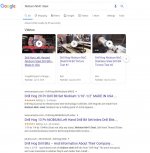
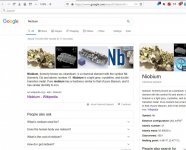
Google Niobium and the only "hits" for this element point back to Drill Hog. What a crock of $hit

Farmall450
Well-known member
what? lol ... if it isn't HSS then it isn't a tap or a die
Google Niobium and the only "hits" for this element point back to Drill Hog. What a crock of $hit
I wasn't sure if that was a typo or what
LB-1911
ALLIANCE MEMBER
Two Previous threads -
Drill hog drill bits and easy outs
08-14-2017
I have 2 sets, 1/2" and 3/8". I will not say that I have "given them a good work out", but I am happy. I like the Huot index !
Rumor is, they are buying in big volume from Norseman and getting big discounts.
11-03-2018
Drill Hog Warranty
B_Bimmer
Well-known member
Junk. I felt lied to about the few things I bought.
flylow7f39
Well-known member
- Joined
- Oct 31, 2010
- Messages
- 358
I've never have used any Drill Hog so other than I prefer stuff not made in communist countries, when available and the cost fits in my budget, I have no opinion about them.Google Niobium and the only "hits" for this element point back to Drill Hog. What a crock of $hit
A Google search for Niobium turns up about 11,000,000 results for me including:
https://periodic.lanl.gov/41.shtml
"Niobium metal is used in jewelry and as an alloying agent in steel to increase its strength. Niobium alloy steels are often used in pipelines."
https://www.britannica.com/science/niobium
"Niobium (Nb), chemical element, refractory metal of Group 5 (Vb) of the periodic table, used in alloys, tools and dies, and superconductive magnets. Niobium is closely associated with tantalum in ores and in properties.
Due to the great chemical similarity of niobium and tantalum, the establishment of the individual identities of the two elements was very difficult. Niobium was first discovered (1801) in an ore sample from Connecticut by the English chemist Charles Hatchett, who called the element columbium in honour of the country of its origin, Columbia being a synonym for the United States. In 1844 a German chemist, Heinrich Rose, discovered what he considered to be a new element occurring along with tantalum and named it niobium after Niobe, the mythological goddess who was the daughter of Tantalus. After considerable controversy it was decided that columbium and niobium were the same element. Eventually international agreement (about 1950) was reached to adopt the name niobium, though columbium persisted in the U.S. metallurgical industry.
Niobium is roughly 10 times more abundant in the crust of the Earth than is tantalum. Niobium, more plentiful than lead and less abundant than copper in the Earth’s crust, occurs dispersed except for relatively few minerals. Of these minerals, the columbite–tantalite series, in which columbite (FeNb2O6) and tantalite (FeTa2O6) occur in highly variable ratios, is the main commercial source. Pyrochlore, a calcium sodium niobate, is also the principal commercial source. Natural niobium occurs entirely as the stable isotope niobium-93."
https://www.livescience.com/34682-niobium.html
"Niobium is a shiny, white metal that typically forms a film on its surface when exposed to air, turning shades of blue, green, or yellow, according to Chemicool. It has a wide range of uses from use in hypoallergenic jewelry to jet engines to superconducting magnets.
Just the facts
- Atomic number (number of protons in the nucleus): 41
- Atomic symbol (on the periodic table of elements): Nb
- Atomic weight (average mass of the atom): 92.906
- Density: 8.57 grams per cubic centimeter
- Phase at room temperature: Solid
- Melting point: 4,491 degrees Fahrenheit (2,477 degrees Celsius)
- Boiling point: 8,571 degrees F (4,744 degrees C)
- Number of isotopes (atoms of the same element with a different number of neutrons): 35
- Most common isotopes: Nb-93 (100 percent natural abundance)
https://en.wikipedia.org/wiki/Niobium#Applications
"Niobium, formerly known as columbium, is a chemical element with the symbol Nb (formerly Cb) and atomic number 41. Niobium is a light grey, crystalline, and ductile transition metal. Pure niobium has a hardness similar to that of pure titanium,[2][contradictory] and it has similar ductility to iron. Niobium oxidizes in the earth's atmosphere very slowly, hence its application in jewelry as a hypoallergenic alternative to nickel. Niobium is often found in the minerals pyrochlore and columbite, hence the former name "columbium". Its name comes from Greek mythology, specifically Niobe, who was the daughter of Tantalus, the namesake of tantalum. The name reflects the great similarity between the two elements in their physical and chemical properties, making them difficult to distinguish.[3]"
Last edited:
Dumber than lumber
Well-known member
- Joined
- Dec 19, 2015
- Messages
- 1,948
Just looking at the website a few weeks ago i was shocked at the high prices. I mean those are no-name tools at stupid high prices to begin with. And if you read over the website atall you see that they are making inconsistent claims.
MJK
Well-known member
I think Tommy Boy said it well.
B_Bimmer
Well-known member
I wouldn't count on it, and good luck getting confirmation that means anything. Drill bits that are made here say it on the bit, none of theirs do. The only thing US made is the huot box included with some sets.
Willie Makeit
Well-known member
- Joined
- Dec 30, 2013
- Messages
- 920
<snip>
A Google search for Niobium turns up about 11,000,000 results for me including: <snip>
1st page of google search
Attachments
flylow7f39
Well-known member
- Joined
- Oct 31, 2010
- Messages
- 358
1st page of google searchGoogle Niobium and the only "hits" for this element point back to Drill Hog. What a crock of $hit
1st page of google search for "Niobium".
1st page of google search for "Niobium steel".
Attachments

Last edited:
^Dude look Drill Hogs 'Pig Steel m60+' LOL WTF
Yes, you can get Niobium Alloy Steel, but Drill Hog saying 'nb41' or 'Ti-22' steel like it is some kind of ASTM designation when it is the chemical element and atomic number put together is bullsh*t just like the rest of 'Drill Hog USA'
They are deceptive marketing company probably ran by one guy in his garage, selling cheap products at 5x market value to increase perceived value and cover warranty cost. Not a 'Hot Deal'
Yes, you can get Niobium Alloy Steel, but Drill Hog saying 'nb41' or 'Ti-22' steel like it is some kind of ASTM designation when it is the chemical element and atomic number put together is bullsh*t just like the rest of 'Drill Hog USA'
They are deceptive marketing company probably ran by one guy in his garage, selling cheap products at 5x market value to increase perceived value and cover warranty cost. Not a 'Hot Deal'
sharkytm
ALLIANCE MEMBER
Or ignore warranty claims completely, and pocket the profits entirely.^Dude look Drill Hogs 'Pig Steel m60+' LOL WTF
Yes, you can get Niobium Alloy Steel, but Drill Hog saying 'nb41' or 'Ti-22' steel like it is some kind of ASTM designation when it is the chemical element and atomic number put together is bullsh*t just like the rest of 'Drill Hog USA'
They are deceptive marketing company probably ran by one guy in his garage, selling cheap products at 5x market value to increase perceived value and cover warranty cost. Not a 'Hot Deal'
B_Bimmer
Well-known member
No matter how he's doing it, it's deceptive and stinks.
For taps, OSG has been stellar for me. Spiral point and spiral flute. Can use in mill and tap under slow power. Just make sure taps are hss. That is a must. Break a tap and you will likely whatever you were tapping in the process of removing the broken pieces.