To avoid these ads, REGISTER NOW!

Need help with long 1000' wire run

Sama8525

Member
Joined
Mar 17, 2020
Messages
14
Location
Texas
Hey all,
Im pretty new to electrical, i know enough not to kill myself but not enough to necessarily do anything right.

I have a couple very long runs i need to do. One down my driveway (about 800') that will have a security camera, a few lights (3-4), and a couple outlets for the occasional need (if i need to plug a small air compressor or drill etc in.) All of which are spread out over the 800' (theres a shed in the middle).

The second run is downhill into my field for about 400' where im building a play structure for paintball. Same thing....lights, maybe speakers, couple outlets. Then going another 400' at a right angle and doing the same thing again.

I thought i had this figured out and so bought 2500' of 8 Gauge copper wire. Now im not so sure.

I know voltage drop is a thing, is that actually important for what im doing or will lights etc still run with low voltage? Is there a way to boost the voltage along the way? Is it better to put it on a 20 Amp breaker? 15? 40?.

Basically how do i wire this with the 8 Gauge wire i already purchased.

Thanks.
 
To avoid these ads, REGISTER NOW!

sberry

Banned
Joined
Jun 18, 2005
Messages
35,747
Location
Brethren, Michigan
The 8 w as a poor choice. Good case where asking first would have been better. "Research" strikes again. Buy a battery drill. Use a flashlight, do you really need an air comp there?
 

Max

ALLIANCE MEMBER
Joined
Jun 16, 2018
Messages
3,325
Location
Georgia
Sberry is correct. There are ways to boost voltage (a transformer), but they will not work for you plus they will cost more than just getting the right wire. Th problem with a transformer is that it will always boost the voltage, but that your wire will drop more or less voltage depending on the load. So when you don’t pull much of a load you’ll run the voltage too high and likely blow up your lights or stereo.

The best option is to return or sell the wire, do the math, and buy the right stuff. You also need to figure out your correct loads so you can size the wires. I can see why you’d want compressors due to paintball, but be aware they are high current devices and your wire cost will be higher to support them.

- Max
 

Bretny

Well-known member
Joined
Jul 31, 2017
Messages
3,918
Location
Dutchess county NY
800ft for a security cam and a few lights. They make all of those things able to run on solar for prob less than the wire alone.
 

sberry

Banned
Joined
Jun 18, 2005
Messages
35,747
Location
Brethren, Michigan
Best case scheme here is number 2 alum, would have to think about how to do this,, maybe 5k ft spool, don't recall the different sizes. I agree about some kind of solar options.
 
OP
S

Sama8525

Member
Joined
Mar 17, 2020
Messages
14
Location
Texas
To clarify. The air compressor is just a little 5 gallon one for tractor tires, not doing it for the paintball.

I feel like there's too much for solar and a generator isn't realistic.

Total load on each line is maybe 12 amps.

Isnt bigger wire much harder to work with?

What would be the correct setup... assuming i could return the wire.

Theres no easy way to do this? Devices that work on low voltage or something?
 

Shiftless

Well-known member
Joined
Mar 9, 2014
Messages
14,523
Location
East Bay SFO
How often do you really need to air up tractor tires in that exact location rather than back in the tractor shed?

Even if you do, there are portable power packs with on board air compressors. How big are your tractor tires?

What’s the wattage on that security cam? Does that cam transmit back to base wirelessly or via cable? What’s the range of wireless?

A few LED lights won’t draw more than a few watts each. Your current requirements will be nowhere near 12 amps. With a portable battery compressor like in a jump box or maybe an M12 or (M18 maybe soon?) inflator, you can use a relatively small gauge wire.

Lots of questions I know, but as sberry said, plan first according to actual needs.
 

Attachments

  • 570A0F09-6D30-4D5A-9AEC-FA879EE9CC97.jpg
    570A0F09-6D30-4D5A-9AEC-FA879EE9CC97.jpg
    123.4 KB · Views: 26
Last edited:

dcg9381

Well-known member
Joined
Jun 20, 2018
Messages
11,711
Location
Austin, TX
I feel like there's too much for solar and a generator isn't realistic.

FYI - if you can ditch the requirement to power a compressor (or haul along an inverter), then a security camera and a few lights - easily done with an 80W+ solar panel and 1-2 12V deep cycle batteries.

Is the camera IP type or wired?
 
OP
S

Sama8525

Member
Joined
Mar 17, 2020
Messages
14
Location
Texas
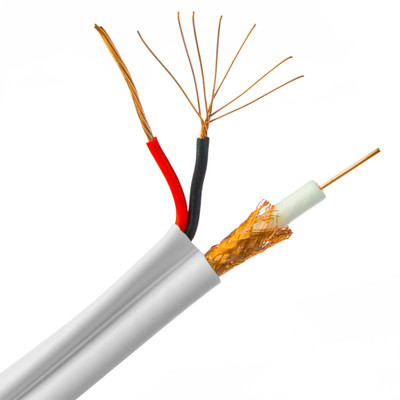
Camera is on an rg59 coax.

I could use the compressor by the house i suppose but it would be nice to have outlets out and around for random things
 

Bert_

Well-known member
Joined
Dec 24, 2016
Messages
9,716
Location
NW Iowa
You need about double the size wire you got.


I could see doing the first 400' run. Forget the rest and do it with solar or something.
 

theoldwizard1

Well-known member
Joined
Feb 22, 2011
Messages
43,132
Location
SE MI
I know voltage drop is a thing, is that actually important for what im doing or will lights etc still run with low voltage? Is there a way to boost the voltage along the way?
Yes, but it would require custom wound transformers. $,$$$

For the camera and the lights, a small solar panel and a couple of 6V golf cart batteries plus a 300W-500W inverter is much cheaper.

For the few times you need to run power tools, buy a portable generator.
 

ard

Well-known member
Joined
Feb 16, 2015
Messages
4,391
Location
Sierra Foothills... California
#1 copper in conduit will give you 15 amps at 808 feet.

You can look into transformers to change the voltage on your line, only a few hundred $- often find them used.

If my calculations are right, if you increase to 480V, that #8 will let you run to 1300 feet, and give you 8 amps. When you convert 8 A @ 480 down to 120, you have 32Amps

FWIW- this is how power distribution works. When you see many miles of electrical wires, then a transformer and fat wires to the house, they are running at 22,000 volts along the street, with lower amps (and smaller wire). They then drop it at the house to 240/120V but 200 Amps (or whatever)

Note I am NOT talking about a transformer to just overcome voltage drop.
 
OP
S

Sama8525

Member
Joined
Mar 17, 2020
Messages
14
Location
Texas
And you think that signal will carry 800' ?????

You MIGHT get that distance with fiber optics. Ethernet would require at least 2 repeater.

Well I was hoping, but theoretically i could put it on the building and aim it down the driveway instead of at the gate. That would make it only 400'
 

BB Sig

Well-known member
Joined
May 16, 2018
Messages
139
Location
Florida
We've had lighting issues with our IP cameras on coax cable. Fries the camera, wire and switch! Also bleed over to the Comcast coax and blew 21 TVs.

I second the fiber optics and run a converter if needed. Solar powered injector of some sort might be possible.

Barry
North Florida
 
To avoid these ads, REGISTER NOW!

ard

Well-known member
Joined
Feb 16, 2015
Messages
4,391
Location
Sierra Foothills... California
Yup

A pair of 480/240-120v transformers would take care of this.

We just had another thread like this with a guy that needed to power a small one room cabin like 2000 ft away....

OP- consider the effort to engineer this, if you really wan no-fuss, no muss 120V out there. Not that hard, bit of a learning curve to engineer- but IMO worth it
 
OP
S

Sama8525

Member
Joined
Mar 17, 2020
Messages
14
Location
Texas
How often do you really need to air up tractor tires in that exact location rather than back in the tractor shed?

Even if you do, there are portable power packs with on board air compressors. How big are your tractor tires?

What’s the wattage on that security cam? Does that cam transmit back to base wirelessly or via cable? What’s the range of wireless?

A few LED lights won’t draw more than a few watts each. Your current requirements will be nowhere near 12 amps. With a portable battery compressor like in a jump box or maybe an M12 or (M18 maybe soon?) inflator, you can use a relatively small gauge wire.

Lots of questions I know, but as sberry said, plan first according to actual needs.

Lets say i skip the compressor. How far can i realistically run 8 gauge for lights and speakers?
 
OP
S

Sama8525

Member
Joined
Mar 17, 2020
Messages
14
Location
Texas
We just had another thread like this with a guy that needed to power a small one room cabin like 2000 ft away....

OP- consider the effort to engineer this, if you really wan no-fuss, no muss 120V out there. Not that hard, bit of a learning curve to engineer- but IMO worth it

Is there a link to that thread?
 
OP
S

Sama8525

Member
Joined
Mar 17, 2020
Messages
14
Location
Texas
Yes, but it would require custom wound transformers. $,$$$

For the camera and the lights, a small solar panel and a couple of 6V golf cart batteries plus a 300W-500W inverter is much cheaper.

For the few times you need to run power tools, buy a portable generator.

Whats the hookup look like for solar? And how much power does that realistically give me? I don't know much about solar
 
OP
S

Sama8525

Member
Joined
Mar 17, 2020
Messages
14
Location
Texas
Also would it solve anything to run 4 wires and do 240v? The 8 gauge i bought is in individual wires.
 
Last edited:

Shiftless

Well-known member
Joined
Mar 9, 2014
Messages
14,523
Location
East Bay SFO
Lets say i skip the compressor. How far can i realistically run 8 gauge for lights and speakers?

We need to know the amperage to answer that question exactly.

At 3 amps draw, with all of the load at the very end, the voltage drop is only 3 1/2 volts.
But all of your load is not at the end...

I have no idea about your speakers, but 360 watts is a LOT of LED lighting.
 
Last edited:
OP
S

Sama8525

Member
Joined
Mar 17, 2020
Messages
14
Location
Texas
Correct me if im doing the math wrong....but if i were to run 4 wires of 8 gauge at 800'. 2 hot wires, a neutral and a ground. That's 240v....there will be significant voltage drop on that obviously. But the end result will be MORE than 120v. Is there anything that could then convert whatever volts were left of the 240 into 120v and just wire things as normal?
 

Shiftless

Well-known member
Joined
Mar 9, 2014
Messages
14,523
Location
East Bay SFO
Nope. That’s not how it works.

Re-read post #3 for the detailed answer.

Why don’t you like 4 1/2 volts less at the end of 400 feet when running 10 amps?
Please list your individual loads. What’s you camera draw? How many floodlights or pathway lights are you running? How many watts each? They are LED right?
 
Last edited:
OP
S

Sama8525

Member
Joined
Mar 17, 2020
Messages
14
Location
Texas
Nope. That’s not how it works.

Re-read post #3 for the detailed answer.

Why don’t you like 4 1/2 volts less at the end of 400 feet when running 10 amps?
Please list your individual loads. What’s you camera draw? How many floodlights or pathway lights are you running? How many watts each? They are LED right?

I havent bought anything except the wire so far. So i can put in whatever would actually work best. Lights for the back field would need to be somewhat diverse, regular field lighting and maybe some spot lights for the kids to search the trees with.

The driveway i can do 400', but in the back the first structure is 400' and then the second is another 300' beyond that.
 

theoldwizard1

Well-known member
Joined
Feb 22, 2011
Messages
43,132
Location
SE MI
Whats the hookup look like for solar? And how much power does that realistically give me? I don't know much about solar
Two 6V golf cart batteries will provide over 200 amp-hours of power for 20 hours, so you can easily pull 10+ amps/hour. That is about 3 nights without recharging. 10A is quite a lot for 12V LED lights.

Don't use a 120VAC inverter for the lights or the camera. It wastes to much power. Your camera likely uses DC power anyway and worst case you will have to use a DC-DC power supply between the batteries and the camera.

A "half size" (36 cell) solar panel and charge controller should recharge those batteries.
 
Last edited:

theoldwizard1

Well-known member
Joined
Feb 22, 2011
Messages
43,132
Location
SE MI
Correct me if im doing the math wrong....but if i were to run 4 wires of 8 gauge at 800'. 2 hot wires, a neutral and a ground. That's 240v....there will be significant voltage drop on that obviously. But the end result will be MORE than 120v. Is there anything that could then convert whatever volts were left of the 240 into 120v and just wire things as normal?
Probably NOT legal, but reasonable "safe". Run 2 conductors off of a 30A 240 breaker. Forget neutral and forget ground. At the end of the wire, you want to connect to one side of a transformer. That is the device that changes one (AC) voltage to another.

The first problem is you do not know for certain what the voltage will be exactly at the end of the wire ! Someone smarter than me can make an "educated guess".

The second problem is, you will need a custom made transformer. $$$ The bonus of (most) transformers is that output is isolated from the input. So connect ground and neutral together on the output, drive a ground rod and you are good to go !

Done this way, you should easily get 120VAC @ 20A !

Depending on how your custom transformer is made, you could even get 240VAC, split phase (i.e. two 120VAC legs), but maybe at only 10A-15A.
 
Last edited:

ard

Well-known member
Joined
Feb 16, 2015
Messages
4,391
Location
Sierra Foothills... California
Probably NOT legal, but reasonable "safe". Run 2 conductors off of a 30A 240 breaker. Forget neutral and forget ground. At the end of the wire, you want to connect to one side of a transformer. That is the device that changes one (AC) voltage to another.

The first problem is you do not know for certain what the voltage will be exactly at the end of the wire ! Someone smarter than me can make an "educated guess".

The second problem is, you will need a custom made transformer. $$$ The bonus of (most) transformers is that output is isolated from the input. So connect ground and neutral together on the output, drive a ground rod and you are good to go !

Done this way, you should easily get 120VAC @ 20A !

Depending on how your custom transformer is made, you could even get 240VAC, split phase (i.e. two 120VAC legs), but maybe at only 10A-15A.


Bad advice...
 

kj_mustang

Well-known member
Joined
Feb 9, 2011
Messages
1,213
Location
Harrisonburg, VA
If you are using an analog camera with coax, then you will need 24v power wires too. It is usually run as a set. Edit: forgot to add you can only go 700 feet without an amplifier.
bulk_siamese_white_th.jpg
 
Last edited:
To avoid these ads, REGISTER NOW!
Top Bottom