To avoid these ads, REGISTER NOW!

AFCI/GFCI 2017 NEC new construction question

Lu-Max

Well-known member
Joined
Jan 8, 2014
Messages
745
My state still uses 2017 NEC

I am finishing up rough-in electrical for my new building, all drops are complete, I'm ready to do the panel. I am making a list of breakers and receptacles to buy and have a question

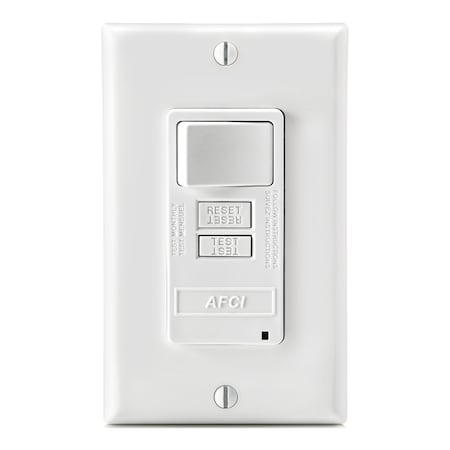
Since this is a guest house I was planning to install AFCI receptacles in all of the rooms that they are required, and then use a standard 15A breaker in the panel. This way if a guest trips a receptacle they can easily reset it and I don't have to walk over to the guest house to reset a tripped breaker (the panel is in a utility room that guests will not have access to). But, to comply with 2017 NEC do the 15A receptacle circuits require an AFCI breaker in the panel or will the installation of AFCI receptacles pass inspection?

I know that using standard, tamper-proof 15A receptacles and an AFCI breaker is probably less expensive, but I don't want to have to walk outside in the rain or late at night/early in the morning to reset a tripped breaker so it's worth the extra cost to me if it complies with 2017 NEC.

Thanks.
 
To avoid these ads, REGISTER NOW!

pbon

Well-known member
Joined
May 14, 2017
Messages
3,498
He does not want the guests to use too much power? The 14-2 Romex was on sale?
 
OP
L

Lu-Max

Well-known member
Joined
Jan 8, 2014
Messages
745
Please don't derail my thread, it's a serious question. Thanks.
 

exranger06

Well-known member
Joined
Aug 9, 2015
Messages
1,686
Location
CT
You can use the outlet type AFCIs if the home run is in conduit or MC or AC cable. This video explains it more:
Keep in mind that it's not just the receptacles that need AFCI protection. Every 15A and 20A 120V circuit needs AFCI. This includes hardwired lighting, ceiling fans, and hardwired appliances. But you can buy switches with AFCI devices, and dead-front AFCIs for those.
Steiner%20Electric%20Company_IDWIMAGE1518990142019.jpeg

af202dfw-p.ashx
 

alfredeneuman

Well-known member
Joined
Mar 3, 2011
Messages
4,590
Location
Fullerton, CA
.... and then use a standard 15A breaker in the panel. This way if a guest trips a receptacle they can easily reset it ..... (the panel is in a utility room that guests will not have access to).

How will the guests reset the breaker if they don't have access to the panel?
 
OP
L

Lu-Max

Well-known member
Joined
Jan 8, 2014
Messages
745
Thanks exranger06, exactly the precise answer I needed.

alfredeneuman - the guests can reset an AFCI receptacle they trip by pushing the reset button on the receptacle.
 

exranger06

Well-known member
Joined
Aug 9, 2015
Messages
1,686
Location
CT
I think what alfredeneuman meant is that if a guest tripped a breaker due to an overload, how would they reset it? And why is that not an issue but a tripped AFCI is?
 

cleanspg

Well-known member
Joined
Nov 5, 2014
Messages
52
Assuming you are wiring with nmb, you need afci breakers and for outlets you need gfci as well so I found it easiest/cheapest (though not cheap) to use combo afci/gfci breakers for outlets and afci only breakers for dedicated light circuits.

Unlike gfci where the protection is only applicable where someone could potentially get shocked, afci is supposed to protect you (or your structure) from an arc and that is just as likely on the home run as anywhere else if you are not using conduit or armored cable.
 
Last edited:

teamextreme

Well-known member
Joined
Aug 10, 2013
Messages
867
Location
Lakewood, CO
Assuming you are wiring with nmb, you need afci breakers and for outlets you need gfci as well so I found it easiest/cheapest (though not cheap) to use combo afci/gfci breakers for outlets and afci only breakers for dedicated light circuits.

Unlike gfci where the protection is only applicable where someone could potentially get shocked, afci is supposed to protect you (or your structure) from an arc and that is just as likely on the home run as anywhere else if you are not using conduit or armored cable.

The area is not a garage or shop area, these are living quarters. As such, GFCI is not required, unless its a bathroom, kitchen, laundry, etc. As stated previously, you need to protect the home run wiring as well as everything downstream of the 1st recep. So unless you ran that first run of wiring (home run) in MC cable, conduit, etc, you have to use an AFCI breaker. I don't think I'd worry that much about guests tripping AFCI's. They sometimes cause issues, but that's usually from running motor loads, like vacuums, power tools, etc. I'm guessing "guests" won't be using that type of equipment. I would put in AFCI breakers and be done with it and save a bunch of money too.
 

cleanspg

Well-known member
Joined
Nov 5, 2014
Messages
52
NEC 2017 requires GFCI on any/all 120v residential circuits with an outlet. There are no exceptions in 2017 that I can remember (maybe a dedicated appliance outlet?) but certainly anywhere in your house/garage/shop you have to have gfci.

EDIT- I may not remember that correctly. I remember it has been required for anything I have done, but that has been garage, kitchen, bath and unfinished basement. maybe not in your living room or bedroom?
 
Last edited:

Terry D

Well-known member
Joined
Mar 25, 2015
Messages
2,202
Location
St. Louis, MO.
NEC 2017 requires GFCI on any/all 120v residential circuits with an outlet. There are no exceptions in 2017 that I can remember (maybe a dedicated appliance outlet?) but certainly anywhere in your house/garage/shop you have to have gfci.

You are thinking AFCI, Pretty much now days if it is not require to be GFCI protected, it needs to be AFCI protected. There are only a few areas that are not required to be AFCI protected. 210.8 describes all places where GFCI protection is required
 
Last edited:

cleanspg

Well-known member
Joined
Nov 5, 2014
Messages
52
You are thinking AFCI, Pretty much now days if it is not require to be GFCI protected, it needs to be AFCI protected. There are only a few areas that are not required to be AFCI protected. 210.8 describes all places where GFCI protection is required

Yeah, I was too hasty in replying. Edited above and then went back and double checked... They are required for every circuit that I have ever added, just not every circuit you could add.
 
OP
L

Lu-Max

Well-known member
Joined
Jan 8, 2014
Messages
745
I think what alfredeneuman meant is that if a guest tripped a breaker due to an overload, how would they reset it? And why is that not an issue but a tripped AFCI is?

Here is precisely what I wrote: "This way if a guest trips a receptacle they can easily reset it" (i.e. If they pop the button on a receptacle they can use the reset button).
 

exranger06

Well-known member
Joined
Aug 9, 2015
Messages
1,686
Location
CT
Here is precisely what I wrote: "This way if a guest trips a receptacle they can easily reset it" (i.e. If they pop the button on a receptacle they can use the reset button).
Right. And here is precisely what I wrote:

I think what alfredeneuman meant is that if a guest tripped a breaker due to an overload, how would they reset it? And why is that not an issue but a tripped AFCI is?

If someone plugs in a bunch of high amperage appliances on one circuit and overloads it, the breaker is going to trip. A 15 amp breaker is going to trip any time the current goes over 15 amps, that's why it's a "15 amp breaker." In that case, the button on the receptacle isn't going to do anything, and you'll have to go out to the guest house and reset the breaker. So what alfredeneuman and I were saying is, why are you so concerned about AFCIs tripping and having to go out and reset them, but you're NOT concerned about breakers tripping due to overloads and having to go out and reset those?
 

jim111

Well-known member
Joined
Nov 18, 2015
Messages
93
Location
tx
OP if you have already run your romex, you asked your question too late. As already pointed out, absolutely not code compliant on new construction to go the afci receptacle route unless you are going conduit system to first metal box, compatiable breaker to receptacle, etc etc. If you are being inspected, you will fail without afci breakers.
 

pbon

Well-known member
Joined
May 14, 2017
Messages
3,498
If it’s a short term rental AirBnB type place, the requirements may be stricter than for your house. That typically depends on the local ordinances.

It looks like the OP thinks AFCI or GFCI outlets are like mini circuit breakers. They are not. It’s a form of protection for arc fault or ground fault that can be provided either by putting one in the first if a string of outlets or by putting a special breaker in the breaker box. The renters could reset the outlet type of they trip it — due to fault not overload, but they will be calling you if they plug their hair dryer and curling iron in the same outlet on a 15 amp circuit.
 
OP
L

Lu-Max

Well-known member
Joined
Jan 8, 2014
Messages
745
Right. And here is precisely what I wrote:
If someone plugs in a bunch of high amperage appliances on one circuit and overloads it, the breaker is going to trip. A 15 amp breaker is going to trip any time the current goes over 15 amps, that's why it's a "15 amp breaker." In that case, the button on the receptacle isn't going to do anything, and you'll have to go out to the guest house and reset the breaker. So what alfredeneuman and I were saying is, why are you so concerned about AFCIs tripping and having to go out and reset them, but you're NOT concerned about breakers tripping due to overloads and having to go out and reset those?

Yes, obviously an overload should trip any breaker that is operating normally. Also obviously, tripping a receptacle (AFCI, GFCI, or combo) is not the same as tripping a breaker. :rolleyes:

What my experience has been (YMMV) with AFCI breakers in particular is that they trip quite easily. In our house my girlfriend's hair dryer, our small vacuum cleaner, our UV sterilizer will occasionally trip the AFCI when you switch them on (on a properly wired circuit). It is not tripping due to overload, apparently the AFCI breaker is sensing a short when these items are switched on. In the case of my girlfriends hair dryer it will intermittently trip when she switches it off. Newer AFCI breakers seem to be a bit better regarding this.

Finally, it is far more convenient to reset a tripped AFCI receptacle then having to go outside to reset a tripped AFCI breaker for these falsely sensed shorts.
 
To avoid these ads, REGISTER NOW!

alfredeneuman

Well-known member
Joined
Mar 3, 2011
Messages
4,590
Location
Fullerton, CA
You can use the outlet type AFCIs if the home run is in conduit or MC or AC cable.

In days past, but not in the 2017 NEC. It changed in the 2014 Edition
#14 NM can be run to an AFCI device for a maximum of 50'; a #12 for 70'.

@Lu-Max> Why don't you want the guests to have access to the breakers?
Does the guest house have any cooking appliances?
 
Last edited:
OP
L

Lu-Max

Well-known member
Joined
Jan 8, 2014
Messages
745
@Lu-Max> Why don't you want the guests to have access to the breakers? Does the guest house have any cooking appliances?

The panel for the guest cottage is in a utility room which is only accessible from the outside. In addition to the panel it contains all of my well pump and water filtration equipment, water softener, RO equipment, tankless heater, security system, and networking panel. Not a place I would ever allow guests access to.

No cooking appliances in unit per local code.
 

checkthisout

Well-known member
Joined
Sep 5, 2008
Messages
5,232
My state still uses 2017 NEC

I am finishing up rough-in electrical for my new building, all drops are complete, I'm ready to do the panel. I am making a list of breakers and receptacles to buy and have a question

Since this is a guest house I was planning to install AFCI receptacles in all of the rooms that they are required, and then use a standard 15A breaker in the panel. This way if a guest trips a receptacle they can easily reset it and I don't have to walk over to the guest house to reset a tripped breaker (the panel is in a utility room that guests will not have access to). But, to comply with 2017 NEC do the 15A receptacle circuits require an AFCI breaker in the panel or will the installation of AFCI receptacles pass inspection?

I know that using standard, tamper-proof 15A receptacles and an AFCI breaker is probably less expensive, but I don't want to have to walk outside in the rain or late at night/early in the morning to reset a tripped breaker so it's worth the extra cost to me if it complies with 2017 NEC.

Thanks.


AFCI receptacles can only be used if the section of the circuit between the breaker panel and first outlet in the chain where your AFCI outlet will be located is in conduit.

You can also run both an arc fault breaker along with an arc fault outlet but this really serves no purpose assuming you're worried about false trips and greatly increases costs.

Otherwise you have to have an AFCI breaker in the panel.
 
Last edited:

jim111

Well-known member
Joined
Nov 18, 2015
Messages
93
Location
tx
In days past, but not in the 2017 NEC. It changed in the 2014 Edition
#14 NM can be run to an AFCI device for a maximum of 50'; a #12 for 70'.

Only time 210.12(A)(4)(d) would be relevant is if they had ever developed a listed breaker and outlet AFCI combo that met the requirement for a combination-type system listed as such. Has this ever happened?
 

checkthisout

Well-known member
Joined
Sep 5, 2008
Messages
5,232

That's not what hes talking about.

Hes talking about where you use an arc faul breaker that protects against parallel arcing to protect conductors up to the first outlet where you would then install an arc fault outlet or dead front that protects against both series and parallel arcing.

Read:
https://www.jadelearning.com/blog/c...dual-function-arc-fault-gfci-circuit-breaker/
 

alfredeneuman

Well-known member
Joined
Mar 3, 2011
Messages
4,590
Location
Fullerton, CA
That's not what hes talking about.

Hes talking about where you use an arc faul breaker that protects against parallel arcing to protect conductors up to the first outlet where you would then install an arc fault outlet or dead front that protects against both series and parallel arcing.

It makes no sense at all to use an arc fault breaker ahead of an arc fault receptacle.
It's like using a GFI breaker ahead of a GFI outlet.
The circuit would already be protected by the breaker, and you could use a regular receptacle instead of the high $ AFCI device.
The section is written expressly as an alternative to using a breaker, the same as a GFCI outlet is.
 
Last edited:

AntonLargiader

Well-known member
Joined
Nov 20, 2016
Messages
1,372
Location
Charlottesville, VA
That article could be better as it doesn't really describe DF breakers well. The issue @checkthisout is referring to is AFCI vs. CAFCI. In Homeline at least, the DF breakers are GFCI and CAFCI.

The issue the OP wants to address is allowing the tenants to reset AFCI trips while locking the OCPD in the utility room. @checkthisout is saying that a parallel AF breaker would meet the AFCI requirement for the panel while still moving some of the AF detection (and resetting) into tenant space.

That's not what hes talking about.

Hes talking about where you use an arc faul breaker that protects against parallel arcing to protect conductors up to the first outlet where you would then install an arc fault outlet or dead front that protects against both series and parallel arcing.

Read:
https://www.jadelearning.com/blog/c...dual-function-arc-fault-gfci-circuit-breaker/
 

alfredeneuman

Well-known member
Joined
Mar 3, 2011
Messages
4,590
Location
Fullerton, CA
Hes talking about where you use an arc faul breaker that protects against parallel arcing to protect conductors up to the first outlet where you would then install an arc fault outlet or dead front that protects against both series and parallel arcing.
Arc fault breakers protect against both series and parallel faults ;)
The series fault has to be 5 amps sustained for it to trip
 
Last edited:

AntonLargiader

Well-known member
Joined
Nov 20, 2016
Messages
1,372
Location
Charlottesville, VA
Yep, looks like parallel-only AFCI went out the window over a decade ago.

I was looking up @alfredeneuman's 5A number and found this article that describes the AFCI requirements better. Looks like those requirements come from the UL.

https://iaeimagazine.org/magazine/2013/julyaugust-2013/afcis-in-our-states-a-standards-perspective/

I'm curious about this because a lot of loads are below 5A, and you can have a lot of arcing heat generated without (the way I see it) meeting the 5A threshold. But maybe I'm missing something.
 

checkthisout

Well-known member
Joined
Sep 5, 2008
Messages
5,232
Arc fault breakers protect against both series and parallel faults ;)
The series fault has to be 5 amps sustained for it to trip

I think I agree but I was more referencing code that assumed someone would come up with a PAIRED breaker and outlet where the breaker only protected parallel faults to the first outlet or dead face and the downstream outlet or dead face would protect both series and parallel faults at lower amperages.

The idea I think in that case would be to bias the tripping to the dead face or outlet so it can easily be reset by whoever without having to go all the way back to breaker box with the intent of the breaker in panel to only protecting against parallel faults should the building wire fail between the panel and first outlet.

I don't know of any products that exist like that but they allowed for it in the code.

Also, what I don't know could fill a warehouse.

At any rate, sorry OP. If you don't want to install arc fault breakers then your options only get more expensive and complicated if you want to meet code.
 

AntonLargiader

Well-known member
Joined
Nov 20, 2016
Messages
1,372
Location
Charlottesville, VA
The requirements are at 210.12 A and for 2017 it looks like the O.P. has some options for keeping the AFCI protection within the guest area.

Option 4 is about the "identified as meeting the requirements for system combination-type AFCI" regular breaker and the AFCI outlet device, such as this one by Eaton: https://www.eaton.com/us/en-us/prod...em-combination-arc-fault-circuit-breaker.html

Option 5 is about running in metal to the first outlet.

Which of these options are useful for you?

FWIW you are probably still going to be in violation of 240.24 which says that the occupants of a guest house must have access to the OCPDs unless the building is under continuous management supervision, but the inspector is unlikely to be able to realize that.
 

alfredeneuman

Well-known member
Joined
Mar 3, 2011
Messages
4,590
Location
Fullerton, CA
FWIW you are probably still going to be in violation of 240.24 which says that the occupants of a guest house must have access to the OCPDs unless the building is under continuous management supervision, but the inspector is unlikely to be able to realize that.

In order to a "guest house" to be applicable to that rule it depends on if there are any permanent cooking appliances. 240.24(B)(2)
That's why I asked somewhere in this thread if he had them. (the answer was no.)
 
Last edited:

AntonLargiader

Well-known member
Joined
Nov 20, 2016
Messages
1,372
Location
Charlottesville, VA
I did see that you'd asked. When I read it, I got the impression that the exemption could not be applied if there were cooking appliances. IOW, if you have cooking appliances you must have access, period, and it's not enough to simply have CMS.
 

checkthisout

Well-known member
Joined
Sep 5, 2008
Messages
5,232
I did see that you'd asked. When I read it, I got the impression that the exemption could not be applied if there were cooking appliances. IOW, if you have cooking appliances you must have access, period, and it's not enough to simply have CMS.

It's odd that it's not required al the time with the amount of people that have cpap and other medical stuff that requires a constant power supply.
 
To avoid these ads, REGISTER NOW!
Top Bottom