To avoid these ads, REGISTER NOW!

Sunnen TN-111 rod checker

David Jackson

Well-known member
Joined
Jul 4, 2014
Messages
471
Location
Magalia, California
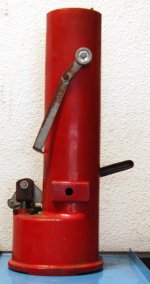
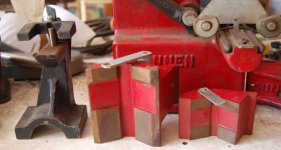
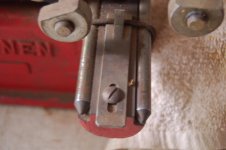
I have a Sunnen TN-111 rod checker I would like to refurbish and even possibly repaint! Does anyone know what the Sunnen red color is?
I am also going to try some Evaporust on the precision surfaces. If it works as well as I hope it does I will be thrilled!
 

Attachments

  • Sunnen A.jpg
    Sunnen A.jpg
    49.5 KB · Views: 59
  • Sunnen B.jpg
    Sunnen B.jpg
    48.4 KB · Views: 57
  • Sunnen C.jpg
    Sunnen C.jpg
    61.1 KB · Views: 53
  • Sunnen D.jpg
    Sunnen D.jpg
    57.5 KB · Views: 43
  • Sunnen 7 (2).jpg
    Sunnen 7 (2).jpg
    129.1 KB · Views: 48
  • Sunnen 8.jpg
    Sunnen 8.jpg
    97.1 KB · Views: 42
  • Sunnen 9.jpg
    Sunnen 9.jpg
    87.7 KB · Views: 36
To avoid these ads, REGISTER NOW!

Roberts210

Well-known member
Joined
Dec 21, 2015
Messages
3,177
Location
Missouri
If it's not been repainted you could take a clean, small part to a good auto paint place and have them computer scan and duplicate the color.
 

TOTO

Well-known member
Joined
Mar 21, 2018
Messages
146
Location
Campbell County, Va
I looked thru my Sunnen catalogs and for some reason they don't list the red touch up paint. They list the gray, green and white. I would contact Sunnen or possibly one of the handful of companies that resell used automotive machine equipment to see what they use.

Or just do as Roberts210 suggested.

Please post what you find, Thanks
 
OP
D

David Jackson

Well-known member
Joined
Jul 4, 2014
Messages
471
Location
Magalia, California
Good ideas! Thanks to both of you.

I called but did not really get far, will keep trying.

I went to the company website and there is a section on Sunnen company history and there are some photos on that page, one of which is of a Sunnen exec. demonstrating a TN-111! The tool is pretty small in the photo but if you find it and look carefully you can see the shine of a piston being used for demo purposes.

I saved the photo in Word but I can't upload it here because it is a docx. If anyone knows how to make a docx photo a jpeg I would love to know.

DJ
 
Last edited:

2oolhound

Well-known member
Joined
Dec 18, 2010
Messages
5,918
Location
BC Canada
Can you get a screen grab or image capture of the docx? Make it as large as possible on a high res screen for best results. Then convert that screen capture into jpeg.
 
OP
D

David Jackson

Well-known member
Joined
Jul 4, 2014
Messages
471
Location
Magalia, California
I can email the docx from the photo on the Sunnen site. It becomes very pixellated, I guess is the word, when it is enlarged.
If I could email the photo to you, it sounds as though you know how to do stuff I don't know how to do; or if you were to go right to the Sunnen site and go to the history page you could get the image directly.
A screen snapshot would be pretty blurry especially if enlarged before captured, at least that is my experience, but again I am not particularly tech savvy.
DJ
 
OP
D

David Jackson

Well-known member
Joined
Jul 4, 2014
Messages
471
Location
Magalia, California
I looked thru my Sunnen catalogs and for some reason they don't list the red touch up paint. They list the gray, green and white. I would contact Sunnen or possibly one of the handful of companies that resell used automotive machine equipment to see what they use.

Or just do as Roberts210 suggested.

Please post what you find, Thanks

I did have a chance to have a conversation with someone from Sunnen. He was kind enough to call me back after I left a message! That's really pretty amazing, that someone from a big company like Sunnen would call me back about a piece of equipment they no longer make, and I gather, have not made in a number of years. He told me red was the first color, maybe that's why no mention. It is apparently an automotive color. The paint on mine is not that bad, I don't know if I will fool with it or not, the paint that is.
 

Packard V8

Well-known member
Joined
Mar 16, 2009
Messages
7,380
Location
Spokane, WA
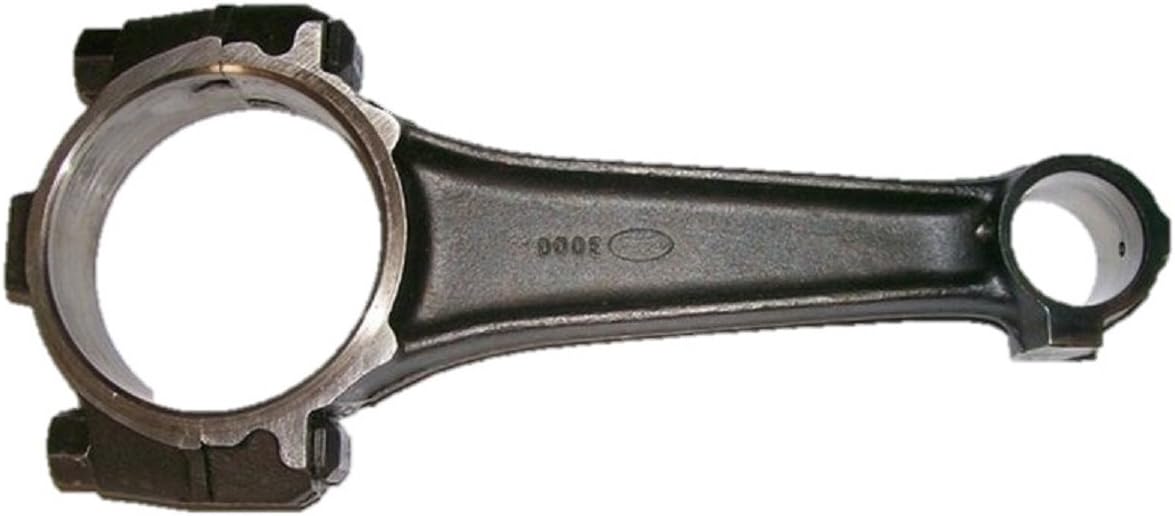
Cool piece of equipment. We have several kicking around which never get used. We do rebuild obsolete engines, but straightening a kinked rod is one of the more frustrating things you'll ever try to do in an automotive machine shop.

Near as I can figure back before the days of antifreeze, engines would get water in a cylinder and that flathead Ford rod was so skinny, even a 6-volt starter could put enough force on the crank to kink a rod.

rUgV1pXC2X_iJn4zvdKMIkunTzUuhMKyIVkq60Kt0z2SajuiuYoxIYK3YZcdLAD7sKsZX0d6sQ3cF2b6FuwFELwg4hlwRvQ_sgVGs9ySbZrsYpRJOWxWrGk


compare that with a Ford 460" rod.

61iy3GGP4-L._AC_SL1200_.jpg


Today's connecting rods are so stout, it's a rare occurrence to find one bent. If bent, it's literally impossible to straighten on the Sunnen rod aligner.

jack vines
 
Last edited:

Provincial

Well-known member
Joined
Sep 21, 2011
Messages
6,871
Location
Near Salem, OR
If you think the 460 Ford rod is sturdy, you should see the rods from a WWII Ranger L-440 aircraft engine. They are about 50% beefier than the 460 rods. This was an inverted 6-cylinder, air-cooled 440 cubic inch engine, and being "upside down" any oil that leaked past the piston rings or valve stems when the engine was sitting for a while would collect in the combustion chamber if the valves were closed. If someone just started cranking the engine without clearing the oil, it would "hydraulic lock" because oil is incompressible, and something would have to give. I used to have a Ranger rod that showed the result of this. It was cocked over on the wrist pin end about 30 degrees. I suspect that the starter had got to full speed before the hydraulic lock happened, and the clutch built into the starter couldn't slip fast enough to keep the damage from happening.
 

2oolhound

Well-known member
Joined
Dec 18, 2010
Messages
5,918
Location
BC Canada
OK I went to the site and checked the images. I'm afraid they are too tiny to do anything with. A lot of times the file is larger than what you see but these are cut to size. Who ever does their web site mayhave the original photos or at least bigger files that were made from them but these have been reduced to this small size.
 
OP
D

David Jackson

Well-known member
Joined
Jul 4, 2014
Messages
471
Location
Magalia, California
Cool piece of equipment. We have several kicking around which never get used. We do rebuild obsolete engines, but straightening a kinked rod is one of the more frustrating things you'll ever try to do in an automotive machine shop.

Near as I can figure back before the days of antifreeze, engines would get water in a cylinder and that flathead Ford rod was so skinny, even a 6-volt starter could put enough force on the crank to kink a rod.

rUgV1pXC2X_iJn4zvdKMIkunTzUuhMKyIVkq60Kt0z2SajuiuYoxIYK3YZcdLAD7sKsZX0d6sQ3cF2b6FuwFELwg4hlwRvQ_sgVGs9ySbZrsYpRJOWxWrGk


compare that with a Ford 460" rod.

61iy3GGP4-L._AC_SL1200_.jpg


Today's connecting rods are so stout, it's a rare occurrence to find one bent. If bent, it's literally impossible to straighten on the Sunnen rod aligner.

jack vines
When I talked to the Sunnen man I think he was thinking of putting the rod in a big, strong vise. Checking on the Sunnen but not trying to bend it there. At least that's the impression I got. I suggested that straightening a rod would be hard enough to do that maybe if a rod is bent just put it in the scrap metal box and get another. He agreed if the bend is severe.
 
Last edited:
To avoid these ads, REGISTER NOW!
OP
D

David Jackson

Well-known member
Joined
Jul 4, 2014
Messages
471
Location
Magalia, California
If you think the 460 Ford rod is sturdy, you should see the rods from a WWII Ranger L-440 aircraft engine. They are about 50% beefier than the 460 rods. This was an inverted 6-cylinder, air-cooled 440 cubic inch engine, and being "upside down" any oil that leaked past the piston rings or valve stems when the engine was sitting for a while would collect in the combustion chamber if the valves were closed. If someone just started cranking the engine without clearing the oil, it would "hydraulic lock" because oil is incompressible, and something would have to give. I used to have a Ranger rod that showed the result of this. It was cocked over on the wrist pin end about 30 degrees. I suspect that the starter had got to full speed before the hydraulic lock happened, and the clutch built into the starter couldn't slip fast enough to keep the damage from happening.

Just reading this after a bit of time ... if the engine, being upside down, had a combustion chamber full of oil, how did you get it out? And, ... how did you know it was full to begin with? Did you take the plugs out before cranking each time and blow the chambers clear?
Just curious; I have had a car motor and a tractor motor lock up that way but it was from coolant in one case and rain getting in through the exhaust pipe in another. Car had to have head gaskets replaced, tractor just took injectors out and cranked. But an upside down airplane motor ... how did you do it?
 

Provincial

Well-known member
Joined
Sep 21, 2011
Messages
6,871
Location
Near Salem, OR
The Ranger engine was an inverted 6-cylinder, so every cylinder was vulnerable to hydraulic lock. It is only the lowest two or three cylinders of a radial engine that have the same exposure.

To clear a hydraulic lock, you pull the motor through by hand, using the propeller. If you feel resistance, you stop. Then you pull the motor through [Bbackwards[/B] which opens the exhaust valve first, letting the oil out through the exhaust system, which is designed to give some oil room to pool and drain.

Electric starters on older aircraft engines had clutches designed in as a way to address hydraulic lock. They were preset to slip at a torque low enough to prevent over-stressing the engine components if hydraulic lock was encountered. Sadly, they often fail to prevent this, so it is important to turn the engine by hand before starting if it has been sitting for any length of time.

The engine cylinders are made of finned, steel barrels, bolted to the block with a great many 3/8" NC studs. The heads are aluminum, and are threaded onto the barrels while very hot. The thread joint is an interference fit, and the barrels are cooled, while the heads are heated to over 500 degrees F. This results in a very tight "shrink" fit. It is so tight, that the bore in the cylinder barrels is finished after the heads are installed. This joint is very strong, and rarely fails. Some of those failures may come from damage from unnoticed hydraulic lock incidents.

Modern aircraft engines are generally horizontally opposed and do not provide an opportunity to hydraulic lock. There are still many radial engines in service.
 
OP
D

David Jackson

Well-known member
Joined
Jul 4, 2014
Messages
471
Location
Magalia, California
The Ranger engine was an inverted 6-cylinder, so every cylinder was vulnerable to hydraulic lock. It is only the lowest two or three cylinders of a radial engine that have the same exposure.

To clear a hydraulic lock, you pull the motor through by hand, using the propeller. If you feel resistance, you stop. Then you pull the motor through [Bbackwards[/B] which opens the exhaust valve first, letting the oil out through the exhaust system, which is designed to give some oil room to pool and drain.

Electric starters on older aircraft engines had clutches designed in as a way to address hydraulic lock. They were preset to slip at a torque low enough to prevent over-stressing the engine components if hydraulic lock was encountered. Sadly, they often fail to prevent this, so it is important to turn the engine by hand before starting if it has been sitting for any length of time.

The engine cylinders are made of finned, steel barrels, bolted to the block with a great many 3/8" NC studs. The heads are aluminum, and are threaded onto the barrels while very hot. The thread joint is an interference fit, and the barrels are cooled, while the heads are heated to over 500 degrees F. This results in a very tight "shrink" fit. It is so tight, that the bore in the cylinder barrels is finished after the heads are installed. This joint is very strong, and rarely fails. Some of those failures may come from damage from unnoticed hydraulic lock incidents.

Modern aircraft engines are generally horizontally opposed and do not provide an opportunity to hydraulic lock. There are still many radial engines in service.

Barrels cool, heads hot, so the barrels have male thread and the heads female? Once assembled never comes apart again? And it must be tricky to get the heads in exactly the right place for the pushrods etc. I've never seen an airplane engine apart and am trying to visualize how you can assemble the heads to the barrel home the barrel, clean it and then put it on the cases with the heads in the right place for the pushrods. Sounds tricky.
 

Provincial

Well-known member
Joined
Sep 21, 2011
Messages
6,871
Location
Near Salem, OR
It is tricky. That is one reason aircraft engines are so expensive.

There were two ways to "clock" the heads to the barrels. Early on, the barrels were finish machined after the heads were installed. That way they could use fixtures referenced to the heads. Later, the assembly process was automated, with manufacturing tolerances held close enough that the heads could be "clocked" very accurately, including deck height.

The design of air-cooled aircraft engines accommodated some misalignment of intake, exhaust, push rods/housings, and other systems. This allowed some variation in alignment, as well as differences in thermal expansion/contraction. Slip joints, rubber packings/seals and hose connections are common.

Liquid cooled aircraft engines were very different, with large castings and solid manifolds were common because thermal expansion/contraction was controlled much closer.
 

LeakyCanoe

Member
Joined
Jun 8, 2014
Messages
7
Location
SW Ontario
hi David,

If you do end getting a lead on the red paint color, I too would appreciate you posting that here.

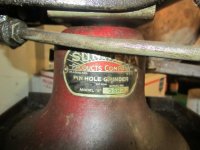
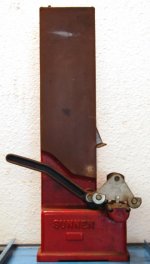
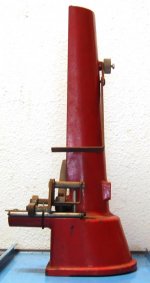
I also have an old "red paint era" Sunnen machine. In my case, it is a vintage Sunnen Pin Hole Grinder.

I have various stones and kit to go with it too. Ultimately I would like to refurb it, at least cosmetically, and then put it up for sale as I really have no use for it . A quality re-paint will make a big difference I suspect because it is pretty ugly right now. Red is one of those tricky colors...the vintage varieties look great on old machines with their patina, etc. but the newer 'fire engine" ones...not so much.

Attached are a couple of pics...the one of mine (paint is bad in it and it was repainted over but you can still see the original red underneath in spots) and the other one with the paint in better shape is an image that I found online.
 

Attachments

  • my Sunnen.jpg
    my Sunnen.jpg
    128.7 KB · Views: 14
  • Sunnen2.jpg
    Sunnen2.jpg
    135.4 KB · Views: 15

Roberts210

Well-known member
Joined
Dec 21, 2015
Messages
3,177
Location
Missouri
I've got a Dodge/Cummins pickup. Check out the Cummins connecting rod, which is on the right in this photo.

170754813.jpg
 
OP
D

David Jackson

Well-known member
Joined
Jul 4, 2014
Messages
471
Location
Magalia, California
hi David,

If you do end getting a lead on the red paint color, I too would appreciate you posting that here.

I also have an old "red paint era" Sunnen machine. In my case, it is a vintage Sunnen Pin Hole Grinder.

I have various stones and kit to go with it too. Ultimately I would like to refurb it, at least cosmetically, and then put it up for sale as I really have no use for it . A quality re-paint will make a big difference I suspect because it is pretty ugly right now. Red is one of those tricky colors...the vintage varieties look great on old machines with their patina, etc. but the newer 'fire engine" ones...not so much.

Attached are a couple of pics...the one of mine (paint is bad in it and it was repainted over but you can still see the original red underneath in spots) and the other one with the paint in better shape is an image that I found online.


I never did get a paint code. Looking at the photos I wonder if your Sunnen tool isn't older than mine. That emblem is cool! I think, based on the photos, that the reds aren't the same either. In the end, I have decided not to repaint my TN as the paint is not all that bad and I don't really know if blasting all the old paint off the main section and all the things it needs to work, is worth the time, expense, and trouble. I have cleaned up the metal surfaces but am going to leave the paint alone, at least for now.
 

Roberts210

Well-known member
Joined
Dec 21, 2015
Messages
3,177
Location
Missouri
I've got 432,*** miles on my '95 Dodge/Cummins and expect to get another 400,000 on it before I get the motor rebuilt. Got an ATS trans in it--got 325,000 miles on it. I'm on the 2nd rear end. It's had 7 sets of tires on it over the years--6 sets were Michelin.
 
To avoid these ads, REGISTER NOW!
Top Bottom