To avoid these ads, REGISTER NOW!

Generator - Gas or Diesel

OP
F

FMC1959

Well-known member
Joined
Feb 9, 2014
Messages
2,317
Location
Montreal, Canada / Upstate NY
No, not really, it’s more about class 8 manufactures deciding to only offer their own engines. And they are still sort of in the on road market, the bigger Navistar maxforce engines are cat Iron but navistar certifies them. By the time tier 4 was implemented the differences in emissions for an engine over 100hp are so close to the requirements of on road emissions.


I am not a proponent of gas, diesel, or propane engines. They all do things well in different areas. For small standby use I would never recommend a diesel. They are not loaded (50%+ on average) enough nor used enough hours to overcome higher ownership cost. If one was off grid and using for large loads and charging a large battery bank i would recommend diesel

For a small back up I would always chose an LP which is really the same engine as a gasoline except the carb and sometimes the valves. But lp is the cleanest and most stabile fuel.

If dead set against LP, I would find ethanol free gas, install water traps, and stabil the **** out of it before ever getting a diesel. You can replace a small gas engine a lot of the time, for not much more than the cost of a fuel pump on a diesel.

Some diesels cold start ok but a lot don’t and then you have to maintain glow plugs or intake heaters. Diesel require 3 to 4 times the oil during a change. Air leaks on a fuel system, algae in the fuel, or water can cause just as much trouble as gasoline that has gone bad but the gasser you flush and continue on.
Water to a diesel is death to injection pumps, and air leaks or running out of fuel can be hell to get going again depending on the engine. Then today’s low sulfur diesel is hard on injectors.

I am not dogging diesels as I have been using them my whole life on a farm, on the flight line, and for the last 15 years I have a 2 ton truck with one and worked for caterpillar. They just shine and make much more financial sense once you burden them over 50% of load on average. I don’t suffer from diesel fanaticism nor the the fantasy that less gph or better mpg translates into better cost per hour or cost per mile

Well, looks like you are forcing me to take a very deep dive into all the costs of renting or buying a propane tank(s). Then what kind of a deal I can get on propane delivered out here where I live now.

About 35 years ago I had a Pontiac Parisienne that I used as a Taxi. Around that time the Feds were really pushing vehicle conversions to natural gas. With all the grants, I bit and it was definitely much cheaper than gas, but on cold winter days, next to impossible to start. I would have to switch it to gasoline, start it, then switch it back to NG after a minute or so of running. I have never had a propane vehicle but remember hearing they were just as bad in cold weather.

Anyone have experience with LP in cold northern climates?
 
To avoid these ads, REGISTER NOW!
OP
F

FMC1959

Well-known member
Joined
Feb 9, 2014
Messages
2,317
Location
Montreal, Canada / Upstate NY
So this brings up another question, I have seen some Champion, Westinghouse and other brands that have dual fuel - gasoline and propane. Anyone have any comments on these?
 

Firebrick43

Well-known member
Joined
May 12, 2015
Messages
14,039
Location
West central Indiana
Propane boils somewhere around -50 degrees. So cold starts shouldn’t be a problem. Many aftermarket conversions are pretty crappy and there are issues with the vaporizers and pulling the required vacuum to start the Lp flowing while the engine/battery is cold and therefore turning over slowly.
There are some automatic primers (similar purpose but different operation as a choke) and there are manually operated primers. The problem is many don’t understand that the manual primer must be actuated as the engine is trying to be started. It’s not like the primer bulb on your leaf blower. Other cold start issues are maintenance. Other than spark plugs(and older engine valve seats) lp engines just run and run and many pay them no attention. Then cold weather happens and things don’t go well.

I typically don’t like dual fuel setups as most I have come across I have seen failures on the solenoids to change over and you have now two points of failure on the fuel system. That being said I have no experience with those two brands.


As for home heating oil in a diesel, most places it exactly the same as no 2 off-road diesel. For a while(and maybe in Canada it still is) it was allowed to be the higher sulfur but most places only carried the ultra low sulfur so they only had to carry/store one fuel. If the engine has no aftertreatment and has a mechanical injection pump it won’t hurt it. If because of extreme cold it’s no1 diesel or ulsd I would add a quart of atf, motor oil, or a treatment like Lucas’s per 20 gallons to ensure lubricity for the injection pump. We used to run aircraft support equipment on jet fuel(kerosene) with some oil added with no issues.
 
Last edited:

Bigblue&Goldie

Well-known member
Joined
Mar 12, 2009
Messages
10,679
Location
AZ
So this brings up another question, I have seen some Champion, Westinghouse and other brands that have dual fuel - gasoline and propane. Anyone have any comments on these?

I have the biggest dual fuel Champion and I love it. LP is way better than dealing with unleaded.
 

WittHay

Well-known member
Joined
Jan 6, 2016
Messages
2,157
Location
Surrey, BC Canada
The small propane tanks around here are 80 gallons or 420 lbs. You can have up to 4 of them. Next size up is 500 gallons. As mentioned before propane is more expensive than off road diesel and tank rental/delivery fees add up.

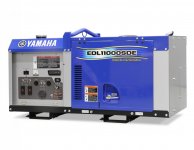
The Kubota and Yamaha diesel generators look similar. I believe the Yamaha is powered by a Kubota D722 16 hp motor. The motors sold over here would have to be Tier 4 compliant. Meaning it might/probably should use ultra low sulphur diesel depending on what emission equipment can be crammed into a small enclosed engine compartment

Diesel fuel can be stored around here for at least a couple of years. Never had a problem with algae with multiple bulk storage and Tidy tanks. Gas we find lasts around 8 to 10 months even for the cheapest marked gas. Use premium in some of the Stihl stuff but just run regular pump gas in the lawn mowers and generators. Not much or no ethanol in gas from our suppliers

Marked or off road diesel is readily available at service station pumps and is ultra low sulfur. Stove oil (kerosene) and heating oil is not available anywhere except in bulk deliveries. Wouldn't take a chance using heating fuel in a modern diesel. I am fairly sure it still has the higher sulphur content
 

Attachments

  • Super-Save.jpg
    Super-Save.jpg
    3.3 KB · Views: 142
  • Yamaha.jpg
    Yamaha.jpg
    75.9 KB · Views: 17

bob15

Well-known member
Joined
Dec 8, 2011
Messages
6,863
Location
Northeasten, CT
Would you know if most diesel engines do fine on home heating fuel or not?

Here diesel fuel at the pump has about 30-40% in "the government calls it road and save the environment tax" but really is "we need money" tax. So home heating fuel is vey cheap....even delivered compared to diesel at the pump. AGR diesel does not have the road taxes but I believe you need to have some kind of "I am a farmer" permit it to buy it.

Technically, home heating oil is # 2 fuel, buttttttt, my dealings with some delivery companies seam to be more of home heaing oil is the bottom of the barge for fuel. I wouldn't run home heating oil in a diesel engine, especially a newer engine/fuel system.

You could inquire with your dealers about getting "true" # 2 fuel without on-road tax if you explain where and how it is being used. It doesn't hurt to ask.
 

bob15

Well-known member
Joined
Dec 8, 2011
Messages
6,863
Location
Northeasten, CT
If I didn't have all the drums (got them at an auction for $5 a piece), a large 200 gallon drum would definitely make sense. But I have these and they are just small enough that I can move them around and off my van with my tractor.

But how many more years will you be able to do that? Not trying to be "mean" but rather practical. With your age and health issues you mentioned earlier, do you really want be (and will you really be able to) move these drums around in several years? I would take a guess and say no.

Whether it's DF or propane, a single large tank would be a better suited for your situation.
 

bob15

Well-known member
Joined
Dec 8, 2011
Messages
6,863
Location
Northeasten, CT
I don't know why they refer to some in gallons and other by pounds. 4 pounds is a (US) gallon in LP.

This is an RV type 100 lb (~25 gal) tank that I referred to in previous posts. Which are a PIA to haul around and need to be carried standing and strapped in a pickup.

https://www.costco.ca/pro-grade-45....-without-gauge-(empty).product.100339105.html

At my previous home I had a propane fireplace and added an outlet for my BBQ. I had a 250 lb (~60 gal). Here is a link of a company that rents and delivers. The 2 larger "sausage" tanks are in gallons, 500 & 1000. But the smaller one, that looks pretty similar to the one I had, and it is expressed in pounds - 420 lb.

My buddy is renting 3 of these (a bit less a 350 lbs each) for a total of $75 a year...I can't get that deal here. I am curious what size you have and how much it cost. I figure they are pricey to buy, and I don't know about where you are but here they are stamped with a date, usually 8-10 years down the road. Most 20 lb tanks are chucked in the garbage as they are worth the price to test and are usually all rusty.

But a big tank, I am sure to have it tested ain't cheap, and then at some point, after x number of tests/years, it will probably need to be replaced.

I have a 500 gallon tank I bought for $56 dollar (after sales tax) from a large company that used to use it for fire fighting training. It is old, 1950's vintage but solid with the valves and regulator either replaced or rebuilt. In the US, these tanks (500 & 1000, not sure on the 120 gallon) do not need to be tested/certified every 10 years like your 20 & 100 pounders.

Here is a before and after pictures of my tank, purchased in 2008. Sorry the painted tank picture isn't a close up. Behind it is my 12kW generator (it is a Gillette brand, a company who no longer makes home units :sad:)
 

Attachments

  • Picture 020.jpg
    Picture 020.jpg
    158.6 KB · Views: 37
  • garden 021.jpg
    garden 021.jpg
    155.3 KB · Views: 40

tool_scrounge

Well-known member
Joined
Jul 20, 2010
Messages
4,192
Location
Southern California
Well, looks like you are forcing me to take a very deep dive into all the costs of renting or buying a propane tank(s). Then what kind of a deal I can get on propane delivered out here where I live now.

About 35 years ago I had a Pontiac Parisienne that I used as a Taxi. Around that time the Feds were really pushing vehicle conversions to natural gas. With all the grants, I bit and it was definitely much cheaper than gas, but on cold winter days, next to impossible to start. I would have to switch it to gasoline, start it, then switch it back to NG after a minute or so of running. I have never had a propane vehicle but remember hearing they were just as bad in cold weather.

Anyone have experience with LP in cold northern climates?

Your issue is going to be the LP vaporization rate. Too low a rate and you starve the generator.

In general:
The lower the temperature, the lower the vaporization rate
The smaller the tank, the lower the vaporization rate
The less filled the tank is, the lower the vaporization rate

So for a 10kW generator, look up the propane usage rate
Then decide on the lowest temperature you want to run at
Then look at the tank size you want to use in the vaporization rate chart.
For a given temperature, you can look at the chart and see how low of a tank fill you can run the tank down to and still meet the required vaporization rate.

For example, I am designing something I need 400,000 BTU/hr using LP. My minimum temperature is 40F. For the tank size I am using I can only run the tank down to 38% full before the vaporization rate is too low.

Talk to the generator mfg for guidance. Or it may be in the manual.
 
Last edited:

Aefriot

Member
Joined
Aug 22, 2019
Messages
10
Location
Potsdam, New York
If efficiency isn't a concern, my recommendation is to get diesel generator with a glow plug. Military generators have them. There are plenty of resources for self-repair assistance. If you do not care if it is new, there are many municipalities that auction off 10-45kw generators for under $2k with under 1k hours. Closing businesses auction standby generators often with automatic transfer switching along with the generator. Stay as small as needed as long as you can operate what you need to. Larger generators cost more to operate and maintain. Keeping a fuel tank inside where the temperature is constant and above dew point to reduce water in the fuel and have no need for anti-gel agent.

I don't remember if you have fuel oil delivered or if you have to pick it up yourself. Get a trailer! Fasten your tank to the trailer and haul it to get it filled then pump it yourself. No need to remove drums from your van. Park the trailer where you need it and leave it. Connect to it with quality connectors, lines and valves. This is true with propane even! Buy a tank of the size you desire and mount it to the trailer. Have a small backup tank to keep you going a day or two in case you run out on the large tank and need time to go get more.

If you want to be efficient, read on. Caution, I'm a tinkerer and don't mind the extra work to keep things operating. I"m not a set it and forget it type of guy.

I know this is not what you asked for, but may help in determining where to look for what fits your situation. I use solar power and many different generators at my home. A bit of our background can help you understand my thinking. If you don't want the background, just go to the "*" line for a recommendation.

We live off-grid. Most of the time the sun provides us with the power we need, but when the clouds cover for days, the generators are the ones who shine.

For the most part, when the batteries are low, we use smaller inverter generators of the 2kw range since we operate only high efficiency lights and appliances. I get about 10 hours from a gallon of regular unleaded for a draw that is usually about 1000-1300w (including 600w battery charging). If the batteries are down to 20% remaining, I don't use high draw devices until the battery has had time to recharge...by either the sun or generator. This usually only takes an hour before I can use the induction cooktop or oven.

That's how we manage our power in our home in the summer. In winter, we use wood for heat and cooking. Propane is used for cooking when it's just too hot in here to start a fire. A masonry heater stays warm all day and all night with only a few small fires. Many times only one in the morning takes us 24 hours when above freezing. We do not use electric for cooking in the winter because the sun is just too unreliable.

When working in the garage/barn/wood shop, I have different power requirements. We are still in the process of configuring power supplies for the out buildings. My lights and radio are run by 2 Trojan 305ah batteries and a 1500w inverter. When I need to use a power tool, if it's not a low-draw device, I use the Honda eu2000i inverter generator. Btw, check the breather filters often. As I found out recently, they get deteriorated in high heat/age and will **** in through your engine...taking all the dirt and dust and chicken feathers that they previously removed from the intake air. But when I need to weld...I start the Onan 6.5kw. I really don't like to start the Onan. It uses too much fuel. It can run about 8 hours on 5 gallon of gas. Even on a busy welding day, it runs about 4 hours. But in those 4 hours, I'm welding only 2 hours. To weld for 2 hours, running the Onan cost roughly $9 (4x$2.20). When welding it is operating at a maximum of 2/3 load. the rest of the time, it's at no load. To me, operating a generator when it's not putting out at least half power is wasteful. Especially at that the financial AND ecological cost.

I also have a MEP-802A 5.0 kw (brushless clean power) rated diesel generator that I recently mounted on a '99 F350 4x4 flatbed field truck so I can move it where it is needed. The truck also has a 60 gpm water pump, 200 gallon tote, 10 HP 60 gal. 23 cfm air compressor (soon to be operational thanks to MacMcMacmac for his assistance) and 1500 lb 600ah 24V battery. I have plans to install a 3kw/6kw surge inverter and complete 120/208/240V 1/3 ph 60hz gang outlet bank for any power anywhere. The compressor and MEP generator all start from the 24v battery and the MEP currently charges the battery.

The MEP generator at half load can operate for 24 hours on 5 gallon of diesel. Diesel is $2.40/gal. So, $2.40 x 5 / 24 = $0.50/hour. That's $2 for that 4 hours of operation.

Diesel is much cheaper to operate as far as fuel cost. Also, because of the upper cylinder lubrication, the engines can last much longer. You are 61 years old. My wife (50) and I (53) are not that far behind you that we don't think about longevity of our high cost equipment. We have been told by those who use them that they have a life expectancy of 20-30,000 hours. This is much longer than we will ever use it. We must take care of it with regular maintenance like oil, oil filer, air filter and coolant changes. But we must put a full load on it occasionally to burn out the diesel loading that occurs when diesel does not run at a high enough temperature for long enough that it pushes raw fuel into the exhaust. Being as efficient as we can be, our load bank is a couple of electric elements in a 5,000 gallon boiler tank used to supply heat and hot water to our house.

I know this information isn't all relevant to you, but it goes to show that I try to be flexible in my approach to power. I am constantly trying to make out production of power match our use...not only in the amount produced when required, but when required. We adjust our use to what's most efficient but not so much that it becomes cumbersome. Everyone's balance is different and only you can determine what that may be.

*************************************************************
Now, my assumptions:
  • Electric water heater
  • Electric range and oven
  • Electric water pump
  • Electric dish washer
  • Electric toaster oven (More flexible than just a toaster and uses less energy than an oven)
  • Electric etc.

Recommendations:
  1. Figure out when all the high power consumption occurs. Can more of the high power consumption be timed to the same time? Can the water pump, water heater (on a timer), dish washer, cooking all be done at the same time in the morning? Operate a bigger 1800 rpm generator at that time when many operations can be done consecutively and more fuel consciously. This will also help ensure a diesel will burn cleanly. Then switch to a smaller inverter generator to conserve fuel when power consumption is less.
  2. Grid-tied battery backup inverter and large battery bank. If power is often interrupted for shorter periods, this may be the way to go. The inverter will recharge your batteries automatically when power comes back on. As an added benefit, it will be easy to add photovoltaic panels and/or maybe a wind turbine at a later date if desired. This is probably the most desirable method as you can size the inverter to your power consumption levels and the battery to your daily needs. Then use a smaller inverter generator that can run at 75-80% of it's full constant load daily to recharge the batteries to get them ready for the next day.

Be sure to have an hour meter on the generators to properly maintain them.

I'm sorry I cannot be more thorough in my post but I need to get to work on my own stuff here. If interested in anything or needing clarification, please ask. I will try to help you figure a possible solution. I will check back.
 
OP
F

FMC1959

Well-known member
Joined
Feb 9, 2014
Messages
2,317
Location
Montreal, Canada / Upstate NY
Propane boils somewhere around -50 degrees. So cold starts shouldn’t be a problem. Many aftermarket conversions are pretty crappy and there are issues with the vaporizers and pulling the required vacuum to start the Lp flowing while the engine/battery is cold and therefore turning over slowly.
There are some automatic primers (similar purpose but different operation as a choke) and there are manually operated primers. The problem is many don’t understand that the manual primer must be actuated as the engine is trying to be started. It’s not like the primer bulb on your leaf blower.

My car that ran on NG had the same button, kept it pressed while turning and let go once the engine started

Other cold start issues are maintenance. Other than spark plugs(and older engine valve seats) lp engines just run and run and many pay them no attention. Then cold weather happens and things don’t go well.

I typically don’t like dual fuel setups as most I have come across I have seen failures on the solenoids to change over and you have now two points of failure on the fuel system. That being said I have no experience with those two brands.


As for home heating oil in a diesel, most places it exactly the same as no 2 off-road diesel. For a while(and maybe in Canada it still is) it was allowed to be the higher sulfur but most places only carried the ultra low sulfur so they only had to carry/store one fuel. If the engine has no aftertreatment and has a mechanical injection pump it won’t hurt it. If because of extreme cold it’s no1 diesel or ulsd I would add a quart of atf, motor oil, or a treatment like Lucas’s per 20 gallons to ensure lubricity for the injection pump.

I mentioned in a previous post that as a stabilizer and also as an anti-gel fr the winter, I add this
https://www.amazon.com/dp/B001JT5MGI/?tag=atomicindus08-20
Do you think this would work similar to the ATF or Lucas additive?


We used to run aircraft support equipment on jet fuel(kerosene) with some oil added with no issues.

Firebrick43, you certainly seem knowledgeable with all this. I just changed out my oil furnace for electric and the leftover oil I had the option to keep or they would get rid of it for me...I kept it, about 120 gallons. I have a 2009 Kubota tractor which has been "maintenance free", just oil & filter changes and 1 new battery. Do you (or anyone else can also chime in) think a 2009 is old enough that it won't have issues if I use the heating oil in it?

I know since my 2009 model there have been at least 2 revisions, usually things like stricter catalytic converts and other EPA type changes. Pretty sure that newer models would be less tolerant to a less than perfect fuel than my older 2009.
 
OP
F

FMC1959

Well-known member
Joined
Feb 9, 2014
Messages
2,317
Location
Montreal, Canada / Upstate NY
I have the biggest dual fuel Champion and I love it. LP is way better than dealing with unleaded.

Good to know. I have always been weary of certain brands for generators. Some cheap ones are good for picnics, cottages, or anywhere you need to run a couple of tools for a couple of hours.

I do not expect week long outages, but sh*t happens and I want something that if it needs to run 24x7 (refueling & maintenance aside) for a week or longer, it can. I know Louisiana, Puerto Rico and other areas where there were devastating events; some people had no power for weeks and cheaper generators were not up to the task while good ones operated for weeks like champs.
 
OP
F

FMC1959

Well-known member
Joined
Feb 9, 2014
Messages
2,317
Location
Montreal, Canada / Upstate NY
The small propane tanks around here are 80 gallons or 420 lbs. You can have up to 4 of them. Next size up is 500 gallons. As mentioned before propane is more expensive than off road diesel and tank rental/delivery fees add up.

The Kubota and Yamaha diesel generators look similar. I believe the Yamaha is powered by a Kubota D722 16 hp motor. The motors sold over here would have to be Tier 4 compliant. Meaning it might/probably should use ultra low sulphur diesel depending on what emission equipment can be crammed into a small enclosed engine compartment

I figured one made for the other because they are too similar in looks and specs. Kubota making a living with their diesel engines, seems more likely the OEM for Yamaha, which has a great reputation, but never really heard anything about Yamaha making diesel engines

Diesel fuel can be stored around here for at least a couple of years. Never had a problem with algae with multiple bulk storage and Tidy tanks. Gas we find lasts around 8 to 10 months even for the cheapest marked gas. Use premium in some of the Stihl stuff but just run regular pump gas in the lawn mowers and generators. Not much or no ethanol in gas from our suppliers

Do you add anything to your diesel or it goes a couple of years with what you got straight out of the pump?
* Everyone's opinions and views have been helpful and great but with laws/EPA changing from province to province and state to state, still, my guess is what you get out of the pump to be closer to what I get, rather than what certain states have. Especially down south where I suspect gasoline as an example, does not have antifreeze in it like we have up north. But then California, I am sure their fuels might be different because of how strict they are.)


Marked or off road diesel is readily available at service station pumps and is ultra low sulfur. Stove oil (kerosene) and heating oil is not available anywhere except in bulk deliveries. Wouldn't take a chance using heating fuel in a modern diesel.

Would you consider a 2009 Kubota tractor a "modern diesel"?

I am fairly sure it still has the higher sulphur content

If I can't use my leftover heating oil in my tractor, I have been using diesel in a couple of Kerosene Torpedo heaters for 3 years now; burning the heating oil in these should be OK?
 
OP
F

FMC1959

Well-known member
Joined
Feb 9, 2014
Messages
2,317
Location
Montreal, Canada / Upstate NY
Technically, home heating oil is # 2 fuel, buttttttt, my dealings with some delivery companies seam to be more of home heaing oil is the bottom of the barge for fuel. I wouldn't run home heating oil in a diesel engine, especially a newer engine/fuel system.

You could inquire with your dealers about getting "true" # 2 fuel without on-road tax if you explain where and how it is being used. It doesn't hurt to ask.

I'll ask the home heating supplier I used as well as my Kubota dealer...see what they say.
 
OP
F

FMC1959

Well-known member
Joined
Feb 9, 2014
Messages
2,317
Location
Montreal, Canada / Upstate NY
But how many more years will you be able to do that? Not trying to be "mean" but rather practical. With your age and health issues you mentioned earlier, do you really want be (and will you really be able to) move these drums around in several years? I would take a guess and say no.

Whether it's DF or propane, a single large tank would be a better suited for your situation.

I agree and no offence taken with your comment. BUT, everyday I try my best to push myself. I just finished re-doing the shingles on my 20 x 30' garage....granted it took me 7 days to do.

My point being that ailments or perfect health, I have seen some seniors deteriorate very fast by doing not much. Conversely, others that remain active, in my area there are many "old" farmers that work 3 times as hard as your average 20-40 year old. They will all tell you that as long as they do it, they can feel young and stay in shape. If they stop, they will....not do good.

I have always been a DIYer and enjoy it, and despite my wife wanting me NOT do do the shingles or other stuff, I will continue to do whatever I can as long as I can.

I am not going to go buy the drums, so already having them, I will continue with them. When I no longer can do it, for sure I will have to look at options like you mentioned.
 
OP
F

FMC1959

Well-known member
Joined
Feb 9, 2014
Messages
2,317
Location
Montreal, Canada / Upstate NY
I have a 500 gallon tank I bought for $56 dollar (after sales tax) from a large company that used to use it for fire fighting training. It is old, 1950's vintage but solid with the valves and regulator either replaced or rebuilt. In the US, these tanks (500 & 1000, not sure on the 120 gallon) do not need to be tested/certified every 10 years like your 20 & 100 pounders.

Here is a before and after pictures of my tank, purchased in 2008. Sorry the painted tank picture isn't a close up. Behind it is my 12kW generator (it is a Gillette brand, a company who no longer makes home units :sad:)

Nice! Both the tank and what looks to be a great sized generator.

I am not sure what the law is here for large tanks, could be like in your situation, large tanks might be made to a different standard and thus do not require mandatory testing. Still do you ever do some kind of test, or as long as you do not smell any propane, that is good enough?
 
OP
F

FMC1959

Well-known member
Joined
Feb 9, 2014
Messages
2,317
Location
Montreal, Canada / Upstate NY
Your issue is going to be the LP vaporization rate. Too low a rate and you starve the generator.

In general:
The lower the temperature, the lower the vaporization rate
The smaller the tank, the lower the vaporization rate
The less filled the tank is, the lower the vaporization rate

So for a 10kW generator, look up the propane usage rate
Then decide on the lowest temperature you want to run at
Then look at the tank size you want to use in the vaporization rate chart.
For a given temperature, you can look at the chart and see how low of a tank fill you can run the tank down to and still meet the required vaporization rate.

For example, I am designing something I need 400,000 BTU/hr using LP. My minimum temperature is 40F. For the tank size I am using I can only run the tank down to 38% full before the vaporization rate is too low.

Talk to the generator mfg for guidance. Or it may be in the manual.

You have opened and new can of worms! I will definitely look into this because we have incredible temperature swings over a year here. From close to 100 Fahrenheit summer to -25 Fahrenheit in winter, being quite normal.

My NG vehicle had 2 tanks, each weighing about 500 lb, just about everyone (driving a Taxi) had to redo the suspension because of the tanks. The would hold NG up to 700 or 900 PSI. Propane, on the other hand, I know the PSI is significantly lower, I think less than 100 psi. Some people suspected that on rare super cold days, approaching -40 F, the propane might be liquid...I doubt that was the case.

Still, if I go the propane route, I will check into that also.
 

SethB

Well-known member
Joined
Jul 30, 2015
Messages
70
I have a 22kw standby with auto switch, 1000lb propane tank. I bought the genny as a package online, delivered by truck. My electrician wired it in. Had the LP company bury the 1000lb tank and plumb it in. All for approx. $7500 in the Northeast US, so not the cheapest area. The 1000 lb tank will last about 10-12 days at a minimum running everything including AC's. No worrying about looking for or storing fuel, moving drums around or fueling a generator.

I would do more research. There is a reason LP/natural gas generators have the market for home standby use.
 
OP
F

FMC1959

Well-known member
Joined
Feb 9, 2014
Messages
2,317
Location
Montreal, Canada / Upstate NY
If efficiency isn't a concern, my recommendation is to get diesel generator with a glow plug. Military generators have them. There are plenty of resources for self-repair assistance. If you do not care if it is new, there are many municipalities that auction off 10-45kw generators for under $2k with under 1k hours. Closing businesses auction standby generators often with automatic transfer switching along with the generator. Stay as small as needed as long as you can operate what you need to. Larger generators cost more to operate and maintain. Keeping a fuel tank inside where the temperature is constant and above dew point to reduce water in the fuel and have no need for anti-gel agent.

I don't remember if you have fuel oil delivered or if you have to pick it up yourself. Get a trailer! Fasten your tank to the trailer and haul it to get it filled then pump it yourself. No need to remove drums from your van. Park the trailer where you need it and leave it. Connect to it with quality connectors, lines and valves. This is true with propane even! Buy a tank of the size you desire and mount it to the trailer. Have a small backup tank to keep you going a day or two in case you run out on the large tank and need time to go get more.

If you want to be efficient, read on. Caution, I'm a tinkerer and don't mind the extra work to keep things operating. I"m not a set it and forget it type of guy.

I know this is not what you asked for, but may help in determining where to look for what fits your situation. I use solar power and many different generators at my home. A bit of our background can help you understand my thinking. If you don't want the background, just go to the "*" line for a recommendation.

We live off-grid. Most of the time the sun provides us with the power we need, but when the clouds cover for days, the generators are the ones who shine.

For the most part, when the batteries are low, we use smaller inverter generators of the 2kw range since we operate only high efficiency lights and appliances. I get about 10 hours from a gallon of regular unleaded for a draw that is usually about 1000-1300w (including 600w battery charging). If the batteries are down to 20% remaining, I don't use high draw devices until the battery has had time to recharge...by either the sun or generator. This usually only takes an hour before I can use the induction cooktop or oven.

That's how we manage our power in our home in the summer. In winter, we use wood for heat and cooking. Propane is used for cooking when it's just too hot in here to start a fire. A masonry heater stays warm all day and all night with only a few small fires. Many times only one in the morning takes us 24 hours when above freezing. We do not use electric for cooking in the winter because the sun is just too unreliable.

When working in the garage/barn/wood shop, I have different power requirements. We are still in the process of configuring power supplies for the out buildings. My lights and radio are run by 2 Trojan 305ah batteries and a 1500w inverter. When I need to use a power tool, if it's not a low-draw device, I use the Honda eu2000i inverter generator. Btw, check the breather filters often. As I found out recently, they get deteriorated in high heat/age and will **** in through your engine...taking all the dirt and dust and chicken feathers that they previously removed from the intake air. But when I need to weld...I start the Onan 6.5kw. I really don't like to start the Onan. It uses too much fuel. It can run about 8 hours on 5 gallon of gas. Even on a busy welding day, it runs about 4 hours. But in those 4 hours, I'm welding only 2 hours. To weld for 2 hours, running the Onan cost roughly $9 (4x$2.20). When welding it is operating at a maximum of 2/3 load. the rest of the time, it's at no load. To me, operating a generator when it's not putting out at least half power is wasteful. Especially at that the financial AND ecological cost.

I also have a MEP-802A 5.0 kw (brushless clean power) rated diesel generator that I recently mounted on a '99 F350 4x4 flatbed field truck so I can move it where it is needed. The truck also has a 60 gpm water pump, 200 gallon tote, 10 HP 60 gal. 23 cfm air compressor (soon to be operational thanks to MacMcMacmac for his assistance) and 1500 lb 600ah 24V battery. I have plans to install a 3kw/6kw surge inverter and complete 120/208/240V 1/3 ph 60hz gang outlet bank for any power anywhere. The compressor and MEP generator all start from the 24v battery and the MEP currently charges the battery.

The MEP generator at half load can operate for 24 hours on 5 gallon of diesel. Diesel is $2.40/gal. So, $2.40 x 5 / 24 = $0.50/hour. That's $2 for that 4 hours of operation.

Diesel is much cheaper to operate as far as fuel cost. Also, because of the upper cylinder lubrication, the engines can last much longer. You are 61 years old. My wife (50) and I (53) are not that far behind you that we don't think about longevity of our high cost equipment. We have been told by those who use them that they have a life expectancy of 20-30,000 hours. This is much longer than we will ever use it. We must take care of it with regular maintenance like oil, oil filer, air filter and coolant changes. But we must put a full load on it occasionally to burn out the diesel loading that occurs when diesel does not run at a high enough temperature for long enough that it pushes raw fuel into the exhaust. Being as efficient as we can be, our load bank is a couple of electric elements in a 5,000 gallon boiler tank used to supply heat and hot water to our house.

I know this information isn't all relevant to you, but it goes to show that I try to be flexible in my approach to power. I am constantly trying to make out production of power match our use...not only in the amount produced when required, but when required. We adjust our use to what's most efficient but not so much that it becomes cumbersome. Everyone's balance is different and only you can determine what that may be.

*************************************************************
Now, my assumptions:
  • Electric water heater
  • Electric range and oven
  • Electric water pump
  • Electric dish washer
  • Electric toaster oven (More flexible than just a toaster and uses less energy than an oven)
  • Electric etc.

Recommendations:
  1. Figure out when all the high power consumption occurs. Can more of the high power consumption be timed to the same time? Can the water pump, water heater (on a timer), dish washer, cooking all be done at the same time in the morning? Operate a bigger 1800 rpm generator at that time when many operations can be done consecutively and more fuel consciously. This will also help ensure a diesel will burn cleanly. Then switch to a smaller inverter generator to conserve fuel when power consumption is less.
  2. Grid-tied battery backup inverter and large battery bank. If power is often interrupted for shorter periods, this may be the way to go. The inverter will recharge your batteries automatically when power comes back on. As an added benefit, it will be easy to add photovoltaic panels and/or maybe a wind turbine at a later date if desired. This is probably the most desirable method as you can size the inverter to your power consumption levels and the battery to your daily needs. Then use a smaller inverter generator that can run at 75-80% of it's full constant load daily to recharge the batteries to get them ready for the next day.

Be sure to have an hour meter on the generators to properly maintain them.

I'm sorry I cannot be more thorough in my post but I need to get to work on my own stuff here. If interested in anything or needing clarification, please ask. I will try to help you figure a possible solution. I will check back.


This was a great read and you are my kind of guy....I love tinkering but I might not be quite the tinkerer you are, but definitely not a set it and forget it person.

I would have loved to get into experimenting with solar and other stuff, but there are always limitations. First there was work and the time to do everything. Now I have lots of time but I am on a fixed income, but the real challenge is the....wife! She is not big on not having normalcy around the house....getting her to change the TV input from HDMI 1 to HDMI 2 to get Netflix was a lot of work! She would go crazy with the setup you have.

I will reread your post and see about if anything can apply to me.
 
OP
F

FMC1959

Well-known member
Joined
Feb 9, 2014
Messages
2,317
Location
Montreal, Canada / Upstate NY
I have a 22kw standby with auto switch, 1000lb propane tank. I bought the genny as a package online, delivered by truck. My electrician wired it in. Had the LP company bury the 1000lb tank and plumb it in. All for approx. $7500 in the Northeast US, so not the cheapest area. The 1000 lb tank will last about 10-12 days at a minimum running everything including AC's. No worrying about looking for or storing fuel, moving drums around or fueling a generator.

I would do more research. There is a reason LP/natural gas generators have the market for home standby use.

Yes, but I would say the biggest reason is $$$.

Diesel are always liquid cooled and except for few exceptions, they start at 15Kw and for similar wattage, LP or gas costs half what a diesel costs and you can get decent home standby setups running LP starting at 6Kw. Conversely when you get into large wattage 30 Kw to 500Kw, the are almost all diesel.

10-12 days for 22Kw, very impressive. Could I ask how much a fill-up to run 10-12 days costs you? Also, you say your tank is buried...interesting...I would think that would be a no-no, in that it would accelerate corrosion and the life of the tank. So what is the rationale on burying the tank?
 
To avoid these ads, REGISTER NOW!

ihateminimumwage

Well-known member
Joined
Jan 26, 2012
Messages
3,960
Kubota 2 & 3cyl engines are bulletproof between the Lowboys and MQ Whisperwatts. Are you needing 120/240VAC or just 120 (not sure if you're 50 or 60hz)? If you only need 120v, a used light tower set might work for you, or an RV pullout. Welders are nice for a short term backup, but you'll be refilling their little tank A LOT.

The Deere powered 50kW you mentioned earlier is a 4024, designed by Hatz and they have some issues. The front timing cover will leak from the thermostat housing and are a big procedure to reseal. Fuel racks/injector pumps can stick at either no fuel or full fuel for no apparent reason. Oil pump is built into the timing cover and not available separately (and a replacement timing cover is in the $1K+ range IIRC). Not Deere's best output, especially compared to the older 4045s that will just run forever.

Aurora Generators out of Ontario offers a Perkins powered 10kW, might give them a call/email and see what prices are like.
 

gearhead1

Well-known member
Joined
Oct 14, 2013
Messages
1,935
Location
NC
With the LP tanks, are you sure they are 250 & 350 lbs and not gallons? Most tanks are 120, 300, 500 & 1000 gallon. Largest in pounds is around 100 (RV tank).

DF can start forming allege in as little as 6 months. I spent 17+ years working for a DF pump, injector & filter manufacturer in R&D. I spent a couple years working on filters & fuel conditioners.

One issue I've seen with drums is condensation which will create enough water which will lead to issues such as allege. Full drums not as bad, but the potential is there. Also make sure there is any rust on the bottom of the drums that can cause leakage.....

If you're heart is set on a DF generator, make sure you rotate your fuel and treat it from a reputable company that has been around decades and not a "fly-by-night" outfit. Also keep a supply of fuel filters handy....just-in-case.

Can you buy a 500 gallon LP tank? I own mine, so I can deal with whomever I want and anything above 300 gallons delivered, there is a discount.

You’re in CT. Stanadyne? I worked for a Diesel engine manufacturer and we used Stanadyne pumps on our generator engines.
 

gearhead1

Well-known member
Joined
Oct 14, 2013
Messages
1,935
Location
NC
I’d personally go with diesel or LP. No gasoline to gum up a carburetor. Diesel will be fuel efficient and the new diesels are not typically hard to start when it’s cold. Like Bob said, keep fuel filters.
 

bob15

Well-known member
Joined
Dec 8, 2011
Messages
6,863
Location
Northeasten, CT
You’re in CT. Stanadyne? I worked for a Diesel engine manufacturer and we used Stanadyne pumps on our generator engines.

Yup. I used to work there, was laid off back in October after 17-1/2 years. They are moving engineering to NC & SC and I have no desire to move south when my family is in CT. I survived to the next to last layoff, with the last one turning off the lights.

What were you guys running? DB4 3, 4 or 6 cylinder pumps?
 

gearhead1

Well-known member
Joined
Oct 14, 2013
Messages
1,935
Location
NC
I used to work for Cummins as a design, then engine performance engineer. 4cyl and 6cyl for 4BTA and 6BTA engines. We hired an application engineer from the Stanadyne facility in NC. Was an easy transition for him. I went to the Bosch school also for the VE, A, and P pumps. It’s all electronic now.

When I was in the military, we had them on the GM 6.2 and 6.5 diesel. We used to rebuild and set on a Bacharach test bench.

As far as a generator is concerned, a diesel with a mechanical fuel system would be hard to beat.
 
Last edited:
OP
F

FMC1959

Well-known member
Joined
Feb 9, 2014
Messages
2,317
Location
Montreal, Canada / Upstate NY
Kubota 2 & 3cyl engines are bulletproof between the Lowboys and MQ Whisperwatts. Are you needing 120/240VAC or just 120 (not sure if you're 50 or 60hz)? If you only need 120v, a used light tower set might work for you, or an RV pullout. Welders are nice for a short term backup, but you'll be refilling their little tank A LOT.

The Deere powered 50kW you mentioned earlier is a 4024, designed by Hatz and they have some issues. The front timing cover will leak from the thermostat housing and are a big procedure to reseal. Fuel racks/injector pumps can stick at either no fuel or full fuel for no apparent reason. Oil pump is built into the timing cover and not available separately (and a replacement timing cover is in the $1K+ range IIRC). Not Deere's best output, especially compared to the older 4045s that will just run forever.

Aurora Generators out of Ontario offers a Perkins powered 10kW, might give them a call/email and see what prices are like.

Thanks for the info on the JD Turbo diesel and I will give Aurora a call
 

Firebrick43

Well-known member
Joined
May 12, 2015
Messages
14,039
Location
West central Indiana
Firebrick43, you certainly seem knowledgeable with all this. I just changed out my oil furnace for electric and the leftover oil I had the option to keep or they would get rid of it for me...I kept it, about 120 gallons. I have a 2009 Kubota tractor which has been "maintenance free", just oil & filter changes and 1 new battery. Do you (or anyone else can also chime in) think a 2009 is old enough that it won't have issues if I use the heating oil in it?

I know since my 2009 model there have been at least 2 revisions, usually things like stricter catalytic converts and other EPA type changes. Pretty sure that newer models would be less tolerant to a less than perfect fuel than my older 2009.
if it actually has a catalytic converter (do you have a DEF tank?) I would say no. 2009/10 was a big transition time so I won’t guess. If still a mechanical pump and no cat then ok.

As for the ****** bloke that stated that small diesels were good for 20,000-30,000 hours, I about fell out of my chair laughing so hard. I think someone put something in his crumpets.

Very very large diesels (1200 or 1800 rpm with over 750 hp)with a continuous rating might see those hours before a major overhaul. A standby rating is only going to see 12,000-15,0000 hours. Smaller engines in the 80-400 hp are going to see that 12k-15k for a continuous rating and maybe 8k or 9k for standby usage. Small 3600rpm engines are going to be 5k or 6k at best, many models might see less
 

WittHay

Well-known member
Joined
Jan 6, 2016
Messages
2,157
Location
Surrey, BC Canada
If I can't use my leftover heating oil in my tractor, I have been using diesel in a couple of Kerosene Torpedo heaters for 3 years now; burning the heating oil in these should be OK?

This is my understanding on fuel types.

Kerosene, stove oil and no. 1 (winter diesel) are similar. Stove oil around here is what is delivered to mobile home furnaces. If you try using regular diesel in these type furnaces, they usually have black smoke and the nozzles get plugged. I think a lot of torpedo heaters are set up to burn diesel/ heating fuel along with kerosene.

Heating oil/fuel and no. 2 marked or off road diesel are similar. Marked ultra low sulphur diesel is what farmers, construction company's and refrigerated vans use. We get ours from Esso, Chevron and Co-op. Dont use any stabilizers or other additives. Heating oil is only by delivery and depending on the area might be the same as marked diesel or some special lower cost higher sulphur content fuel sold mainly from the fall till spring

To me a modern diesel is something that has a particulate filter with the warning lights and regen buttons. Along with the little tank that has the blue cap for DEF. 1 ton trucks started around 2008 and tractors/equipment various years since.

I have never really thought of using old heating fuel in a tractor. Something about fuel delivered to rusty tanks at the trailer park and then stored in unclean containers afterwards. This is where algae starts and its a pain to get rid of. Had neighbors down the road do that
 
Last edited:

gearhead1

Well-known member
Joined
Oct 14, 2013
Messages
1,935
Location
NC
The other thing to be careful of is the fuel system. Rotary fuel injection pumps typically only get lubrication from the fuel itself. An in-line fuel pump usually has an oil line from the engine and gets its lubrication from engine oil. So running kero or heating oil won’t hurt the in-line pump. Light fuels like kero and JP8 types can be hard on the rotary pumps.
 

nadogail

Well-known member
Joined
Jan 23, 2009
Messages
31,957
Location
Coronado, CA
Why has nobody mentioned Witte Diesel engines, or Lister engines or Lister Knock Offs from India.

Witte made a good solid engine very popular in Alaska. Lister engines enjoyed a good reputation too.
 

SethB

Well-known member
Joined
Jul 30, 2015
Messages
70
Yes, but I would say the biggest reason is $$$.

Diesel are always liquid cooled and except for few exceptions, they start at 15Kw and for similar wattage, LP or gas costs half what a diesel costs and you can get decent home standby setups running LP starting at 6Kw. Conversely when you get into large wattage 30 Kw to 500Kw, the are almost all diesel.

10-12 days for 22Kw, very impressive. Could I ask how much a fill-up to run 10-12 days costs you? Also, you say your tank is buried...interesting...I would think that would be a no-no, in that it would accelerate corrosion and the life of the tank. So what is the rationale on burying the tank?

Tanks are buried all the time, more expensive as they are coated to prevent corrosion. I had mine buried because it's in my front yard essentially. 1000gal (I said LB, it's gallons) are filled to 80%. Last fill, which was a partial was around $2.75 per gallon delivered if I recall correctly. I don't fill that often as it's only for outages. For comparison home heating oil is around $2.50 right now near me. Diesel is around $2.70 per gallon at the pump.
 
OP
F

FMC1959

Well-known member
Joined
Feb 9, 2014
Messages
2,317
Location
Montreal, Canada / Upstate NY
if it actually has a catalytic converter (do you have a DEF tank?) I would say no. 2009/10 was a big transition time so I won’t guess. If still a mechanical pump and no cat then ok.

As for the ****** bloke that stated that small diesels were good for 20,000-30,000 hours, I about fell out of my chair laughing so hard. I think someone put something in his crumpets.

Very very large diesels (1200 or 1800 rpm with over 750 hp)with a continuous rating might see those hours before a major overhaul. A standby rating is only going to see 12,000-15,0000 hours. Smaller engines in the 80-400 hp are going to see that 12k-15k for a continuous rating and maybe 8k or 9k for standby usage. Small 3600rpm engines are going to be 5k or 6k at best, many models might see less

Good to know...I had to look up what a DEF tank is and no, I do not have one. I do not think it has a catalytic converter. I have seen where they stick the cat conv on ne models, so pretty sure I do not have one. But I can check to be sure with my dealer.
 

Firebrick43

Well-known member
Joined
May 12, 2015
Messages
14,039
Location
West central Indiana
Good to know...I had to look up what a DEF tank is and no, I do not have one. I do not think it has a catalytic converter. I have seen where they stick the cat conv on ne models, so pretty sure I do not have one. But I can check to be sure with my dealer.

No need to check with your dealer. No def tank equals no catalytic converter.

https://images.app.goo.gl/15g7rawE5ux3xnC97
Does it have an injection pump like this with hardlines running to the injectors?
 
OP
F

FMC1959

Well-known member
Joined
Feb 9, 2014
Messages
2,317
Location
Montreal, Canada / Upstate NY
This is my understanding on fuel types.

Kerosene, stove oil and no. 1 (winter diesel) are similar. Stove oil around here is what is delivered to mobile home furnaces. If you try using regular diesel in these type furnaces, they usually have black smoke and the nozzles get plugged. I think a lot of torpedo heaters are set up to burn diesel/ heating fuel along with kerosene.

I can try the heating oil in one of them. worst case scenario is I screw up a $200 heater; much better than messing up my tractor

Heating oil/fuel and no. 2 marked or off road diesel are similar. Marked ultra low sulphur diesel is what farmers, construction company's and refrigerated vans use. We get ours from Esso, Chevron and Co-op. Dont use any stabilizers or other additives. Heating oil is only by delivery and depending on the area might be the same as marked diesel or some special lower cost higher sulphur content fuel sold mainly from the fall till spring

To me a modern diesel is something that has a particulate filter with the warning lights and regen buttons. Along with the little tank that has the blue cap for DEF. 1 ton trucks started around 2008 and tractors/equipment various years since.

I have never really thought of using old heating fuel in a tractor. Something about fuel delivered to rusty tanks at the trailer park and then stored in unclean containers afterwards. This is where algae starts and its a pain to get rid of. Had neighbors down the road do that

So pretty sure my tractor does not qualify as a "modern" diesel, mine has no "particulate filter with the warning lights and regen buttons. Along with the little tank that has the blue cap for DEF". When I bought mine the model had been out 2-4 years already, so equivalent to 2006-2007 design & engine. They made changes to the model in 2012 or so; probably introduced some of the changes you mention
 
OP
F

FMC1959

Well-known member
Joined
Feb 9, 2014
Messages
2,317
Location
Montreal, Canada / Upstate NY
The other thing to be careful of is the fuel system. Rotary fuel injection pumps typically only get lubrication from the fuel itself. An in-line fuel pump usually has an oil line from the engine and gets its lubrication from engine oil. So running kero or heating oil won’t hurt the in-line pump. Light fuels like kero and JP8 types can be hard on the rotary pumps.

Here you have me stumped, no idea what pump is in my tractor
 
OP
F

FMC1959

Well-known member
Joined
Feb 9, 2014
Messages
2,317
Location
Montreal, Canada / Upstate NY
...Aurora Generators out of Ontario offers a Perkins powered 10kW, might give them a call/email and see what prices are like.

I checked online and they have prices also. They look like excellent units BUT, not cheap. Granted they seem to have quality build in all aspects, just a bit to high for my budget (their online prices are USD)

A 10Kw unit with taxes in will be just over $9000USD
https://www.auroragenerators.com/product-page/10kw

On the other hand, double the Kw, a 20Kw and its like $12,500USD taxes in. Much more appealing and would be great to have 20Kw...just not in the budget right now.
https://www.auroragenerators.com/product-page/agi20p
 
OP
F

FMC1959

Well-known member
Joined
Feb 9, 2014
Messages
2,317
Location
Montreal, Canada / Upstate NY
Tanks are buried all the time, more expensive as they are coated to prevent corrosion. I had mine buried because it's in my front yard essentially. 1000gal (I said LB, it's gallons) are filled to 80%. Last fill, which was a partial was around $2.75 per gallon delivered if I recall correctly. I don't fill that often as it's only for outages. For comparison home heating oil is around $2.50 right now near me. Diesel is around $2.70 per gallon at the pump.

I will definitely have to do a lot of shopping around to see the feasibility of LP
 
To avoid these ads, REGISTER NOW!
Top Bottom