

You are using an out of date browser. It may not display this or other websites correctly.
You should upgrade or use an alternative browser.
You should upgrade or use an alternative browser.
Tools of Japan
- Thread starter Frankstools
- Start date
Dave455
Well-known member
Nepros are probably up there with Snap On. Both are absolutely top end tools, comparable tooth count, swing arc etc. The Snap On might be a bit stronger, but they’re more common so we know more about them. The Nepros are probably better / tougher finished.
I probably slightly prefer the feel of the Snap On, but I’m sure there are many who prefer the Nepros.
The KoKen are almost as good, but not quite! They’re probably the best value.
I probably slightly prefer the feel of the Snap On, but I’m sure there are many who prefer the Nepros.
The KoKen are almost as good, but not quite! They’re probably the best value.
ricleh
Well-known member
I have about 60 Nepros ratchets and about 50 Snapon ratchets. It's a tossup between them. Nepros does use a quick release head if that matters to you. I prefer a non quick release head most of the time myself, but I use a Nepros ratchet 70% of the time when I am working on something and I use a Snapon ratchet 30% of the time. I also own many other brands of ratchets including Koken and Koken Zeal. Nepros and Snapon are my favorites hands down.
Dave455
Well-known member
I have about 60 Nepros ratchets and about 50 Snapon ratchets. It's a tossup between them. Nepros does use a quick release head if that matters to you. I prefer a non quick release head most of the time myself, but I use a Nepros ratchet 70% of the time when I am working on something and I use a Snapon ratchet 30% of the time. I also own many other brands of ratchets including Koken and Koken Zeal. Nepros and Snapon are my favorites hands down.
Ricleh that’s interesting. You have a lot more Nepros than I do (about 58 more!) - do you think it’s the same for you across all the drive sizes?
For example, I like KoKen ratchets, but I find KoKen are weak in 1/4 drive. Snap On (or Stahlwille, or Hazet) all seem to be better tools in 1/4 drive.
I’ve heard it said that Nepros excel at 1/4 drive, but don’t own any, yet!
ricleh
Well-known member
I use 1/4" drive 85% of the time when working on things. Nepros ratchets are excellent in 1/4", 3/8" and 1/2" drive sizes. Snapon is excellent in those drive sizes also. The only weakness in Nepros is the limited selection of tools abailable. I believe I have every tool they ever made except for the outrageously expensive Urushi ratchets. I have a few of the Urushi ratchets, but not the really expensive ones. I bought 2 of their master tool sets 10 years ago and purchased an additional several thousand dollars of their tools over the years.
For example, I like KoKen ratchets, but I find KoKen are weak in 1/4 drive. Snap On (or Stahlwille, or Hazet) all seem to be better tools in 1/4 drive.
I’ve heard it said that Nepros excel at 1/4 drive, but don’t own any, yet!
How do you mean weak? I have a few different 1/4" drive ratchets, including at least one from all of the brands above except Hazet. The main difference I've found between them in use IMO is Snapon is notchier with worse backdrag, and has poorer unit-to-unit consistency in feel.
Nepros and Stahlwille (80T) feel basically the same to me, and handle is not a variance there because I keep my Nepros stubby 1/4" drive on a Stahlwille breaker bar.) Koken is the one I reach for most often, because it's the smoothest feeling and has the best handle (Wiha Softfinish). The flex mechanism feels as solid as any other, too.
Honestly I should sell my Snapon locking flex, because there's nothing it does as well as or better than the other available options. The best part about it is the Hazet plastic handle I pressed over the metal handle!
southalabama
Well-known member
Haven’t looked through nearly 300 pages to see if it’s been mentioned before but Adams Savage did a short YouTube on NT Cutters. Snap blade xacto knives basically. I ordered from amazon. Nice quality. I like them.
Reed Prince
Well-known member
<iframe width="560" height="315" src="https://www.youtube.com/embed/tDxUEMPLm3U" frameborder="0" allow="accelerometer; autoplay; encrypted-media; gyroscope; picture-in-picture" allowfullscreen></iframe>
NT Cutter still makes five types of the larger version that he said he bought 25 years ago, lost and never found again.

NT Cutter still makes five types of the larger version that he said he bought 25 years ago, lost and never found again.
Dave455
Well-known member
How do you mean weak?
Well, I mean that KoKen do 3/8 drive exceptionally well. The tools are first class, incredibly tough, the range available is awesome, as is the value. 1/2” drive is similar.
But I’m not sure about 1/4” drive. I have some, mainly because they offer BA sizes, and can’t fault the sockets. But the extensions feel a bit light and delicate compared to some makes. Definitely so compared to older British Tools. Same with some of the handles.
afm
Member
Thanks to this thread, I bought a Ko-Ken Z-EAL basic set (3285ZA).
It gets delivered tomorrow, and I can't wait to compare the backdrag with my Dual 80s!
It gets delivered tomorrow, and I can't wait to compare the backdrag with my Dual 80s!
Reed Prince
Well-known member
I have the 3286Z set. I think you'l like it.Thanks to this thread, I bought a Ko-Ken Z-EAL basic set (3285ZA).
It gets delivered tomorrow, and I can't wait to compare the backdrag with my Dual 80s!
Thanks to the recent posts to this thread, I bought my first Nepros ratchet, a 1/4" one. Purchased it from nepros.net, which appeared to have the best price. Judging from past nepros.net purchases, it will take weeks to get here and the company will send me no information about the progress of my order. But I mind even less than I normally might, as it seems that everything from Japan is slow these days. My July 21st Amazon order is not predicted to arrive until the 11th.
Last edited:
afm
Member

Here is the Z-EAL compared against the Wera Zyklop 3/8" Speed Ratchet, Snap-On FHLFD80PB, and Wera Zyklop 3/8" All-Metal Ratchet.
The Z-EAL is impressively compact, and the fit of the Ko-Ken sockets on the anvil is incredible. There is no wobble, and the ball detent is just right.
In terms of backdrag, I arranged them from least backdrag at the top to most at the bottom. The Ko-Ken is noticeably smoother than a dual 80 even when new, but for some reason nothing can seem to touch the insanely low backdrag of the Wera Speed Ratchet (though the metal Wera has very high backdrag).
The OD of the Ko-Ken sockets is smaller than any other sockets I own, and I like the shallow lead-in chamfer.
I bought this ratchet. I thought it's useful for my work.
https://www.amazon.co.jp/gp/product/B07Z612KV9/
Comes with 8 useful socket sizes, 8,10,12,13,14,17,19,21 mm
The 11 inch long tool is useful for breaking over-tightened bolts and nuts, which I encounter sometimes. It seems to be made in China.
https://www.amazon.co.jp/gp/product/B07Z612KV9/
Comes with 8 useful socket sizes, 8,10,12,13,14,17,19,21 mm
The 11 inch long tool is useful for breaking over-tightened bolts and nuts, which I encounter sometimes. It seems to be made in China.
Attachments

Last edited:
Here is the Z-EAL compared against the Wera Zyklop 3/8" Speed Ratchet, Snap-On FHLFD80PB, and Wera Zyklop 3/8" All-Metal Ratchet.
The Z-EAL is impressively compact, and the fit of the Ko-Ken sockets on the anvil is incredible. There is no wobble, and the ball detent is just right.
In terms of backdrag, I arranged them from least backdrag at the top to most at the bottom. The Ko-Ken is noticeably smoother than a dual 80 even when new, but for some reason nothing can seem to touch the insanely low backdrag of the Wera Speed Ratchet (though the metal Wera has very high backdrag).
The OD of the Ko-Ken sockets is smaller than any other sockets I own, and I like the shallow lead-in chamfer.
Thx - that's very informative - I've got a Ko-ken on order...
PCMusicGuy
Well-known member
Has anyone setup an account with Rakuten Global Express yet? The Rakuten Global Market has been shutdown and replaced and it now requires a verified identity with a passport, etc. I've tried contacting Franktools but never get an email back and can't find a phone number.
pizza
Well-known member
imo just buy from amazon.co.jp
search part numbers from the koken catalog
search part numbers from the koken catalog
It seems backdrag is so important to ratchets users, I've found off the shelf my Japanese offerings are usually best. But I find it quite ironic a tool that is used to take thing apart and put back together is 'off the table's itself as far as tuning. I can set the backdrag on any spring pawl design to my liking. Backdrag can be fixed/adjusted, poor design/tolerance cannot.
I generally have a play around with the spring to adjust back drag but have not had quite the same success. I find that you only get a small window of adjustment before the mechanism binds or slips. It's not always enough adjustment to make a high back drag ratchet into a low back drag ratchet. Specifically roto heads and Facom round heads with the heart shaped spring, if you loosen it too much then the ratchet slips. I have not been able to adjust them enough to have as low back drag as Gedore (and presumably Ko-ken). Could be user error on my part. 
Last edited:
toddmorr
Well-known member
have never clipped the spring on a roto or round head, but I have with all the rest, Koken excepted. Just did it with an 84t Gearwrench with excellent results. I usually clip off around 2 turns of the coil or so, perhaps 15-20% of the total spring length. That gets me good results without slipping or binding.
I generally have a play around with the spring to adjust back drag but have not had quite the same success. I find that you only get a small window of adjustment before the mechanism binds or slips. It's not always enough adjustment to make a high back drag ratchet into a low back drag ratchet. Specifically roto heads and Facom round heads with the heart shaped spring, if you loosen it too much then the ratchet slips. I have not been able to adjust them enough to have as low back drag as Gedore (and presumably Ko-ken). Could be user error on my part.
I agree, very small window for adjustment. And who has time to try different springs? Replacing, trimming, testing, repeat... Whatever, I just grab my Ko-ken.
Andylismore
Member
Interesting
toddmorr
Well-known member
So you can make Gearwrench have similar back drag to Ko-ken without any ill side effects? That's cool. I've only tried round and roto heads as mentioned. This opens up some possibilities.
no side effects. If you're going to try it, I'd start with a single turn of the spring, then another. I don't think i've ever exceeded 2-3 turns. Have done with Tekton, Gearwrench, Carlyle, Cornwell and it's been a no-regrets improvement in each. I have a 1/4 SO that I'm pretty sure a prior owner did it to, because there's no way a stock SO has that little backdrag.
That Impression
Member
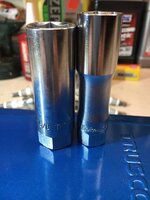
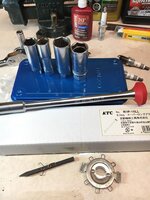
Happy Dog Days of Summer folks! I figured I would share some of my Japan made spark plug socketry. Subaru spark plugs are notorious for being difficult, and I decided to upgrade my Thorsen Japan to a Koken Zeal.

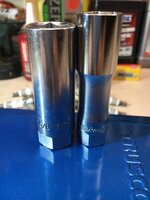

The Koken is a nice unit, but the KTC piece holds the plugs a bit more to my liking. I find the indicator on the KTC to be very helpful when indexing plugs.


The Koken is a nice unit, but the KTC piece holds the plugs a bit more to my liking. I find the indicator on the KTC to be very helpful when indexing plugs.
Attachments
-
 51b4319f02e6f8f28fe2ca7ec942784c.jpg101.8 KB · Views: 11
 -
 8cca4dcf07778e350a5ac8c228f258fe.jpg71.7 KB · Views: 1
 -
 89f02111ff40e03d3f7ae31566d61d0e.jpg96.8 KB · Views: 1
 -
 8fbd8214dc44943d94e2ad1a37d81bda.jpg87.6 KB · Views: 1
 -
 403662641ed295fae4839677be6ba768.jpg121.2 KB · Views: 1
 -
 1daebdc21a8612919840e59882e91de2.jpg101 KB · Views: 1
Mike.ASC
Well-known member
Where did you get the KTC piece from? ^
That Impression
Member
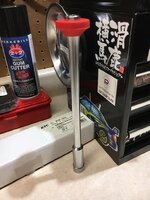
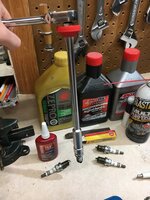
^ I purchased this one through Frankstools. It makes changing plugs on V6s and inlines a breeze. It is one piece so no socket extension disconnect, and the magnet really holds the plug nicely.


Attachments


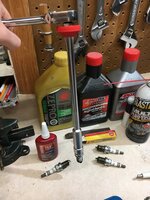
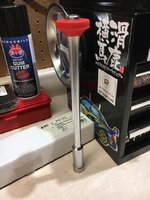
Koken has been offering those extended spark plug sockets in two lengths. One in 250 mm the other in 180 mm.
I've got both 180 & 250mm sets in all three sizes, 14, 16 & 20.8
http://www.kokenusa.com/products/product/148
I've got both 180 & 250mm sets in all three sizes, 14, 16 & 20.8
http://www.kokenusa.com/products/product/148
Last edited:
Mike.ASC
Well-known member
Thank you for the reply fella's.
This is going off-topic sorry, but I wanted see if you really can fettle a ratchet spring/springs enough to make a significant difference in back drag without effecting the function of the ratchet mechanism. Just for fun, this is no science lesson.
No offence please, CR888 and toddmorr, I realize that you don't need confirmation from me about something you already know.
I didn't have a junk pear head to mess with so purchased the cheapest 72 tooth ratchet I could find locally. 'Streetwize' with a 'z.' Obviously, results will vary with different ratchets.
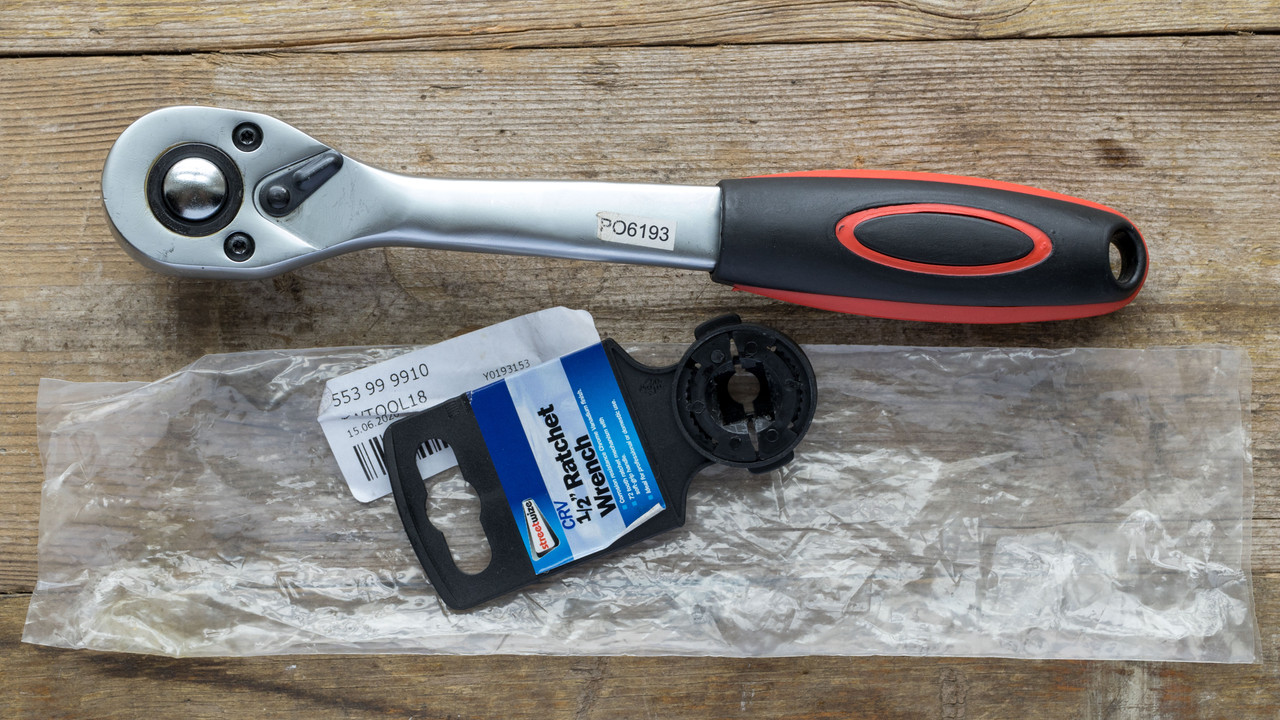
The Streetwize ratchet feels like it has average back drag for a 72 tooth, somewhere between Gedore and a sealed Facom. Gedore is 60 tooth so not an exact match. My aim was to make the Streetwize similar in smoothness and back drag to the Gedore.
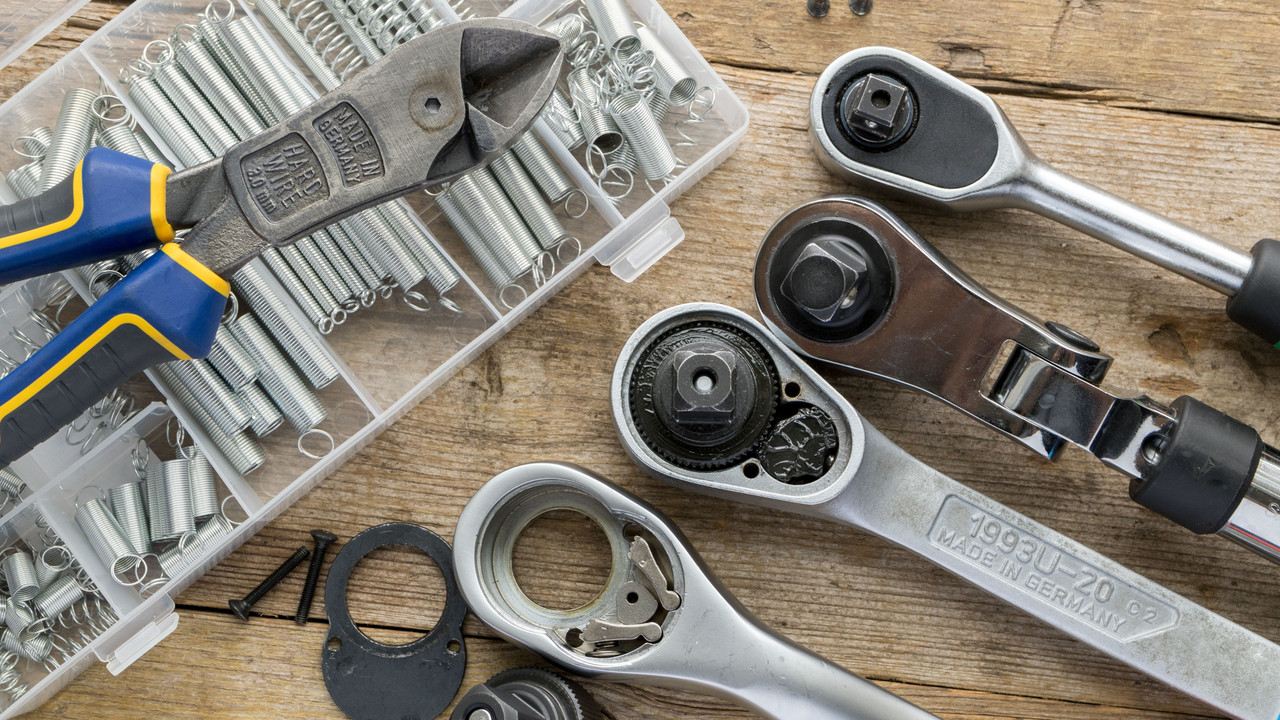
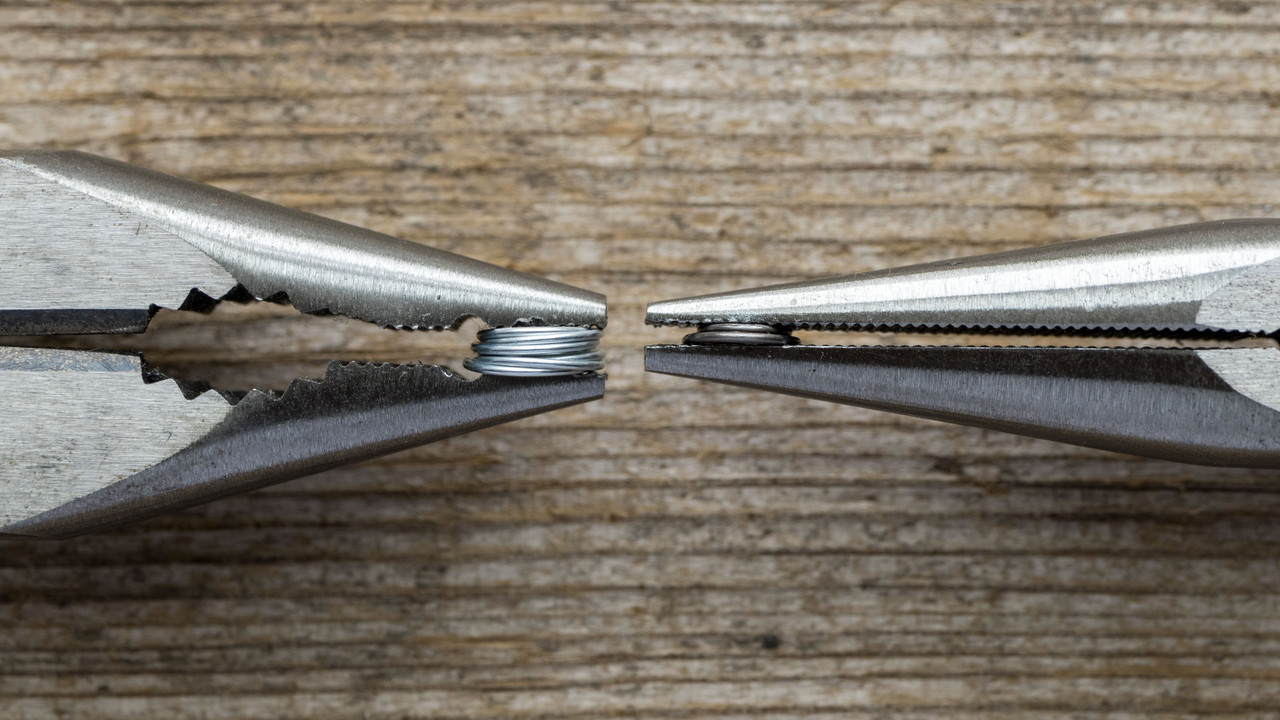
I already had a box of springs so tried some different shapes and sizes before committing to cutting the original springs. The conical spring is from the ratchet. This is the size of spring that reduced back drag enough to compare to the Gedore. Any smaller and the mechanism slipped. The new spring is also easier to compress.
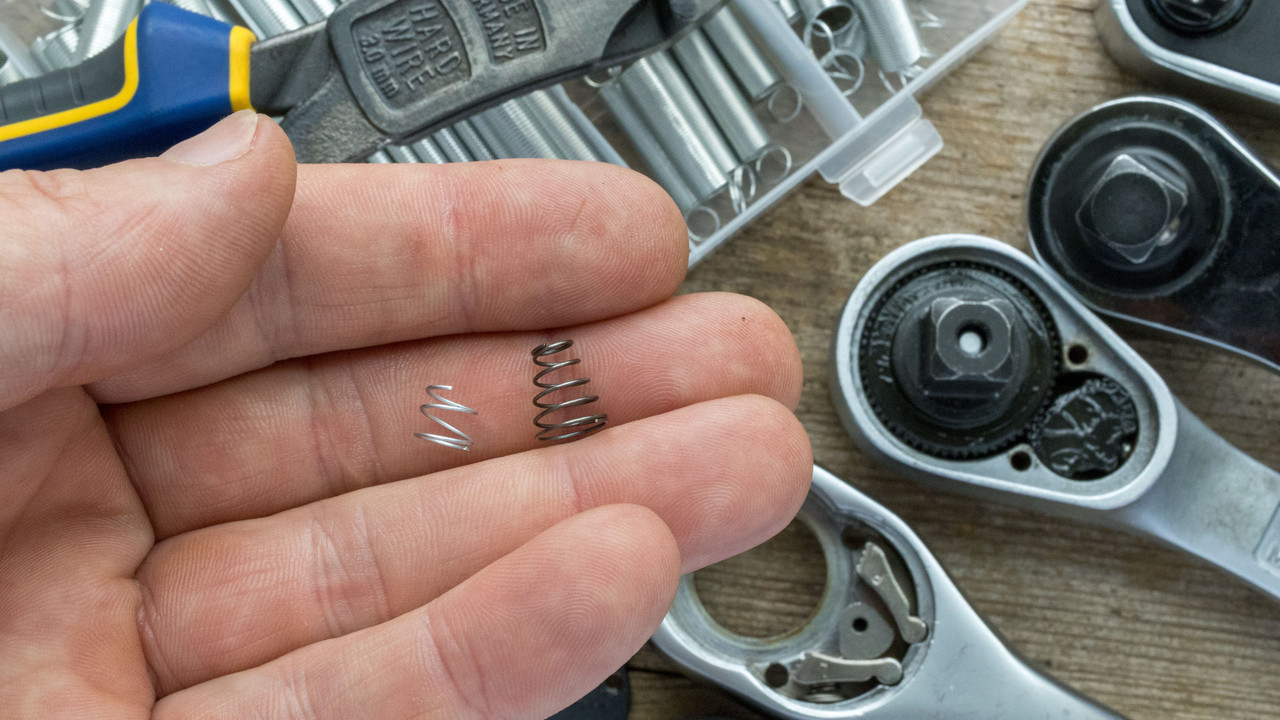
So I started cutting one of the original springs, half a coil at a time. Surprisingly I couldn't really feel any significant difference until the spring was about half it's original size.
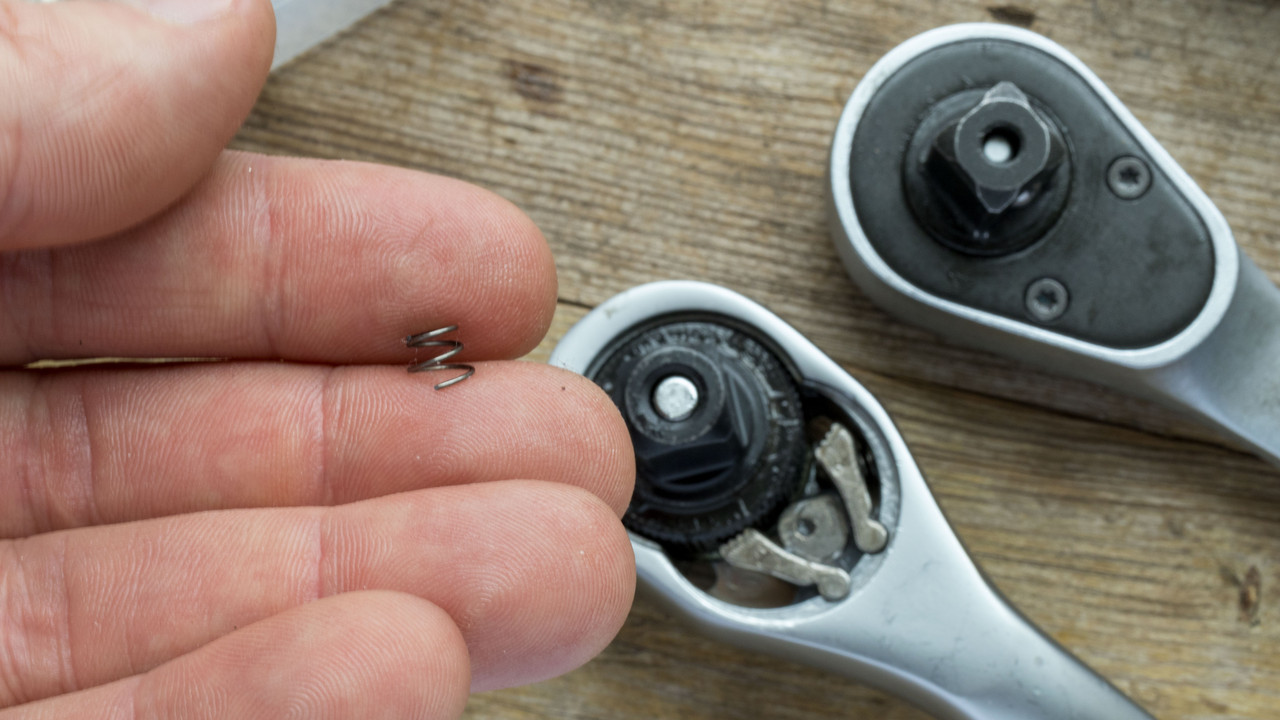
With the original springs cut, the back drag is greatly reduced and feels similar to the Gedore. However, the mechanism did not feel as smooth and produced louder clicks. With new softer springs, again about half the size of the originals, the mechanism feels and sounds very similar to the Gedore. Not quite as smooth but pretty close. I have tried the ratchet on a couple of bolts without issue but I'm not 100% confident that the changes will not cause issues. I would speculate that less drastic alterations would not affect function negatively at all.
Will try again with a dual pawl design if one turns up cheap.
Note. Something I didn't consider... The original springs are conical. When conical springs are compressed, the coils fit inside each other so the spring can be compressed down to the thickness of just one coil. With non-conical springs the coils sit on top of each other when compressed. This means that the original springs cannot be replaced with non-conical springs of the same length as it would not allow enough clearance for the pawls to move away from the main gear. So on this ratchet, simply replacing the original springs with softer standard springs of the same size is not an option.
No offence please, CR888 and toddmorr, I realize that you don't need confirmation from me about something you already know.
I didn't have a junk pear head to mess with so purchased the cheapest 72 tooth ratchet I could find locally. 'Streetwize' with a 'z.' Obviously, results will vary with different ratchets.
The Streetwize ratchet feels like it has average back drag for a 72 tooth, somewhere between Gedore and a sealed Facom. Gedore is 60 tooth so not an exact match. My aim was to make the Streetwize similar in smoothness and back drag to the Gedore.
I already had a box of springs so tried some different shapes and sizes before committing to cutting the original springs. The conical spring is from the ratchet. This is the size of spring that reduced back drag enough to compare to the Gedore. Any smaller and the mechanism slipped. The new spring is also easier to compress.
So I started cutting one of the original springs, half a coil at a time. Surprisingly I couldn't really feel any significant difference until the spring was about half it's original size.
With the original springs cut, the back drag is greatly reduced and feels similar to the Gedore. However, the mechanism did not feel as smooth and produced louder clicks. With new softer springs, again about half the size of the originals, the mechanism feels and sounds very similar to the Gedore. Not quite as smooth but pretty close. I have tried the ratchet on a couple of bolts without issue but I'm not 100% confident that the changes will not cause issues. I would speculate that less drastic alterations would not affect function negatively at all.
Will try again with a dual pawl design if one turns up cheap.
Note. Something I didn't consider... The original springs are conical. When conical springs are compressed, the coils fit inside each other so the spring can be compressed down to the thickness of just one coil. With non-conical springs the coils sit on top of each other when compressed. This means that the original springs cannot be replaced with non-conical springs of the same length as it would not allow enough clearance for the pawls to move away from the main gear. So on this ratchet, simply replacing the original springs with softer standard springs of the same size is not an option.
Last edited:
I've got one of those cheap Chinese 72t mechanisms to about 1/3 of the backdrag of a good Japanese ratchet. You just need to take small amounts off each spring and match or tune the springs so they both have the same pressure. If not the sound of the 'click' will be different between forward & reverse along with the backdrag. FWIW with some adapter's I used that $3 ratchet to undo lug nuts on my LandCruiser which from memory are around 80 or 90ftlbs.
toddmorr
Well-known member
with some adapter's I used that $3 ratchet to undo lug nuts on my LandCruiser which from memory are around 80 or 90ftlbs.
that made me chuckle.
pizza
Well-known member
thanks for sharing your results, mr.lemons
toddmorr
Well-known member
ah yes there ain't no such thing as a free lunch. I wondered that too.
theoretically the shorter spring pushes the pawl less deeply and firmly into the gears? and therefore the engagement isn't as "sure", and feels a little less solid?
since mr lemons appears to be rather motivated on this topic, for which we are all appreciative, maybe the next step is to get two identical ratchets, trim one and then carefully compare the feel of the two at the same time.
theoretically the shorter spring pushes the pawl less deeply and firmly into the gears? and therefore the engagement isn't as "sure", and feels a little less solid?
since mr lemons appears to be rather motivated on this topic, for which we are all appreciative, maybe the next step is to get two identical ratchets, trim one and then carefully compare the feel of the two at the same time.
In this case the ratchet has a separate spring and pawl for each direction, so I was able to swap out just one of the springs and compare it to the original by switching the direction switch.
I think durability is the main concern. Pretty sure that fitting weaker springs has a similar effect to adding years of wear/fatigue to the original springs.
Also, I think some/most people may prefer a more positive clicking sounding and feeling mechanism.
+ what mrspeed said.
I think durability is the main concern. Pretty sure that fitting weaker springs has a similar effect to adding years of wear/fatigue to the original springs.
Also, I think some/most people may prefer a more positive clicking sounding and feeling mechanism.
+ what mrspeed said.
paulsomlo
Well-known member
Yep - because manufacturers don't want the ratchet coming back under warranty because it skips. And they know that most people aren't going to understand the tradeoff between longevity and backdrag. And when it starts skipping, it hurts their reputation.I think durability is the main concern. Pretty sure that fitting weaker springs has a similar effect to adding years of wear/fatigue to the original springs.
toddmorr
Well-known member
good thinking. Makes sense....especially that dirt/grime over time would make it more likely to skip.
i do agree the average guy would find stock backdrag acceptable on many of these ratchets.
i do agree the average guy would find stock backdrag acceptable on many of these ratchets.