To avoid these ads, REGISTER NOW!

Diesel vs. gas tractor?

58Yeoman

Well-known member
Joined
Oct 1, 2010
Messages
8,999
Location
Central IL
I'm looking at buying a scut, and a Tym T224 fits the bill for size and cost. The only thing is, I've never had a diesel anything in my 70 years, and I'm not sure now is the time to start. I've got 1 1/4 acres and don't really need a new tractor, but would like something that my wife can drive and use. The 80 Cub 782 is quirky and the 89 Craftsman GT18 is okay, but no blade or bucket.

The minimum I need is a snow blade for the 180' driveway in the winter; it's gravel, so no snowblower. I've gotten by w/o a bucket all these years, but now the money is there, so why not? The price of fuel isn't a concern, as I use premium non-ethanol gas treated with Stabil now in all my small engines. What will I have to do with the diesel if it sits around for a couple months on non-use?

I sat on a new Simplicity Legacy at a JD dealer on Saturday (that was closed) and really liked the feel of it. It was the right size and has a snow plow included in the price, and 50 hours on it. I've looked online and found two Sims with a fel and 4x4 for good prices, but they're both 4 hours drive one way. I'm going to a local Sim dealer tomorrow to see what he has.

We had gone to see a JD saturday, but it was beat up. The dealer said a snow plow was about $1400 to add to it (hydraulic). I'm guessing that a Sim plow would be about the same if I bought one w/o one. The Tym dealer sells all the tractors he gets, but he's an hour away, and there aren't any other dealers nearer than almost a hundred miles.

Anyway, back to my original question. Is diesel so much more work than with gas? I need something really small for my tight spaces, and don't plan on pulling any stumps, etc., just something to ease the load on an old body.
 
To avoid these ads, REGISTER NOW!

cvairwerks

Well-known member
Joined
Aug 12, 2016
Messages
7,214
Location
Within hearing distance of Texas Motor Speedway
A diesel is better when you are using equipment at low rpm or for extended periods of time. Gas motors don’t like low rpm, long term use nor do they like low air flow thru the radiator.

Sounds like for your usage, it’s not going to matter too much on which fuel. Service and dealer accessability and relationship should be high focus items.
 

HenryAZ

MEMBER EMERITUS
Joined
Sep 18, 2012
Messages
1,054
Location
South Congress AZ
A diesel is better when you are using equipment at low rpm or for extended periods of time. Gas motors don’t like low rpm, long term use nor do they like low air flow thru the radiator.

I run my Kubota diesel almost all the time at idle RPMs, or slightly above, and the temp gauge never rises out of the medium cool range. Even when I rev it up to power the rear PTO, the gauge never goes above half way.

I agree, the dealer should be your first concern, no matter the fuel type. Size/type and brand of tractor second.
 

ALinCarolina

Well-known member
Joined
Dec 29, 2014
Messages
757
Location
NC Piedmont
I've got a diesel Kubota and and an antique gas Farmall. But with any tractor built within the last 30 or so years I would definitely go with a diesel.
 

Leaflessshadetree

Well-known member
Joined
Aug 1, 2013
Messages
7,154
Location
Don't ask.
I keep my Kubota in an unheated shed. In the coldest days of winter Diesel can/will gel up, even with treated fuel. When that happens I add an extra dose of fuel treatment and point a portable heater at the fuel filter and lines. After 15-30 minutes it will start and run fine.
If you get a loader get 4 wheel drive (or 4 wheel assist) and plenty of weight for the rear (wheel weights, filled tires or a weight box).
The Loader is very useful but not so much for moving snow. You can get a blade that attaches to the loader arms (either to the bucket or replaces the bucket) but they can be hard on the loader arms.
If you don't mind operating in reverse back blades for the 3 point aren't expensive and usually easy to find used.
 

XJSuperman

Well-known member
Joined
Jan 26, 2018
Messages
3,087
Location
Central Iowa
2 things:

Snowblowers are fine for gravel. They have shoes to set height and keep them out of the rock. A blade will arguably do more damage by carrying the rock with it since not all blades have skids/shoes on them and the blade naturally wants to dig.

Second, nothing wrong with a gas tractor, but the newer stuff will be diesel if you have any size to it. Gas will be simpler most likely, and you can avoid the emissions **** if you don't want to deal with DEF or if the tractor sits for long periods of time or doesn't get long hot running times.
 

cvairwerks

Well-known member
Joined
Aug 12, 2016
Messages
7,214
Location
Within hearing distance of Texas Motor Speedway
Hmmm...please don't tell that to my 1947 2N or any of its siblings still running every day.

LOL...Don't think anyone stocks 2N's thru 9N's anymore, so they kinda fall out of what the OP is looking for.

I drove an 8N for a bit that definitely did not like being run at low rpm, as it would tend to overheat. Keep it moving and some rpm on it and it was pretty happy.
 
OP
5

58Yeoman

Well-known member
Joined
Oct 1, 2010
Messages
8,999
Location
Central IL
My driveway was blacktop, but we had it "oil & chipped" last year. My snowblower is a one stage unit that needs to contact the driveway to pull itself. I have a snowblade on my old Cub that I raised the blade with the feet to clear the gravel. Better than shoveling.

Thanks for the replies; I think I'll be staying with gas for my purposes.
 

Showkey

"MEMBER EMERITUS"
Joined
Aug 9, 2014
Messages
8,638
Location
Wausau WI
Must be winter is coming........the first snow removal post.

Tractors and plowing comes up every year. Snow plow work best and fast if the push vehicle is fast enough to curl the snow off the the tilted blade. A slow straight push Plow is a Problem because the snow weight quickly becomes greater than the available traction, even with FWD.

For that reason rear or front mount blower on tractors are very common.

The front bucket works but it’s not fast or simple. Where a plow might be 15 minutes the bucket become a hour. 3” snow and the bucket is no fun......it’s just slow.

Then there’s the traction issue.......tires, wheel weights, chains.......each has there merits and problems. Spinning chains on asphalt and or chip seal can be a concern.......even scratching. concrete.
 

Farmall450

Well-known member
Joined
Dec 23, 2011
Messages
13,367
Location
Marengo, Illinois
I wouldn't be scared of a good Yanmar/Kubota diesel.

Way, way more efficient. If you get a small gas, it will be air cooled, and will need to be ran wide open (which I assume is what they're referencing up higher) :dunno:
 

tarmy

Well-known member
Joined
May 28, 2014
Messages
4,678
Location
Nor Cal
I never had a diesel before either. I use the hell out of my 3 banger Kubota...starts and works great every time.

I have about 1 1/2 acre as well...it get used for something, including snow plowing every week.
5C2B0838-3F8D-40DF-A12C-2C91FBDF10F9.jpg
 

purplezr2

Well-known member
Joined
Jun 1, 2010
Messages
5,292
Location
Central MN
I keep my Kubota in an unheated shed. In the coldest days of winter Diesel can/will gel up, even with treated fuel. When that happens I add an extra dose of fuel treatment and point a portable heater at the fuel filter and lines. After 15-30 minutes it will start and run fine.
If you get a loader get 4 wheel drive (or 4 wheel assist) and plenty of weight for the rear (wheel weights, filled tires or a weight box).
The Loader is very useful but not so much for moving snow. You can get a blade that attaches to the loader arms (either to the bucket or replaces the bucket) but they can be hard on the loader arms.
If you don't mind operating in reverse back blades for the 3 point aren't expensive and usually easy to find used.

Curious your location and fuel type used.

Had no issue with starting at -30 in Minnesota. That was a TC40D New Holland with road/off road fuel.
 

ericm

Well-known member
Joined
Apr 17, 2016
Messages
1,963
Location
Southern Oregon
There is no DEF needed for tractors under 75hp because the emissions limits are eased. Emissions limits are eased further under 25.5hp. For them a DPF or DOC is not used. This is for the current Tier 4 emissions which went into effect about 6 years ago. With a few exceptions the manufacturer's solutions work pretty well.

Diesel stores better than gasoline since it has few volatile fractions to evaporate. However diesel injector pumps and injectors don't like water. And water in diesel can grow algae, which can clog fuel filters. I use a stabilizer and biocide in the diesel fuel I store for my tractor.

Diesel is a little different but generally you can just run it and follow the owner's manual. Gas outdoor power equipment engines usually are governed to around 3600 rpm at full "throttle". Small diesel tractors < 25hp can be in the 2800-3200 rpm range. So not a lot of difference. However the diesel tractor will cost more.

If you're not doing a lot with it the premium for the diesel tractor and it's fuel, and the added hassle of having to buy and store an extra fuel type, are probably not worth it.
 

garfunkle24

Well-known member
Joined
Mar 18, 2008
Messages
3,429
Location
Saskatoon, Canada
Hmmm...please don't tell that to my 1947 2N or any of its siblings still running every day.

That, Sir, is what we call anecdotal evidence. If gas worked as well in larger tractors and equipment, they would still be made that way.

Diesel is a better fuel for equipment, has better torque characteristics, less maintenance etc etc. The real question is whether the higher initial outlay and hassle of owning equipment of 2 fuel types is worth it given the OP's needs.
 

KEH

Well-known member
Joined
Jan 31, 2010
Messages
5,142
The biggest advantage of a diesel tractor is that it has much better fuel economy. Most of the present day tractors, if not all, are diesels. The resale value of the diesels is much better.

KEH
 

Bolson32

Well-known member
Joined
Dec 6, 2016
Messages
541
Location
Lake Elmo, MN
OP, I was pretty much in the same boat as you last year. Wife and I moved to a 1.5 acre lot and I wanted something to do a bunch of snow removal, bucket, mower etc. Ended up with a 1026r and it's a tank. There hasn't been a ton of maintenance but they're so well known and supported I'm not terribly worried about it if it does come up. I do most simple fluids myself but I'm not gonna tackle any actual engine maintenance/repairs.

Mine does our driveway and 200ft of dog run with a snow pusher np. I just filled my ballast box with concrete so I'm expecting even better snow pushing this year tbh. I went with the pusher over the plow as I didn't want the big price tag. Got a 60" JD pusher for ~$800.
 

Pen & Wrench

Well-known member
Joined
Jan 12, 2015
Messages
658
Location
Huron, SD
A water cooled gas engine will do fine. Diesel eliminates the ignition and spark plugs. Use number 1 fuel in winter, get an engine heater or keep it in a heated shed. Diesels tend to have lots of torque and they just seem to run without much issue or trouble, but a good water cooled gas engine is nothing to be concerned about. Air cooled engines have proven themselves, but they don't cool as good, and probably need some rpm to cool well enough in hot weather, maybe not so critical in the winter. I have a diesel S650 Bobcat, and when I was a kid my Dad had an M600 Bobcat with an air cooled Wisconsin engine. We had trouble with the ignition getting wet in the distributor cap, and sometimes it didn't want to start, and I can tell you that I have none of those issues with my diesel bobcat, for whatever that's worth.
 
OP
5

58Yeoman

Well-known member
Joined
Oct 1, 2010
Messages
8,999
Location
Central IL
Is all diesel now biodiesel, or is the 'old style' still available? Is one better than the other for small tractors?
 
To avoid these ads, REGISTER NOW!

Bert_

Well-known member
Joined
Dec 24, 2016
Messages
9,722
Location
NW Iowa
That, Sir, is what we call anecdotal evidence. If gas worked as well in larger tractors and equipment, they would still be made that way.

Diesel is a better fuel for equipment, has better torque characteristics, less maintenance etc etc. The real question is whether the higher initial outlay and hassle of owning equipment of 2 fuel types is worth it given the OP's needs.

The old gas tractors were governed at maybe 2500 rpm, some less. Same as most diesels. Horse power is horse power.

The advantage of diesel always was fuel economy. It you're not using it for several hours everyday it really doesn't matter.
 

garfunkle24

Well-known member
Joined
Mar 18, 2008
Messages
3,429
Location
Saskatoon, Canada
The old gas tractors were governed at maybe 2500 rpm, some less. Same as most diesels. Horse power is horse power.

Try pulling a plow with a 200hp tractor and a 200hp crotch rocket and let me know how it goes. You can even put the bike motor in the tractor with the same gearing and tires if it makes you feel better.

Diesel burns different to gas, with them being completely different hydrocarbons. I'm pretty sure that's why they have different names. Diesel has a slower burning flame front, giving a more sustained impulse to the crank, creating more torque.

But yes, HP is HP. Kind of.
 

Bert_

Well-known member
Joined
Dec 24, 2016
Messages
9,722
Location
NW Iowa
Try pulling a plow with a 200hp tractor and a 200hp crotch rocket and let me know how it goes. You can even put the bike motor in the tractor with the same gearing and tires if it makes you feel better.

Diesel burns different to gas, with them being completely different hydrocarbons. I'm pretty sure that's why they have different names. Diesel has a slower burning flame front, giving a more sustained impulse to the crank, creating more torque.

But yes, HP is HP. Kind of.

You're comparing apples to spaceships...

200hp is a ridiculous number. No major manufacturer ever made a gas tractor that big. A 60hp gas tractor will do the same work as a 60hp diesel. Those are realistic numbers from when both types were popular. They are usually rated in hp at the drawbar or at the PTO. If anything that should tell you that it's the same.
 

garfunkle24

Well-known member
Joined
Mar 18, 2008
Messages
3,429
Location
Saskatoon, Canada
You're comparing apples to spaceships...

200hp is a ridiculous number. No major manufacturer ever made a gas tractor that big. A 60hp gas tractor will do the same work as a 60hp diesel. Those are realistic numbers from when both types were popular. They are usually rated in hp at the drawbar or at the PTO. If anything that should tell you that it's the same.

At their rated speed for max hp, sure. Comparing the torque curve of both will give you the real answer.

0.5hp or 9000hp, the number doesn't matter. 200hp was just given for arguments sake.

Peak HP numbers DO NOT tell the whole story. Peak HP numbers are pretty much only of use to marketing wankers and clueless braggarts.

Do some reading:

https://www.industrytap.com/diesel-engines-produce-higher-torque-gas-engines/45170
https://www.electricbike.com/electric-vs-gas-vs-diesel-when-is-a-horsepower-not-really-a-horsepower/

Can't be bothered to find better sources.
 
Last edited:

jblnut

ALLIANCE MEMBER
Joined
Jan 17, 2015
Messages
7,018
Location
In the Middle of MN
We had both a International 856 gaser (4.9L) and an International 856 Diesel (6.7L) at the same time and both would do about the same amount of work. We'd always grab the Diesel first because it was WAAAAAAAY easier on fuel. I always got stuck with the gaser and I'd have to fill up almost twice as often as the 856 Diesel. Being the diesel had a much larger engine it was able to lug down more and pull through things the gaser had to shift down in.

So .... if you intend to load the tractor down day in and day out, get a diesel. If you want the "relative" simple things about a gas engine, I'd do that in a heartbeat for what you are doing. Either are great options honestly and it'd 100% come down to the dealer to me. John Deere machines come at a premium but it is because they will be around for decades to come, the other off brand stuff like TYM and LS and countless others may be supported the day you purchase it and might be gone the first time you need service. We purchased a Kioti small tractor a few years back and needed a few things for it so we called the guy we purchased it from ... he laughed and said the closest dealer was now well over 500 miles away. Guess what got listed for sale the very next day ??
 

Bert_

Well-known member
Joined
Dec 24, 2016
Messages
9,722
Location
NW Iowa
At their rated speed for max hp, sure. Comparing the torque curve of both will give you the real answer.

0.5hp or 9000hp, the number doesn't matter. 200hp was just given for arguments sake.

Peak HP numbers DO NOT tell the whole story. Peak HP numbers are pretty much only of use to marketing wankers and clueless braggarts.

Do some reading:

https://www.industrytap.com/diesel-engines-produce-higher-torque-gas-engines/45170
https://www.electricbike.com/electric-vs-gas-vs-diesel-when-is-a-horsepower-not-really-a-horsepower/

Can't be bothered to find better sources.

An industrial engine will make peak hp for hours on end. If they both make 60hp at 2400rpm, a common governed speed for gas and diesel, guess what. The torque is the same.
 

Firebrick43

Well-known member
Joined
May 12, 2015
Messages
14,037
Location
West central Indiana
Diesel burns different to gas, with them being completely different hydrocarbons. I'm pretty sure that's why they have different names. Diesel has a slower burning flame front, giving a more sustained impulse to the crank, creating more torque.

But yes, HP is HP. Kind of.

This is simply not true. All things being equal except fuel, a modern gas engine will have more horse power and torque at a given RPM. Note very carefully, I stated "all things being equal"

Since we are talking "work" applications of an engine, the biggest factor of low rpm torque (under 2500 rpm) is bore to stroke relationship. A long stroke to bore size ratio will produce more torque at low rpm. This same ratio limits high rpm torque/hp. A square bore engine will rev better and perform better at higher rpm

Now your probably getting all in a tizzy right now but I have some examples. Back in the late 60's and early 70's one could get a tractor with either a Gas or a Diesel engine, and some times LP as well.

Take a late 60's 3020 john deere. Similar constructed engines. All three carefully tested at the university of nebraska under identical methods.
http://www.tractordata.com/farm-tractors/000/0/6/63-john-deere-3020-engine.html

To get the same torque, and therefore horsepower at the same rpm range, john deere had to have 270 cubic on the diesel vs 227 cubic inches on the gas and LP engines. 18 percent more displacement.

Many truckers in the early 60's hated diesels because they were dogs, the small cam cummins 855 (cubic inch) before it had a turbo made only 250hp. The 478cubic inch gmc v6 was its equal in horsepower and torque with 377 cubic inches less displacement and the 637 gmc v8 and 702 gmc v12 dominated it with less displacement. As did several of the big straight 6 gassers from diamond T and international

The TURBO made the diesel engine into what is so loved today.

Diesel engine to gain some fuel efficiency due to lack of a butterfly in the intake. This reduces pumping losses and therefore raise fuel economy some. However the largest gain in fuel economy is really not due to the engine design itself. Most rate fuel economy on Mile per gallon or Gallons per hour. Diesel fuel has 139000 btus per gallon, gasoline 124000, and propane 91000 btus. Therefore diesel, will have 11-12 percent greater efficiency out of the gate compared to gas due to its energy content per gallon not the engine itself. Interestingly enough diesel is typically over 15 percent higher cost per gallon at this time as well!
Back in 95 the chevy and ford diesels were turboed they only made around 160 hp. The guys That were driving them were because at that time, gas was around 1.20 a gallon and diesel was under a dollar. That was 17 percent more btus per dollar

The biggest reason heavy equipment and farmers adapted diesel engines is they are cheap bastards. In the 30's diesel was a waste product that had to be dealt with from the cracking process. Cat never talked about fuel efficiency in their sales lit from the time, they talked about how cheap the fuel was. In the 40's tractors were sold that burned tractor fuel. This was a form of kerosene, that would light off from spark plug if the engine was good and hot, and the fuel was cheap. As coal furnaces were replaced by oil burners, LP tractors started to sell well as LP was a waste product flared off the cracking process(theme starting?) Even though MPG or GPH look atrocious the cost per acre plowed was the cheapest. Again as oil burners were replaced by LP furnaces the cost rose and diesel made headway. A nice side benifit to diesel was its density that made for less refueling and once the turbo was installed on diesel it made a nice tractor. Gas tractors were neglected technology wise, and suffered from crappy updraft carb.
 

garfunkle24

Well-known member
Joined
Mar 18, 2008
Messages
3,429
Location
Saskatoon, Canada
^^I'm not going to quote all that, nor will I argue with you.

You did, however, quote what I had written and claimed it to be untrue. Which part is untrue, exactly?

The only vaguely questionable one would be flame front / flame speed, which is difficult to quantify given the variability and also the change from laminar to turbulent flow. This I won't argue either, however, as it requires an understanding of chemistry, thermodynamics and thermochemical engineering that I don't possess.

I will reduce my claim to this:

Diesel engines, as typically designed and produced, tend to produce more torque at lower RPM than an equally rated gasoline engine.

An industrial engine will make peak hp for hours on end. If they both make 60hp at 2400rpm, a common governed speed for gas and diesel, guess what. The torque is the same.

"Hours on end" hardly meets the requirements of an industrial engine.
 

zkdiesel

Well-known member
Joined
Oct 6, 2013
Messages
8,335
Location
chicagoland cornfields
I run my Kubota diesel almost all the time at idle RPMs, or slightly above, and the temp gauge never rises out of the medium cool range. Even when I rev it up to power the rear PTO, the gauge never goes above half way.

I agree, the dealer should be your first concern, no matter the fuel type. Size/type and brand of tractor second.
Diesel equipment is made to be run at governed rpm. Wack the throttle and don’t look back

Low rpm and high load even if it does it is not good for the crank and bearings.
#1 skidsteer engine killer is using a breaker at idle for more control. Yep, they knock the rod bearings out of most before 2k hours if guys do this
 

Firebrick43

Well-known member
Joined
May 12, 2015
Messages
14,037
Location
West central Indiana
Diesel burns different to gas, with them being completely different hydrocarbons. I'm pretty sure that's why they have different names. Diesel has a slower burning flame front, giving a more sustained impulse to the crank, creating more torque.

But yes, HP is HP. Kind of.

The specific part highlighted in red is untrue.

^^I'm not going to quote all that, nor will I argue with you.

You did, however, quote what I had written and claimed it to be untrue. Which part is untrue, exactly?

The only vaguely questionable one would be flame front / flame speed, which is difficult to quantify given the variability and also the change from laminar to turbulent flow. This I won't argue either, however, as it requires an understanding of chemistry, thermodynamics and thermochemical engineering that I don't possess.

I will reduce my claim to this:

Diesel engines, as typically designed and produced, tend to produce more torque at lower RPM than an equally rated gasoline engine.

You mean completely changed your claim. It was not included in your original statement therefore there was no reduction.

And still as a discussion on tractors there are many example of models showing that diesels don’t follow your new claim.

Even modern spark ignited industrial engines don’t necessarily follow your claim. I worked for caterpillar for 15 years in the factory that makes all their spark ignition engines, most running on natural gas, and large Diesel engines. They were built with mostly the same iron, just different pistons, some changes to the head, spark plugs, and fuel mixers(carburetor). The naturally aspirated diesel didn’t enjoy any of your fore mentioned claims, and were in fact rarely sold due to low output compared to their natural gas brethren which were mostly naturally aspirated. Ratings were always at the same 1500 or 1800 rpm dependent on application.

Some of the newer engines could dynamically blend in up to 80 percent untreated natural gas while running (fracking pumps) with no change in hp/torque even with the radical difference in flame front speeds.

As for “industrial engines making peak hp for hours on end” really does define an industrial engine. Peak hp is controlled either electronically or by the iron choices. Engines made at the plant I worked at life span was measured in 10s of thousands of hours. A back up generator application could have a larger output due to a bigger generator, larger turbo, and larger fuel injectors but only a 10000 hour between overhaul. Same basic engine detuned with smaller set of turbos making 750 less hp and running 7-8k hours a year would easily make it to 25000 hours before overhaul. A haul truck engine could have six turbos if working at high altitude.

Most industrial engines have B10 and B50 ratings assigned to their specific outputs. B10 is the hours where 10 percent of the engines in that specific output rating will need overhauled and B50 is of course 50%.
 
Last edited:

garfunkle24

Well-known member
Joined
Mar 18, 2008
Messages
3,429
Location
Saskatoon, Canada
Well if you were only claiming one particular part to be untrue, that's all you should have quoted. As it is, you claim it to be untrue that gas and diesel burn differently, that they're different hydrocarbons and that they have different names.

If we're playing the pedantic game, those are some embarrassing mistakes.

If you want to be such a pedant about mistakes or inaccuracies, you should really be more careful with what you say.

Again, if we're being pedantic, my initial claim has changed very little. What you took to task was the reasoning ie flame propagation:

If gas worked as well in larger tractors and equipment, they would still be made that way.

Diesel is a better fuel for equipment, has better torque characteristics, less maintenance etc etc. The real question is whether the higher initial outlay and hassle of owning equipment of 2 fuel types is worth it given the OP's needs.
 

u3b3rg33k

Well-known member
Joined
Dec 18, 2017
Messages
4,048
there's a lotta nonsense in here. I grew up with a Ford 860. 45 PTO horsepower. that's 1800rpm, you want more power rev it up to pulley speed, 2400rpm. they just put bigger engines on the gassers to make the same torque.

a diesel 45 PTO tractor isn't gonna pull a 3 bottom plow any better than a 45hp gasser of the same design.


diesel is good for one thing: operating cost. if you're gonna work it hard your wallet will be happy and the engine will be happy.

diesel is terrible if you don't work it hard. they slobber and have higher TCO if you're not taking advantage of the mid to high load fuel economy.
 

HenryAZ

MEMBER EMERITUS
Joined
Sep 18, 2012
Messages
1,054
Location
South Congress AZ
Is all diesel now biodiesel, or is the 'old style' still available? Is one better than the other for small tractors?

One station in this small town sells the "off road" (red colored) diesel. That's what I buy for my Kubota. The only problem is the huge nozzles on those pumps and getting the fuel into the safety can. I use a funnel but it still overruns sometimes.
 

s14kev

Well-known member
Joined
Dec 12, 2008
Messages
245
I've had a Kubota BX23S bought new for 2 yrs now. First small diesel motor I've owned. I think we should all be able to agree that diesels make more torque at a lower rpm for the same engine displacement. They also make less power for the same engine displacement at peak RPM since they typically aren't designed to rev as high. Overall lifespan and longevity of a diesel should also be longer than a gas engine between complete overhaul. I'm a fan of the diesel for a tractor. It's been a workhorse, hasn't lacked power and sips fuel. If you are going to run you equipment for a few hours at a time without stopping, it seems to be a great choice. Negatives are diesels are much noisier and dirtier than a gas engine.

We just bought a Kawasaki mule UTV. Had gas and diesel engine options. Chose gas. Diesel was way noisier, makes less power, lower top speed and really no benefit unless you only have diesel farm equipment and didn't want to stock a different fuel.

Bigger question is why buy a subcompact tractor for only 1.25ac? We have 9ac and the tractor runs a tiller, woodchipper, backhoe, rotary cutter, box blade, seeder, pallet forks etc. I can't imagine needing one for 1.5ac. A new BX23S is over $20K. That buys a lot of rental time. Just to push a snow plow a UTV can make short work of that and there are far better and faster machines to cut grass than a SCUT.
 

matt_i

Well-known member
Joined
Mar 14, 2008
Messages
10,727
Location
SE Michigan
The TURBO made the diesel engine into what is so loved today.

I'm going to lay my money on the change from prechamber mechanical- pump to direct-injection fuel systems.

Getting the droplet size down due to higher line pressures lets a diesel run much closer to ideal stoich air:fuel ratio and not have to be forcibly leaned out to reduce smoke. Running on the lean side of stoich air:fuel ratios is a power robber no matter what fuel a person runs or how its ignited.....compression or spark.

That said I have gas tractors from the 1950s so not directly applicable to the OP's question. They are simple and I can fix anything on them except for castings.

I've had reasonably good luck with fuel systems running E10, I do my best to top off the tank prior to the offseason to minimize head space in the tank which I feel can be an opening to expose more cold metal of the tank to atmospheric moisture that opens the door to moisture entering the fuel. I run 1/2 to 1 bottle of seafoam thru each engine at the start of the next season as well.

My opinion is to equalize the higher cost of the diesel engine plus higher volumetric fuel costs, one really has to run them a long time....
 
Last edited:

snorky18

Well-known member
Joined
Oct 1, 2007
Messages
1,170
Location
Southeast Tennessee
I never had a diesel before either. I use the hell out of my 3 banger Kubota...starts and works great every time.

I have about 1 1/2 acre as well...it get used for something, including snow plowing every week.
5C2B0838-3F8D-40DF-A12C-2C91FBDF10F9.jpg

That's a nice looking setup tarmy, but the hydraulic hose loop down low, that runs to the thumb on the backhoe bucket..... makes me nervous. I'd give myself 30 minutes of operating time before I got it hung on a rock or root or stumped and ripped the hoses off the tractor.
 

Firebrick43

Well-known member
Joined
May 12, 2015
Messages
14,037
Location
West central Indiana
Well if you were only claiming one particular part to be untrue, that's all you should have quoted. As it is, you claim it to be untrue that gas and diesel burn differently, that they're different hydrocarbons and that they have different names.

If we're playing the pedantic game, those are some embarrassing mistakes.

If you want to be such a pedant about mistakes or inaccuracies, you should really be more careful with what you say.

Again, if we're being pedantic, my initial claim has changed very little. What you took to task was the reasoning ie flame propagation:


As any one can see In post 28 I never once mentioned flame spread speed. You knew the false part of your statements I was challenging.
 
Last edited:

Busted_Knuckles

Well-known member
Joined
Oct 9, 2009
Messages
2,613
Location
Northwest Illinois
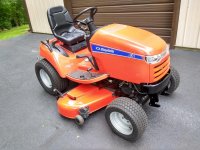
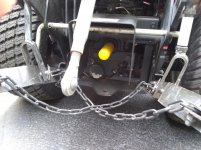
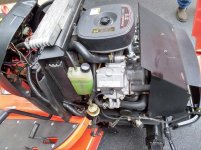
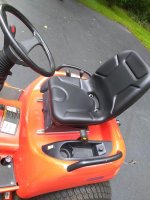
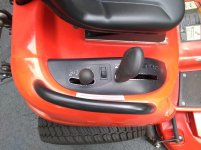
Im trying to find a home for this,.. its 4x4 and gas, but does not have plow.. but you can cut the grass with it too ! This is sitting in 61109, north of you maybe a couple hours ?
 

Attachments

  • IMG_20200610_151118522_HDR.jpg
    IMG_20200610_151118522_HDR.jpg
    153.3 KB · Views: 96
  • IMG_20200610_151126015.jpg
    IMG_20200610_151126015.jpg
    153.6 KB · Views: 66
  • IMG_20200610_151318360.jpg
    IMG_20200610_151318360.jpg
    154.3 KB · Views: 67
  • IMG_20200610_151233769_HDR.jpg
    IMG_20200610_151233769_HDR.jpg
    157.5 KB · Views: 66
  • IMG_20200610_151333729.jpg
    IMG_20200610_151333729.jpg
    95.5 KB · Views: 62
  • IMG_20200610_151041291.jpg
    IMG_20200610_151041291.jpg
    151.4 KB · Views: 64
  • IMG_20200610_151311288.jpg
    IMG_20200610_151311288.jpg
    149.5 KB · Views: 87
To avoid these ads, REGISTER NOW!
Top Bottom