To avoid these ads, REGISTER NOW!

Dedicated 240v outlet to run a Weld Pak 100

MAD MARK

Well-known member
Joined
Mar 3, 2019
Messages
57
Location
Pittsburgh Pa
I ran an 8 awg wire dedicated to my attached garage through the attic to run a 7500 watt heater. I no longer use the heater much, maybe 3-4 times a year to supplement the other heater til it catches up.

What is the best way to use this 40 amp box to run a Lincoln Weld Pak-100 which wants 20 amps. I have other 110 outlets in the garage but they are on a 20 amp which runs everything in the garage (lights/fans/refridg/etc)

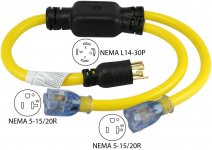
I was thinking of a simple 240 to 110 to plug into the NEMA L14-30P outlet such as the picture below and link. That way I know the welder wont trip anything while running other things. And I am going to run this welder because it was free, I know there are way better options out there.

I figure for $25 cheapest option.

https://www.amazon.com/Conntek-YL1430520S/dp/B002MGJ2F4/ref=sr_1_6?dchild=1&keywords=240+to+120+adapter&qid=1606716856&sr=8-6
 

Attachments

  • plug.jpg
    plug.jpg
    54.5 KB · Views: 42
To avoid these ads, REGISTER NOW!

wyliesdiesels

Well-known member
Joined
Aug 14, 2012
Messages
20,041
Location
Modesto, CA
So you ran an 8/3 NM-b cable to the L14-30 recetacle for a heater? 240v equipment doesnt need a neutral so it would use an L6-30r...
 

dogdog

Well-known member
Joined
Nov 15, 2011
Messages
12,711
You'll be fine to, that welder is a 120V only I think, so the pigtail break out will be fine... The welder have a 15AMP fuse in the back also.... Just make sure you have neutral on that plug as mentioned.

all my 240V outlets are setup with L14-30R in the garage. a bit expensive for the Receptacles and extra wiring. but I rather have it uniform YMMV... but that L14-30R is a 30AMP rated not 40.. though... Just saying make sure you have your plugs right... technically if you have a proper L14-30R you can use that breakout pigtail... or build one. probably cheaper to buy one.
 
Last edited:

dogdog

Well-known member
Joined
Nov 15, 2011
Messages
12,711
That thing ain't legal no way no how.


Not sure, my generator came with a 10' L14-30P break out cable with the generator.

why wouldn't it be legal ? L14-30R have neutral and ground .. just shared neutral .
 

sberry

Banned
Joined
Jun 18, 2005
Messages
35,747
Location
Brethren, Michigan
Hook 6 space panel on it. Can use the heater, can use another circuit or 2 for other tools. It's a good way to go around the existing wiring for heavier loads.
 

Millwrong

Well-known member
Joined
Feb 4, 2018
Messages
369
Location
Canada
Agreed. If you ran a neutral out there, just put in a small sub panel and feed a nice dedicated 20 amp 120 outlet, and a 240 outlet for the heater. Also this way, if you ever run into future electrical needs, you're ahead of the game.
 

nadogail

Well-known member
Joined
Jan 23, 2009
Messages
32,007
Location
Coronado, CA
IMHO, your idea, with a sub panel, is good. If you don't fuse the circuit to 20 Amps, not good. Going for a sub panel, again IMHO, should make everything good.
 

sberry

Banned
Joined
Jun 18, 2005
Messages
35,747
Location
Brethren, Michigan
This is rather economical too, probably 40$ for all of it, panel, a couple clamp, breakers and a ground bar. I see he said 3 conductor earlier.
 

u2slow

Well-known member
Joined
Nov 20, 2011
Messages
3,605
Location
BC
I would probably recycle one of those 'spa-pack' boxes I have for such a job. Holds a 2-pole breaker. The #8 feed doesn't need a neutral to supply a welder.

I really, really despite twist-locks. The tension and contact area on straight-blades is usually better.
 

mike93lx

ALLIANCE MEMBER
Joined
Dec 9, 2013
Messages
37,738
Location
Richmond, VA
I would probably recycle one of those 'spa-pack' boxes I have for such a job. Holds a 2-pole breaker. The #8 feed doesn't need a neutral to supply a welder.

I really, really despite twist-locks. The tension and contact area on straight-blades is usually better.

Yes he definitely needs a neutral to feed a 120v welder, unless he reconfigures the feed at the source
 

Crazyjake8493

Well-known member
Joined
Sep 26, 2014
Messages
3,974
Location
Upstate NY
Another vote for a small subpanel. Stick a 4 or 6 space panel there, double pole 40A for the heater in case it needs to be used, and a single pole 20A for the welder, still leaves an additional space or few. Minimal additional expense over the $25 adapter, and safer.
 

sberry

Banned
Joined
Jun 18, 2005
Messages
35,747
Location
Brethren, Michigan
the 6 space is super economical and designed just for this. If I was doing it wouldnt limit it with 2 when the cost is so similar and so much more room in a larger box.
Agree about the expense vs adapter, so close and if done right this will be an asset.
 

wyliesdiesels

Well-known member
Joined
Aug 14, 2012
Messages
20,041
Location
Modesto, CA
Not sure, my generator came with a 10' L14-30P break out cable with the generator.

why wouldn't it be legal ? L14-30R have neutral and ground .. just shared neutral .

code does not allow a 30a outlet on a 15a or 20a circuit.

The NEC does not have jurisdiction over a portable generator.

If you used a 15a extension cord plugged into a 30a circuit on your generator and overloaded it, what do you think will happen? The breaker certainly wont trip before the cord gets hot.
 

dogdog

Well-known member
Joined
Nov 15, 2011
Messages
12,711
code does not allow a 30a outlet on a 15a or 20a circuit.

The NEC does not have jurisdiction over a portable generator.

If you used a 15a extension cord plugged into a 30a circuit on your generator and overloaded it, what do you think will happen? The breaker certainly wont trip before the cord gets hot.

Not sure about NEC, but that cord is shorter, and 10 GA. Technically it probably won't over heat in the scenario... with a lesser gauge wiring it probably would.

Gauge: 10 AWG, Max Rating: 7500 Watts
 
To avoid these ads, REGISTER NOW!

dcg9381

Well-known member
Joined
Jun 20, 2018
Messages
11,809
Location
Austin, TX
code does not allow a 30a outlet on a 15a or 20a circuit.

Where does code prohibit this other than multi-outlet circuits?

NEC 210.21(B)(3) says "no" - but only applies to the case when there are more than 1 outlets on the circuit.

I was under the impression that 210.21(B)(1) allows this pretty clearly:
"a single receptacle installed in an individual branch circuit shall have an ampere rating not less than that of the branch circuit."

It doesn't say it can have a higher ampere rating than the branch circuit ampere rating.
It says it cannot have a smaller ampere rating. It's not necessary to explicitly "allow" the other cases as long as nothing prohibits them.

This would allow for:
* A single 20A receptacle on a 20A circuit
* A single 30A receptacle on a 20A circuit
* A single 50A receptacle on a 20A circuit

The other catch seems to be:
"Receptacles, cord connectors, and attachment plugs shall be constructed such that receptacle or cord connectors do not accept an attachment plug with a different voltage or current rating from that for which the device is intended......"

Key word "intended" - if you're intending this to be a circuit for a welder, I'd say you're doing it right. There is no standard welder plug that I know about...

I didn't just arm-chair this one, if it's a violation, I'm doing it wrong too..
 
Last edited:

wyliesdiesels

Well-known member
Joined
Aug 14, 2012
Messages
20,041
Location
Modesto, CA
Where does code prohibit this?

NEC 210.21B3 says "no" - but only applies to the case when there are more than 1 outlets on the circuit.

I was under the impression that 210.21(B)(1) allows this pretty clearly:
"a single receptacle installed in an individual branch circuit shall have an ampere rating not less than that of the branch circuit."

It doesn't say it can have a higher ampere rating than the branch circuit ampere rating. It says it cannot have a smaller ampere rating.

This would allow for:
* A single 20A receptacle on a 20A circuit
* A single 30A receptacle on a 20A circuit
* A single 50A receptacle on a 20A circuit

The other catch seems to be:
"Receptacles, cord connectors, and attachment plugs shall be constructed such that receptacle or cord connectors do not accept an attachment plug with a different voltage or current rating from that for which the device is intended......"

Key word "intended" - if you're intending this to be a circuit for a welder, I'd say you're doing it right. There is no standard welder plug that I know about...

putting a 30a receptacle on a 15a or 20a circuit allows one to plug in a load that exceeds the ampere rating of the branch-circuit.

read 210.22

Permissible Loads, Individual Branch Circuits. An individual branch circuit shall be permitted to supply any load for which it is rated, but in no case shall the load exceed the branch-circuit ampere rating.
 
Last edited:

dcg9381

Well-known member
Joined
Jun 20, 2018
Messages
11,809
Location
Austin, TX
Thanks for the reference of what you think the violation is - that's helpful.

210.22 Permissible Loads, Individual Branch Circuits:
An individual branch circuit shall be permitted to supply any load for which it is rated, but in no case shall the load exceed the branch-circuit ampere rating.

To me, this is talking about the load, not the outlet. It says you shouldn't overload circuits, which makes sense. As long as his load (the welder) is compliant with the breaker and wire, my take is that it isn't prohibited. 210.22 has no prohibition on a larger receptacle.


The table in 210.21(B) - which is branch circuits (not individual, so it really doesn't apply), allows for a 50A receptacle on a 40A breaker.
 

wyliesdiesels

Well-known member
Joined
Aug 14, 2012
Messages
20,041
Location
Modesto, CA
Thanks for the reference:


To me, this is talking about the load, not the outlet. It says you shouldn't overload circuits, which makes sense. As long as his load (the welder) is compliant with the breaker and wire, my take is that it isn't prohibited.


The table in 210.21(B) - which is branch circuits (not individual), allows for a 50A receptacle on a 40A breaker.

welders are a difficult reference to use, as code allows exceptions to the normal wire size requirements, for welder circuits. the wire can be smaller than what is allowed for general branch circuit wiring due to duty cycle.

but putting a 30a receptacle on a 20a circuit allows one to plug in utilization equipment/load with a 30a attachment plug, which obviously would exceed the rating of the circuit. The whole point of the NEC is to prevent fire. An end user plugging in equipment will not know what size wire is in the wall and thus will not know that if they see a 30a outlet, it wont actually support their 30a load. also a breaker may or may not trip (think of older junkie breakers like zinsco, FPE, challenger, etc that dont always trip) upon overload. why chance a fire?

In the OPs case, he wont be overloading anything since the welder is small. I was merely adding to the discussion about putting larger receptacles on lower rated circuits.
 
Last edited:

sberry

Banned
Joined
Jun 18, 2005
Messages
35,747
Location
Brethren, Michigan
It isn't just about the circuit but the stuff plugged in to it. In this case the code explained what as it does but doesn't explain why. Says do or don't. Doesn't go in to all the theory.
 

dogdog

Well-known member
Joined
Nov 15, 2011
Messages
12,711
It isn't just about the circuit but the stuff plugged in to it. In this case the code explained what as it does but doesn't explain why. Says do or don't. Doesn't go in to all the theory.

In theory, the breakers is there to protect the wiring IMO of cause, not the devices attached to it...

The welder have a 15AMP or 20AMP fuse anyways build in.
 

sberry

Banned
Joined
Jun 18, 2005
Messages
35,747
Location
Brethren, Michigan
I believe the welder is the only exception to all this dept for the 15A on a 20. But with it can't put a breaker bigger than the receipt rating but are allowed to use smaller wire to the point of its short circuit rating,, and can use breakers smaller than the receipt rating
Required to with some of the minimum wire sizes for some welders.
 

sberry

Banned
Joined
Jun 18, 2005
Messages
35,747
Location
Brethren, Michigan
^^^^^^agreed

Sent from my SM-G960U using The Garage Journal mobile app

In theory, the breakers is there to protect the wiring IMO of cause, not the devices attached to it...

The welder have a 15AMP or 20AMP fuse anyways build in.
This is not meant to be rude but the opinion doesnt count here. The thought it is only to protect the circuit is rather rudimentary. So much, most,, of it or parts of the connected equipment depends on the breaker for short circuit protection, this is different than thermal overload. The cords to it and some/most/all of the internals sized to the circuit it is to be plugged in to.
There are some pieces,,, may be able to handle 30 that come 15vend, a chop saw, some table saws etc but the other tools designed to be limited to 20A circuits. Their cords and internal controls not rated for larger breakers.
My pressure washer has parts use less current than the 120v but have size larger wire, doesn't have any further protection except for motor protection for the burner. Has heavier leads for it and the transformer to match the circuit it's plugged in to.
The close assumes it's wired to code about recepts, it says if it's a 30 there is a 30 breaker,, to meet demand but also to limit current for fault. Some pieces may use a heavier end, lighter cord, wood working sharing circuits is one place. Doesn't need 30,, it's the largest circuit it can be connected to. Can run multiple machines from 1 circuit.
 

sberry

Banned
Joined
Jun 18, 2005
Messages
35,747
Location
Brethren, Michigan
The welder may have built in thermal, it has other protection for smaller internal components. Most of the 120v welders can tolerate 30 but,,, this type of circuit can be used as a general for other common equipment hence the limitation to 20. The adapter earlier not legal due to this, allows anyone to plug anything 120v in to a 30,, not good, not listed.
 

sberry

Banned
Joined
Jun 18, 2005
Messages
35,747
Location
Brethren, Michigan
Breakers for most dedicated circuits really do not protect against thermal, only on generals with multiple outlets. Only against shorts. An electric range, a buzzer welder, all load calculated. Only thermal in a range is for a clock. None in the welder, all parts sized to fault a 50. Comes with a 12 cord, as long as the wire is big as or better than the cord that is the protection,, not the breaker. Clear? Not clear?
 

Terry D

Well-known member
Joined
Mar 25, 2015
Messages
2,202
Location
St. Louis, MO.
This is not meant to be rude but the opinion doesnt count here. The thought it is only to protect the circuit is rather rudimentary. So much, most,, of it or parts of the connected equipment depends on the breaker for short circuit protection, this is different than thermal overload. The cords to it and some/most/all of the internals sized to the circuit it is to be plugged in to.
There are some pieces,,, may be able to handle 30 that come 15vend, a chop saw, some table saws etc but the other tools designed to be limited to 20A circuits. Their cords and internal controls not rated for larger breakers.
My pressure washer has parts use less current than the 120v but have size larger wire, doesn't have any further protection except for motor protection for the burner. Has heavier leads for it and the transformer to match the circuit it's plugged in to.
The close assumes it's wired to code about recepts, it says if it's a 30 there is a 30 breaker,, to meet demand but also to limit current for fault. Some pieces may use a heavier end, lighter cord, wood working sharing circuits is one place. Doesn't need 30,, it's the largest circuit it can be connected to. Can run multiple machines from 1 circuit.
WTF are you talking about. I merely agreed that if it is a 8-3 ran to the garage, it would be better to put put a sub panel in. I have had the exact same welder for 25 years. I have it plugged into a dedicated 120 volt 20 amp circuit, and never had a problem

Sent from my SM-G960U using The Garage Journal mobile app
 
Last edited:

sberry

Banned
Joined
Jun 18, 2005
Messages
35,747
Location
Brethren, Michigan
I wasn't talking to you, I was generalizing about the misconception about what a breaker does. I agree a sub is the correct thing to do. Whoops, the machine added a quote I didn't mean to add. I was responding to dog, the little buttons here on phone etc. Terry, I know you know.
 

JeepJohn62

Well-known member
Joined
Feb 25, 2019
Messages
157
Location
Alaska
Hi Mad Mark,
Few topics start a riot like an electrical code discussion!

Your original post states you ran a dedicated 240V circuit to your heater. This requires two hots and a ground. This implies that you do not have a neutral, so you can't get a 120v circuit this way.

I would mount a small subpanel and run the appropriate neutral for it. This will allow you to make several branch circuits as you like.

John

Sent from my SM-A102U using The Garage Journal mobile app
 
OP
M

MAD MARK

Well-known member
Joined
Mar 3, 2019
Messages
57
Location
Pittsburgh Pa
Hi Mad Mark,
Few topics start a riot like an electrical code discussion!


Sent from my SM-A102U using The Garage Journal mobile app

Always can learn from it somehow.

Below is a better idea after looking at it.

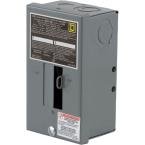
Have a 40-amp 240 breaker running 8-3 wire to the garage that feeds the panel below which has a 30-amp breaker in it. The 40 amp is being used in the main panel because I think there was an empty space and it was laying there.

That 30-amp breaker then feeds to an outlet on which I pigtailed the wire below to accept. So I would have to go from that kind of outlet(4 prong range) to 120.

40ampmain-->30ampsub-->Female4prongoutlet
 

Attachments

  • subp.jpg
    subp.jpg
    3 KB · Views: 63
  • 4 prong.jpg
    4 prong.jpg
    5.1 KB · Views: 64
To avoid these ads, REGISTER NOW!
Top Bottom