To avoid these ads, REGISTER NOW!

PTFE tape gasoline resistant?

seagull369

Well-known member
Joined
Jan 16, 2013
Messages
227
The yellow kind, which I guess is just a thicker version of the white kind, says it's safe to use on "gas," but I imagine that refers to natural gas. Does gasoline, though, eat this stuff up?
 
To avoid these ads, REGISTER NOW!

rlitman

Well-known member
Joined
Oct 18, 2010
Messages
24,624
Location
Long Island
The yellow kind, which I guess is just a thicker version of the white kind, says it's safe to use on "gas," but I imagine that refers to natural gas. Does gasoline, though, eat this stuff up?

Teflon isn't eaten by any fuels that I am aware of.

Just to be clear, almost all teflon tape products are 100% teflon, and those are ALL equally immune to being broken down by gasoline, LP, NG, Jet A, etc.

The differences between the tape colors has most to do with the tape density, and thickness, with these two sets of exceptions: Green is special, because it is certified as oil free for oxygen service. Grey and copper colored tapes have nickel and copper particles for enhanced anti-galling properties, but inferior sealing properties.
 

engineer2

Well-known member
Joined
Dec 13, 2009
Messages
11,814
Location
Chicago burbs
What type of fitting on a gasoline engine (or whatever you are doing) requires Teflon tape? Most old fuel line fittings a flare types. The flare is the seal, not the threads.
 
OP
S

seagull369

Well-known member
Joined
Jan 16, 2013
Messages
227
What type of fitting on a gasoline engine (or whatever you are doing) requires Teflon tape? Most old fuel line fittings a flare types. The flare is the seal, not the threads.

This is for a npt fitting on a generator gas tank. I'll probably end up using Permatex #2 non-hardening, but it got me wondering about the thread tape
 

Dave455

Well-known member
Joined
Mar 19, 2013
Messages
5,821
Location
Sussex, England
The yellow kind, which I guess is just a thicker version of the white kind, says it's safe to use on "gas," but I imagine that refers to natural gas. Does gasoline, though, eat this stuff up?

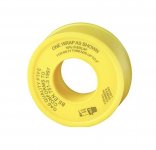
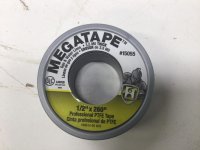
The yellow PTFE is sold here in the U.K. as “Gas Safe”, but that refers to “Gas” as in Propane, Butane etc, not “Gasoline”.

I imagine it’s the same stuff in the U.S. (as shown below) but given the differences in terminology I’m surprised they are not a bit more specific!

I’m not sure if it’s thicker, or a different composition?

One U.K. supplier says it’s suitable for “fuel oils” which implies Diesel or Kerosene, but not Gasoline.
 

Attachments

  • 3E191268-F7BB-41A9-AB99-308F42724F59.jpeg
    3E191268-F7BB-41A9-AB99-308F42724F59.jpeg
    65.5 KB · Views: 18
  • E4DD5D3A-8BC0-487F-8585-520C06807A74.jpg
    E4DD5D3A-8BC0-487F-8585-520C06807A74.jpg
    42.7 KB · Views: 18
Last edited:

rlitman

Well-known member
Joined
Oct 18, 2010
Messages
24,624
Location
Long Island
This is for a npt fitting on a generator gas tank. I'll probably end up using Permatex #2 non-hardening, but it got me wondering about the thread tape

Ah, makes sense. I've never used Permatex #2 on threads, but I do use it on water pump seals. I'd probably reach for my Rectorseal 5 for this, but there are lots of things I have rated for gasoline service.
 

Wrench97

Well-known member
Joined
Jun 23, 2018
Messages
12,130
Location
Southeastern Pa
Worst part of Teflon tape on Fuel fittings is the part that breaks off and get stuck in the float.................I always use pipe dope like Rectorseal posted above.
 

4xdog

Well-known member
Joined
Aug 18, 2012
Messages
5,620
Location
Santa Fe, NM
Worst part of Teflon tape on Fuel fittings is the part that breaks off and get stuck in the float.................I always use pipe dope like Rectorseal posted above.

Yep -- I don't use Teflon tape on anything where a loose piece could get into sensitive mechanics. That includes especially engine internals.
 

ddawg16

Well-known member
Joined
Jul 11, 2008
Messages
21,005
Location
S. California
Guys....

Teflon tape is not a sealer. It's friction reducer which allows you to get more turns on the fitting. It's the tapered thread which provides the sealing.

The tape provides minimal sealing.
 

DeeKay

Well-known member
Joined
Nov 25, 2020
Messages
448
Location
Colorado
Guys....

Teflon tape is not a sealer. It's friction reducer which allows you to get more turns on the fitting. It's the tapered thread which provides the sealing.

The tape provides minimal sealing.

I've heard that from quite a few people, mostly engineers. In a perfect world yes that's how tapered pipe threads are designed to work given the threader makes a 100% perfect thread form. In the real world pipe dope and teflon tape does some of the sealing work.
 
To avoid these ads, REGISTER NOW!

Showkey

"MEMBER EMERITUS"
Joined
Aug 9, 2014
Messages
8,638
Location
Wausau WI
Worst part of Teflon tape on Fuel fittings is the part that breaks off and get stuck in the float.................I always use pipe dope like Rectorseal posted above.

X3 carb float seat stick drops gallons of fuel on the floor or in crankcase .

Guys....

Teflon tape is not a sealer. It's friction reducer which allows you to get more turns on the fitting. It's the tapered thread which provides the sealing.

The tape provides minimal sealing.

The fills the thread gap on tapered thread especially on poor quality China pipe and fitting. Extra thick tape extra raps is the new order of the day.

There some pipe and fittings that will never seal with filling the threads no mattter how tight.


084382CD-BE25-4959-BB55-F45700BD73FA.jpg
 
OP
S

seagull369

Well-known member
Joined
Jan 16, 2013
Messages
227
Thanks for all the great replies. I didn't realize Rectorseal (#5) was good on gasoline. I might just use that instead, since I have some already,

On a side note after reading the product descript, I didn't know the Rectorseal ISN'T recommended for use with ABS or CPVC.
 

anndel

Well-known member
Joined
Oct 28, 2015
Messages
3,270
Location
Hawaii, USA
I used to work for the Chevron Refinery repairing/refurbishing air pneumatic pumps and used to use the white version of the same PTFE tape. It worked well for everything I dealt with from crude oil to gasoline and naphta until the next pump rebuild about a year later.
 

Hawke

Well-known member
Joined
Aug 24, 2007
Messages
151
Location
Sydney Australia
PTFE tape is the work of the devil. All its good for is lubricating taper threads (another design of Lucifier) and allowing them to overtighten and split housings, and or allow the fitting to vibrate loose. The only way to fit and seal a taper thread, is to use the correct Loctite thread sealant.

Ever wonder why you never see tape used on an aircraft or race car?
 

ddawg16

Well-known member
Joined
Jul 11, 2008
Messages
21,005
Location
S. California
PTFE tape is the work of the devil. All its good for is lubricating taper threads (another design of Lucifier) and allowing them to overtighten and split housings, and or allow the fitting to vibrate loose. The only way to fit and seal a taper thread, is to use the correct Loctite thread sealant.

Ever wonder why you never see tape used on an aircraft or race car?

No....because those are different types of connections. They don't depend on the taper of the thread to provide sealing. Totally different animals...tape or dope would just cause problems.

1396.jpg
 

Renegade1LI

Well-known member
Joined
Mar 11, 2018
Messages
4,977
Location
long island ny
Thanks for all the great replies. I didn't realize Rectorseal (#5) was good on gasoline. I might just use that instead, since I have some already,

On a side note after reading the product descript, I didn't know the Rectorseal ISN'T recommended for use with ABS or CPVC.

This is off the rector seal web site, good for pvc, do not use on abs or cpvc.
Applications
RectorSeal No. 5 is recommended for pipe made of galvanized steel, iron, brass,
copper, aluminum, stainless steel, polyethylene, reinforced fiberglass, and PVC. DO
NOT USE ON ABS OR CPVC.
RectorSeal No. 5 is recommended for pipe carrying:
• Acids, dilute
• Air, compressed
• Aliphatic solvents
• Ammonia – gaseous, liquid
• Caustics, dilute
• Cutting oils (low aromatic)
• Diesel fuel oil
• Gasohol (unleaded gasoline and 10%
alcohol)
• Gasoline (leaded and unleaded)
• Heating oils
• Helium, gaseous
• Hydraulic oils
• Hydrogen, gaseous
• Inert gases
• Kerosene
• Liquefied petroleum gases (butane,
propane, mixtures)
• Mineral oils
• Natural gas
• Nitrogen, gaseous
• Petroleum solvents
• Refrigerants
• Soap, liquid
• Steam
• Vegetable oils
• Water (hot or cold)

It's nice to have one sealant that covers such a wide range.
 

rlitman

Well-known member
Joined
Oct 18, 2010
Messages
24,624
Location
Long Island
Thanks for all the great replies. I didn't realize Rectorseal (#5) was good on gasoline. I might just use that instead, since I have some already,

On a side note after reading the product descript, I didn't know the Rectorseal ISN'T recommended for use with ABS or CPVC.

Rectorseal 5 doesn't have teflon on it, and I believe the "stiction" from ABS and CPVC is the issue. Rectorseal T plus 2 is teflon infused, and is rated for ABS and CPVC, though strangely, I don't see gasoline on the T plus 2 datasheet, whereas it is clearly listed on the 5.
 

Renegade1LI

Well-known member
Joined
Mar 11, 2018
Messages
4,977
Location
long island ny
I wouldn't recommend using abs or cpvc for gasoline or even pvc. If you are burying the pipe it should be frp, hdpe or ul971 flex pipe. Above ground usually sch 40 steel pipe is specd, A53 seamless.
 

rlitman

Well-known member
Joined
Oct 18, 2010
Messages
24,624
Location
Long Island
I wouldn't recommend using abs or cpvc for gasoline or even pvc. If you are burying the pipe it should be frp, hdpe or ul971 flex pipe. Above ground usually sch 40 steel pipe is specd, A53 seamless.

LOL, I can certainly agree to that. The point I was making is that Rectorseal dopes are not a one-size-fits-all product. But yeah, PVC and gasoline are kind of mutually exclusive, so it's not a problem.

However, for those crazy enough to need a one-size product for these edge cases, check out the Laco 41600 SLIC-TITE STIK. That stuff is rated for gasoline, and plastic pipes (yeah, probably not at the same time), and checks off more boxes on a single product than anything else I've seen.
 

59 wagon man

Well-known member
Joined
Oct 25, 2010
Messages
1,589
Location
hollywood fla
old school way was anything such as rectorseal, pipe dope , grape goo , whatever paste you wanted to use and spoolwick. cotton based thread wound into the threads and coated with any paste you wanted. more time consuming but never had a leak with thousands of joints made
 

JRC3

Well-known member
Joined
Jun 30, 2014
Messages
12,481
Location
Southwestern OH
This thread hits home right now...I have a question...I'm going to use this on a plastic tank. I will use a regular nut on the inside, I also have another petcock and could use the nut and washer off that on on the inside. My question is, will that washer seal the threads or will I need sealant? I just can't imagine that washer smashing into the threads enough.

The project is an old Honda generator that's missing the tank, gonna use a regular red plastic gas can. Thanks.

Added another pic
 

Attachments

  • 20201207_111605[1].jpg
    20201207_111605[1].jpg
    40.8 KB · Views: 15
  • 20201207_124602[1].jpg
    20201207_124602[1].jpg
    51 KB · Views: 6
Last edited:

rlitman

Well-known member
Joined
Oct 18, 2010
Messages
24,624
Location
Long Island
That looks like it the seal to me, I would not put anything on it.

Correct. Thread sealant is for NPT (or BSP) tapered threads. It's really not appropriate anywhere else, though I've been known to coat metal-to-metal connections with a swipe of the above SlicTite crayon on flares and unions when they give me issues.
 

Renegade1LI

Well-known member
Joined
Mar 11, 2018
Messages
4,977
Location
long island ny
old school way was anything such as rectorseal, pipe dope , grape goo , whatever paste you wanted to use and spoolwick. cotton based thread wound into the threads and coated with any paste you wanted. more time consuming but never had a leak with thousands of joints made

Wanna laugh, I learned the hard way recently, like usual. Do not use wick with any oil! I have a fitter, who is a great pipe guy install fuel piping for new boilers in a school. Well somehow he thought that wick would leak proof it, 6 months later every joint leaked, had to reseal every joint. The wick works just like in a lamp, wicks the oil right through the threads. With water it swells up tight, not oil, he truly earned his nickname, leakum.
 
To avoid these ads, REGISTER NOW!
Top Bottom