To avoid these ads, REGISTER NOW!

Drilling holes in top plate

ollie76

Well-known member
Joined
Apr 22, 2012
Messages
694
Location
Nova Scotia
Good day all,

Just planning on running some Ethernet cable throughout my house and I'll have to drill a few holes up in the attic down through the top plates of a couple bedrooms. I'm not 100% sure on how to locate existing 120v wiring in the walls so I just want to get some advice before I begin.

I plan to drill a single hole in the top plate of the two upstairs bedrooms and then fish the single ethernet cable straight down to a wall outlet. Is it possible to have wiring secured to the underside of the top plate and I end up drilling through wire?
 
To avoid these ads, REGISTER NOW!

jeepxj

Well-known member
Joined
Mar 2, 2008
Messages
17,881
highly unlikely it will be on the bottom of the top plate.
 

htmdude57

Well-known member
Joined
Apr 28, 2014
Messages
173
Location
Hudson Valley, New York
By top plate, are you meaning an exterior wall? I would think that would be difficult due to insulation in the wall, and low clearance to the roof, to get a drill there.
 
OP
O

ollie76

Well-known member
Joined
Apr 22, 2012
Messages
694
Location
Nova Scotia
No, it would be the top plates of the interior dividing walls of the three bedrooms. I have access through the attic. House is approx 15 years old in a modern subdivision.
 

didit

Well-known member
Joined
Feb 11, 2020
Messages
892
Location
S.W. Ontario
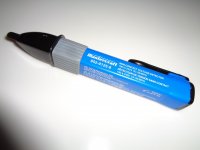
Possibly if there are ceiling light fixtures but I agree, not likely without being visable from where you will be drilling. Use a proximity voltage sensor to find out before drilling. The one in the pic was about $5.
 

Attachments

  • DSC06315.jpg
    DSC06315.jpg
    71.2 KB · Views: 32
Last edited:

alfredeneuman

Well-known member
Joined
Mar 3, 2011
Messages
4,584
Location
Fullerton, CA
Possibly if there are ceiling light fixtures but I agree, not likely without being visable from where you will be drilling. Use a proximity voltage sensor to find out before drilling. The one in the pic was about $5.
The sensor would not read through the plate's wood.
 

didit

Well-known member
Joined
Feb 11, 2020
Messages
892
Location
S.W. Ontario
Just run that thing along the top plate while in the attic??

That's it. It takes 2 AAA batteries and will sound off when it gets less than a foot away from any live circuit without touching anything. There are no buttons or switches. Canadian Tire. Good luck!
 

sparky 1971

Well-known member
Joined
Oct 9, 2018
Messages
7,982
Location
Central Iowa
That non contact sensor isn't going to read a hot wire through the top plate, but it could give you a reading if you get too close to the wire in the attic. There aren't any wires stapled to the bottom of the plate. The wires may, however come through the plate a few inches away from the stud, in which case they may be running at a pretty sharp angle to the stud. If that's the case, you could potentially hit a wire if you use a long bit and get it between the wire and the stud. The double top plate is 3" thick. Just get a stubby bit and chuck it into your drill so that it's only going to drill about 3-1/4 to 3-1/2" deep before the chuck bottoms out against the plate if your worried about it. I refuse to do attic work anymore, but when I was willing to go into an attic, I would almost always use a 6" long auger bit. Not once was I concerned about hitting a wire.
 

didit

Well-known member
Joined
Feb 11, 2020
Messages
892
Location
S.W. Ontario
After some experimenting with the sensor I would say alfredeneuman and sparky 1971 gave you the straight truth. It does not detect through the double plate. The sensor does detect the live circuit when pushed to the bottom of the double plate but only because it is now only penetrating the drywall on an angle to the wire. It would depend on the location of the wire and what is obstructing it. I sure don't want to mislead you but in my case I could detect the circuit feeding my sump pump that had sporadic nailers for hanging the drywall. Other places I tried, nothing.
 

CJ7VFR

Well-known member
Joined
Jan 13, 2015
Messages
2,939
Location
Central New Jersey
If there is any wiring stapled inside the cavities created by the top plate, wall studs and the sheetrock where you want to drill the holes, the wires will most likely be stapled to the wall studs and not the top plate like jeepxj said.

If the wires have to make some type of loop inside the cavities of the walls, up near the top plate, most electricians seem to staple the wire to the wall stud to hold the wire in place, and then just run the wire up and over to the next wall stud and put a staple in there to run the wire back down. They don't normally put a staple up on the horizontal top plate because it is harder to hammer in that direction, and a staple there is not really needed.

But for the most part, unless you have some electrical items up near the ceiling, like a light fixture or a ceiling fan, then most likely all the wiring in the second floor rooms will be down low and usually no higher up than the highest switch. This is not always the case, but mostly, as there is no reason to run wiring up inside the walls of the second floor unless you are running wire to control a light or ceiling fan.

If there is any wiring inside the walls that does come up high, and into the attic, then perhaps you could fish the ethernet cable thru those holes that already exist if they are located close enough to where you need them?

If you do go ahead and drill holes, you might want to start with a small drill bit, and set the depth so that the bit just breaks thru the top plate, but no deeper. Once the hole is drilled you should be able to then poke a thin wire thru the small hole and see if you hit anything. Chances are the wire will not be stapled to the top plate, but at least this way you will not drill into any wires.

If you are not hitting anything when you poke the wire thru, go up to a larger drill bit, but still set the depth to just go thru the top plate and no more. Then you will for sure see if there is a wire there without hitting and damaging it.

The other thing could do is look in each bedroom to see where any receptacles, switches and any other electrical items are located on the walls. Then, try to avoid those locations and wall cavities where they are located, and drill down thru the top plate in a different cavity.

Jim
 

Innovate1

Well-known member
Joined
Jul 28, 2014
Messages
4,289
Location
Illinois near St. Louis, Missouri
Drilling down should be relatively safe as others have noted. Drilling just through is a good precaution too. Checking what other switches and boxes are in the area is a good idea. Drilling up is another story - learned that the hard way years ago.
 
OP
O

ollie76

Well-known member
Joined
Apr 22, 2012
Messages
694
Location
Nova Scotia
So I drilled my holes. My drill bit was 4" long so I just did it very gingerly. After I drilled the holes I stuck a small USB borescope camera down just to make sure I didn't hit anything. All I could see at the bottom of the holes was insulation, no wires visible. I guess it's good.
 

jeepxj

Well-known member
Joined
Mar 2, 2008
Messages
17,881
well i'm happy to hear your service entrance wasnt compromised in drilling a top plate
 
To avoid these ads, REGISTER NOW!

CJ7VFR

Well-known member
Joined
Jan 13, 2015
Messages
2,939
Location
Central New Jersey
Good news on the hole! If you think you will ever want to run something else down thru that same hole you may want to consider attaching a string of some sort to the ethernet cable when you pull it thru.

This string will provide you with a way to pull another cord/wire/cable thru the same location easily.

Just a thought.

Jim
 
OP
O

ollie76

Well-known member
Joined
Apr 22, 2012
Messages
694
Location
Nova Scotia
Good news on the hole! If you think you will ever want to run something else down thru that same hole you may want to consider attaching a string of some sort to the ethernet cable when you pull it thru.

This string will provide you with a way to pull another cord/wire/cable thru the same location easily.

Just a thought.

Jim

Oh man too late, I should have done that. What a great idea, sheesh I should have waited a bit before doing this.
 
OP
O

ollie76

Well-known member
Joined
Apr 22, 2012
Messages
694
Location
Nova Scotia
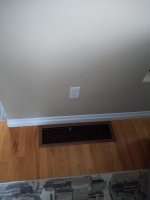
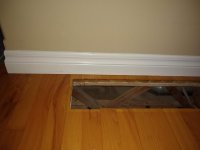
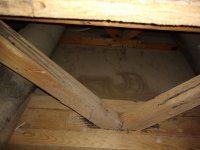
So a little more planning ahead. This will be the next ethernet run and the wiring will go through the attic and, hopefully, come down the wall so I can run it to the basement. I've highlighted the run in yellow and it will go from the attic to underneath the floor.

So this will require drilling through that top plate and also drilling up through the bottom plate (is that what they call it?). Once again, any tips you guys can throw my way would be much appreciated. I will wait a bit before I drill these holes as I got a bit ahead of myself last time.
 

Attachments

  • IMG_20201213_105836054.jpg
    IMG_20201213_105836054.jpg
    49.3 KB · Views: 36
  • IMG_20201213_105836054~3.jpg
    IMG_20201213_105836054~3.jpg
    53.4 KB · Views: 35
  • IMG_20201213_105843044.jpg
    IMG_20201213_105843044.jpg
    39 KB · Views: 35
  • IMG_20201213_105921553.jpg
    IMG_20201213_105921553.jpg
    70.5 KB · Views: 35
  • IMG_20201213_105929127.jpg
    IMG_20201213_105929127.jpg
    131.7 KB · Views: 36
  • IMG_20201213_105948010.jpg
    IMG_20201213_105948010.jpg
    147.9 KB · Views: 36
Last edited:

couch67

Well-known member
Joined
Mar 18, 2016
Messages
1,407
Location
Ontario Canada
That one is a bit more invasive. I think you would drill the top plate like you did before. Drop a fish tape or rod from the top to make sure there isnt blocking mid-way. The fiberglass fish rods give you a better chance of finding the bottom hole.

The bottom hole will be a bit trickier. you could drill from the bottom up, through the air return vent. If not, I'd remove the baseboard and cut a small access hole to drill from there. More patching but less time fussing with getting the hole cut, and getting the fish tape through the bottom hole. This looks to be a high traffic, very visible area so I'd be sure of my finishing skills (and how patient my significant other is), before going this path.

I'm assuming the basement ceiling is drywalled based on your pic. Maybe an access hole there would work?

If you do manage to drill through the bottom plate from the cold air return vent, but still have trouble getting your fish tape through the bottom hole, you can still remove the baseboard and cut a small access point (not higher than the baseboard itself) to help get the tape through the bottom hole. This way you dont have to patch up the wall when you put it all back together.

Finally, I think for it to meet code you need plenum rated ethernet cable. I'm not 100% sure about that one, but worth checking on. I'm sure someone else will chime in on this to confirm or correct.
 
Last edited:
OP
O

ollie76

Well-known member
Joined
Apr 22, 2012
Messages
694
Location
Nova Scotia
That one is a bit more invasive. I think you would drill the top plate like you did before. Drop a fish tape or rod from the top to make sure there isnt blocking mid-way. The fiberglass fish rods give you a better chance of finding the bottom hole.

The bottom hole will be a bit trickier. you could drill from the bottom up, through the air return vent. If not, I'd remove the baseboard and cut a small access hole to drill from there. More patching but less time fussing with getting the hole cut, and getting the fish tape through the bottom hole. This looks to be a high traffic, very visible area so I'd be sure of my finishing skills (and how patient my significant other is), before going this path.

I'm assuming the basement ceiling is drywalled based on your pic. Maybe an access hole there would work?

If you do manage to drill through the bottom plate from the cold air return vent, but still have trouble getting your fish tape through the bottom hole, you can still remove the baseboard and cut a small access point (not higher than the baseboard itself) to help get the tape through the bottom hole. This way you dont have to patch up the wall when you put it all back together.

Finally, I think for it to meet code you need plenum rated ethernet cable. I'm not 100% sure about that one, but worth checking on. I'm sure someone else will chime in on this to confirm or correct.

I've developed some decent wire fishing skills that seem to be working well. For the most part I haven't used fish tape too much. I use a thin diameter plastic stick with a long length of ball chain taped on the end. I drop the stick and the ball chain down from the top and try to catch the ball chain with a magnet inserted from the bottom. I have the magnet attached to a bendy equipment tie. Pull the ball chain out and then tape strong string to the ball chain and pull the whole thing back up to the attic. Then I tape the Ethernet wire to the string and pull it all the way down. I have found that this method works best if you don't have any insulation in your way.
 

couch67

Well-known member
Joined
Mar 18, 2016
Messages
1,407
Location
Ontario Canada
I've developed some decent wire fishing skills that seem to be working well. For the most part I haven't used fish tape too much. I use a thin diameter plastic stick with a long length of ball chain taped on the end. I drop the stick and the ball chain down from the top and try to catch the ball chain with a magnet inserted from the bottom. I have the magnet attached to a bendy equipment tie. Pull the ball chain out and then tape strong string to the ball chain and pull the whole thing back up to the attic. Then I tape the Ethernet wire to the string and pull it all the way down. I have found that this method works best if you don't have any insulation in your way.

That is clever - might need to borrow that one for myself next time!
 

sparky 1971

Well-known member
Joined
Oct 9, 2018
Messages
7,982
Location
Central Iowa
I haven't used the stick and chain method before, but have used a chain many times. Drill at least a 1" hole from below. Drop a piece of jack chain from the attic, make sure to tie it off so it doesn't fall into the wall. Using a piece of #12 solid wire, bend a hook on the end,, stick it up from below and spin it around to grab the chain. Pull the wire and chain out.
 
OP
O

ollie76

Well-known member
Joined
Apr 22, 2012
Messages
694
Location
Nova Scotia
So again, unlikely I'll hit electrical wire in either the top or bottom plates? I think I will drill the holes small and look inside with my borescope first. Is the bottom plate also likely around 3 to 3 1/2" thick?
 

alfredeneuman

Well-known member
Joined
Mar 3, 2011
Messages
4,584
Location
Fullerton, CA
The bottom plate should be 1-1/2" thick

My trick for insulated walls was to drop a piece of jack chain or 3/16" string with a 1 pound lead fishing sinker on the end. I dropped it right in between the drywall and the insulation.
Overkill is better than frustration.
 

MoonRise

Well-known member
Joined
Nov 5, 2010
Messages
4,030
Location
NJ
Don't forget to caulk ALL the holes with fire-stop caulking.

It's Code required (and has been for a while).

The bottom plate on a wall is typically just a single plate, so 1-1/2" thick. Top plate on a wall is typically a double plate, so 3" thick.
 
OP
O

ollie76

Well-known member
Joined
Apr 22, 2012
Messages
694
Location
Nova Scotia
Don't forget to caulk ALL the holes with fire-stop caulking.

It's Code required (and has been for a while).

The bottom plate on a wall is typically just a single plate, so 1-1/2" thick. Top plate on a wall is typically a double plate, so 3" thick.

Really? That's good to know, I will do that next time I'm up there
 

MoonRise

Well-known member
Joined
Nov 5, 2010
Messages
4,030
Location
NJ
Well, up dere in da Canuckistan region tings may be different. :D

But here in the US, NEC and other building/electrical Codes have required the use of fire-stop caulking for a while now. 10-20 years or so at least.

YMMV and all that. Being as you are in a 'foreign' country and all. :lol:
 
To avoid these ads, REGISTER NOW!
Top Bottom