To avoid these ads, REGISTER NOW!

DeWalt vs Husky Air Compressor

alex123

Well-known member
Joined
Jan 16, 2019
Messages
177
Location
USA
Hello Friends,

I am looking at two compressors head to head for some automotive work. I am not a mechanic, and this is simply for home automotive repair (ratchet, air wrench, die grinder, cut off tool, etc...). A 220V setup is definitely not an option, and neither is anything larger than 40 gallons. I am directly comparing these two air compressors, and am interested in knowing which would provide longer run times for my tools. This DeWalt is 25 gallons, and offers 6.2 SCFM @ 90psi (200psi max), while this Husky is 30 gallons, and also offers 6.2 SCFM @ 90psi , but has a max of 175psi. Which compressor will yield longer tool run times? And which is the better tool overall? On a similar note, is there a online calculator of sorts that can calculate the average tool run time if I provided the aforementioned specs?

Thanks,
 
To avoid these ads, REGISTER NOW!

Lucid Moments

Well-known member
Joined
Aug 9, 2015
Messages
1,775
Location
Gainesville, Ga
They are going to be so close I doubt you would be able to tell the difference unless you ran them side by side.

Either will run most of what you need for general automotive work unless you need to do a lot of body work and sanding or other air intensive work.
 
OP
A

alex123

Well-known member
Joined
Jan 16, 2019
Messages
177
Location
USA
They are going to be so close I doubt you would be able to tell the difference unless you ran them side by side.

Either will run most of what you need for general automotive work unless you need to do a lot of body work and sanding or other air intensive work.

I appreciate your reply. Definitely no body work. It'll be mostly air ratchet, die grinder, air hammer, etc. If there won't be a noticeable difference, I'm thinking the Husky is the way to go. It's $170 cheaper.
 

WoodsTruck

Well-known member
Joined
Jan 12, 2013
Messages
1,024
I just bought a California Air Tool compressor a couple months ago. Not as powerful as what you are describing but the noise level is a huge improvement.
 
OP
A

alex123

Well-known member
Joined
Jan 16, 2019
Messages
177
Location
USA
I just bought a California Air Tool compressor a couple months ago. Not as powerful as what you are describing but the noise level is a huge improvement.

Thank you for your reply. I'm glad you're happy with your CAT - I heard those things are pretty good! My goal is to maximize run time on 110V, so I'm looking for the largest unit I can get on 110v.
 

Professional Tool User

Well-known member
Joined
Apr 9, 2018
Messages
1,835
Location
BC
Both should be around the same. I'd be looking into whether or not there is a significant difference in the quality of the parts.
 
OP
A

alex123

Well-known member
Joined
Jan 16, 2019
Messages
177
Location
USA
Both should be around the same. I'd be looking into whether or not there is a significant difference in the quality of the parts.

Good point. I actually did and surprisingly, the Husky had better reviews. There were a number of QC issues related to air leaks on the DeWalt.
 

GeoBruin

Well-known member
Joined
May 5, 2018
Messages
3,744
In that price/size range, consider this Quincy that makes 7.4 cfm at 100 PSI. Northern tool and Air Compressors Direct both ship it for free.

I believe it is the highest output 120v machine currently. All the IMC/Atlas Copco brands (Bellaire etc.) sell a version of it but I think the Quincy is cheapest. I had one before I upgraded to a 60 gallon and it was a great little machine. I put a clamp meter on it and it creeps up close to 18 amps when it's nearly full so you'll definitely want a 20 amp circuit, but it never tripped the breaker.


https://www.aircompressorsdirect.com/Quincy-Q12124VPQ-Air-Compressor/p110582.html
 

jonesg

Well-known member
Joined
Mar 15, 2010
Messages
1,698
Location
northern Maine/
Both should be around the same. I'd be looking into whether or not there is a significant difference in the quality of the parts.

Campbell Hausfeld makes a lot of compressors for other labels, surprised to see my harbour freight has a CH head unit too.

Suggest you get high flow hose and couplers, the V type are a lot better than 1/4 inch M type couplers.
 

seber

Well-known member
Joined
May 31, 2016
Messages
4,199
Location
Deep East Tx.
In that price/size range, consider this Quincy that makes 7.4 cfm at 100 PSI. Northern tool and Air Compressors Direct both ship it for free.

I believe it is the highest output 120v machine currently. All the IMC/Atlas Copco brands (Bellaire etc.) sell a version of it but I think the Quincy is cheapest. I had one before I upgraded to a 60 gallon and it was a great little machine. I put a clamp meter on it and it creeps up close to 18 amps when it's nearly full so you'll definitely want a 20 amp circuit, but it never tripped the breaker.


https://www.aircompressorsdirect.com/Quincy-Q12124VPQ-Air-Compressor/p110582.html

I agree with this. In that price range, I would avoid two stage compressors altogether. Too many compromises have to be made to keep the price down. Quincy compressors are known for longevity. Cheap aluminum flywheels are going to wear out quickly if you use it much. Two stage high pressure is great if you have a large tank to store it, but with a small tank, you will be running pretty my full time anyway, so greater CFM at working pressure is more important.
 
OP
A

alex123

Well-known member
Joined
Jan 16, 2019
Messages
177
Location
USA
In that price/size range, consider this Quincy that makes 7.4 cfm at 100 PSI. Northern tool and Air Compressors Direct both ship it for free.

I believe it is the highest output 120v machine currently. All the IMC/Atlas Copco brands (Bellaire etc.) sell a version of it but I think the Quincy is cheapest. I had one before I upgraded to a 60 gallon and it was a great little machine. I put a clamp meter on it and it creeps up close to 18 amps when it's nearly full so you'll definitely want a 20 amp circuit, but it never tripped the breaker.


https://www.aircompressorsdirect.com/Quincy-Q12124VPQ-Air-Compressor/p110582.html


Thank you for the recommendation. That unit is rated at max 135psi. Would it not be continuously running as soon as I start running my tools... There's not a lot of time between 135psi, and when it starts to kick back on. Or am I missing something?
 
OP
A

alex123

Well-known member
Joined
Jan 16, 2019
Messages
177
Location
USA
Campbell Hausfeld makes a lot of compressors for other labels, surprised to see my harbour freight has a CH head unit too.

Suggest you get high flow hose and couplers, the V type are a lot better than 1/4 inch M type couplers.

Thank you for your input. Any specific unit you would recommend with a cfm>6.2 and a psi >175?
 
OP
A

alex123

Well-known member
Joined
Jan 16, 2019
Messages
177
Location
USA
I agree with this. In that price range, I would avoid two stage compressors altogether. Too many compromises have to be made to keep the price down. Quincy compressors are known for longevity. Cheap aluminum flywheels are going to wear out quickly if you use it much. Two stage high pressure is great if you have a large tank to store it, but with a small tank, you will be running pretty my full time anyway, so greater CFM at working pressure is more important.

Thank you for your response. I'm hoping you can help me better understand this concept as I'm new to air tools. If the unit has a max PSI of 135, as is the case with the Quincy unit, will that not imply my unit will kick on sooner, and more often, than say a unit of similar tank size, with a higher max psi? The Quincy is rated at 135psi max, and as soon as I use my ratchet, or die grinder, it's going to drop significantly and kick on pretty much immediately, will it not?
 

GeoBruin

Well-known member
Joined
May 5, 2018
Messages
3,744
Thank you for your response. I'm hoping you can help me better understand this concept as I'm new to air tools. If the unit has a max PSI of 135, as is the case with the Quincy unit, will that not imply my unit will kick on sooner, and more often, than say a unit of similar tank size, with a higher max psi? The Quincy is rated at 135psi max, and as soon as I use my ratchet, or die grinder, it's going to drop significantly and kick on pretty much immediately, will it not?
Yes and no. It will depend on what kind of tools you're using and how you're using them.

With a small tank (let's assume 25 gallons), the actual difference in the volume of stored air at 135 psi vs 175 psi is only about 9 cubic feet. You can use Boyle's to calculate this for yourself.

At the air consumption rate for something like a die grinder, you're going to chew through that 9 cubic foot difference in a matter of 15 or 20 seconds under constant use. Now once the compressor kicks on, it's a race between your compressor's pump and your tool to see who can make/use more air and with a compressor of this size, your tool is going to win. That's why you will see the CFM number is usually the one people focus on, because that's what the compressor is capable of delivering constantly once the tank is drained initially.

Speaking of "constantly", compressors in this class are usually not rated for constant use. They have a duty cycle rating (50 - 60%?) and for a compressor with a small tank, a high cut in pressure, and a low flow pump, the compressor may often exceed that duty cycle under constant use.

Others have mentioned that a two stage compressor in this size/class is probably not necessary/ideal and I tend to agree. Achieving those high pressures with a low hp pump puts a lot of wear and tear on the machine. This may not be a problem for intermittent use, but may affect the lifespan of the motor/pump/parts.

As for calculating "run time", most air tools have an advertised CFM rating. The problem is, this number is usually based on an "average" use case scenario which assumes something like a 25% to 35% use factor. In other words, if a die grinder advertises 6 CFM consumption but is based on a 25% use factor, that actually translates to 24 CFM. Also, if that number is for the tool "free running", it will consume even more air under load.

In any case, once you have a working number for the rate of consumption, you can calculate how long it will take to lower your tank pressure to the compressor cut in pressure and them to the regulated pressure etc. using a Boyle's law calculator. If you need specific guidance on that, let me know.

Cheers!
 

Rinspeed

Well-known member
Joined
Apr 26, 2020
Messages
1,831
Location
NY
Why is 240V not an option, it opens up a decent gap in performance.
 
OP
A

alex123

Well-known member
Joined
Jan 16, 2019
Messages
177
Location
USA
Yes and no. It will depend on what kind of tools you're using and how you're using them.

With a small tank (let's assume 25 gallons), the actual difference in the volume of stored air at 135 psi vs 175 psi is only about 9 cubic feet. You can use Boyle's to calculate this for yourself.

At the air consumption rate for something like a die grinder, you're going to chew through that 9 cubic foot difference in a matter of 15 or 20 seconds under constant use. Now once the compressor kicks on, it's a race between your compressor's pump and your tool to see who can make/use more air and with a compressor of this size, your tool is going to win. That's why you will see the CFM number is usually the one people focus on, because that's what the compressor is capable of delivering constantly once the tank is drained initially.

Speaking of "constantly", compressors in this class are usually not rated for constant use. They have a duty cycle rating (50 - 60%?) and for a compressor with a small tank, a high cut in pressure, and a low flow pump, the compressor may often exceed that duty cycle under constant use.

Others have mentioned that a two stage compressor in this size/class is probably not necessary/ideal and I tend to agree. Achieving those high pressures with a low hp pump puts a lot of wear and tear on the machine. This may not be a problem for intermittent use, but may affect the lifespan of the motor/pump/parts.

As for calculating "run time", most air tools have an advertised CFM rating. The problem is, this number is usually based on an "average" use case scenario which assumes something like a 25% to 35% use factor. In other words, if a die grinder advertises 6 CFM consumption but is based on a 25% use factor, that actually translates to 24 CFM. Also, if that number is for the tool "free running", it will consume even more air under load.

In any case, once you have a working number for the rate of consumption, you can calculate how long it will take to lower your tank pressure to the compressor cut in pressure and them to the regulated pressure etc. using a Boyle's law calculator. If you need specific guidance on that, let me know.

Cheers!

A HUGE THANK YOU for the details explanation. That clarifies things quite a bit. Okay, so given what you've mentioned, what would you say is the best option between the aforementioned Quincy vs DeWalt vs Husky, given my use purpose of the compressor?
 
OP
A

alex123

Well-known member
Joined
Jan 16, 2019
Messages
177
Location
USA
Why is 240V not an option, it opens up a decent gap in performance.

Because I live in a rental unit and don't plan on buying anytime soon. My property management company does not offer 240V, and are not okay with me modifying their electrical outlets... Nor do I want to pay for electrical work on a unit I don't own. LOL
 

metlmunchr

Well-known member
Joined
Sep 10, 2011
Messages
1,278
All of these are single stage compressors, including the Quincy. The difference is Quincy is rating theirs within the normal operating pressure range for single stage compressors while the other two are pouring on marketing **** by the bucket full.

A single stage compressor cycling at 175 or 200 psi is going to have a short life primarily due to excess heat. Single stage compressors, even very expensive and high quality ones, have historically operated at a max pressure of 125 to 135 psi. Thermodynamic principles determine heat of compression and heat transfer laws determine the ability of any device to shed the heat as it's generated. Both are based on science, and no marketing goon can escape the fact.

The government stepped on a whole raft of these clowns for lying about horsepower on all sorts of consumer goods from lawn mowers to air compressors. So, once their ability to claim 6hp from a 1.5hp motor was taken away, they had to find something else to market that wasn't technically lying. Enter the 200psi single stage consumer air compressor. So long as it'll outlast the warranty, they could give a big damn if it melts down a day after the warranty ends. They sold it based on "Oh wow, 200 psi." And that's all that matters to them.

Notice on the Husky unit linked, the statement "2 stage performance". That's a bald faced lie. The ability to overpressure a single stage compressor is in no way related to the performance of a 2 stage unit. A more accurate statement would be 2 stage pressure until it self destructs, which will happen far sooner than you expect.

My advice is to buy from manufacturers who make an honest attempt sell durable tools with legitimate performance ratings. The Quincy passes that test. The other two don't come close.
 

GeoBruin

Well-known member
Joined
May 5, 2018
Messages
3,744
A HUGE THANK YOU for the details explanation. That clarifies things quite a bit. Okay, so given what you've mentioned, what would you say is the best option between the aforementioned Quincy vs DeWalt vs Husky, given my use purpose of the compressor?
The poster above clarified that the dewalt/husky are not actually 2 stage compressors. In my mind, its crazy to make 200 psi on a 110 volt single stage pump. I don't see how that can last. My guess is the Quincy is going to be quieter, cooler, and more efficient. I can also tell you from first hand experience that the ability to call Quincy and have them factory ship a replacement part is really nice. I'm not sure who you would be dealing with if you needed a part for a dewalt or husky compressor. Home Depot?

I don't want to deceive you into thinking the Quincy is on par with one of Quincy's U.S. Made compressors. It's not. But I do think it's the best buy in the 120v compressor space. That's why I bought one when I was in your same situation.
 

Rinspeed

Well-known member
Joined
Apr 26, 2020
Messages
1,831
Location
NY
Because I live in a rental unit and don't plan on buying anytime soon. My property management company does not offer 240V, and are not okay with me modifying their electrical outlets... Nor do I want to pay for electrical work on a unit I don't own. LOL


That makes a lot of sense, I own a Dewalt 60 gal and have been quite happy with it especially for what I paid. That being said I would go with the Quincy 24 gal that GeoBruin linked long before either of the other ones you are looking at.
 
To avoid these ads, REGISTER NOW!

GeoBruin

Well-known member
Joined
May 5, 2018
Messages
3,744
That makes a lot of sense, I own a Dewalt 60 gal and have been quite happy with it especially for what I paid. That being said I would go with the Quincy 24 gal that GeoBruin linked long before either of the other ones you are looking at.
At various times both Dewalt and Husky have contracted with well known manufacturers to produce compressors under their respective names. Even my Harbor Freight 60 gallon is just a repainted Belaire 216v. With the buying power the big box stores have, they can actually get the prices down on good compressors. This applies mostly to the 5hp/60-80 gallon units however. I assume they are specifically commissioning these smaller units to reach their broader consumer base and as mentioned above, they are cherry picking the specs they're shooting for so they can play the marketing game.
 
OP
A

alex123

Well-known member
Joined
Jan 16, 2019
Messages
177
Location
USA
All of these are single stage compressors, including the Quincy. The difference is Quincy is rating theirs within the normal operating pressure range for single stage compressors while the other two are pouring on marketing **** by the bucket full.

A single stage compressor cycling at 175 or 200 psi is going to have a short life primarily due to excess heat. Single stage compressors, even very expensive and high quality ones, have historically operated at a max pressure of 125 to 135 psi. Thermodynamic principles determine heat of compression and heat transfer laws determine the ability of any device to shed the heat as it's generated. Both are based on science, and no marketing goon can escape the fact.

The government stepped on a whole raft of these clowns for lying about horsepower on all sorts of consumer goods from lawn mowers to air compressors. So, once their ability to claim 6hp from a 1.5hp motor was taken away, they had to find something else to market that wasn't technically lying. Enter the 200psi single stage consumer air compressor. So long as it'll outlast the warranty, they could give a big damn if it melts down a day after the warranty ends. They sold it based on "Oh wow, 200 psi." And that's all that matters to them.

Notice on the Husky unit linked, the statement "2 stage performance". That's a bald faced lie. The ability to overpressure a single stage compressor is in no way related to the performance of a 2 stage unit. A more accurate statement would be 2 stage pressure until it self destructs, which will happen far sooner than you expect.

My advice is to buy from manufacturers who make an honest attempt sell durable tools with legitimate performance ratings. The Quincy passes that test. The other two don't come close.

Very good to know! And a big thank you for sharing this information!! Honestly, I've been using battery powered, but there are some things that I'd rather just have pneumatic (...plus it sounds cool! ...lol). I was worried about the lower 135max psi, but it appears based on what you and others have stated, that the "2 stage" and "200psi" are either non-existent, or come at a steep cost of reliability. I will look at the Quincy in more detail. I also noticed they were rating it at 7.1 cfm @100psi instead of @90. So then, I should be getting somewhere near the high 7's @90psi?
 
OP
A

alex123

Well-known member
Joined
Jan 16, 2019
Messages
177
Location
USA
The poster above clarified that the dewalt/husky are not actually 2 stage compressors. In my mind, its crazy to make 200 psi on a 110 volt single stage pump. I don't see how that can last. My guess is the Quincy is going to be quieter, cooler, and more efficient. I can also tell you from first hand experience that the ability to call Quincy and have them factory ship a replacement part is really nice. I'm not sure who you would be dealing with if you needed a part for a dewalt or husky compressor. Home Depot?

I don't want to deceive you into thinking the Quincy is on par with one of Quincy's U.S. Made compressors. It's not. But I do think it's the best buy in the 120v compressor space. That's why I bought one when I was in your same situation.

That is actually a very good point, and one I admittedly overlooked. I'm looking to get something that will work at least 5 years, and I know Home Depot won't be offering that type of support. Quincy is looking better and better. I'm running ratchets, air hammers, etc... (no body work).... Will the Quincy suffice?
 
OP
A

alex123

Well-known member
Joined
Jan 16, 2019
Messages
177
Location
USA
That makes a lot of sense, I own a Dewalt 60 gal and have been quite happy with it especially for what I paid. That being said I would go with the Quincy 24 gal that GeoBruin linked long before either of the other ones you are looking at.

I appreciate your feedback, thank you! Yes, it is looking like the front runner at this time. I'm hoping it can keep up for auto repair (at home, and non-body work).
 

Aaron_W

Well-known member
Joined
Feb 6, 2018
Messages
2,927
Location
Northern California
I got this 30gal Dewalt last year when Tractor Supply had their Black Friday sale. It is 155psi not 175 or 200 as with the ones you listed, but as other have mentioned that high pressure may not be the best idea for long life.

I don't do a lot of work with air, but I've been quite happy with it so far. Much quieter than the 6 gallon oil less I was using before. I'd put the sound at 10 feet like standing next to an idling diesel truck.

30 gal Dewalt
 

GeoBruin

Well-known member
Joined
May 5, 2018
Messages
3,744
That is actually a very good point, and one I admittedly overlooked. I'm looking to get something that will work at least 5 years, and I know Home Depot won't be offering that type of support. Quincy is looking better and better. I'm running ratchets, air hammers, etc... (no body work).... Will the Quincy suffice?
I recent responded to another poster who asked about using an air hammer (and a rather large one at that) with a 6 gallon pancake compressor. Here is the link to that thread. Look at post 18.

https://r.tapatalk.com/shareLink/to...&share_fid=20318&share_type=t&link_source=app

In short, for "burst applications" like ratcheting and hammering, you'll be fine because the compressor will have time to recover. It gets a little trickier when you talk about hogging out a bunch of material with a die grinder because the air use is constant. Even so, it's definitely doable if you're not doing it all day every day. I even ran a small balst cabinet with that Quincy. I just took breaks.
 
OP
A

alex123

Well-known member
Joined
Jan 16, 2019
Messages
177
Location
USA
I got this 30gal Dewalt last year when Tractor Supply had their Black Friday sale. It is 155psi not 175 or 200 as with the ones you listed, but as other have mentioned that high pressure may not be the best idea for long life.

I don't do a lot of work with air, but I've been quite happy with it so far. Much quieter than the 6 gallon oil less I was using before. I'd put the sound at 10 feet like standing next to an idling diesel truck.

30 gal Dewalt

Thank you Aaron. I think at $100 more, I'll probably go with the higher CFM with Quincy, but I'm glad it's working out for you, and it's one more option to consider for anyone else in my position. Appreciate you brother
 
OP
A

alex123

Well-known member
Joined
Jan 16, 2019
Messages
177
Location
USA
I recent responded to another poster who asked about using an air hammer (and a rather large one at that) with a 6 gallon pancake compressor. Here is the link to that thread. Look at post 18.

https://r.tapatalk.com/shareLink/to...&share_fid=20318&share_type=t&link_source=app

In short, for "burst applications" like ratcheting and hammering, you'll be fine because the compressor will have time to recover. It gets a little trickier when you talk about hogging out a bunch of material with a die grinder because the air use is constant. Even so, it's definitely doable if you're not doing it all day every day. I even ran a small balst cabinet with that Quincy. I just took breaks.


Thank you! That was an interesting read... I actually didn't know you can adjust when the motor kicks back on. I'd imagine for the Quincy, there's not much wiggle room, though, as it only goes to 135psi to begin with... Is my understanding correct?
 

redmondjp

Well-known member
Joined
Nov 25, 2014
Messages
2,318
Location
Redmond, WA
Add me to the camp of those not in favor of running a single-stage compressor to that high of pressure. Fun tip - look at the pressure range that Quincy states for their industrial-duty QR line of single-stage pumps - maximum continuous pressure is only 100psi, with one or two pump models going to 150psi for intermittent pressure. And this is for cast-iron, heavy-duty pumps with pressurized oiling systems!

Watch the rate of pressure increase on a single-stage pump above 100psi - you're talking about a long run time for very little pressure gain, with a very hot motor and pump as a bonus.

I bought a Lefoo (Home Depot Husky brand) oilless compressor used (needing a few fixes) cheap, because I needed something that would run on a 120V circuit at a neighbor's house for doing a roofing project over there. It also has a very high pressure cutoff at 140psi, and you could toast marshmallows on the heat coming out of the top of it after it shuts off.

One can always take one of these units and try to adjust the on-off range - if the original pressure control switch won't allow this, then a good Square-D control switch can be had on the jungle website for around $40-50.
 

GeoBruin

Well-known member
Joined
May 5, 2018
Messages
3,744
Thank you! That was an interesting read... I actually didn't know you can adjust when the motor kicks back on. I'd imagine for the Quincy, there's not much wiggle room, though, as it only goes to 135psi to begin with... Is my understanding correct?
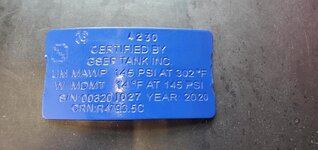
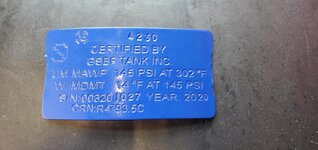
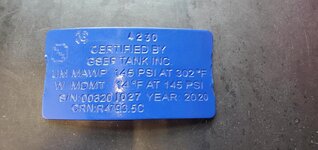
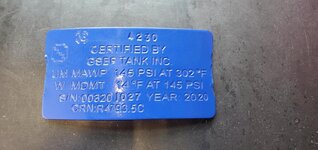
I think there's some confusion on the max pressure rating in the advertising for that compressor. It's actually 145, not 135. Here's a picture of the plate from the tank and the label on the side of the compressor. Also, I distinctly remember it shutting off right around 150 on the guage.

As for the pressure switch, you can adjust the cut in/out pressure pretty easily. I believe the pressure switch on that model is a Condor 11/11ea. You can probably find a video or manual online. It goes up to 165 psi however so make sure you don't exceed the working pressure of the pump/tank.

54220c24a10efb0ceeecdccb1f340f17.jpg6c759e91839f8038b6d7d6e1982ff5e2.jpg
 

Attachments

  • 54220c24a10efb0ceeecdccb1f340f17.jpg
    54220c24a10efb0ceeecdccb1f340f17.jpg
    193 KB · Views: 1
  • 6c759e91839f8038b6d7d6e1982ff5e2.jpg
    6c759e91839f8038b6d7d6e1982ff5e2.jpg
    170 KB · Views: 2

Rinspeed

Well-known member
Joined
Apr 26, 2020
Messages
1,831
Location
NY
At various times both Dewalt and Husky have contracted with well known manufacturers to produce compressors under their respective names. Even my Harbor Freight 60 gallon is just a repainted Belaire 216v. With the buying power the big box stores have, they can actually get the prices down on good compressors. This applies mostly to the 5hp/60-80 gallon units however. I assume they are specifically commissioning these smaller units to reach their broader consumer base and as mentioned above, they are cherry picking the specs they're shooting for so they can play the marketing game.


Good points, pretty sure my Dewalt was made by Sanborn and the pump looks identical to the 25 gal Dewalt the OP was looking at. I think Home Depot is off their rocker asking $670 for a 25 gal when Tractor Supply has the 60 gal for $600. I only paid $450 on Black Friday 18 months ago, hard to pass up at that price, I looked for a couple months for a used 80 gal and there were just not any deals close enough.
 

cmandp

Well-known member
Joined
Dec 22, 2011
Messages
1,283
Location
New Jersey
I think there's some confusion on the max pressure rating in the advertising for that compressor. It's actually 145, not 135. Here's a picture of the plate from the tank and the label on the side of the compressor. Also, I distinctly remember it shutting off right around 150 on the guage.

As for the pressure switch, you can adjust the cut in/out pressure pretty easily. I believe the pressure switch on that model is a Condor 11/11ea. You can probably find a video or manual online. It goes up to 165 psi however so make sure you don't exceed the working pressure of the pump/tank.

54220c24a10efb0ceeecdccb1f340f17.jpg6c759e91839f8038b6d7d6e1982ff5e2.jpg

Can this Quincy compressor run on a standard 20A circuit? It says FLA is 19A and they recommend a 30A breaker. That sounds like you need to run a dedicated circuit for it, no?
 

Attachments

  • 54220c24a10efb0ceeecdccb1f340f17.jpg
    54220c24a10efb0ceeecdccb1f340f17.jpg
    193 KB · Views: 1
  • 6c759e91839f8038b6d7d6e1982ff5e2.jpg
    6c759e91839f8038b6d7d6e1982ff5e2.jpg
    170 KB · Views: 1
OP
A

alex123

Well-known member
Joined
Jan 16, 2019
Messages
177
Location
USA
I think there's some confusion on the max pressure rating in the advertising for that compressor. It's actually 145, not 135. Here's a picture of the plate from the tank and the label on the side of the compressor. Also, I distinctly remember it shutting off right around 150 on the guage.

As for the pressure switch, you can adjust the cut in/out pressure pretty easily. I believe the pressure switch on that model is a Condor 11/11ea. You can probably find a video or manual online. It goes up to 165 psi however so make sure you don't exceed the working pressure of the pump/tank.

I noticed not many people are mentioning this compressor across the web, and the one place that has reviews on it has an average of 4.3/5. I even tried to see if there was a review video on it, and couldn't find anything. Other compressors generally have some review videos and I'm wondering why that may be? Clearly the Quincy is heavily favored on the forums and I'm wondering why there hasn't been more info on it across the web.
 

GeoBruin

Well-known member
Joined
May 5, 2018
Messages
3,744
It's brand new as of late 2020.This model replaced the similar Q12126vp.

Also, I don't doubt the distribution is much more imited relative to a Dewalt that's sold at every home depot in America.

Remember it's an exact copy of the similar Belaire and Atlas Copco models (or at least the previous version was) so you could look for reviews for those as well.
 
OP
A

alex123

Well-known member
Joined
Jan 16, 2019
Messages
177
Location
USA
It's brand new as of late 2020.This model replaced the similar Q12126vp.

Also, I don't doubt the distribution is much more imited relative to a Dewalt that's sold at every home depot in America.

Remember it's an exact copy of the similar Belaire and Atlas Copco models (or at least the previous version was) so you could look for reviews for those as well.

Thank you for clarifying. To clarify, the Quincy is oil lubricated, right? I think I'll buy one of these when they become available. They are on back order at the moment.
Okay, so with that picked.., on to fittings, which I know nothing about. What size diameter hose? I doubt I'll need more than 25'. Any specific one you recommend? Also, I know nothing about fittings and couplers, what would be the best for automotive work, please? I noticed some fittings have a swivel feature, which I find to be super convenient... Any drawbacks to those? Any you would recommend? Also, do I need a filter?
 

GeoBruin

Well-known member
Joined
May 5, 2018
Messages
3,744
It is oil lubricated.

Hoses and fittings (like everything else) depend on your use case. Will the hose hook directly to the compressor or will you have and hard distribution line between the comp and the hose?

In any case, it seems like a 3/8 hose will work fine, especially if you only need a 25 footer. I would recommend a ball valve as a shut off right at the compressor. The Quincy doesn't have a bung you can hook directly in to on the tank so you're connecting to a 1/4" female npt fitting on the regulator. So with 1/4 on the reg and 1/4 on the hose, you can use a 1/4" ball valve. That said, I haven't found a 1/4" ball valve that feels substantial or is advertised as being full port, so it might be worth using 1/4" - 3/8" (or 1/4" to 1/2") bushings to fit a larger ball balve in there. Then you can run a water trap/filter or a "piggyback" filter/regulator combo and then your hose. Ideally you add some hard line before the water trap to help cool the air and condense out some of the water vapor prior to the trap but if the goal is for the compressor to be mobile, you won't want that.

You mention automotive use, well there's a whole quick coupler/plug convention called "automotive" and it's probably the most popular. Many here recommend Milton Hi Flow couplers/plugs but that may not be necessary for your application ans they're more expensive, plus most conventional things that take standard automotive plugs will need to have the plugs switched out.

Another alternative is a product made by a company called Stedlin. They are a participant here on the forum. Anyhow, they sell a quick coupler that is a really nicely machine aluminum part and their corresponding plugs fit super easily into the coupler with very little effort, even under full pressure. They offer full flow plugs that flow effectively as much air as the Milton Hi Flow, and they have Quiet plugs that slowly dissapate the air from a tool/hose when discunnected so there's no loud, violent disconnect.

The other advantage is the couplers/plugs are compatible with other automotive fittings so you can mix and match.

As for swivels, Stedlin offers a really badass "double jointed" swivel (they call it an orbital) that offers a crazy degree of freedom. I have one connecting my blast gun so I can manipulate it easily in my small cabinet. It's expensive, but worth it for tools you use all the time.
 

anndel

Well-known member
Joined
Oct 28, 2015
Messages
3,270
Location
Hawaii, USA
I have the Husky 30 gallon compressor (#C301H) that preceeded the 30 gallon you have listed and it all depends on what tools you're going to use. I use impact wrenches, air hammer and sometimes an air cutoff tool but at maybe 20% duty cycle before the compressor runs to refill the tank. The recommended duty cycle per the owner's manual is 50% meaning not running for more than 30 minutes in any given hour. I usually get things done before the compressor kicks in and it's removing axle nuts, differentials, some front ends, subframes, etc.
 
OP
A

alex123

Well-known member
Joined
Jan 16, 2019
Messages
177
Location
USA
It is oil lubricated.

Hoses and fittings (like everything else) depend on your use case. Will the hose hook directly to the compressor or will you have and hard distribution line between the comp and the hose?

In any case, it seems like a 3/8 hose will work fine, especially if you only need a 25 footer. I would recommend a ball valve as a shut off right at the compressor. The Quincy doesn't have a bung you can hook directly in to on the tank so you're connecting to a 1/4" female npt fitting on the regulator. So with 1/4 on the reg and 1/4 on the hose, you can use a 1/4" ball valve. That said, I haven't found a 1/4" ball valve that feels substantial or is advertised as being full port, so it might be worth using 1/4" - 3/8" (or 1/4" to 1/2") bushings to fit a larger ball balve in there. Then you can run a water trap/filter or a "piggyback" filter/regulator combo and then your hose. Ideally you add some hard line before the water trap to help cool the air and condense out some of the water vapor prior to the trap but if the goal is for the compressor to be mobile, you won't want that.

You mention automotive use, well there's a whole quick coupler/plug convention called "automotive" and it's probably the most popular. Many here recommend Milton Hi Flow couplers/plugs but that may not be necessary for your application ans they're more expensive, plus most conventional things that take standard automotive plugs will need to have the plugs switched out.

Another alternative is a product made by a company called Stedlin. They are a participant here on the forum. Anyhow, they sell a quick coupler that is a really nicely machine aluminum part and their corresponding plugs fit super easily into the coupler with very little effort, even under full pressure. They offer full flow plugs that flow effectively as much air as the Milton Hi Flow, and they have Quiet plugs that slowly dissapate the air from a tool/hose when discunnected so there's no loud, violent disconnect.

The other advantage is the couplers/plugs are compatible with other automotive fittings so you can mix and match.

As for swivels, Stedlin offers a really badass "double jointed" swivel (they call it an orbital) that offers a crazy degree of freedom. I have one connecting my blast gun so I can manipulate it easily in my small cabinet. It's expensive, but worth it for tools you use all the time.

Wow! Thank you so much for the awesome info!!
 
OP
A

alex123

Well-known member
Joined
Jan 16, 2019
Messages
177
Location
USA
I have the Husky 30 gallon compressor (#C301H) that preceeded the 30 gallon you have listed and it all depends on what tools you're going to use. I use impact wrenches, air hammer and sometimes an air cutoff tool but at maybe 20% duty cycle before the compressor runs to refill the tank. The recommended duty cycle per the owner's manual is 50% meaning not running for more than 30 minutes in any given hour. I usually get things done before the compressor kicks in and it's removing axle nuts, differentials, some front ends, subframes, etc.

That's really mostly what I'll be using mine for as well. They sell a lot of t hose Husky's and overall the reviews are actually pretty good. Have you had any luck using a cutoff wheel on yours?
 

Hohn

Well-known member
Joined
Aug 25, 2016
Messages
2,683
Location
Diesel Central, Indiana
Campbell Hausfeld makes a lot of compressors for other labels, surprised to see my harbour freight has a CH head unit too.

Suggest you get high flow hose and couplers, the V type are a lot better than 1/4 inch M type couplers.
If you're using enough air that those coupler actually help even a measurable amount, you should step up to 1/2" hose and 3/8 NPT threads fittings. (i.e. Milton P series couplers instead of M series, for example).
 
To avoid these ads, REGISTER NOW!
Top Bottom