Vintage Veloce
Well-known member

I mean besides having multiple sizes in one bit?
Are they ever better than a single bit of the proper size? Why?
I don't own one, but have seen them on TV... ;-)


Actually that is one of the features that makes them great in sheet metal. The next larger step just touches the surface and acts as a deburring tool on the hole size you stopped on.I’ve not used a step bit, but I like the idea for sheet metal and will probably find a use for one some day.
How does one avoid scarring the work surface with the next step higher? Is that easy to manage?
In really thin and/or soft material you need to slow down and ease up on the pressure when doing the last step. A light touch will just deburr the edge which usually isn't a problem. If the burr on the backside is an issue you can go from the other side to remove that burr.I’ve not used a step bit, but I like the idea for sheet metal and will probably find a use for one some day.
How does one avoid scarring the work surface with the next step higher? Is that easy to manage?
Unibit was the brand of the first ones, think they came out in the late 70's. Think they had a patent that expired and now everyone makes them. I have a Unibit from around 1978 that still works great.On thin sheet metal a unibit makes clean burr free holes. With a standard bit it usually gets ugly with burrs and sometimes it will deform the metal into a warped mess if the bit grabs as its punching through.
Yes it is. You'll be fine as long as you don't press too far into the next size. Done correctly, the next step higher will deburr that side of the material.I’ve not used a step bit, but I like the idea for sheet metal and will probably find a use for one some day.
How does one avoid scarring the work surface with the next step higher? Is that easy to manage?
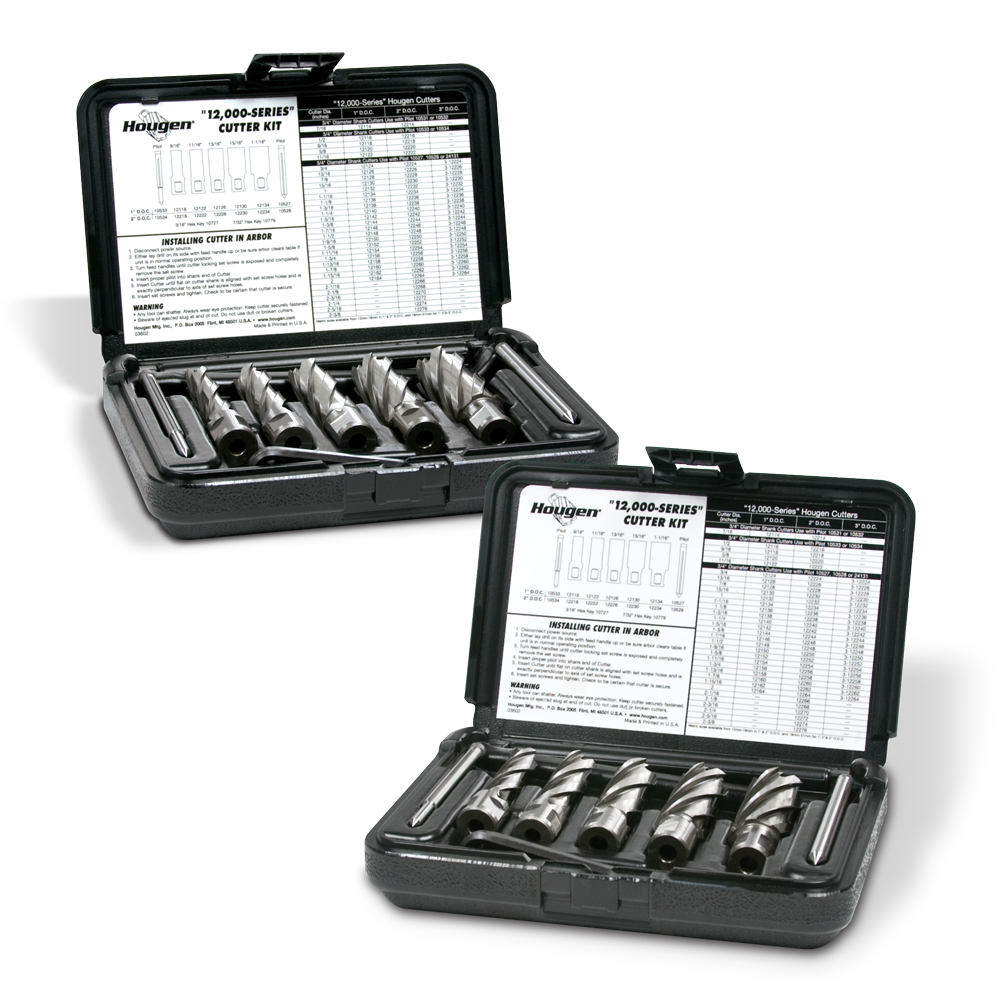
 www.hougen.com
Wait... what... are you saying the step drills don't cut perfectly round holes?Most have already praised where the step drills shine. Thin materials in particular and deburring as they go plus not leaving a triangulated hole like a regular twist drill can leave and enlarging an existing hole.
If you really want perfectly round holes I suggest checking out the Rota Cut annular cutters. I have had my Hougen Rota Cuts now for several years and they are my go-to's when I want a perfectly round hole.
PRODUCT SEARCH - Cutter Kits - HOUGEN MANUFACTURING
Get the perfect set of Hougen annular cutters! Kits available in RotaLoc Plus, Copperhead Carbide, RotaCut, and "12,000-Series" for every mag drill or sheet metal job.
Most have already praised where the step drills shine. Thin materials in particular and deburring as they go plus not leaving a triangulated hole like a regular twist drill can leave and enlarging an existing hole.
If you really want perfectly round holes I suggest checking out the Rota Cut annular cutters. I have had my Hougen Rota Cuts now for several years and they are my go-to's when I want a perfectly round hole.
PRODUCT SEARCH - Cutter Kits - HOUGEN MANUFACTURING
Get the perfect set of Hougen annular cutters! Kits available in RotaLoc Plus, Copperhead Carbide, RotaCut, and "12,000-Series" for every mag drill or sheet metal job.
 agree ……………annular cutters are the next level up in every way.

Nothing will cut a perfectly round hole. There is always some error. It really comes down to how much error and tolerance you are willing to accept. Step drills come pretty close and close enough for most applications IMHO.Wait... what... are you saying the step drills don't cut perfectly round holes?
They work awesome for thin materials.
Something like drilling a 1" hole in some 18 gauge sheetmetal for example.

I used to be VERY selective with using mine when they first came out, as it was a $40-50 bit.Clean, accurate round holes in thin sheet metal. It doesn't catch or tear like normal bits. One bit fits all.
Standard drill bits will actually leave a triangular hole in thin sheet metal.
I use step bits far more than standard bits. They drill just as easy, have a build in deburr, and have multiple sizes on a single tool.
