To avoid these ads, REGISTER NOW!

New Concrete - Cure and Seal vs Densifier?

riddleyo

Member
Joined
Feb 4, 2013
Messages
17
I am getting concrete poured this weekend and am researching about sealers, cure, and densifier.
My concrete contractor wants to apply "DIAMOND CLEAR" which appears to be a acrylic cure and seal product.
I told him I am interested in densifier, and like the look and strength of the concrete at the local box store. I will be using the concrete for automotive work and expect there will be oil/gas spills and welding sparks at some point in the future.
He advised me he could skip the diamond clear but could not guarantee the surface would turn out right because of the lack of cure.
I said don't skip the diamond clear because I want my concrete to cure properly. If I am interested in doing densifier, should I wait until spring and remove the sealer to apply densifier?
I have read LLWillysfan recommend Conkure or a wet water cure but I don't think these are feasible options with my pour coming up so soon, low temps, and my contractor having no experience with these methods.
I will be using a heater to ensure a warm cure as local temps will be ranging from 60s as the high and 30s as the low on the day/night of the pour.
Any insight would be appreciated!
 
To avoid these ads, REGISTER NOW!

ConCretin

Well-known member
Joined
Jan 20, 2011
Messages
3,379
Location
Central Maine
Hopefully our resident product experts will weigh in but we never apply a chemical curing product to a floor that will receive penetrating sealers, densifiers, or even adhered floor coverings due to incompatibility concerns. Even 'dissipating' curing compounds leave a residue that can interfere with subsequent product applications unless it is physically removed.

I edited this post this morning after giving it some more thought. I originally suggested a wet cure was an option but that's risky this time of year. Saturating the slab surface as freezing temps are approaching isn't a good idea especially if the concrete is not air entrained.

Honestly, you probably don't need to do anything at all. Curing is very important in hot or windy conditions but the amount of water loss in fall or winter conditions is negligible. Even ACI acknowledges this.

If you are uncomfortable with no curing, I'd just go with a moist cure. Simply cover the floor with an impervious material like poly. This will protect the surface from wind and keep evaporation to a minimum. This method does run the risk of mottling or uneven coloring although it usually fades with time.
 
Last edited:

Armorpoxy

Well-known member
Joined
Aug 18, 2013
Messages
3,735
Location
NJ
Hi, the floors at box stores are 'polished' which is a process of diamond grinding/honing the floors with large diamond floor grinders which they successively each step put on finer grit diamond pads. Densifier is put on the floor during this process to harden the concrete. It soaks in and does literally nothing to the surface appearance.

Once the floor is polished to the customer's specifications, a stain blocking penetrating sealer is burnished in.

If you want the look of a polished floor use a topical sealer or our SPGX one part Polyurea which gives the look of polished concrete with out polishing it. This type of floor will give you protection from automotive fluids. Densifer will not.

See example below. We also have topical solvent and water based sealers which give a similar look with less protection and are less expensive. Please reach out directly to below for more info.

Densifer in your case based on your desire for a polished floor will not give you that result in any way. Even cure and seals penetrate and won't do that. Also be careful if you add a sealer as then if you want to add a topical coating, it will need to be ground off since sealers repel coatings.
 

Attachments

  • 22131155400_fb21e9d2b2_b.jpg
    22131155400_fb21e9d2b2_b.jpg
    162.3 KB · Views: 81

Firebrick43

Well-known member
Joined
May 12, 2015
Messages
14,145
Location
West central Indiana
I am getting concrete poured this weekend and am researching about sealers, cure, and densifier.
My concrete contractor wants to apply "DIAMOND CLEAR" which appears to be a acrylic cure and seal product.
I told him I am interested in densifier, and like the look and strength of the concrete at the local box store. I will be using the concrete for automotive work and expect there will be oil/gas spills and welding sparks at some point in the future.
He advised me he could skip the diamond clear but could not guarantee the surface would turn out right because of the lack of cure.
I said don't skip the diamond clear because I want my concrete to cure properly. If I am interested in doing densifier, should I wait until spring and remove the sealer to apply densifier?
I have read LLWillysfan recommend Conkure or a wet water cure but I don't think these are feasible options with my pour coming up so soon, low temps, and my contractor having no experience with these methods.
I will be using a heater to ensure a warm cure as local temps will be ranging from 60s as the high and 30s as the low on the day/night of the pour.
Any insight would be appreciated!
Say a heater, its in an enclosed building?
 

ConCretin

Well-known member
Joined
Jan 20, 2011
Messages
3,379
Location
Central Maine
Say a heater, its in an enclosed building?
I didn't notice the comment about a heater. I would encourage you not to do that unless it is vented i.e. a hot air furnace. Unvented heaters such as space heaters give off carbon dioxide. This can cause carbonization, which results in a chalky surface. I know it's done all the time but your temps aren't low enough to take the chance.

Daytime temps in the 60's will be plenty warm enough to get a finish on the concrete before dark and as long as it doesn't dip below freezing for the first 48 hours or so, there is zero chance of the concrete being damaged by cold temps. A heater will also dry out the floor, which is the opposite of what you are trying to do by curing it.

If the slab is inside a finished building, all the better. It eliminates wind and sun as potential sources of evaporation, which might be a reason to cure the floor. Skip the heater, skip the curing, wait a month, apply your sealer/desifier and enjoy your awesome new shop.
 
Last edited:
OP
R

riddleyo

Member
Joined
Feb 4, 2013
Messages
17
Poured this morning. 60 degrees during the pour but temp is dropping fast to a low of 28 degrees tonight20211211_110407.jpg
 
OP
R

riddleyo

Member
Joined
Feb 4, 2013
Messages
17
I didn't notice the comment about a heater. I would encourage you not to do that unless it is vented i.e. a hot air furnace. Unvented heaters such as space heaters give off carbon dioxide. This can cause carbonization, which results in a chalky surface. I know it's done all the time but your temps aren't low enough to take the chance.

Daytime temps in the 60's will be plenty warm enough to get a finish on the concrete before dark and as long as it doesn't dip below freezing for the first 48 hours or so, there is zero chance of the concrete being damaged by cold temps. A heater will also dry out the floor, which is the opposite of what you are trying to do by curing it.

If the slab is inside a finished building, all the better. It eliminates wind and sun as potential sources of evaporation, which might be a reason to cure the floor. Skip the heater, skip the curing, wait a month, apply your sealer/desifier and enjoy your awesome new shop.
Contractor has the heater and the sealer ready to go today. I think it may be too late to alter course unless I just turn off the heater tonight. Contractor recommended the sealer to trap water and help cure and said they couldn't guarantee the finish if I altered the plan. Should I speak up and cancel the sealer? Here is a pick of the heater they are using
 

Attachments

  • 20211211_111008.jpg
    20211211_111008.jpg
    327.8 KB · Views: 72

ConCretin

Well-known member
Joined
Jan 20, 2011
Messages
3,379
Location
Central Maine
I try to recommend best practices but I'll also say that what you are doing is very common in residential work and rarely ends in disaster so don't worry too much.

There is no real downside to the curing compound other than the likely need to remove it before applying your densifier. Depending on the product, this could be as simple as a power washer. It will depend on the product you choose.

Even with a low of 28, I'd probably still just cover the floor but If you are going to use a heater, only run it when temps are near freezing, which is probably just a few hours a day. Turn it off completely after 48 hours. The slab will be fine after that.

You also need to weigh the situation with your contractor. Varying from his plan and advice could complicate your position if problems do arise.

Btw, congrats on your new floor!
 

Firebrick43

Well-known member
Joined
May 12, 2015
Messages
14,145
Location
West central Indiana
I would cover the concrete as well. I wouldn’t be afraid of sprinkling some water mid day either on it. 28 degree air temp will not freeze a slab inside a building. The concrete curing generates heat, the ground is transferring heat, and even water changing phases with generate heat to a point. Hense why orange groves will spray water if there is a chance of an overnight light freeze.
 
OP
R

riddleyo

Member
Joined
Feb 4, 2013
Messages
17
Well I just read more than I wanted to know about carbonization and calcium chalkiness scares. Thank you all for the quick feedback. Appreciate everybodys advice. And I think I will follow my contractor so I don't run into problems and have no follow up support. I will talk to them about covering vs heat vs watering once they are done finishing. They are working hard smoothing everything out right now.

Also thank you Amorpoxy for the alternative product recommendations. Will give them a look!
 
To avoid these ads, REGISTER NOW!

Jeepster04

Well-known member
Joined
Jun 25, 2013
Messages
3,100
I personally wouldnt want a heater blowing warm air across the surface of the concrete. With as dry as the air already is, the heater will just dry out the top layer of concrete. Once the concrete starts to setup, you want it to cure slowly and stay wet.

I would close up that opening and leave it be.
 

Toyo72

Well-known member
Joined
Nov 27, 2009
Messages
281
Interested in the pictures. Considering whether to do Lithi-tek densifier and 8510 or polyspartic in my new shop (just poured, building soon in process). Tough decision.
 

C2 Turbo

Well-known member
Joined
Mar 18, 2014
Messages
392
Location
Out skirts of Louisville, KY
Interested in the pictures. Considering whether to do Lithi-tek densifier and 8510 or polyspartic in my new shop (just poured, building soon in process). Tough decision.
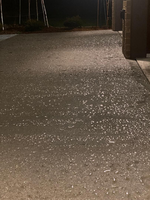
Here you go.... Night time and just started raining. If you like it, I have some spare jugs FS in Classifieds. Lovely product

1640655944964.png
 

Toyo72

Well-known member
Joined
Nov 27, 2009
Messages
281
Oh nice. I also have fresh driveway and porch concrete, might make sense to do that as well. Looks great.
 

Iggy2

New member
Joined
Feb 3, 2024
Messages
1
I had a new garage floor poured. The contractor did a terrible job finishing it - not smooth like typical garage floor. I want to sand it smoot and then seal it. Planning to use Lithi-Tek 4500 primer/densifier, and then Silox-Tek 8510 sealer. I ran across something that made me think that perhaps I should apply the Lithi-Tek first, then sand, then apply sealer. I'm interested in other's thoughts.
 

Armorpoxy

Well-known member
Joined
Aug 18, 2013
Messages
3,735
Location
NJ
Hi, we are assuming you mean grind the concrete, it really can't be 'sanded'. Diamond floor grinders can be rented or Home Depot also rents Diamabrush wheels for floor scrubbers but these throw a LOT of dust and don't capture it. A diamond floor grinder gets used with a proper matching vacuum to collect the dust (shop vacs won't work, they will plug up in minutes unless you use a Dust Deputy or similar pre-collector).

Densifying prior to grinding is fine. We carry Ghostshield if you go that route.
 
To avoid these ads, REGISTER NOW!
Top Bottom